 Vista
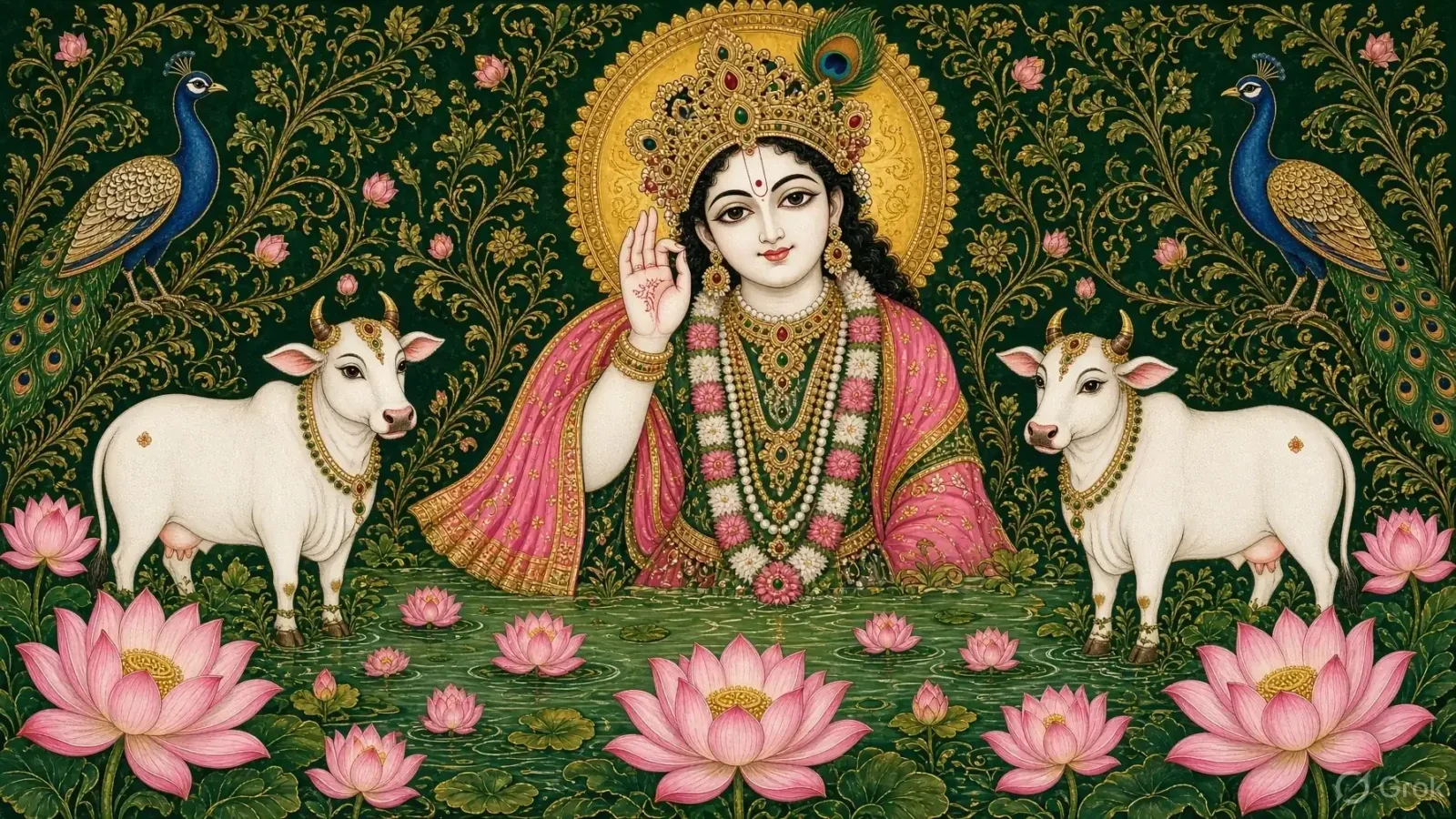
Pichwai art is a devotional cloth painting from Nathdwara in Rajasthan, made as a backdrop hung behind the image of Shrinathji in temples of the Pushtimarg tradition. The word means “that which hangs at the back”. For an easy Pichwai drawing, start with a lotus or a cow, keep the shapes large and rounded, outline them with a clear line, fill flat colours on a dark or deep background and finish with a decorated border.
This guide explains what Pichwai art is, which state it comes from, the Nathdwara tradition, the motifs of cows, lotuses and peacocks, a beginner art kit checklist, easy cow and lotus drawing, Shrinathji and festival themes, rangoli adaptations, a step-by-step method, designs, borders, wall decor and school projects. A clear note first: Pichwai in its original sense is a sacred temple textile. Everything we suggest here is Pichwai-inspired practice, and the rangoli and decor ideas are modern adaptations, not traditional temple art. Please treat the subject with respect, credit the tradition and buy authentic work from Nathdwara artists. If you want the motif chart, see our Pichwai motifs chart.
Table of contents
- What is Pichwai art?
- History of Nathdwara Pichwai painting
- Pichwai art symbols and motifs
- Pichwai art kit and materials
- Easy Pichwai art drawing
- Pichwai cow painting
- Pichwai lotus and peacock designs
- Shrinathji and Krishna Pichwai painting
- Pichwai art rangoli designs
- How to make a Pichwai painting step by step
- Pichwai painting designs and pictures
- Pichwai wall painting and home decor
- Pichwai art for kids and school projects
- FAQs and conclusion
What is Pichwai art?
Meaning of Pichwai, Pichhwai and Pichvai
Pichwai, Pichhwai and Pichvai are different spellings of the same word. Gaatha explains the name as “hanging at the back”, from the Sanskrit pich (back) and wai (hanging). Google Arts and Culture gives the same meaning and describes pichwais as painted or woven textile hangings used as backdrops in temple shrines. They are central to Pushti Marg worship, adding a visual layer to the daily service and the mood of each darshan.
Pichwai art is from which state?
Pichwai art is from Rajasthan. Nathdwara, the town most closely tied to it, is in Rajsamand district, Rajasthan, according to Gaatha. Google Arts and Culture adds that most pichwais were produced in Rajasthan and Gujarat, with some from the Deccan. So “Pichwai painting of Rajasthan” and “Nathdwara Pichwai painting” describe the same core tradition.
History of Nathdwara Pichwai painting
Shrinathji temple tradition
Gaatha links Pichwai to the Vallabha sampradaya, founded by Vallabhacharya (1479 to 1531), whose philosophy became the basis of Pushtimarg. It says the Shrinathji image was moved from the Govardhan area in the late 17th century and established at Singad village, now Nathdwara, under the Mewar ruler Rana Raj Singh. The page itself gives more than one date for the move and flags some stories, such as the Mirabai and Akbar accounts, as legends or unsourced, so we do not repeat those. What the page does say is that Pichwai painting is more than 300 years old, forms a subset of the Mewar school as the Nathdwara school, declined with Westernisation in the late 19th and early 20th centuries and is now being revived.
Traditional devotional cloth paintings
Inside the temple, Gaatha says, the deity is cared for like a family member according to the time of day and season, with darshan offered eight times a day, and pichwais are changed for rituals, festivals and seasons. Google Arts and Culture notes that in winter, painted pichwais are replaced by heavier brocade and metallic-work hangings. Because each hanging belongs to a particular moment of worship, the images are meant for devotion first and decoration second.
Pichwai art symbols and motifs
Cows, lotus flowers and peacocks
Google Arts and Culture lists recurring imagery of cows, peacocks, lotuses and gopis carrying milk pots. Gaatha ties summer to pink lotuses and the monsoon to peacocks. Gopashtami, described as the cow festival, is among the listed scenes. We keep the explanations at this level because the sources do not assign fixed spiritual meanings to each motif, and we avoid inventing any.
Krishna, gopis and nature
Pichwais focus mainly on Krishna’s childhood and youth, most often on Shrinathji, say Google Arts and Culture. Scenes include the Ras Lila (Krishna’s dance with the gopis), Annakuta, Daan Lila, Gopashtami, Janmashtami and Nandamahotsava. Gaatha describes the style as having large eyes, broad noses and heavy bodies, with dark borders, gold decoration and white outlines. Nature fills the background: kadamba trees, lotus ponds and peacocks, which also shows the season.

Pichwai art kit and materials
Beginner art kit checklist
“Pichwai art kit” is a common search, and ready-made kits vary a lot, so check what is included before buying. A useful beginner kit has:
- a base such as a printed or plain canvas, board or cotton cloth
- acrylic or poster colours in dark blue or green, white, red, yellow, pink, gold and black
- two or three brushes, including a very fine one for outlines
- pencil, eraser, palette, water jar and tissue
- an outline or reference sheet, ideally credited to its artist
We do not quote kit prices because they change widely between sellers.
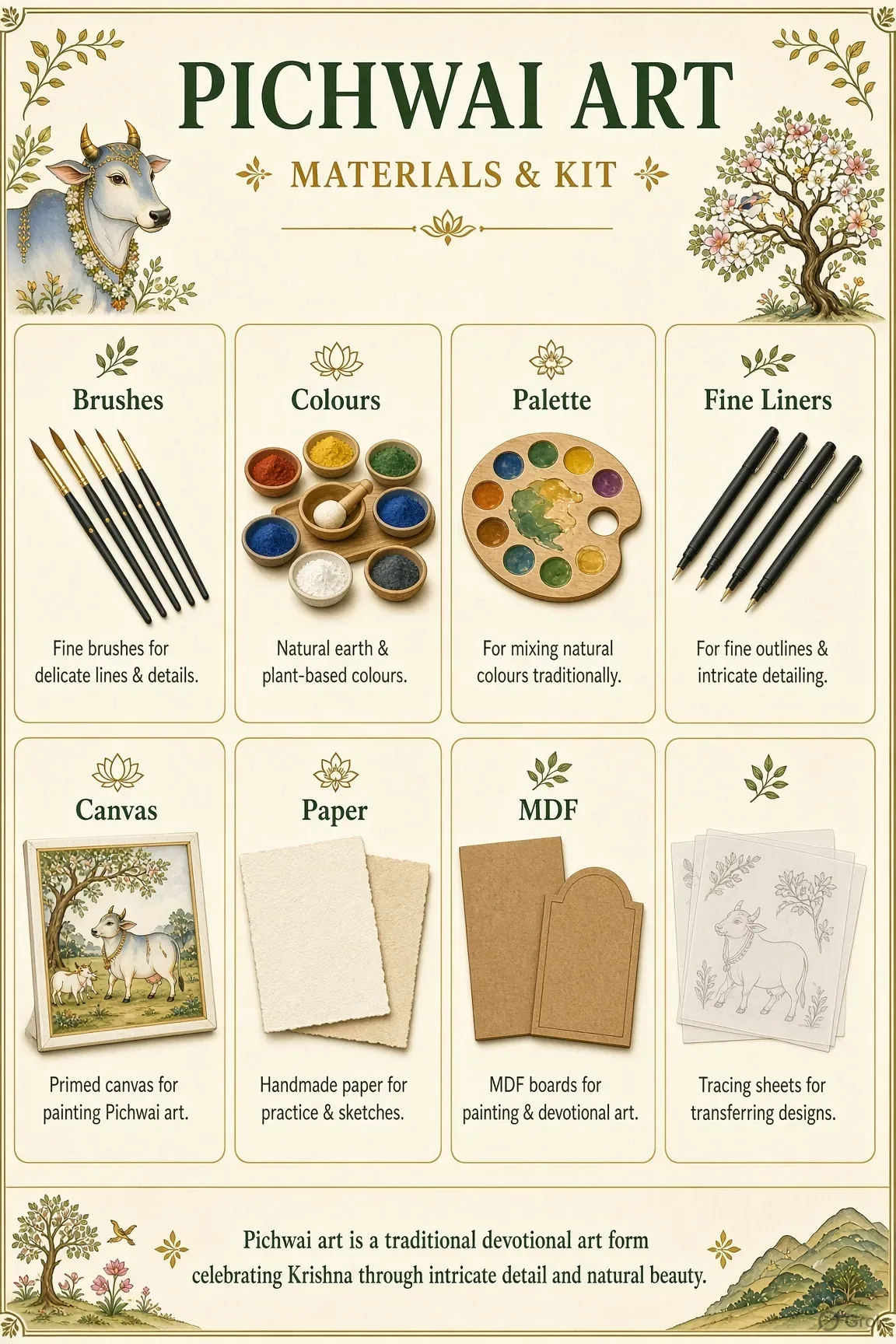
Brushes, canvas, paper, MDF and colours
Traditional Nathdwara work uses cotton cloth starched with a paste, gum or resin as a binder, brushes made from horse, goat or squirrel hair, natural colours, and gold or silver applied as foil and gum-based mixtures, per Gaatha. It adds that poster colours are now used alongside natural ones. For practice, cotton cloth or cartridge paper works well. Canvas boards are easy to handle, and MDF panels suit decorative work if you seal and prime them first. Use a dark base such as deep blue, green or black so lotus pinks, whites and golds stand out. Keep paints and varnishes away from food contact and use non-toxic colours for children.
Easy Pichwai art drawing
Basic drawing techniques
- Big simple shapes first. Build everything from circles and ovals.
- Clean outlines. Draw the outline once, with a steady line.
- Repeat patterns. Use rows of petals, dots and leaves to fill space.
- White detail lines. Add fine white or light lines over dark fills for definition.
Beginner-friendly motifs and patterns
Start with a single lotus (a row of pointed petals around a small centre), a leaf, a peacock feather (an oval with a smaller oval and a dot inside) and a simple cow. Then try a repeat band of lotus petals along the bottom edge. Practise each motif five times on rough paper before using paint.
Pichwai cow painting
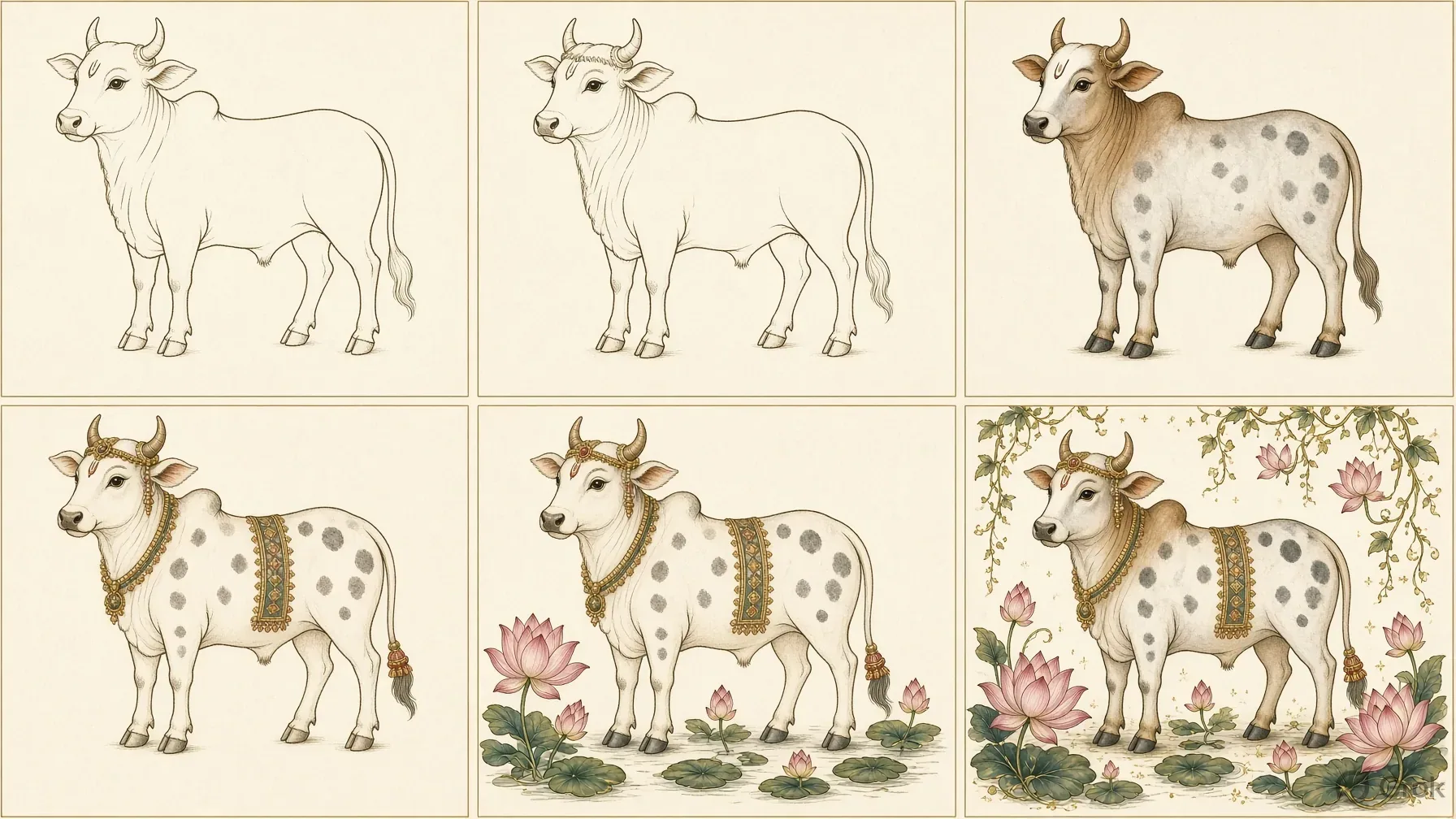
Easy cow drawing step by step
- Body. Draw a large rounded oval, slightly longer than tall.
- Head. Add a smaller oval at one end with two curved horns and small ears.
- Legs. Draw four short straight legs with simple hooves.
- Tail and hump. Add a thin curved tail and a gentle hump.
- Decoration. Add a garland, bells or patterned cloth on the back.
- Colour. Fill with white or cream on a dark background, outline in dark, add white detail lines and a gold touch.
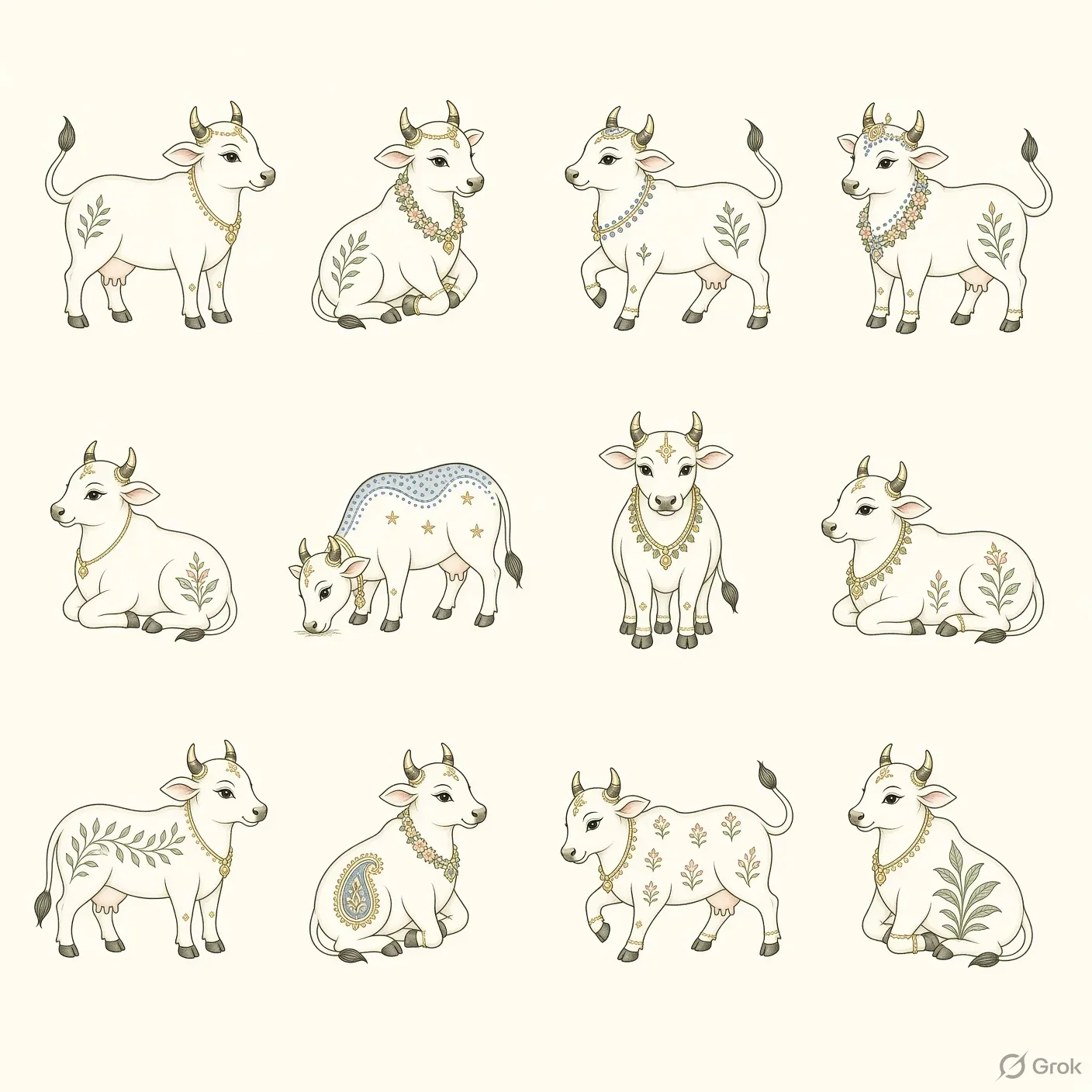
Decorative cow pairs and herd compositions
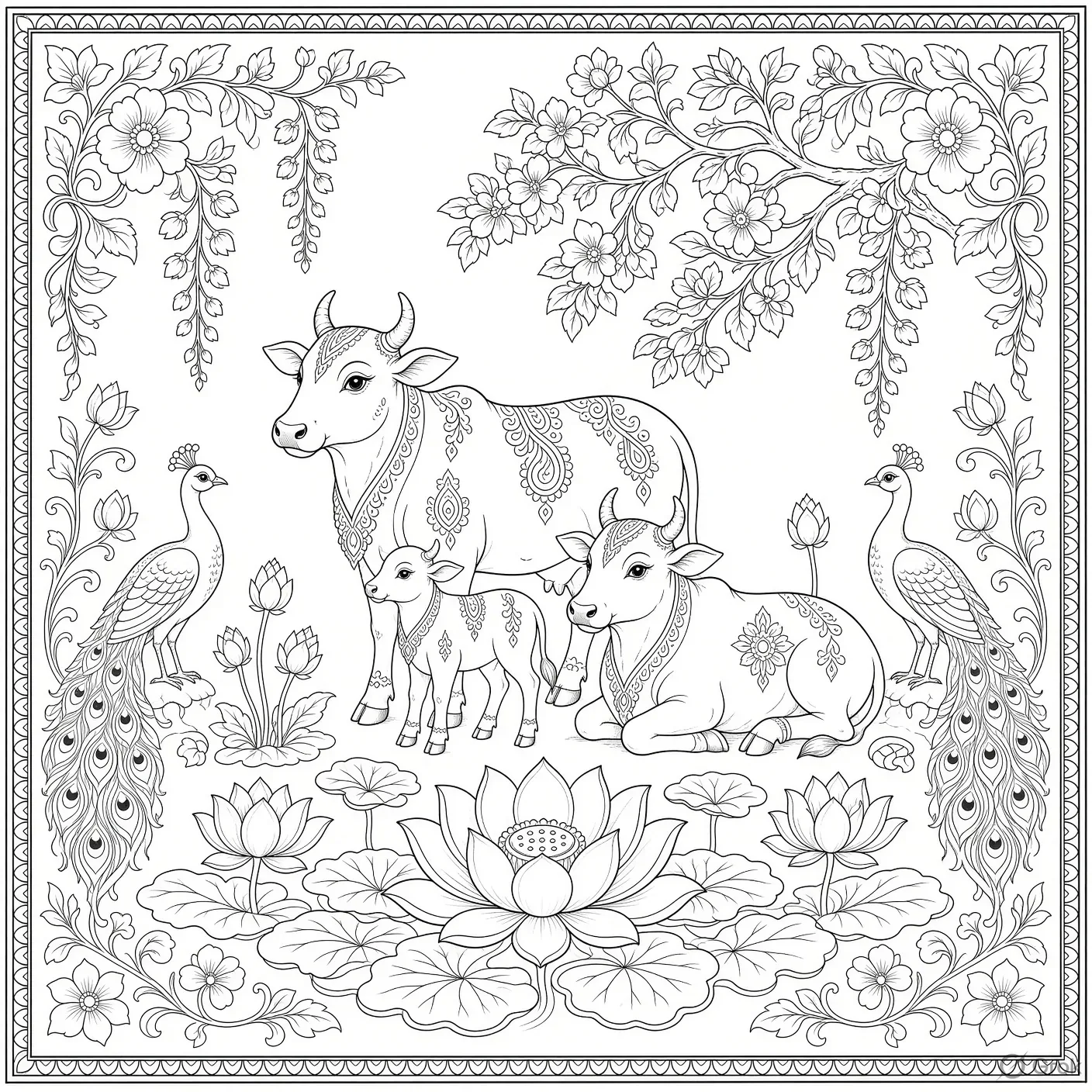
Draw two cows facing each other, with a calf between them, or a row of cows walking in one direction with trees behind. A herd works best when you vary sizes and poses while keeping the same outline style, with lotus plants or grass tufts filling the gaps.
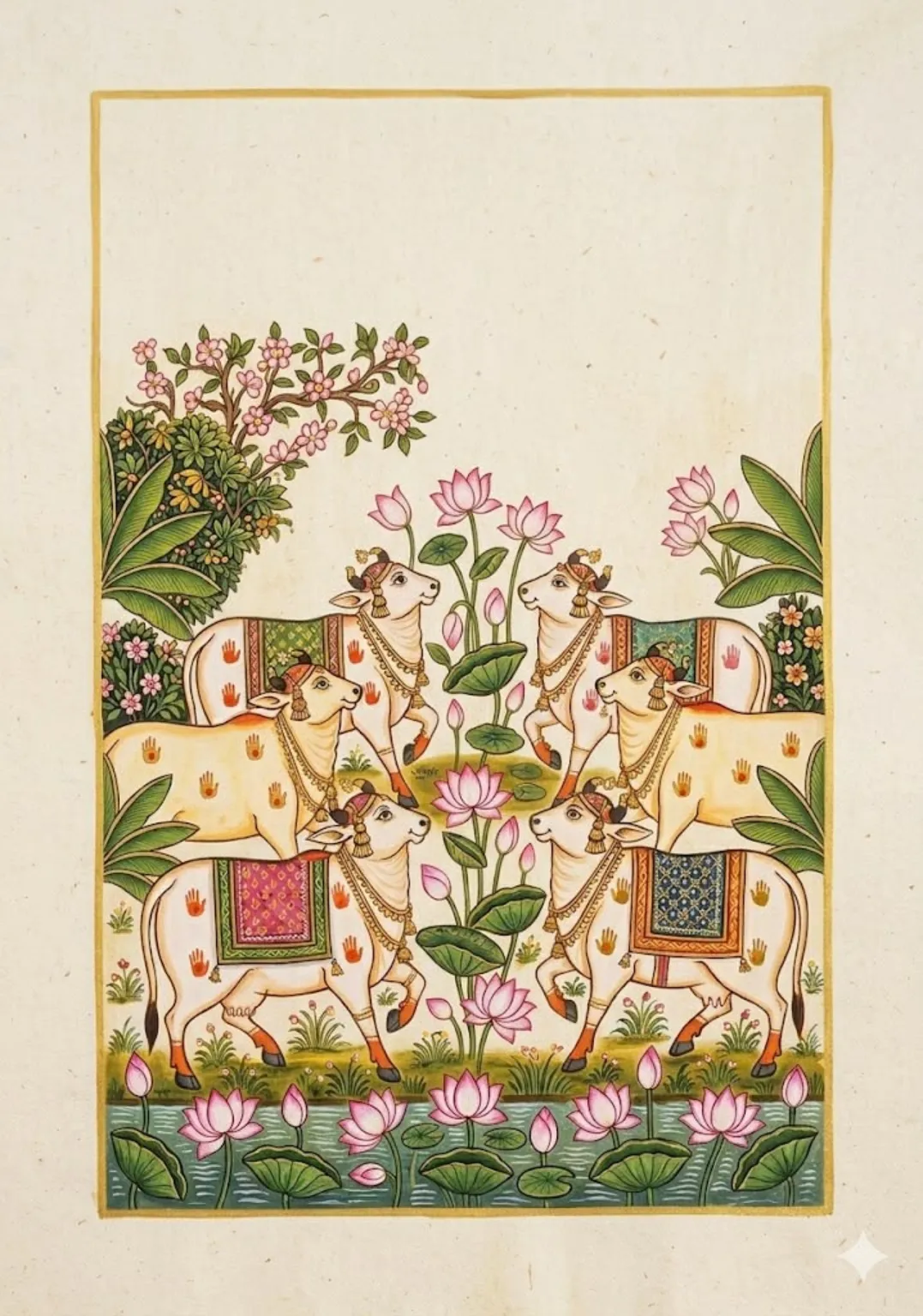
Cow and lotus design combinations
Place a cow in the centre with a lotus pond below, or frame a pair of cows with large lotus blossoms at the corners. Pichwai cow and lotus designs suit square canvases, circular plates and rangoli-style layouts.
Pichwai lotus and peacock designs
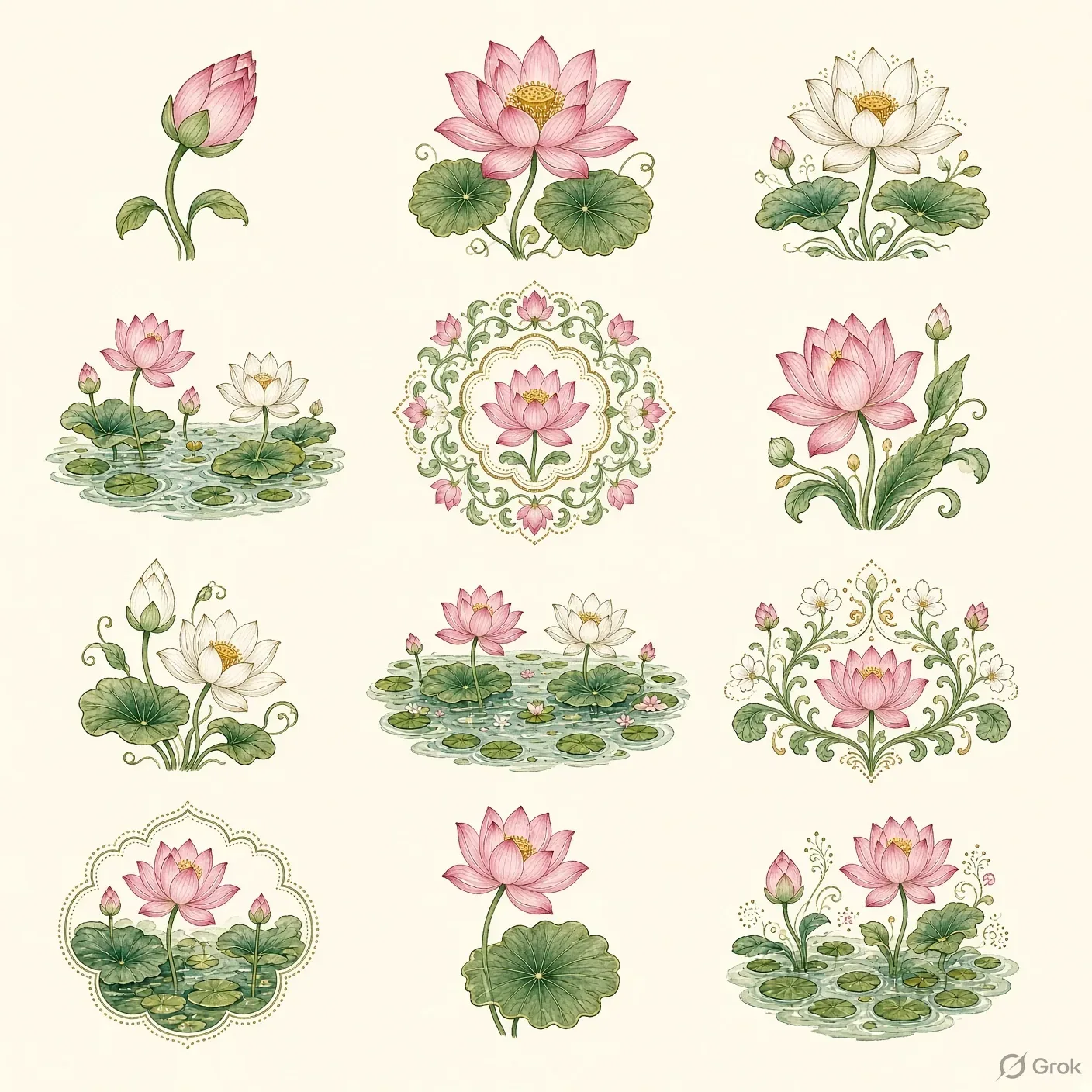
Lotus pond paintings
Google Arts and Culture describes Kamal Vana and Jal Vihar pichwais as showing lotuses and water to offer relief from summer heat. For a lotus pond, paint a dark blue or green water area, add round leaves, then lotus blooms in layers of pink and white petals with a yellow centre. Fish or small birds can fill the water. Outline petals in a darker pink or white.
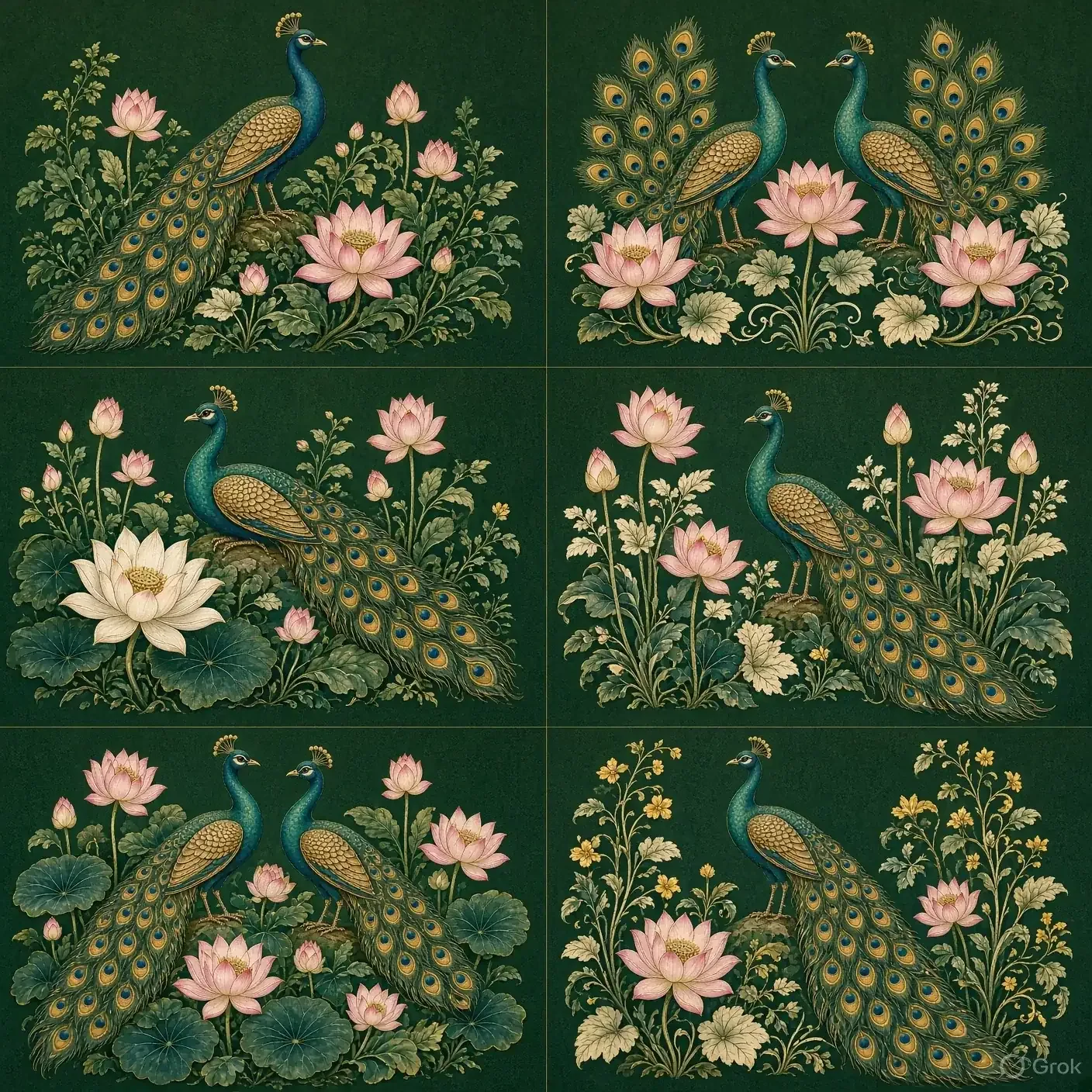
Peacock and floral arrangements
The same source describes Morakuti pichwais showing dancing peacocks for the monsoon. Paint a peacock with a long fan of feathers, each feather made of nested ovals in blue, green and gold, and surround it with leaves and flowers. Keep the background dark so the colours glow.
Shrinathji and Krishna Pichwai painting
Traditional iconography
Google Arts and Culture describes Shrinathji as Krishna at about age seven, with the left arm raised to lift Mount Govardhana and the right hand on the waist. Gaatha says the same, naming the image as seven-year-old Krishna lifting Govardhan Hill. Because this is a sacred image, we do not give a drawing recipe for the deity. If you want to depict Shrinathji, study authentic Nathdwara work, ideally with an artist’s guidance, and treat the finished painting with respect.
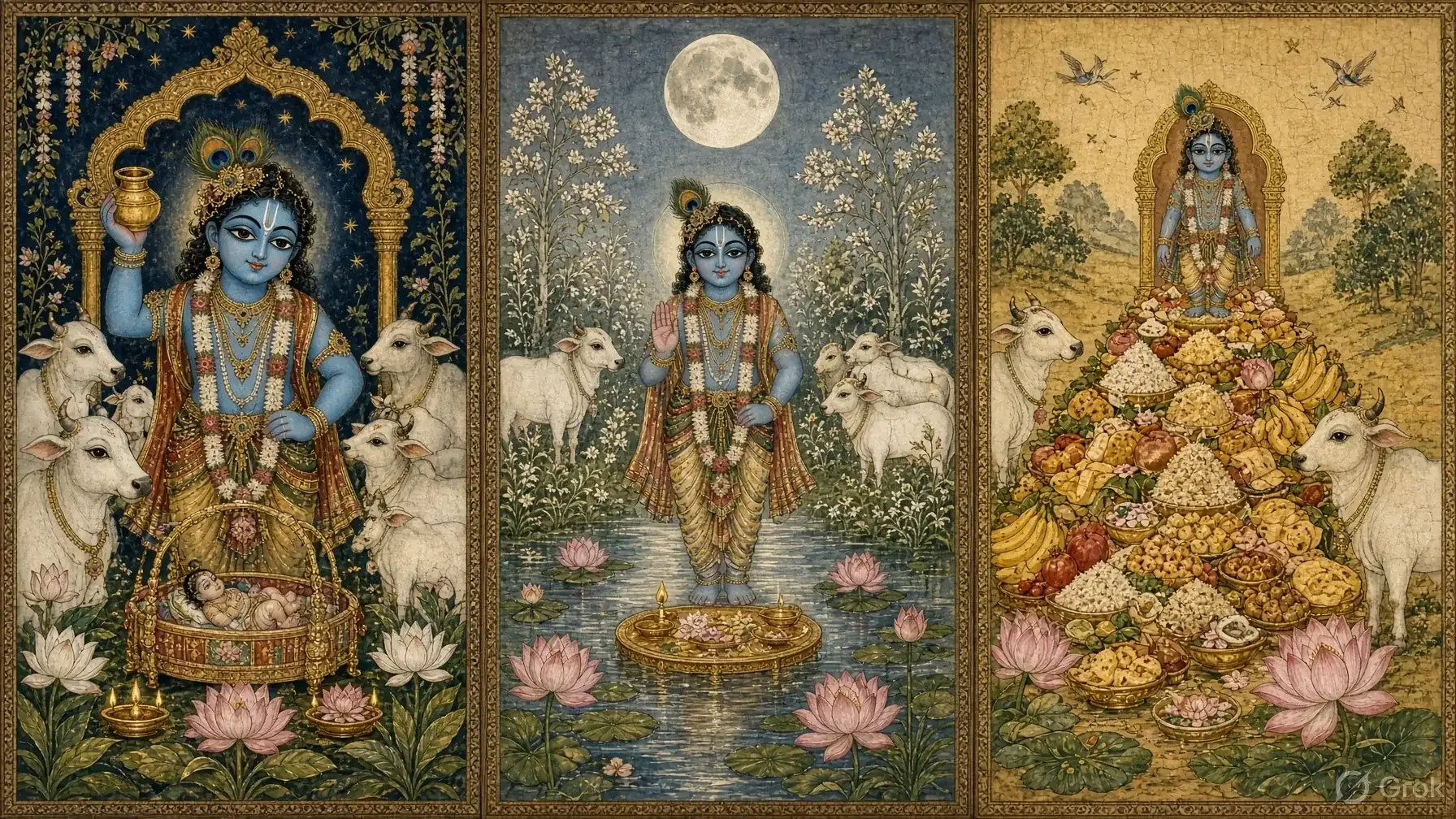
Janmashtami, Sharad Purnima and Annakut themes
- Janmashtami: listed by Google Arts and Culture among typical pichwai scenes.
- Sharad Purnima: Gaatha describes it as shown through a bright full moon.
- Annakut: a major festival the day before Diwali celebrating the Govardhan episode, and its scene is a popular Pichwai subject, says Gaatha.
Pichwai art rangoli designs
Easy cow and lotus rangoli
Pichwai rangoli designs are a modern idea: people borrow Pichwai motifs for floor decoration. Our sources do not record rangoli as part of the traditional Pichwai art, so please present these as inspired adaptations. For an easy design, draw a large lotus in chalk, add a small cow in the centre or two cows facing it, and border it with a petal band. Fill with coloured powder or flower petals, using a dark mat or contrasting floor behind the outline to make the colours stand out.
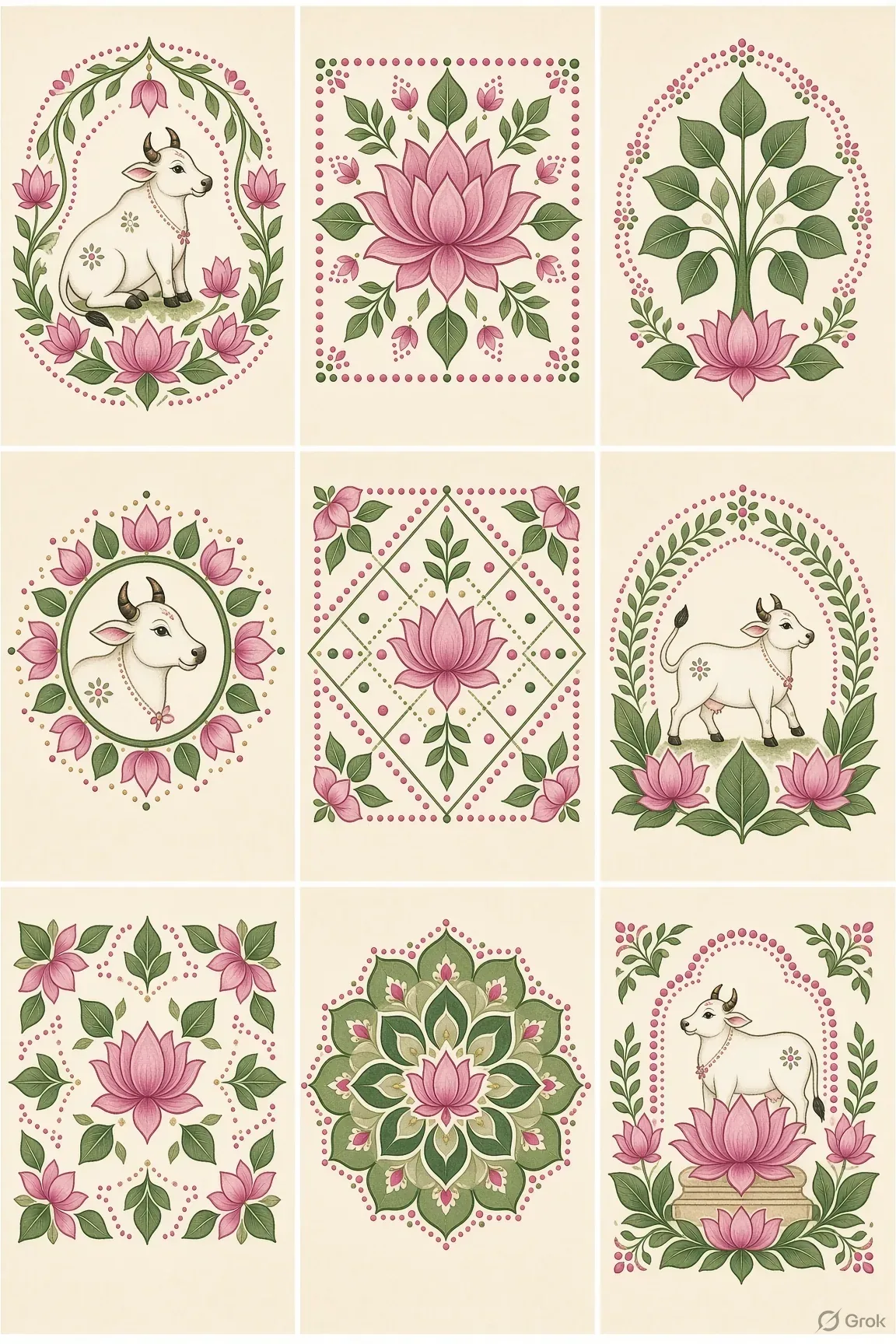
Janmashtami and festival decoration ideas
For festival decoration, create a lotus rangoli with a peacock feather corner and a row of small diyas. Janmashtami ideas could include a lotus with a cow, a flute outline and a peacock feather. Use simple motifs rather than attempting a sacred image on the floor, where it may be walked on.
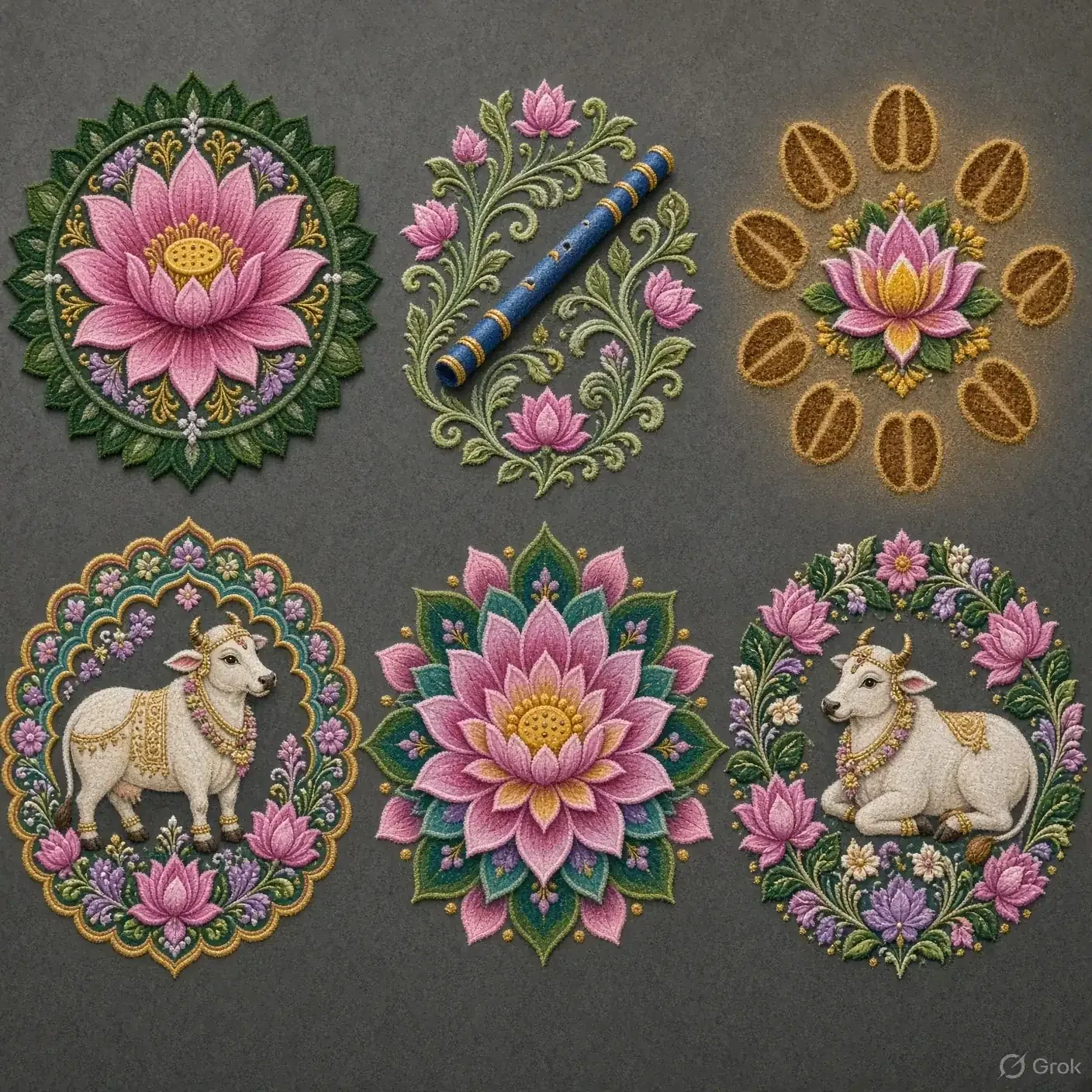
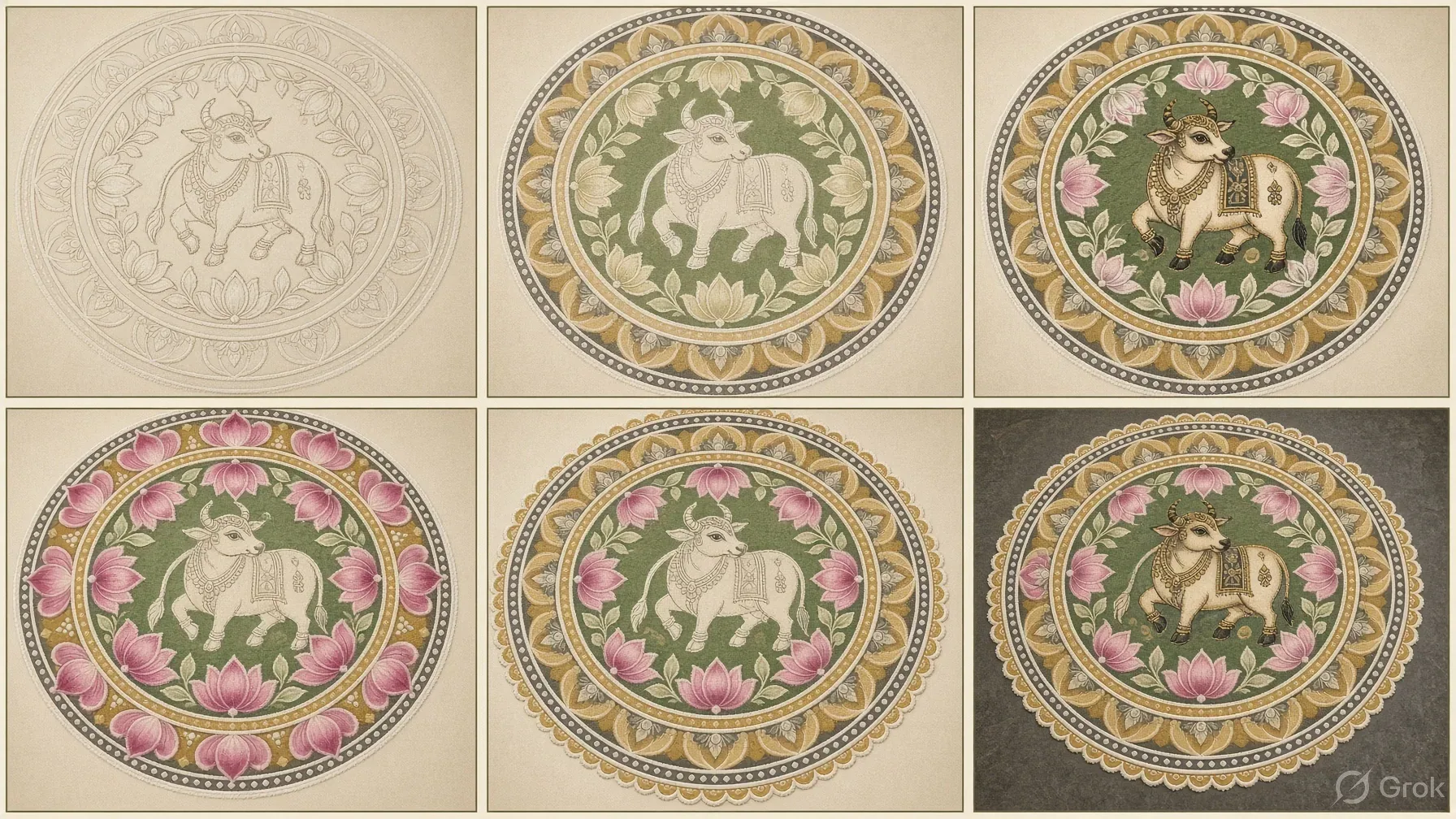
Why these are modern adaptations
Traditional Pichwai is a painted or woven textile hung in a shrine. A rangoli is a temporary floor design. They share motifs but not purpose or technique, so label rangoli as “Pichwai-inspired” and do not describe it, or AI-generated imagery, as authentic Pichwai painting.
How to make a Pichwai painting step by step
Sketching and outlining
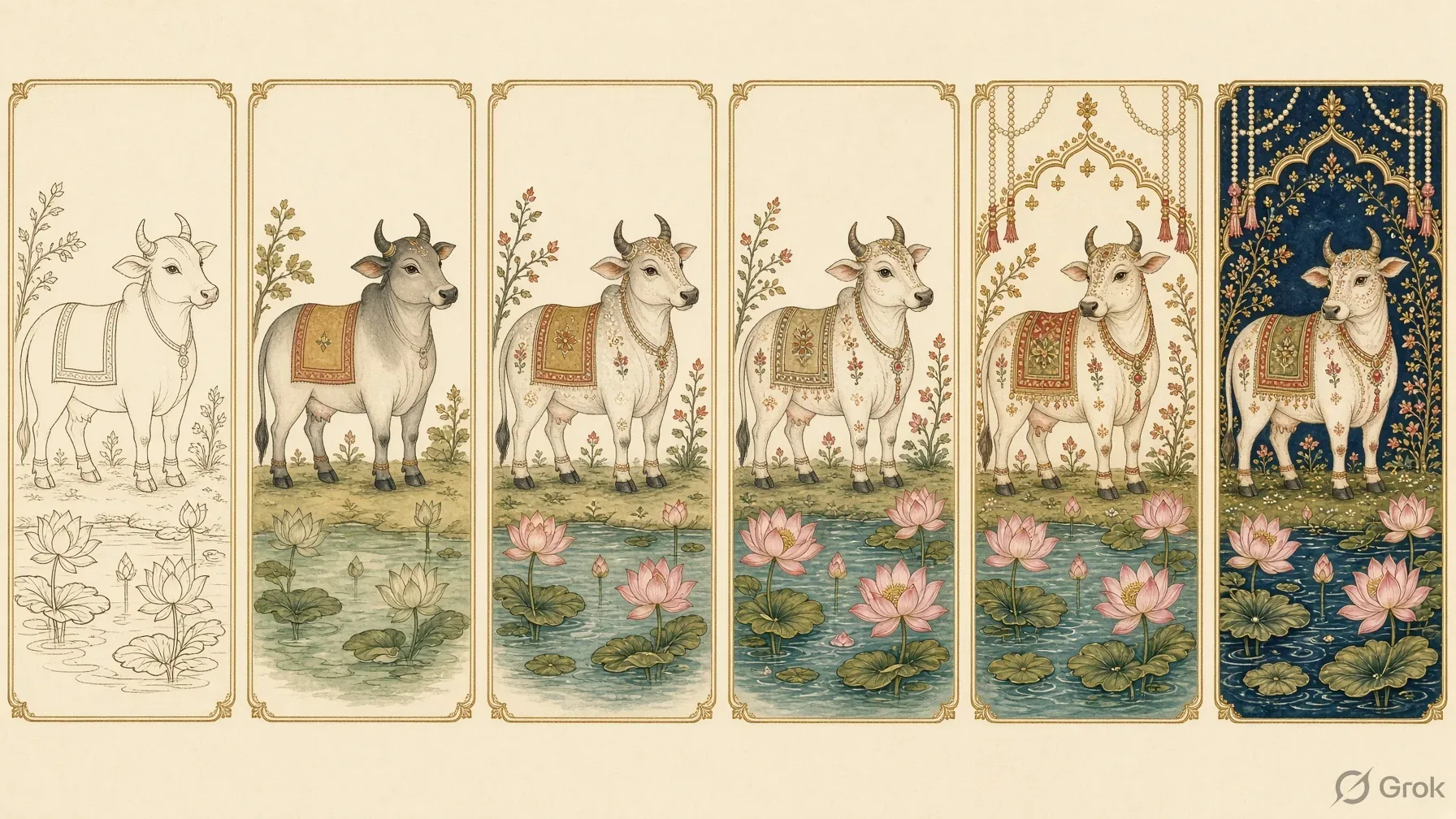
Gaatha describes the traditional order: stitching and starching the cloth, marking borders with thread, a rough charcoal outline and then a final outline, grinding and sieving natural colours, a base colour burnished with an agate stone, detailing and shading, and finally gold application and polishing. A traditional painting can take three months to a year. Here is a practice version:
- Prepare. Fix cloth or paper flat, and mark a border with a ruler.
- Rough sketch. Draw lotus and cow shapes lightly in pencil.
- Final outline. Correct and repeat with a clean line.
Base colours and fine details
- Background. Paint the dark base and let it dry fully.
- Main colours. Fill cows, petals and leaves with flat colours, one colour at a time.
- Details. Add shading, white detail lines, dots and patterns.
- Gold touches. Add gold paint or pen to borders and ornaments, sparingly.
- Finish. Let it dry, erase pencil marks and check edges.
Pichwai painting designs and pictures
Traditional and contemporary designs
| Design | Elements | Season or occasion |
|---|---|---|
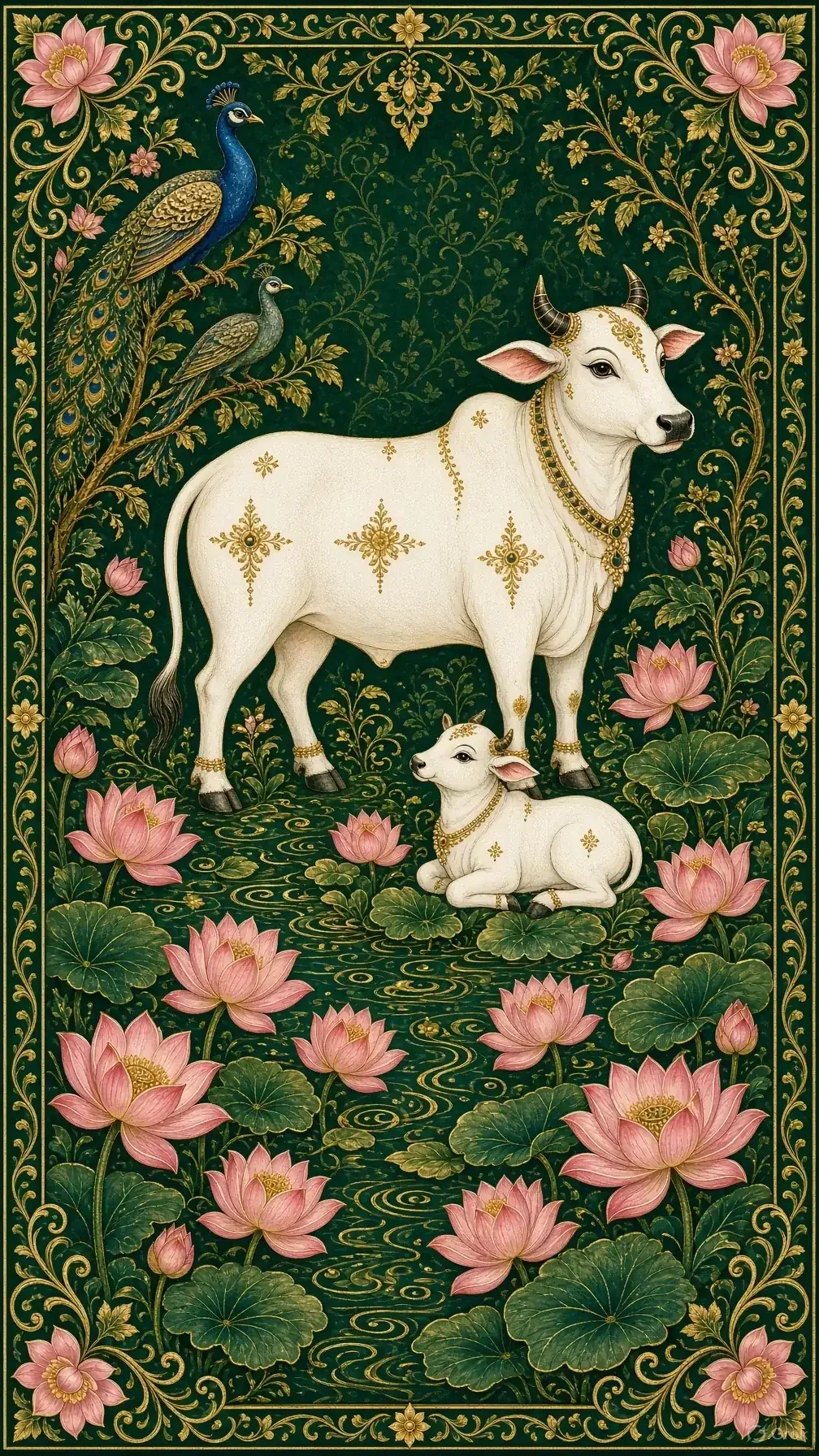
| Lotus pond (Kamal Vana) | Lotuses, water, fish | Summer |
| Peacock (Morakuti) | Dancing peacocks, trees | Monsoon |
| Cow and calf | Cows, grass, lotus | Gopashtami theme |
| Full moon | Bright moon, garden | Sharad Purnima |
| Annakut scene | Offerings, hill motif | Annakut |
Border patterns and colour combinations
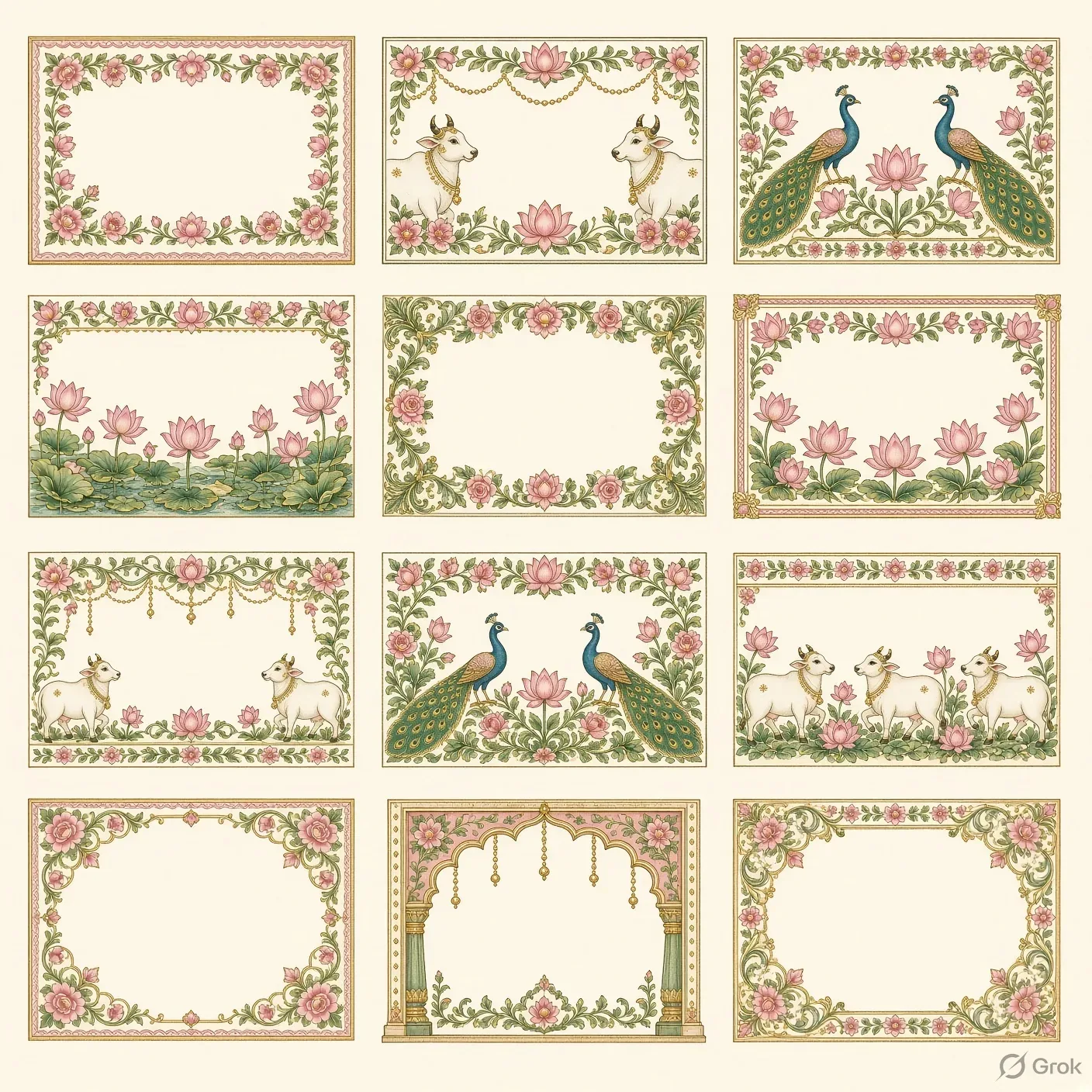
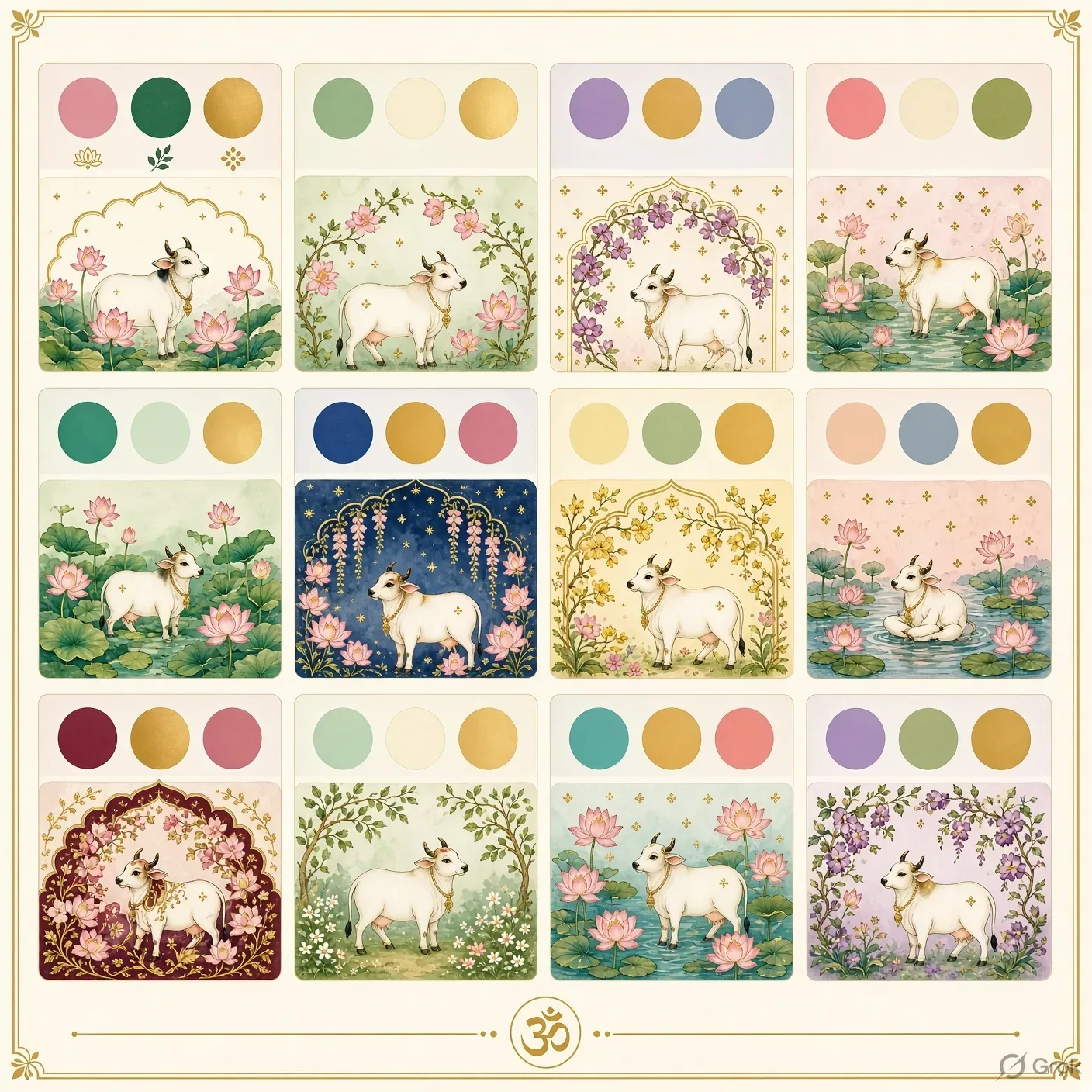
Gaatha notes dark borders and gold decoration as part of the style. For a Pichwai border design, paint a band of repeating lotus petals or a row of small flowers with a gold line on each side. The palettes below are practical suggestions for Pichwai-inspired work, not rules of the tradition.
| Palette | Colours | Mood |
|---|---|---|
| Midnight | Deep blue, white, pink, gold | Rich, glowing |
| Forest | Dark green, cream, red, gold | Fresh, festive |
| Monsoon | Teal, peacock blue, green, yellow | Cool, lively |
| Classic | Black, white, red, gold | Bold, graphic |
Pichwai wall painting and home decor
Living room and puja room inspiration
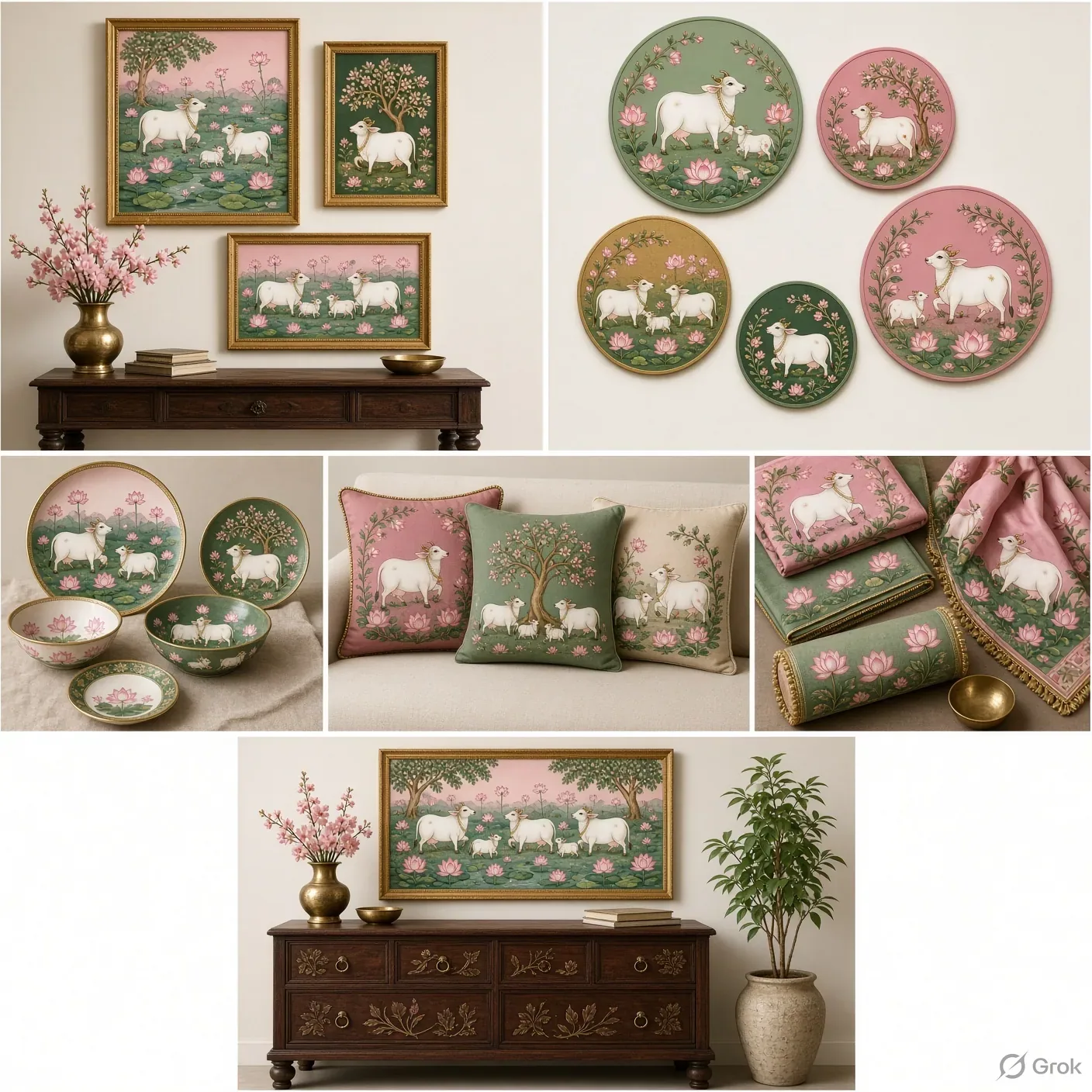
A Pichwai-inspired panel with lotuses and cows suits a living room wall as decor. For a puja room, treat devotional images with respect: hang them at a clean, raised spot and keep them away from kitchens and bathrooms. Use plain lotus and cow designs if you want a calm, decorative look without sacred imagery.

Canvas, MDF panels and decorative plates
Canvas and MDF are good for wall panels. Seal MDF, prime it, paint with acrylics and finish with a clear varnish. Decorative plates and trays should be for display only. Craft paint and varnish are not certified food-safe, and a “non-toxic” label does not make them safe for food, so do not paint the surface of plates you will eat from.
Pichwai art for kids and school projects
Kids can start with a lotus, a peacock feather and a simple cow on dark paper, using white and pink crayons or paint markers. For a school project, write a short note: Pichwai is a devotional cloth painting from Nathdwara, Rajasthan, hung behind Shrinathji in Pushtimarg temples, and its motifs include cows, lotuses and peacocks. Add a map and a drawing. The practice sheet above can be downloaded using the image download button.

FAQs and conclusion
1. What is Pichwai art?
It is a devotional cloth painting hung behind the deity in Pushtimarg temples, best known from Nathdwara.
2. Pichwai art is from which state?
Rajasthan, with Nathdwara in Rajsamand district as its main centre.
3. What does Pichwai mean?
Roughly “that which hangs at the back”.
4. What is in a Pichwai art kit?
Usually a base, colours, brushes and a reference sheet, though contents vary, so check the listing.
5. How do I draw an easy Pichwai cow?
Use an oval body, a smaller oval head with horns, four legs, a tail and a decorated cloth, then fill with a light colour on a dark background.
6. Why do Pichwai paintings show lotuses and peacocks?
Sources link lotus scenes to summer and peacock scenes to the monsoon.
7. Is Pichwai rangoli traditional?
No. It is a modern adaptation of Pichwai motifs for floor decoration.
8. Which colours are used in Pichwai?
Traditional work uses natural colours with red, green and yellow as main colours, plus gold. Modern practice often uses acrylic or poster colours.
9. Can beginners paint on MDF?
Yes, after sealing and priming it, and keeping it for display only.
10. How can I support Pichwai artists?
Buy directly from Nathdwara artists or reputable sellers, credit them and label your own work as Pichwai-inspired.
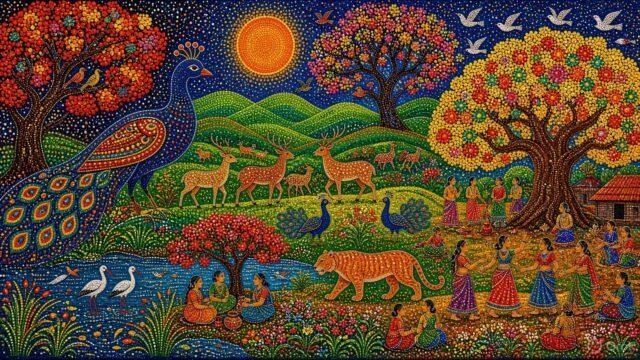
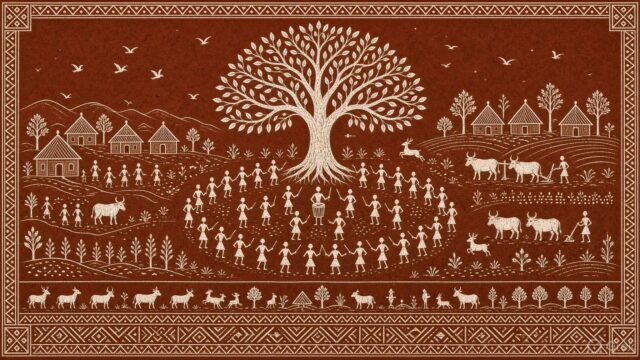
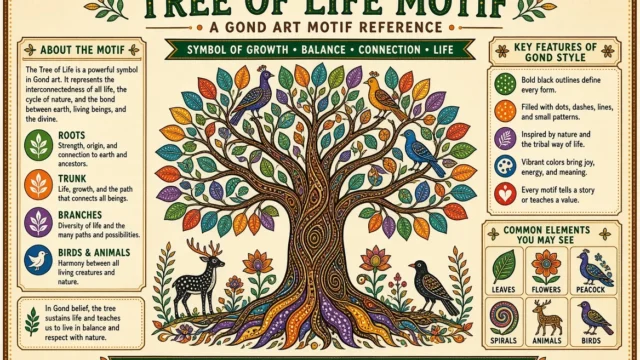
Conclusion: Learn the shapes, respect the sacred context and practise slowly. For more folk-art practice, try our Madhubani guide, Warli chart, Gond tutorial, Lippan guide and Mandana chart.
Sources and further reading: Gaatha: Nathdwara Pichwai; Google Arts and Culture: Pichwai.
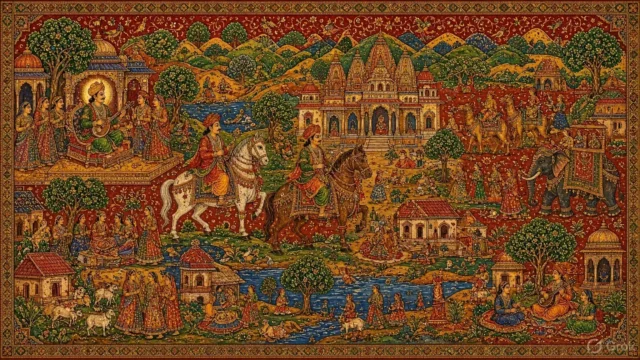
Related Rajasthani art: Phad painting: Rajasthani narrative scroll art















Share Your Opinion
Comments are closed on this post.