 Vista
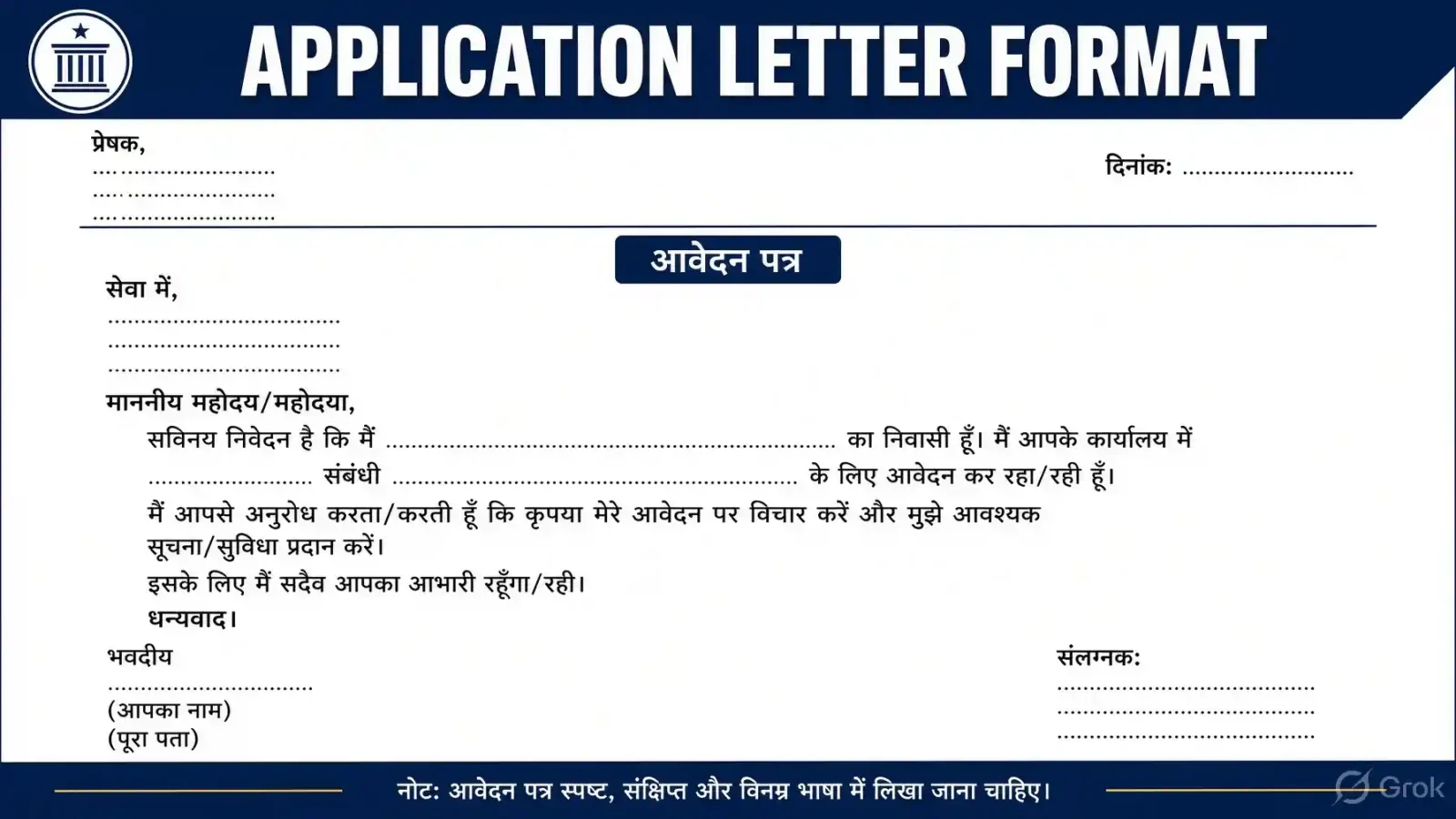
Whether you want leave from school, a service from your bank, or a change from a government office, an application letter is usually where it starts. It follows a fixed structure that Indian offices expect. This guide explains each part, gives a ready sample and points to specific formats for common needs.
Parts of an Application Letter
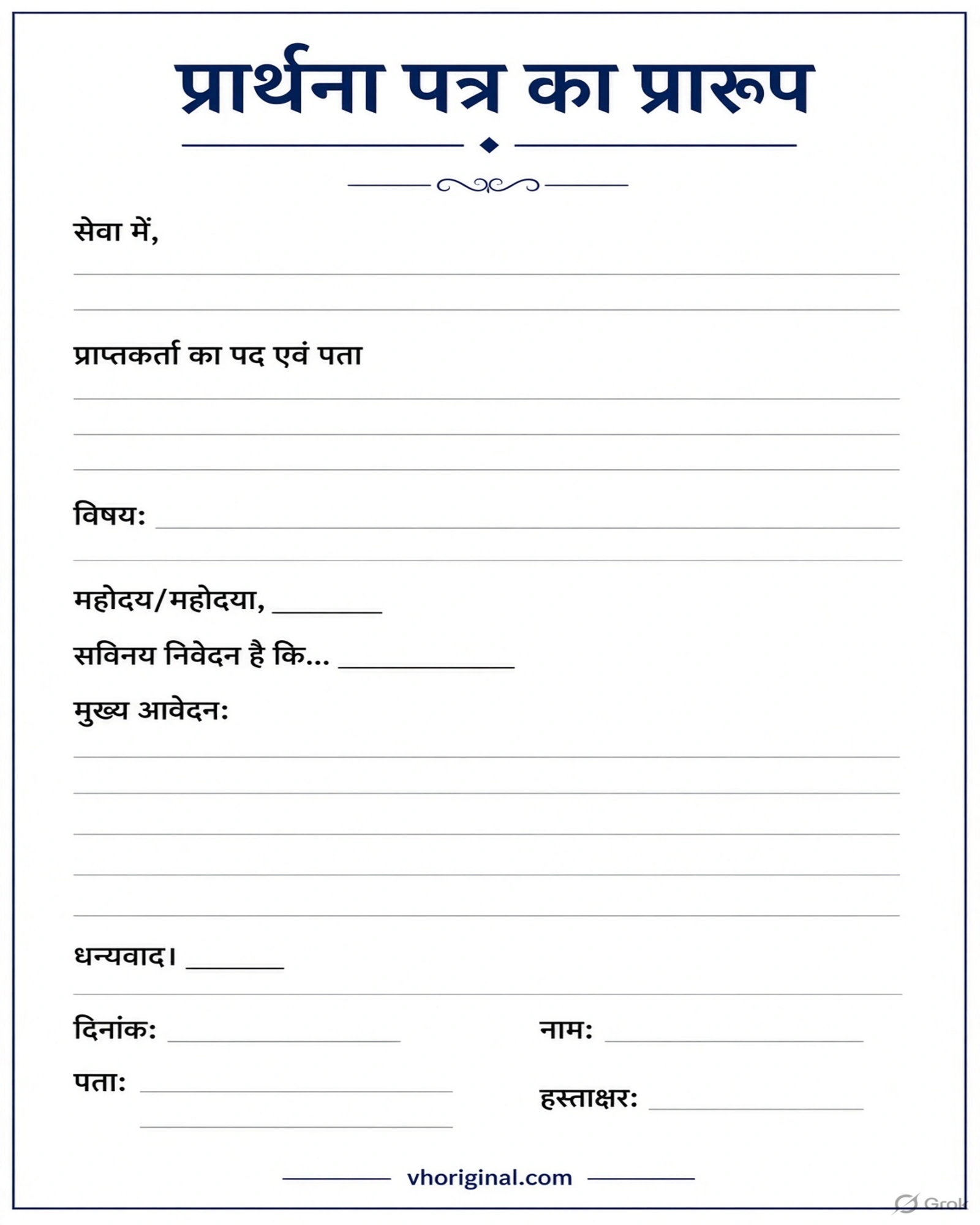
A formal letter typically has the sender’s address, date, recipient’s designation and address, subject line, salutation, body, complimentary close, signature and enclosures if any.
| Part | What to write |
|---|---|
| Sender’s address | Your full address, top left |
| Date | Below the sender’s address |
| Recipient | Designation, organisation and address |
| Subject | One line stating the purpose |
| Salutation | Dear Sir/Madam, or Respected Principal |
| Body | Who you are, why you write, what you request |
| Closing | Yours faithfully / sincerely, then name and signature |
Sample Application Letter
[Your Name]
[Your Address, City, PIN]
[Phone / Email]
[Date]
The [Designation]
[Organisation]
[Address]
Subject: Application for [purpose].
Respected Sir/Madam,
I, [Name], [your role or account/reference number], write to request [what you want]. [One or two sentences giving the reason.] I would be grateful if you could kindly consider my request. I have enclosed [documents] for reference.
Thanking you,
Yours faithfully,
[Signature]
[Name]
Ready Formats for Common Needs
- Leave: use the school leave application generator or the sick leave application format.
- Bank requests: try the bank application letter generator.
- Quitting a job: see the resignation letter format.
- Someone acting on your behalf: use the authorization letter format.
- Police complaint: read the FIR and zero FIR application guide.
Tips for a Strong Letter
- Use formal, polite language and clear short paragraphs.
- State the issue clearly and avoid offensive or emotional language.
- Write the subject so the reader knows the purpose at a glance.
- Include your name, address and contact details so they can reply.
- Keep a copy and take acknowledgement when you submit in person.
Common Mistakes
- Missing or vague subject line.
- Forgetting the date or signature.
- Putting several unrelated requests in one letter.
- Addressing the wrong person or designation.
Frequently Asked Questions (FAQ)
Where does the date go in a formal letter?
Just below the sender’s address, as most Indian formal-letter guides show.
Is a subject line compulsory?
It is standard in formal letters and helps the reader grasp the purpose quickly, so include it.
How should I write the salutation if I don’t know the name?
Address the person by title, such as “Dear Sir/Madam” or “Respected Principal”.
Can I send an application letter by email?
Yes. Keep the same structure, put the subject in the email subject line and attach documents.
Note: Some institutions have their own required formats, so confirm with them if you are unsure.
Also read: School Certificate Template: Participation, Merit and Appreciation Wordings, Elements and Print Tips | Parent-Teacher Meeting (PTM) Notice Format: Samples in English and Hindi
Sources
- Naukri Campus: Formal Letter Format (naukri.com)
- Orchids International School: Formal Letter Writing in English (orchidsinternationalschool.com)
- Grammarly: How to Write a Formal Letter (grammarly.com)
- UnoJobs: Formal Letter Format in India, Samples and Rules (unojobs.com)
- ICAI: Business Communication study material (icai.org)

















Share Your Opinion
Comments are closed on this post.