 Vista

After an FIR, people often ask how many days the police have to file a chargesheet. The answer depends on whether the accused is in custody and how serious the offence is. This guide explains the position under the Bharatiya Nagarik Suraksha Sanhita (BNSS) in simple language.
What is a chargesheet?
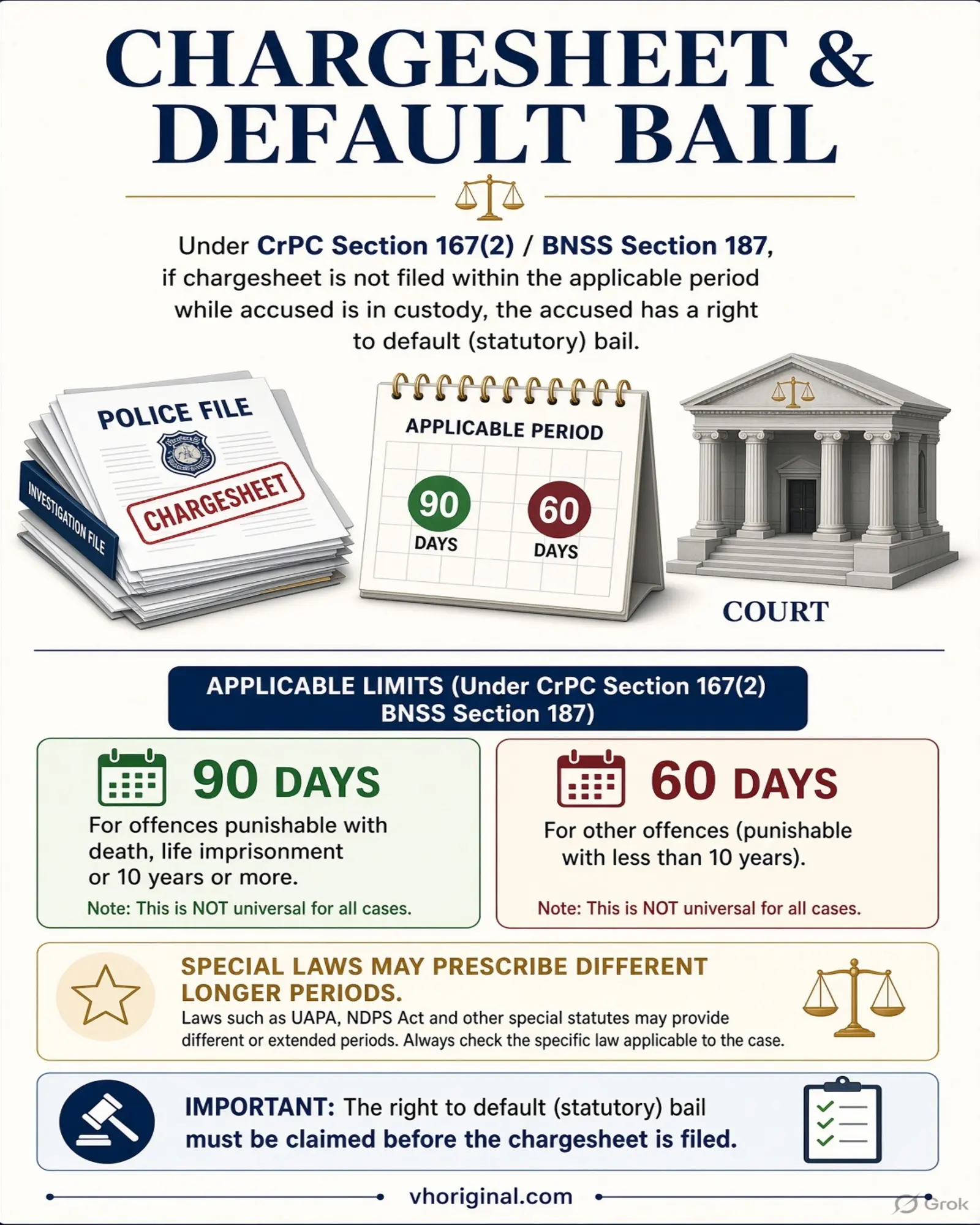
A chargesheet is the common name for the final police report sent to the magistrate once an investigation is complete. Section 193 of the BNSS deals with this police report. It lists the accused, the charges, the witnesses and the evidence collected.
The 60-day and 90-day rule
If the accused is arrested and held in judicial custody, Section 187(3) of the BNSS sets limits after which the accused may become entitled to bail if no chargesheet has been filed:
| Type of offence | Time limit (counted from custody) |
|---|---|
| Offences punishable with death, life imprisonment or imprisonment of 10 years or more | 90 days |
| Other offences | 60 days |
The days are counted from the start of custody. The right arises only if the police report is not filed within the limit and the accused is ready to furnish bail. This is commonly called default bail or statutory bail.
Separate limit for sexual offences
For certain serious sexual offences such as rape, Section 193(2) of the BNSS provides that the investigation should be completed within two months of recording the information. This is an investigation deadline and is different from the 60/90 day custody limit above.
If the accused is not in custody
When the accused has not been arrested or is already on bail, the 60/90 day default bail count does not apply. There is then no single fixed date for the chargesheet, and an investigation can take months or years. A complainant can ask the investigating officer for the status and, if needed, apply to the court.
How default bail works in practice
- With a lawyer, check the date custody began and the 60/90 day end date.
- If the limit has ended and no chargesheet is filed, apply for bail in the concerned court.
- The court checks whether the report was filed in time. The final decision rests with the court.
Police sometimes file an incomplete report or ask for further investigation on the last day, so the result can differ from case to case. Please take advice from a lawyer.
To know your rights at the time of arrest, read police arrest rights in India under BNSS. If you cannot afford a lawyer, see free legal aid through NALSA and DLSA.
Frequently asked questions (FAQ)
What is the maximum time to file a chargesheet?
For an accused in custody, 60 or 90 days depending on the offence. If the accused is not in custody, there is no single fixed limit.
What is default bail?
It is statutory bail that an accused in custody can seek when the chargesheet is not filed within the allowed time.
Does a chargesheet mean the person is guilty?
No. After the chargesheet the case goes to court for trial, where guilt still has to be proved.
This article is for general awareness and is not legal advice. Please consult a lawyer about your specific case.
Also read: Application Letter to SHO (Police Station): Format, Sample and How to Get Receipt | Is Recording Video of the Police in Public Legal in India? Rules for Streets and Police Stations
Sources
- Bharatiya Nagarik Suraksha Sanhita, 2023 (BNSS), Sections 187 and 193: indiacode.nic.in
- Ministry of Home Affairs: information on the new criminal laws, mha.gov.in
- Supreme Court and legal news portals: articles on default bail


















Share Your Opinion
Comments are closed on this post.