 Vista
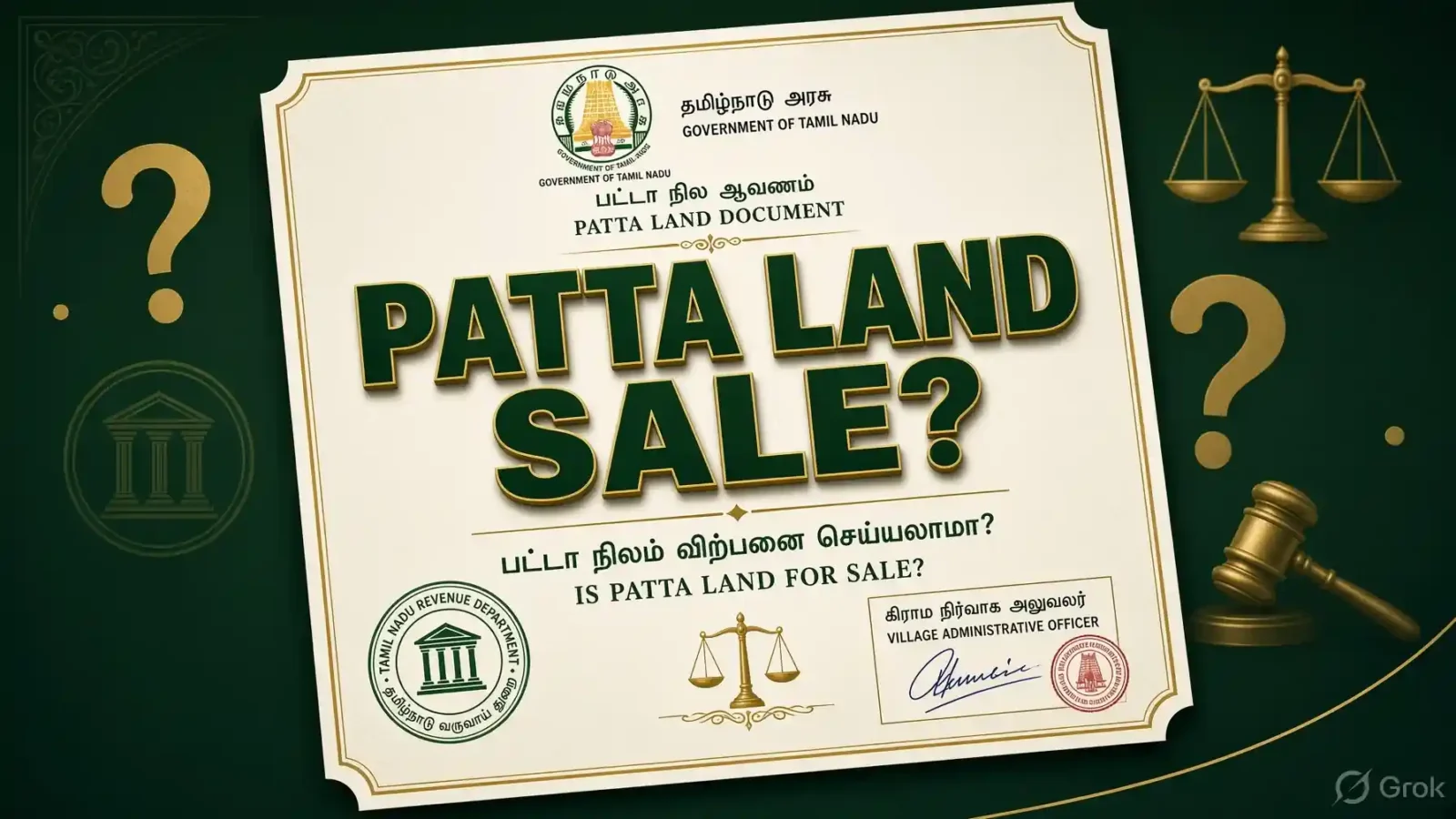
Many families hold land through a government patta. When it is time to sell, the first question is whether that is allowed. The direct answer: patta land usually comes with restrictions or conditions, which depend on the state, the terms of the patta and the land category. Selling without a required permission can make the sale invalid.
What a patta gives you
In a government patta, ultimate ownership generally stays with the state and the holder gets a right to use the land, often with conditions on transfer. Read the patta document first, since many pattas state that the land cannot be transferred.
The Madhya Pradesh example
Several Madhya Pradesh High Court decisions refer to Section 165(7-b) of the Madhya Pradesh Land Revenue Code, 1959. As described in those judgments, a person who gets land from the government cannot transfer it without the permission of a revenue officer or Collector. One judgment calls the permission requirement mandatory and says a transfer without it is void. In another matter, a mutation made after an unpermitted sale of patta land was cancelled and sent back to the Naib Tahsildar. A third ruling said the bar turns on the date of transfer, not the date of the grant.
Some decisions also discuss the position before Section 165(7-b) was inserted in October 1980, and older rules under which no permission was needed after ten years. That is why each case depends on dates and the patta’s terms. Land held by tribal owners follows separate rules, with Section 165(6) requiring the Collector’s written permission in specified situations.
This is only one state’s example. Rules in Uttar Pradesh, Rajasthan, Maharashtra and others can differ, so check your state’s land revenue law or revenue department.
Risks of selling without permission
- The sale may be declared void or illegal, as in the Madhya Pradesh judgments.
- Mutation can be cancelled and the record can revert to the earlier name.
- The buyer’s money can get stuck, and the seller faces disputes and possible action.
- In one judgment, a holder who transferred in violation lost his status as bhumiswami. That reflects its specific facts and is not an automatic result everywhere.
Checks before you sell or buy
- Read the patta conditions and note the date it was granted.
- Check the land category and type of right in the khasra-khatauni. See old khasra and land records.
- Ask the tehsil or Collector’s office in writing whether permission is needed, and the process and conditions.
- Get permission before the deal, not after.
- As a buyer, verify the full chain of ownership using certified copies of old registry deeds.
- Speak to a lawyer before paying any token money. See land token money and double sale.
For records and mutation, read land mutation and demarcation, and use the where-to-complain directory to find the right office.
Frequently asked questions
If I have used the land for years, can I sell it freely?
Long use does not automatically give a right to sell. The patta terms and state law apply.
Is Collector permission easy to get?
It varies by state and case. A decision on permission should come with reasons, so ask your tehsil or Collector’s office about the process.
I already bought and now find it was patta land. What next?
Speak to a lawyer quickly, write to the seller, and check the date of the sale and the patta terms. Courts have treated older sales differently in some cases.
This is general information, not legal advice. Rules depend on the state, the patta terms and dates. Confirm with the tehsil office and your lawyer before any deal.
Also read: Official Website to View Land Map (Bhu Naksha) Online: State-Wise Portal Directory for India | Khasra Khatauni Columns Explained: Khata, Gata, Area and Category in Simple Words
Sources
- Madhya Pradesh High Court, MP 3452/2019 final order (4 September 2019), mphc.gov.in
- Madhya Pradesh High Court, WP 17148/2007 final order (26 March 2015), mphc.gov.in
- Madhya Pradesh High Court, WP 3730/2021 (3 March 2021) on tribal land and Section 165(6), mphc.gov.in
- Indian Kanoon: Malti Sharma v. State of M.P. and other cases on Section 165(7-b)
- Indian Kanoon: sub-sections of Section 165, M.P. Land Revenue Code, 1959
- PRS India: text of the M.P. Land Revenue Code, 1959
- Latest Laws: 2021 Madhya Pradesh High Court decision on Section 165(7-b) and date of transfer






















Share Your Opinion
Comments are closed on this post.