 Vista
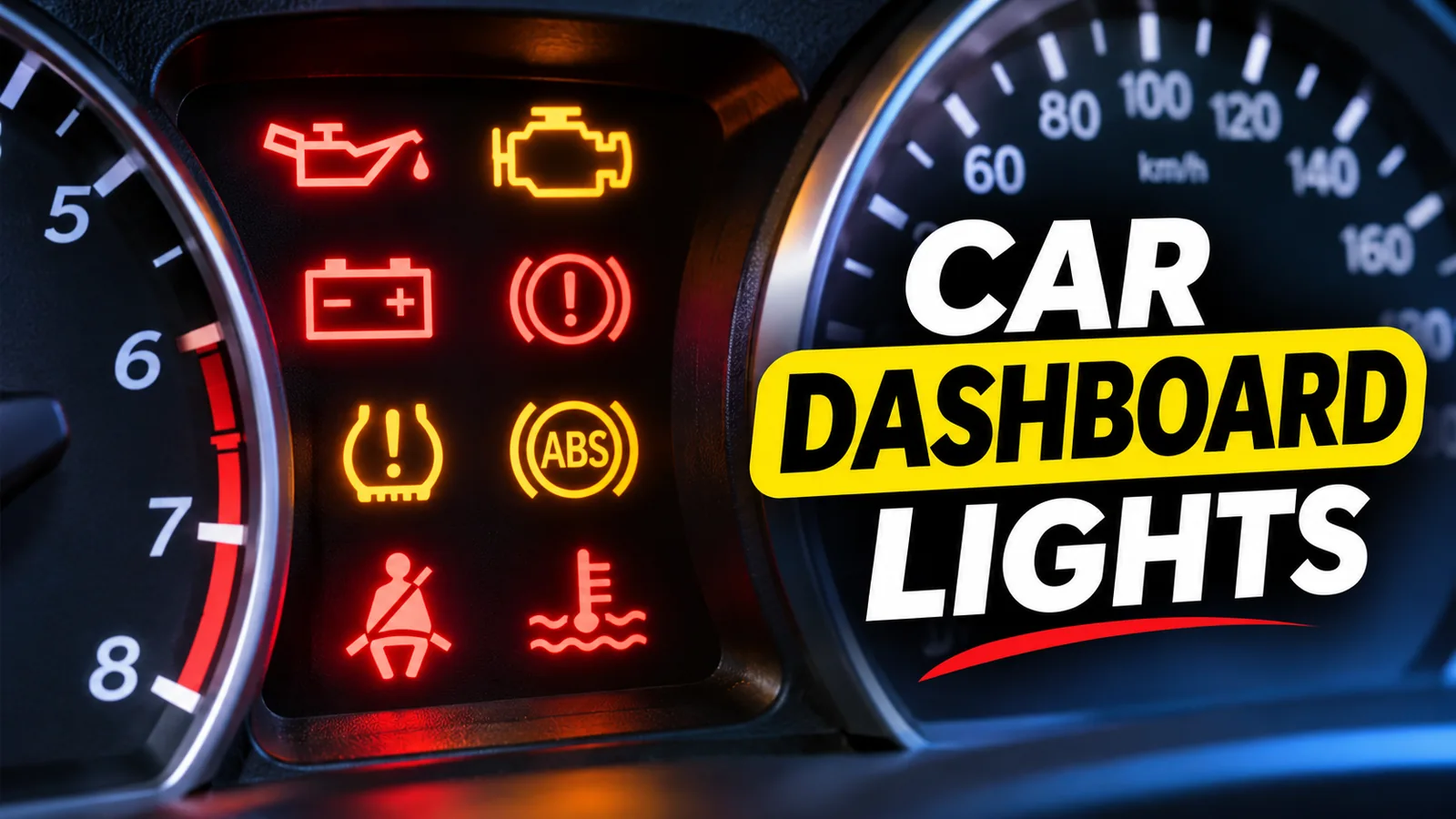
A light suddenly comes on while you are driving, and the first reaction is panic. Should you stop or keep going? The truth is that every light means something different, and the colour is the first clue. This guide explains what the common warning lights mean and what you should do about each.
Start with the colour: a traffic-light system

| Colour | Meaning | What to do |
|---|---|---|
| Red | A serious problem or a safety risk | Act at once. Stop safely and check if you can |
| Amber or yellow | Caution, needs attention soon | You can usually drive on, but get it checked at the earliest |
| Green or blue | A system is active, for information | Nothing to do, for example headlights or indicators on |
Many lights flash on for a moment when you start the car. That is a system self-check, not a fault. One more rule: if an amber light starts flashing, treat it like a red light and call a mechanic right away.
Red lights: act immediately
| Light | Meaning | What to do |
|---|---|---|
| Oil pressure (oil can symbol) | Engine oil pressure is too low | Pull over and switch off the engine. Driving on can damage it |
| Engine temperature or coolant (thermometer symbol) | The engine is overheating | Stop, switch off and let it cool. Do not open the radiator cap on a hot engine |
| Battery (battery symbol) | A charging system fault, so the battery is not charging | Turn off AC and extra electrics and get it checked soon, or the car may stall |
| Brake system (exclamation mark in a circle) | Low brake fluid, handbrake on or a brake fault | Check the handbrake first. If it is off, avoid driving and get it inspected |
| Airbag | The airbags may not deploy in a crash | Get it checked at a service centre soon |
| Seat belt reminder | A seat belt is not fastened | Fasten it |
On some cars the airbag light is red and on others amber, depending on the maker, so check your manual.
Amber lights: get it checked soon
| Light | Meaning | What to do |
|---|---|---|
| Check engine (engine symbol) | A problem with the engine or emission system | If steady, get it checked soon. If flashing, stop and call a mechanic |
| ABS | The anti-lock braking system is not working properly | Normal brakes still work but without ABS help in emergencies. Get it checked |
| Tyre pressure (TPMS) | One or more tyres are low on air | Check pressure and inflate |
| Traction or ESP | Active on slippery roads, or a fault | Normal when it flickers on a slippery road. Get it checked if always on |
| Service or spanner symbol | Routine service is due | Book a service |
| Low washer fluid | The windscreen washer is low | Top it up |
| Low fuel | Fuel is running low | Refuel soon |
Green and blue lights: all is well
- Headlights: usually green, showing the lights are on
- High beam: blue, showing full beam is on
- Turn signals: a flashing green arrow
- Cruise control or eco mode: green on many cars
What to do when a light comes on
- Do not panic. Note the colour first.
- For a red light, find a safe place, pull over and switch off the engine.
- Open the owner's manual, because symbols differ slightly by maker.
- Check the easy things yourself: oil, coolant, tyre pressure and the handbrake.
- If you cannot find the cause, go to an authorised service centre or a trusted mechanic.
Mistakes to avoid
- Driving on with a red oil or temperature light
- Leaving a check engine light on for months without a check-up
- Opening the radiator cap on a hot engine, which risks burns from hot steam
- Removing the bulb or fuse to switch the light off, which hides the real fault
FAQ
What should I do if a red dashboard light comes on?
Treat it as a serious warning. Stop in a safe place, check the cause and get help from a service centre if needed.
Can I drive with the check engine light on?
With a steady amber light you can usually drive a short distance and get it checked soon. If it flashes or the car jerks, stop right away.
Why do all the lights come on when I start the car?
It is a normal system check. They should go off after a moment.
If the battery light is on, do I just need a new battery?
Not necessarily. It can be a charging system problem such as the alternator or belt. Only an inspection will tell.
Are the symbols the same on every car?
Most are similar, but some differ by maker. Your owner's manual is the most reliable guide.
This is general guidance and not a diagnosis for a particular vehicle. Treat your car's manual and an authorised service centre's advice as final.
Also read: Bike Speedometer Symbols Meaning: Dashboard Warning Lights, Colours and What to Do
Sources
- Kelley Blue Book: Car Warning and Dashboard Lights Explained
- What Car?: Car warning lights, understanding dashboard symbols
- Consumer Reports: What the dashboard warning lights mean
- AAA: A Warning-Light Road Map
- Synchrony and Haynes: dashboard warning light guides
- Halfords and Direct Line: car warning light guides






















Share Your Opinion
Comments are closed on this post.