 Vista

Many property buyers are caught out because they cannot tell a registered sale deed from an agreement to sell. They look alike on paper but work very differently in law. In simple words, a registered sale deed gives ownership, while an agreement to sell is only a promise to sell in future.
What each document is
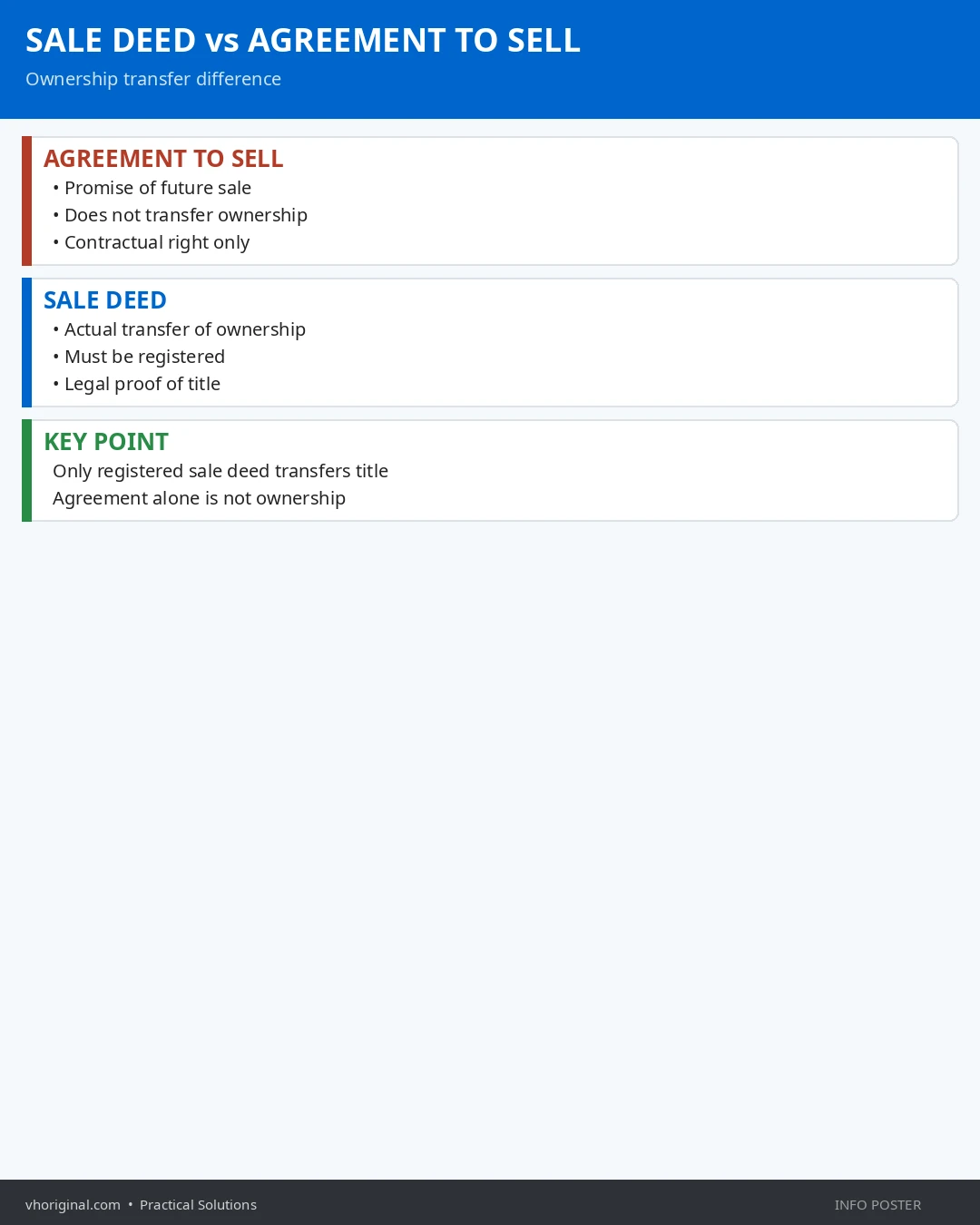
Sale deed (registry): the document that transfers ownership from seller to buyer. Under Section 54 of the Transfer of Property Act, sale of tangible immovable property worth ₹100 or more can be made only by a registered instrument. Legal explainers add that Section 17 of the Registration Act makes registration of a sale deed compulsory, and an unregistered sale deed has no legal standing in court.
Agreement to sell (ikrarnama, earnest-money agreement): the parties agree that the property will be sold in future on stated terms. Section 54 makes clear that a contract for sale does not by itself create any interest in or charge on the property. So an agreement does not transfer title, even if possession was handed over.
Side by side
| Point | Sale deed | Agreement to sell |
|---|---|---|
| Meaning | Sale is complete | Promise to sell later |
| Ownership | Passes to the buyer | Does not pass |
| Registration | Compulsory | Generally not compulsory, but check state and RERA rules |
| Stamp duty | Full duty applies | Different and often lower, per state rules |
| Law | Transfer of Property Act and Registration Act | Contract Act and Section 54 of the Transfer of Property Act |
The RERA wrinkle
Some sources say Section 17(2) of the Registration Act does not list a sale agreement among compulsorily registrable documents. But for projects covered by RERA, Section 13 of that Act speaks of registering the builder-buyer agreement, and articles discuss this conflict between the two laws. In certain cases a buyer in possession under an agreement may also get limited protection under Section 53A. Ask a lawyer how this applies in your state and case.
Buyer precautions
- Never treat possession plus an agreement as ownership. The registered sale deed creates the real title.
- Before paying earnest money, verify the seller’s title documents, khasra-khatauni and maps.
- Write the price, instalments, last date for registration and conditions clearly in the agreement.
- Complete the registration on the agreed date and keep the sub-registrar’s receipt.
- After registration, apply for mutation so the revenue record shows your name.
- Pay through banks and keep every receipt.
If your earnest money is stuck or a registry looks forged, read bayana refund and fake registry (Hindi). To read an older deed and get a copy, see old land registry deeds and certified copies, and for the next step read land mutation and demarcation.
Frequently asked questions
Is an agreement on stamp paper enough?
No. Stamp paper alone does not give title. Ownership needs a registered sale deed.
What if the seller backs out after the agreement?
Remedies such as specific performance or refund of earnest money may exist. Time limits apply, so consult a lawyer quickly.
Why is mutation needed after registry?
Registry gives legal ownership, while mutation updates the revenue record. Without it you can face trouble with loans, resale or government schemes.
This is general information, not legal advice. Stamp duty and registration rules vary by state. Have a lawyer check the papers before any purchase.
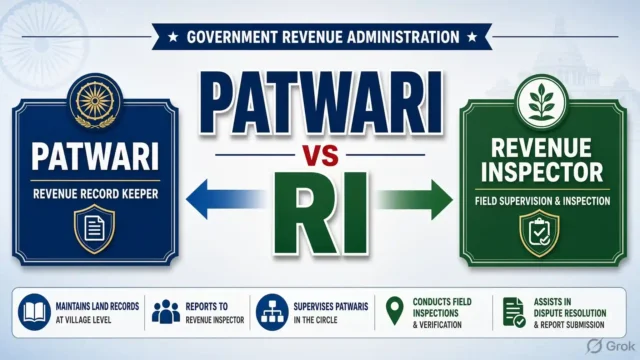
Also read: SDM vs Tehsildar: Who Is Senior in India? Powers, Duties and Where to Go for What | Patwari vs Revenue Inspector (RI): Who Is Senior? Hierarchy, Duties and Where to Complain
Sources
- iPleaders: Agreement to sell vs RERA vs Registration Act; Difference between sales agreement and sales deed
- Bajaj Finserv: Sale Under the Transfer of Property Act
- Sobha: Difference between Sale and Agreement to Sell
- Square Yards: Sale Deed vs Agreement to Sale
- Legal Service India: How sale is different from agreement to sale
- Taxmann and Mondaq articles on RERA and the Registration Act





















Share Your Opinion
Comments are closed on this post.