 Vista
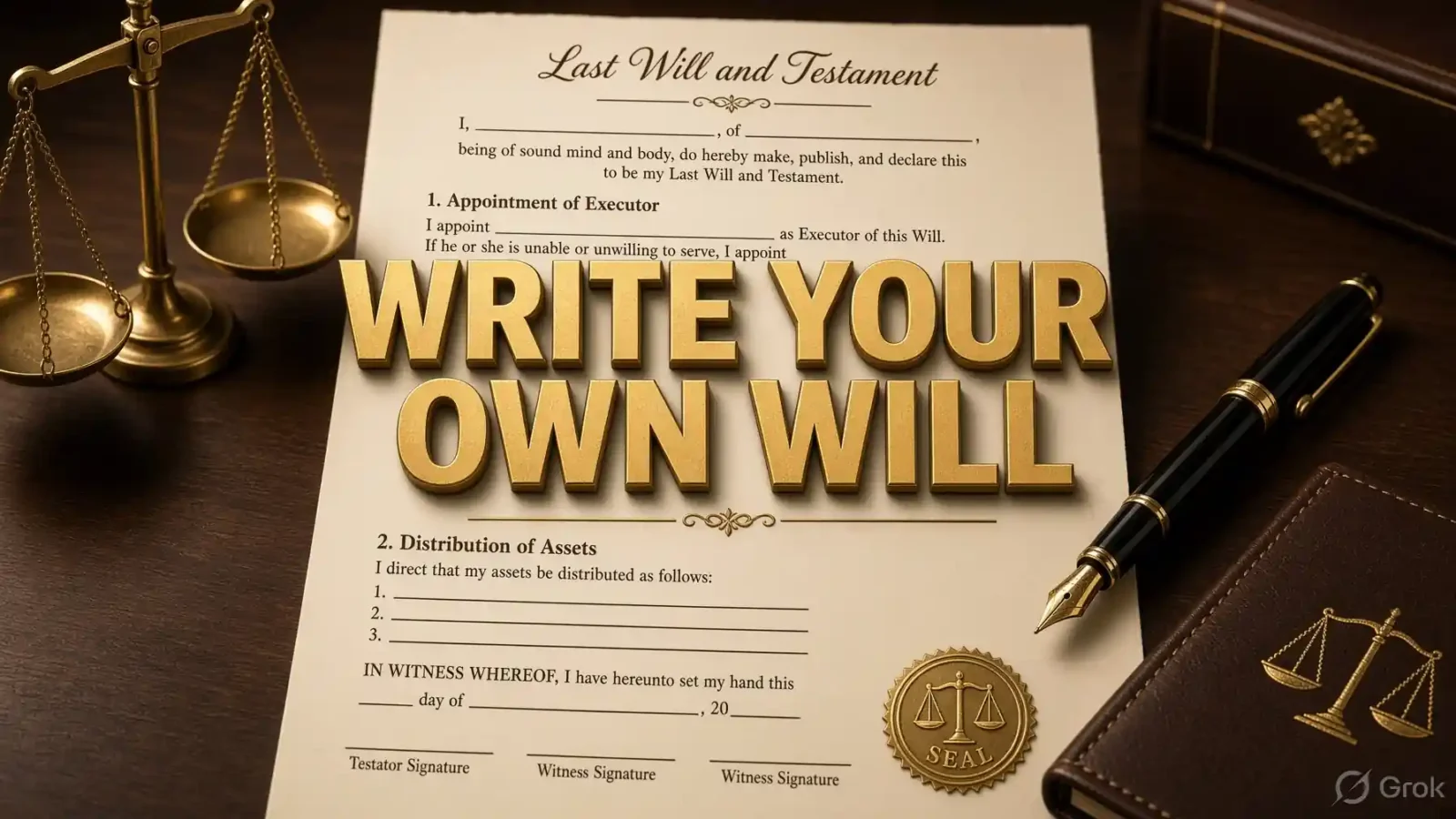
Many people think a will needs a lawyer, stamp paper and a trip to the registrar’s office. In fact, a will in India can be written by you, and even a plain handwritten will can be valid as long as a few legal conditions are met. This guide explains those conditions in simple language.
Is a lawyer required?
No. Legal articles note that a lawyer is not legally required to write a will, and a handwritten (holographic) will can be valid if it satisfies Section 63 of the Indian Succession Act, 1925. The language can be ordinary, as long as your intention is clear.
Conditions for a valid will (Section 63)
| Condition | What it means |
|---|---|
| The person making the will | An adult of sound mind |
| In writing | Typed or handwritten, both work |
| Signature | The testator signs or puts a mark, or someone else does so in their presence and on their direction |
| Two witnesses | At least two witnesses sign in the presence of the testator |
A will attested by only one witness is treated as defective, so two witnesses are necessary. If the will is challenged, at least one attesting witness may have to testify in court about its execution.
Is registration compulsory?
No. Section 18 of the Registration Act, 1908 lists registration of a will as optional. An unregistered will can be valid if its due execution is proved under Section 63. Do not confuse registration or notarisation with the legal requirement of witnesses. Many experts see registration as useful extra evidence, but it does not by itself prove validity.
Simple steps to write your own will
- State at the top that this is your last will and that earlier wills are cancelled.
- Write your full name, father’s or husband’s name and address.
- List your assets clearly: land khasra numbers, house address, bank accounts, insurance and so on.
- Say who gets which asset and what happens to anything left over.
- Name a trusted person as executor.
- Date it, sign it yourself, and have two witnesses sign in front of you.
- Keep the original safe and tell the executor where it is.
Common mistakes
- Having only one witness, or having witnesses sign at different times.
- Using as a witness someone who receives property under the will. It is generally safer to avoid this.
- Vague or incomplete description of property.
- Willing away property that is not fully yours, such as a share in joint family ancestral property.
Scope of the law: the Indian Succession Act is understood to apply to Hindus, Sikhs, Jains, Buddhists, Christians and Parsis, while a Muslim’s will is governed by Muslim personal law, which has different rules. If the estate is large or a family dispute is likely, having a lawyer review your draft is wise.
For questions about a daughter’s or other heirs’ rights, read daughter’s property rights, will and gift deed. For what happens after a death, see property transfer after death: legal heir, succession and probate and nominee not getting money from the bank.
Frequently asked questions (FAQ)
Is a will on plain paper valid?
Yes, if it is in writing, signed by the testator and attested by two witnesses. Stamp paper is not described as necessary.
How many witnesses are needed?
At least two.
Does a nominee automatically become the owner?
No. A nominee is not always the final owner. Property passes under the will or succession law.
This is general information, not legal advice. Every family and estate is different, so consult a lawyer if needed.
Also read: Who Inherits Property If a Person Dies Without a Will in India? Hindu Succession Act Class I Heirs Explained | If Your Son Is the Nominee, Whose Money Is It? Nominee vs Legal Heirs in Indian Bank Accounts and FDs
Sources
- Indian Succession Act, 1925: Section 63, Indian Kanoon text
- LiveLaw: “Law of Wills” For Common Man (Registration Act, Section 18)
- iPleaders: How to draft a Will, resolve all your queries
- Legal Service India: The Legal Status of Unregistered Wills in India
- Captain Legal: Valid wills in India, Section 63 and execution rules



















Share Your Opinion
Comments are closed on this post.