 Vista
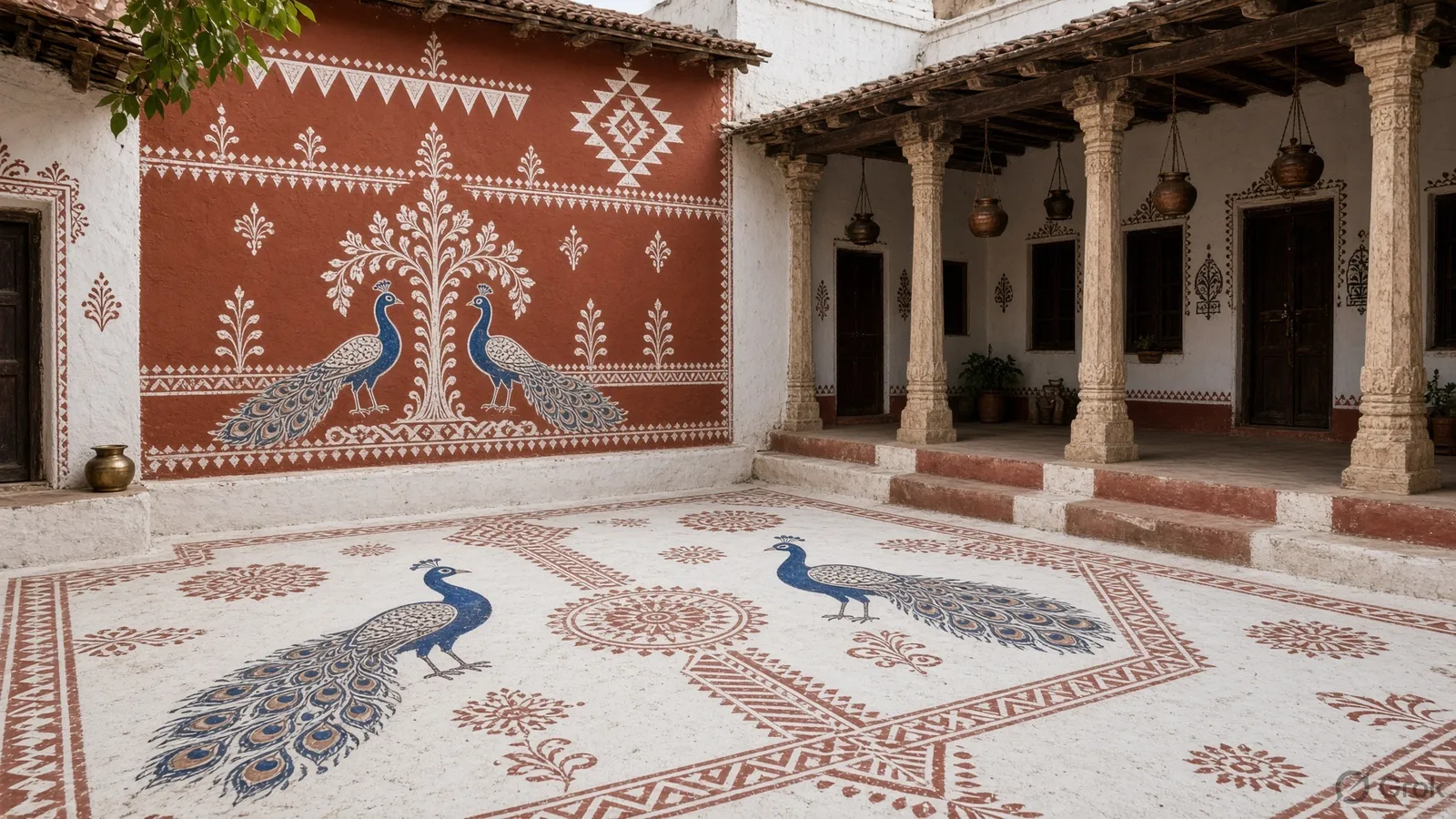
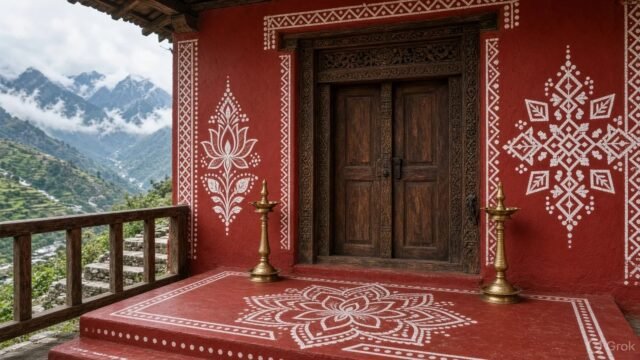
Mandana is a traditional wall and floor painting of Rajasthan and Madhya Pradesh, made mainly by women, most famously those of the Meena community. White khadiya (chalk solution) is drawn over a red geru base to make geometric and symbolic patterns. For an easy Mandana drawing, paint a red base, draw a square frame, add a central motif such as a peacock or flower, fill the gaps with cross-hatching and finish with a border.
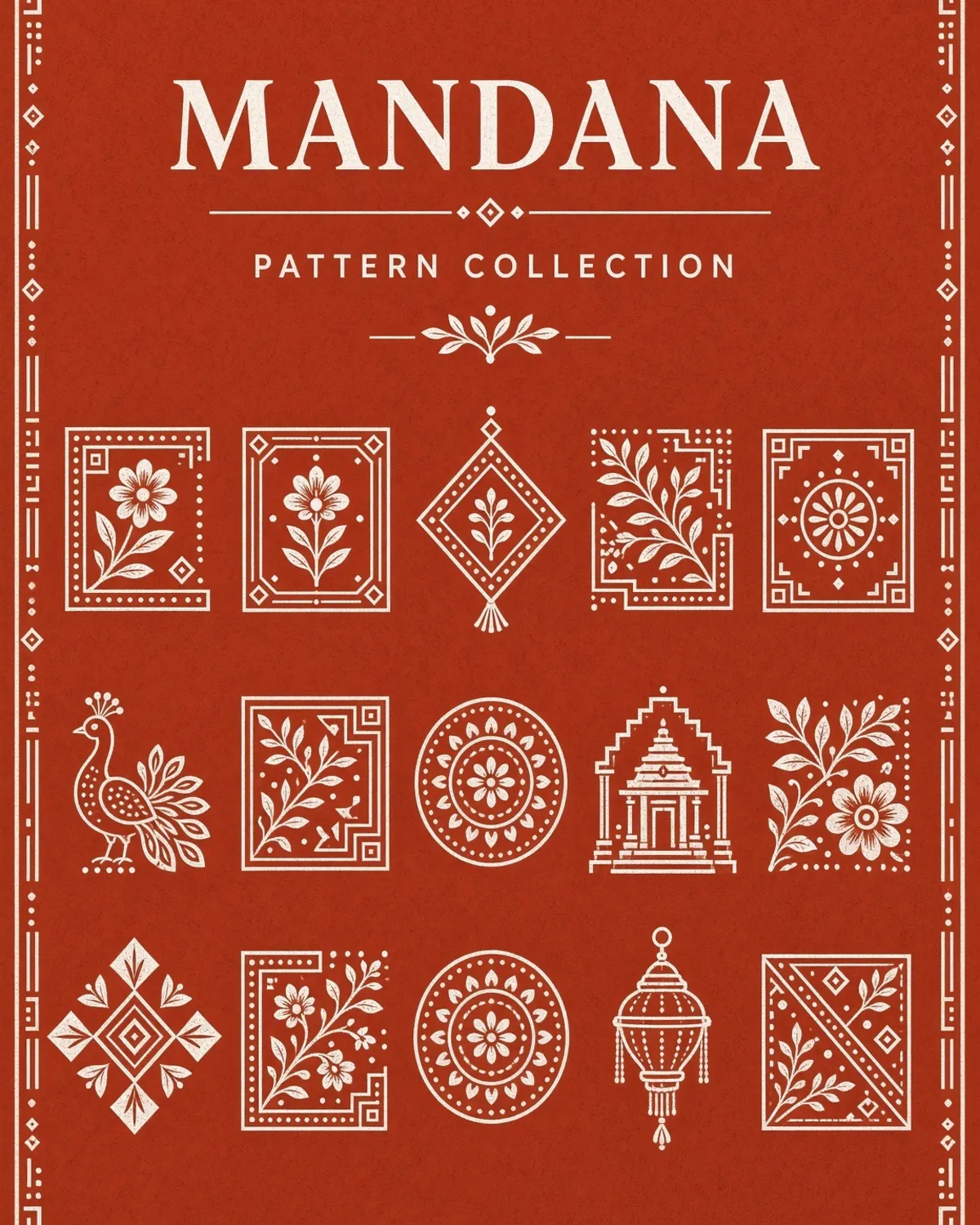
This guide covers Mandana art of Rajasthan and Madhya Pradesh: history, the Meena women’s contribution, materials, easy drawings, animal, bird and flower motifs, floor and wall traditions, festival rangoli and modern home ideas. Our paper practice is Mandana-inspired; the ritual and village art belongs to the women who keep it alive. For pattern references, see our Mandana patterns chart.
Table of contents
- Rajasthan and Madhya Pradesh traditions
- Meena women and Mandana
- Geru, khadiya and materials
- Red-and-white geometric patterns
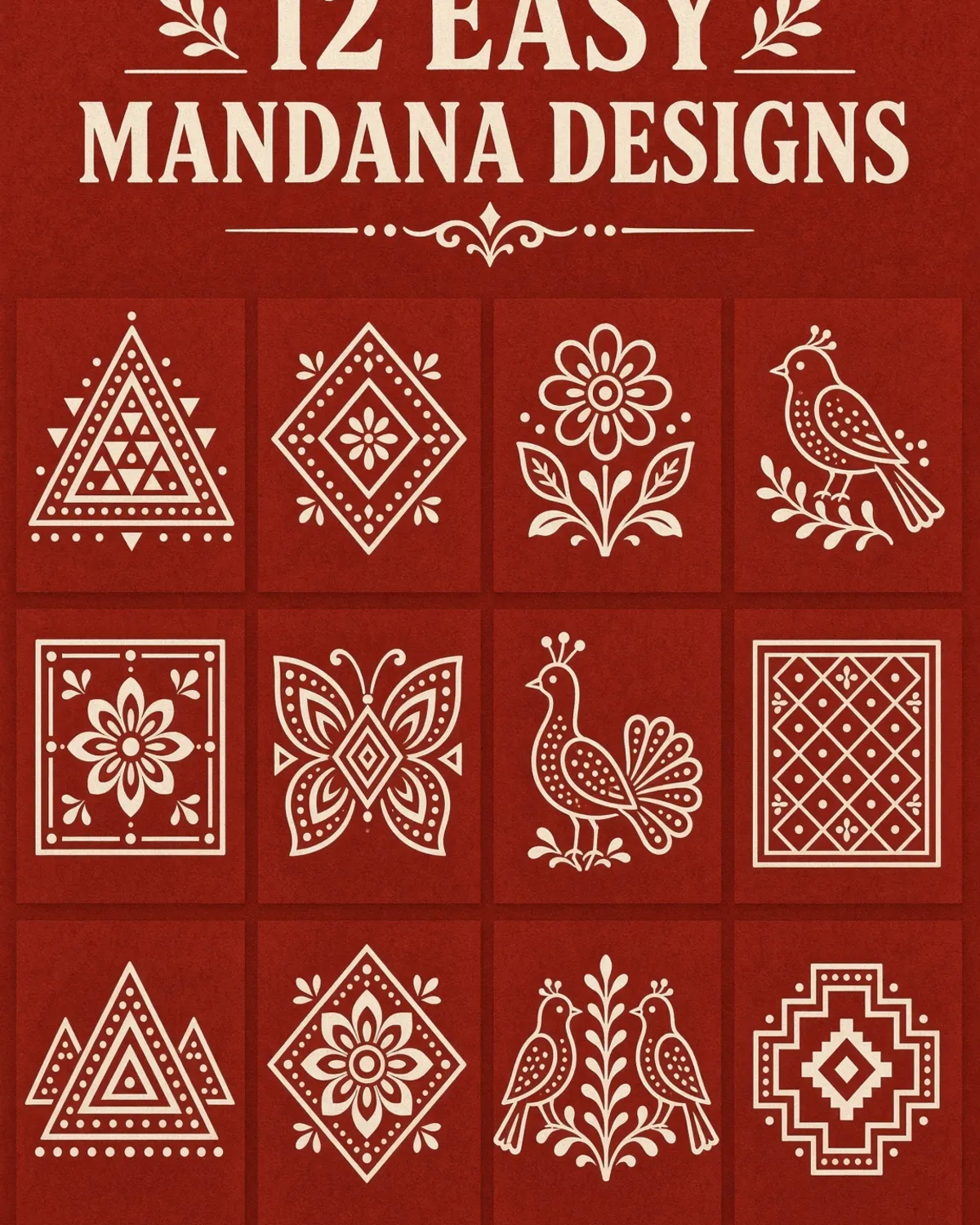
- Easy Mandana drawing: step-by-step
- Animal, bird, flower and geometric designs
- Floor and wall paintings
- Festival rangoli and modern decoration
- FAQs
Rajasthan and Madhya Pradesh traditions
Wikipedia describes Mandana as wall and floor paintings of Rajasthan and Madhya Pradesh, drawn to protect the home, welcome the gods and mark festive occasions. The IMP Art database says floor mandana is practised by various communities in Rajasthan, while the mural and clay relief tradition is mainly linked to the Meena community in Rajasthan, Gujarat and Madhya Pradesh. A Deccan Herald feature says that in Rajasthan Mandana goes on walls and floors, while in Madhya Pradesh it is usually restricted to the floor; treat this as a general pattern, since practice varies by village. The word is linked to “mandan”, meaning to decorate.
Meena women and Mandana
Meena women of the Hadoti area are known for designs of great symmetry and accuracy, according to Wikipedia, and mothers teach daughters, according to the INHCRF note. The art is predominantly women’s work, tied to caring for the home. Meena women use different surfaces and sizes for different occasions, and Madan Meena’s book “Nurturing Walls” documents the animal paintings made by them. When you admire or buy Mandana, credit the Meena women’s tradition rather than treating it as anonymous decoration.
Geru, khadiya and materials
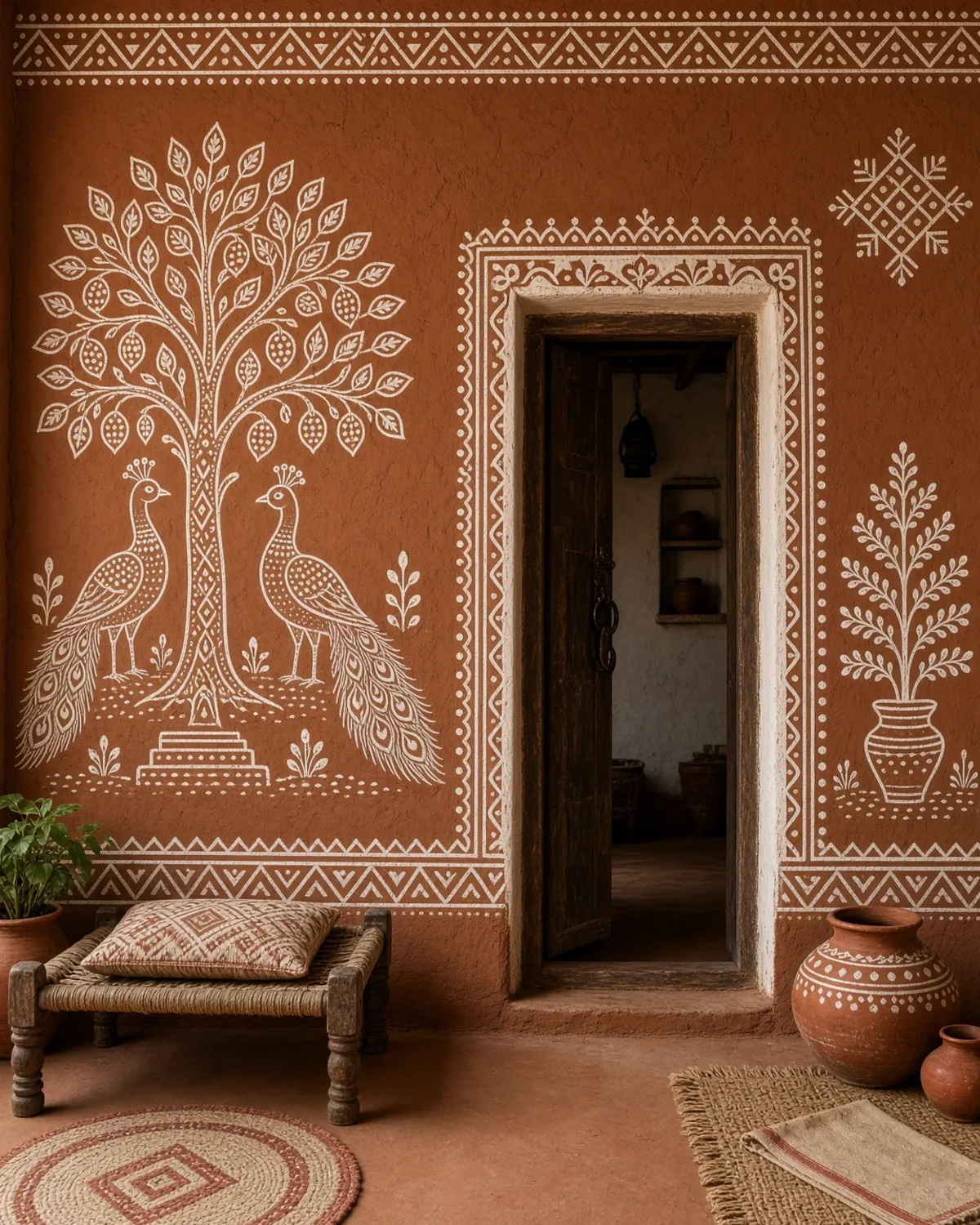
The red pigment is geru, made of red ochre or brick-red clay, and the white is khadiya, a chalk or lime-based solution, according to Deccan Herald and INHCRF. The NIOS folk art module also lists rice paste, turmeric and kumkum among Mandana materials. The traditional wall is first coated with cow dung and clay so it absorbs the colours. A wall painting brush may be made from the twig of a date palm, while floor designs are made by squeezing a khadiya-soaked cloth onto the floor, according to a 30 Stades report. For practice, use red paint or red paper and white acrylic, poster colour or chalk.
| Material | Traditional | Practice substitute |
|---|---|---|
| Red | Geru (red clay) | Red or brick acrylic |
| White | Khadiya (chalk or lime solution) | White poster or acrylic paint |
| Surface | Cow dung and clay coated wall or floor | Board, paper or canvas |
| Brush | Date palm twig or a soaked cloth | Flat and fine brushes |
Red-and-white geometric patterns
The IMP Art entry notes a typical feature of floor and wall mandana: intricate cross-hatching of varying thickness filling spaces between outlines. White motifs on red make a strong geometric look: squares, triangles, diamonds and dotted lines. Floor mandana in Rajasthan has symbolic designs for specific occasions including Diwali, Gangaur, Makar Sankranti, childbirth and marriage.
Easy Mandana drawing: step-by-step
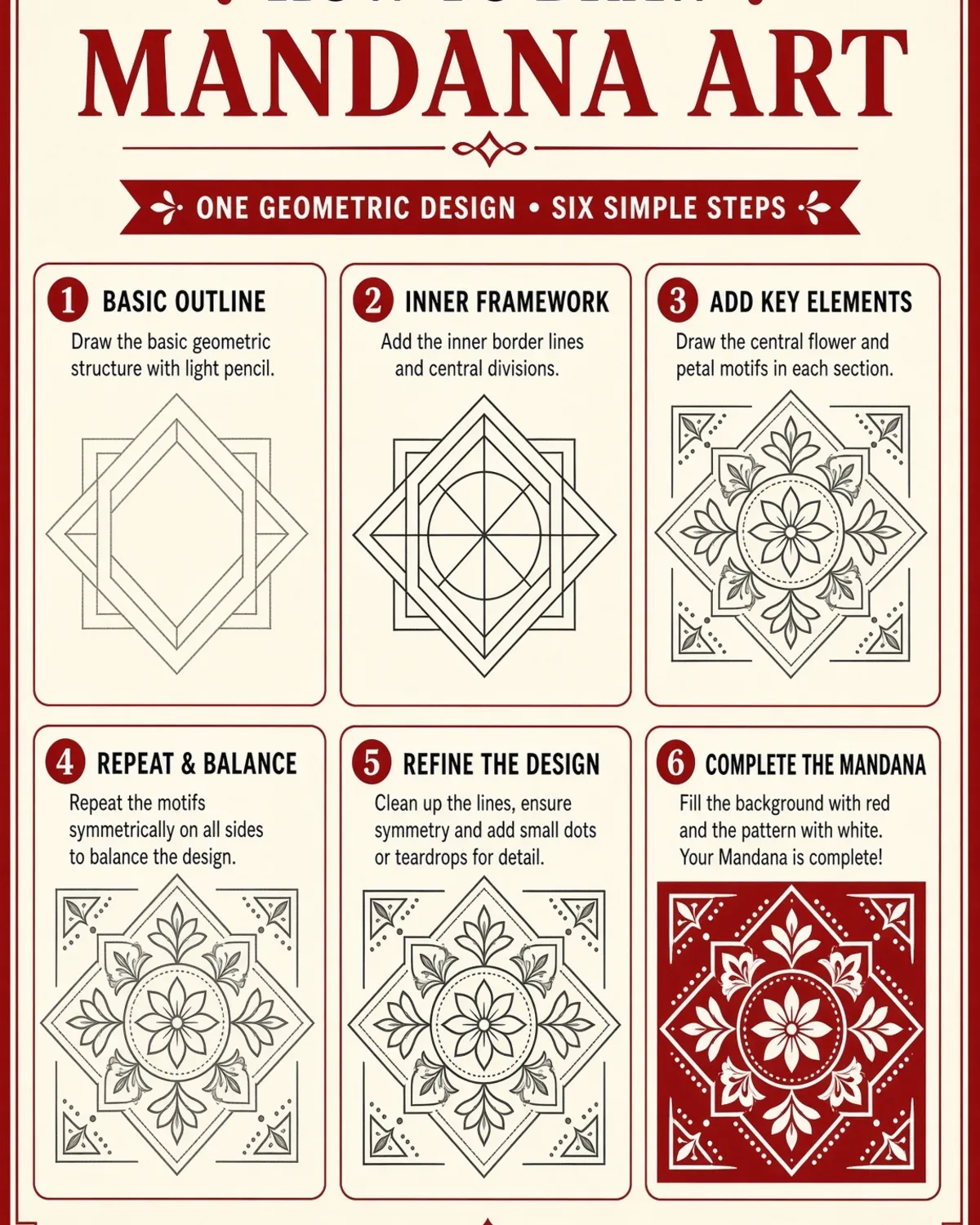
- Red base: paint the board or paper red and let it dry.
- Frame: draw a square in white and a second square inside it with a gap.
- Centre motif: draw a simple flower with six petals in the middle.
- Corner shapes: add a triangle or quarter-circle in each corner.
- Cross-hatch: fill spaces between outlines with fine crossing lines.
- Border: finish with a row of dots or small triangles around the frame.
Animal, bird, flower and geometric designs
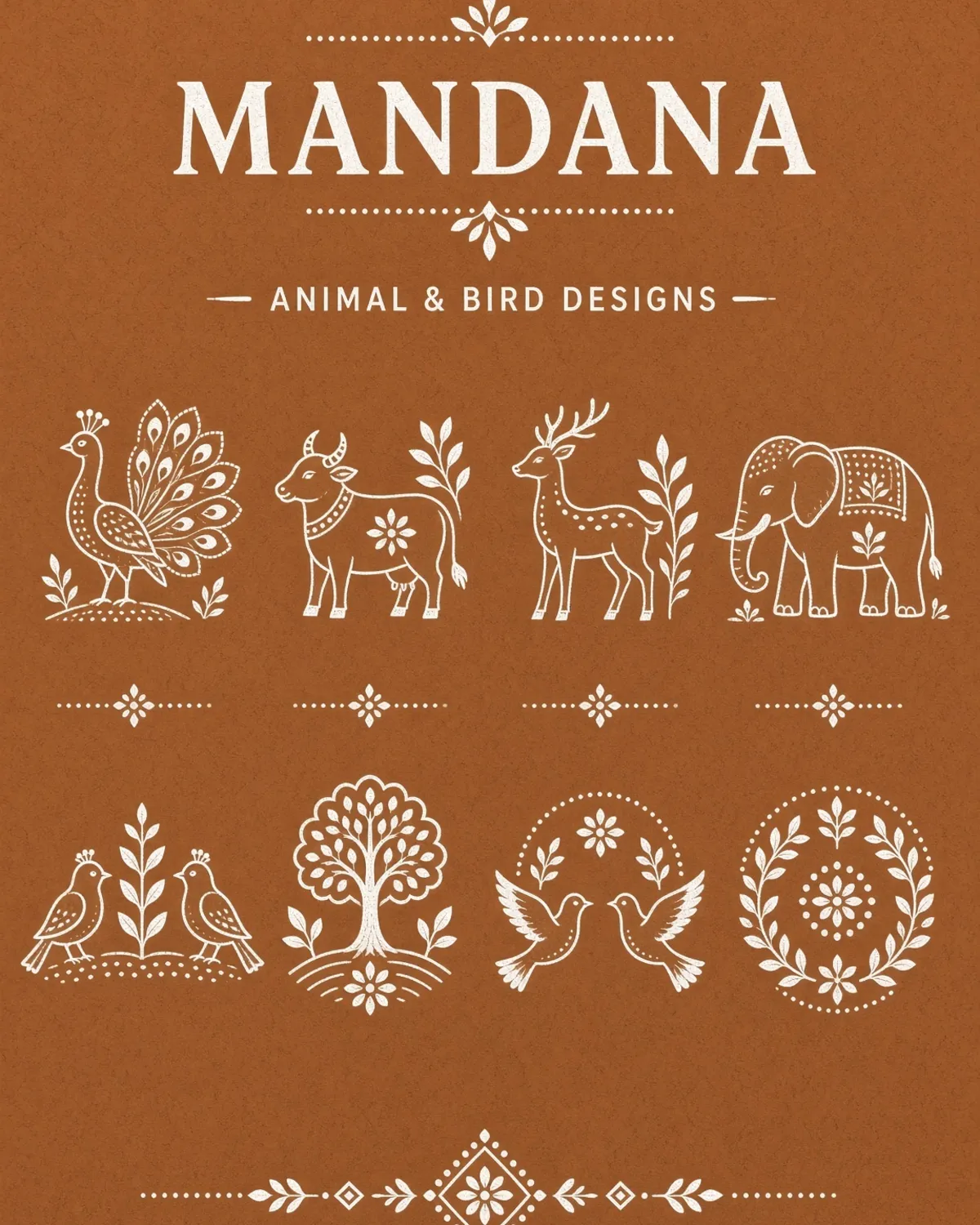
The peacock is the trademark motif, according to a research paper on Meena painting, and Mandana also shows Ganesha, tiger, leopard and other animals. Easy beginner motifs include a peacock built from circles and a fan of lines, a lotus or flower from rounded petals, a simple bird in profile, and an elephant from a rounded body with four columns for legs. Combine them with a geometric border for a complete Mandana art drawing.
Floor and wall paintings
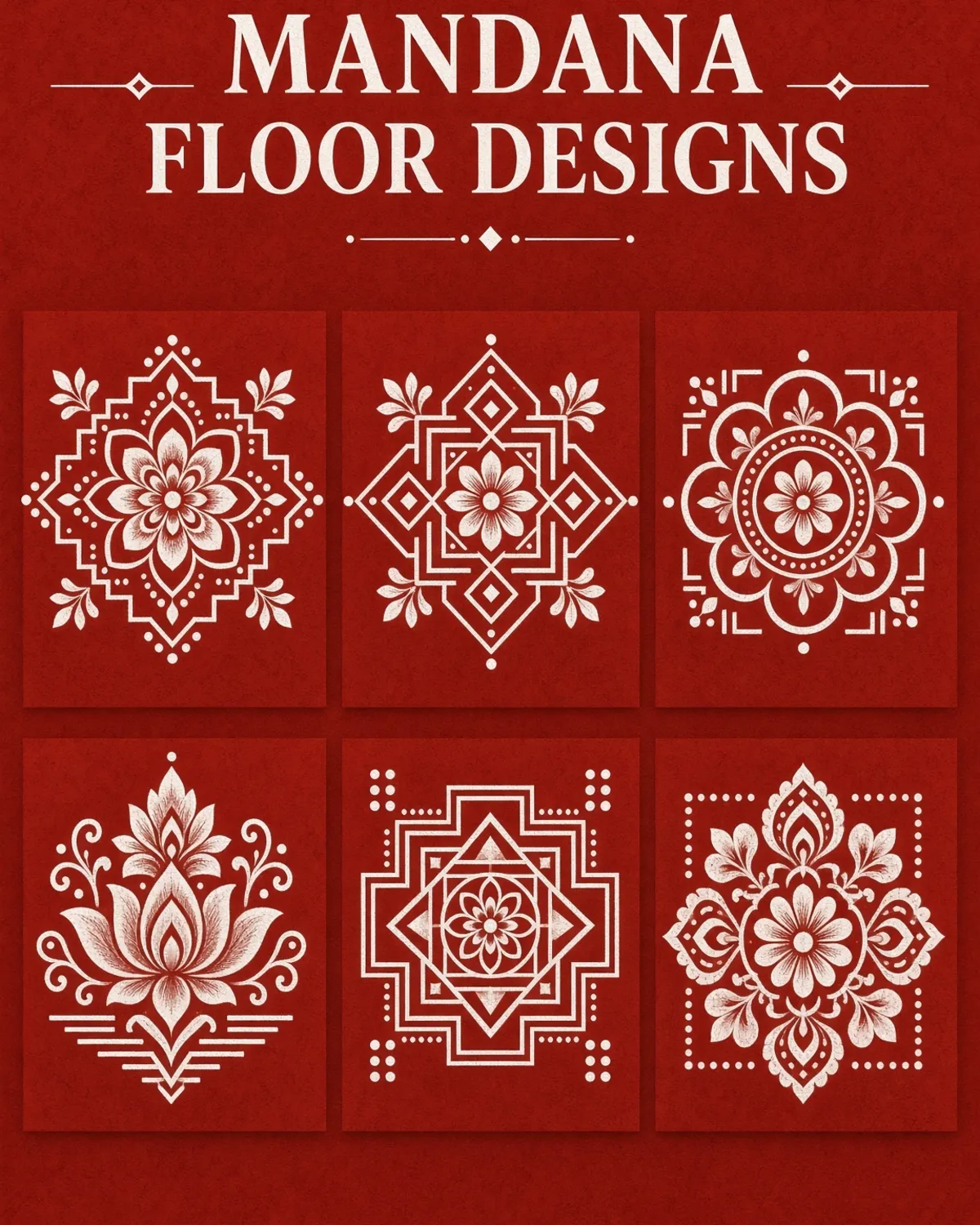
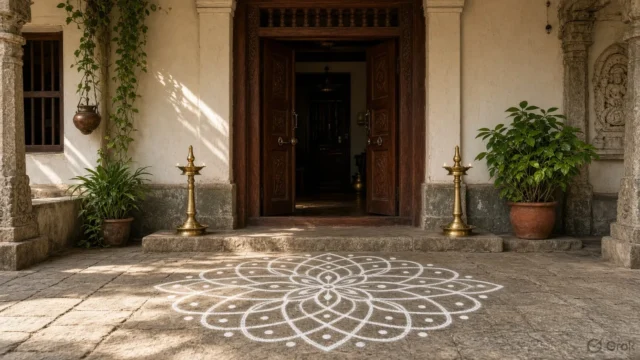
Floor Mandana, drawn on cow-dung-coated floors with red clay and white khadiya, is made on occasions such as Dussehra, Diwali and Holi, according to the NIOS module. The module also describes “paglya” patterns based on footprints. Wall Mandana is more permanent and often covers larger surfaces with animal and ritual scenes. Both are living traditions, but research notes that mud-wall painting is fading as houses change, so supporting artists matters.
Festival rangoli and modern decoration
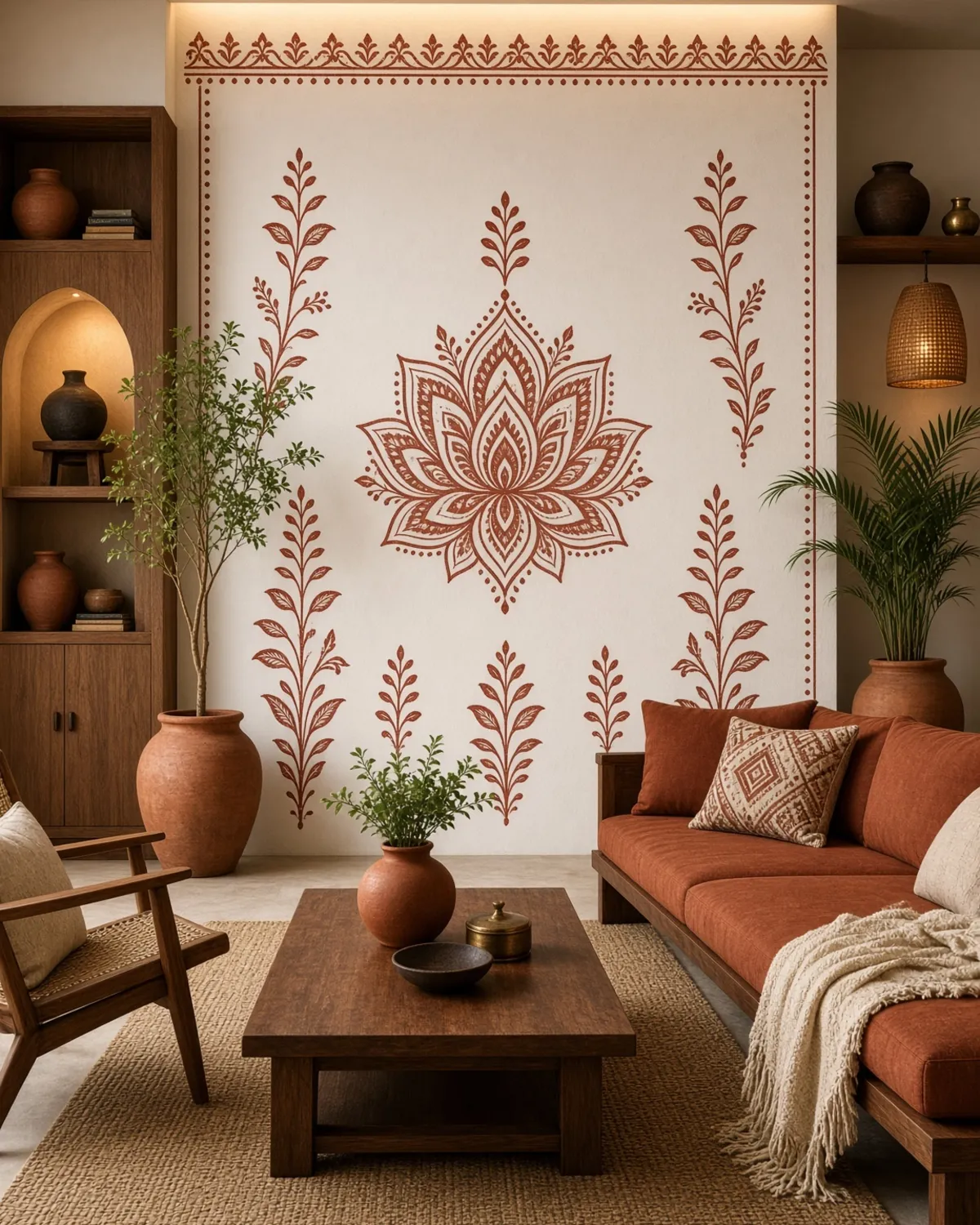
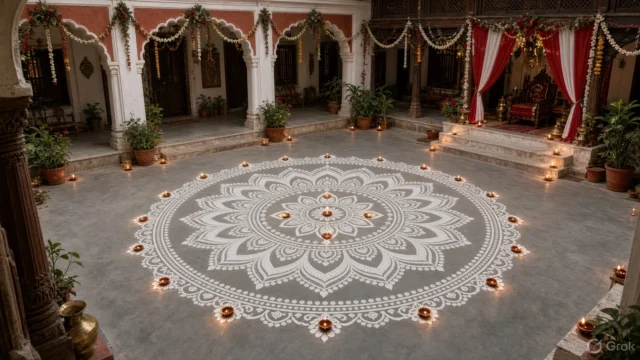
For a Mandana rangoli at Diwali, use a white outline on a red base, then fill with simple geometric shapes. Modern uses include framed red-and-white boards, nameplates, table runners and wall panels. These are adaptations; a framed board is not the village floor ritual. Keep the geometric look clean, use a limited palette and credit the Meena tradition when you share your work.
FAQs
1. What is Mandana art?
A traditional wall and floor painting of Rajasthan and Madhya Pradesh drawn in white on red.
2. Who makes Mandana?
Mainly women; Meena women of the Hadoti area are especially known for it.
3. What colours are used in Mandana?
Red geru and white khadiya are the traditional pair.
4. How can I draw Mandana easily?
Paint a red base, add a white frame, a central motif, cross-hatching and a border.
5. Is Mandana the same as rangoli?
It is a related threshold and floor tradition, but Mandana has its own red-and-white style and techniques.
6. Which motifs are common?
Peacock, tiger, Ganesha, flowers and geometric shapes.
7. Can I use Mandana in modern decor?
Yes, as clearly labelled Mandana-inspired work that credits the tradition.
Related guides: Aipan motifs, Alpana motifs, Lippan art, Phad art, Pichwai art and Warli art.
Sources: Wikipedia: Mandana painting; IMP Art: Mandana; NIOS Folk Art: Mandana; INHCRF: Mandana art of Rajasthan; Deccan Herald; 30 Stades.
Related folk art: Aipan art: Kumaoni deli, chowki and border designs












Share Your Opinion
Comments are closed on this post.