 Vista
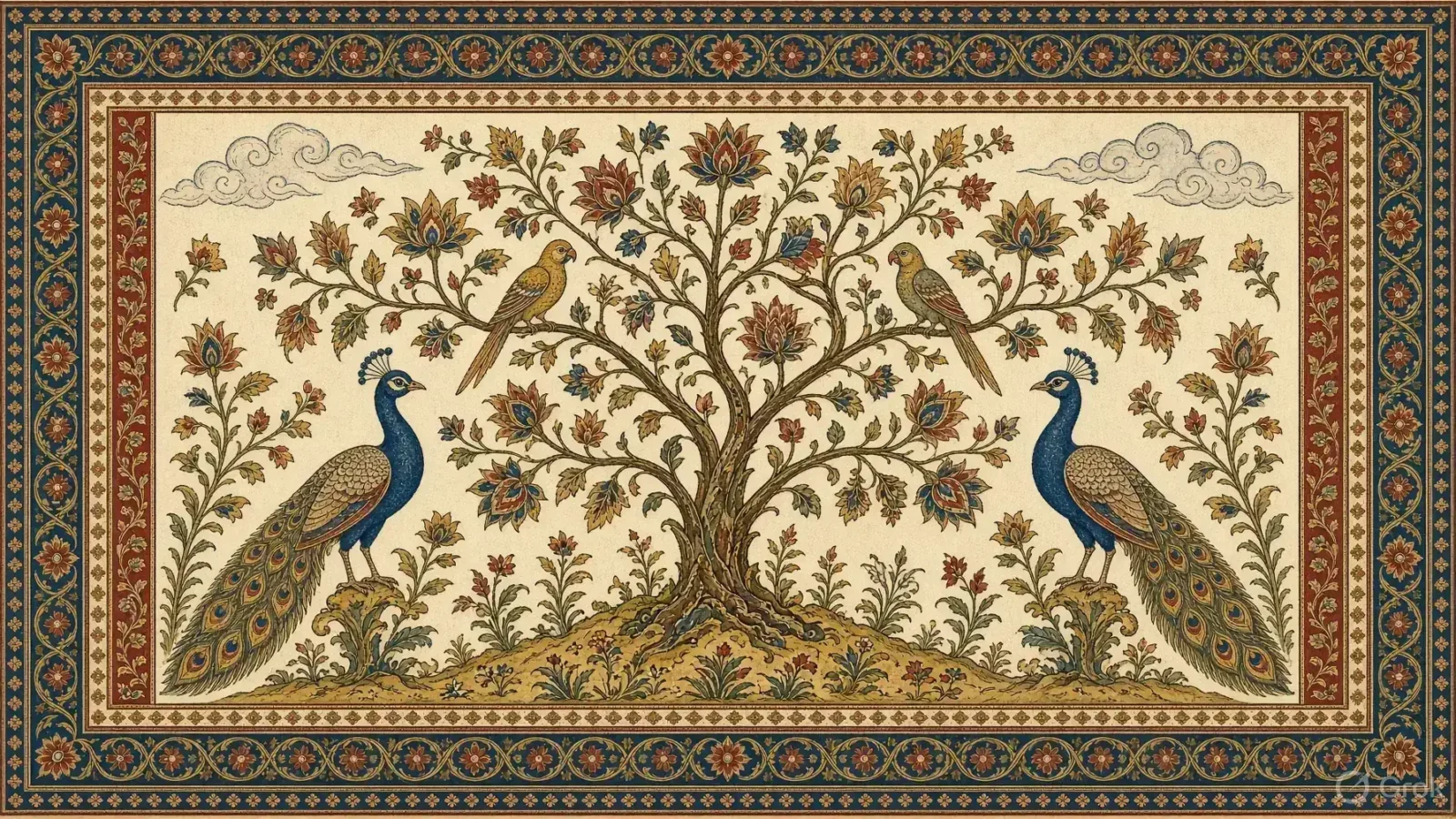
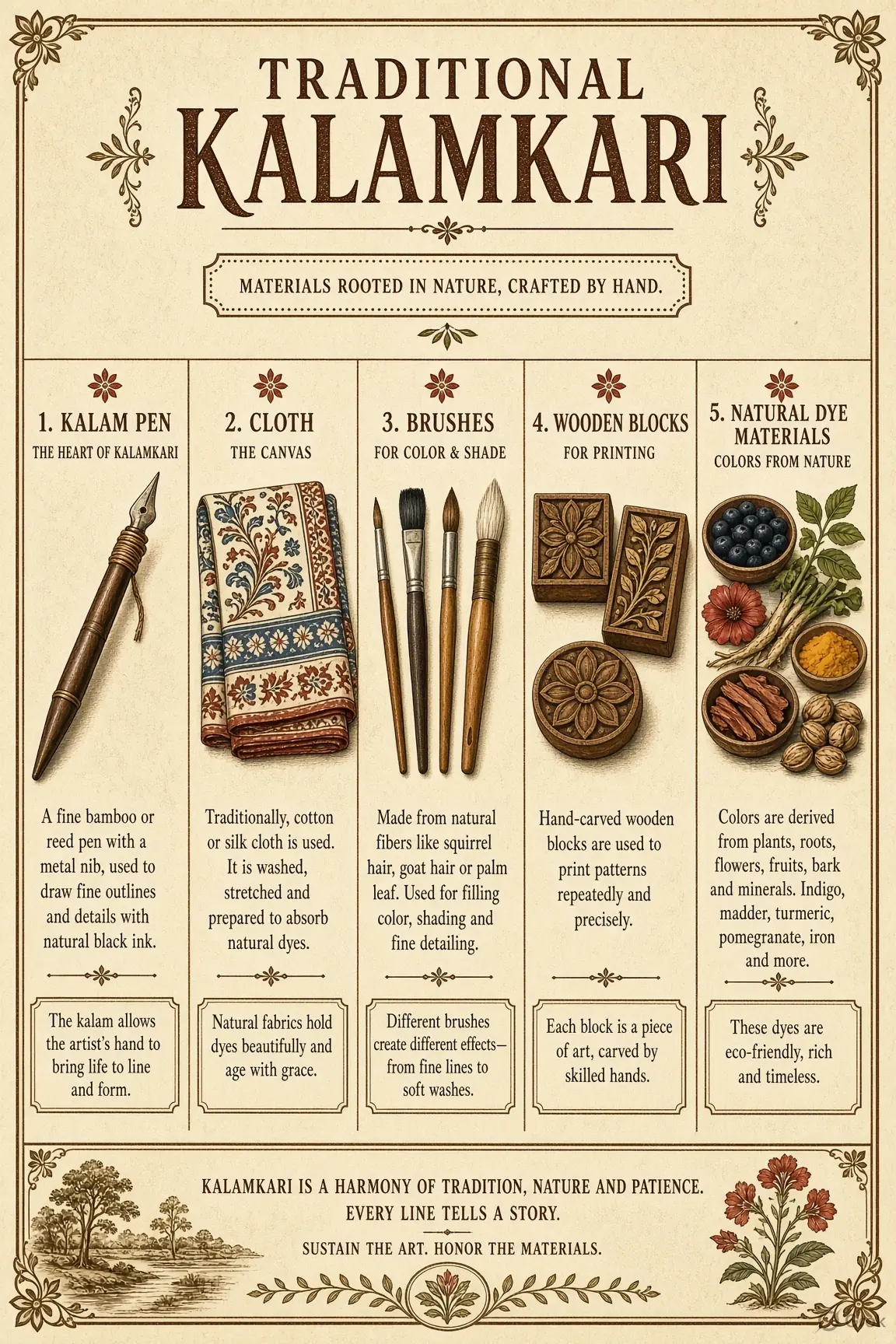
Kalamkari is a traditional textile art from Andhra Pradesh, India, in which motifs are drawn or block-printed on cotton fabric using natural dyes. The name combines “kalam” (pen) and “kari” (craftsmanship). The two famous styles are Srikalahasti, where a bamboo pen is used to draw freehand, and Machilipatnam, where carved wooden blocks print the outlines.
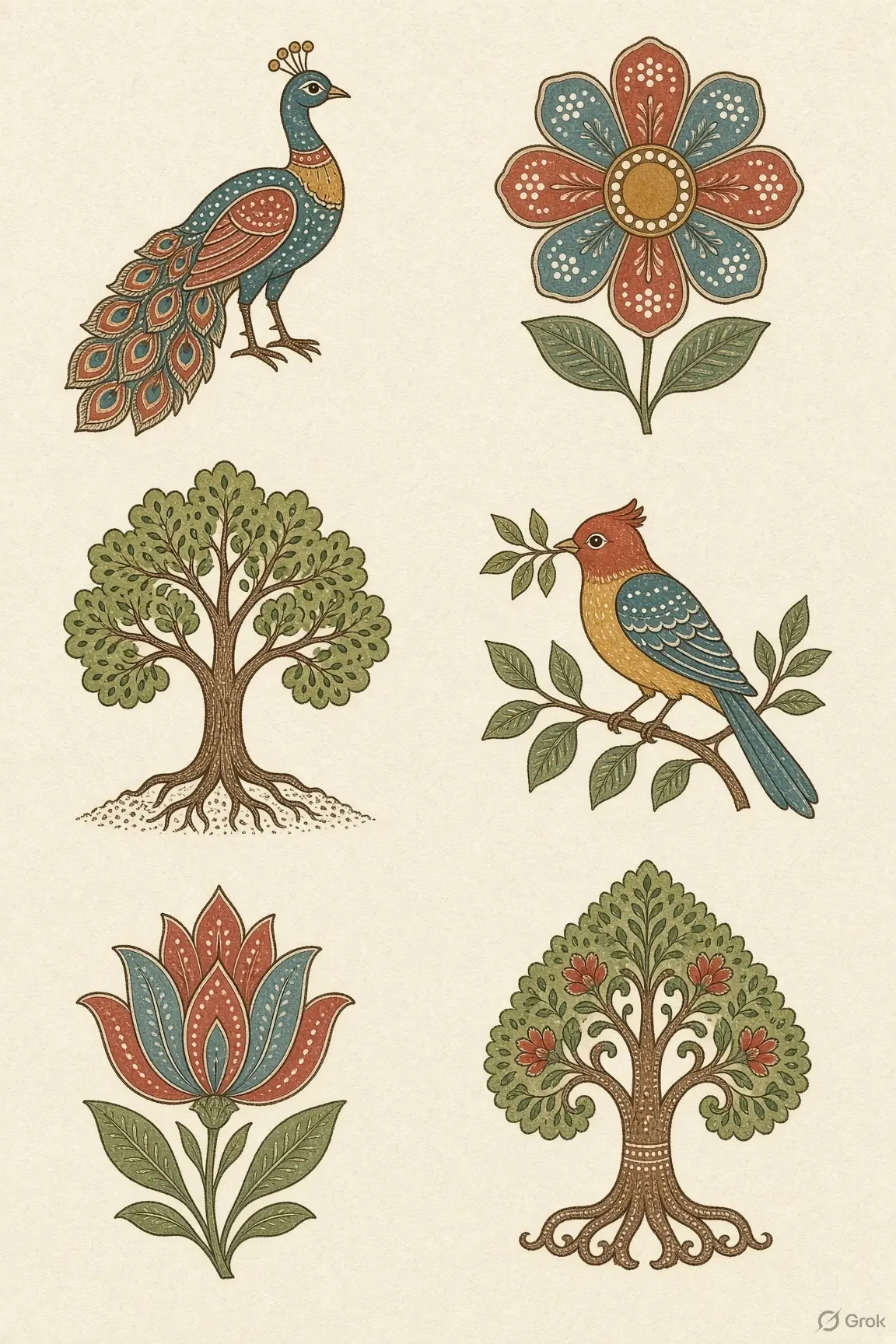
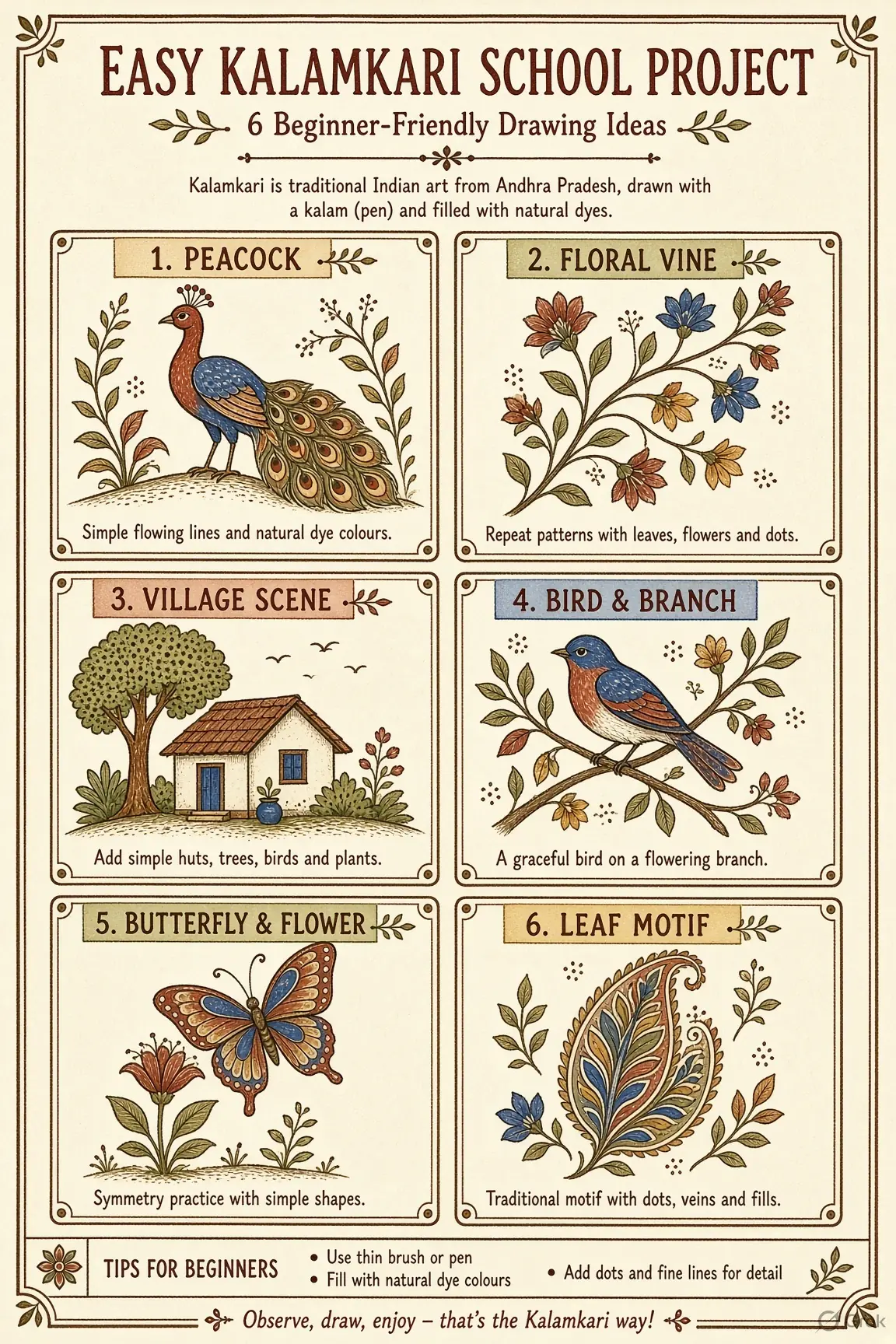
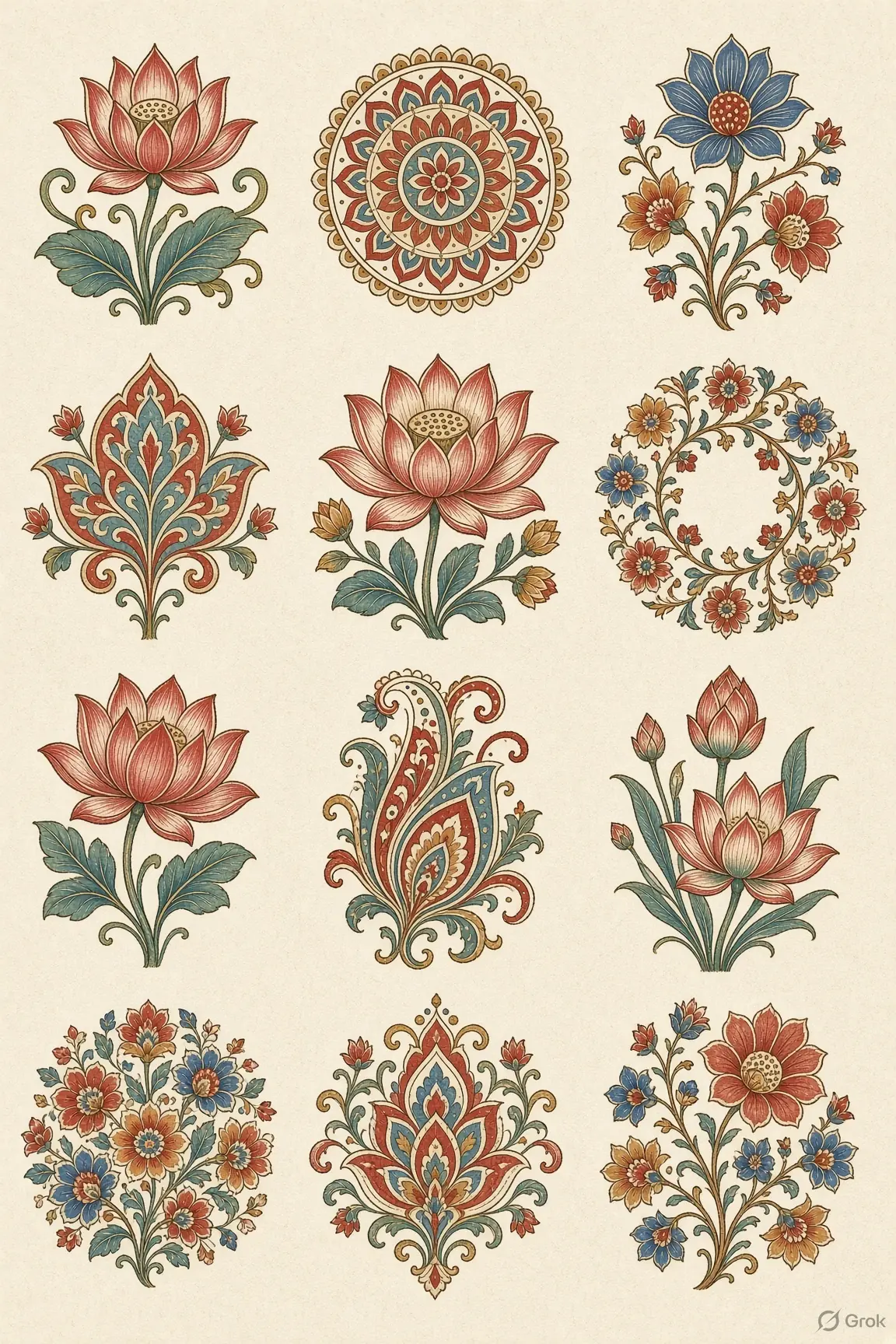
This guide answers the common questions, such as “Kalamkari art which state”, and then moves to practice: easy Kalamkari drawings for kids and school projects, peacock, lotus, elephant and Tree of Life designs, borders, and wall art. Pen-and-paper practice here is Kalamkari-inspired. Real Kalamkari is a long, skilled textile process, so buy from artisans when you can. For our motif reference, see the Kalamkari motifs chart.
Table of contents
- Kalamkari art: which state and what it means
- History
- Srikalahasti vs Machilipatnam
- Natural dyes and fabric preparation
- Easy Kalamkari drawing for kids and beginners
- Peacock, elephant, lotus and Tree of Life
- Border patterns, sarees and dupattas
- Wall decoration and framed art
- Image gallery
- FAQs
Kalamkari art: which state and what it means
Kalamkari is associated with Andhra Pradesh. Srikalahasti is in Tirupati district, and Machilipatnam is in Krishna district. The word combines kalam, meaning pen, and kari, meaning craftsmanship. Today it is both a textile craft and a popular style of folk-inspired painting that people practise on paper and canvas.
History
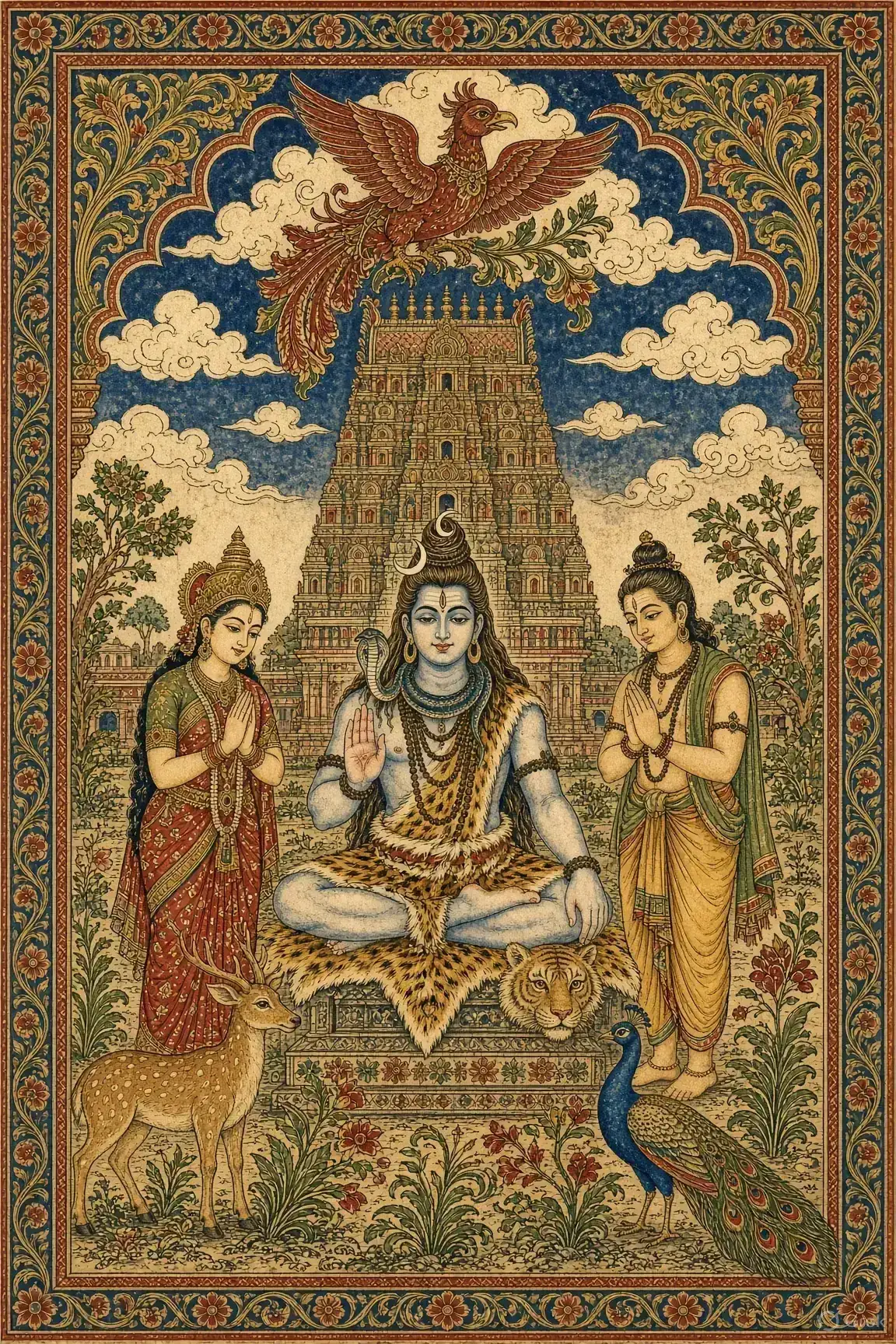
Wikipedia notes that the craft was patronised under the Mughals and the Golconda rulers, whose artisans were known as “Qualamkars”. Srikalahasti work is known for religious myths and epics, with borders and pallus on sarees. Geographical Indication status was registered for Srikalahasti Kalamkari in 2005 and Machilipatnam Kalamkari in 2008, according to Wikipedia. We do not state when the craft began, since sources differ.
Srikalahasti vs Machilipatnam
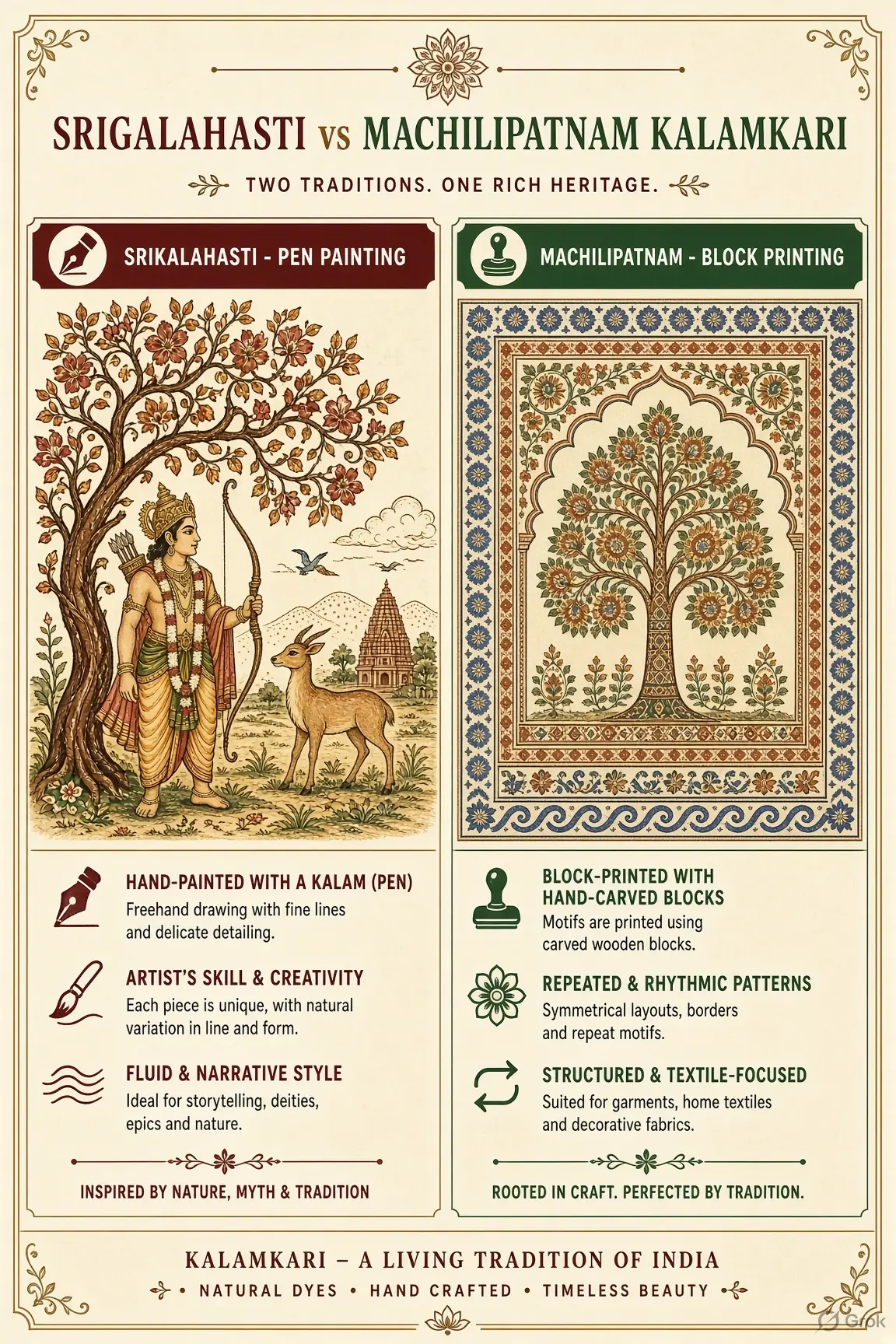
| Feature | Srikalahasti | Machilipatnam |
|---|---|---|
| Method | Freehand drawing with a bamboo pen | Printing with carved wooden blocks |
| Colour work | Natural dyes filled in by hand in stages | Layered colour impressions |
| Themes | Myths, epics, temple scenes | Floral and repeating patterns |
| Place | Tirupati district | Krishna district (Pedana nearby) |
The craft details above follow the Government of India handicrafts portal. Our motifs chart shows each style’s patterns in more detail.
Natural dyes and fabric preparation
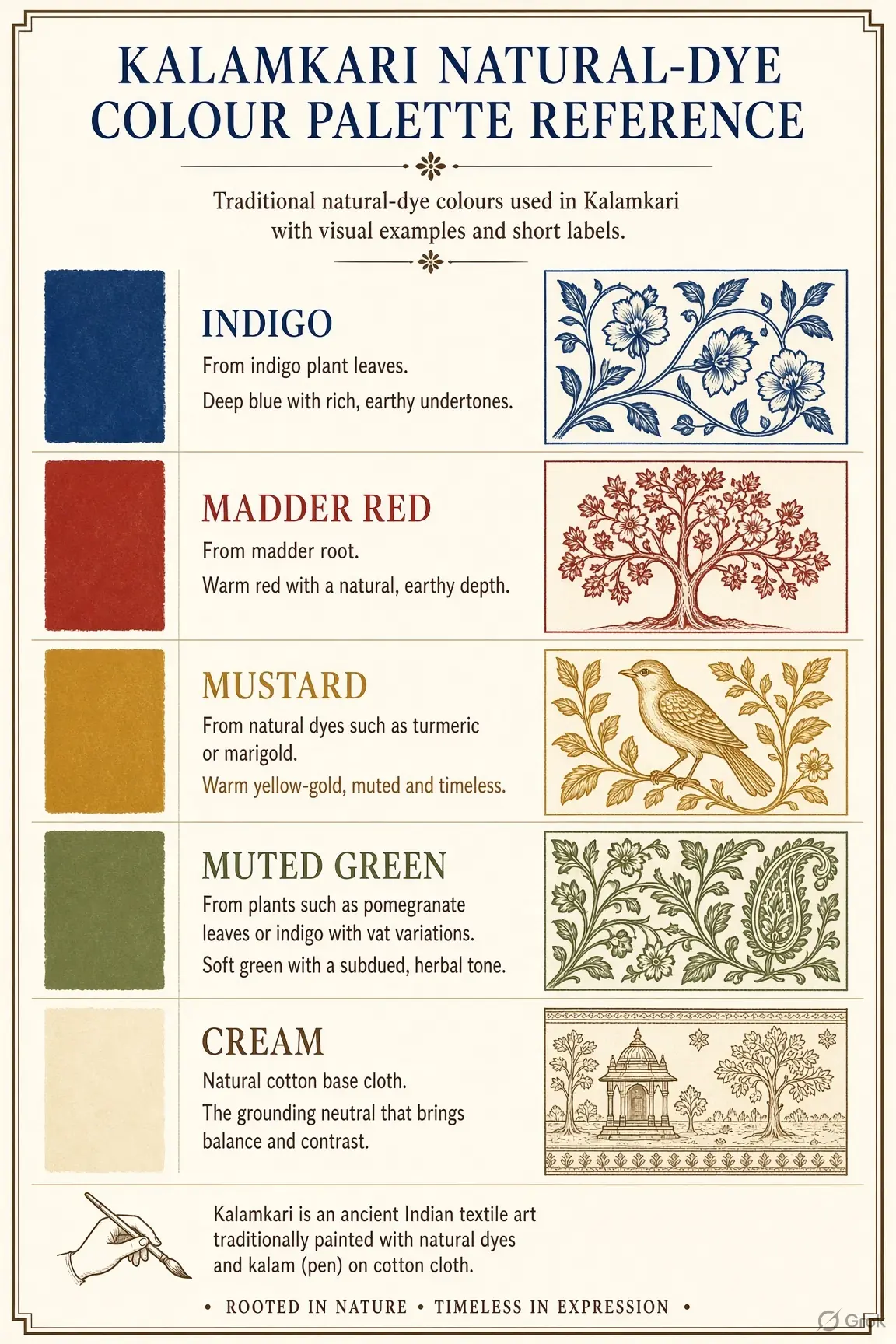
Government craft sources describe preparing the cotton with myrobalan, buffalo milk, alum and cow dung, and colouring with natural agents such as indigo, madder and pomegranate rind. We list these for understanding only; the traditional process involves mordants and many stages, and we do not give a home recipe. For a safe practice version, use fabric paint or fabric markers, dry fully, heat set as the label says and wash cold on a gentle cycle.
Easy Kalamkari drawing for kids and beginners
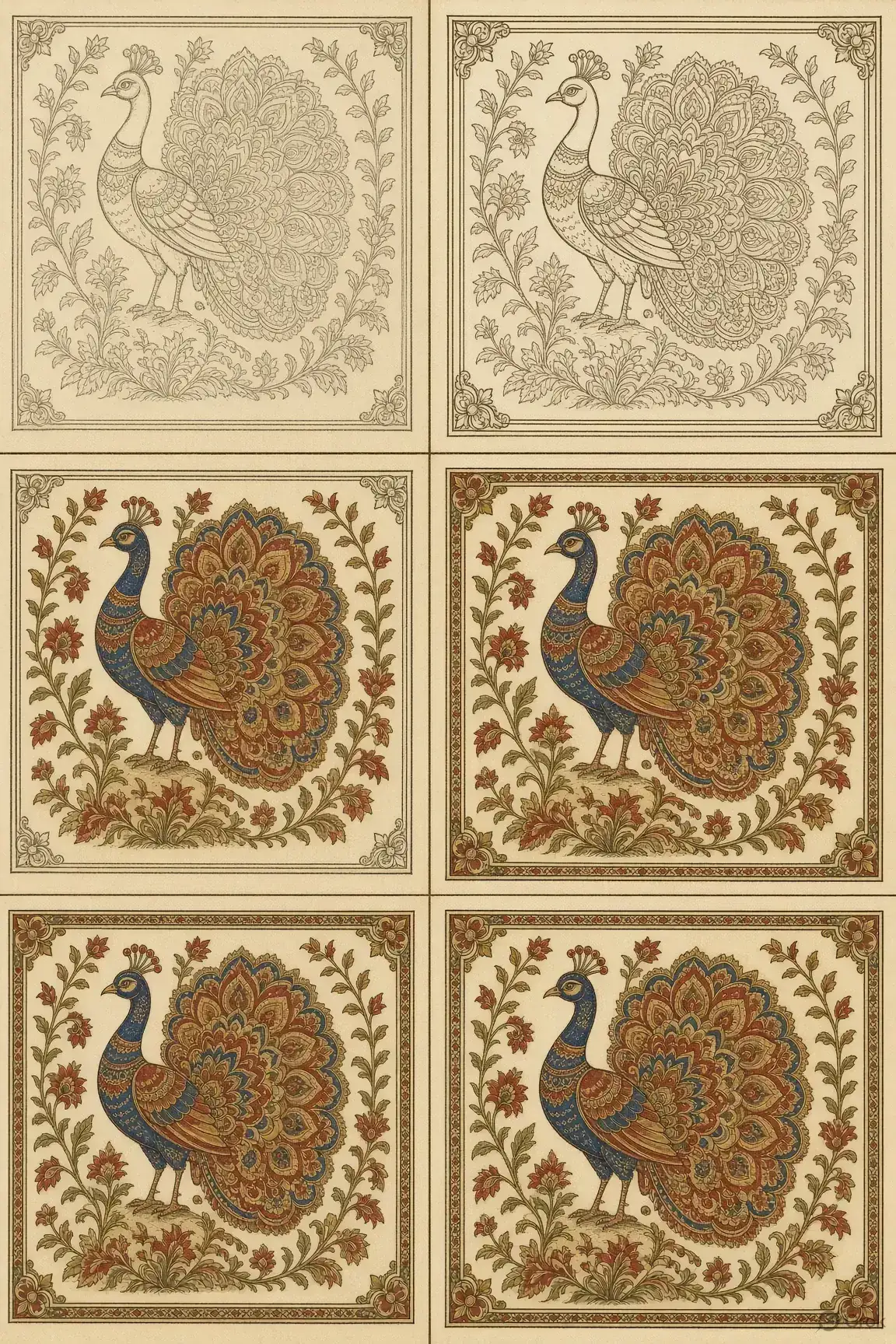
- Draw a peacock body: a teardrop body with a curved neck and small crown.
- Add the tail: a fan of leaf-shaped feathers with a small eye in each.
- Fill with pattern: use dots, lines and small flowers inside the body and feathers.
- Outline: trace with a dark brown or black pen for the pen-drawn look.
- Colour: use earthy tones such as indigo blue, rust red, mustard and green.
- Border: add a floral or wave border to complete the school-project page.
Peacock, elephant, lotus and Tree of Life
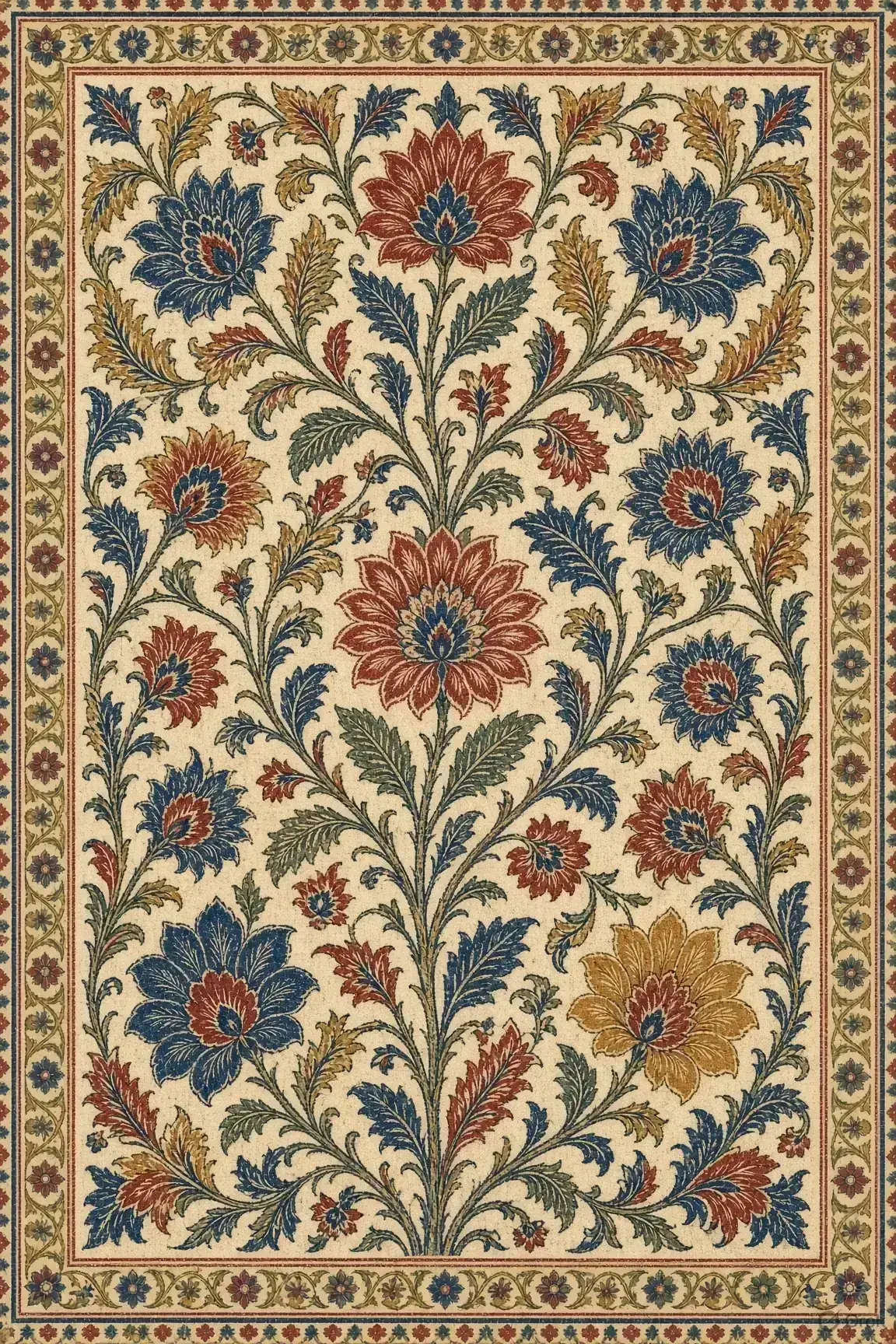
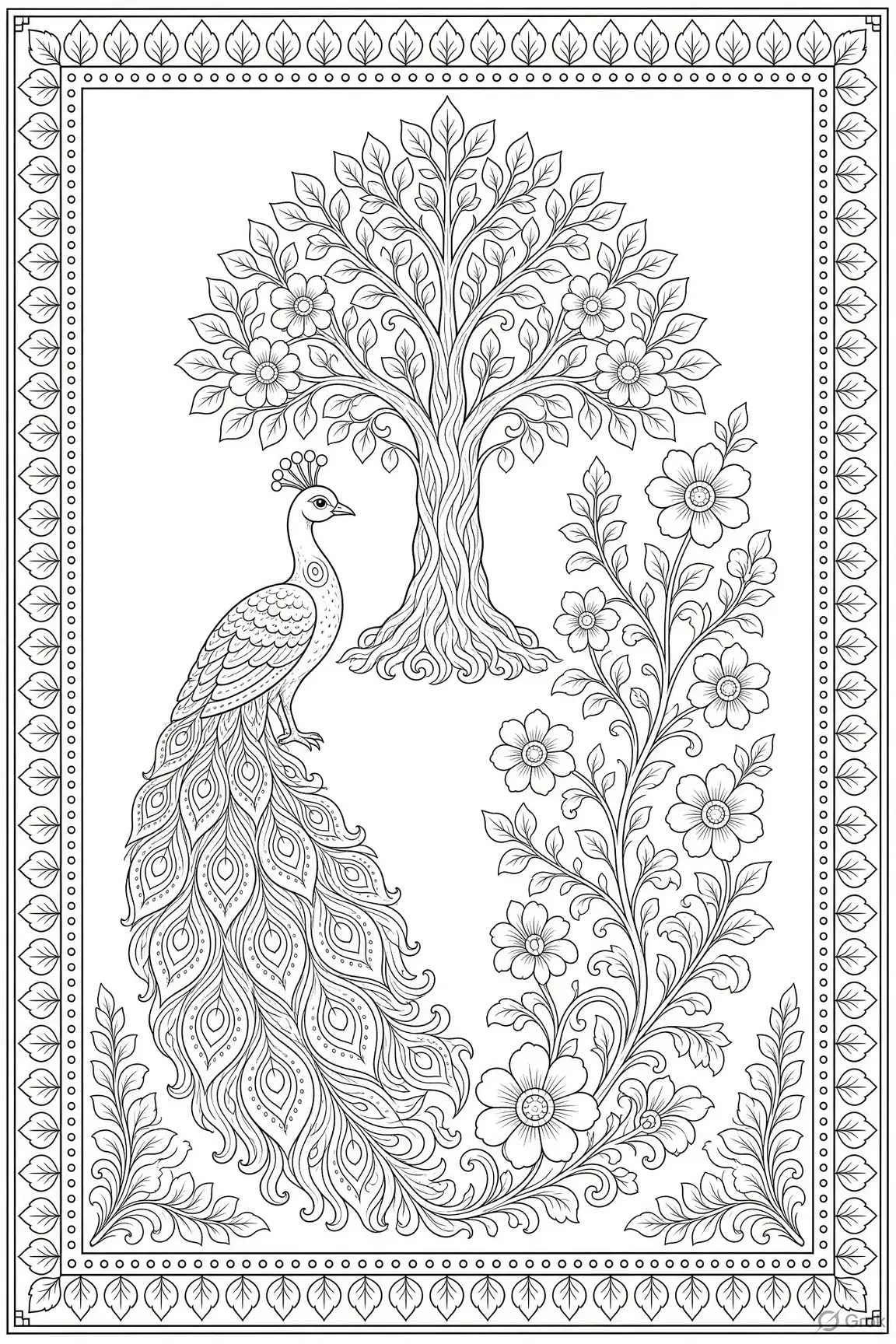
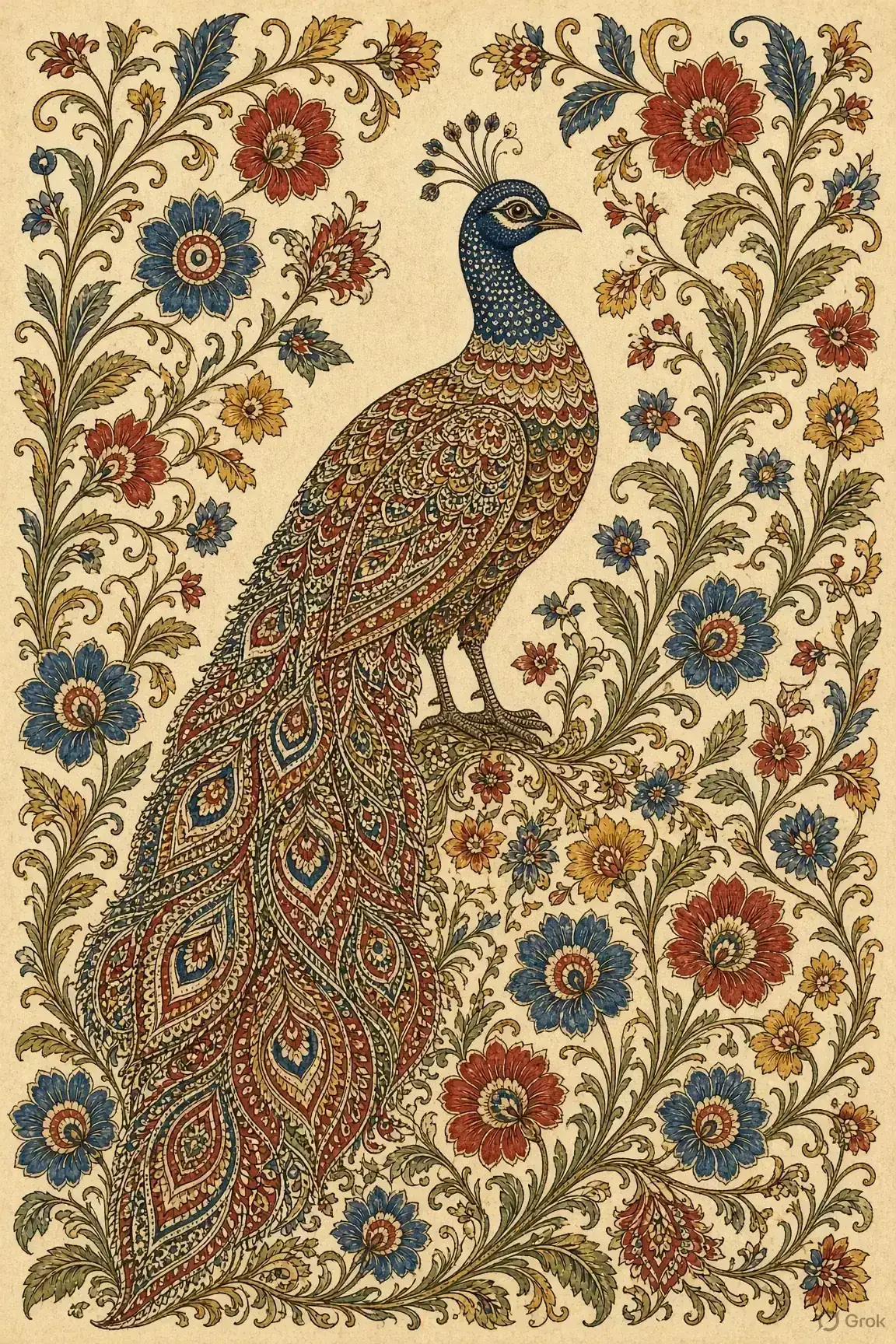
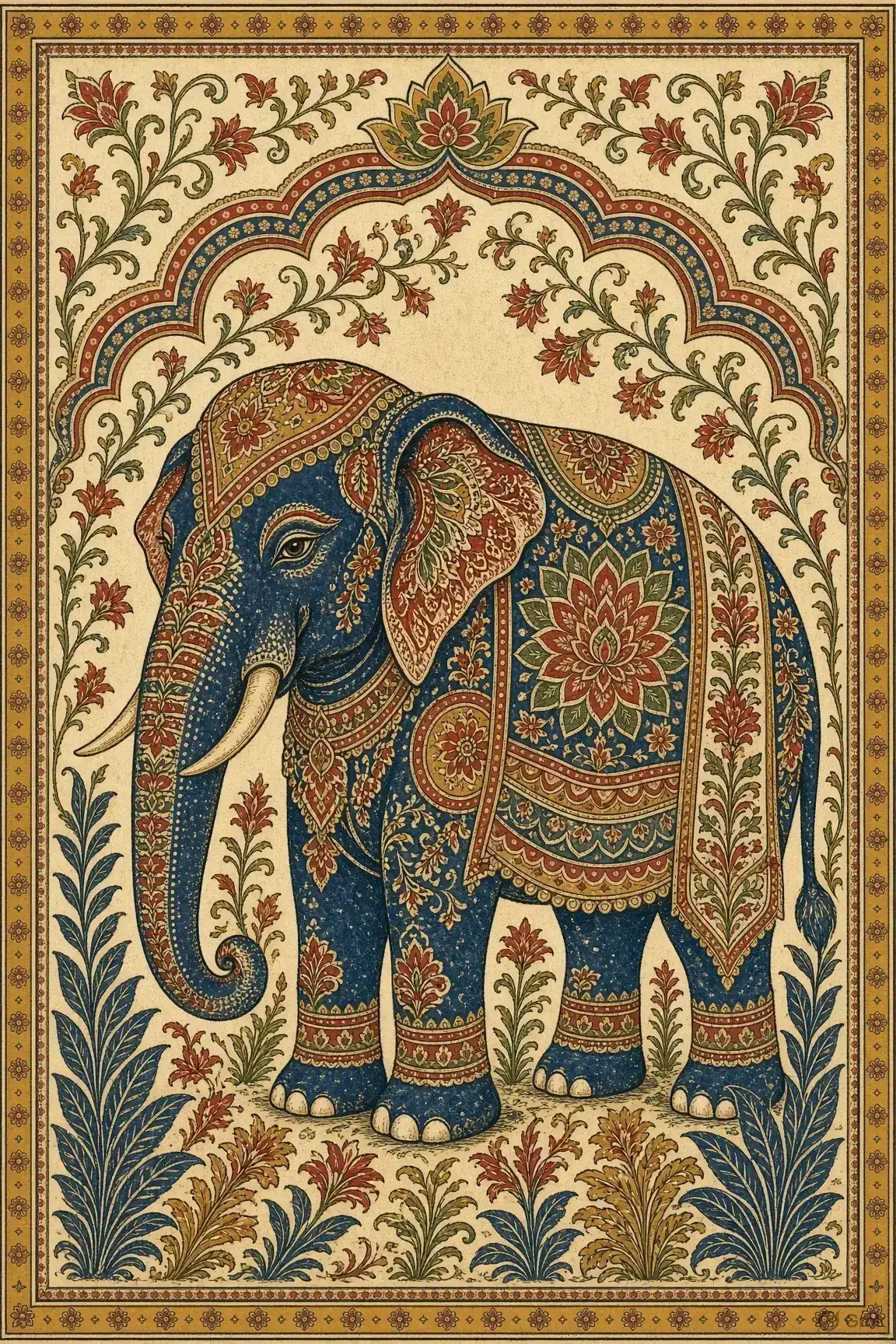
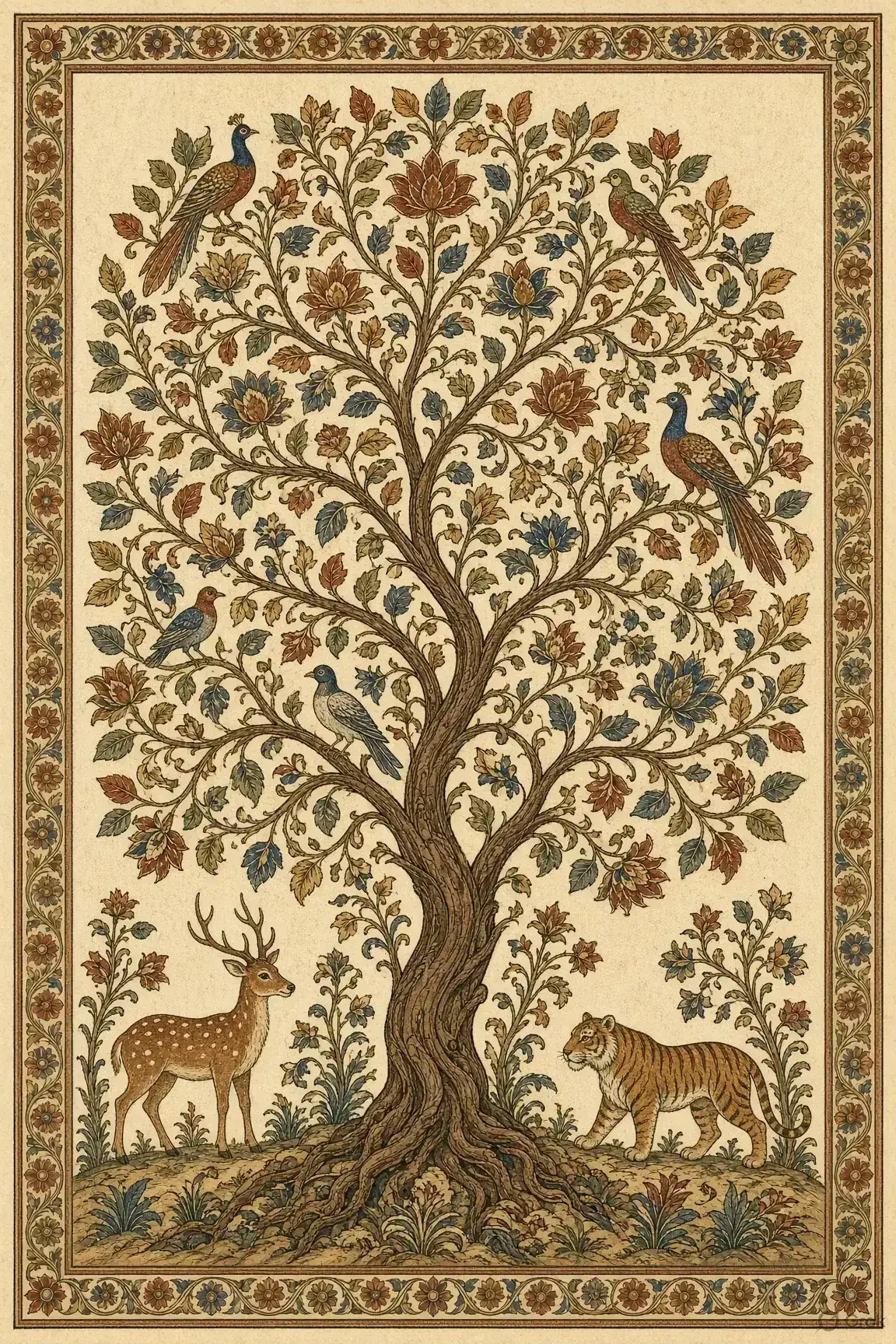
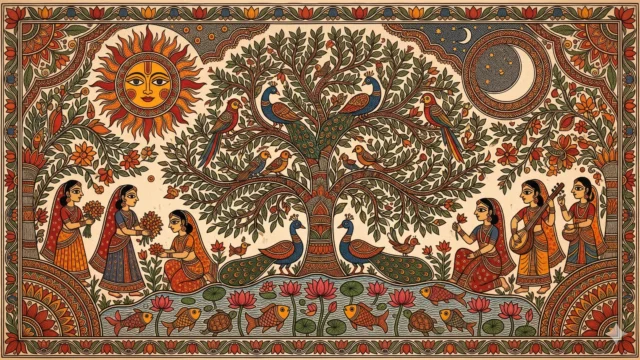
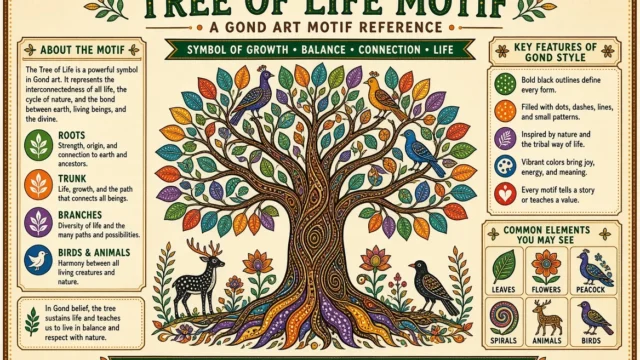
Kalamkari flower motifs are usually flowing and balanced, with leaves and vines filling space. A Tree of Life shows a central tree with branches, birds and blossoms. An elephant can be decorated with patterned blankets and floral bodywork, and a lotus works well as a simple, symmetrical practice shape. Treat any religious scenes with respect and avoid copying an artisan’s specific design for sale.
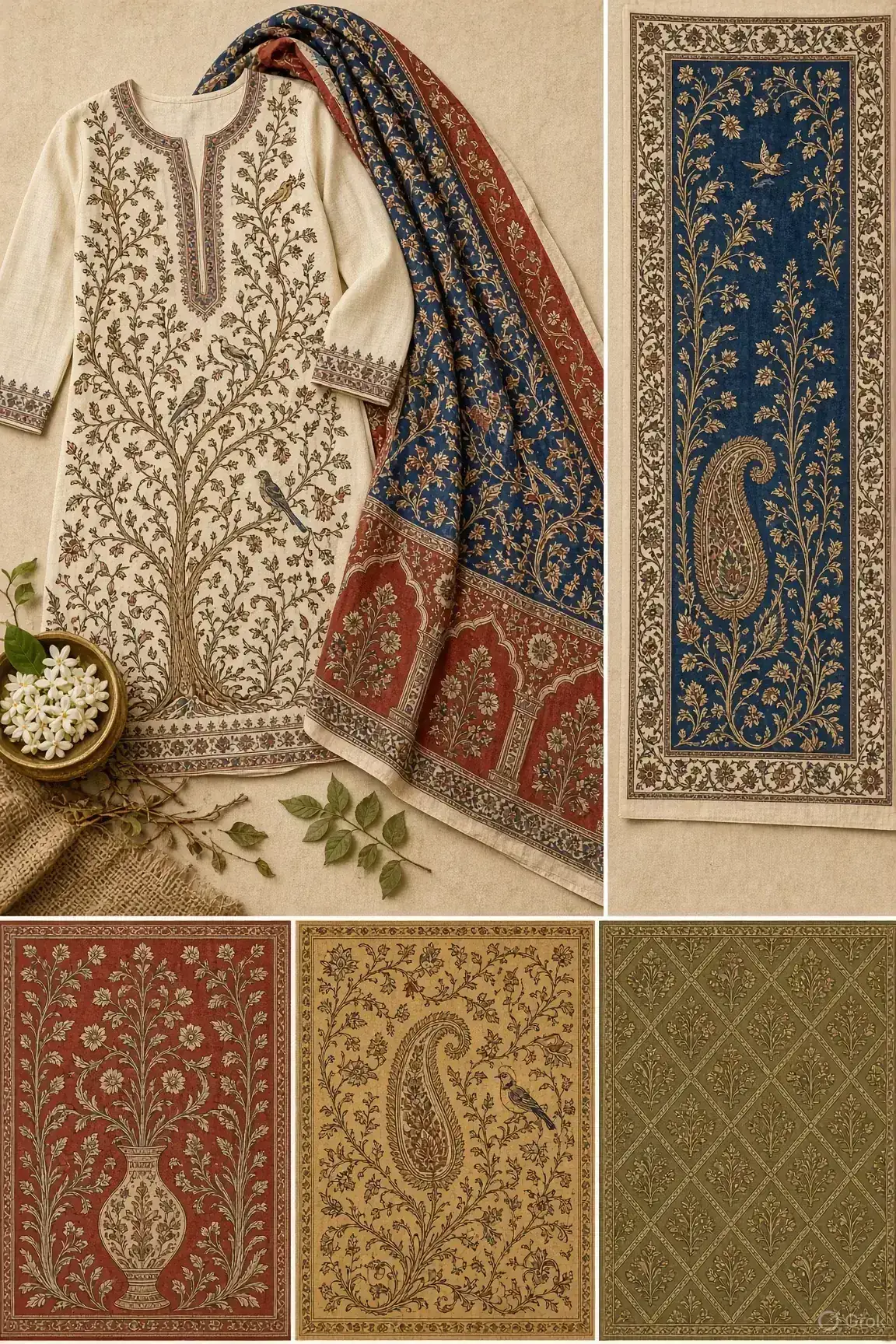
Border patterns, sarees and dupattas
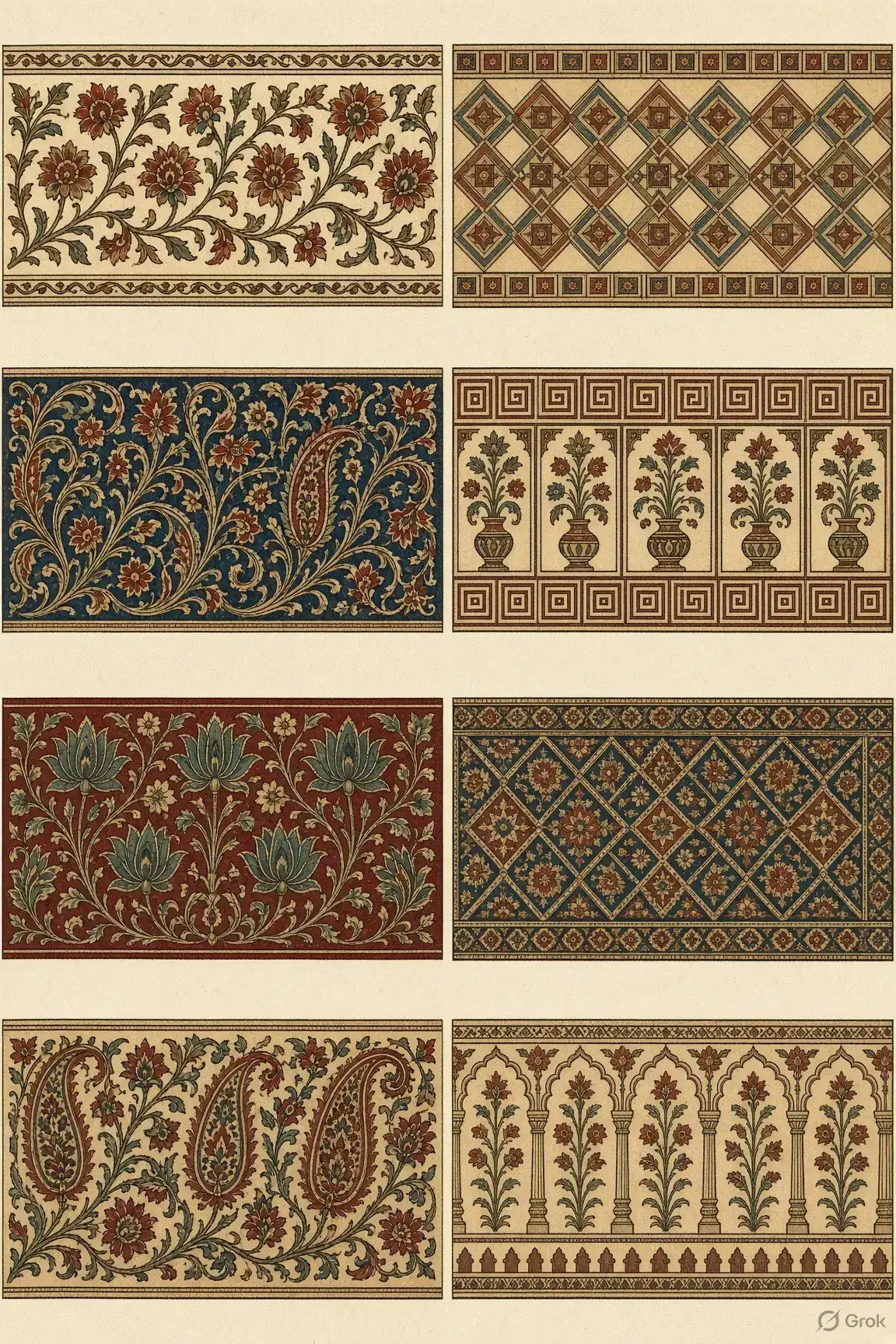
Common border ideas include repeating floral buds, wavy vines, paisley-like leaves and small geometric bands. Sarees and dupattas often pair a patterned border with a quieter field. Learn what to look for when buying: hand-drawn lines with slight variation suggest pen work, while very identical repeats may be printed. Neither is lesser, but the sellers should state the method honestly.
Wall decoration and framed art
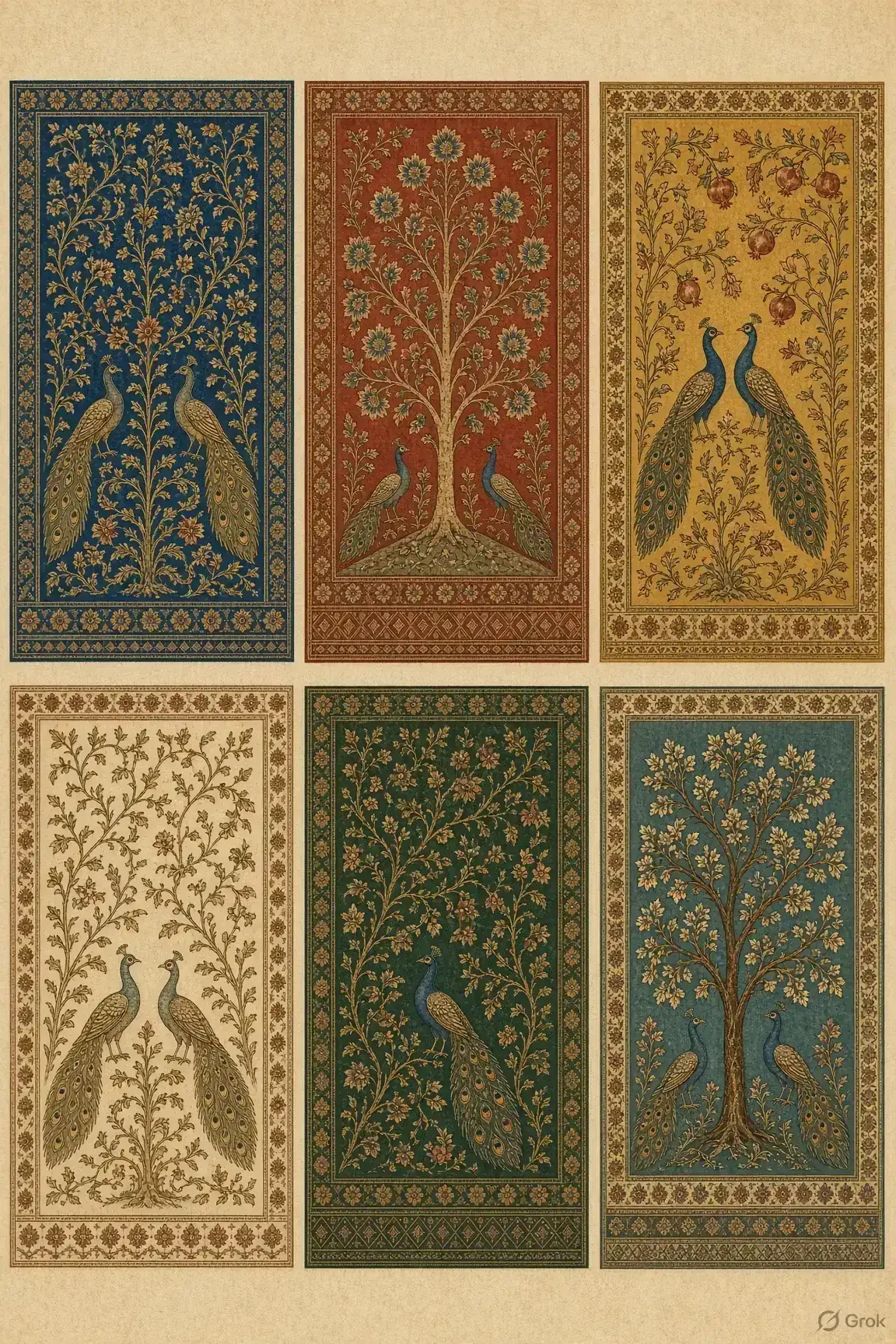
A framed Tree of Life or peacock panel suits a hallway or study. Group three small frames for a gallery wall, and pick earthy colours that sit well with wood and cotton furnishings. Keep framed fabric out of direct sunlight to avoid fading. Decorative paint is not food-safe, so do not use practice designs on plates or cups.
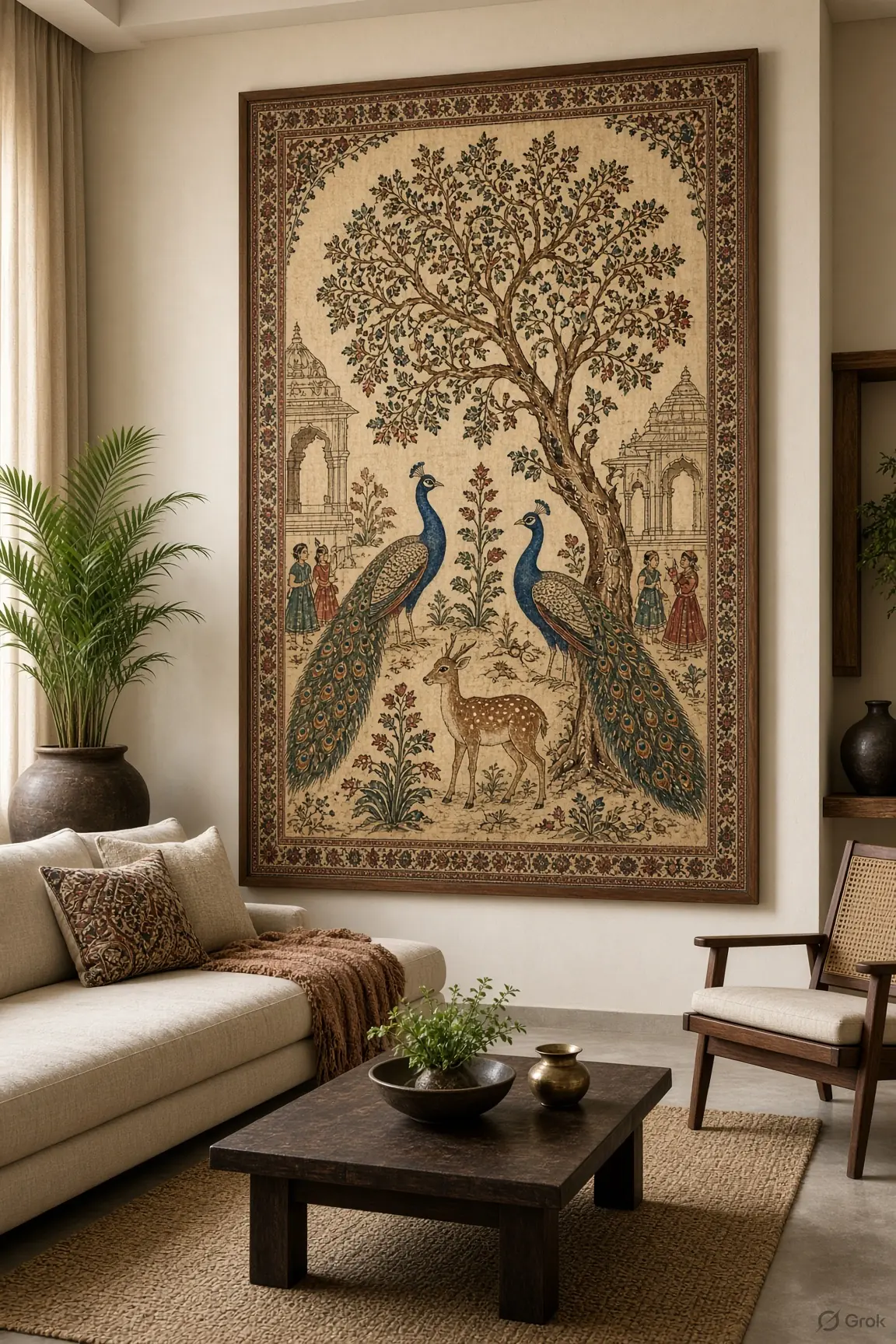
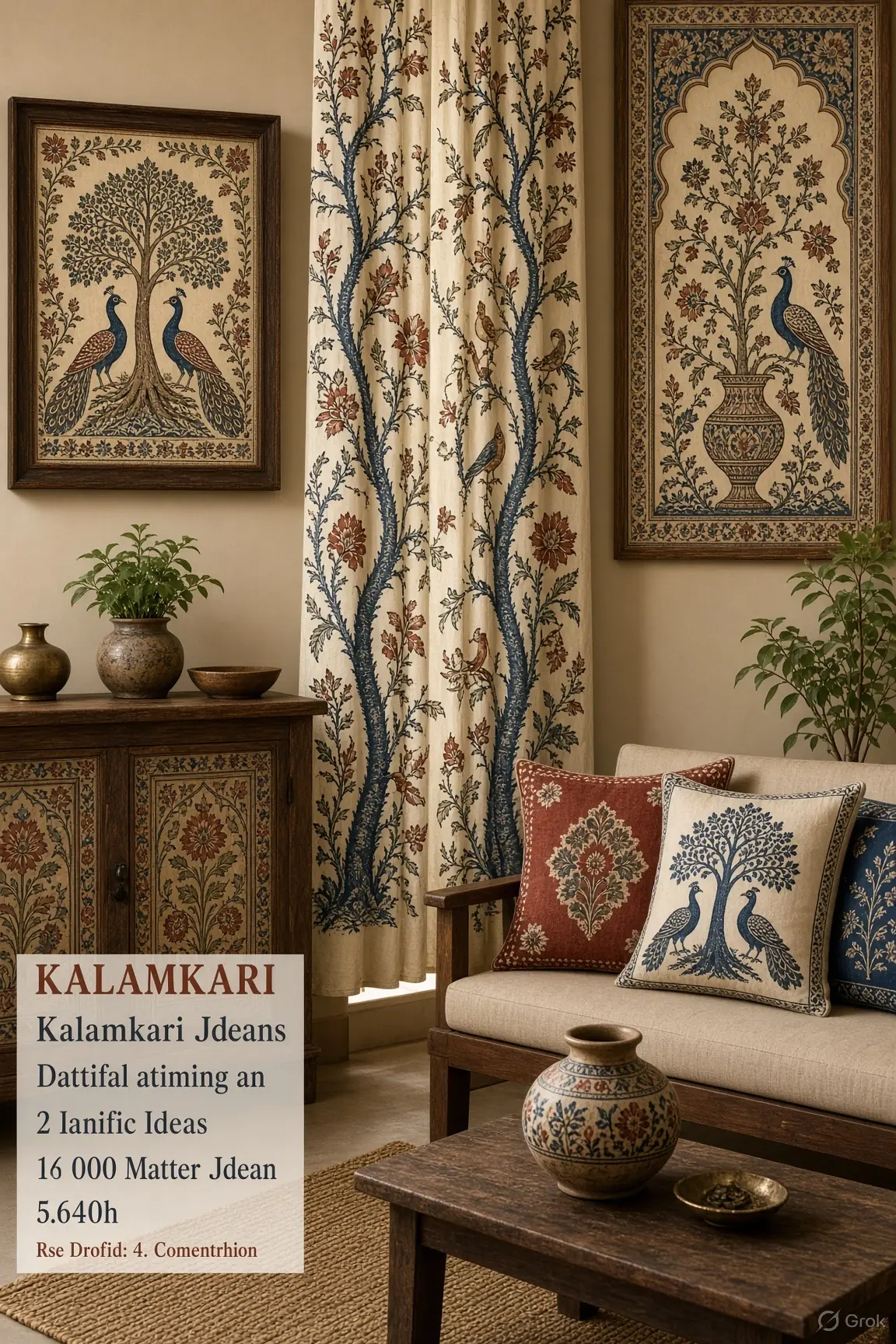
Image gallery
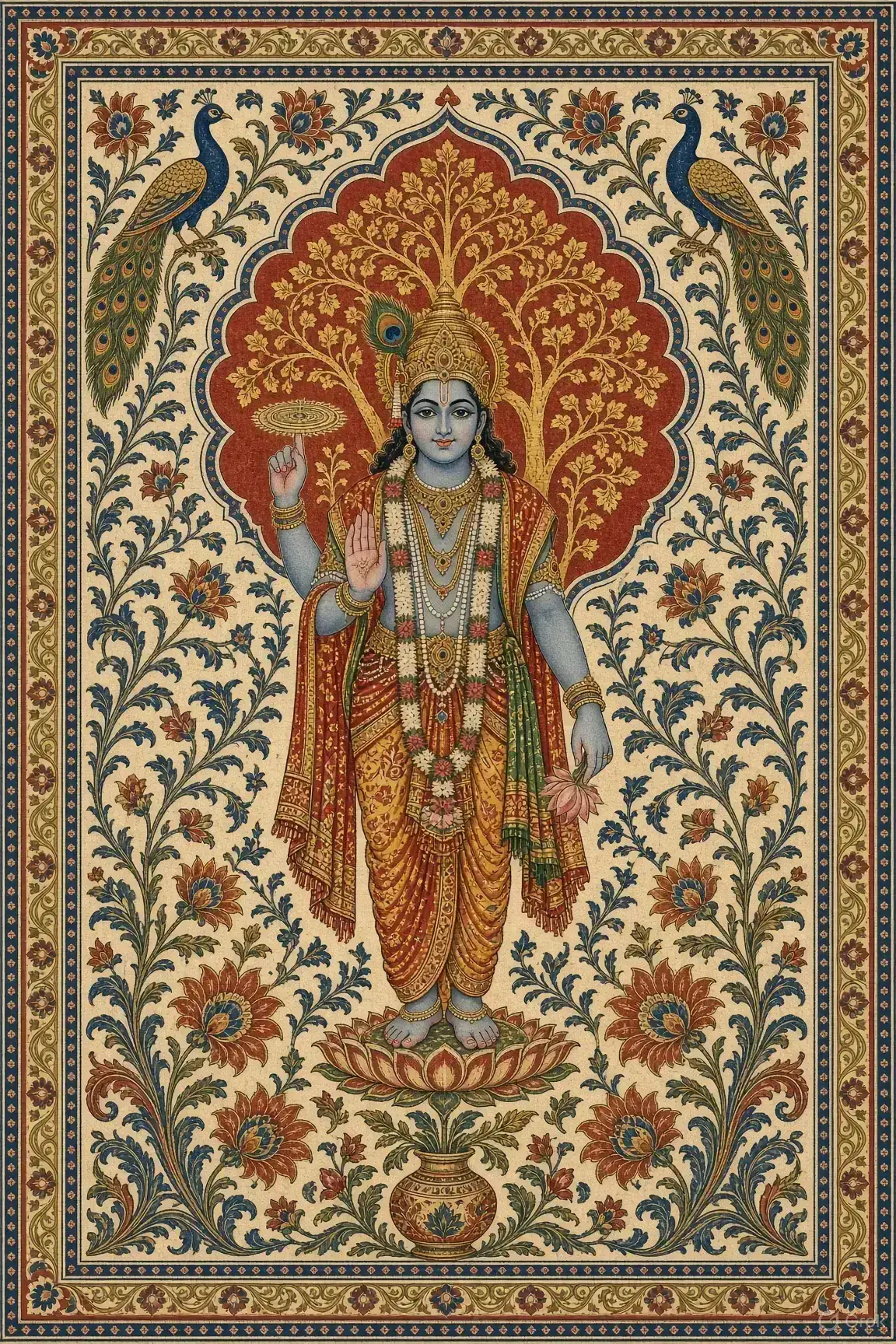
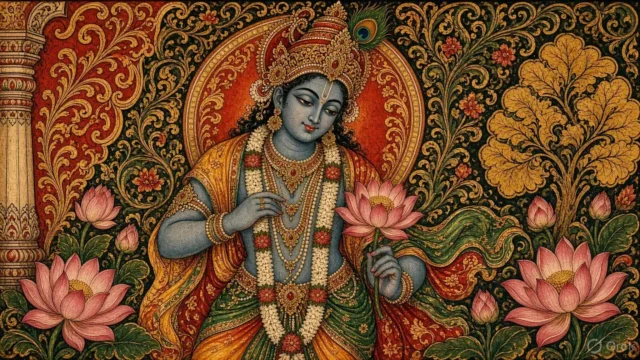
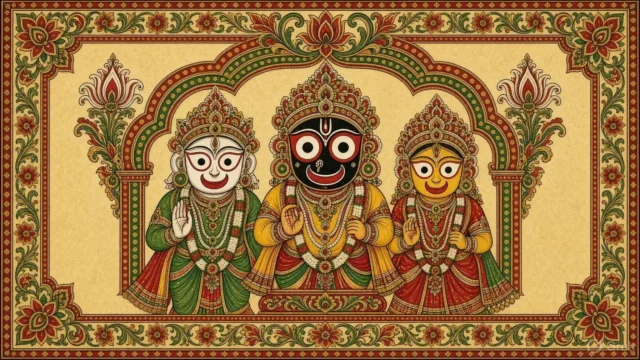
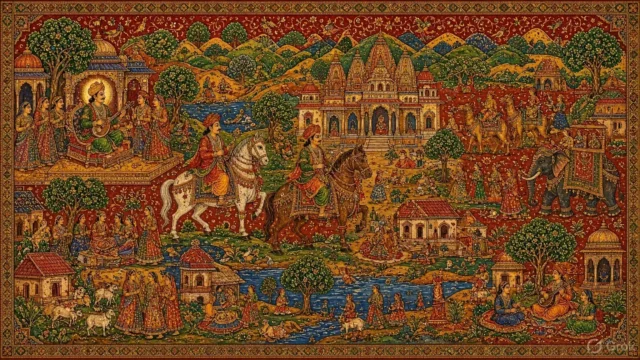
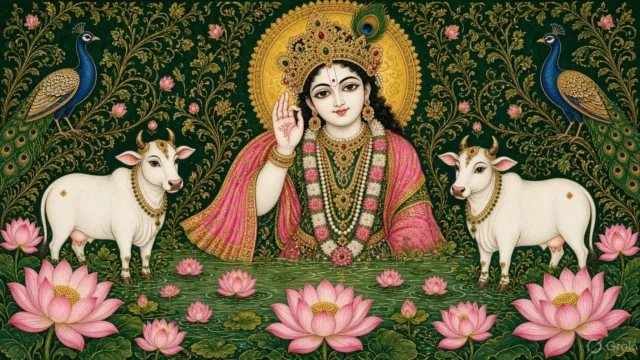
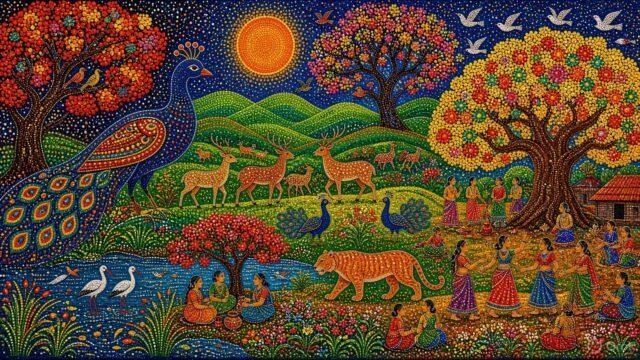
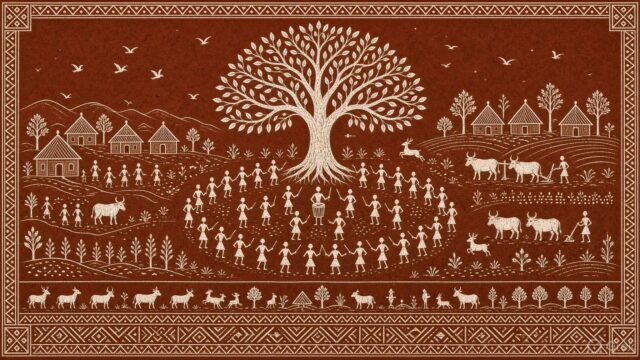
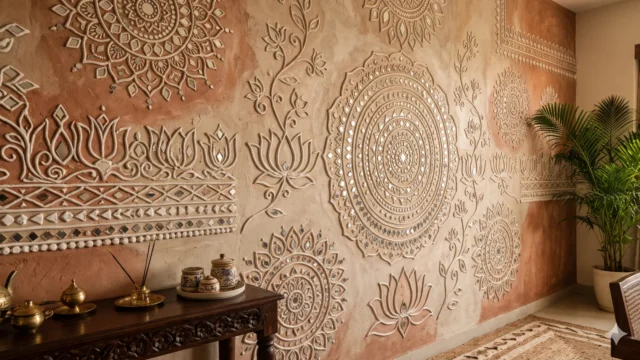
Explore Kalamkari art images, textile paintings and decorative designs.
FAQs
1. Kalamkari art: which state is it from?
Andhra Pradesh, with Srikalahasti and Machilipatnam as the two best-known centres.
2. What does Kalamkari mean?
Kalam means pen and kari means craftsmanship.
3. What is the difference between Srikalahasti and Machilipatnam Kalamkari?
Srikalahasti is drawn freehand with a bamboo pen; Machilipatnam uses carved wooden blocks.
4. How can kids draw easy Kalamkari art?
Start with a peacock, fill it with dots and flowers, outline in dark brown and colour in earthy tones.
5. Which dyes are used in traditional Kalamkari?
Natural agents such as indigo, madder and pomegranate rind are listed by government craft sources.
6. Can I paint Kalamkari-style art on canvas?
Yes, as Kalamkari-inspired work; label it so and credit the tradition.
7. How do I support Kalamkari artisans?
Buy from artisan cooperatives and sellers who state whether work is hand-drawn or block-printed.
More folk-art guides: Madhubani, Warli chart, Gond tutorial, Lippan, Pichwai motifs and Pattachitra borders.
Sources: India Culture portal; Development Commissioner (Handicrafts); Wikipedia: Kalamkari; Krishna district, Andhra Pradesh.
Related Indian folk art: Odisha Pattachitra art: drawings and border designs














Share Your Opinion
Comments are closed on this post.