 Vista

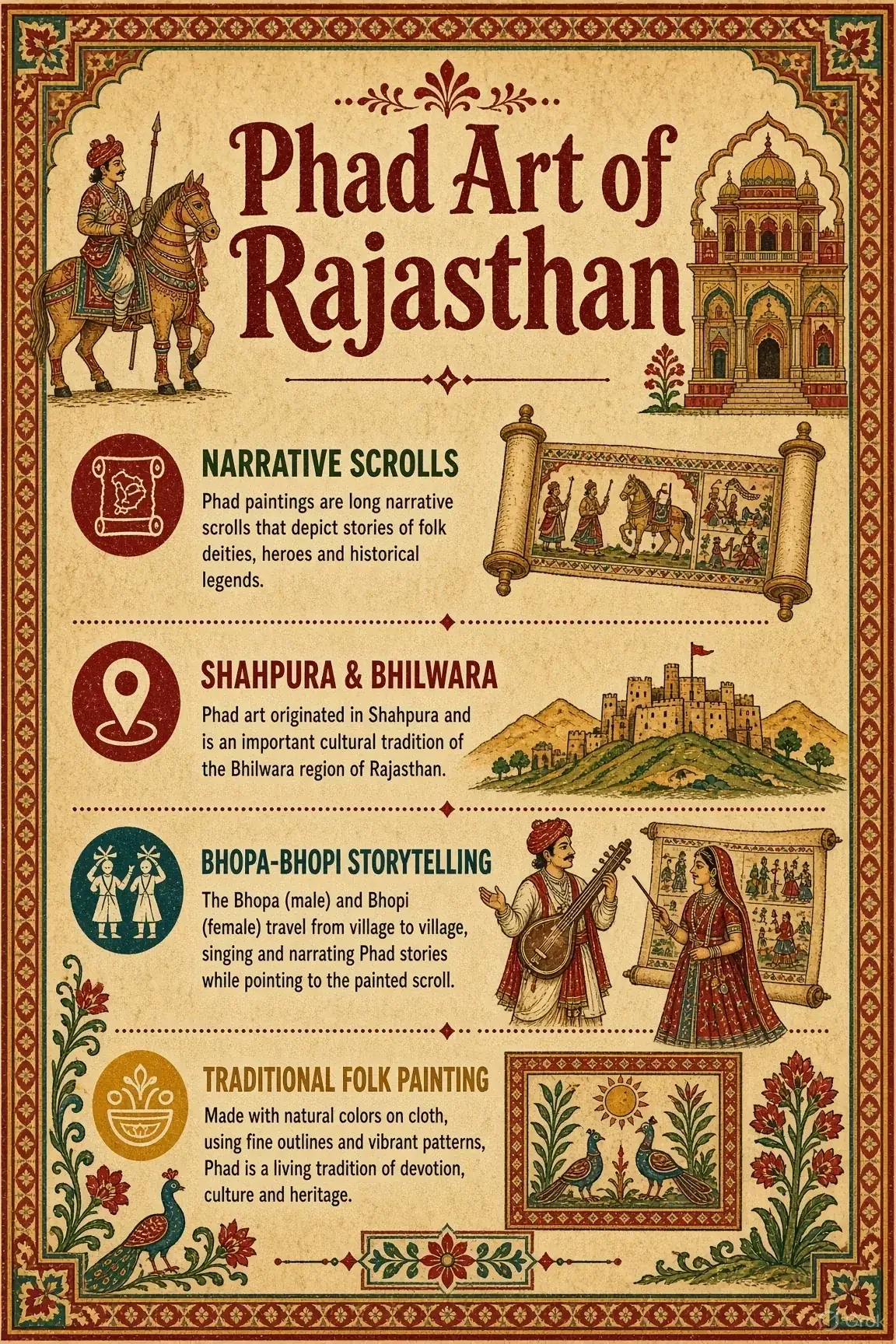
Phad art is a Rajasthani narrative scroll painting, made on long horizontal cloth and used by travelling storytellers to sing epics of local heroes and deities. Phad painting belongs to Rajasthan, and its best-known centres are Shahpura and Bhilwara. To start an easy Phad art drawing, plan a long horizontal panel, place the main hero at the centre, add small scenes around him in a rough circle, outline in a light colour, fill flat colours one at a time and finish with black outlines and a bold border.
This guide covers the meaning and history of Phad art, how a traditional scroll is read, the famous Pabuji and Devnarayan themes, materials and colours, easy drawing for beginners, a step-by-step method, designs and pictures, borders, school projects and modern decor. One honest note before we start: every practice design here is Phad-inspired learning material, not a traditional scroll. Traditional phads are made by hereditary Joshi painters, and we encourage you to learn from them, credit them and buy from them directly. For another Rajasthani folk tradition, see our Mandana art chart.
Table of contents
- What is Phad art?
- History of Rajasthani Phad art
- Understanding Phad art paintings
- Traditional Phad painting themes
- Hanuman Chalisa Phad art
- Phad art materials and colours
- Easy Phad art drawing for beginners
- How to make a Phad painting step by step
- Phad art painting designs and pictures
- Phad art border designs and colour combinations
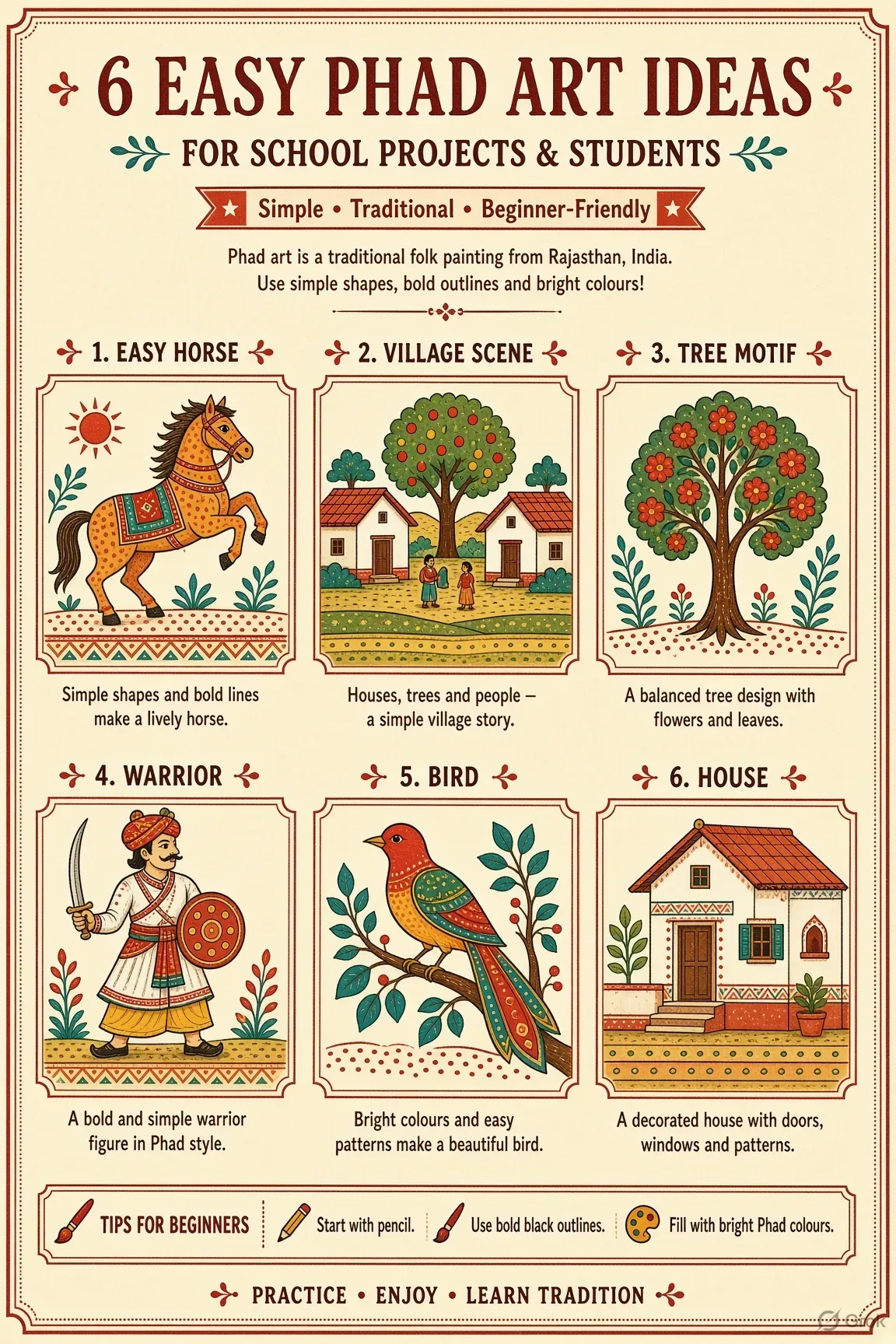
- Phad art for kids and school projects
- Modern Phad art for walls, canvas and home decor
- FAQs and conclusion
What is Phad art?
Meaning and defining characteristics
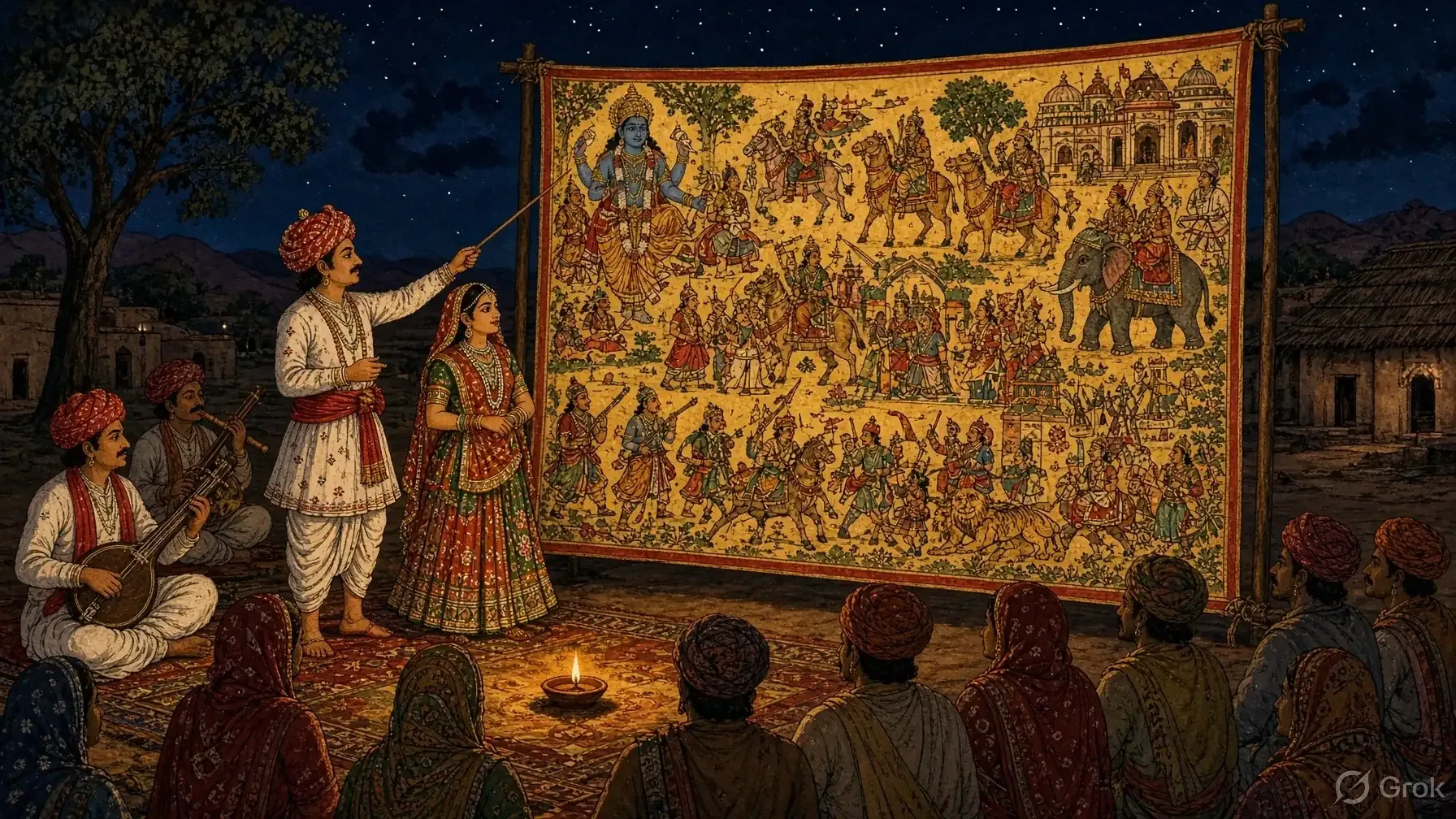
Phad (also written Phad or Pad) art is a form of Rajasthani folk painting made on a long cloth scroll. The scroll is not just decoration. Gaatha describes how a bard-priest unrolls it and narrates the story while an assistant lights the relevant part with an oil lamp. The painting works as a story map, a performance backdrop and a shrine at once. Its defining features are a crowded horizontal composition, flat bold colours, strong black outlines, round faces and a heavy border.
Phad art belongs to which state?
Phad painting belongs to Rajasthan. The tradition is linked mainly to Shahpura and the Bhilwara region, so searches for “phad painting of Rajasthan” and “Rajasthani Phad art” point to the same folk art. Related scroll traditions exist in other parts of India, but this guide covers the Rajasthani form.
History of Rajasthani Phad art
Shahpura and Bhilwara traditions
According to Gaatha, the Joshi painters trace their roots to Bharatpur near Bhilwara, moved to Shahpura in the 16th century, and some later settled in Bhilwara in the late 19th century. The oldest surviving example it cites, noted by John Smith, is a Devnarayan phad dated 1867, though the Joshi painters say the tradition is older. That gap is worth remembering: the earliest surviving piece and the age of the tradition are two different things, and we do not claim an exact start date.
A museum record at the Asian Art Museum shows how long these scrolls were used in practice. Its Pabuji phad, made in 1929 to 1930 in Shahapura, is painted in opaque watercolour on coarse cotton and measures about 57 by 180 inches. The record describes it as worn from heavy use in performance.
Joshi artists and traditional craftsmanship
Phad painters are known as Joshis and belong to the Chipa community of printers, says Gaatha, which links the name to “Jyotshi”, meaning horoscope or calendar predictors. The page also notes a community tradition that a devotee of Devnarayan named Chochu Bhat gave the Joshis the privilege of painting phads. Treat this as the community’s own account. In 1960, Shree Lal Joshi started the Chitrashala to preserve the art, which is one reason Bhilwara is a well-known centre today. The craft is hereditary and skill-heavy, so buying directly from Joshi artists or reputable cooperatives supports the people who keep it alive.
Understanding Phad art paintings
Narrative scroll composition
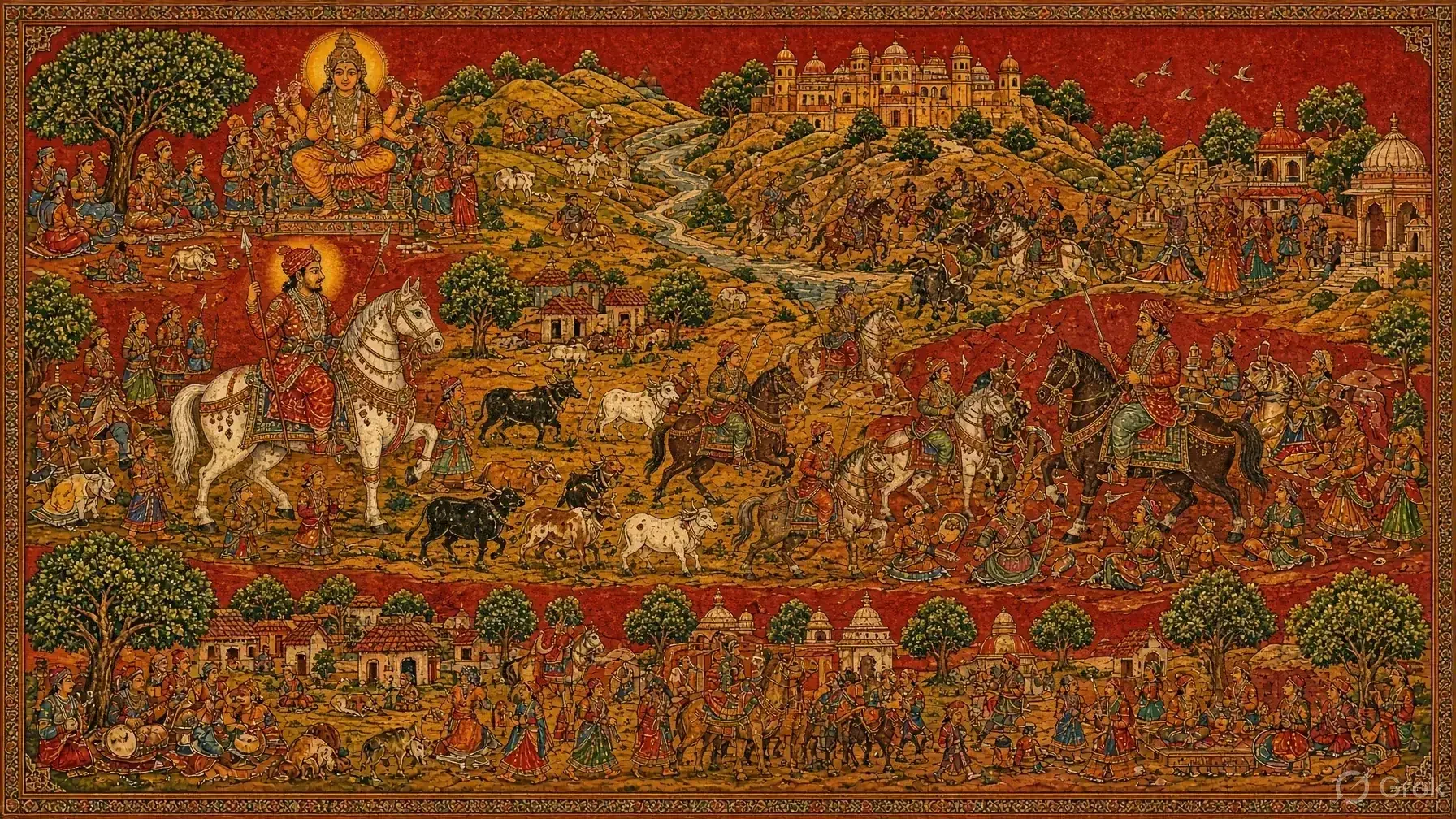
A phad is not read like a comic strip. Gaatha notes that figures are arranged by the geography of the epic rather than in a straight sequence, with the main character at the centre and often drawn larger. The Asian Art record describes the same logic for the Pabuji phad: the hero sits at the centre with his court, distant places appear near the edges, scenes of conflict mark the left and right sides, and the gods occupy the top. For your own practice, think of the scroll as a map of a story.
Human figures, architecture, animals and storytelling
Phad figures are flat and frontal, with round faces and large expressive eyes. Gaatha notes stylistic links to the Shekhawati region, including the round faces. Buildings appear as simple flat shapes, trees fill gaps, and animals such as horses and camels sit beside their riders. Everything is packed tightly, and little empty space is left. Small details such as ornaments, turbans and weapons help tell characters apart.
Bhopa and Bhopi performances
Gaatha describes the Bhopa as a priest-storyteller, usually from the Nayak community, who travels between villages, while his wife, the Bhopi, supports the performance. He wears a red baga, a safa and ghunghroo anklets. Performances are often held on winter nights, and the Bhopa may adapt the narration to audience questions. The Pabuji epic is described as long enough to need several nights. Without the live performance, a phad is hard to follow fully, which the Asian Art record also points out.
Traditional Phad painting themes
Pabuji Ki Phad
Pabuji ki Phad tells the story of Pabuji, described by the Asian Art record as a god of the Rebari camel herders, shown as a princely warrior with his court at Kolu. Gaatha gives the size of a Pabuji phad as about 15 feet long. Smaller versions are called Phadhye. When you practise, keep Pabuji large at the centre, his horse beside him, and place smaller scenes around the edges.
Devnarayan Ki Phad
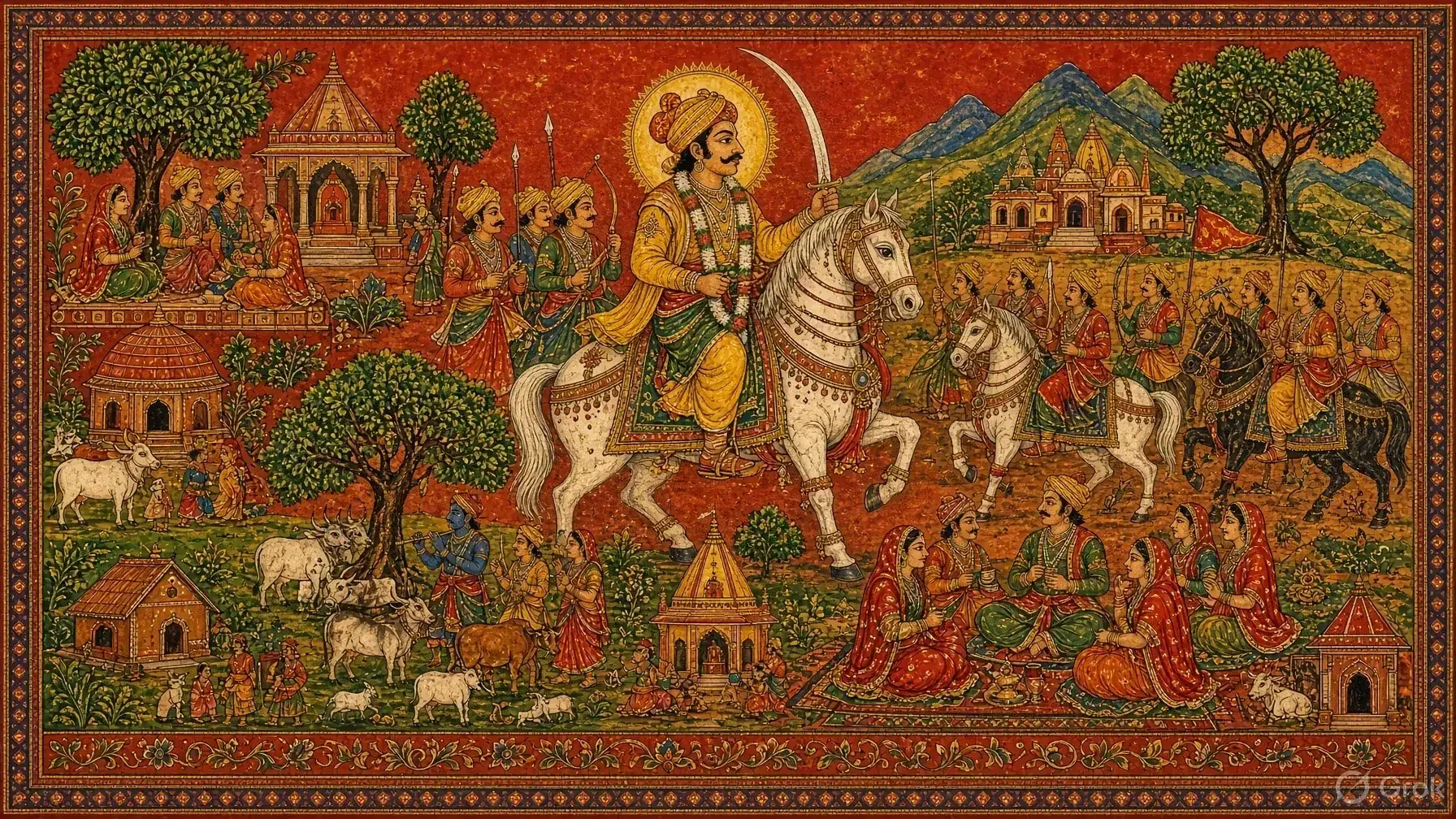
Devnarayan ki Phad is the other great narrative of this art. Gaatha gives its length as about 30 feet in one section and 35 feet in another, so the page itself gives both figures, and the height of phads as roughly 4 to 5 feet. Other subjects listed by Gaatha include Dhola-Maaru, Hadi Rani, Rama and Sita, Krishna, Rani Padmini and Prithviraj Chauhan. Earlier phads also depicted heroes such as Goga Chauhan, Teja Ji and Amar Singh Rathore. Phad subjects are mostly regional heroes and deities rather than only the great Sanskrit epics.
Hanuman Chalisa Phad art
Contemporary devotional storytelling concepts
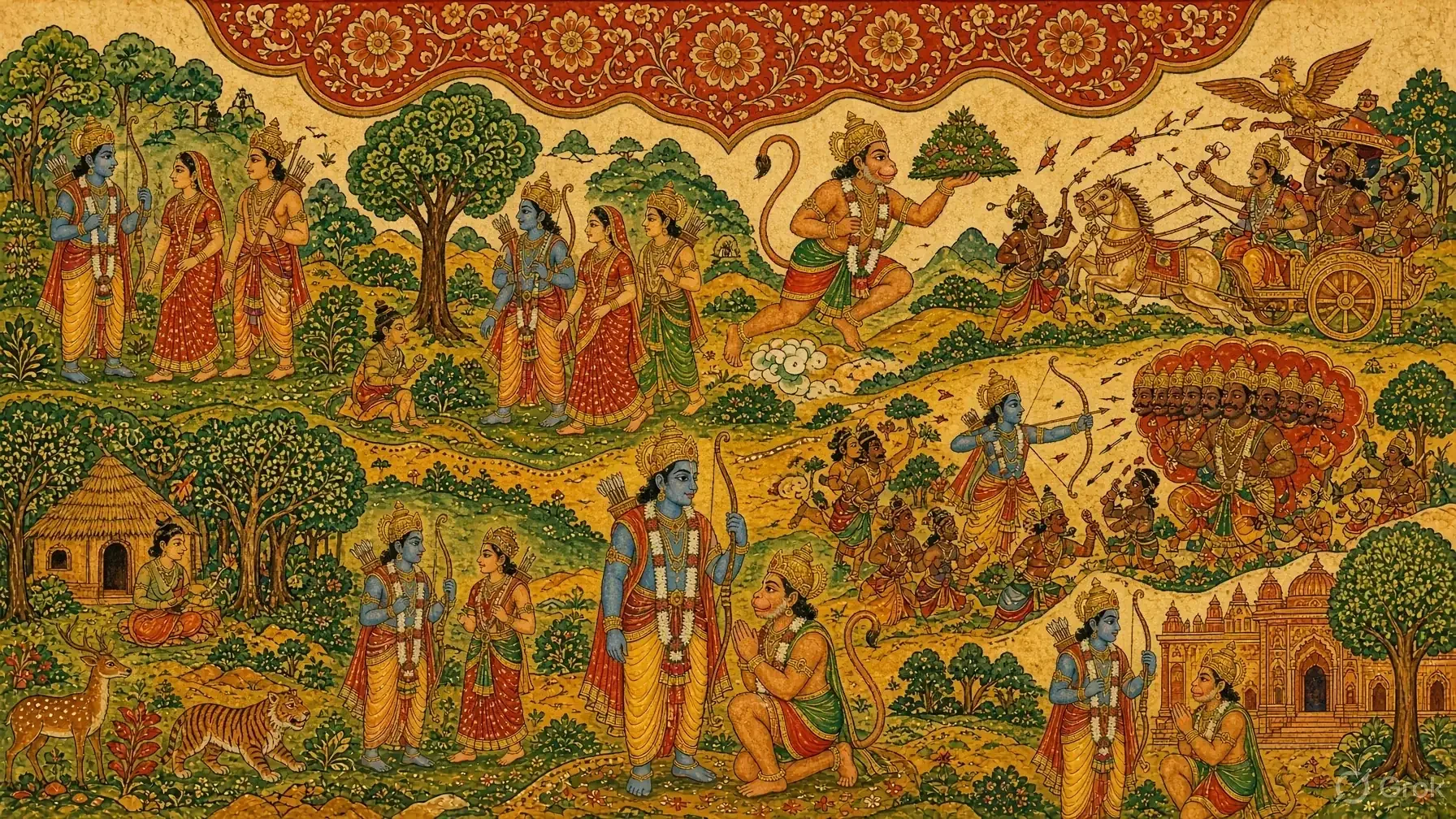
“Hanuman Chalisa Phad art” is a popular search, and it needs an honest label. The traditional subjects documented above are Pabuji, Devnarayan and similar folk epics. Hanuman Chalisa phad is a contemporary devotional adaptation: artists and hobbyists borrow the phad format, a long horizontal cloth with a central figure and surrounding scenes, to illustrate a well-loved prayer. It is a creative use of the form, not a documented traditional Phad subject, and we recommend calling it “Phad-style” or “Phad-inspired”.
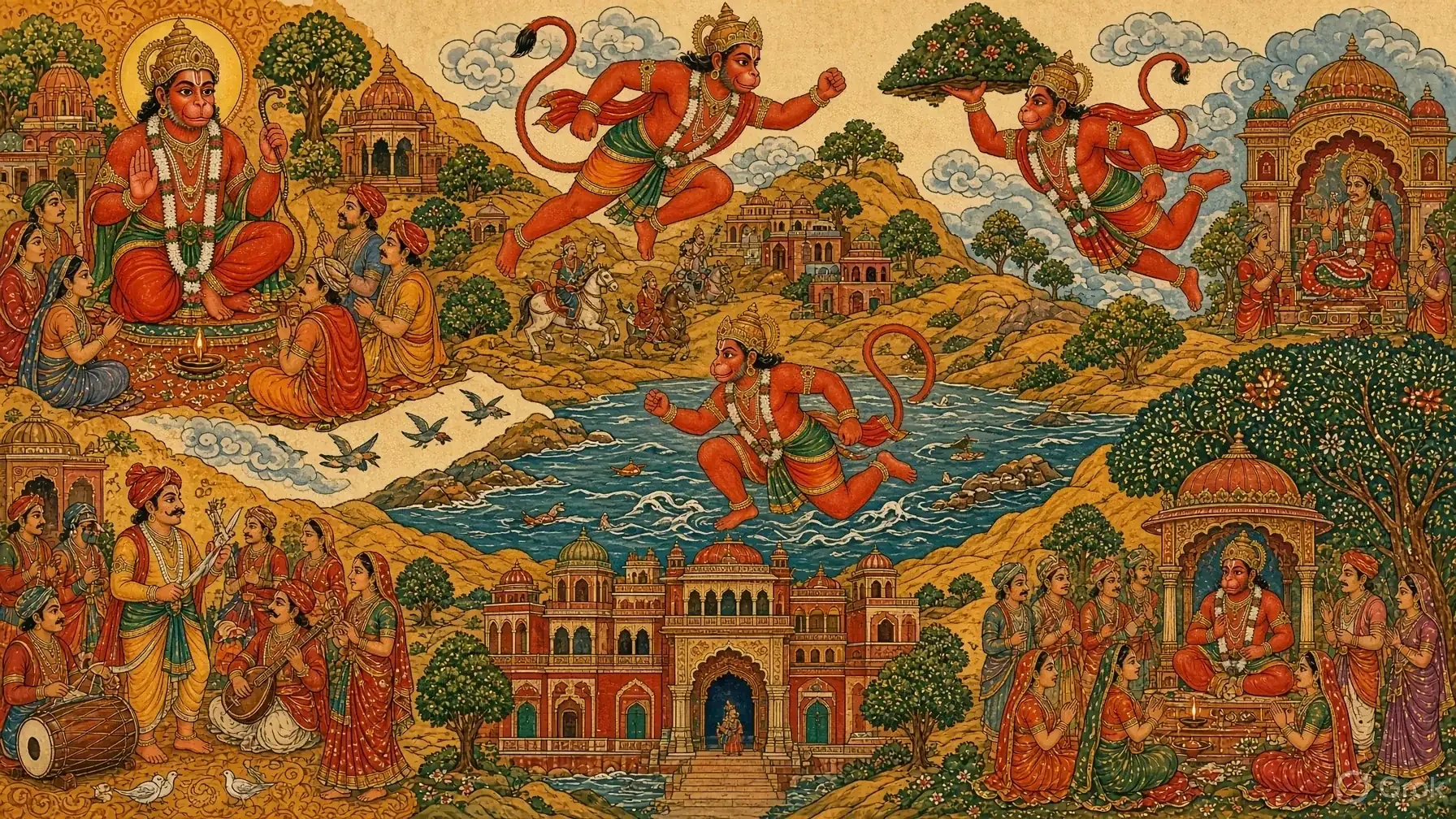
How to represent selected verses through sequential scenes
- Choose a few verses, not all forty. Pick four to six that show clear actions, since a crowded panel is hard to read.
- Put Hanuman at the centre. Draw him larger than other figures, following the phad habit of the main character at the centre.
- Place scenes around him. For example, Rama and Sita on one side, the leap across the sea on another, and the mountain-carrying scene on a third.
- Separate scenes with trees and buildings, not boxes, as traditional phads do.
- Write the chosen verse names or numbers in a small neat caption if you want to guide the viewer.
Distinguish contemporary adaptations from traditional Phad subjects
When you share your work, add a short note such as “Phad-inspired illustration of selected Hanuman Chalisa verses”. That way viewers know it is a modern adaptation and not a traditional Joshi phad. Please do not describe AI-generated or classroom work as authentic Phad art, and avoid giving religious meanings to colours or symbols that we cannot source.
Phad art materials and colours
Traditional cloth and pigments
Gaatha records the traditional method. Long scrolls are made on hand-woven cloth, prepared with tamarind seed powder and Arabic gum, then starched with wheat or barley flour boiled with water and gum, sun-dried and burnished smooth with a stone. Pigments were traditionally mineral powders mixed with tree gum, and earthen colours with gum, water and indigo were adopted later. Synthetic and acrylic colours are now common. The page lists light yellow for sketching, orange for faces and skin, green for trees, brown (geru), vermilion for dress, black, indigo and gold or silver highlights. We do not give recipes for mineral pigments here, since some traditional materials are hazardous and should be learned from artists.
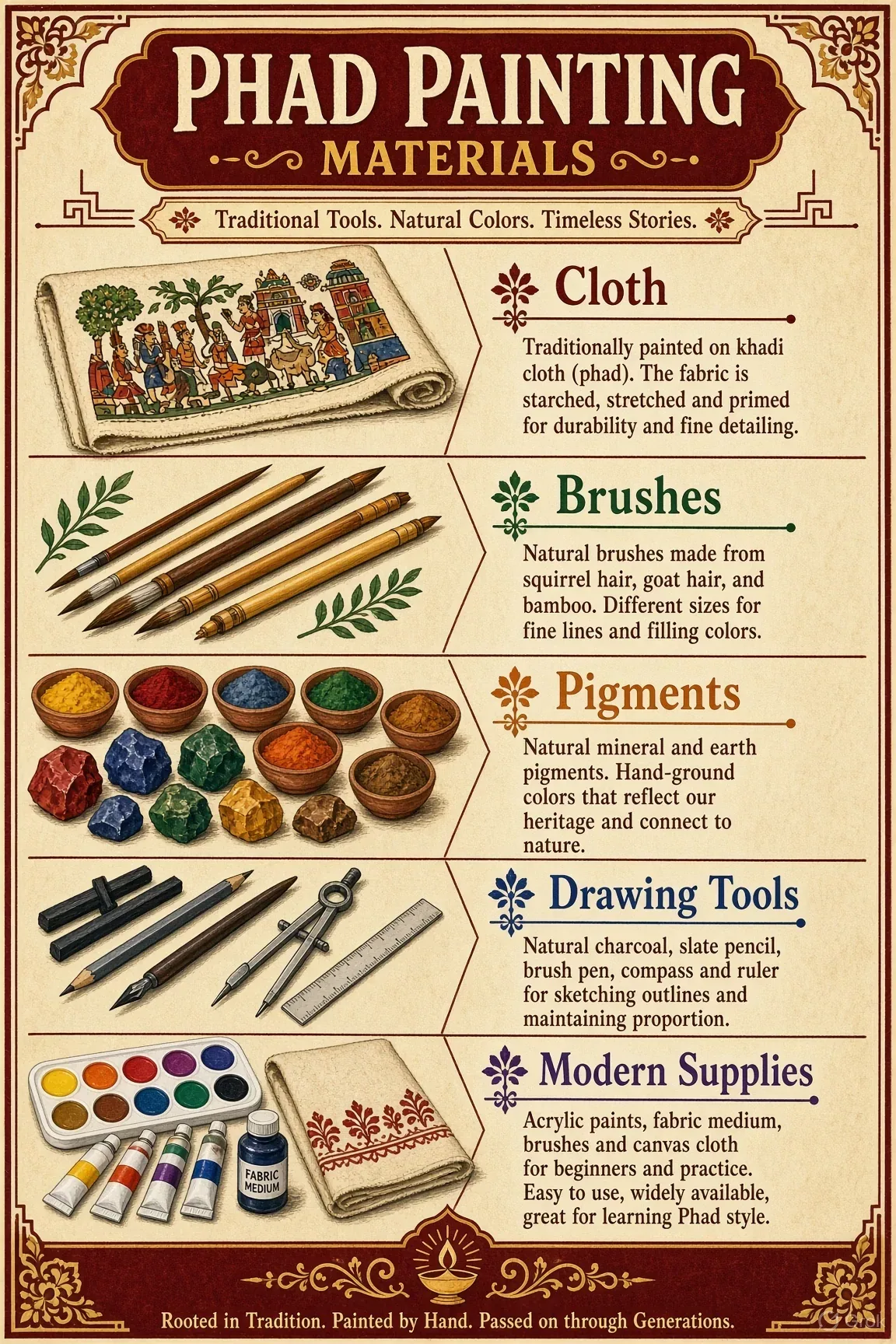
Modern paper, canvas, brushes and suitable colours
- Surface: thick cartridge paper cut into a long strip, cotton cloth, or a narrow canvas panel.
- Colours: poster colour or acrylic in orange, yellow, red, green, brown, blue, white and black.
- Brushes: a flat brush for fills and a fine round brush for outlines and faces.
- Outlines: a black waterproof pen or a fine brush with black paint.
- Extras: pencil, eraser, ruler, palette, water jar and tissue.
For cloth, wash and iron the fabric, stretch it flat and use fabric paint or fabric medium as the label directs. Children should use non-toxic colours suited to their age.
Easy Phad art drawing for beginners
Human figures and facial features
Easy Phad art drawing starts with simple, flat figures. Draw a round face, then add large almond eyes, a straight nose and a small mouth, all in profile or three-quarter view. Add a turban or crown, a broad chest, a narrow waist and a long skirt or dhoti. Keep the hands and feet simple. Gaatha notes that the eye of the main character is painted last, as it is believed to bring the painting to life, so save the eye of your hero for the end if you want to follow the tradition.
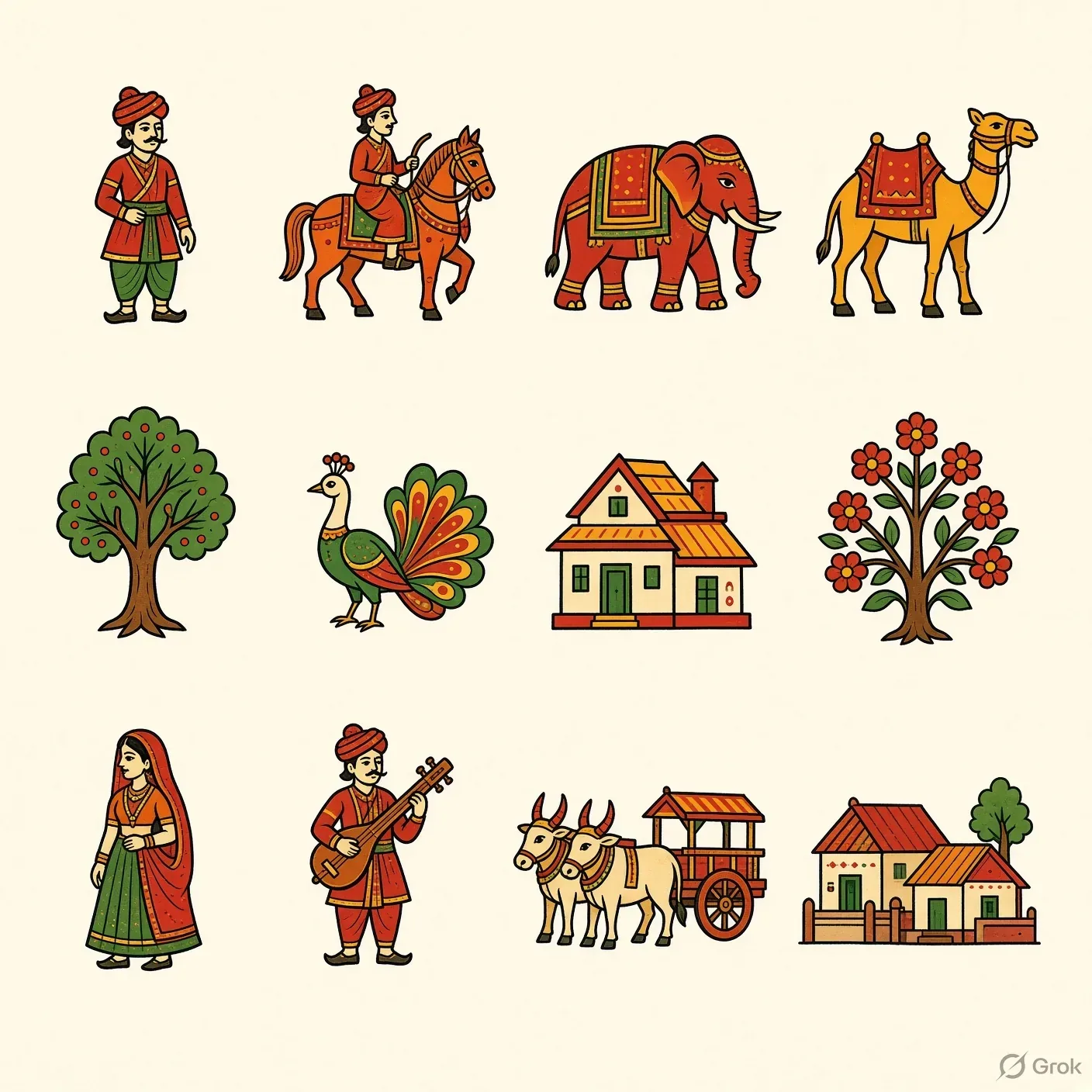
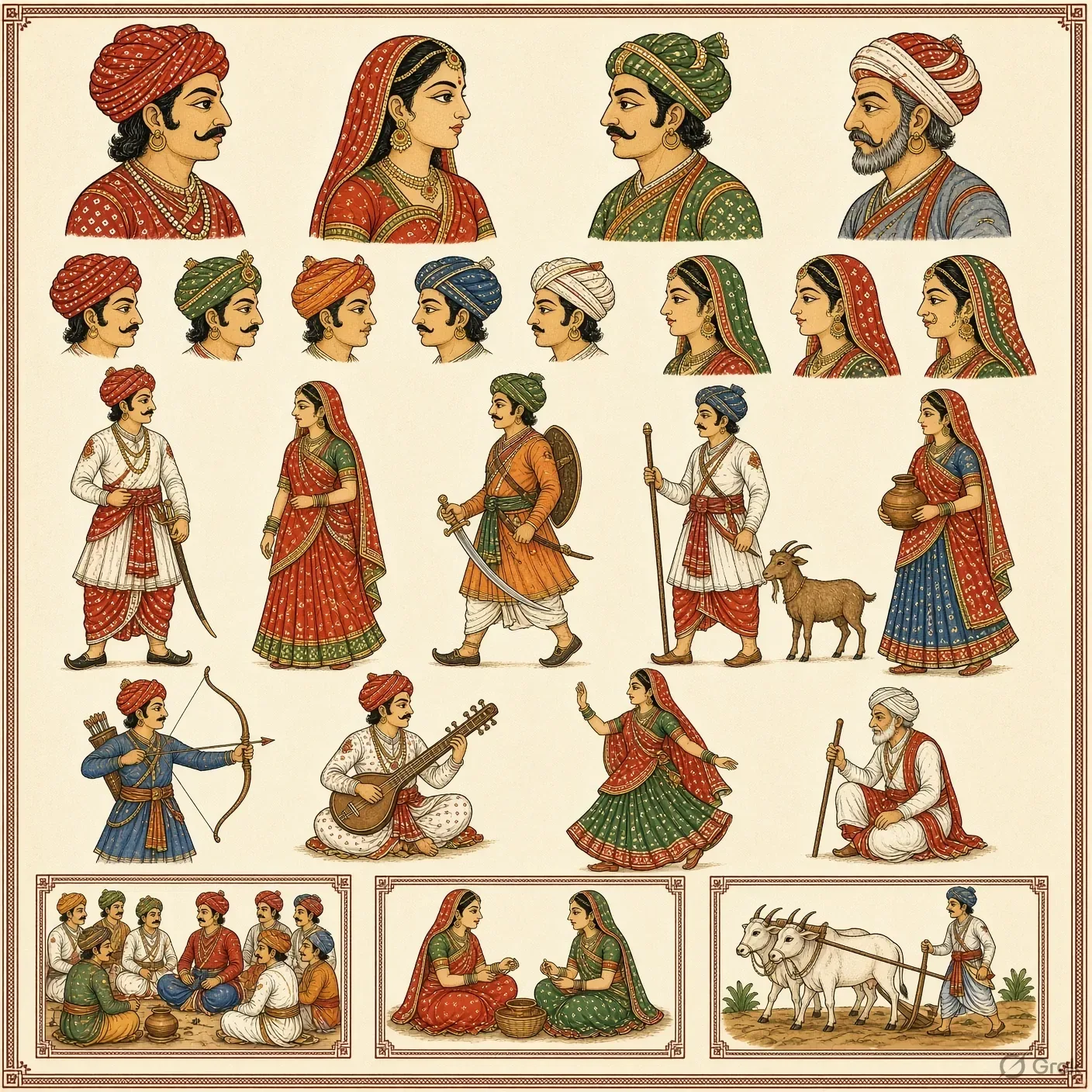
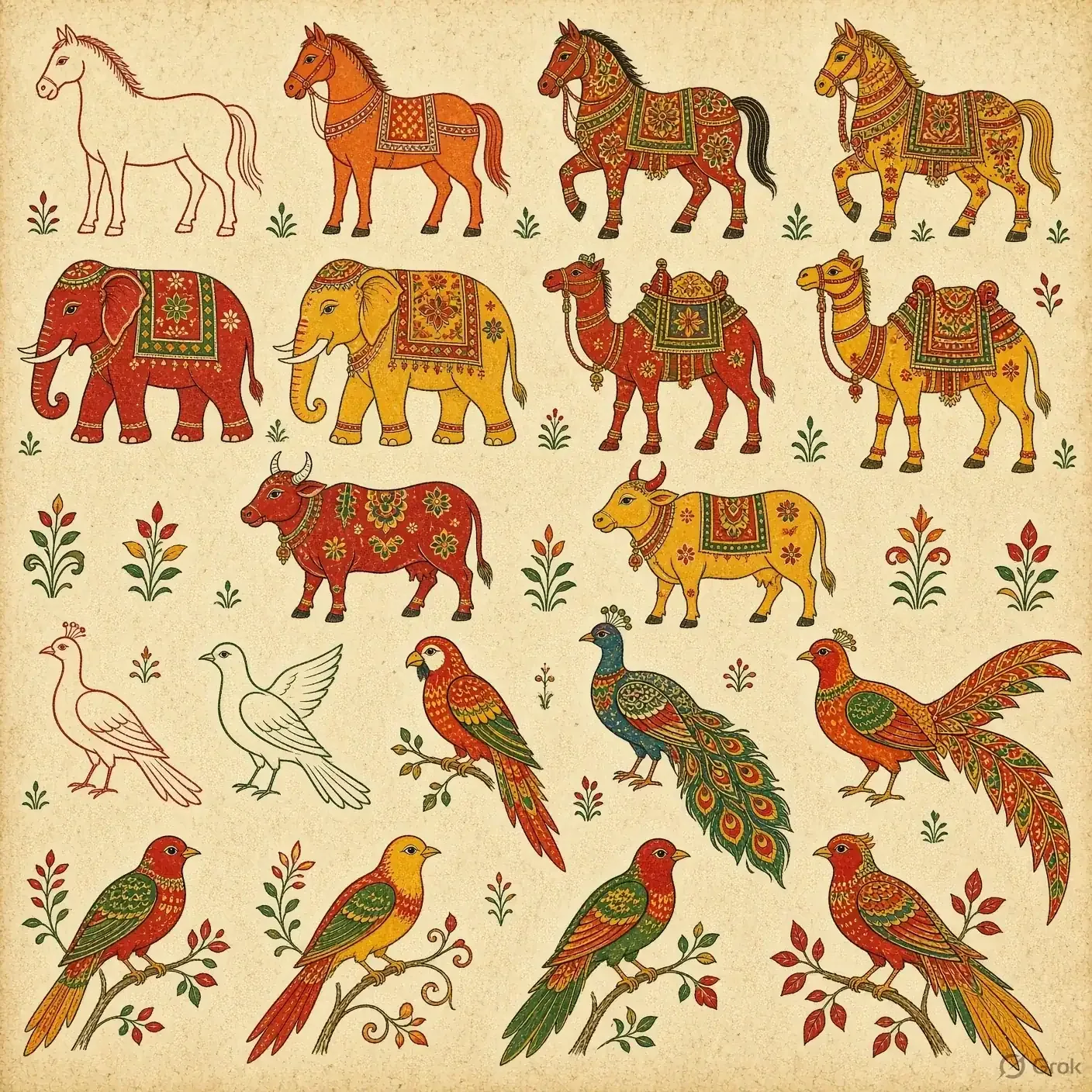
Elephants, horses, camels and trees
- Horse: a long oval body, a curved neck, thin legs and a flowing tail. Place a rider on top.
- Camel: a bean-shaped body, a long curved neck, a small head and a single hump. Camels suit the Pabuji theme because of his link to camel herders.
- Elephant: a large rounded body, a curled trunk and a decorated cloth on its back.
- Tree: a thick trunk with a rounded crown of leaves, repeated to fill gaps between scenes.
How to make a Phad painting step by step
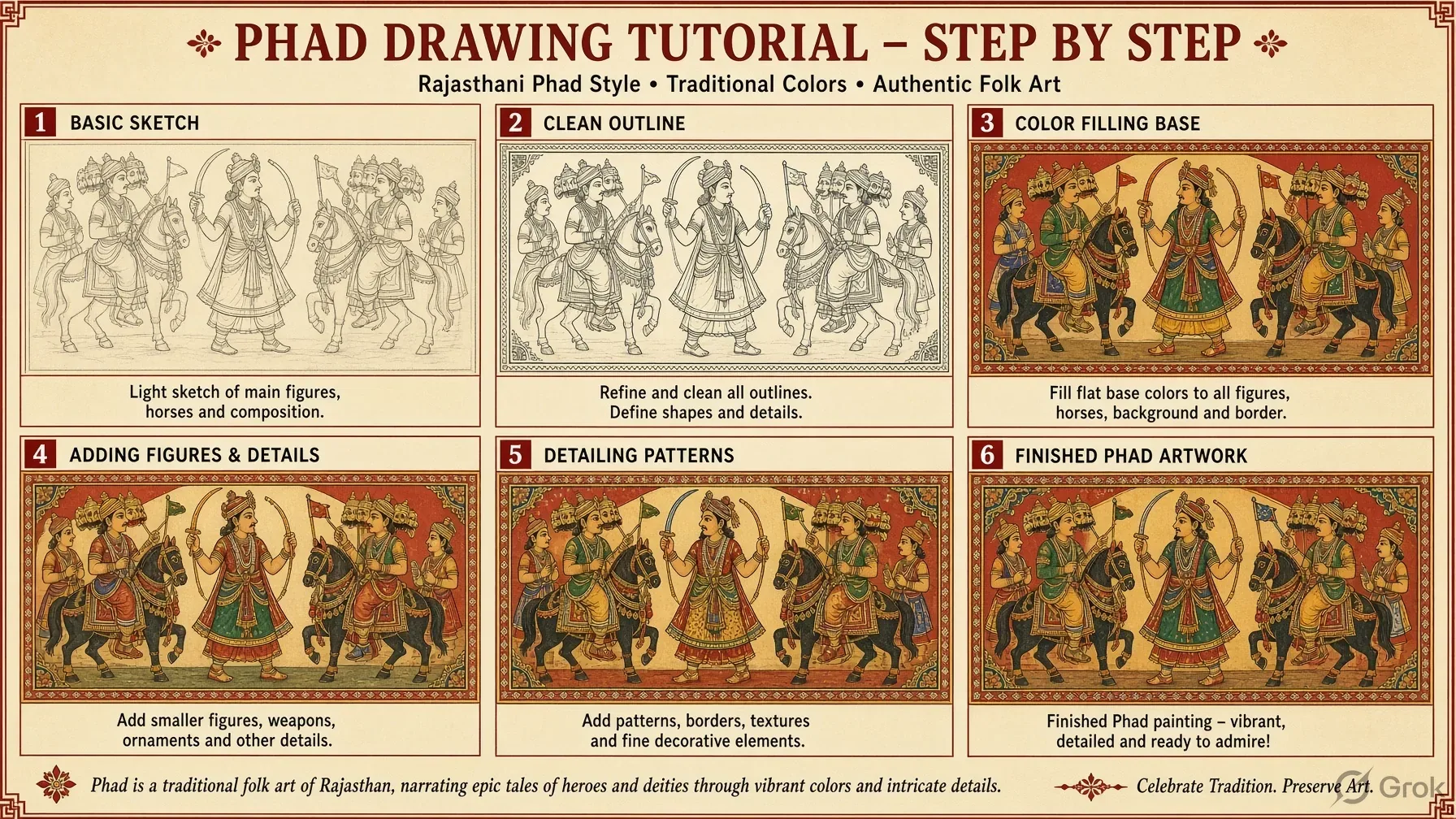
Sketch and composition planning
- Plan the panel. Use a strip about three times longer than its height. Mark a border about two fingers wide.
- Place the hero. Draw a large central figure with a horse or companion.
- Add scenes around. Use a rough circle of smaller scenes, with the sky or gods at the top and distant places near the edges.
- Fill gaps. Use trees, buildings and animals so that no large empty space remains.
Outline, colouring and detailing
The traditional order recorded by Gaatha is a good model. A ritual begins the work, in which an unmarried daughter of the family draws a swastika on the canvas. The cloth is prepared, the outline is drawn in yellow, colours are filled one at a time starting with orange for faces and bodies, black details and a black outline follow, then the border, and last the eye of the main character. You can adapt this for practice:
- Light outline. Trace your pencil sketch with a pale yellow or light pencil line.
- Skin and faces first. Fill faces and bodies with orange or a warm skin tone.
- Fill other colours. Do one colour at a time across the whole panel, letting each dry: green for trees, red for dress, brown for animals.
- Black outline and details. Outline every figure, add eyes, hair, ornaments and patterns.
- Border. Paint a floral inner border and a thick red outer border.
- Final eye. Paint the main character’s eye last.
Working one colour at a time keeps the palette consistent and saves time on washing brushes.
Phad art painting designs and pictures
Traditional storytelling designs
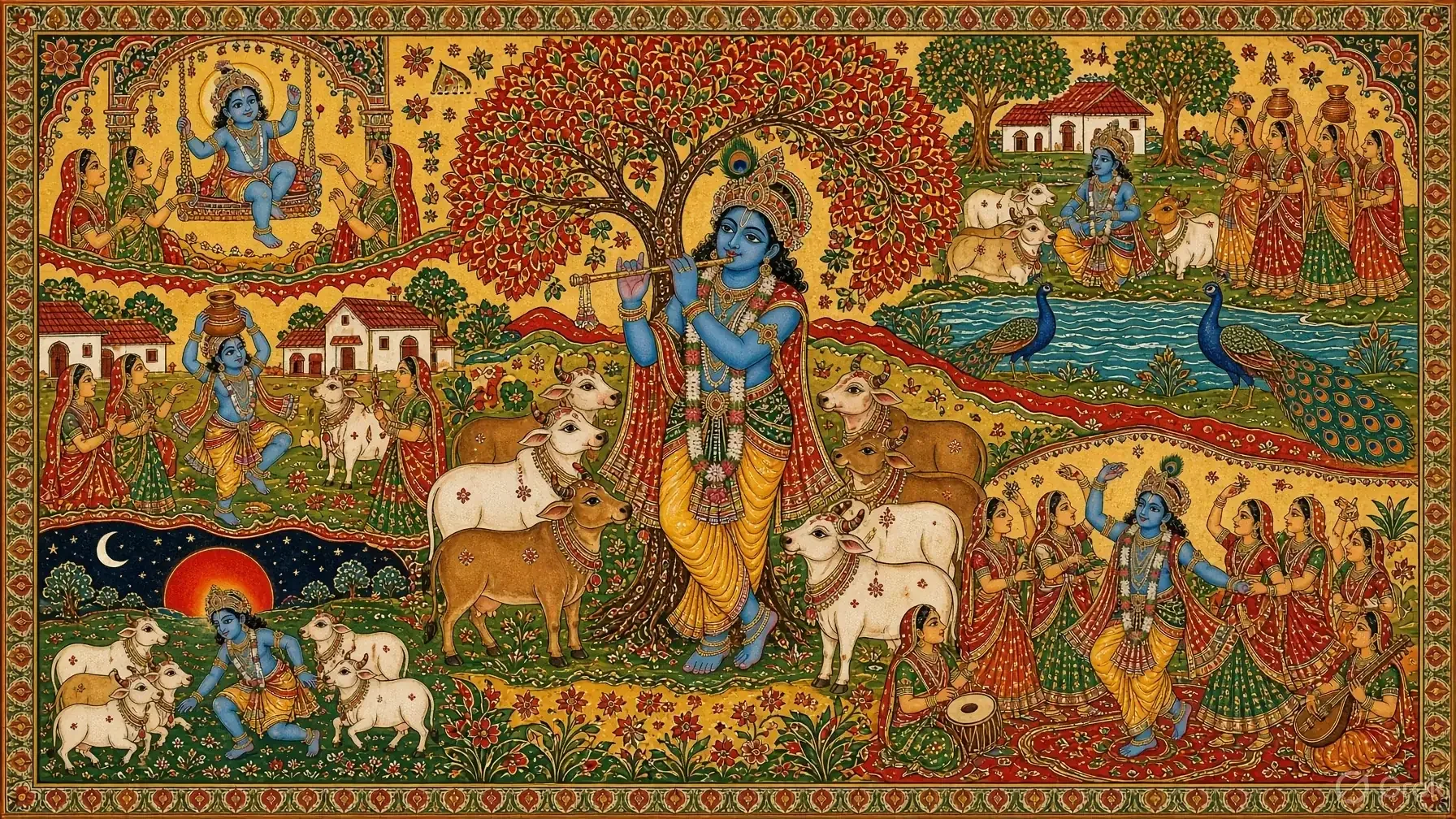
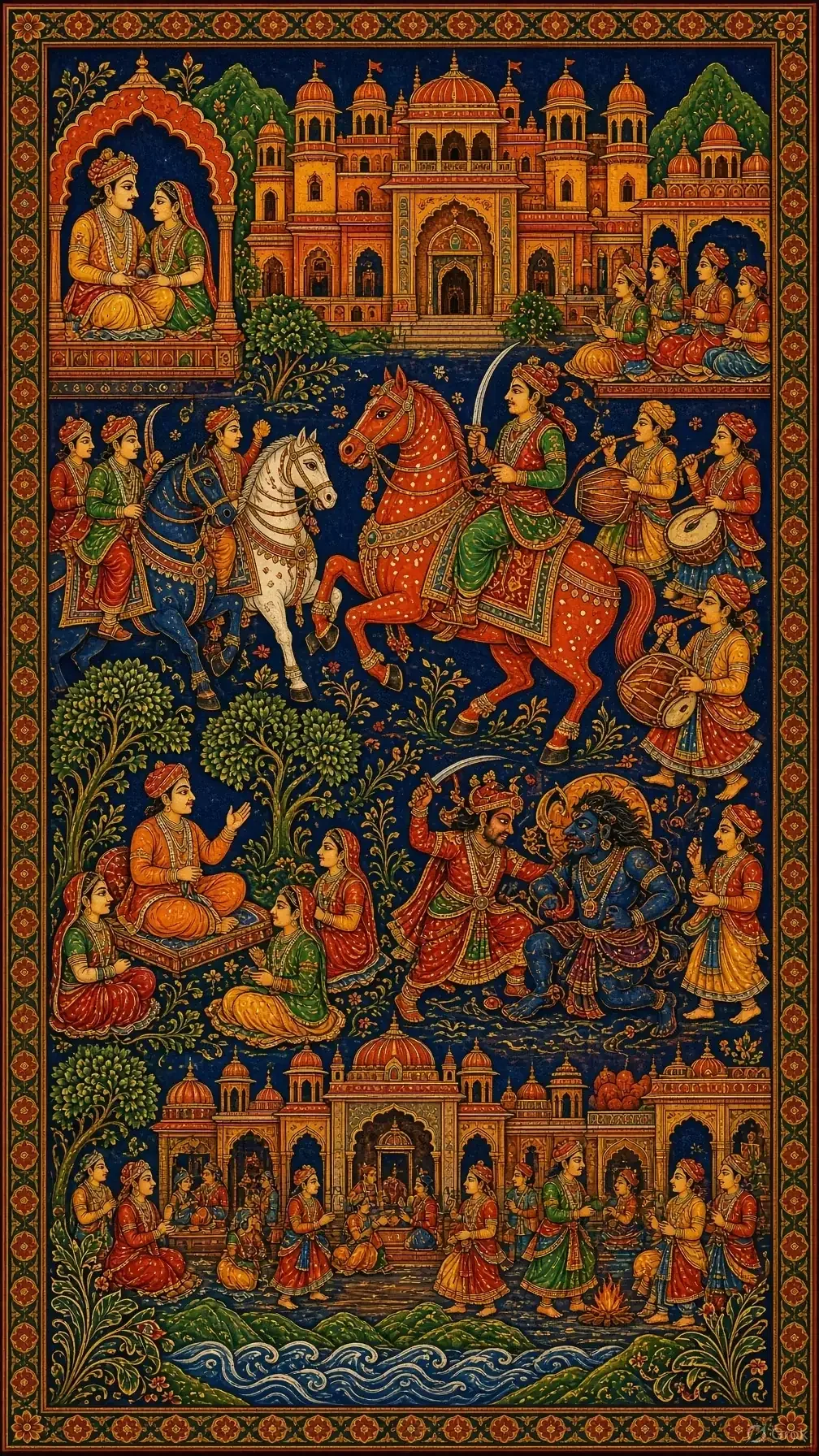
When people search for a “picture of Phad art”, they usually want references. Traditional designs show a central hero with a horse, a court scene, battle scenes at the sides and gods at the top. Museum and artist sources are the best way to see authentic scrolls; use them for understanding the composition, not for tracing.
Modern decorative interpretations
| Design idea | Layout | Best for |
|---|---|---|
| Hero and horse panel | Large central rider, small scenes around | Wall art |
| Camel caravan strip | Row of camels and trees | Bookmark, border |
| Village scene | Houses, trees, people in small groups | School chart |
| Hanuman Phad-inspired | Central figure with four to six scenes | Devotional decor |
| Single-figure panel | One large figure with border | Greeting card |
Phad art border designs and colour combinations
Border patterns and colour palettes
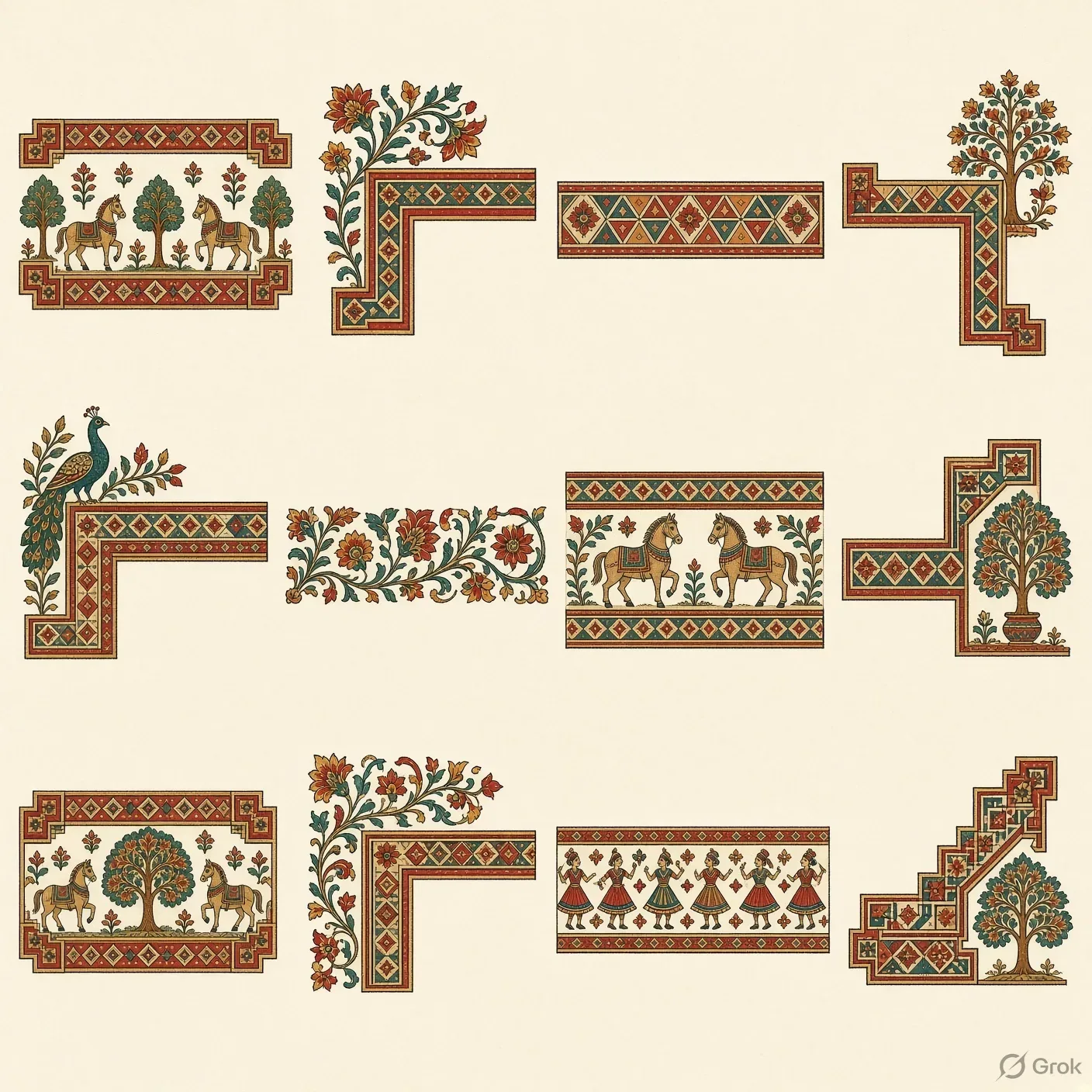
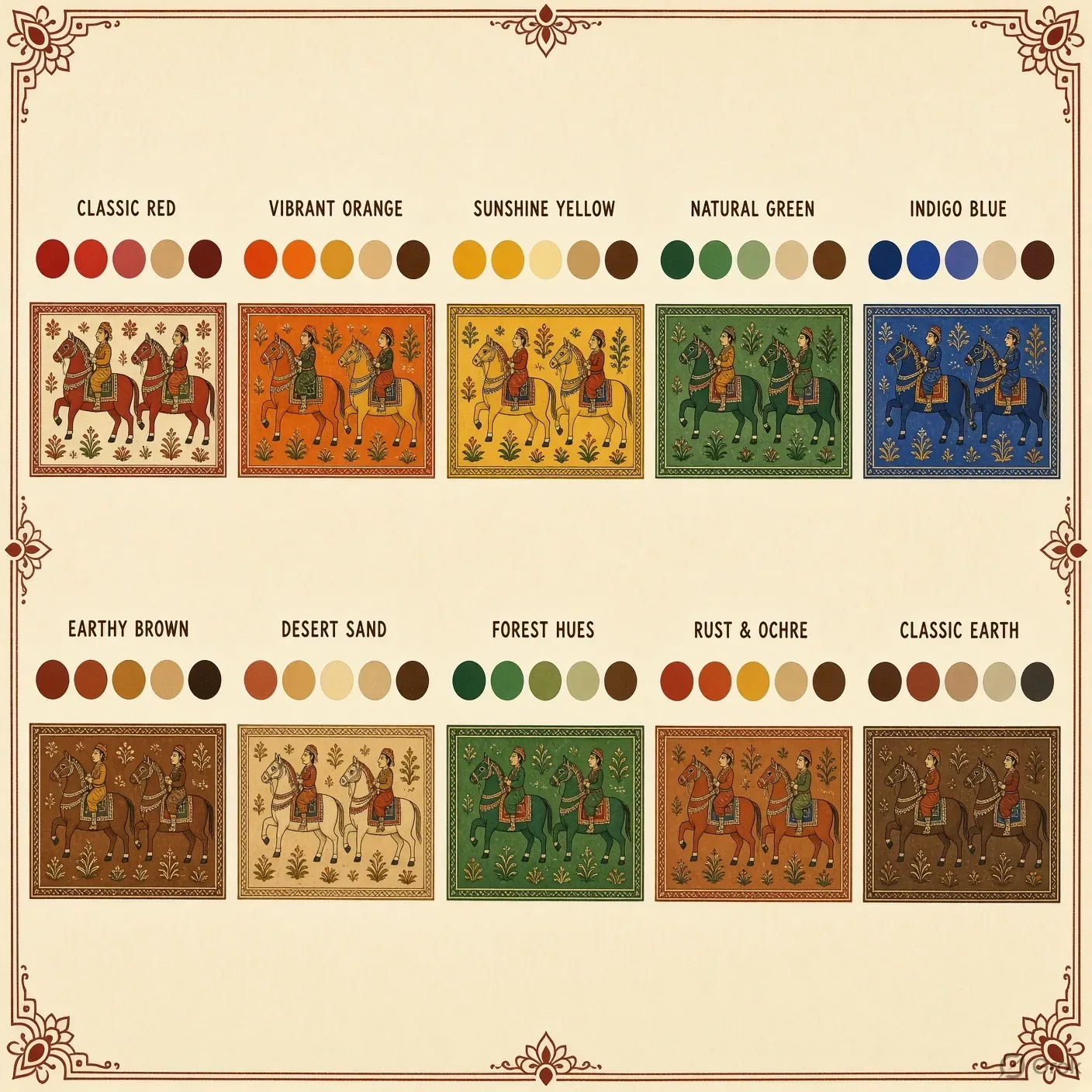
Gaatha describes phad compositions as framed by a floral border and a thick red border. For a Phad art border design, paint a narrow inner band of repeating small flowers or leaves, then a thick red outer band. The colours below are practical suggestions for Phad-inspired work, not rules of the tradition.
| Palette | Colours | Mood |
|---|---|---|
| Traditional-inspired | Orange, yellow, green, red, brown, black | Warm, earthy |
| Royal | Deep red, indigo, gold highlights | Rich, formal |
| Soft | Cream, ochre, olive, brown | Calm, modern |
| Bold | Red, black, white, yellow | Graphic |
Keep large areas to a few colours and use black outlines to hold everything together.
Phad art for kids and school projects
Simple drawing exercises
- Draw round faces with big eyes on a strip of paper.
- Practise a horse and a camel using simple ovals.
- Make a border with repeating flowers, then a thick red band.
- Retell a short folk story in three small scenes around one large figure.
Project presentation and short explanatory notes
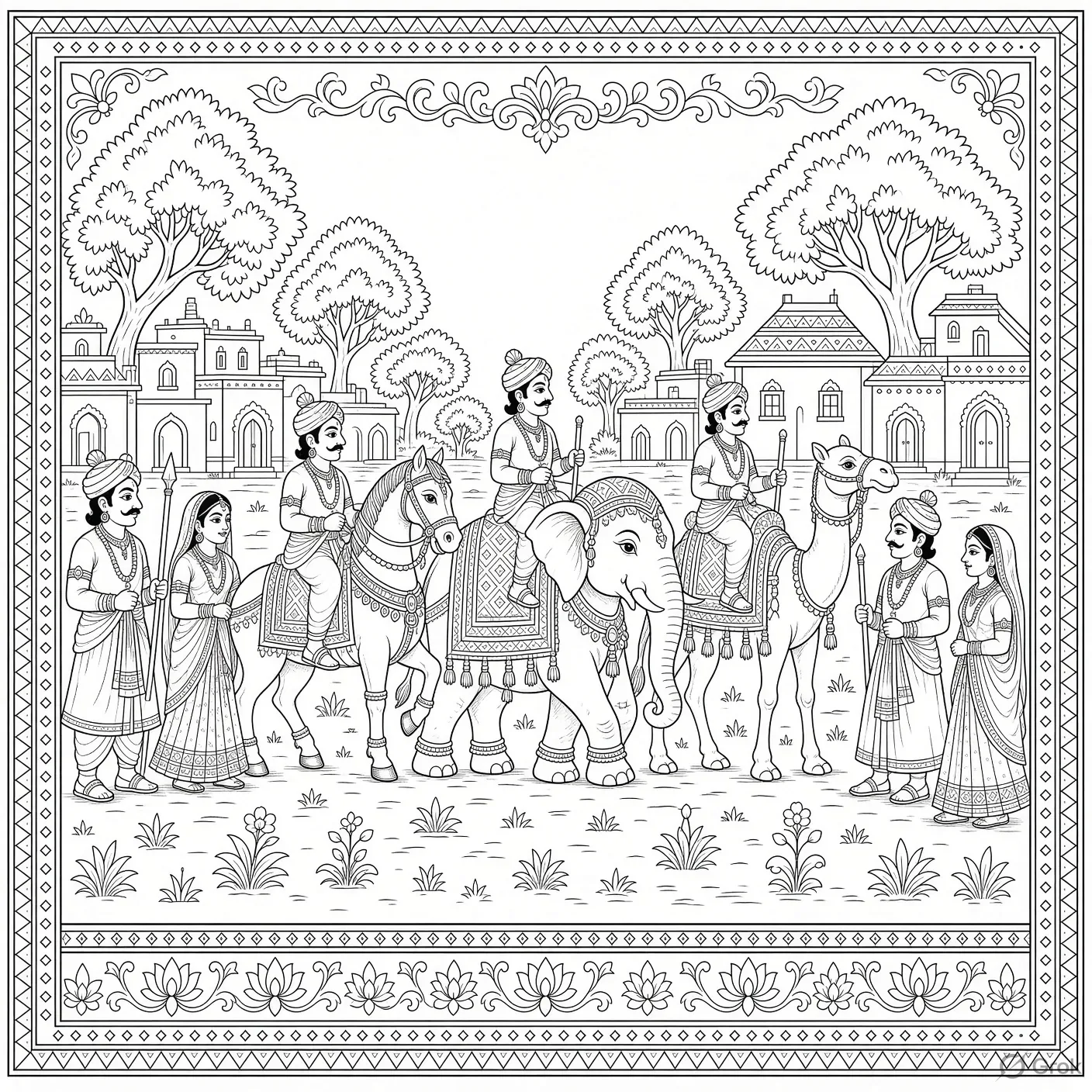
For a Phad art school project, add a short note of three or four lines: Phad art is a scroll painting from Rajasthan, linked to Shahpura and Bhilwara, painted by Joshi artists and used by Bhopas to narrate stories of Pabuji and Devnarayan. Add a map, a drawing and a small border. Practice sheets for printing are not available yet. We plan to add original downloadable sheets later.
Modern Phad art for walls, canvas and home decor
Wall art, canvas panels and decor ideas
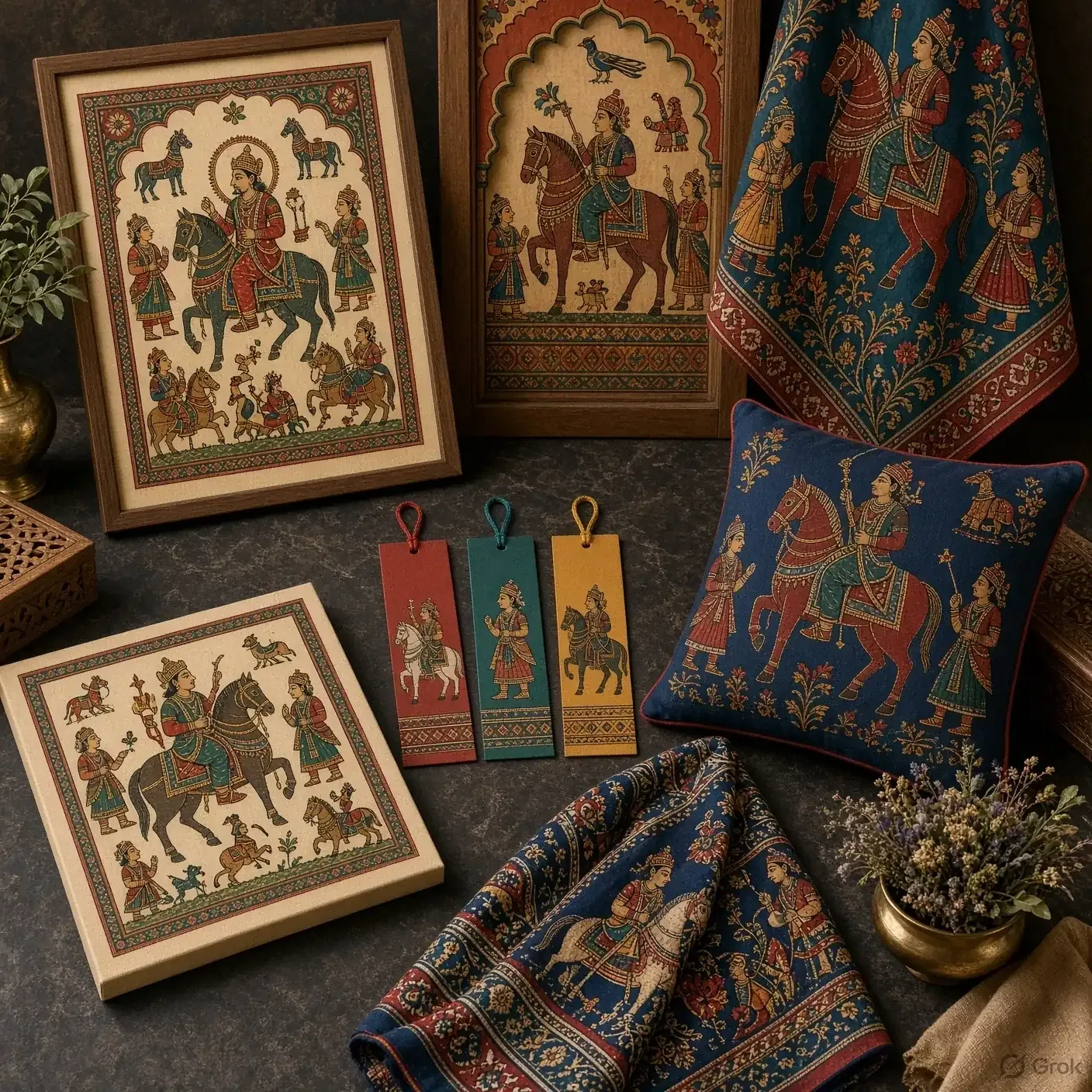
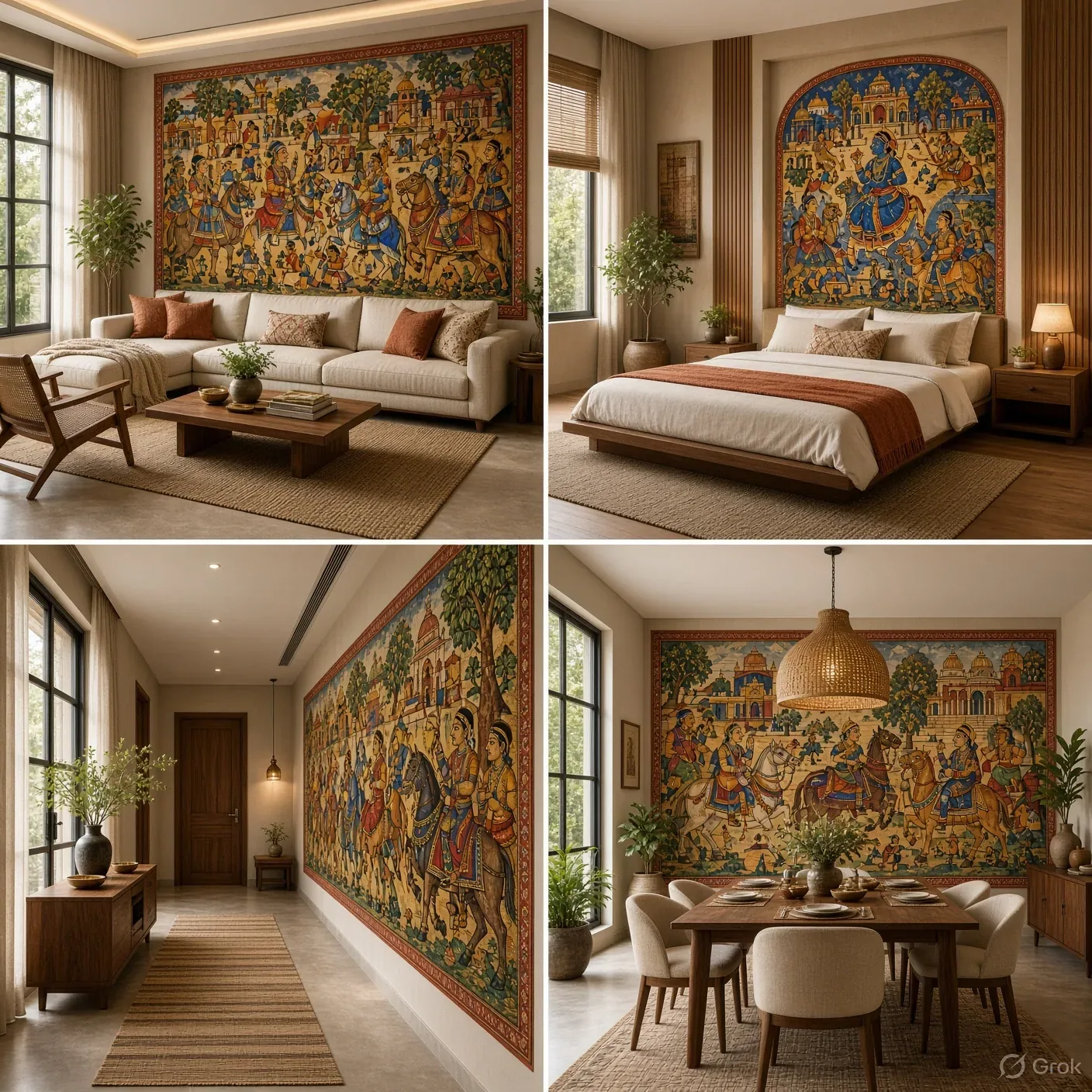
A long narrow canvas suits a Phad-inspired design above a sofa, bed or console. Keep the horizontal format, add a bold border and choose two or three dominant colours. Smaller panels work as bookmarks, cards and cushion covers. Hang cloth paintings away from direct sun and moisture. Label your work “Phad-inspired” and credit the tradition, and if you want an authentic scroll, buy from Joshi painters directly.
FAQs and conclusion
1. What is Phad art?
It is a Rajasthani narrative scroll painting used by Bhopa storytellers to narrate epics of local heroes and deities.
2. Phad painting belongs to which state?
Rajasthan, mainly the Shahpura and Bhilwara region.
3. Who paints traditional phads?
Joshi painters, who belong to the Chipa community, according to Gaatha.
4. What are Pabuji ki Phad and Devnarayan ki Phad?
They are the two best-known phad narratives, telling the stories of Pabuji and Devnarayan.
5. What are Bhopa and Bhopi?
A Bhopa is the priest-storyteller who performs in front of the phad, and the Bhopi is his wife, who supports the performance.
6. How do I start an easy Phad art drawing?
Draw a long horizontal panel, place a large hero in the centre, add small scenes around, outline, fill colours one by one and finish with black lines and a border.
7. Is Hanuman Chalisa Phad art traditional?
No. It is a contemporary adaptation of the phad format, not a documented traditional subject.
8. Can I paint Phad on paper?
Yes. Traditional scrolls are on cloth, but paper and canvas work well for practice.
9. Which colours are used in Phad painting?
Traditionally orange, yellow, green, brown, red, black and indigo, with gold or silver highlights. Modern artists often use acrylic.
10. How can I support Phad artists?
Buy directly from Joshi artists or reputable cooperatives, credit them, and do not sell your own practice work as authentic Phad.
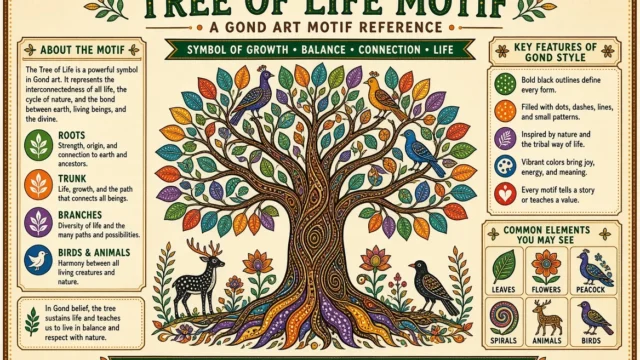
Conclusion: Phad is a living storytelling tradition, so learn the way a story is laid out, keep your hero at the centre and respect the community that carries the craft. For more folk-art practice, explore our Madhubani guide, the Warli chart, the Gond art tutorial, the Lippan art guide and the Pithora painting chart.
Sources and further reading: Gaatha: Phad painting of Bhilwara; Asian Art Museum: The Story of Pabuji.
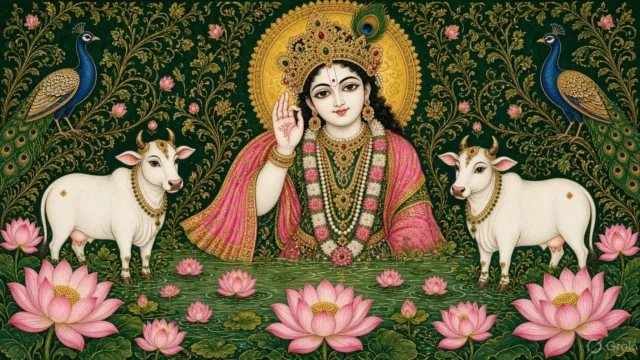
Related Rajasthani art: Pichwai painting: cows, lotuses and Nathdwara art
















Share Your Opinion
Comments are closed on this post.