 Vista
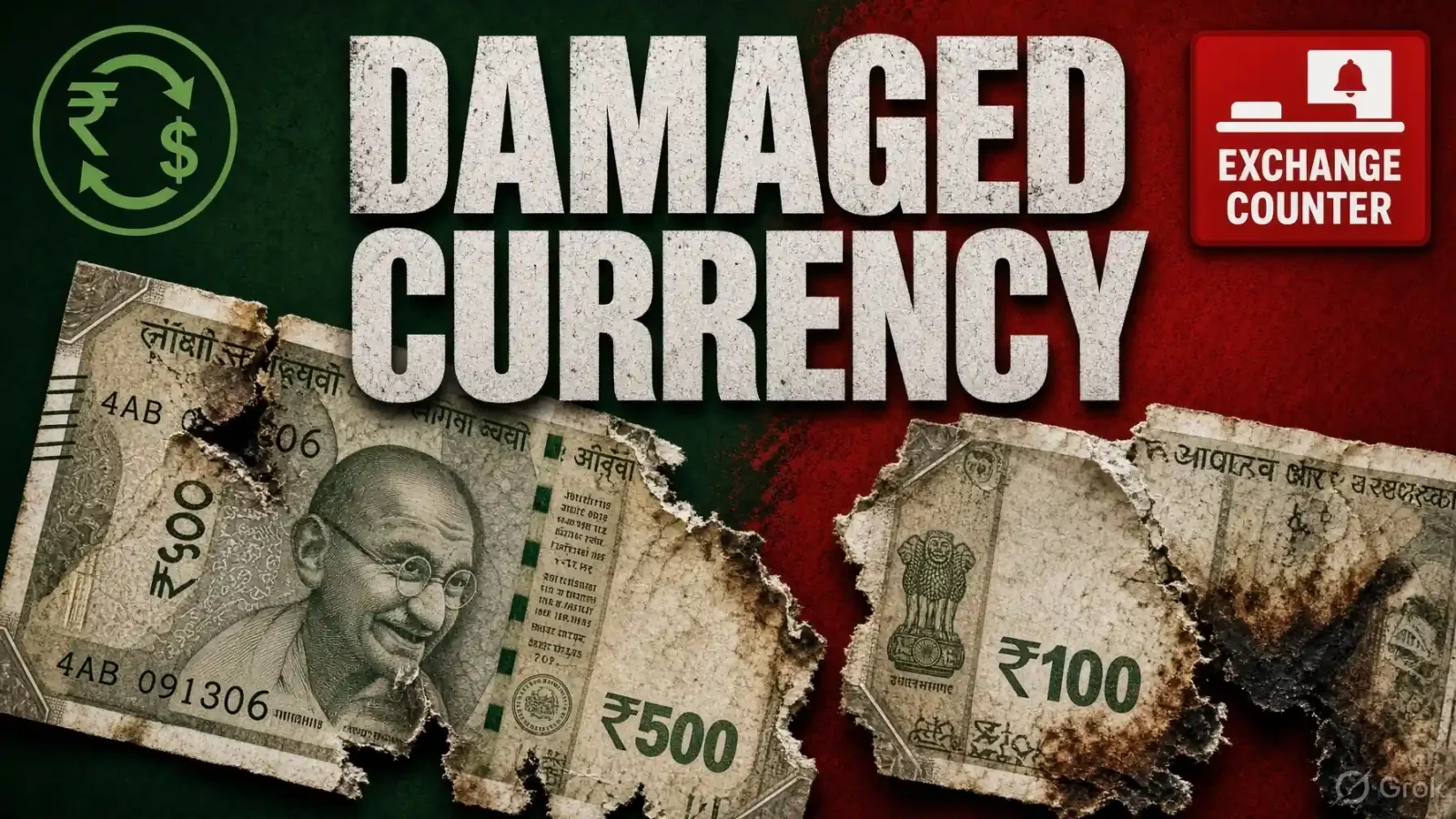
A torn, badly soiled or pasted note is often refused by shopkeepers, but the Reserve Bank of India has a free exchange facility for such notes at banks. This guide explains where to go and what to keep in mind.
Types of damaged notes
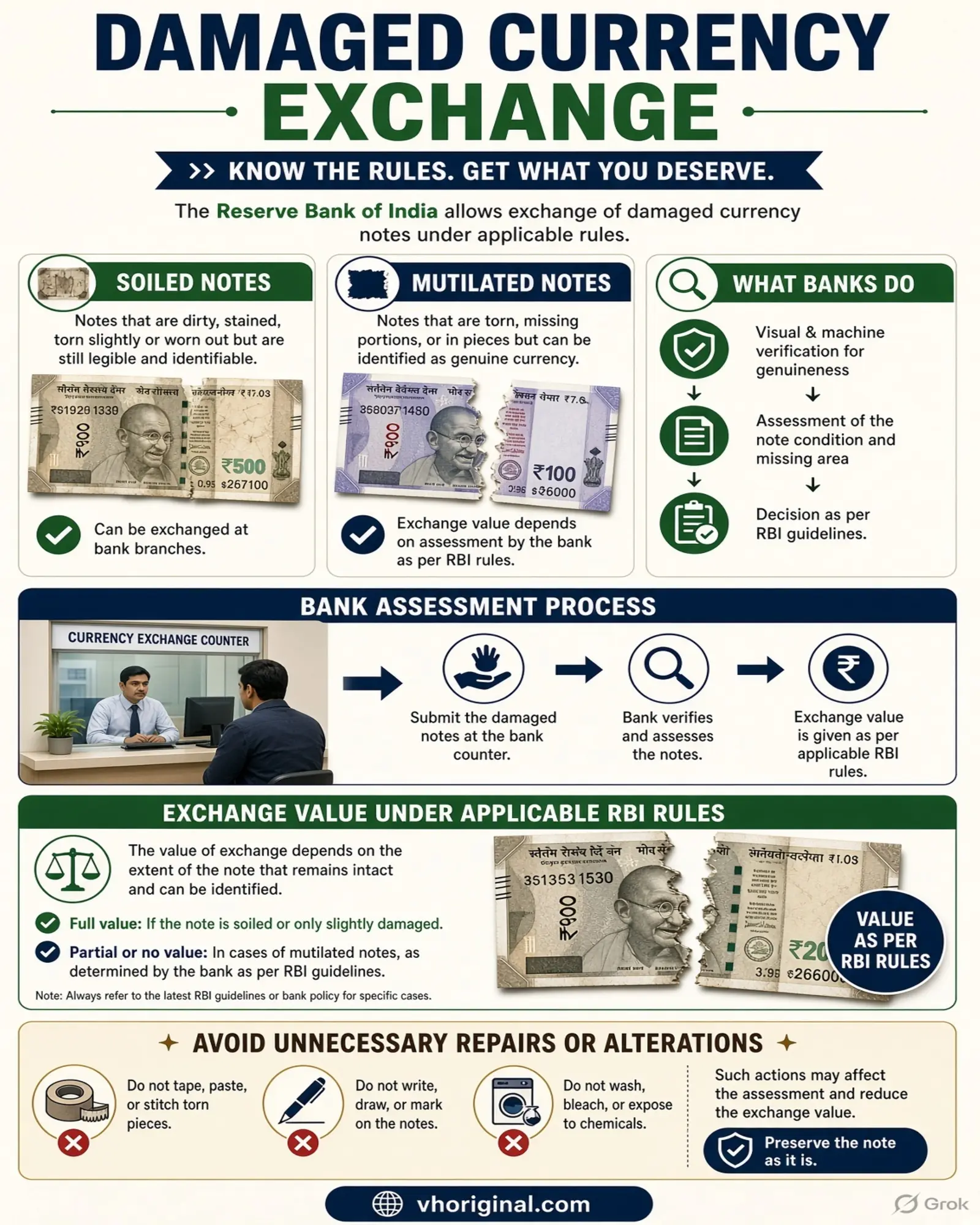
- Soiled note: a note dirtied by use. RBI’s rules also count a two-piece note pasted together, where both pieces belong to the same note and form the whole note.
- Mutilated note: a note with a missing portion or one that is in more than two pieces.
- Imperfect note: a note with defects such as cuts, wear or ink damage.
Where to exchange them
Under RBI’s directions, banks must provide the facility to exchange soiled, mutilated and imperfect notes at all their branches, free of cost. RBI Issue Offices also exchange notes. Notes that cannot be handled through the normal procedure are generally advised to be tendered at the concerned RBI Issue Office.
How many notes can be exchanged
The procedure varies with the number of notes and the type of branch. For example, for mutilated notes up to 5 pieces, non-chest branches should normally examine them and pay over the counter. If the branch cannot decide, it can take the notes against a receipt and send them to the linked currency chest branch. For larger quantities, ask the bank or the Issue Office first, since limits and procedures change and RBI’s latest master direction is the final reference.
What value will you get?
Soiled notes are exchanged at full value. For mutilated notes, the refund depends on the portion presented and the note’s features, as set out in the RBI (Note Refund) Rules, 2009. Notes that are deliberately cut, counterfeit or not identifiable are not paid. The branch officer examines each note and decides the final amount.
Tips before you go
- Carry every piece of the note, especially the parts with the serial number and security thread.
- Keep an identity document handy because the bank may ask for details.
- If a branch refuses, ask for the reason in writing, write to the bank’s grievance officer and then use the RBI complaint facility or the Banking Ombudsman.
- Do not write on or stick labels on the note, since that can reduce its value.
To understand serial numbers on notes, read our post on Indian currency note inset letters. For complaint options, see where to complain in India.
Frequently asked questions (FAQ)
Is there a fee to exchange a torn note?
No. The facility is free under RBI’s rules.
Can any bank branch exchange damaged notes?
RBI’s direction requires all banks to offer the facility at all their branches.
What if the bank refuses?
Ask for the reason in writing, write to the bank’s grievance officer, then approach the RBI complaint facility or the Banking Ombudsman.
This is general information. The amount and procedure depend on the condition of the note, so confirm with RBI’s latest directions and your bank branch.
Also read: How to Identify Fake Indian Currency Notes: RBI Security Features for ₹500, ₹200 and ₹100
Sources
- RBI: Master Direction – Facility for Exchange of Notes and Coins, rbi.org.in
- RBI: Reserve Bank of India (Note Refund) Rules, 2009 (as amended in 2018), rbi.org.in
- RBI: Master Circular – Exchange of Soiled/Mutilated/Imperfect Notes, rbi.org.in















Share Your Opinion
Comments are closed on this post.