 Vista

A “legal notice” from a bank makes most people panic. Some tear it up and ignore it, others rush to do whatever the letter says. Both are mistakes. The better path is to read it calmly, work out what kind of notice it is, and reply in writing within the time given. This guide explains it in plain language.
First: not every “legal notice” is the same
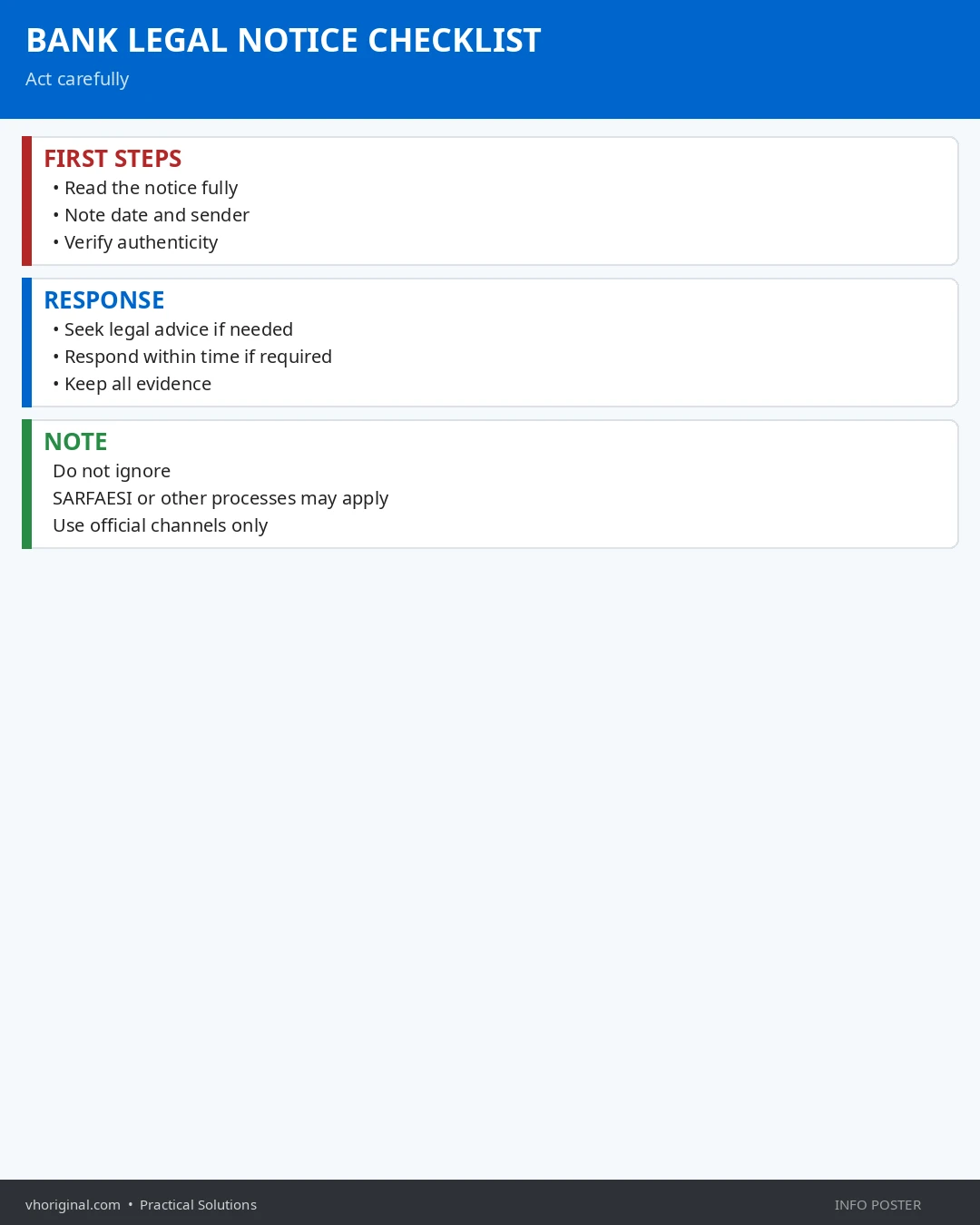
Notices sent in a bank’s name differ a lot in effect:
- A general demand or advocate’s notice: asks you to pay overdue instalments or the full amount, often within a short deadline. It may come from the bank’s lawyer.
- A SARFAESI Act section 13(2) notice: issued when a secured loan, such as a home loan or a loan backed by property, turns into an NPA. It asks you to clear the full dues within 60 days.
- A DRT summons or notice: sent when the bank has filed a case before the Debts Recovery Tribunal.
- A Lok Adalat notice: an invitation to settle the matter by agreement.
Start by checking which law or section the notice mentions. Without that, you cannot tell how much time you really have.
What a SARFAESI section 13(2) notice means
Several legal explainers say section 13(2) lets a secured lender send a demand notice asking the borrower to repay the outstanding amount with interest within 60 days of the notice. The notice should state the total dues and the secured assets the bank relies on.
During those 60 days you generally have three options: pay, negotiate a settlement or a revised repayment plan, or raise written objections if the notice has errors. Explainers say objections are raised under section 13(3A) and the bank must give a reasoned reply. The time given for that reply differs between sources (some say 7 days, others 15), so confirm it with a lawyer.
If nothing is paid within 60 days, the bank can take steps under section 13(4), such as taking possession of the secured property. After such a step the borrower can appeal to the Debts Recovery Tribunal, and one legal article says the window for that appeal is 45 days.
Points worth knowing
- The account must genuinely be classified as an NPA under RBI norms before SARFAESI can be used.
- Legal explainers state that agricultural land falls outside this law.
- Unsecured loans, such as credit cards and personal loans, are normally pursued through other routes like civil cases or the DRT, because there is no pledged property to take possession of.
- This is the general picture. Every case has its own facts, so show the notice to a lawyer.
Step by step: what to do when the notice arrives
- Note the date you received it. Deadlines may count from the notice date or the receipt date. Keep the envelope and any delivery proof.
- Read the whole notice, not only the bold amount. Check the bank name, loan account number, loan type, overdue instalments, interest and penalties, default date, security, payment deadline and the legal provision cited.
- Check that it is genuine. Verify the bank’s real address, an authorised officer’s signature and your account number. Scammers also send scary notices in the name of banks and lawyers. Confirm at your branch or through official contact details. Your rights with recovery agents are explained here: recovery agents and your legal rights.
- Get your loan records. Ask the bank for the full account statement, sanction letter and interest calculation, and check for wrong charges.
- Reply in writing. Do not rely on verbal promises. State your position, attach payment proof and list your objections. Keep a copy and send it by speed post or email.
- Offer a settlement or restructuring in writing if you are facing genuine hardship.
- Talk to a lawyer, especially if the notice mentions property or the 60-day period.
What not to do
- Ignore the notice. Legal explainers warn this can lead to NPA classification, a DRT case or enforcement action.
- Pay an agent in panic or transfer money through unknown links.
- Sign blank papers.
- Transfer property to someone else in a hurry, which can make things worse.
Related loan situations
Personal loan: your rights if you cannot repay a personal loan. Credit card: credit card legal rights and process. Bounced cheque: section 138, bail and settlement. Loan apps: loan app photo blackmail.
A simple outline for your reply
- Notice date, notice number and loan account number at the top.
- Amounts and dates you have already paid, with receipts or statements.
- Point-by-point disagreement with any wrong figures.
- Your proposal, such as a new instalment plan or a settlement.
- A request that the bank gives a reasoned written reply.
This is only an outline. It is better to have the actual reply drafted by a lawyer.
Frequently asked questions (FAQ)
Can the bank take my house as soon as I get a notice?
No. Under SARFAESI a 60-day notice is described as mandatory before further steps. Even so, do not treat that period lightly.
Do I have to reply to the notice?
It is not always a legal must, but replying is wise. It creates a record of your side that can help later.
How do I know if the notice is fake?
Check with the bank directly, match the loan account number, and never send money to a personal account. A genuine notice has full loan details.
Does SARFAESI apply to farm land?
Legal explainers say agricultural land is outside the Act. Confirm for your own case with a lawyer.
Where do I complain if the bank behaves unfairly?
Write to the bank’s grievance channel first. If you get no satisfactory answer, you can use the RBI Integrated Ombudsman complaint route.
Important note
This is general awareness information, not legal advice. Every notice and loan is different, and timelines, sections and procedures can change. Please consult a qualified lawyer with your actual notice in hand.
Also read: How to Write the Cheque Amount in Words in India: Lakh, Crore and Paise Examples | Cheque Bounce: How Many Days Do You Have to File a Case? The 30-Day, 15-Day and 1-Month Timeline
Sources
- Bajaj Finserv: Section 13(2) of the SARFAESI Act, the demand notice stage
- Taxaj: SARFAESI notice, section 13(2), reply, DRT appeal and settlement options
- Sansa Legal: How to respond to a SARFAESI notice from your bank in India
- ApniLaw: how to reply to a SARFAESI notice
- Lead India (leadindia.law): legal notice, DRT notice and settlement articles
- IIBF BankQuest (Apr-Jun 2024): SARFAESI provisions





















Share Your Opinion
Comments are closed on this post.