 Vista
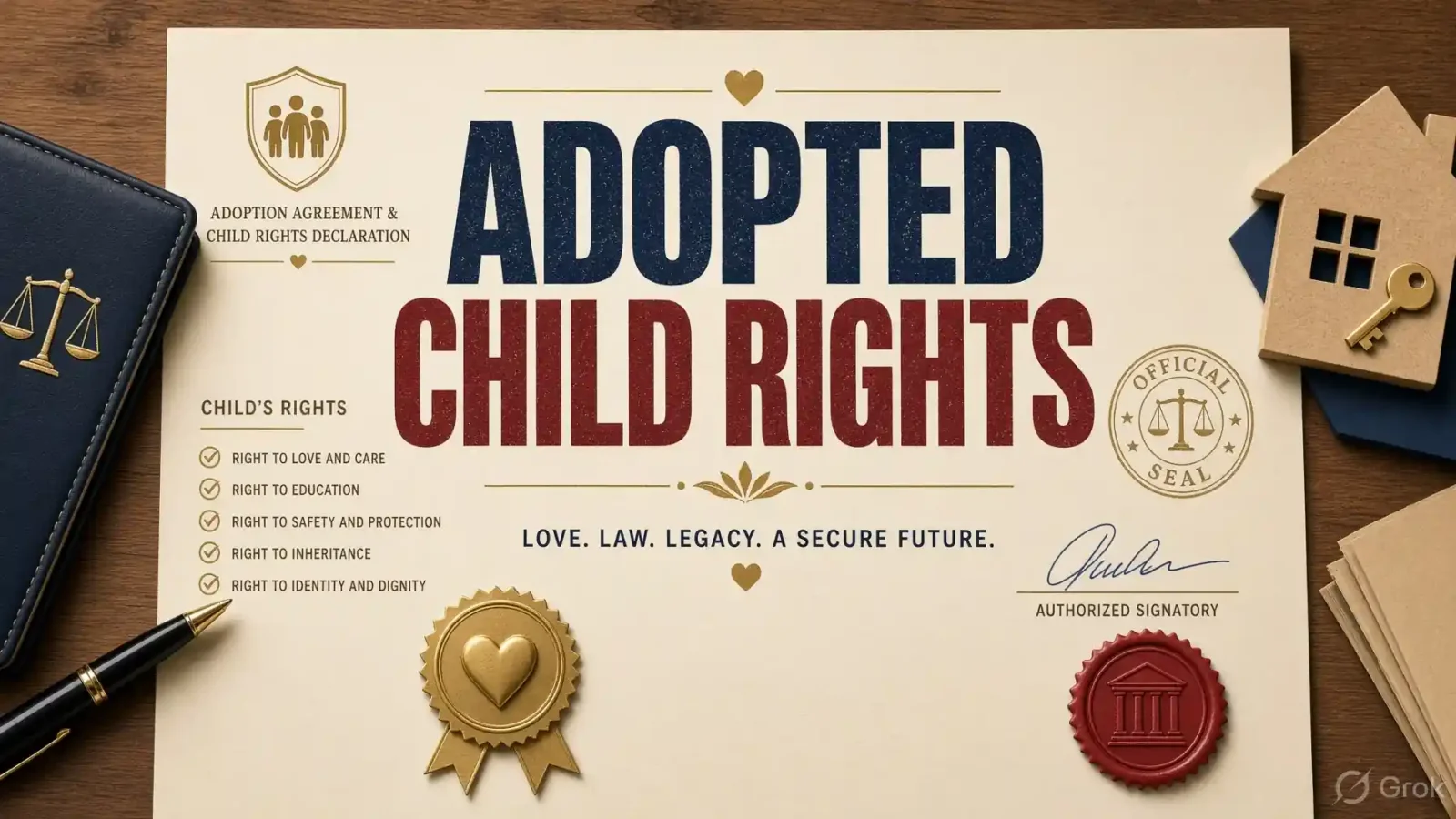
Adoptive parents often ask two things: will our adopted child get the same share in our property as a biological child, and will the child still have a claim on the birth family’s property? The answer depends largely on religion and personal law. This guide explains the position in plain language.
Adopted Child’s Rights Under Hindu Law
Under the Hindu Adoptions and Maintenance Act, 1956 (HAMA), a validly adopted child is treated as the child of the adoptive parents. Under Hindu succession law the child ranks as a Class I heir with rights equal to a biological child, covering both ancestral and the parents’ self-acquired property.
| Type of property | Adopted child’s position (Hindu law) |
|---|---|
| Ancestral property | Equal share, like a biological child |
| Adoptive parents’ self-acquired property | Equal heir without a will; a will can provide otherwise |
| Birth parents’ property | Generally no claim after adoption |
Ties With the Birth Family Are Cut
Adoption ends inheritance rights in the biological family, except for property that had already vested in the child before adoption. The law also says an adopted child cannot take away an estate that had already vested in another person before the adoption.
Muslim and Christian Law
According to a Business Standard report, Hindu and Christian personal laws draw no distinction between an adopted and a natural-born child. Muslim personal law does not treat an adopted child on par with a biological one, so the child does not get the same inheritance rights. Muslim families usually look at options such as a will or a gift, with legal advice. Adoption procedures may also be shaped by the Juvenile Justice Act.
Effect of a Will
Parents can distribute their self-acquired property by will. Unless a will says otherwise, an adopted child inherits just like a biological one. So if you want your adopted child’s share to be certain, a clear will is the safest route.
Documents and Precautions
- Complete a valid adoption. HAMA expects the child to be given by the biological parents and taken by the adoptive parents.
- Prepare and register an adoption deed. Courts have treated a registered adoption as presumptively valid unless disproved.
- Update the child’s records (birth certificate, Aadhaar, school) with the adoptive parents’ names.
- Keep nominations and your will clear and current.
For the paperwork after a death, read property transfer after death: legal heir, succession and probate. Also see daughters’ property rights, wills and gifts.
Frequently Asked Questions (FAQ)
Does an adopted child get an equal share in ancestral property?
Under Hindu law, yes. A validly adopted child is treated as a Class I heir with rights equal to a biological child.
Can an adopted child claim the birth parents’ property?
Generally no. Inheritance rights in the biological family end on adoption, apart from property already vested before it.
Can parents leave an adopted child out of a will?
For self-acquired property a will can set a different distribution. Rules for ancestral property are stricter. Take legal advice.
What is the position in Muslim families?
Muslim personal law does not give an adopted child the same inheritance rights as a biological child. A will or gift is commonly explored with a lawyer.
Is registering the adoption deed necessary?
Requirements depend on the case, but a registered deed is strong evidence if the adoption is ever disputed.
Disclaimer: This article is general information, not legal advice. Rules vary by religion and family circumstances. Please consult a lawyer or your District Legal Services Authority before making adoption or property decisions.
Also read: Wife’s Rights in Husband’s Property in India: Residence, Maintenance, Streedhan and Inheritance | Denied Your Share in Ancestral Property? Legal Remedies for Sons and Daughters in India
Sources
- CourtKutchehry: Inheritance Rights of Adopted Children in India (courtkutchehry.com)
- Business Standard: Inheritance rights of adopted children rest on personal law (business-standard.com)
- Housing.com: Property rights of an adopted son (housing.com)
- Mondaq: Adopted child is Class-1 heir and has equal rights in father’s property (mondaq.com)
- Supreme Court of India, Hindu Adoptions and Maintenance Act case (indiankanoon.org)
- BasicHomeLoan: Property rights for adopted children in Indian law (basichomeloan.com)
























Share Your Opinion
Comments are closed on this post.