 Vista
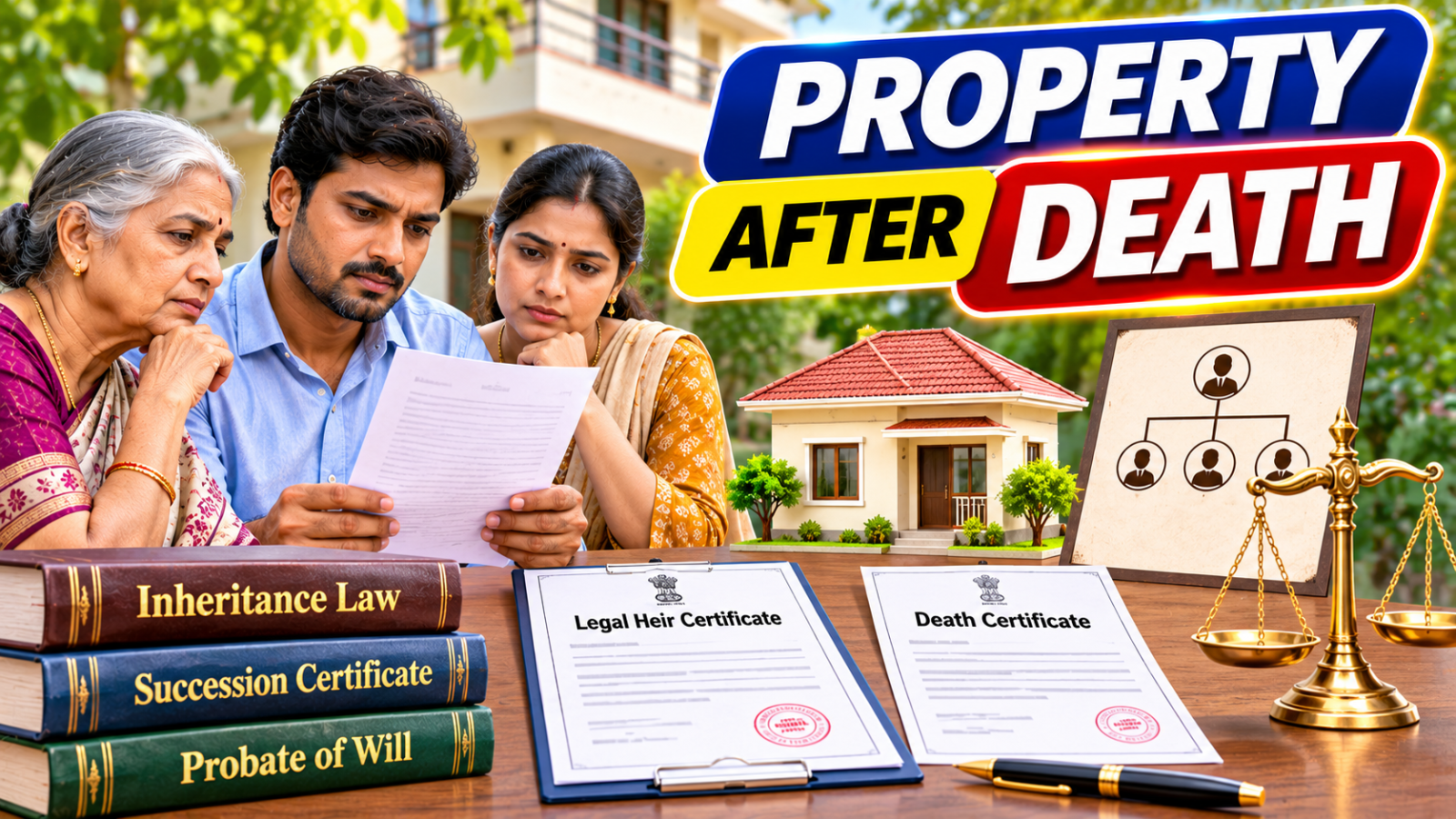
When someone dies suddenly and no will can be found, the first question is: who gets the property? In that case property passes by fixed legal rules known as intestate succession. This guide explains the rules for a Hindu man’s property in simple language.
Who do these rules apply to?
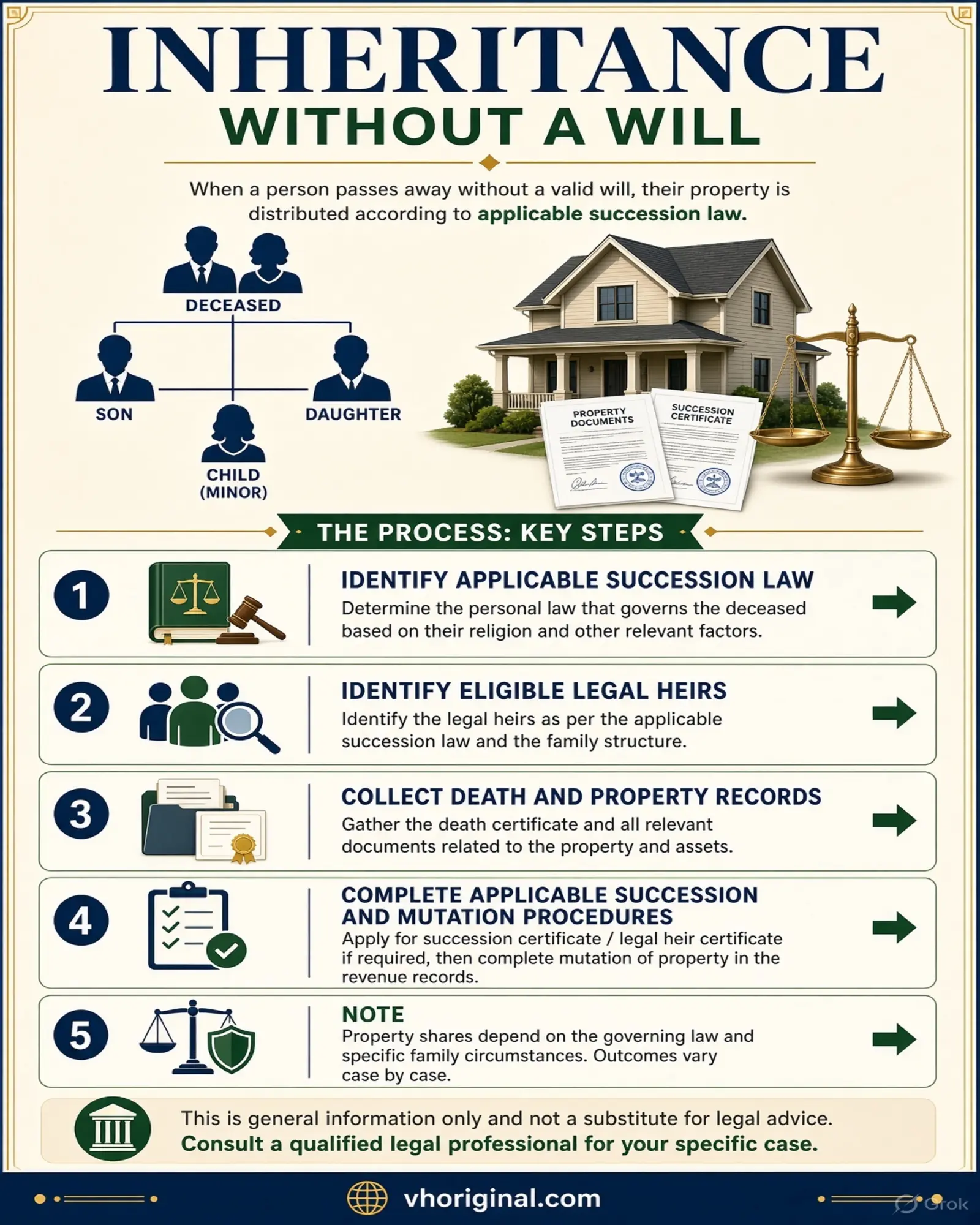
The Hindu Succession Act, 1956 applies to Hindus, a group that also includes Buddhists, Jains and Sikhs. Muslim, Christian and Parsi families follow different laws or personal law on inheritance, so this post does not apply to them directly.
Order of heirs for a Hindu man’s property
Under Section 8 of the Act, the property of a Hindu male who dies without a will goes first to the relatives listed as Class I heirs in the Schedule. If there is no Class I heir, it goes to Class II relatives, and if there are none either, it moves on to agnates and then other relatives.
| Order | Who |
|---|---|
| First | Class I heirs: widow, sons, daughters, mother and other close relatives listed in the Schedule (such as the children of a son or daughter who died earlier) |
| Second | If there is no Class I heir, Class II relatives such as the father and siblings |
| After that | Agnates and then cognates (other relatives) |
How Class I heirs share the property
All Class I heirs inherit at the same time and in equal shares. There is no hierarchy among them, and while they are alive Class II relatives get nothing. The mother and the widow are both Class I heirs, so they cannot be excluded from the share.
Example: Suppose Mr A dies without a will leaving a wife, a son and a daughter. His property is divided equally among the three. If his mother is also alive, all four receive equal shares.
Points to keep in mind
- This rule applies to the deceased’s own separate (self-acquired) property. Joint family ancestral property follows different rules, and daughters are treated as coparceners after the 2005 amendment.
- When a Hindu woman dies without a will, a different order applies, set by Section 15.
- To prove who the heirs are, a legal heir certificate or succession certificate is often needed.
- Being a bank nominee does not make someone the final owner. A nominee is generally entitled to receive the money, while the true entitlement lies with the legal heirs.
What to do next
- Obtain the death certificate.
- Gather a list of all heirs and their identity documents.
- Apply for a legal heir or succession certificate if required.
- If everyone agrees on the division, put it in a written, registered document and get the land mutation done.
- If there is a dispute, speak to a lawyer or the District Legal Services Authority.
For the process after a death, read property transfer after death: legal heir, succession and probate and land mutation and demarcation. For related questions see daughter’s property rights, will and gift deed and free legal aid in India.
Frequently asked questions (FAQ)
How much does a widow get if there is no will?
A widow is a Class I heir and shares equally with the other Class I heirs, such as the children and the mother.
Do daughters get an equal share?
Yes. Daughters are Class I heirs and are entitled to shares equal to sons.
What if there is no Class I heir?
The property then goes to Class II relatives, and if none exist, to relatives further down the order.
This is general information, not legal advice. The outcome can change with the nature of the property (self-acquired or ancestral), religion and family situation, so consult a lawyer.
Also read: If Your Son Is the Nominee, Whose Money Is It? Nominee vs Legal Heirs in Indian Bank Accounts and FDs | What to Do After a Death in the Family: Legal and Money Checklist for India
Sources
- Hindu Succession Act, 1956: Section 8, Income Tax Department text, incometaxindia.gov.in
- Hindu Succession Act, 1956 as amended by Act 39 of 2005, Delhi High Court report
- Legal Wires: Succession to the property of a Hindu male
- TaxGuru: Class I heirs under the Hindu Succession Act, 1956
- Supreme Today: Hindu Succession Act, division among mother, wife and children






















Share Your Opinion
Comments are closed on this post.