 Vista
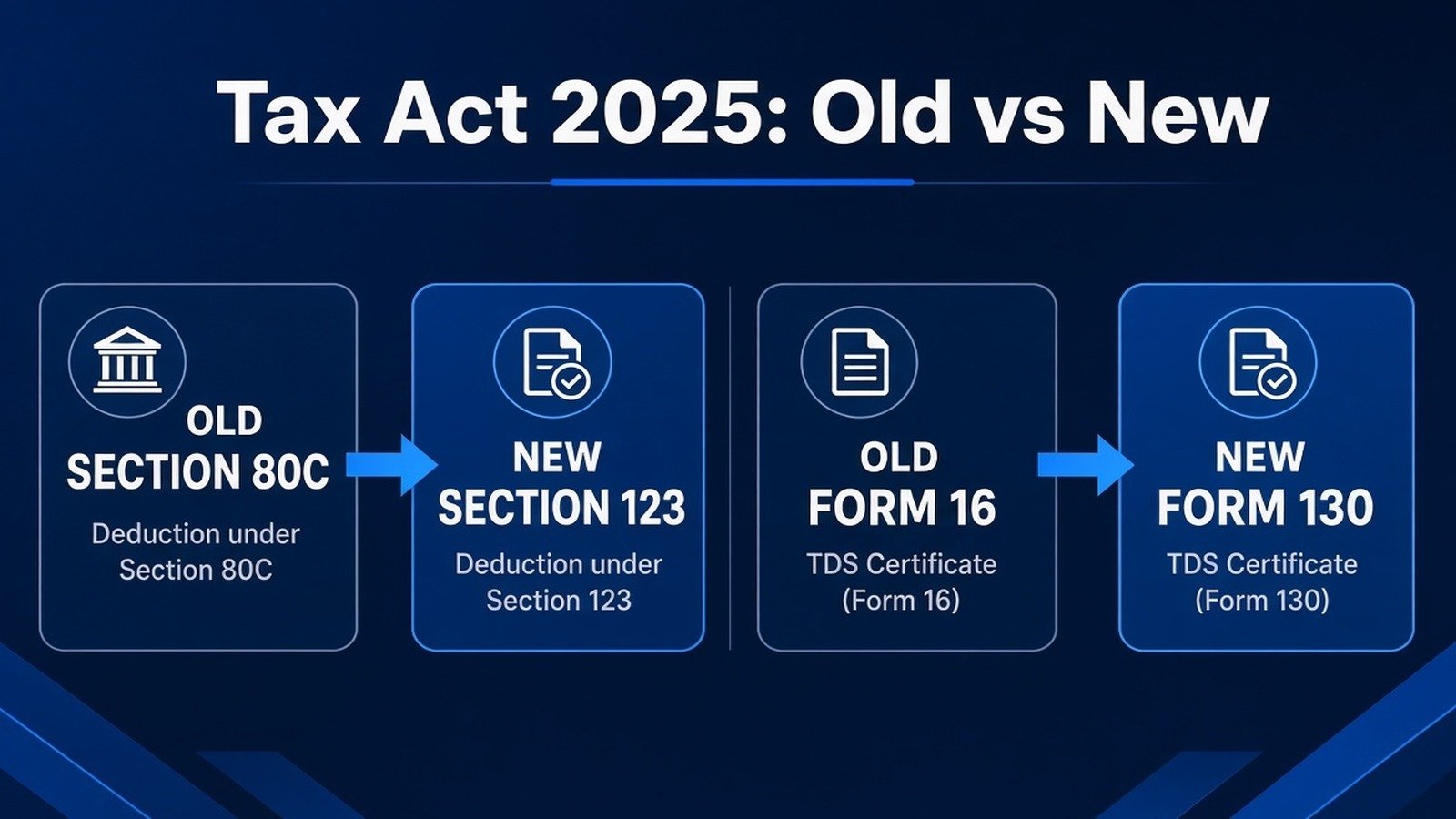
From 1 April 2026, India runs on a new law: the Income-tax Act, 2025. It replaces the 1961 Act. The headlines sound dramatic, but for most salaried people and small business owners, the changes are about structure, wording and form numbers rather than how much tax you pay. This guide explains, in plain language, what changed and what did not.
At a glance
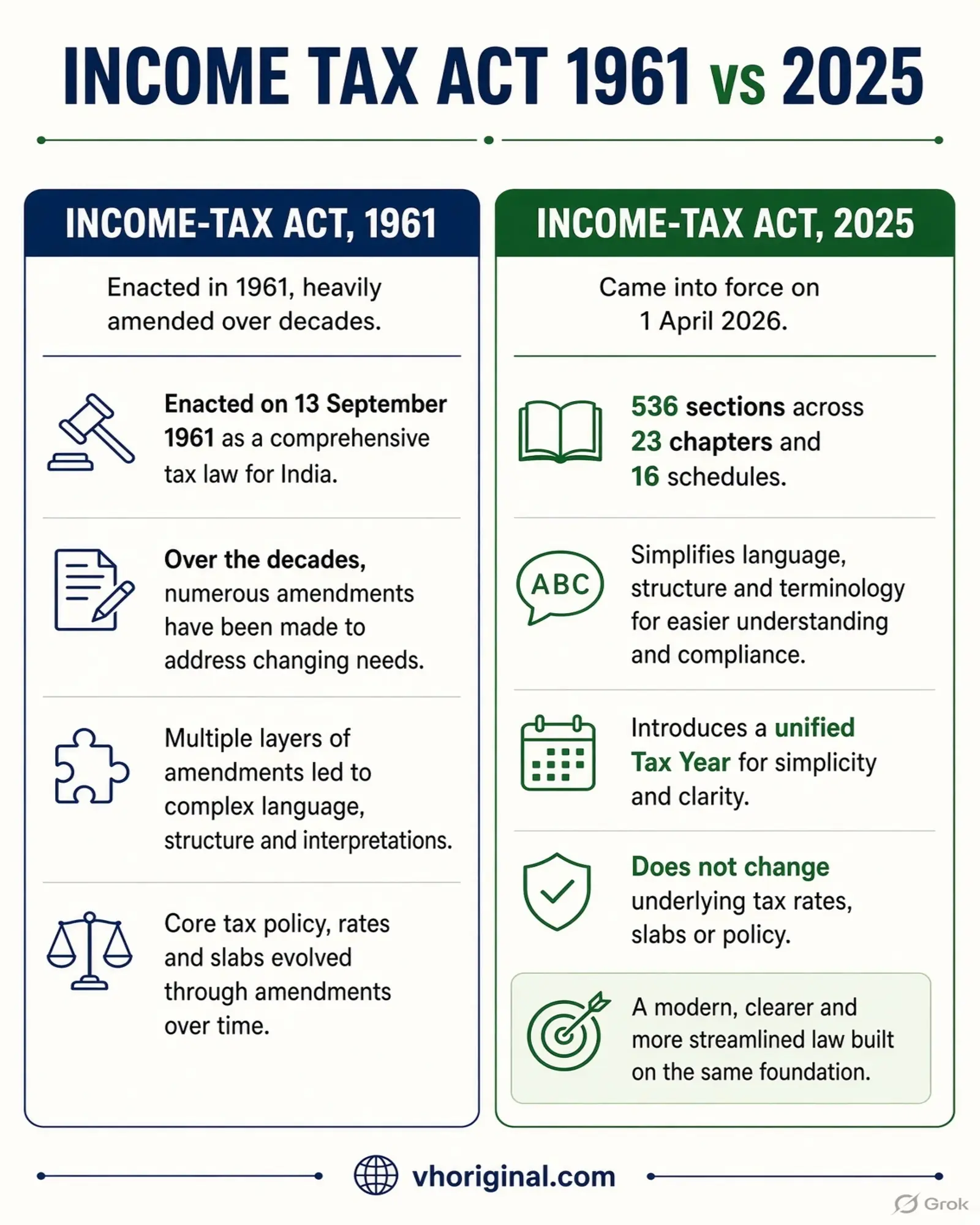
- Effective date: 1 April 2026, starting with Tax Year 2026-27.
- Sections: down from 819 to 536, in 23 chapters and 16 schedules.
- Rates and slabs: no new taxes; rates are the same.
- New tax regime: still the default, with the old regime available as an option.
- Terminology: “Previous Year” and “Assessment Year” are replaced by one “Tax Year”.
What is a “Tax Year”?
Earlier, the year in which you earned income was the Previous Year (financial year) and the year in which it was assessed was the Assessment Year, for example FY 2025-26 and AY 2026-27. Many taxpayers mixed these up. The new Act uses a single term, Tax Year, which runs from 1 April to 31 March. Income and its tax now share one name: Tax Year 2026-27.
Which law applies to your return?
| Income earned in | Law that applies |
|---|---|
| FY 2025-26 (AY 2026-27) | Income-tax Act, 1961 |
| Tax Year 2026-27 (from 1 April 2026) | Income-tax Act, 2025 |
So the return you filed in 2026 for FY 2025-26 used the old sections and forms. Returns under the new Act come in 2027, for Tax Year 2026-27. For the filing steps, see our ITR filing guide.
Tax slabs: did they change?
No. Budget 2026-27 kept the rates as they were. Slabs under the new regime:
| Annual taxable income | Rate |
|---|---|
| Up to ₹4 lakh | Nil |
| ₹4 lakh to ₹8 lakh | 5% |
| ₹8 lakh to ₹12 lakh | 10% |
| ₹12 lakh to ₹16 lakh | 15% |
| ₹16 lakh to ₹20 lakh | 20% |
| ₹20 lakh to ₹24 lakh | 25% |
| Above ₹24 lakh | 30% |
Under the new regime, a Section 87A rebate of up to ₹60,000 makes taxable income up to ₹12 lakh tax-free, and salaried people get a ₹75,000 standard deduction. A 4% health and education cess applies on the tax. Details are in our 2026-27 slabs guide.
Old section numbers, new numbers
The 1961 Act had lettered sections such as 80C and 80D. The 2025 Act uses plain running numbers. According to some reports, 80C now sits at Section 123, Form 16 becomes Form 130, Form 26AS becomes Form 168, and Forms 15G and 15H merge into Form 121. You will see new names gradually on payslips, bank letters and the tax portal. Our old vs new sections and forms list has the full mapping.
What should you do now?
- Do not panic over new names such as “Tax Year” on forms.
- Compare the new and old regimes for your own numbers before choosing.
- Keep investment, insurance and rent proofs if you may choose the old regime.
- For any pending return of FY 2025-26 or earlier, the old Act’s sections still apply.
Frequently asked questions (FAQ)
Has tax gone up under the new Act?
No. It is described as a restructuring: no new taxes and the same slabs.
Is the old tax regime abolished?
No. The new regime is the default, but you can opt for the old one. Salaried taxpayers can choose each year; people with business income face stricter switching rules.
Which Act applies to my FY 2025-26 return?
The 1961 Act, because that income was earned up to 31 March 2026.
What about old notices or cases?
Existing rights and liabilities are protected, so proceedings under the old Act continue. Reply to a notice according to the section and date mentioned in it.
Disclaimer: This article is general information, not tax advice. Please consult a chartered accountant and check the Income Tax Department website before making decisions.
Also read: How Much Cash Can You Legally Keep at Home in India? Income Tax Limits and Proof You Need | Income Tax Notice Received? What 143(1), 139(9), 142(1), 143(2) and 148 Mean and How to Respond
Sources
- Income Tax Department: Salient Features of the New Income-tax Act (incometaxindia.gov.in)
- ClearTax: Income Tax Act 2025 and income tax slabs (cleartax.in)
- iPleaders: Income-tax Act 2025 comparison (blog.ipleaders.in)
- Free Press Journal: Income-Tax Act 2025 Key Points (freepressjournal.in)
- CAclubindia: Income Tax Act 2025 vs 1961 (caclubindia.com)

























Share Your Opinion
Comments are closed on this post.