What is Christmas and Why is it Celebrated?
Christmas is the most significant festival in Christianity, observed annually on December 25th as the birthday of Jesus Christ. According to Christian beliefs, Jesus Christ, the son of God, incarnated on Earth to spread the message of love, forgiveness, peace, and compassion. His birth is considered a symbol of hope and salvation for humanity. More than just a religious observance, Christmas is an occasion for people to unite with their families and loved ones. The celebration serves as a reminder to be kind to one another, help those in need, and foster positivity in life. Over time, it has evolved from its religious origins into a global cultural phenomenon, celebrated by people of various faiths and cultures.
The Sacred Birth of Jesus Christ: The True Story of Christmas
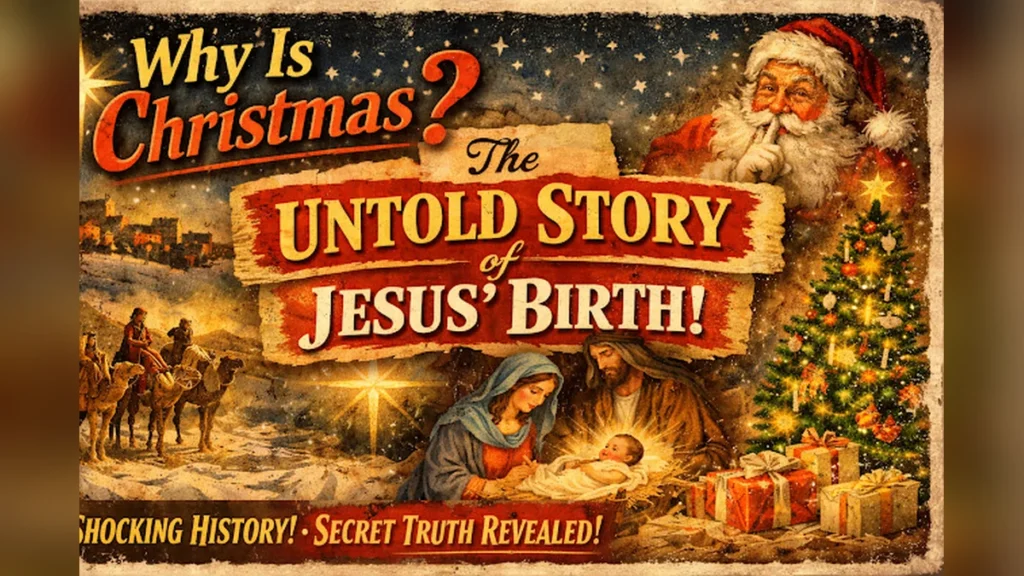
The foundation of Christmas lies in the miraculous story of Jesus Christ’s birth, as narrated in the Gospels of Matthew and Luke in the Holy Bible. This event took place nearly two thousand years ago in Bethlehem, a city in the province of Judea. Jesus Christ’s mother was Mary, and his father was Joseph. At that time, the Roman Emperor Augustus ordered a census, requiring everyone to return to their ancestral towns. Following this decree, Mary and Joseph journeyed from Nazareth to Bethlehem. Upon arriving in Bethlehem, they found no room in any inn, as all accommodations were occupied. Consequently, they had to take shelter in a stable. It was in this stable, in a humble manger, that Mary gave birth to Jesus Christ. At the time of his birth, a wondrous star appeared in the sky, known as the ‘Star of Bethlehem.’ This star guided three wise men from the East to the infant Jesus. These wise men presented the newborn with precious gifts such as Gold, Frankincense, and Myrrh, symbolizing his royal, divine, and sacrificial future. Simultaneously, shepherds in the nearby fields received the joyous news of Jesus Christ’s birth from angels. The angels proclaimed, ‘Today in the city of David a Savior has been born to you; he is the Messiah, the Lord.’ This event marked a new era of hope and direction for humanity.
The Historical Journey of Christmas: When and How Did It Begin?
Interestingly, in the early days of Christianity, Jesus Christ’s birthday was not celebrated. For early Christians, the resurrection of Jesus Christ (Easter) held greater significance. It was only around the 4th century AD that the Christian Church officially began observing December 25th as Christmas. Historians hold differing views on why this specific date was chosen. A prevalent theory suggests that several winter festivals were already being celebrated in the Roman Empire around December 25th, such as ‘Saturnalia’ and the festival of ‘Sol Invictus,’ which symbolized the rebirth of the sun. The Church utilized the timing of these popular festivals to spread the Christian message more widely and attract people to Christianity. In this way, Jesus Christ was associated with these festivals as the ‘Light of the World.’ As Christianity spread, Christmas traditions also evolved. During the Middle Ages, the festival became a significant celebration in Europe. Traditions such as decorating Christmas trees, singing carols, exchanging gifts, and feasting gradually became integral parts of the celebration. Today, Christmas is celebrated in over 160 countries worldwide, making it one of the most recognized festivals. Each region and culture has incorporated its unique traditions, contributing to its diverse and colorful nature.
Global Customs and Traditions of Christmas
Christmas is a festival that holds a distinct identity across different regions. While Santa Claus brings gifts for children in Western countries, in many Spanish-speaking nations, the ‘Three Wise Men’ carry on the tradition of gift-giving. The custom of decorating Christmas trees originated in Germany, while in the Philippines, the tradition of decorating ‘parols’ (lanterns) is popular. In India too, Christmas is celebrated with great enthusiasm. Not only the Christian community but also people from other faiths observe it as a festival of love and peace. Special prayers are held in churches, homes are decorated, and people exchange greetings of ‘Merry Christmas.’ The exchange of cakes and sweets is an integral part of this celebration.
The Modern Significance of Christmas: More Than Just a Festival
In contemporary times, the significance of Christmas extends beyond religious beliefs. The festival inspires us to embrace compassion, charity, and love for others. It provides a precious opportunity for families to come together, reminisce about old memories, and create new ones. In the hustle and bustle of life, Christmas offers a pause, allowing for self-reflection and the recognition of true joys in life. It reminds us that the greatest gifts are not material possessions, but the company of loved ones, peace, and love. Christmas has thus traversed a long journey from the sacred story of Jesus Christ’s birth to a global message of unity and love. It reminds us that the spirit of hope, faith, and love brings true happiness. Therefore, this Christmas, let us all embrace these values in our lives and contribute to making the world a better place.