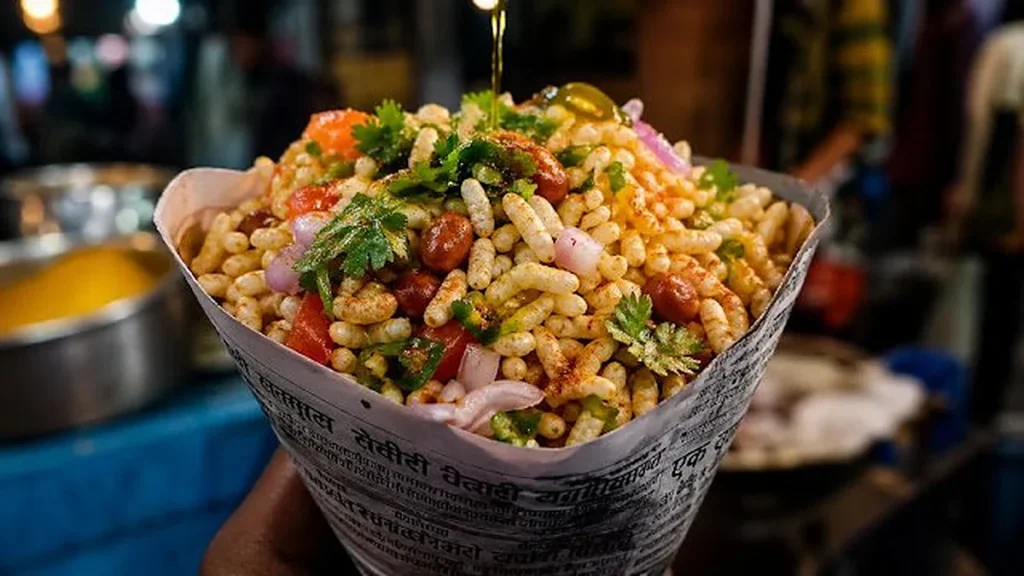
What is Jhalmuri? The Spicy Puffed Rice Delight
Jhalmuri is more than just a snack; it’s an emotion for many, especially in Bengal. The name itself tells a story: ‘Jhal’ means spicy in Bengali, and ‘Muri’ refers to puffed rice. So, Jhalmuri is essentially a fiery, crunchy, and savory puffed rice snack. Unlike its cousin, Bhel Puri, which often uses sweet and tangy chutneys and sev, leading to a slightly moist texture, Jhalmuri stands out. Its character comes from its dry crunch, pungent spices, and the unmistakable kick of raw mustard oil that awakens the senses.
The 5 Pillars of Authentic Jhalmuri
To truly capture the essence of street-side Jhalmuri, understanding its core components is key. The magic isn’t just in mixing ingredients; it’s in the craft:
1. Crispy Puffed Rice (Karara Muri)
The foundation of great Jhalmuri is perfectly crisp puffed rice. If your muri is even slightly stale, the entire dish can become soggy. Street vendors often lightly roast their muri to ensure maximum crunch.
2. Raw Mustard Oil (Kacha Shorshe Tel)
This is non-negotiable. No refined oils or alternatives can replicate the pungent, sharp flavor of authentic raw mustard oil. It’s the soul of Jhalmuri.
3. Chanachur and Peanuts
A spicy, slightly tangy Bengali chanachur (a type of savory Indian snack mix) combined with roasted peanuts provides essential crunch and a burst of flavor.
4. Fresh Chopped Ingredients
Finely diced onions, tomatoes (seeds removed to prevent sogginess), green chilies, fresh coriander, cucumber, and small pieces of fresh coconut add texture, freshness, and a balancing sweetness.
5. Bhaja Moshla (Roasted Spice Mix)
This is the secret weapon. A blend of dry-roasted and ground spices like cumin, coriander, and red chili powder gives Jhalmuri its signature aroma and depth of flavor. Each vendor has their unique ratio.
Preparing Your Jhalmuri Ingredients
While the assembly is quick, proper preparation is crucial for that perfect texture and taste. Have these ready before you start:
Ingredients List:
- 3 cups crisp puffed rice (muri)
- 1 small onion, finely chopped
- 1 small tomato, finely chopped (seeds and pulp removed)
- 2 tablespoons boiled black chickpeas or white peas
- 1 small boiled potato, diced
- 2 tablespoons finely chopped fresh coconut
- 2-3 green chilies, finely chopped (adjust to taste)
- 1/2 cup spicy chanachur and roasted peanuts
- 1 to 1.5 teaspoons authentic ‘Bhaja Moshla’
- 1 tablespoon pungent raw mustard oil
- Juice of half a lemon
- Fresh coriander leaves, chopped
- Optional: A teaspoon of spicy mango pickle (gherkin) oil and masala
Assembling Your Jhalmuri: The 5-Minute Toss
The assembly is where the magic happens. Avoid mixing with a spoon; the technique is to ‘toss’ everything together rapidly.
Step 1: The Dry Base
In a large, deep bowl, combine the crisp puffed rice, chanachur, and roasted peanuts. If using sev, add it now.
Step 2: Add Vegetables and Boiled Ingredients
Layer the chopped onions, tomatoes, green chilies, cucumber, boiled chickpeas/peas, diced potato, and fresh coconut pieces over the dry base. Do not mix yet.
Step 3: Sprinkle the Spices
Evenly sprinkle the ‘Bhaja Moshla’ over the ingredients. You can also add a pinch of black salt if desired.
Step 4: The Flavor Infusion
Drizzle the raw mustard oil and lemon juice over the entire mixture. If using, add the mango pickle oil and masala now.
Step 5: The Ultimate Toss
Hold the bowl firmly with both hands and toss the ingredients vigorously upwards and downwards for about 10-15 seconds. This ensures an even coating without crushing the puffed rice. Serve immediately in a paper cone or bowl, garnished with fresh coriander and a few coconut pieces.
The Science of Crispness: Why Jhalmuri Must Be Eaten Fresh
Puffed rice is highly hygroscopic, meaning it readily absorbs moisture. As soon as wet ingredients like tomatoes, lemon juice, and oil are added, a process called ‘moisture migration’ begins. The muri starts absorbing the liquid, quickly losing its crispness and turning soggy within minutes. Street vendors serve Jhalmuri in paper cones not just for presentation, but because the paper helps absorb excess moisture, preserving the crunch for a little longer. For the best experience, assemble Jhalmuri just before serving, ideally in individual portions.
Frequently Asked Questions (FAQs)
1. Can I substitute the raw mustard oil?
While you can technically use other oils, it won’t be authentic Jhalmuri. The pungent kick and unique aroma come solely from raw mustard oil. It’s a defining ingredient.
2. Why does my Jhalmuri taste bitter?
Bitterness can arise from two main issues: over-roasting the spices when making the ‘Bhaja Moshla’ (they should be lightly toasted on low heat), or using too much lemon juice or lemon seeds in the mixture.
3. What is Chanachur, and what can I use if I can’t find it?
Chanachur is a popular Bengali mixed savory snack, often spicy and tangy. If authentic Bengali chanachur is unavailable, you can use a good quality spicy Indian snack mix (like Navratan mix) or a spicy sev mixture.
4. Is it necessary to roast the puffed rice?
Only roast the puffed rice if it doesn’t feel crisp. If it crumbles easily when pressed, it’s good. If it feels chewy, lightly dry roast it in a pan for 2 minutes and let it cool completely before use.
Disclaimer
This recipe is intended as a cooking guide for traditional Bengali Jhalmuri. It uses raw mustard oil and pungent spices, which are characteristic of the dish. If you have allergies to peanuts, mustard oil, or any other ingredients, or have digestive issues like acidity, please consume with caution and adjust ingredients as needed. Always consult a healthcare professional for dietary advice.