 Vista
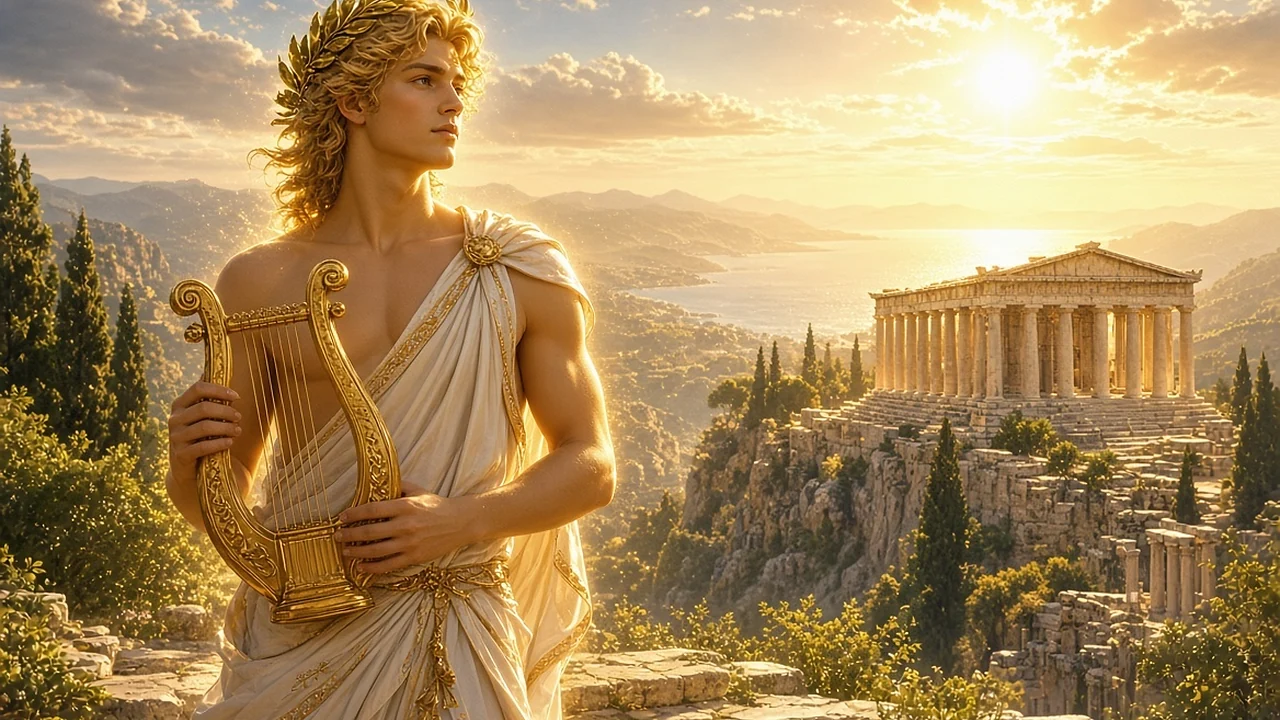
Apollo in Greek mythology is the Olympian god associated with music, poetry, prophecy, healing, archery and, in certain later traditions, sunlight. He is the son of Zeus and Leto and the twin brother of Artemis. His famous symbols include the lyre, bow, laurel wreath and raven, while the sanctuary of Delphi connects him with one of the most influential oracles in ancient Greece. He is often simply called “the sun god,” but that description needs context: Helios is a distinct solar deity in much early Greek literature. Apollo’s stories include a dramatic birth, an encounter with the serpent Python, his relationship with Hermes and divine interventions in the Trojan War.
Who was Apollo, and what was he the god of?
Apollo has one of the widest sets of associations among the Olympians. In poetry he may appear with a lyre as the patron of song; at Delphi his oracle offers divine responses to questions; on the battlefield his arrows can bring suffering or disease; in healing traditions his influence points in another direction. These roles may seem contradictory to a modern reader, but the coexistence of healing and disease reflects ancient ideas about divine power over conditions that humans cannot fully control. He was also connected with the protection and upbringing of the young.
Unlike many Greek gods, Apollo retains essentially the same name in Roman mythology. That continuity of spelling should not encourage us to treat every Greek and Roman literary image as an identical early Greek doctrine. A statue of a beautiful young archer, a discussion of the Pythian oracle and a Roman poet’s description of sunlight are different contexts. Understanding them individually gives a fuller picture of the deity than assembling a list of powers without sources.
Apollo’s birth: Zeus, Leto, Artemis and Delos
Apollo is the child of Zeus and Leto in the established genealogical tradition. His sister Artemis is closely associated with the hunt and wild animals, whereas Apollo’s roles include music and prophecy. The island of Delos is especially significant in major literary and sacred traditions about Apollo’s birth. The Homeric Hymn to Apollo narrates Leto’s search for a place to give birth and the eventual arrival at Delos. Different local versions of the divine twins’ birth exist, so a single modern timeline should be labeled with its source.
The divine family also explains relationships with other Olympians. Zeus is king of the gods, Hera is his wife and appears as an opponent of Leto in several traditions, and Artemis has her own strong identity rather than being merely Apollo’s female reflection. Apollo’s birth and early adventures can be read alongside the succession story told by Hesiod, though the Homeric Hymn and Theogony are different texts with distinct emphases. Readers should not assume every detail of the hymn appears in Hesiod’s genealogy.
The Oracle of Delphi: why Apollo was linked with prophecy
Delphi, located in central Greece, became an important sanctuary of Apollo. The site was associated with the Pythia, a priestess who delivered oracular responses within established ritual practices. People and communities sought guidance on significant matters, but a prophecy was not the same thing as a scientifically testable forecast. Ancient texts and later historians offer different descriptions of the oracle’s procedures and the interpretation of answers. We should be careful about claiming that every cryptic prediction was always correct or that modern legends about the site are proven.
The Homeric Hymn to Apollo links the god with Delphi and the establishment of a sanctuary. The myth of a serpent or dragon commonly called Python, associated with the sanctuary in later accounts, describes Apollo overcoming a guardian and taking control. The prior ownership of the oracle and the identity of the guardian vary among authors, as collected in ancient mythographic references. That variation is useful: it shows how sacred sites can attract multiple origin stories rather than preserving a single universally agreed account.
Apollo and the serpent Python: what happened?
In the familiar myth, Apollo travels toward Delphi and overcomes a monstrous serpent associated with the area. The episode helps explain his connection to the Pythian sanctuary and the name Pythian used for some of his institutions or festivals. Some sources emphasize a dragoness, others use Python, and the accompanying geography and motives differ. Rather than creating an unqualified claim that a real giant snake was killed at an archaeologically verified date, a responsible article presents the event as a foundational sanctuary legend.
Delphi became part of Greek religious and political life in historically attested ways; that is separate from accepting the supernatural serpent battle as literal history. Ancient monuments, inscriptions and archaeological studies can tell us about the sanctuary’s existence and practices. Myths about its divine founding explain how ancient people narrated the significance of the place. Readers benefit when archaeology and poetic invention are not confused.
Why are the lyre, laurel and bow symbols of Apollo?
The lyre represents Apollo’s association with music, poetry and structured harmony. In the Homeric Hymn to Hermes, Hermes invents a lyre and eventually gives it to Apollo as part of their reconciliation. The myth highlights the different characters of the two gods: Hermes is clever and inventive, while Apollo becomes deeply identified with skilled music. The laurel is connected with Apollo’s sacred imagery and later stories including Daphne, while the bow and arrows represent his power to strike from afar.
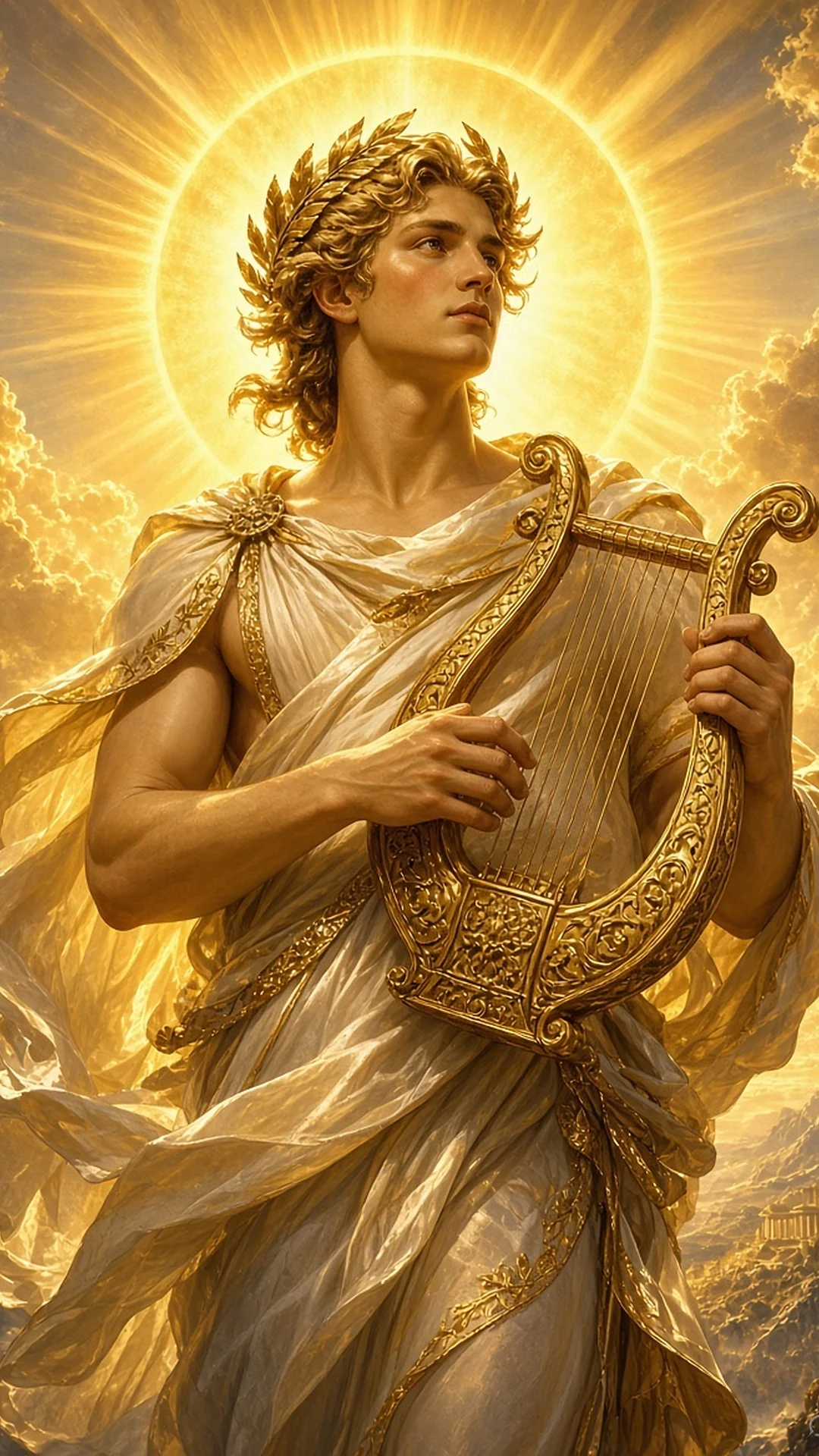
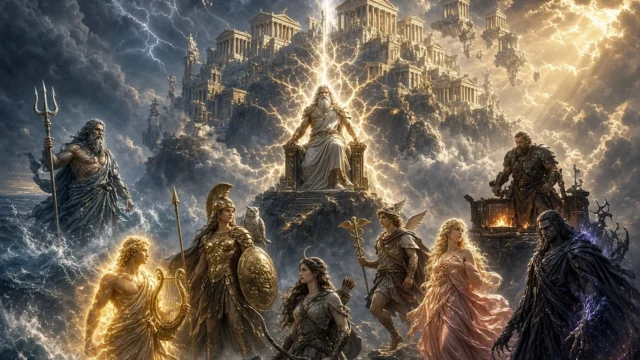
Apollo is also associated with the raven or crow and other animals in particular traditions. The precise selection of attributes depends on the artwork and text, not on a fixed modern logo. A musician with a lyre might be Apollo in a particular painting, but contextual inscriptions and accompanying figures help confirm the identification. For an article illustrated with a cinematic image, the caption should describe the lyre and the divine association rather than claim that the picture reproduces a specific authentic ancient portrait.
Apollo vs Helios: was Apollo the Greek sun god?
The short answer is not in the same way in every period or source. The sun as a distinct divine figure is called Helios, often associated with a chariot moving across the sky. In Hesiod’s Theogony, Helios is connected with the Titans Hyperion and Theia. Apollo, meanwhile, is linked with prophecy, music, archery and healing, and he later acquires or shares increasingly explicit solar imagery. Greek and Roman literature may associate Apollo, Phoebus and solar radiance in ways that complicate a neat separation.
Therefore “Apollo is the sun god” can be a shorthand for some later familiar traditions, but saying “Helios never existed as a separate Greek god” is plainly inaccurate. If a reader asks which god pulls the sun across the sky, Helios is a key early answer. If they ask why Apollo is often pictured glowing like the sun, later solar associations need to be explained. A good myth article names the period and author rather than turning a long history of changing attributes into a one-line absolute rule.
Apollo in the Trojan War: healing, plague and archery
Apollo plays a visible role in Homer’s Iliad. The poem begins with a dispute involving the priest Chryses and the Greek commander Agamemnon. When Chryses’s request is rejected, Apollo sends a devastating plague upon the Achaean camp. The Greek forces must confront the offense and its consequences. Apollo also assists the Trojan side in parts of the conflict, contrasting with Athena’s support for the Greeks in many episodes. The combination of archery, disease and divine intervention is central to the way the epic uses his character.
In other stories Apollo’s relationship to healing becomes prominent, including his association with Asclepius in important traditions. This does not make the Homeric plague episode a medical explanation of infection, nor does it mean ancient medicine relied only on divine prayer. The mythological and historical practices are subjects for distinct kinds of evidence. Readers interested in the Trojan War should understand that gods in the Iliad take sides, interfere and argue, but the poem does not narrate the whole later Trojan Horse episode.
Other famous myths: Daphne, Cassandra and Marsyas
In the Roman poet Ovid’s Metamorphoses, the Daphne story associates Apollo with pursuit, transformation and the laurel. The original story involves unwanted pursuit and should not be romanticized without acknowledging that conflict. Cassandra is another figure connected in some traditions with Apollo’s gift of prophecy and the tragedy of being disbelieved. The contest involving the musician Marsyas highlights the dangerous boundary between human or lesser divine skill and the authority of an Olympian god. The literary sources and versions of these stories differ.
These episodes show that Apollo is not simply a cheerful musician. His myths explore beauty, artistic rivalry, punishment, illness, divine patronage and limits on human independence. They are also examples of why the most popular scene from Ovid should not be presented as though the same detailed plot appears in Homer’s earliest surviving epic.
Is Apollo the same as Surya in Hindu mythology?
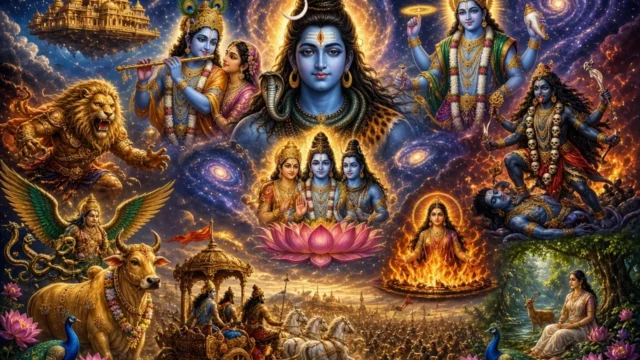
Solar imagery can suggest a thematic comparison between later Apollo depictions and Surya, but their scriptures, family relationships, worship and cultural histories differ. Apollo and Helios also need to be distinguished within Greek literature before making a distant comparison. Therefore no responsible historical conclusion follows that Apollo and Surya are literally the same deity merely because both may be connected with sunlight.
Our already published Greek vs Hindu mythology comparison covers broad parallels with qualifications. Apollo is best understood from the Homeric Hymns, Homer’s Iliad and collections of ancient testimonies rather than from a quick chart of world religions.
Apollo Greek mythology: five FAQs
Who were Apollo’s parents?
Zeus and Leto; Artemis is his twin sister in the well-known tradition.
What were Apollo’s main powers?
Music, prophecy, archery, healing and the sending of plague are key associations in ancient sources.
Was Apollo the same as Helios?
No, not in all traditions. Helios is a distinct solar god in important early Greek sources, while Apollo later acquires strong solar associations.
Where was Apollo’s most famous oracle?
At Delphi, where the Pythia delivered responses within Apollo’s sanctuary.
What instrument symbolizes Apollo?
The lyre, strongly associated with his musical identity and with a story involving Hermes.
Sources and conclusion
For birth and the sanctuary see Homeric Hymn to Apollo; for powers and variants consult Theoi’s Apollo source dossier; for disease and Trojan War read Homer, Iliad Book 1, and for genealogy Hesiod’s Theogony. Conclusion: Apollo unites music, prophecy, healing and dangerous divine authority; the complex relationship with Helios is part of his story, not a detail to erase. Updated 14 November 2026. Images are illustrative.







Share Your Opinion
Comments are closed on this post.