 Vista

Achilles’ heel meaning is a hidden weakness that can defeat an otherwise powerful person, plan or organization. The phrase comes from the Greek hero Achilles, a great warrior in the Trojan War stories. Today many retellings say his mother, Thetis, dipped him in the River Styx and held him by one heel, leaving that spot vulnerable. But there is a surprising correction: the complete familiar Styx explanation is not told in Homer’s Iliad. The most explicit surviving literary references to the dipping motif arise much later in Roman-era sources, notably Statius. To understand the idiom, we need to separate Achilles’ actual role in the Iliad from later stories about how he died.
Who was Achilles in Greek mythology?
Achilles is the son of Peleus, a mortal ruler, and Thetis, a sea goddess. He is a central Greek or Achaean warrior in the legend of the Trojan War, famous for his fighting power and his devastating anger. Homer’s Iliad begins by invoking the wrath of Achilles and explores the personal and collective costs of that wrath. His story is not primarily a biography of his heel. It concerns honor, a dispute between leaders, friendship, grief and the tension between a glorious short life and a less famous long one.
Achilles fights for the Greek army against Troy, but his relationships with fellow Greeks are complicated. Agamemnon, the commander of the Greek expedition, challenges Achilles’ honor during a dispute over the captive Briseis. Achilles then withdraws from battle, and the Achaeans suffer without his participation. This decision is the engine of much of the Iliad’s plot. An article that starts and ends with the heel misses the literary reasons Achilles became so famous in ancient Greek culture.
What happens to Achilles in Homer’s Iliad?
The Iliad takes place during a limited period near the end of the Trojan War; it does not cover the entire siege or recount the familiar wooden-horse ending. Achilles’ companion Patroclus enters battle wearing his armor and is killed by Hector, the Trojan champion. Grief brings Achilles back into the fighting. He receives new armor fashioned by Hephaestus and confronts Hector in a duel outside Troy. Hector’s death becomes one of the poem’s defining moments, followed by scenes of mourning and the courage of Hector’s father, Priam.
The poem ends with Hector’s funeral, not with Achilles’ own death. Achilles’ fate is foreshadowed, but the famous moment when Paris shoots an arrow into an otherwise invulnerable heel is not narrated there. Homer also does not present him as a hero whose entire body is automatically immune to wounds: in Book 21, Asteropaeus wounds him, making a simplistic claim of perfect Homeric invulnerability especially difficult. Readers should therefore avoid attributing the familiar river-dipping scene to a book that does not contain it.
Where did the River Styx and vulnerable heel story come from?
In the well-known later version, Thetis seeks to protect her infant son by dipping him into the supernatural waters of the River Styx. Because she holds him by the ankle or heel, that small region remains outside the water and is not protected. Later narratives turn that vulnerability into the site of his fatal wound. The story has become so familiar that people often believe it must be present in the oldest Greek epic. The surviving evidence is more complicated.
The Roman poet Statius, writing his unfinished Achilleid in the late first century CE, provides important early surviving references to the Styx-dipping motif. Scholars debate whether Statius created the familiar version or drew on an older tradition now lost. There are also earlier accounts in which Thetis attempts to make Achilles immortal by different means, including fire and ambrosia, and fails. These are not all descriptions of the same ritual. Rather than claiming that a Roman author personally invented the entire myth, the careful conclusion is that the exact popular Styx account is not attested in the Iliad and becomes explicit much later in the surviving written record.
Did Achilles die from an arrow to his heel?
In later Trojan War traditions, Paris, a son of the Trojan royal family and brother of Hector, wounds or kills Achilles with an arrow, often with the involvement of Apollo. The circumstances vary among texts and images. Ancient sources do not all specify exactly the same point on the foot or ankle. A modern academic reassessment also stresses that several Latin sources identify a region nearer the ankle or talus, rather than the modern anatomical heel understood by most readers.
This matters because a confident sentence such as “Homer says Paris shot Achilles directly in the heel” is doubly misleading: the death is not depicted in the Iliad, and the later anatomical tradition is more complicated than a single standard illustration. Some accounts associate his death with Apollo’s sanctuary; others give more general circumstances during the war. The sensible summary is that an arrow is associated with Achilles’ death in later tradition and that the vulnerable heel or ankle motif also belongs to a later developing story.
Why did Achilles return to fight Hector?
The most important emotional turn in the Iliad comes through the death of Patroclus. Achilles has been refusing to fight because of his dispute with Agamemnon. Patroclus obtains permission to use Achilles’ armor, hoping to relieve the Greek forces under attack. The plan goes tragically wrong. Patroclus is killed, and Achilles’ grief and rage drive him to seek revenge on Hector. The poem follows the consequences of this decision for both armies and for families facing loss.
It is tempting to reduce Achilles to either an invincible superhero or a purely angry villain. Homer provides a more demanding portrait. Achilles is extraordinary in combat but suffers deep emotional pain and makes choices that harm others. His encounter with Priam after Hector’s death opens a moving scene of shared grief. That scene helps explain why the story remains influential even for readers who have no particular interest in the later magical heel motif.
What does Achilles’ heel mean in everyday English?
The phrase “Achilles’ heel” refers to a particular weak point in something otherwise formidable. A company with excellent products but terrible customer support might be said to have customer service as its Achilles’ heel. A talented student who struggles to manage deadlines might call time management their Achilles’ heel. A strong computer system may have a weak security practice. The point is not that the whole person or system is weak; it is that one vulnerability can undermine an otherwise impressive set of strengths.
The expression should also be distinguished from the medical term Achilles tendon, the tendon linking the calf muscles with the heel bone. The anatomical name is inspired by the legendary hero, but a pain in that tendon is a medical issue, not proof that a mythic story describes real ancient physiology. If a person has severe tendon pain or injury, they should seek appropriate medical care rather than rely on folklore as an explanation.
Achilles, Hector, Paris and the Trojan Horse: who did what?
Some online summaries merge several different characters. Hector is the Trojan warrior killed by Achilles in the Iliad. Paris is the Trojan prince associated with Achilles’ later death. Odysseus is a Greek strategist whose cunning is connected with the wooden horse in broader Trojan traditions. Patroclus is Achilles’ close companion whose death transforms the hero’s choices in Homer. Keeping these names and events straight helps avoid claiming that Hector killed Achilles or that Achilles himself operated the Trojan Horse.
For a broader comparison of mythological narrative themes, our already published Greek vs Hindu mythology guide explores similarities without declaring ancient Greek and Indian heroes to be identical. Likewise, no direct one-to-one identification should be imposed between Achilles and a particular Indian epic character simply because both are famous warriors.
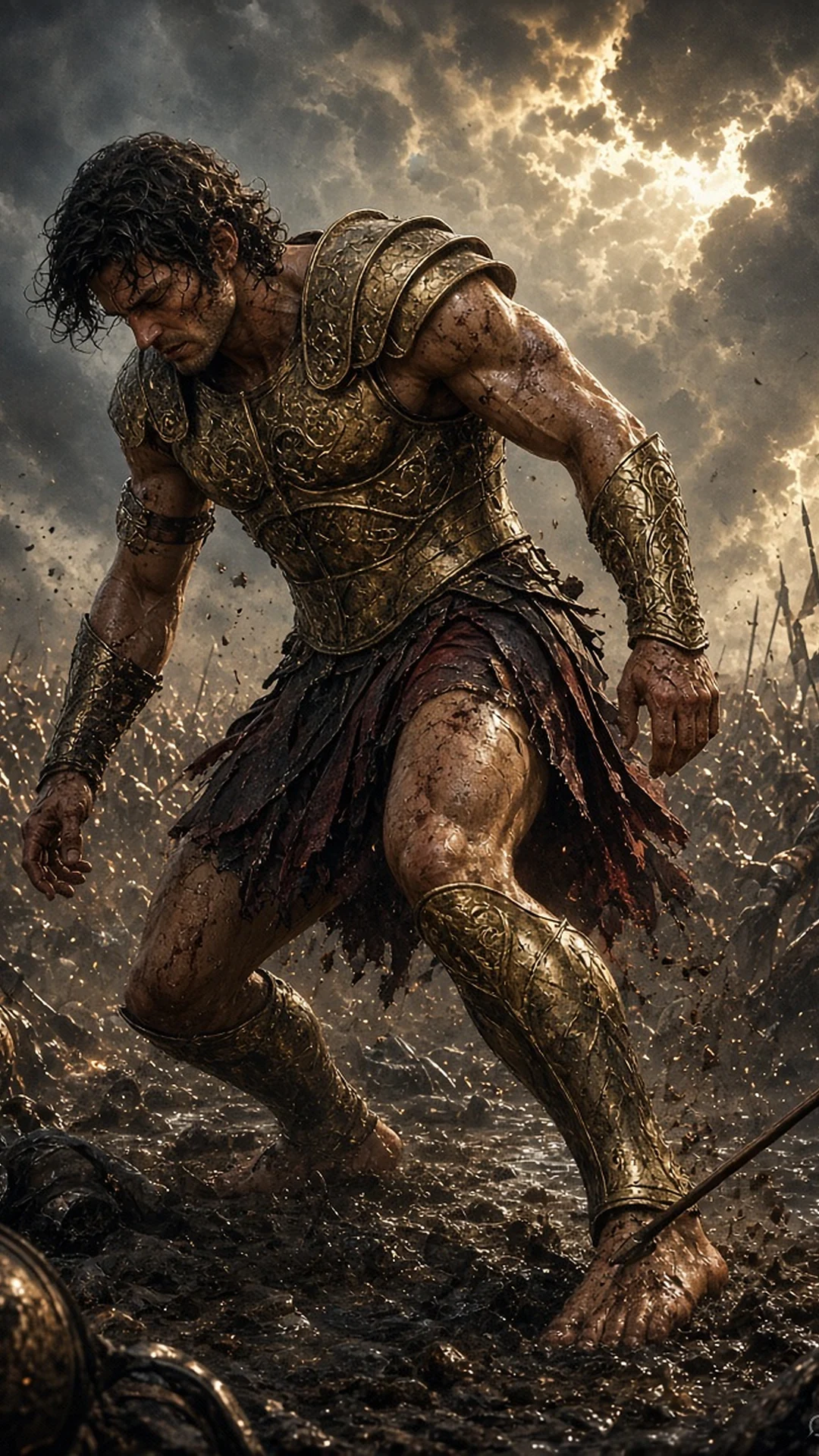
Five Achilles heel FAQs
What is the meaning of Achilles’ heel?
A specific weakness or vulnerability that can bring down an otherwise strong person, system or plan.
Is Achilles’ vulnerable heel described in the Iliad?
No. Homer’s Iliad does not contain the famous Styx-dipping origin or narrate the heel-arrow death scene.
Who was Achilles’ mother?
Thetis, a sea goddess. His father was the mortal Peleus.
Who killed Achilles in Greek mythology?
Later traditions associate his death with an arrow shot by Paris, often with Apollo’s involvement. The accounts vary.
Is the Achilles tendon the same as Achilles’ heel?
No. The tendon is a real anatomical structure named in connection with the hero; the idiom describes a figurative weak point.
Sources and conclusion
For Achilles’ anger, Patroclus and Hector consult Homer’s Iliad; for the later invulnerability motif see Statius, Achilleid and a modern scholarly study of the heel/ankle tradition. For other Trojan episodes compare Apollodorus, Epitome. Conclusion: Achilles matters to Greek literature for his choices and grief, while the familiar invulnerable heel belongs to a developing later myth. Updated 14 November 2026. Illustrations are imaginative.




























Share Your Opinion
Comments are closed on this post.