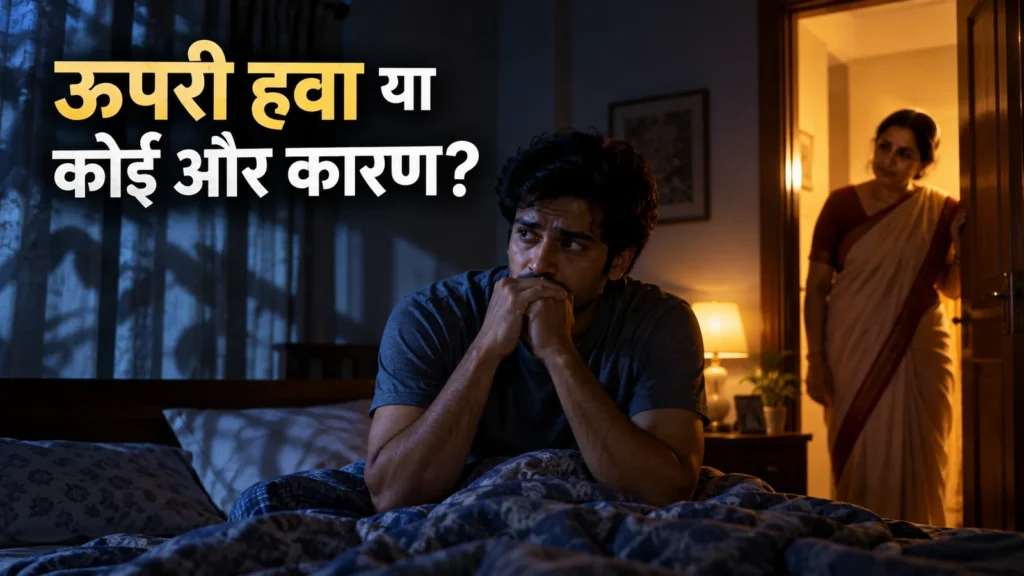
A figure in the corner—or an unclear view of ordinary objects?
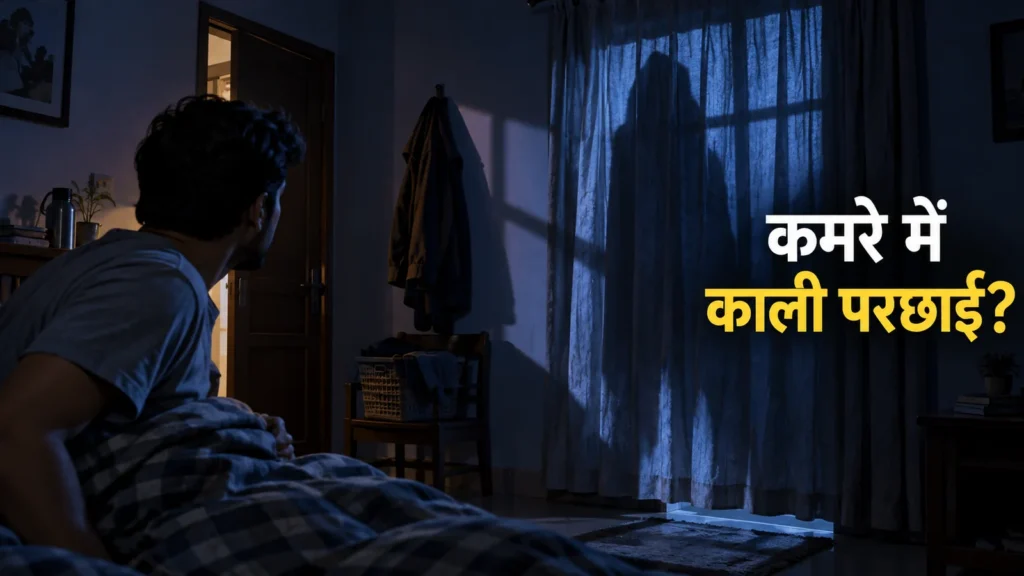
Imagine waking and seeing a tall dark shape in the corner. You watch it, frightened, until a light reveals clothing on a chair beside a curtain. This is an illustrative scene, not an explanation imposed on every reader’s experience.
A dark shadow in a room raises different questions depending on the circumstances. Misidentifying an object in low light, having a sleep-transition experience and developing a visual or health symptom are not the same situation.
A sudden curtain or shadow across your field of vision, new flashes or many new floaters requires urgent eye assessment. That is different from noticing a coat’s shadow in the corner. Sudden confusion or a serious health problem also calls for medical help.
Low light can leave the identity of an object unclear
When details are difficult to see, a chair, clothing and curtain may appear to form a human-like shape. A frightening story remembered at that moment can influence the interpretation. This is a possible explanation, not proof of what happened in your room.
Reading a familiar word into blurry lettering is a useful comparison: something is present, but its identity is misunderstood. Separating the observed shape from the conclusion about it creates room for a sensible check.
If a light reveals an ordinary source, remember that detail. Do not use it to call someone else a liar when their own source remains unclear. A recurring experience or one without an obvious explanation may warrant further questions and assessment.
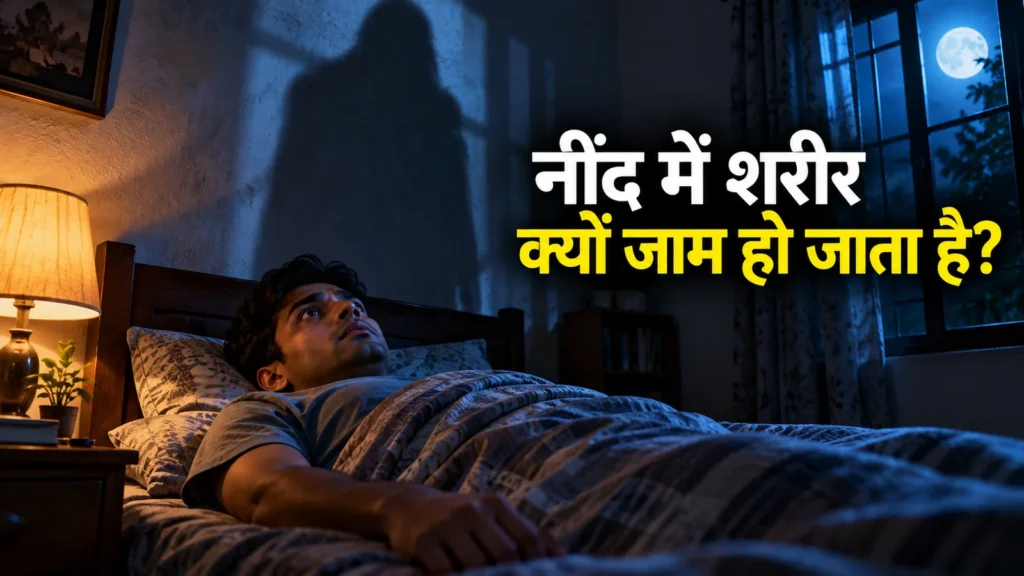
Did it happen while falling asleep or waking?
Some people have dream-like visual or presence sensations around sleep transitions. Brief inability to move may raise the separate question of sleep paralysis. A dark shape alone does not establish that diagnosis.
Note whether you were drifting off, had just woken or had been fully awake for some time. Did lighting change what you saw? Could you move? These details are more informative than assigning importance to a particular hour on the clock.
A person seeing something at a sleep transition and someone seeing it repeatedly while fully awake do not automatically need the same explanation. Finding the phrase “shadow person” online does not establish an entity; it may simply label a reported experience.
FACT: a 19 Hz explanation is not a universal answer
Claims that a particular frequency makes the eye vibrate and produce a human-like shadow should not be treated as a settled explanation for every home. Research on environment and unusual experiences needs careful interpretation.
In one controlled Haunt experiment, the number of reported experiences was unrelated to exposure conditions. That does not rule out every possible environmental effect, but neither does it establish that a household fan produces ghost-like figures. An ordinary phone app cannot validate that claim for your room.

How to check the room safely
If there is no gas smell, electrical hazard or other real emergency, use a light from a safe position and look at ordinary objects and incoming light. Do not chase a shape in the dark, carry a weapon into a confrontation or attack a family member.
A moving curtain or passing vehicle light may be worth noting. Camera images can contain reflection, blur and equipment limitations too. A shape in a poor photograph does not prove a ghost, while its absence from a photograph does not diagnose illness.
Listen calmly to the person who felt frightened. A useful response is: “Let us work out what we could see.” If repeated staring, frightening videos or a gathering crowd increases distress, return to a calmer conversation and rest instead of escalating the investigation.
Recurring experiences while fully awake need another conversation
Repeated visual experiences, particularly while fully awake, are a reason to seek prompt medical advice. Assessment may consider sleep, eyesight, medicines, illness and other causes. One symptom cannot establish a psychiatric diagnosis.
Changes in vision may call for an eye professional. Do not wait for a routine appointment if sudden flashes, many new floaters or a curtain-like visual shadow appears. Describe whether the shadow was in the room or across what your eye could see.
Bring a medicines list and brief notes about the events. Do not borrow sedatives or abruptly stop prescribed treatment. Ask which changes require urgent help and which belong in planned follow-up.
Preparing a useful description without choosing a diagnosis
You might tell a clinician: “I saw a shape after waking. I could move, and I am not sure whether it changed with the light.” Replace each detail with your actual experience. Do not add symptoms because they appeared in a reassuring explanation online.
If someone was present, they can describe the lighting and your reaction. Their observations may help without overriding your own account. Ask what further information would clarify the problem and whether an eye or sleep assessment is relevant.
A family argument about ghosts can distract from those practical questions. You do not need to resolve a whole worldview before discussing vision, medication or disrupted sleep. Keep the purpose of the appointment clear: a safe explanation and an appropriate next step.
Advice: respect the fear and remain honest about the cause
You can say: “The shape felt clear to me, but I do not yet know its cause.” That respects the experience without treating an interpretation as established. An unanswered question does not make one frightening explanation correct.
Harmless faith practices can coexist with checking light, sleep and health. Hitting, exposing someone to smoke or pressuring them to leave home during a ritual can cause harm. Support should make the situation safer.
If a child is frightened, look at ordinary objects together in daylight and allow conversation without forcing a scary story. Take an older person’s vision or sleep complaint seriously as well. Useful support is practical at every age.
Frequently asked questions
Does a dark figure prove a ghost is present?
No. Lighting, sleep timing and health symptoms are relevant to assessment.
What if it disappears with the light?
An ordinary shadow or misidentification is possible, but this does not explain every experience.
Can a fan frequency prove the cause?
No universal explanation follows from a particular frequency claim or a phone app.
What if a curtain appears across my vision?
Sudden visual curtain, new flashes or many new floaters needs urgent eye assessment.
Does one event prove mental illness?
No. Seek assessment for new or recurring symptoms rather than choosing your own diagnosis.
Related reading
Unexplained Bruises or Scratches After Sleep: What to Check
Footsteps or Jingling Sounds on the Roof at Night: What to Check
Why Do Dogs Howl at Night? Sounds, Distress and Ghost Claims
Rotten Egg Smell in the House: Safety First, Then the Cause
Why Do I Wake Up at 3 AM? Sleep Patterns, Fear and Next Steps
Sources and review
Information reviewed: 14 October 2026. The opening scene is illustrative, not a reported case.
NHS: Hallucinations and hearing voices
The Haunt project: controlled experiment
National Eye Institute: Retinal detachment
This is general information, not an individual diagnosis or treatment. Seek professional help for severe or persistent symptoms.