Neighbour blocking your access road: what should you do first?
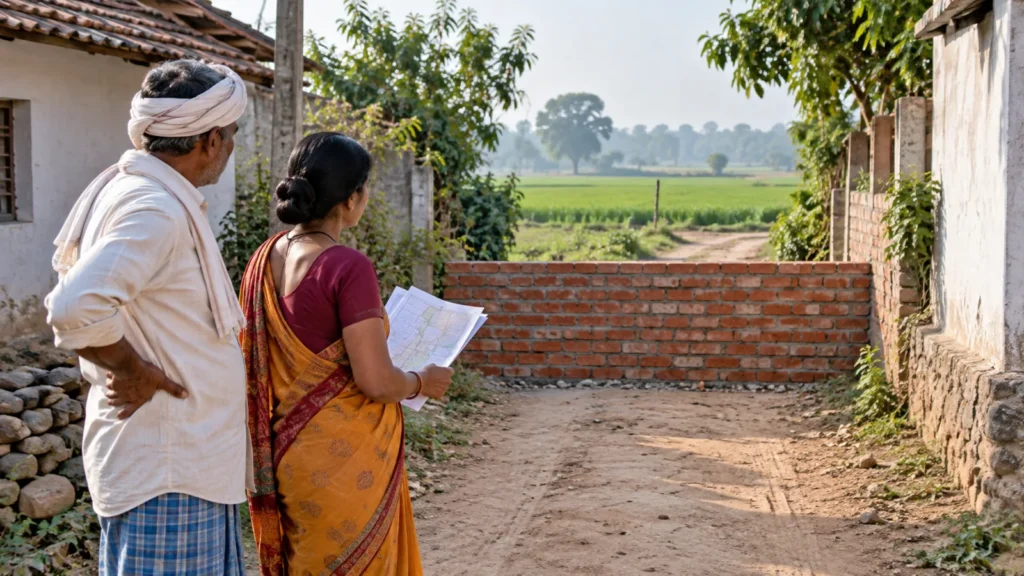
A wall suddenly blocks the lane to your house, a gate closes the shared passage, or fencing stops your tractor from reaching the farm. Before confronting the neighbour, establish what kind of route it is and record the obstruction. A public road, a private right of way and a customary agricultural access route can involve different authorities and different legal remedies.
The practical answer is to match your evidence and requested relief to the correct forum. BNSS section 152 can address an unlawful obstruction affecting a public place or a way lawfully used by the public. A private access dispute may instead require state revenue remedies, an easement claim or civil-court relief. There is no universal promise that an SDM will reopen every passage within 30 days.
- Record the location, date, nature of the obstruction and affected users.
- Take photographs from a safe position and preserve original files.
- Collect maps, property deeds and evidence of earlier use.
- Record threats or immediate danger separately from the access-right dispute.
- File before the appropriate authority and obtain a receipt or diary number.
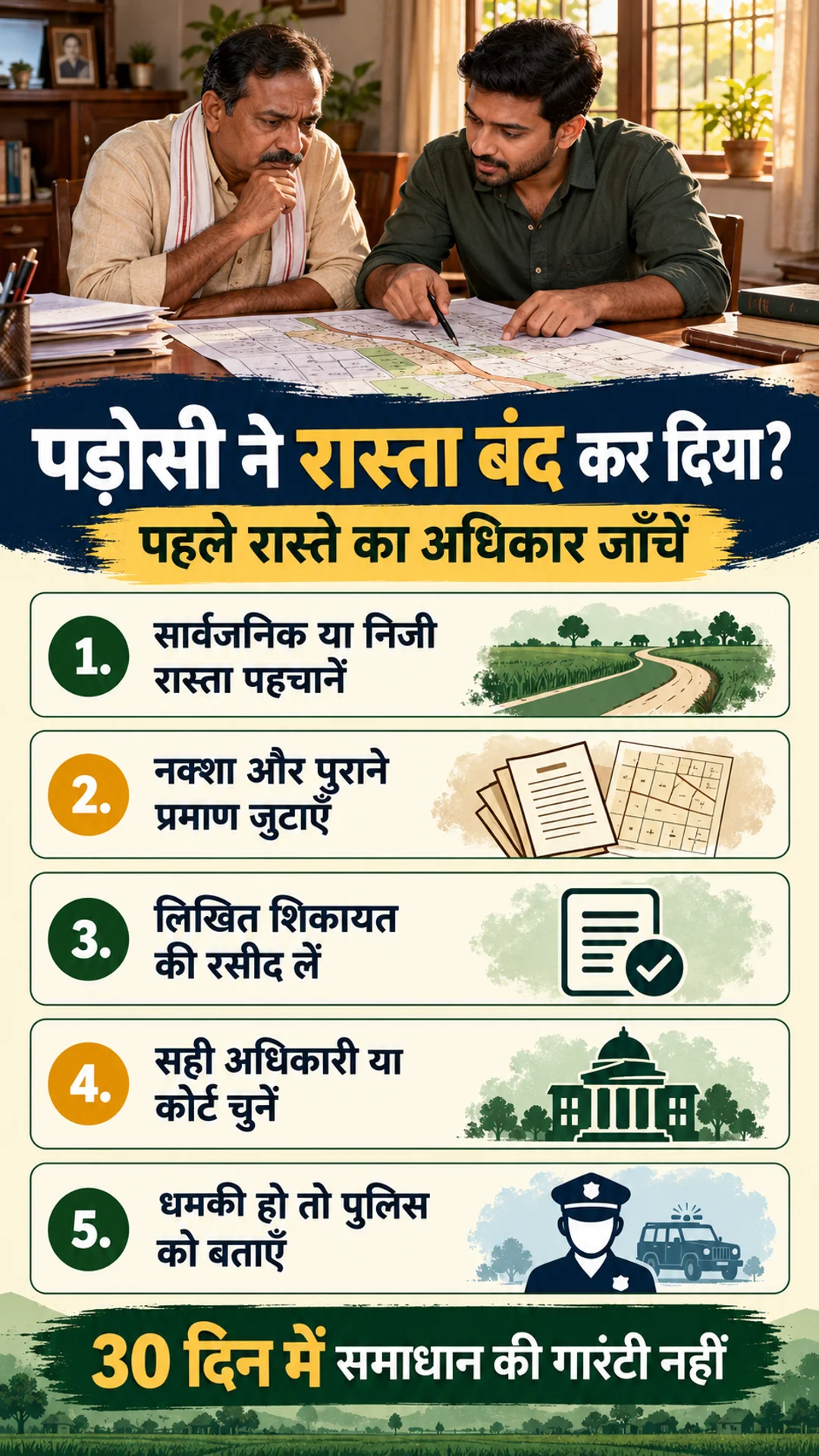
Public road, shared passage or private right of way?
Start with the records. Ask the municipality, panchayat or revenue office for certified documents showing the road, lane, village common land or access route. Identify which authority controls it. People calling a strip of land a common road is a useful lead, but it does not settle the legal question on its own.
A private route may be described in a sale deed, partition document, layout or access agreement. Ownership of the underlying land and the legal right to pass over it are separate questions. A privately owned strip might carry a valid access right; a dirt track that looks like a road might have no established public status.
For a shared passage within a family property or residential layout, obtain the partition plan, approved layout and relevant agreements. Possession, boundaries, co-ownership and the right to use the passage may need separate consideration. Google Maps and a hand-drawn sketch can help explain location, but they are not substitutes for authoritative land records.
For example, a barrier across a recorded village road used by many residents can raise a public-obstruction issue. A shortcut to one farm across a neighbour’s land requires closer examination of the legal basis for private use. Filing the same application in both situations without checking the facts can waste valuable time.
BNSS section 152 and the SDM process
Section 152(1)(a) allows the competent Executive Magistrate to make a conditional order addressing unlawful obstruction in a public place or a way lawfully used by the public. Depending on jurisdiction, this can be the District Magistrate, SDM or another specially empowered Executive Magistrate. Submit the location, public-use basis and supporting records; filing alone does not create a removal order.
The person addressed by the order has an opportunity to comply or show cause. If the existence of the public right is denied, section 156 matters: reliable evidence supporting that denial can lead to a stay until a competent court decides the right. Section 158 permits local investigation or expert examination. This explains why a clear map and independent evidence of public use are valuable.
Section 157 provides for proceedings under that section to conclude as soon as possible within 90 days, extendable to 120 days for recorded reasons. This is not a guaranteed period from every complaint to physical reopening. Service, a disputed right, interim directions and enforcement affect what happens next. Section 160 addresses compliance with an absolute order and its lawful implementation.
FACT: interim injunction under BNSS section 161 has a threshold of imminent danger or serious injury to the public. Private inconvenience does not automatically meet it. Describe genuine emergency access, school traffic or risks to affected families with evidence. Older discussions refer to CrPC section 133; check the applicable procedural law for your particular proceeding.
Farm access: revenue law, BNSS 166 or civil court?
Agricultural access can have a state-specific revenue remedy. In Madhya Pradesh, section 131 of the Land Revenue Code allows a Tahsildar to inquire into certain field-access disputes with reference to previous custom and the convenience of the parties. The 2018 amendment to section 133 provides an obstruction-removal route for recognised village roads/common land and routes covered by a section 131 decision. Other states can differ.
Do not copy an old Madhya Pradesh article citing section 132 without checking amendments: the 2018 amendment deleted it. Verify current local provisions, the land category and jurisdiction. A Patwari report may help, but the official who prepares a report is not necessarily the authority issuing the final order. Disclose any pending litigation or court stay.
BNSS section 166 may be relevant where a disputed right to use land or water is likely to cause a breach of peace. Recent exercise matters: for a year-round right, exercise within three months before receipt of the relevant report/information; for a seasonal right, exercise in the last relevant season or occasion. It is not a substitute for a final determination of property title. Provide a truthful chronology and evidence of recent use.
When a lasting private access right needs adjudication, a civil suit seeking the appropriate declaration and injunction may be necessary. A deed-based grant, necessity and prescription are distinct easement arguments. Necessity under section 13 is not simply a desire for the shortest route; transfer or partition and available access matter. Section 15 generally examines qualifying use for 20 years, or 30 years against government property. Mere permissive use does not automatically satisfy it. Check territorial applicability and all statutory conditions.
A final civil decision can take time, but appropriate temporary relief can also be sought. Removing an existing wall may require a different, more demanding form of relief than restraining fresh obstruction. An order saying “status quo” does not necessarily reopen a passage. Ask counsel to specify the location, the interference and the practical relief needed rather than requesting a vague stay.
Evidence file and written complaint template
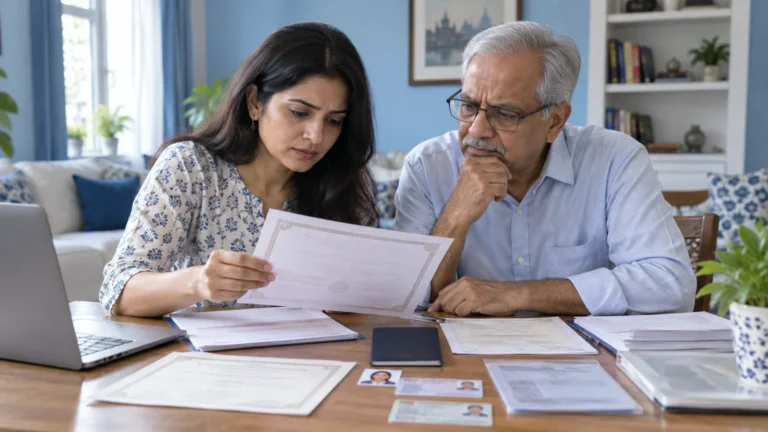
Prepare a one-page chronology: when the route was last used, when the obstruction appeared, who witnessed it, who is affected and what previous complaints were made. Retain originals and attach copies. Preserve original photo/video files rather than relying solely on compressed messaging copies. Witnesses should describe what they personally observed, not a story prepared for them.
- Village/ward, district, plot or survey numbers and a clear route description.
- Certified maps, relevant land records, deeds, partition papers or approved layout.
- Before-and-after photographs, dated videos and independent evidence of earlier use.
- Previous complaints, acknowledgements, replies and existing court orders.
- A truthful explanation of alternative access, actual loss and urgent needs.
The following is a general representation, not a ready-to-file court petition for every situation. Address it to the competent Executive Magistrate for a public-obstruction issue, the relevant revenue authority for a covered agricultural access dispute, or the local body for its road-management functions. Do not label private land as government land without evidence.
To: [Competent authority, office, district]
Subject: Request for inquiry and lawful action concerning obstruction at [location/survey number]
I, [name/address], state that [wall/gate/other obstruction] was placed on [date]. The route has been used by [users, duration, purpose]. Its claimed legal status/right is supported by [records or documents].
The actual effect is [facts]. Any threat or immediate danger is [specific incident].
Please register this representation and provide a receipt number, examine the records and site, hear the concerned parties and take appropriate action under the applicable law. The reason for requesting urgent lawful relief is [facts and evidence].
Attachments: [numbered list]. Previous complaint, pending case or court order: [complete details].
Date, name, contact details and signature
Keep a stamped copy when filing in person. For an official portal, email or post, retain the reference number and delivery evidence. Verify the address through the district’s official website. A message sent to a private contact or intermediary is not proof that the department registered your application.
Threats, police help and enforcement follow-up
If there is violence, immediate danger or someone is trapped, seek emergency help through 112 and explain the location and risk clearly. Police can address safety and possible offences; the final private access right may need another competent process. If told it is a civil matter, describe any actual threats or violence separately in writing. Do not invent a criminal allegation to force action.
After an order, obtain a certified copy and identify the compliance date and responsible implementing authority. If the obstruction remains, submit a compliance request with the order and updated photographs. Read whether it directs a survey, a hearing or actual removal. Even a favourable order does not mean you should personally demolish a disputed structure.
If no response arrives, follow up with the original reference number through the relevant supervisory or departmental grievance channel. RTI can help request existing maps, reports and action records; it is not itself an order to reopen a route. An adverse order, appeal or stay requires prompt review of the applicable deadline.
Advice
Organise the problem into access-right documents, obstruction evidence and safety incidents. A simple sketch can explain direction, but label it as illustrative. State the real impact on older people, disabled residents, essential services or farm work, and consider safe temporary arrangements while the legal route is pursued.
If settlement is possible, define the location, width, use, maintenance and any timing restrictions in writing, with advice on necessary registration and formalities. Budget for certified copies and surveys as well as legal fees. Ask the District Legal Services Authority about eligibility for legal aid. A precise application supported by the correct records is often the most useful starting point.
FAQ: neighbour blocking a common road
Can a private landowner always close a passage?
Not necessarily. A lawful public use, granted passage, easement or statutory access right may exist. Its basis and scope must be established from the facts and evidence.
Will an SDM remove the wall within 30 days?
There is no universal guarantee. Jurisdiction, public-right evidence, notice and inquiry matter. The section 157 timetable is not a blanket promise of physical removal from the date of every complaint.
What if the old farm route is missing from the map?
Examine customary or private use, documents and the applicable state revenue law. Absence from a map does not conclusively answer the access-right question, but previous use must still be proved.
Will an online complaint or FIR immediately reopen the road?
Registration and a removal order are different steps. Safety, criminal investigation, revenue proceedings and civil relief have distinct functions.
Can I remove the obstruction myself?
Avoid forcible action on disputed land. Seek the appropriate order and lawful enforcement; call for help when immediate safety is at risk.
Related reading
Police calling without an FIR: notices and your rights
Sources and applicable law
- NCRB: BNSS sections 152–161 and 166
- India Code: Indian Easements Act, 1882
- Indian Easements Act: statutory text
- MP Legislative Assembly: Land Revenue Code Amendment Act, 2018
- India Code: Code of Civil Procedure, 1908
Disclaimer: general legal information for India. State law, land classification, current records and court orders affect individual remedies. No outcome or universal completion time is guaranteed. Fact-checked: 13 October 2026.