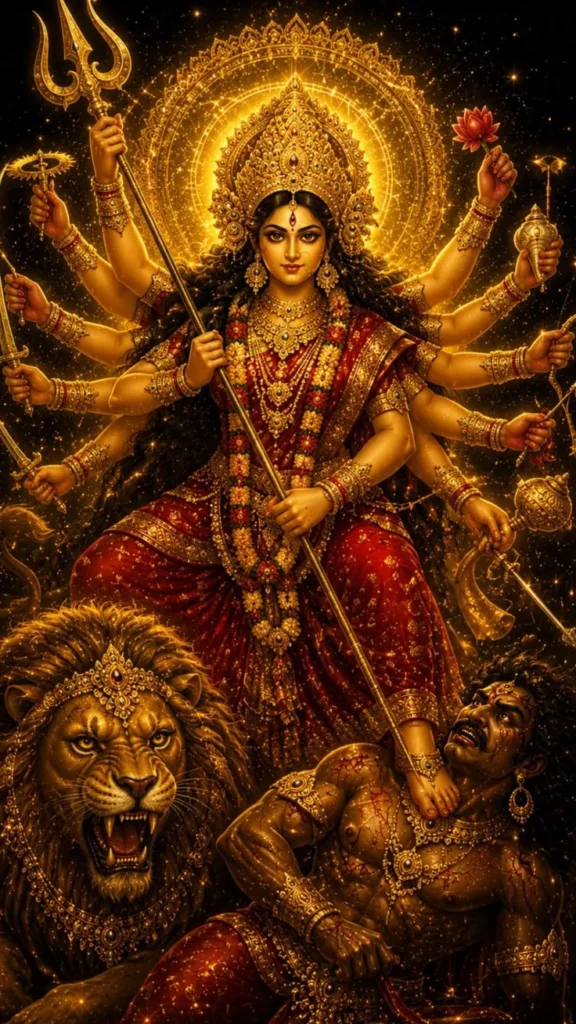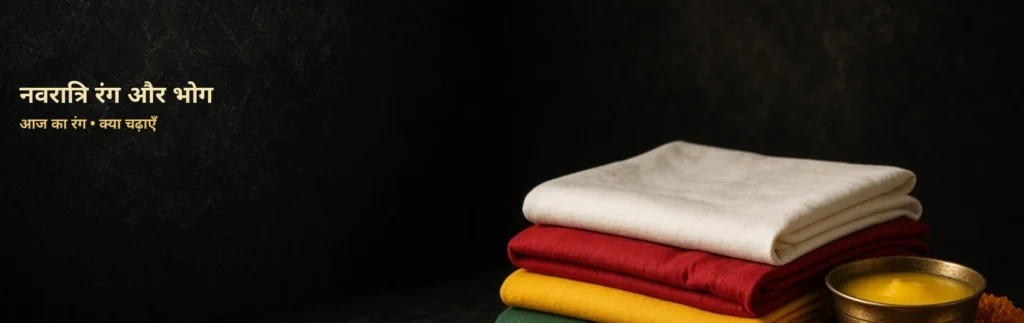
Today’s colour is the least stable Navratri search. One WhatsApp list writes white for day one, another yellow, a third orange. People in all three towns still reach the temple in cloth. No single list is entered in a gazette. Below are two customs in use, and the bhog most homes can actually manage.
Two cloth lists
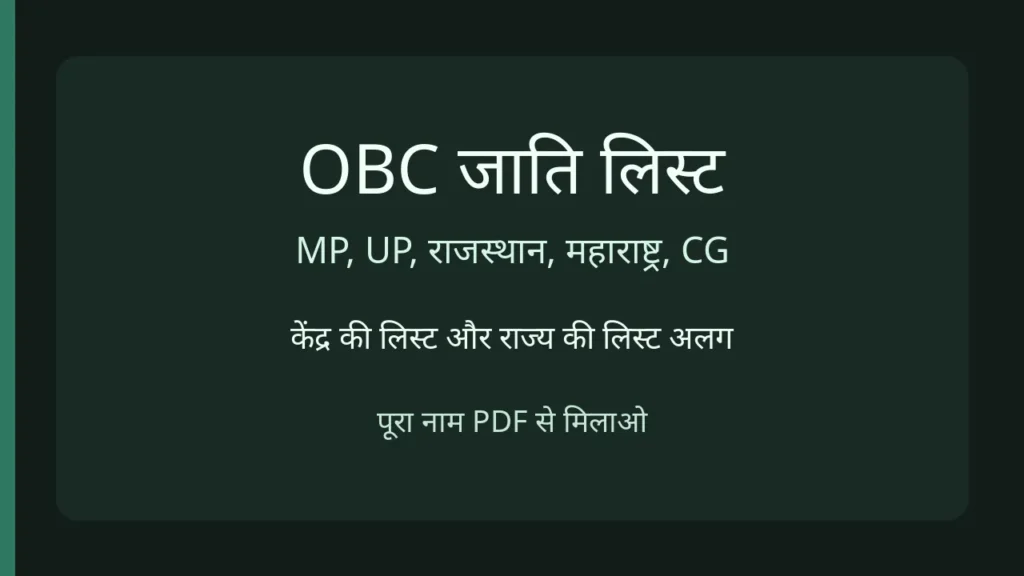
The first, common on school charts and many north-Indian statuses: day 1 white, 2 red, 3 blue, 4 yellow, 5 green, 6 grey, 7 orange, 8 peacock, 9 pink. The second starts day 1 in yellow or orange and shifts the rest. Do not forward either as “the scriptural colour”. Write that it is the house or the neighbourhood.
Wear the saree or kurta already in the cupboard. A new set is not required. If white is missing, cream will do. If red is missing, maroon. Colour does not stop the puja. There is no shop link here.
The bhog thali
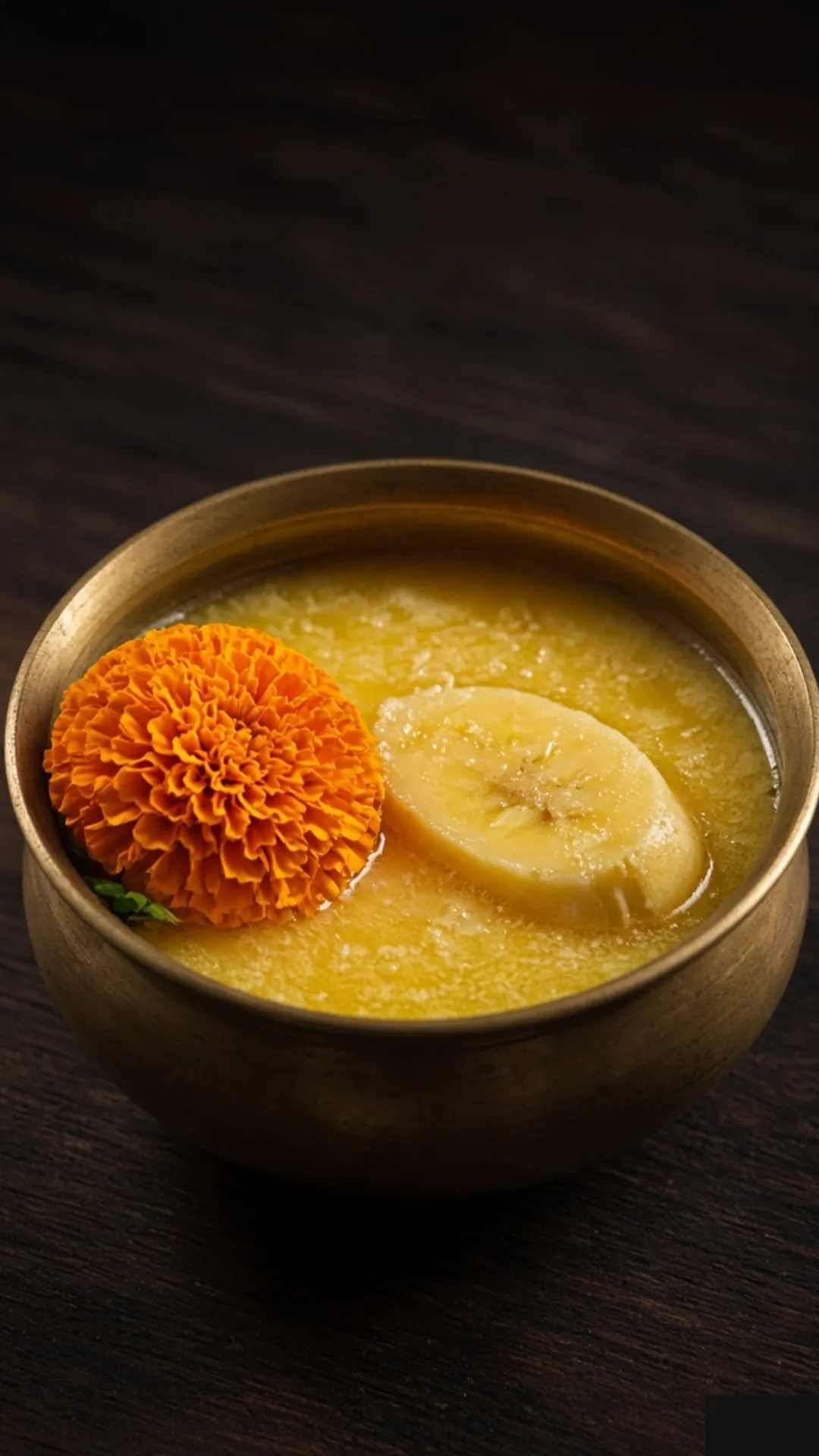
Day 1 ghee, a small bowl of desi ghee or a ghee sweet. Day 2 mishri or sugar. Day 3 kheer or milk. Day 4 malpua, or any ghee sweet if malpua is not made. Day 5 banana. Day 6 a little honey. Day 7 jaggery. Day 8 coconut. Day 9 sesame laddoo or plain sesame. Allergy, diabetes, a small child — leave that item off the thali. Prasad is not medicine. A fast is a question for a doctor.
Flower and lamp
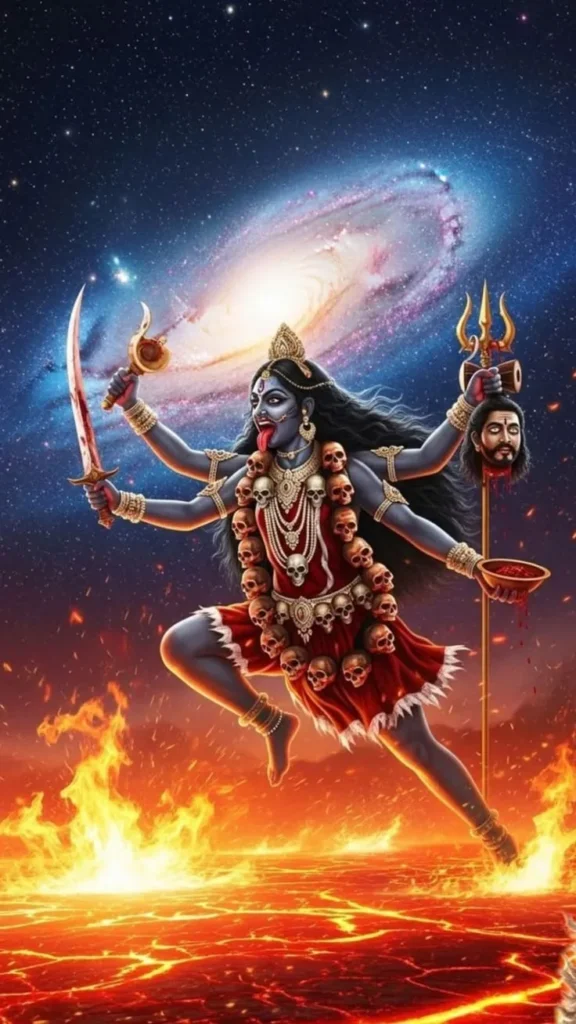
Marigold works on almost every day. Several homes keep white flowers for Shailputri, jasmine or rose. Red is spoken of for Chandraghanta. On Kalaratri the lamp is left burning into the night. Keep it off the curtain and the paper. The offering comes first, the family eats after. Yesterday’s prasad from the fridge is not today’s bhog.
What a status can say
Name, day, the colour you actually wore, and one line that colour changes by region. There is no need to declare another list wrong. Vijayadashami’s colour does not belong in this nine-day table.
यह जानकारी हिंदू पंचांग, पुराण-कथा और घर-क्षेत्र की रीत से ली गई है। तिथि स्थानीय पंचांग से बदल सकती है। रंग और भोग एक आधिकारिक सूची नहीं। फल, नौकरी या रोग की गारंटी नहीं। वेबसाइट जिम्मेदार नहीं।