Yellow Navratri jaware or seeds that will not sprout: what to do
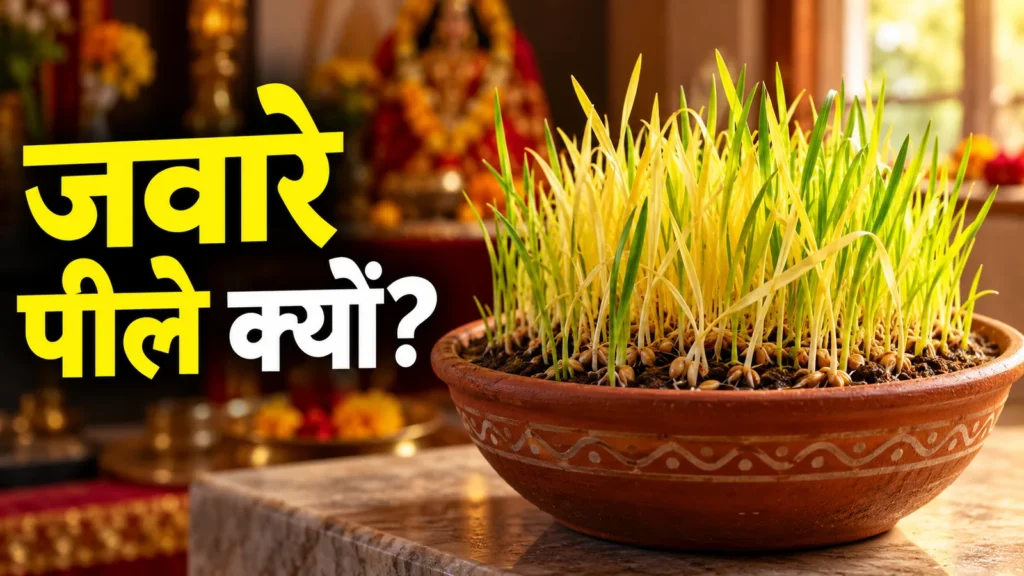
You sow grain beside the Navratri kalash, but the shoots look yellow, thin or uneven. Some seeds have not appeared at all. Does that mean something is wrong with the puja? Start with the plants. Their appearance can change with the seed, moisture, light and growing conditions. A bowl of seedlings cannot determine what will happen to your family.
This guide explains common questions about yellow jaware, pale shoots, failed germination and basic care. It respects the devotional tradition while separating symbolic meanings from plant problems. A written article cannot diagnose every bowl, so possible causes should be treated as possibilities rather than a certain answer.
What are jaware, and why are they grown during Navratri?
Many families grow grain seedlings as part of Navratri worship. Barley is commonly used; some households use wheat. You may see the words jaware, jware, jau or barley shoots in searches. First establish which grain your family actually uses, because a local name does not always identify the seed precisely.
The seedlings can symbolise new life, food and a connection with nature. The Umaria district administration’s Jawara page records the local practice of sowing jawara during the nine days of Nav Durga. That documents a tradition; it does not demonstrate that seedling colours predict personal events.
Do green jaware guarantee prosperity?
Healthy green growth can feel encouraging and may be regarded as an auspicious symbol within a family. That is different from a promise that a wish will come true. The plants do not guarantee employment, money or recovery from illness. Decisions about those matters need their own practical information.
Weak seedlings do not measure weak devotion either. Caring for a plant and judging somebody’s sincerity are different tasks. Avoid blaming a relative for “ruining” the festival because a bowl looks different from one at a neighbour’s home.
Why do Navratri jaware turn yellow or look white?
Check the light before interpreting the colour
Shoots grown in a dark location can look pale and stretched. Look at the actual position of the bowl: does it receive daylight, or is it kept in a dim corner? Colour alone cannot identify a particular deficiency or disease. A pale plant is not evidence of a message aimed at your household.
Moving the bowl straight into harsh midday heat is not automatically the answer. Consider your home’s conditions and make any change gradually. If the puja corner is very dark, discuss a suitable brighter location with your family. Plant care and the religious arrangement can be discussed together without turning either into an argument.
Look at moisture, drainage and crowding
Is the growing material dry, lightly moist or holding standing water? Can surplus water drain? Are seeds piled densely together? Does the saucer stay full after watering? Write down what you observe before choosing a cause or adding a remedy.
Two bowls do not need to have matching colours because their seeds and conditions can differ. Photographs also change colour with lighting and camera settings. Comparing your bowl with a brightly edited social media picture is not a reliable way to decide whether the worship is auspicious.
Why did the barley or wheat seeds fail to germinate?
You need intact, viable seed for growing. Grain kept for cooking is not automatically a suitable sowing product. Broken, milled or cooked grain should not be treated as ordinary viable seed. Ask the supplier what you have purchased and how it is intended to be used.
University of Minnesota Extension’s seed-starting guidance discusses seed age, drainage and following seed instructions. It is horticultural information, not a Navratri ritual manual. Use that distinction when considering advice about the plants.
How many days should jaware take to sprout?
Timing depends on the seed and conditions. A fixed promise that every grain must appear within a particular number of hours would be misleading. Check the seed’s instructions or ask its supplier. If some shoots have emerged, avoid digging up the remaining grains repeatedly just to see whether they have started.
If nothing appears after the expected period, review the seed and growing material. Odour, pooled water or decaying grains may point to a practical problem. You do not need to hide the result with artificial shoots. Explain what happened calmly and ask about a simple alternative within your family’s practice.
What if jaware dry out, bend or develop white growth?
Look at the growing material before applying several remedies at once. Keep a record of what changed so that a knowledgeable person can help. This guide does not recommend adding milk, sugar, ghee or leftover offerings to the soil. Paying for a ritual to “repair” the plant is not a necessary plant-care step.
White roots are not automatically mould
Fine structures near a root may be root hairs, while spreading fluffy growth can have another explanation. If you see decay, collapsing shoots or a spreading coating, seek advice from a gardener or agricultural professional. A single photograph is not always enough for a confident diagnosis.
The RHS damping-off guide describes seedling diseases that can prevent emergence or cause young plants to collapse. High humidity, poor air circulation and crowded sowing can contribute. Clean containers, avoiding crowding and not overwatering are useful general precautions.
Do not use damaged or questionable puja seedlings for juice, food or edible prasad. A plant grown for worship has not necessarily been raised for safe consumption. If any chemical was applied, do not pass the material to somebody else without that information.
A simple way to sow and care for Navratri jaware
- Establish your household’s practice and the seed being used. Choose a clean container and a suitable growing medium.
- Provide drainage before setting up the bowl. Do not try to break holes into a filled container during worship.
- Follow sowing instructions for your seed. You do not need a thick pile of grain to make the display meaningful.
- Check the growing material before watering. A rigid twice-daily schedule does not suit every bowl or weather condition.
- Consider light, ordinary air circulation and a clean position. Keep the bowl away from the diya’s heat and think about spilled water and children’s access.
If soaking is recommended for the seed you have, follow suitable instructions. Keeping grain underwater for several days is not presented here as a religious requirement. Sowing advice and the kalash ceremony are different kinds of guidance; do not transfer rules from one to the other without considering their purpose.
Photographing the bowl occasionally and noting when you watered it can be more useful than constant checking. If you ask for help, describe the seed, location and growing material as well as the colour. That gives someone a better starting point than simply asking whether the plant is unlucky.
When and how should jaware be immersed or disposed of?
Families may complete the observance on Ashtami, Navami or Dashami according to local practice. One compulsory completion day should not be imposed on every household. Ask about your own tradition and follow local arrangements for collecting worship materials.
Do not put plastic, cloth, colours, containers and mixed rubbish into a river or pond. Where a local collection point exists, use it. For clean organic plant material, an appropriate soil or compost option may be considered if acceptable within your tradition. Material containing chemicals or contamination needs a different disposal decision.
Advice
Focus on three practical questions: what seed is this, what is the moisture like, and how much light reaches the bowl? If the colour changes, start there. Comparing your devotion with another family’s seedlings is unlikely to help. Keeping a short care note can support a much more useful conversation.
If somebody confidently predicts illness, death or financial loss from the colour, do not treat that claim as evidence. Medical, work and family decisions should reflect real circumstances. Faith and ordinary care can coexist without using a plant as a forecast.
FAQ about yellow or poorly growing jaware
Are yellow jaware a bad omen?
Some beliefs associate colours with outcomes, but yellow shoots do not establish a future event. Review light, moisture, seed and growing conditions first.
Are white shoots a special message from the Goddess?
A pale shoot alone cannot support that conclusion. Check the growing conditions and seek plant-care advice if the problem is unclear.
Should I stop puja if the seeds do not sprout?
Failed germination does not judge your sincerity. Investigate the seed and ask a trusted person about alternatives for any specific ritual you follow.
Must I water jaware every morning and evening?
No universal plant-care schedule fits every container. Check the growing material; do not add more water merely because a scheduled time has arrived.
Can jaware height predict financial success?
No. Height and density describe growth, not a guaranteed income, fulfilled wish or result of worship.
Read next
What to do if the Akhand Jyot goes out
Disclaimer: This is general cultural and plant-care information. Traditions differ, and a written guide cannot diagnose every plant problem. Seedling colour, size and rituals do not guarantee future or health outcomes.