What should you do if your Akhand Jyot goes out?
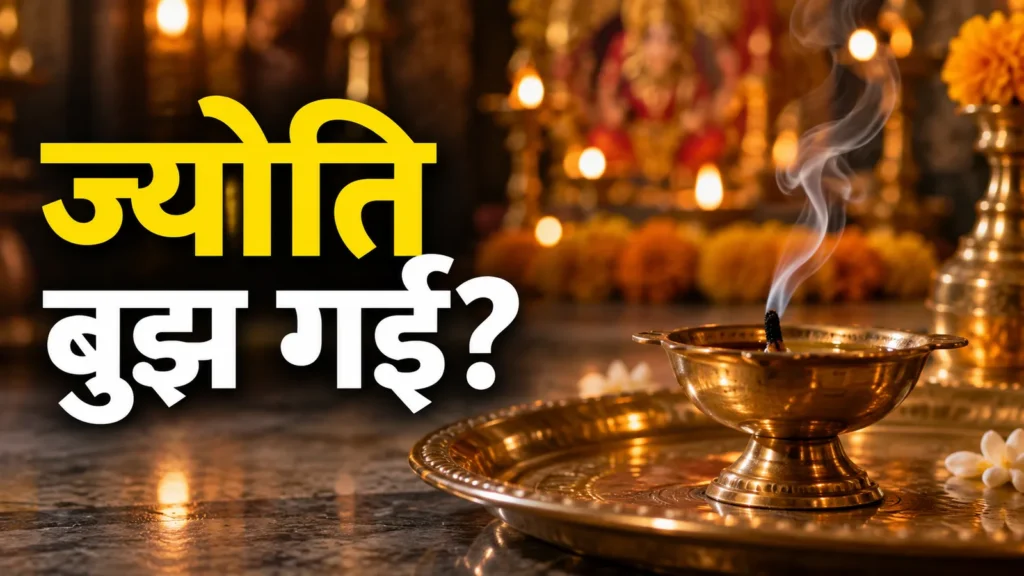
You notice the Navratri lamp has gone out, and suddenly every question feels urgent. Is the puja broken? Is the Goddess unhappy? Do you need a special remedy? First, pause. An extinguished wick cannot tell you what will happen to your family. Check the surroundings, let the lamp cool, and only relight it when the setup is safe.
Akhand Jyot means a continuously burning devotional flame. Some households make a specific commitment to keep it lit; others light a diya during morning and evening worship. Those are different arrangements. This guide concerns ordinary home worship and practical safety, rather than prescribing one rule for every temple, tradition or spiritual practice.
Is an extinguished Akhand Jyot a bad omen?
In some families, a lamp going out is considered undesirable. That can explain why the event feels upsetting. It does not establish that illness, financial trouble or a family dispute will follow. A belief about an event and reliable evidence of a future outcome are different things.
A website also cannot determine whether a deity is angry with you. Religious interpretation belongs to faith and tradition. An empty lamp is something you can inspect; a claim that it carries a personal warning goes beyond that observation. You do not need to accept a frightening video as a verdict on your worship.
Does the whole Navratri fast become invalid?
Keeping a fast, reciting prayers and maintaining a lamp are separate activities. A flame going out does not demonstrate that your intention was wrong. If you have undertaken a particular religious vow, ask a trusted person within that tradition how it is understood. This article cannot issue a binding religious ruling for all communities.
Avoid blaming a child, an older relative or whoever last checked the lamp. Someone may have put it out because the setup looked unsafe. Listen before making accusations. Preventing a curtain from catching fire is a sensible response, and a family argument will not repair the lamp or make the arrangement safer.
Why does the Akhand Jyot keep going out?
Look at ordinary, checkable causes. Is the fuel running low? Is the wick positioned so it can draw fuel? Does a fan or an open doorway send a draught across the flame? Is the exposed wick too short, badly positioned or heavily burned? Is the lamp sitting unevenly? These questions help you improve the actual setup.
Oil and ghee do not always behave identically in every lamp. The vessel, wick and room conditions can affect what you observe. There is no universal promise that a spoonful of fuel will last a fixed number of hours. Do not copy another person’s unattended burning time from a video.
Should you make the flame bigger?
A larger flame is not a guarantee of uninterrupted worship. Once the lamp is cool, inspect the vessel and wick. Replace unsuitable parts and observe the next use while present. If a vessel is cracked or the arrangement is unstable, address that problem rather than simply adding more fuel.
Do not improvise an airtight enclosure or invert an ordinary drinking glass over the diya to protect it from wind. If you use a lamp cover, choose equipment intended for that purpose and follow its safety instructions. A homemade enclosure is not evidence that the lamp can now be left unattended.
How to relight the diya safely
- Check whether surrounding material is burning or producing smoke. Deal with an immediate hazard before thinking about the ritual.
- Do not rush to lift a hot vessel, pull the wick or pour in fuel. Let the lamp cool completely.
- Inspect the cool vessel. Do not reuse a damaged lamp or an unsafe arrangement without correcting it.
- Prepare a suitable wick and fuel. Do not pour oil or ghee onto a live flame.
- Put the lamp on a stable, uncluttered, heat-resistant surface. Relight it only when you can remain present and watch it.
This process does not require you to buy expensive puja materials or light a prescribed number of additional lamps. You can resume your usual prayer if you wish. There is no need to turn a practical problem into a crisis by making a new commitment while frightened or under pressure.
Do you need prayashchit, a mantra or a forgiveness prayer?
Different traditions may have a simple way of resuming worship or asking forgiveness after an interruption. You can follow your family’s practice if you choose. However, every remedy promoted online is not automatically an established religious requirement. A demand for money accompanied by a threat of misfortune deserves caution.
If it comforts you, say a short prayer in your own words: “Mother, please forgive any unintentional mistake. I will continue with care.” This is an example of a personal prayer, not a quotation from scripture or a compulsory mantra. Recitation, donations and ceremonies cannot provide a guarantee that no difficulty will occur.
Must you restart the entire nine days?
There is no single restart instruction this website can impose on everyone. If your vow belongs to a particular practice, ask someone who understands it and request an explanation of the rule. Do not promise an unsafe or exhausting arrangement simply because another person insists that you must.
You can also distinguish an accidental interruption from a deliberate safety decision. Putting out a flame when nobody can supervise it is responsible household care. The religious meaning of a particular vow can be discussed separately, without treating the home’s safety as negotiable.
Can you leave an Akhand Jyot burning while sleeping?
An open flame needs supervision. The U.S. Fire Administration advises extinguishing candles before leaving a room or going to bed. An oil diya is also an open flame, so the same underlying hazard matters during worship. A devotional purpose does not remove the risk.
NFPA candle guidance stresses stable surfaces, keeping loose clothing and hair away, and not leaving children alone around a burning candle. Apply these precautions thoughtfully to home lamps. A protective tray does not make an unattended flame safe.
If your household cannot provide safe supervision, discuss another worship arrangement. Lighting a diya while present at morning and evening prayer, or using battery lighting for illumination, may suit the home. Battery lighting should not be advertised as automatically fulfilling every religious vow; ask about that within your tradition.
Advice
Before starting, decide who will take care of the lamp and whether safe care is realistic. A rota on paper does not help if everyone will actually be asleep or away. Repeated problems are a reason to reassess the arrangement, rather than experiment with larger flames or additional unattended lamps.
If worry about the extinguished flame keeps returning, speak with a calm, trusted person. Avoid anyone who uses that worry to demand payment. If fear persistently disrupts sleep or everyday life, support from a qualified mental health professional is a reasonable option. Seeking help does not require abandoning your faith.
FAQ about an extinguished Akhand Jyot
Does a diya going out prove bad luck is coming?
No. Some traditions attach meanings to it, but the flame alone cannot establish a future event. Check the lamp’s ordinary causes first.
Can I reuse the same wick?
Inspect it after the vessel has cooled. Replace an unsuitable or heavily burned wick. Do not adjust it with your hands in a hot lamp or live flame.
Is a forgiveness prayer compulsory?
That depends on your tradition. A simple personal prayer is an option; an expensive ceremony or a promise of guaranteed protection should not be treated as necessary.
Can I cover the lamp with a glass?
Do not improvise with an ordinary glass or airtight container. Use purpose-made equipment according to its instructions, and do not mistake a cover for permission to leave it unattended.
What if a fire starts during puja?
Prioritise people, leave safely and contact local emergency services. Do not stay in a dangerous area to finish the ritual or save worship materials.
Read next
Akhand Jyot rules and home worship
Disclaimer: This is general information, not a binding religious ruling or a promise of protection. Practices differ by family and tradition. For a fire or medical emergency, use appropriate professional and emergency assistance.