One mukhi Rudraksha X-ray report: identify the actual claim
An expensive one-mukhi listing may come with an impressive certificate and an attached image. Before buying, ask which object was examined, which examination is recorded and what the issuer actually concluded. A seller’s “100% original” statement should not be substituted for the findings in a one mukhi Rudraksha X-ray report.
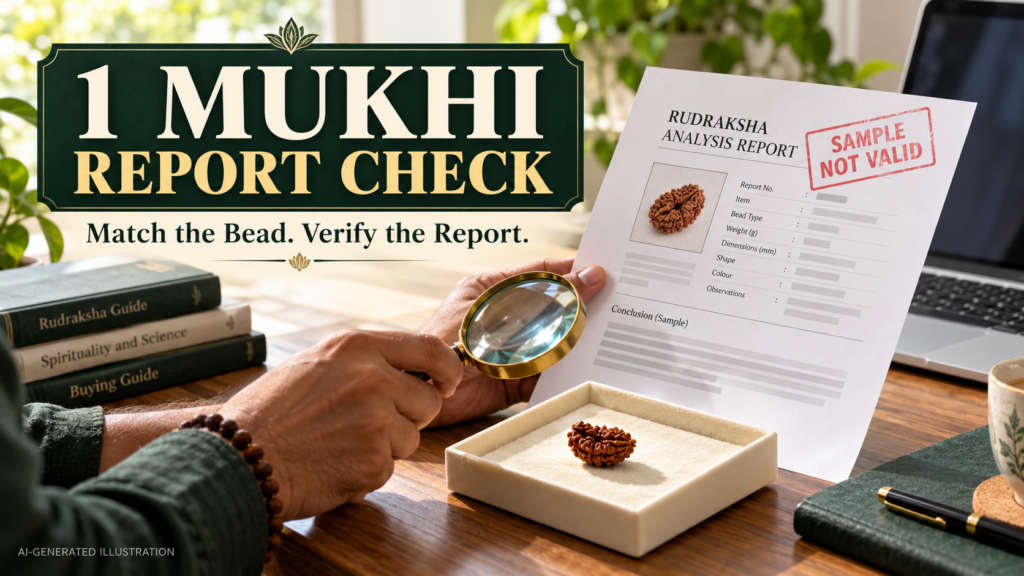
This guide concerns report reading and the link to a particular item. The earlier Rudraksha guide covers general surface checks and household-test limitations. This article does not provide a genuine one-mukhi X-ray or anatomical gallery; all three pictures are explanatory AI illustrations.
Seven report details to read separately
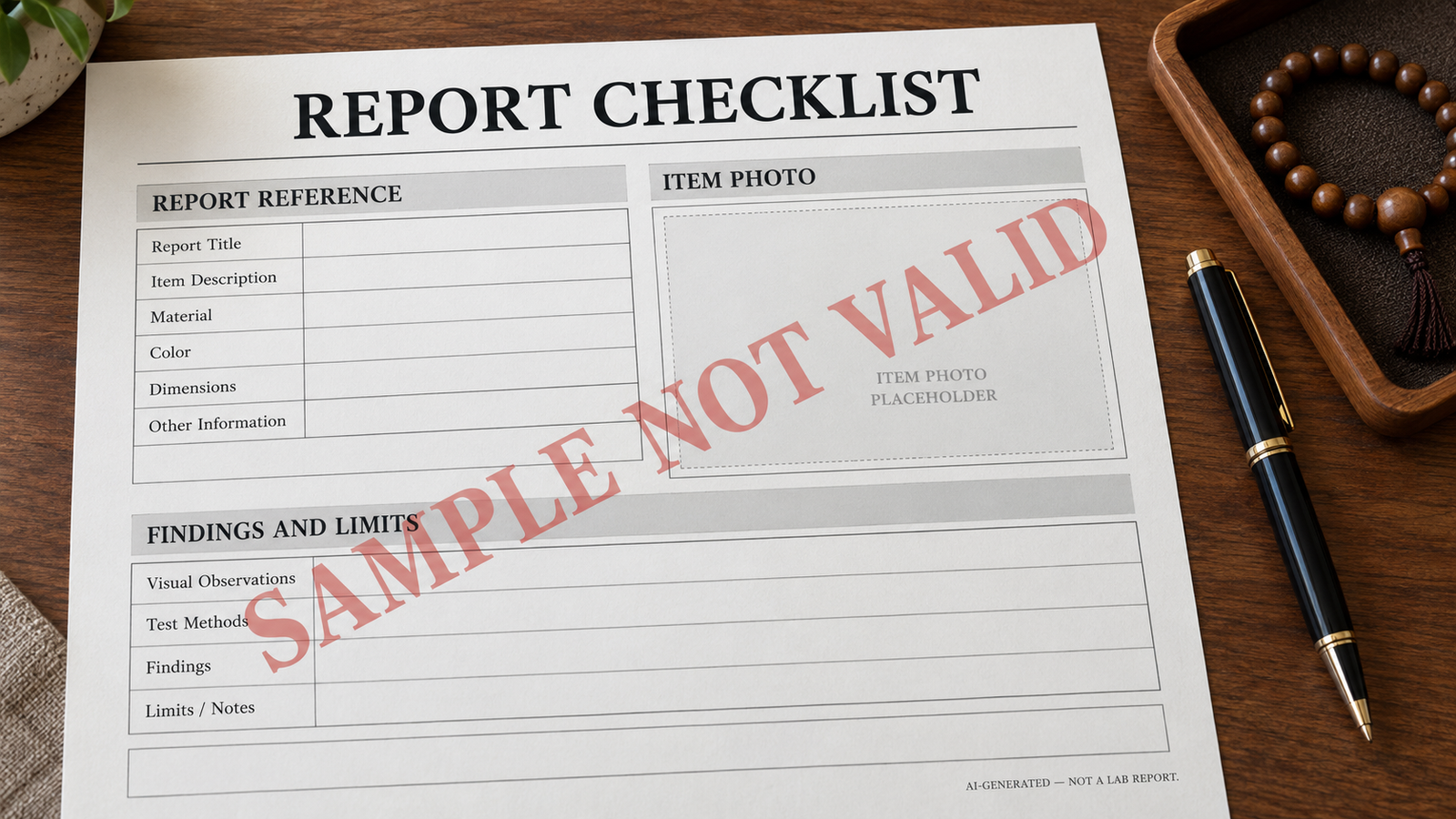
Report formats vary. Treat this list as a buyer’s checklist rather than a mandatory government certificate format. Where a detail is missing, request clarification instead of assuming the answer.
1. Issuer: full identity and independently obtained contact. 2. Reference: report number and date. 3. Item: one loose bead, a string or a lot? 4. Description: photographs and measurements linked to the actual purchase.
5. Examination: what visual, microscopic, X-ray or other work is recorded? 6. Findings: what is actually concluded about identity, faces or modification? 7. Remarks: what conditions, limitations or unexamined areas are stated?
A report for a string is not automatically proof that every bead was individually identified. An attached image is not the same as an explicit one-mukhi finding. Ask questions about the document in front of you, not a generic sample.
Verify the report reference and laboratory claims
Do not rely on a QR code alone. Locate the issuer independently and use its own report-check or enquiry route. Compare the reference, date and returned record with the seller’s PDF. Private issuer pages in our sources are examples, not recommendations.
A matching online entry can help confirm issuance, but linking the physical bead is another task. If no entry appears, check transcription, older-record policies and the issuer’s support process. A missing online result alone is not a final forgery finding.
If NABL accreditation is claimed, check the exact organisation, validity and relevant test scope in official NABL records. NABL explains that capabilities outside its stated scope are not covered by the accreditation. A logo or an ISO badge is not enough to establish coverage of this particular examination.
FACT: A genuine report reference can be presented with a different object. Verify both the report record and the identity of the item.
An X-ray entry is different from an identification conclusion
The examination entry describes a method; the findings state a conclusion. “X-ray performed” does not automatically confirm every claim about faces, origin, rarity or price. Ask what the issuer concluded for this specimen.
Do not count apparent compartments in a blurred image and issue your own definitive verdict. Ask the relevant expert to explain orientation, available views and image quality. If a picture seems inconsistent with the text, obtain a clearer copy and written clarification rather than editing the report yourself.
Country of origin, a rarity claim, market value and physical identification are separate questions. A report may address some and not others. Reading “natural” is not a reason to assume every other commercial claim was examined.
Physical testing does not guarantee spiritual outcomes or a particular personal result. This article does not independently certify any laboratory’s competence or the specimen offered in an individual listing.
Does the report belong to the exact bead?
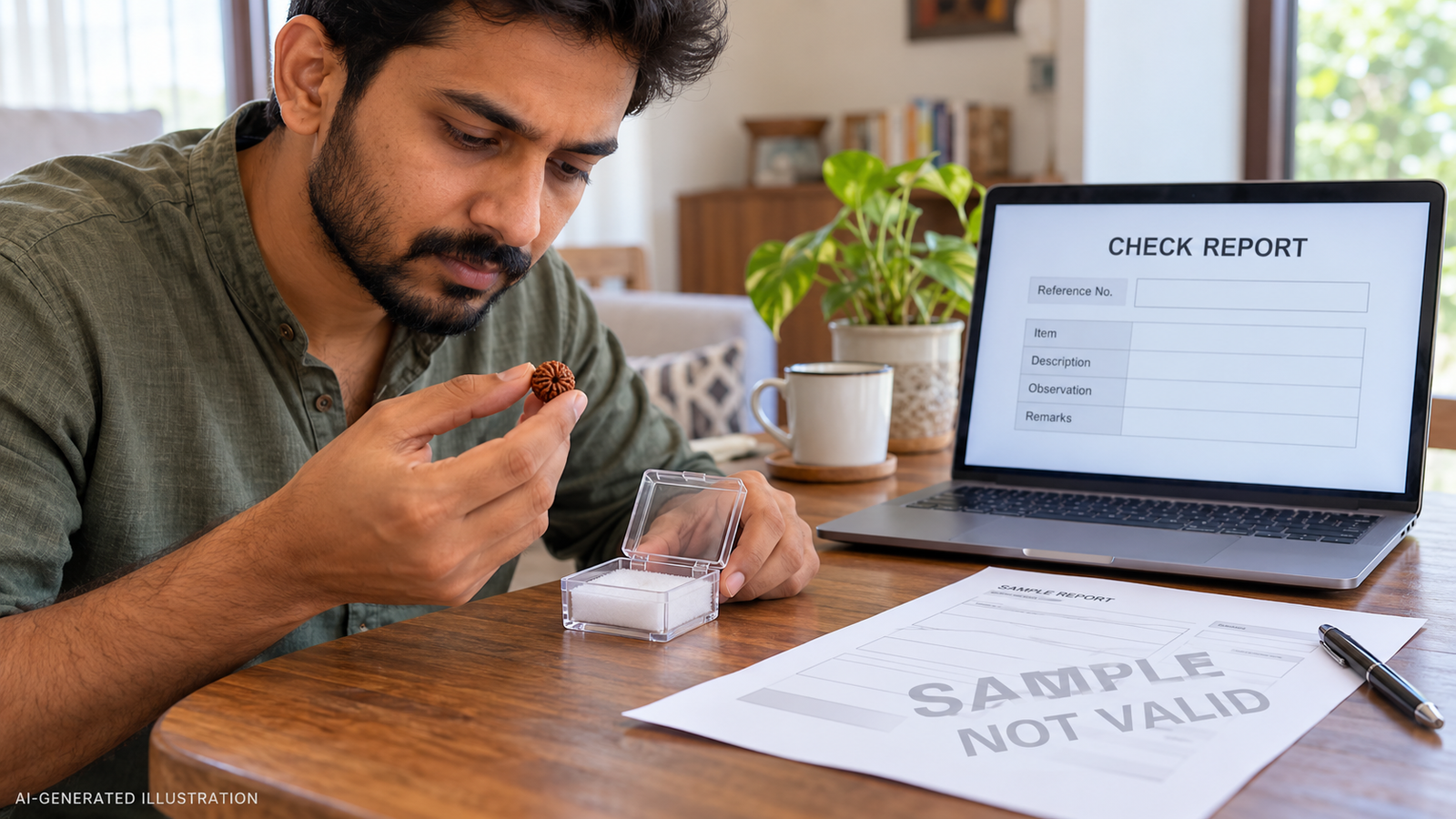
Request photographs from all sides and both ends, measurements and a slow video of the exact bead to be dispatched. A stock image or another specimen’s scan is not evidence linked to your order. Understand the quantity and mounting or packaging described in the report.
Compare the report photograph, measurements and identifying surface features. If the bead is capped, mounted or sealed, ask which parts were actually examined. Packaging and seals do not themselves constitute a laboratory finding.
If polishing, oiling, drilling, repairs or packaging changed after examination, ask the issuer whether re-examination is appropriate. Do not treat a small measurement difference as a verdict without clarification about method and condition.
Keep arrival photographs of the item, labels and paperwork. Raise mismatched pictures, references or unclear findings within the agreed enquiry/return period. If the same-item link is unresolved, pause the purchase until the questions are answered.
Advice: written questions before purchase
A useful written request is: “This item is sold as one mukhi. Is this report for this single bead? Which examination was performed, where is the conclusion recorded, what is said about alteration, and how can I independently verify the reference?”
Clarify testing fees, re-examination, shipping and return responsibilities before purchase. If a second opinion is needed, ask a suitable specialist about the scope of their service. Do not assume every provider interprets every report in the same way.
Use a simple decision order: issuer record, exact-item match, scope of findings, then price and return terms. Do not use an answer to one question as a replacement for another. A rarity label is not a reason to accept incomplete evidence.
One-mukhi report questions answered
Does an attached X-ray prove one mukhi? No. Read the findings and the link to the specimen.
Does a valid number prove this is the same bead? Not by itself. Match the object separately.
Do all certificates have the same expiry? No. Ask about the issuer’s current terms and re-examination policy.
Does no online result prove a fake report? No. Seek independent clarification from the issuer.
Can the sample be used as a certificate? No. It is a fictional checklist, not a government or laboratory report.
Sources and fictional image clarification
This is general report-reading and buying information, not a laboratory conclusion, valuation or spiritual consultation. Private sources illustrate their own services and formats. No provider endorsement or assertion of NABL coverage for Rudraksha testing is made. All images are AI-generated illustrations. Checked on 24 October 2026.
- Private issuer example: IGL Rudraksha report formats; not an endorsement
- Private issuer example: IGL report-check service
- Private issuer example: report fields; this is a 7-mukhi example, not a one-mukhi finding
- NABL: Accreditation scope and distinction from management-system certification
- Private issuer example: older-record verification guidance
General Rudraksha identification, mukhi grooves and household-test limits