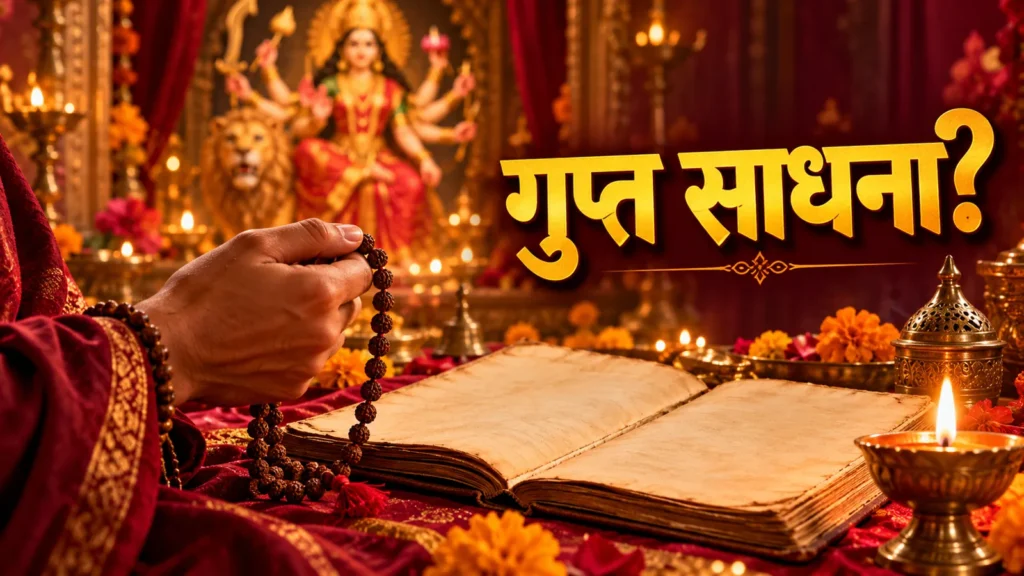
Navratri tantra and mantras: separate tradition from promises
During Navratri, videos may promise that a secret mantra will change your life overnight, attract money or bring someone under your control. Those claims can sound appealing when you are worried about work or relationships. However, a religious tradition, personal devotion and a guaranteed outcome are different things. Start by identifying what exactly is being promised.
Navratri is an occasion for worship; it does not automatically validate every claim made in the name of tantra. Promises of a definite job, relationship, cure or legal result require a reliable basis. It is sensible to pause before making decisions under pressure, fear or the hope of an instant solution.
What is tantra? Is it the same as black magic?
Reducing tantra to “black magic” gives a misleading picture. The British Museum’s historical material places it within traditions that developed in India and influenced Hindu and Buddhist religious thought. It is not one universal ritual or a single shortcut sold through social media.
Mantras, meditation and rituals may have different roles in different traditions. A mysterious-looking object does not establish supernatural power. A teacher’s clothing, dramatic language or popularity also does not prove reliability. Look at how they explain their claims, treat questions and respect personal boundaries.
Mantra, yantra and sadhana: basic meanings
In simple terms, mantra refers to recitation or sacred utterance, yantra can refer to a religious diagram or symbol, and sadhana broadly means a sustained practice. Meanings vary by tradition. Hearing these words together is not a reason to assume that a specific extraordinary result has been demonstrated.
What is Gupt Navratri? How is it different?
In the panchang tradition, Navratris in Magha and Ashadha are also called Gupt Navratri. Drik Panchang provides separate calendars for them. They should not be confused with Chaitra Navratri or the Sharadiya Navratri associated with Ashwin. These are different Hindu calendar months.
The word “secret” does not mean everyone must hide worship from their family or visit a dangerous location. Communities may have their own practices. If a teacher discusses confidentiality, ask about its context and how your safety and freedom to seek advice will be preserved.
Are the ten Mahavidyas the same as the nine Durgas?
No. These are distinct groupings in Goddess worship; Drik Panchang describes them separately. A viral post that mixes their names deserves a source check. The presence of a deity’s name does not make every advertised ritual necessary for every devotee.
This article does not provide dates or a universal auspicious time. If you need calendar information, check the correct year, location and local panchang. Do not apply the date from an old video to a different year without checking.
Mantra siddhi and secret practice: how to assess a claim
The religious meaning of “siddhi” depends on context. An advertisement may use the same word to promise unusual powers, wealth or control over another person. Assess that promise separately. Completing a stated number of recitations does not by itself establish a guaranteed real-world outcome.
Ask which source or tradition is being cited, who explains its meaning and what result is expected. What happens if the promised outcome does not occur? Will another payment be demanded? Vague answers and repeatedly changing conditions are reasons to slow down, rather than reasons to trust more.
Will a pronunciation mistake cause misfortune?
It is inappropriate to identify a recitation mistake as the definite cause of an illness, accident or family problem. You can ask a knowledgeable person for help learning a text. Constantly blaming yourself and paying to remove imagined consequences is unlikely to resolve the actual problem.
For ordinary worship, choose a text you understand. Ask a qualified teacher within the relevant tradition about specialised practices associated with initiation. A partial social-media demonstration is not a substitute for a complete explanation of that tradition.
Vashikaran, black magic and quick-fix rituals
A guarantee of changing someone else’s wishes is not a healthy foundation for a relationship. Consent matters in love and marriage. Claims that a name, photograph or item of clothing can bring someone “under control” do not address their choices or the underlying relationship problem.
If a relationship has become distant, consider respectful communication. If the other person declines or asks for distance, accept that boundary. For employment problems, preparation, applications and useful advice are practical directions. Worship may offer personal support, but should not be treated as a way to control other people’s decisions.
Do not accuse a neighbour of black magic whenever there is illness, conflict or a business loss. An unsupported accusation can damage relationships and distract from investigating the real issue. Describe the problem clearly and seek help relevant to it.
Fraud and health risks in the name of spiritual practice
Pause when someone says your family will suffer unless you pay today, demands secrecy or tells you to stop prescribed treatment. Do not hand over your decision-making to a frightening message. Show it to someone you trust and seek local police assistance if there are threats.
In India, online financial fraud can be reported through the National Cybercrime Reporting Portal. 1930 is the helpline for immediate reporting of cyber financial fraud. Keep messages and transaction records. Do not send more money because someone guarantees recovery of an earlier payment.
Taking unknown substances, forced smoke exposure, physical injury and stopping treatment are not safe forms of support. If a practice is disrupting your sleep or health, pause and seek appropriate advice. Explaining symptoms to a clinician is compatible with maintaining personal faith.
Hearing voices others do not hear while awake, sudden confusion or thoughts of self-harm are reasons to seek medical help. NHS guidance recommends assessment for hallucinations. Immediate danger requires emergency care at a nearby hospital.
It is reasonable to ask a religious adviser about the meaning of a tradition. It is equally reasonable to decline injury, isolation, unwanted contact or financial pressure. A safe discussion leaves you free to ask questions, consult trusted people and obtain healthcare.
Advice: a safe approach for an ordinary devotee
- Choose familiar, peaceful worship and understand its meaning. Discuss family traditions respectfully.
- Before a specialised practice, understand its source, purpose and demands. Avoid relying solely on a sensational video.
- Do not assume devotion requires giving up sleep, food, prescribed medicine or daily responsibilities.
- Use sensible fire and ventilation precautions. Keep children and pets away from flames and hot objects.
- Take time over requests for money. Never share banking credentials, OTPs or private photographs with strangers.
You do not need to attempt every practice you encounter. Being unprepared for a demanding ritual does not mean you lack faith. Focus on what you understand, can practise safely and can fit into ordinary life without harming yourself or others.
For example, if a video says missing one day will bring disaster, do not immediately buy a corrective ritual. Check its source and talk to a trusted adviser. If a family member is frightened, listen calmly instead of shaming them or repeating the threat.
FAQ: Navratri tantra and Gupt Navratri
Can I worship at home during Gupt Navratri?
Ordinary, safe Goddess worship can be observed at home. Specific traditions may have their own requirements; complex rituals are not necessary for everyone.
Does every tantric practitioner perform black magic?
No. Tantra has a broad religious and historical context. Assess an individual’s conduct and claims rather than labelling an entire tradition.
Can a mantra guarantee a job or a relationship?
A definite guarantee of those external outcomes is not justified. Preparation, consent and real circumstances continue to matter.
Must Navratri practice take place in a cremation ground?
That is not a universal requirement for ordinary devotees. Do not visit isolated or unsafe places at a stranger’s instruction.
What if someone threatens me unless I pay for a ritual?
Pause further payment, keep the messages and seek trusted support or police assistance. For online financial fraud in India, report promptly through 1930.
Related reading: Are ghosts real? Science, psychology and paranormal claims.
Sources: British Museum: Tantra timeline; Drik Panchang: Magha Gupt Navratri; Ashadha Gupt Navratri; National Cybercrime Reporting Portal; NHS: Hallucinations.
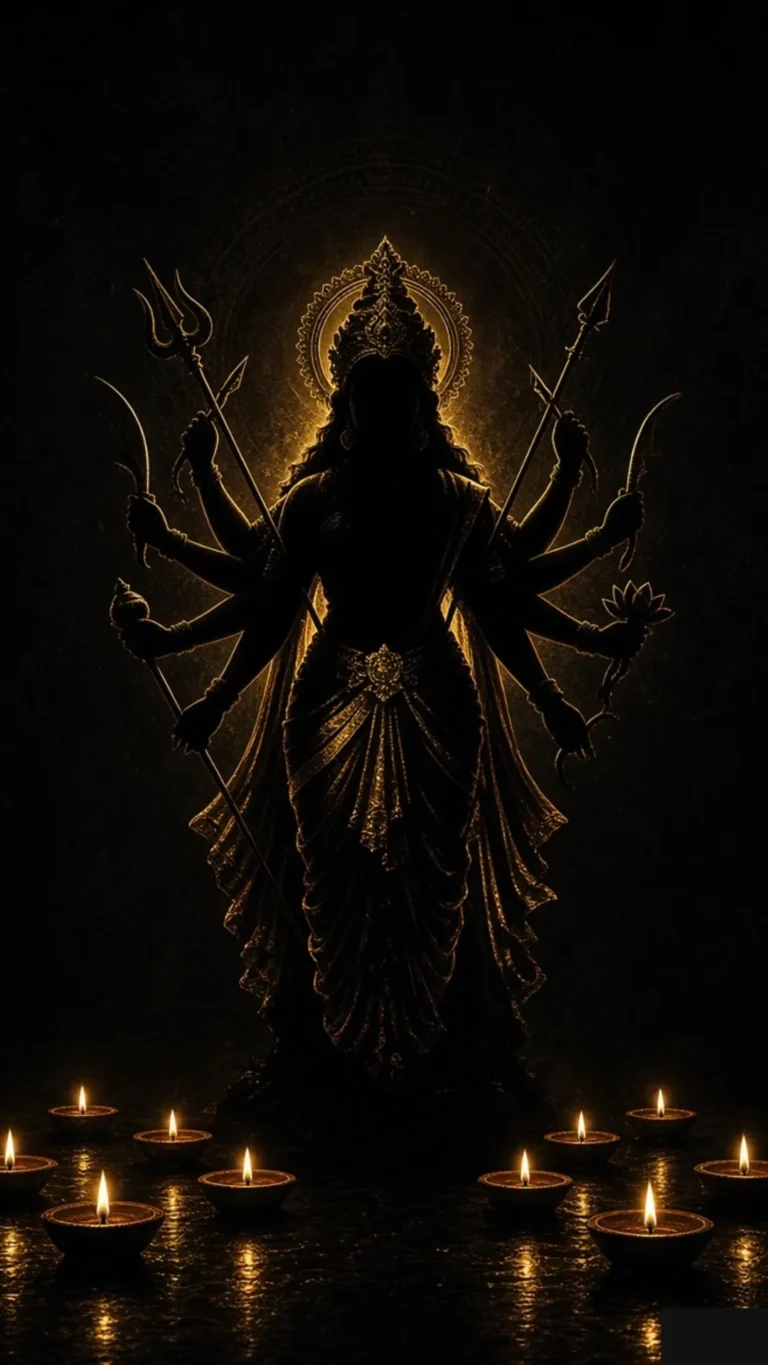
Disclaimer: This is general religious and cultural information with safety guidance. Traditions vary. It does not replace initiation, individual ritual instruction or medical assessment. The featured image is symbolic AI artwork.