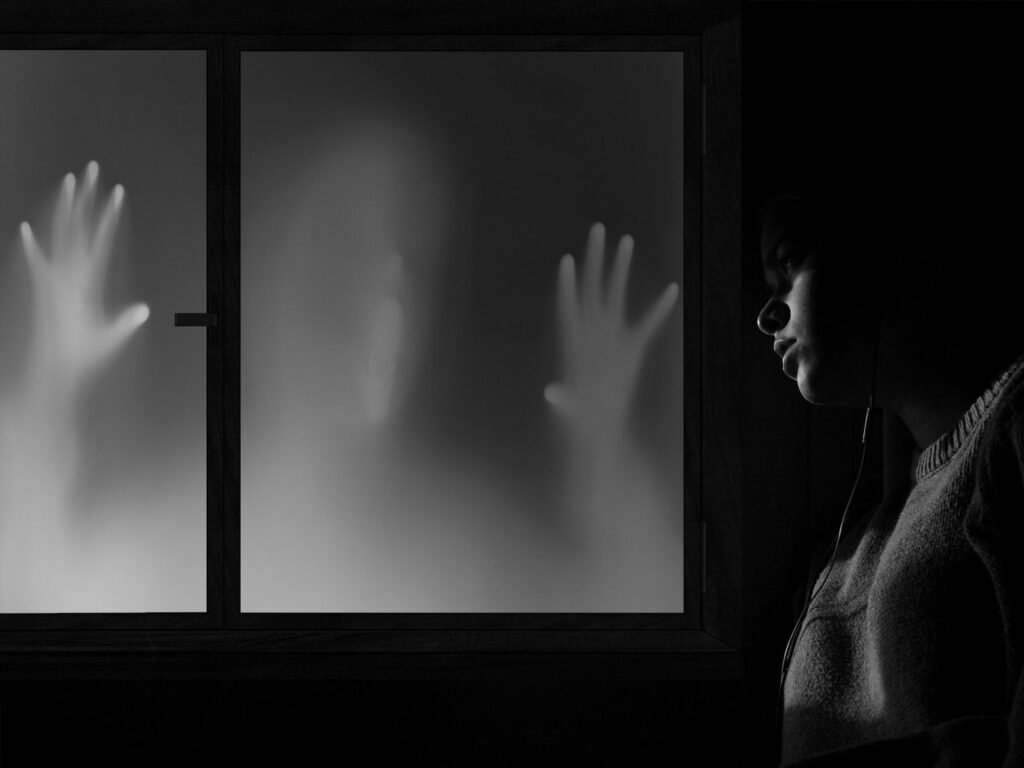
From bedtime stories whispered in childhood to viral late-night internet searches, the question “are ghosts real?” has captivated human imagination for millennia. Across cultures, civilizations, and generations, tales of unseen entities, shadowy apparitions, and lingering spirits have formed an inescapable part of our shared human narrative. But when we strip away the eerie music of horror cinema and the dramatic claims of paranormal reality television, what actually remains? Do disembodied spirits walk among us, or are these mysterious encounters clever tricks played by our physical environment and our own minds?
Every month, hundreds of thousands of curious individuals search the web asking whether spirits genuinely exist. For some, the belief stems from deeply personal, eerie experiences—a sudden drop in ambient room temperature, unexplainable footsteps in an empty hallway, or a brief glimpse of a figure in the darkness. For others, belief is rooted in religious or cultural traditions that teach the existence of an immortal soul. However, scientific skeptics, cognitive researchers, and physicists offer vastly different explanations, attributing ghost sightings to neurological quirks, atmospheric physics, and environmental illusions.
In this comprehensive analysis, we evaluate the question of whether ghosts are real through the dual lenses of science, psychology, physics, and historical folklore. Rather than resorting to sensation or fearmongering, our objective is to provide a rational, evidence-based deep dive into paranormal claims. By exploring how human biology interacts with mystery, we can better understand why the belief in ghosts persists and what truly happens when people encounter “the supernatural.”
The Cultural and Historical Origins of Ghost Beliefs
Long before modern science began dissecting human sensory perception, human societies created stories to explain the greatest mystery of existence: death. In historical and mythological contexts, ghost folklore emerged naturally as human beings attempted to make sense of mortality, grief, and the vast unknown.
1. Ancestral Spirits and Cultural Folklore
In almost every ancient culture—from Vedic traditions in Asia to ancient Egyptian, Greek, and Mesopotamian societies—the concept of the soul surviving physical death is deeply embedded. Folklore often divides spirits into distinct categories: benevolent ancestors who guide the living, and restless wandering entities whose lives were cut short by tragedy, betrayal, or unfulfilled desires. These cultural frameworks provided a structured way for communities to cope with sudden loss and ensure proper burial rites.
2. Morality and Social Control
Historically, ghost stories served a practical social function. In many traditional societies, tales of haunted forests, abandoned structures, or vengeful spirits were used as moral parables. They discouraged individuals from venturing into dangerous areas at night, warned against committing crimes, and encouraged respectful behavior toward elders and the deceased. By instilling a fear of spiritual retribution, societies maintained social order long before modern law enforcement existed.
3. The Human Need for Afterlife Continuity
At a psychological and philosophical level, belief in spirits satisfies a profound human desire for continuity. The idea that consciousness simply ceases at biological death is uncomfortable for many. Believing that spirits continue to exist—even in a haunting capacity—offers subconscious reassurance that the human mind and identity transcend physical decay.
Common Paranormal Claims: Anecdotes vs. Verified Evidence
When people assert that they have witnessed ghost activity, their reports usually fall into specific categories. While these accounts are often deeply convincing to the individual experiencing them, scientists label them as unverified anecdotal reports rather than scientific proof.
Documented Categories of Paranormal Claims:
- Auditory Phenomena (EVP and Noises): Claims of hearing footsteps, unexplained whispers, creaking floorboards, or knocking sounds in empty buildings. Paranormal enthusiasts often attempt to capture these using Electronic Voice Phenomena (EVP) audio recorders.
- Visual Apparitions and Shadows: Reports of seeing fleeting figures, shadow people, or translucent human shapes out of the corner of one’s eye.
- Tactile and Thermal Sensations: Sudden localized drops in ambient temperature (often called “cold spots”) or the uncomfortable feeling of being watched, touched, or pushed by an invisible presence.
- Physical Displacements: Objects apparently moving on their own, doors slamming shut, or electrical appliances malfunctioning without an obvious physical cause.
While these phenomena feel terrifyingly real to those present, rigorous scientific testing requires repeatable, empirical evidence under controlled laboratory conditions—something paranormal claims have consistently failed to produce.
The Scientific Perspective: Physics and Environmental Triggers
Science approaches the question “are ghosts real?” through empirical methodology, requiring testable hypotheses and verifiable data. To date, no scientific body has found measurable proof of ghosts. Instead, physics and environmental science offer logical explanations for reported haunting phenomena.
1. The First Law of Thermodynamics (Energy Conservation)
A common argument among ghost believers is that human consciousness is a form of energy, and according to the First Law of Thermodynamics, energy cannot be created or destroyed—only transformed. Therefore, they argue, human energy must persist as a spirit after death. However, physics clearly demonstrates that upon biological death, human chemical energy dissipates into the surrounding environment as thermal heat and biochemical decomposition. There is no physical mechanism or detectable subatomic particle that allows personal memories, personality, or consciousness to remain coherent as a lingering “energy entity.”
2. Infrasound: The Unheard Frequency of Fear
Infrasound refers to low-frequency sound waves below 20 Hertz, which is beneath the threshold of normal human hearing. Although humans cannot explicitly hear infrasound, our bodies physically react to it. Studies show that exposure to infrasound can cause feelings of unexplained dread, shivering, hyperventilation, nausea, and micro-vibrations in the human eyeball that create visual illusions or blurry “shadows” in peripheral vision. Infrasound is naturally generated by wind turbulence through old structures, heavy machinery, traffic, or seismic activity, easily explaining why certain old buildings feel inherently “haunted.”
3. Environmental Factors and Carbon Monoxide Poisoning
Old, poorly ventilated homes with aging heating systems can accumulate low levels of carbon monoxide (CO). Carbon monoxide poisoning is an insidious chemical trigger that directly causes auditory and visual hallucinations, severe paranoia, feelings of dread, and confusion. In several historical cases where families reported extreme domestic hauntings, environmental investigations uncovered slow carbon monoxide leaks as the direct cause of their shared hallucinations.
The Psychological Perspective: How the Brain Creates Ghosts
Cognitive neuroscience and psychology demonstrate that the human brain is an extraordinary pattern-seeking machine. When operating under fatigue, stress, or sensory deprivation, the brain can construct vivid, terrifying experiences that feel entirely real.
1. Sleep Paralysis and Hallucinations
One of the most frequent causes of alleged night-time ghost visitations or phantom attacks is sleep paralysis. This medical condition occurs during the transition between REM (Rapid Eye Movement) sleep and waking life. While the mind regains consciousness, the motor cortex remains chemically paralyzed to prevent physical movement during dreams. During this state, individuals often experience intense chest pressure, suffocation sensations, and vivid waking hallucinations of a dark, malevolent entity standing in the room or sitting on their chest.
2. Pareidolia and Pattern Recognition
Pareidolia is a hardwired evolutionary brain mechanism that forces humans to recognize familiar patterns—especially human faces and bodies—in random, chaotic visual stimuli. When looking at dark shadows, textured walls, or dense foliage, the brain automatically fills in missing visual details, mistaking a hanging coat or a tree branch for an impending ghostly apparition. In survival terms, it was safer for our early ancestors to mistake a shadow for a predator than to miss a predator entirely.
3. Expectation Priming and Suggestion
Human perception is heavily shaped by mental framing. If an individual is told that a specific hotel room or castle is haunted, their brain enters a state of hyper-vigilance. Normal, mundane occurrences—a settling house foundation, a drafty window, or a distant pipe whistle—are instantly interpreted as supernatural activity. Suggestion creates a self-fulfilling loop where fear amplifies sensory sensitivity, which in turn fuels more fear.
4. Grief Hallucinations and Trauma Responses
Losing a close family member or loved one induces extreme emotional trauma. It is medically documented that grieving individuals frequently experience sensory illusions of the deceased—hearing their voice calling, sensing their distinct perfume, or briefly seeing them in a crowd. Known as grief hallucinations, these occurrences are a natural neurological coping mechanism as the brain adjusts to profound loss, rather than literal spiritual visitations.
5. Mass Hysteria and Social Contagion
In group settings where stress or high anxiety is present, emotional contagion can cause multiple individuals to experience identical illusions or somatic symptoms simultaneously. When one person panics and claims to see an entity, others in the group often mirror the reaction, solidifying a shared narrative of a paranormal event.
Spiritual Faith vs. Empirical Science
Ultimately, evaluating whether ghosts are real depends on the framework one chooses to apply. From a spiritual and religious standpoint, the reality of the soul and the realm beyond physical life are matters of personal faith, intuition, and sacred tradition. Science does not exist to demean or attack personal spiritual beliefs; rather, it operates strictly within the realm of physical, testable, and measurable evidence.
While science has not found a single piece of objective physical evidence proving the existence of disembodied human spirits, it has provided verifiable natural explanations for virtually every category of reported haunting. For those seeking logical clarity, science demonstrates that the universe operates through natural laws of physics and biology rather than ghostly apparitions.
Comparative Analysis
FACT BOX: Myth vs. History vs. Science
- Myth: Cold spots in a room indicate a ghost absorbing thermal energy to manifest itself.
- Science: Cold spots are caused by convection currents, air leaks around windows, structural drafts, or sudden micro-changes in humidity.
- Myth: Seeing a dark shadowy figure at night is proof of a lurking spirit or demon.
- Science: Visual pareidolia and sleep paralysis explain peripheral shadow sightings and nocturnal hallway hallucinations.
- History: Ghost stories were traditionally used across ancient cultures as moral lessons and mechanisms to enforce social boundaries.
- Science: The First Law of Thermodynamics confirms human body energy dissipates as ordinary ambient heat and biochemical decomposition at death, not coherent spiritual entities.
- Science: Low-frequency infrasound waves (below 20 Hz) cause physical feelings of dread, shivering, and eye vibrations mistakable for apparitions.
FAQ
FAQ
1. Are ghosts real according to modern science?
No. According to modern empirical science, there is no verified physical evidence proving that ghosts or spirits exist. Scientific studies consistently attribute ghost encounters to natural phenomena, environmental factors, or psychological mechanisms such as sleep paralysis and pareidolia.
2. Why do people feel a presence in haunted places?
Feeling an unseen presence is typically triggered by psychological expectation priming, high environmental anxiety, infrasound exposure, or subtle environmental shifts like drafty rooms and electromagnetic fluctuations that heighten sensory awareness.
3. Can sleep paralysis cause ghost sightings?
Yes. Sleep paralysis occurs when the brain wakes up while the body remains chemically paralyzed during REM sleep. It frequently generates vivid waking hallucinations of shadowed figures standing near or pressing on the chest, which people historically misinterpret as ghostly or demonic attacks.
4. What should you do if you experience strange noises or visions in your home?
First, check for simple logical and physical causes. Ensure your home has working carbon monoxide detectors, check for structural drafts or loose windows, inspect electrical wiring, and evaluate whether stress, fatigue, or sleep deprivation might be affecting your perception.
5. What is pareidolia, and how does it relate to ghosts?
Pareidolia is a psychological phenomenon where the brain interprets random visual patterns or shadows as familiar shapes, particularly human faces and figures. In low light or unfamiliar surroundings, pareidolia causes people to mistake ordinary objects for ghosts.
Disclaimer: This article is strictly intended for educational, cultural, and analytical purposes. It does not constitute medical, psychological, spiritual, or occult advice. Readers seeking guidance regarding mental health, sleep disorders, or environmental safety should consult certified healthcare professionals or qualified home inspectors.