Are ghosts more active during Navratri? Start with the claim
Someone warns you not to go outside at night during Navratri. Later, you hear an unfamiliar sound or wake from a frightening dream, and the warning comes back to mind. That sequence can feel convincing. However, feeling afraid and establishing that a spirit caused an event are different things. A useful explanation needs to consider what happened and the circumstances around it.
The reliable sources checked for this article do not establish increased ghost activity during Navratri. Presenting that claim as a proven fact would be misleading. You can respect someone’s faith while asking practical questions about a specific experience. You do not have to settle every spiritual question before helping a frightened person feel safe.
Navratri, spirits and negative energy: belief and context
Navratri centres on devotion to the Goddess and regional celebrations. India’s official tourism account describes worship of Durga’s nine forms and the theme of good overcoming evil. That religious significance does not provide a measurement of ghost activity.
Families and communities may tell different stories about night-time rituals, unseen beings or spiritual protection. A story handed down in one household is not automatically a rule shared by every Hindu tradition. Be cautious when a social-media post claims that all scriptures say the same thing but provides no original passage or context.
Do spirits appear on Ashtami, Saptami or at midnight?
A time can be important for worship without demonstrating that spirits become more active then. If a video gives a precise hour for supernatural danger, ask how that conclusion was independently checked. Dramatic music, a red circle around a shadow and an alarming headline do not establish the cause of an event.
People also use “negative energy” to mean different things: tension at home, a gloomy mood, fear or a spiritual belief. Ask which meaning is intended. An argument or an uncomfortable room is not evidence that someone has measured an invisible force. Clear language makes the discussion less frightening and more useful.
Feeling a presence and being unable to move in bed
Brief inability to move while falling asleep or waking can be sleep paralysis. The NHS describes possible feelings of a presence or pressure. Those sensations can be frightening, but they do not establish a spirit’s presence. Repeated episodes that disrupt sleep deserve medical advice.
This does not mean every unusual night-time experience has that explanation. Notice when the event occurred. Were you fully awake, drifting off or just waking? How much light was in the room? Did anyone else hear the same sound? Details are more helpful than deciding on a supernatural label immediately.
Does chest pressure mean a ghost is sitting on you?
Pressure alone cannot establish that conclusion. New or severe chest pain, breathing difficulty or fainting while awake should not be dismissed as a harmless sleep episode. Seek immediate medical help. An online article cannot examine you or determine what is causing your symptoms.
Ghost dreams, nightmares and shadows during Navratri
A frightening dream is not a definite prediction or proof that a spirit has arrived. NHS information lists tiredness, worry and frightening experiences among possible contributors to nightmares. If recurring nightmares affect sleep or daily life, seek help.
Imagine watching a frightening clip before bed and then noticing a human-looking shape in a curtain. In daylight, the same corner looks ordinary. In that situation, checking the curtain, lighting and airflow is sensible. There is no need to visit a deserted place or conduct a frightening experiment to test yourself.
A blurred face in a photograph is not enough to establish a ghost either. Consider the original image, reflections, lighting and possible editing. Ask someone what they notice before telling them your own alarming interpretation. A neutral question leaves more room for an ordinary explanation.
“Signs of possession” or a health concern?
Shaking, crying, sweating, dizziness and a racing heart do not identify one specific cause. Calling them “ghost symptoms” without assessment can delay useful help. Ask when the person last ate, how they slept and whether they took their usual medicine. Listen to the answers instead of diagnosing them yourself.
Seeing or hearing things others do not perceive while fully awake warrants medical assessment. The NHS describes several possible causes. Voices urging harm, sudden confusion or rapidly worsening symptoms require immediate emergency care at a nearby hospital.
Seeking medical help does not require abandoning faith. Calm prayer can remain part of someone’s life, but treatment should not be delayed or prescribed medicine stopped because an event has been given a religious label. Describe the timing, duration and circumstances to the clinician. If a trusted person witnessed the episode, their account may help too.
Ghost-removal mantras, tantra and exorcism: practical boundaries
Prayer or a familiar mantra may offer personal comfort. Claiming that it guarantees removal of a spirit or replaces medical treatment is a separate claim. Missing a prayer, stumbling over pronunciation or being unable to complete a ritual is not a sound reason to blame yourself for something bad happening.
Pause if someone frightens you into buying an expensive ritual, demands secrecy or insists on immediate payment. Speak with someone you trust before deciding. Avoid sending private photographs or personal details to strangers claiming special powers. If there are threats or suspected fraud, contact local authorities.
Hitting, burning, forced smoke exposure, restraint and harming animals are not safe forms of support. A distressed person should not become a public spectacle. Recording a child and posting a “possessed” label can damage their dignity and privacy long after the immediate incident has passed.
It is reasonable to ask a religious adviser for a peaceful explanation of a tradition. It is also reasonable to decline instructions that cause injury, isolation or financial pressure. A safe conversation should leave you able to make decisions freely and obtain appropriate healthcare.
Advice: what to do when night-time fear increases
- Move to a safe, comfortable place. Turn on a light if helpful and ask a trusted person to stay nearby.
- Check an unfamiliar sound safely. Do not investigate enclosed or deserted places alone.
- Stop frightening videos before bed and leave time for rest during celebrations.
- If fasting makes you feel unwell, seek advice appropriate to your health rather than treating distress as a test of devotion.
- Write down the time, circumstances and sleep pattern. Share those details with a clinician if the problem recurs.
You might say, “That sounds frightening. Let’s make sure you’re safe and get the help you need.” Avoid ridicule and avoid confirming an invisible threat without evidence. The immediate goal is to reduce distress and respond to observable needs.
For example, if a relative is scared after a dream, stay with them briefly and discuss what happened when they feel calmer. If the experience repeats, do not turn each episode into another family argument about belief. Agree on practical steps and professional advice when needed.
FAQ: Navratri ghosts, spirits and fear
Do ghosts really roam more during Navratri?
The sources checked here do not establish that claim. An individual story cannot demonstrate a festival-wide change in supernatural activity.
Does worshipping Kali or Kalaratri attract ghosts?
It is inappropriate to present worship of these Goddess forms as a guarantee that ghosts will arrive. Avoid linking a person’s distress to a deity in a way that spreads fear.
Does inability to move in sleep mean a spirit caught me?
That experience can occur with sleep paralysis and is not evidence of a spirit. Seek medical advice if episodes recur or make you afraid to sleep.
Will salt or lemons definitely remove ghosts?
A guaranteed spirit-removal claim is not justified. If you observe a household tradition, keep it safe and do not substitute it for necessary care.
What if a child is afraid of ghosts?
Listen calmly, reduce frightening content and provide reassurance. Seek qualified advice if persistent fear affects sleep, school or everyday activities.
Related reading: Are ghosts real? Science, psychology and paranormal claims.
Sources: Incredible India: Navratri; NHS: Sleep paralysis; NHS: Nightmares; NHS: Hallucinations.
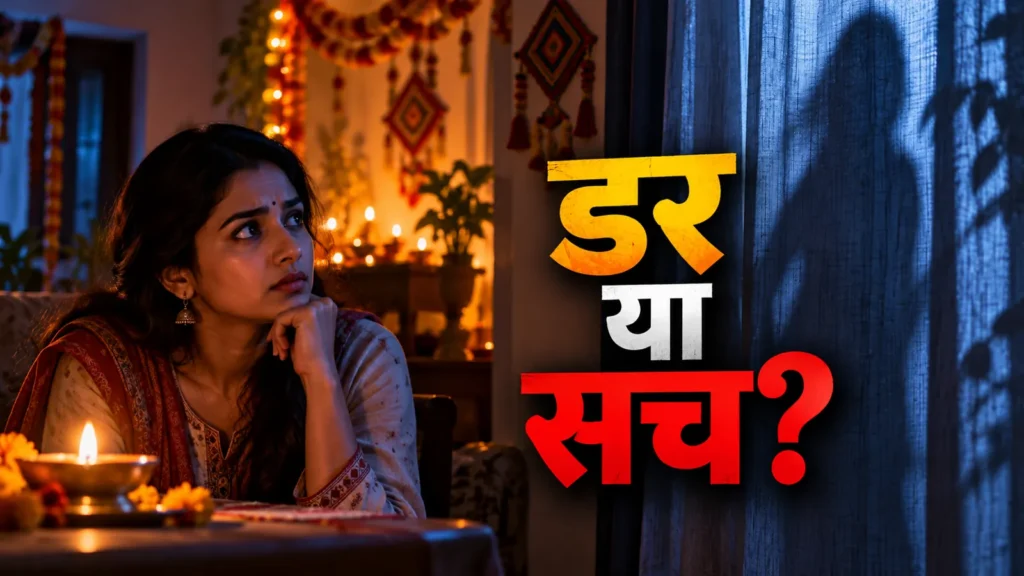
Disclaimer: This article provides general information and safety guidance. Religious beliefs vary. It does not replace individual medical assessment, diagnosis or treatment. The featured image is symbolic AI artwork.