 Vista
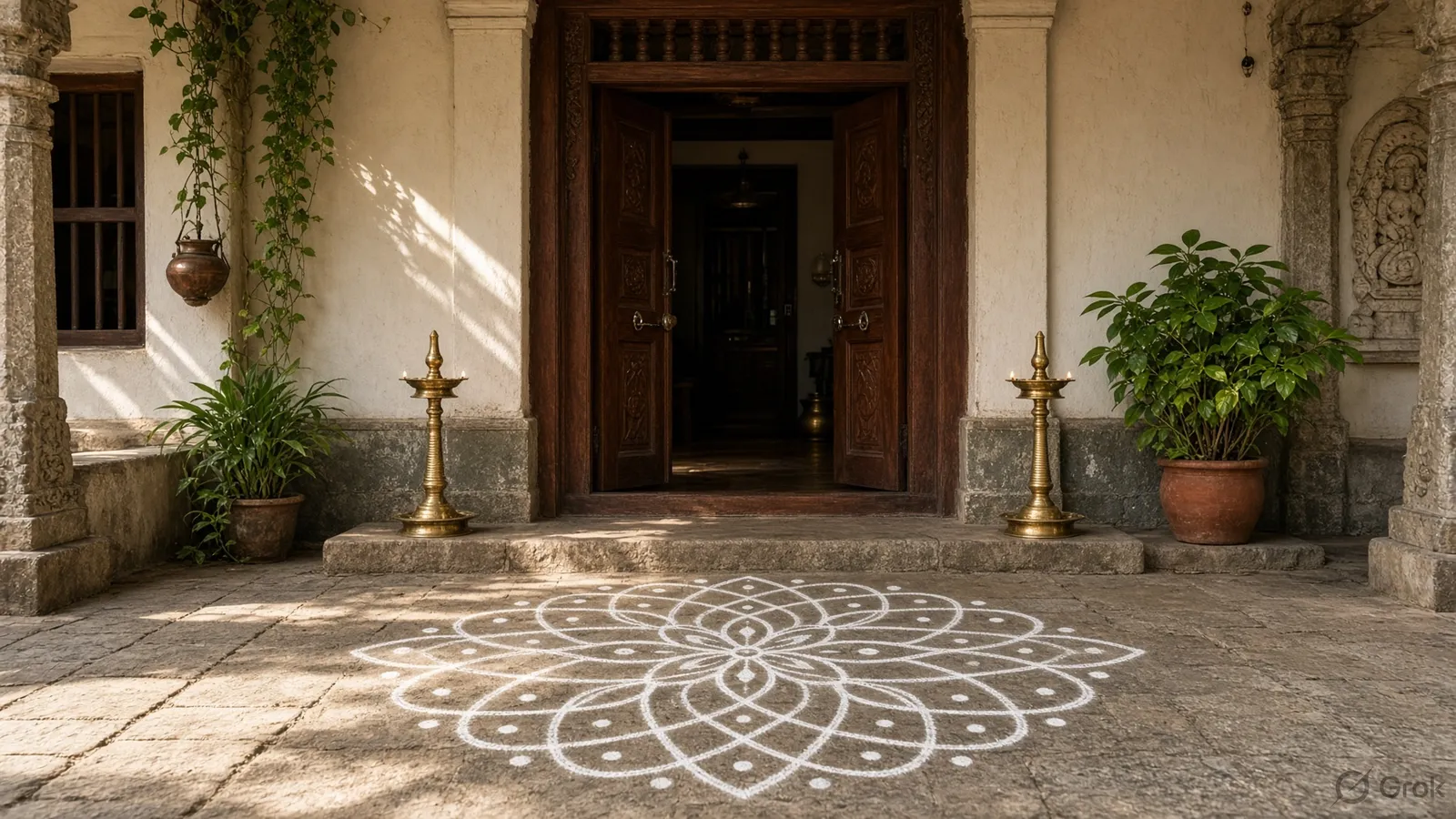
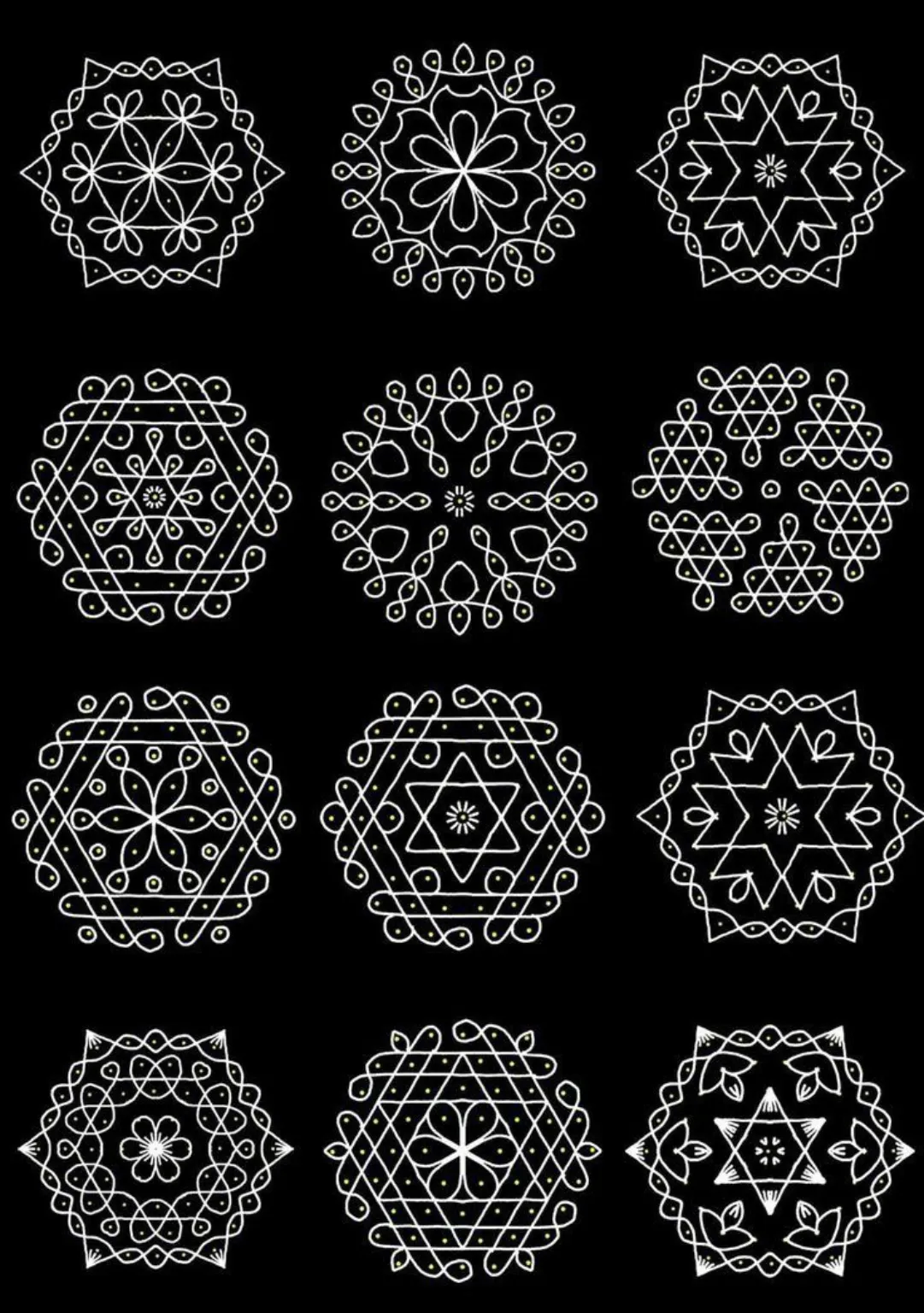
Kolam is the traditional threshold art of Tamil Nadu, drawn daily at doorsteps with rice flour. Kolam art is from Tamil Nadu (the same art is called muggu in Telugu). Pulli kolam is built on a grid of dots, sikku kolam weaves loops around dots, and padi kolam uses lines. To draw an easy dot kolam, place a small diamond of dots, then curve a single line around each dot and close the loop.
This guide answers “Kolam art which state”, then moves to history, materials, kolam types, beginner 3, 5 and 7 dot designs, step-by-step drawing, Pongal and Margazhi kolam, stencils and stickers, wall decoration and traditional vs modern designs. For a chart of dot patterns, see our Pulli Kolam 5 and 7 dot chart.
Table of contents
- Kolam art: which state?
- History, importance and materials
- Pulli, sikku and padi kolam
- Easy 3, 5 and 7 dot kolam
- Step-by-step drawing
- Daily, Pongal and Margazhi kolam
- Stencils, stickers and wall decoration
- Traditional vs modern designs
- FAQs
Kolam art: which state?
Kolam is the art of Tamil Nadu. The Tamil Nadu Tourism site calls it an integral part of the morning ritual of the state’s women and the state’s cultural identity, drawn with rice flour as a sign of auspiciousness. Wikipedia notes similar floor art goes by other names: muggu in Telugu, and rangoli in Kannada. The Federal adds that the tradition is not restricted to Tamil Nadu.
History, importance and materials
Sahapedia describes kolam as a daily women’s ritual art made with rice flour (kolapodi) on swept ground, honoured as Bhudevi, or Mother Earth. Asia Inch notes it works as aesthetic expression, an invocation to Lakshmi, a protective marker and a way of offering rice flour to ants. The Federal says it is traditionally drawn at the threshold at brahma muhurtham, the pre-dawn hour. Outlook Traveller says it is hard to pinpoint when the tradition began, so we do not give a date. Materials: dry rice flour is standard; wet flour paste (called maa or maavu kolam) lasts longer; chalk or white stone powder is sometimes used, and Tamil Nadu Tourism and Britannica note the classic kolam is white.
Pulli, sikku and padi kolam
| Type | Meaning | How it looks |
|---|---|---|
| Pulli kolam | Pulli means dot | Designs built on a grid of dots |
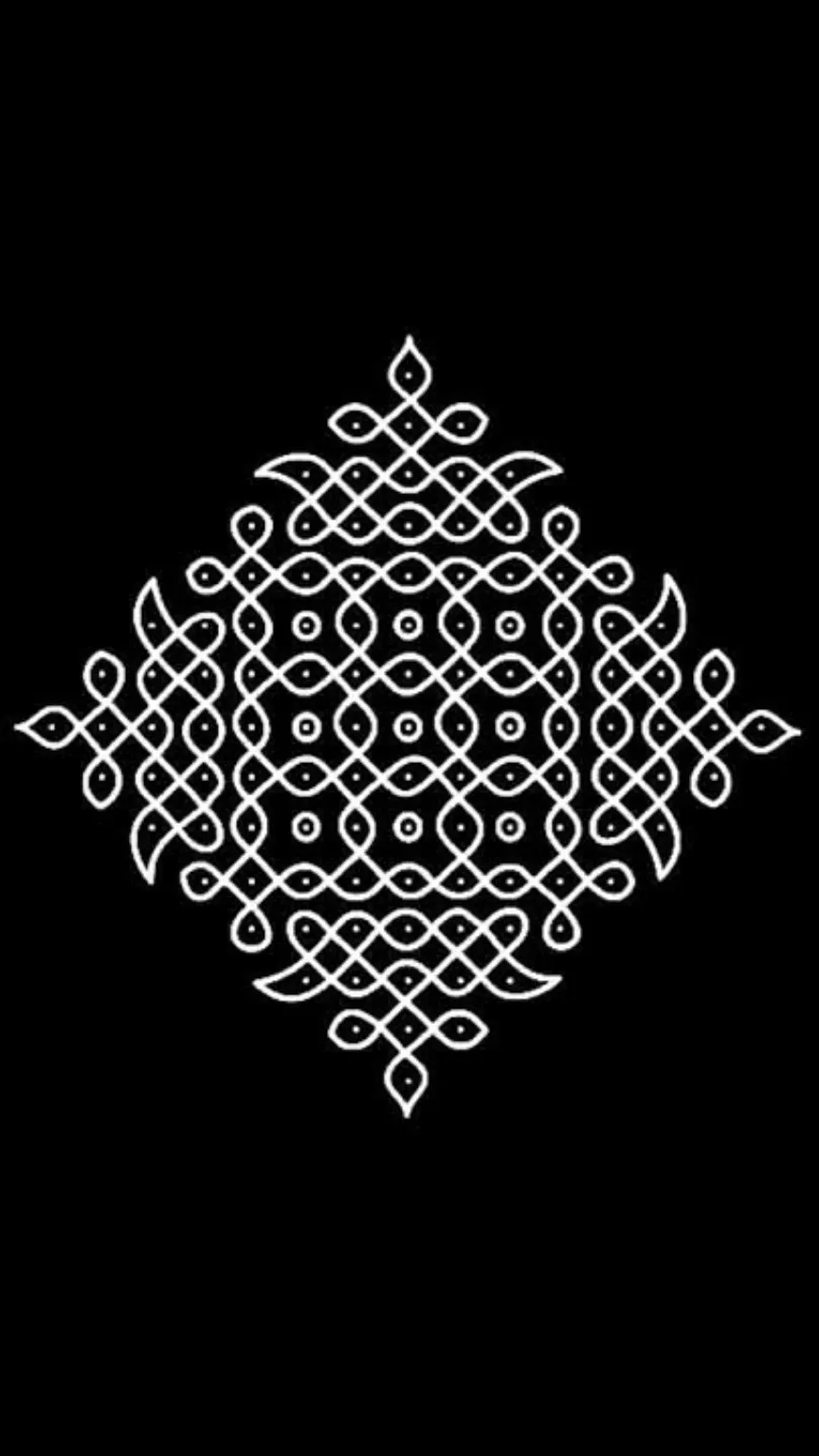
| Sikku kolam | Sikku means knot | Curved lines looped around dots in a knot-like weave |
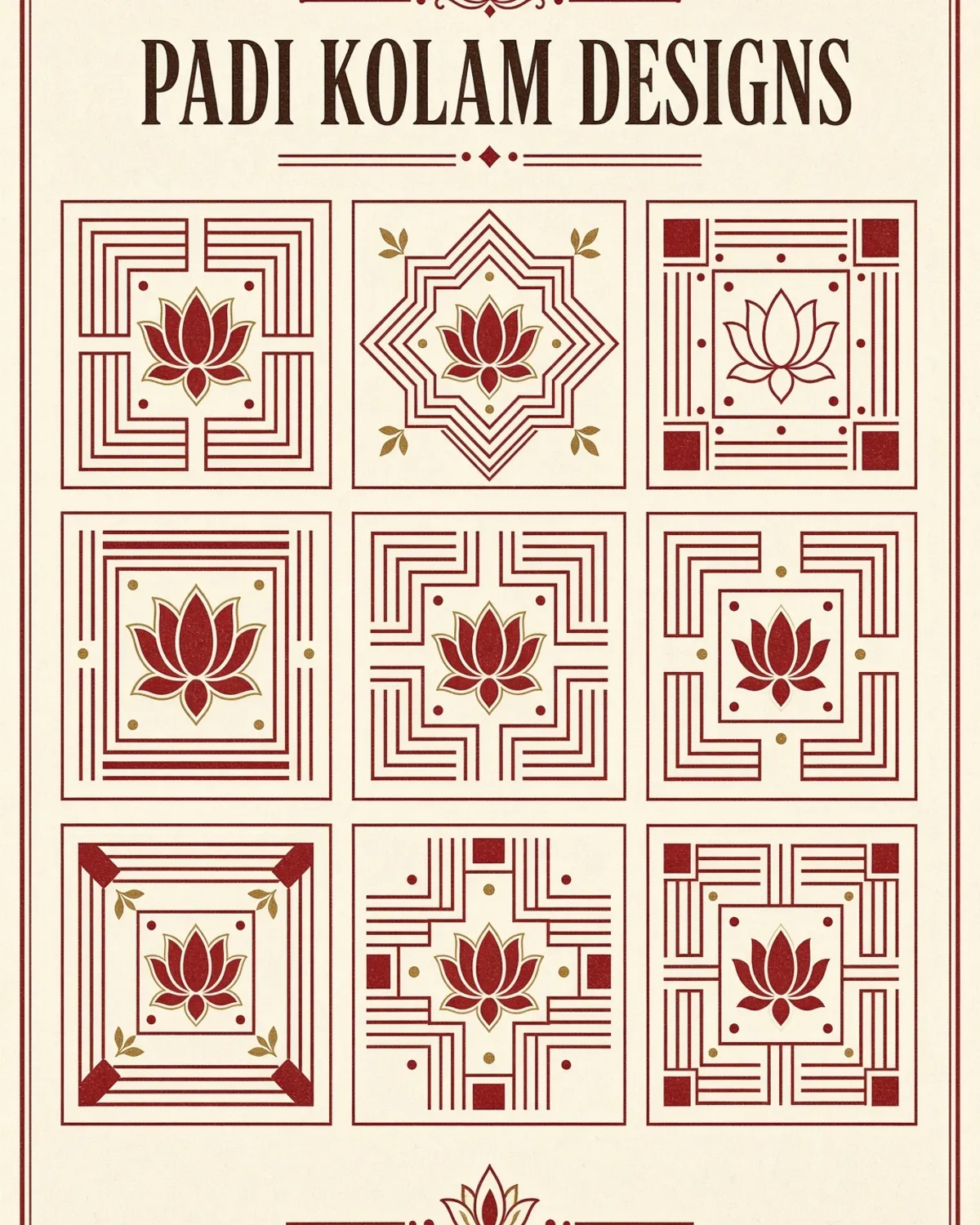
| Padi kolam | Padi refers to lines | Straight-line patterns, often without dot grids |
Asia Inch lists pulli, padi and sikku as daily forms referring to dots, lines and curved patterns. Nature Infocus adds that “sikku” refers to knots, and that in the past a complex sikku kolam was a sign of an educated woman in the family. Sikku kolam is beginner-hard because every loop must close properly.
Easy 3, 5 and 7 dot kolam
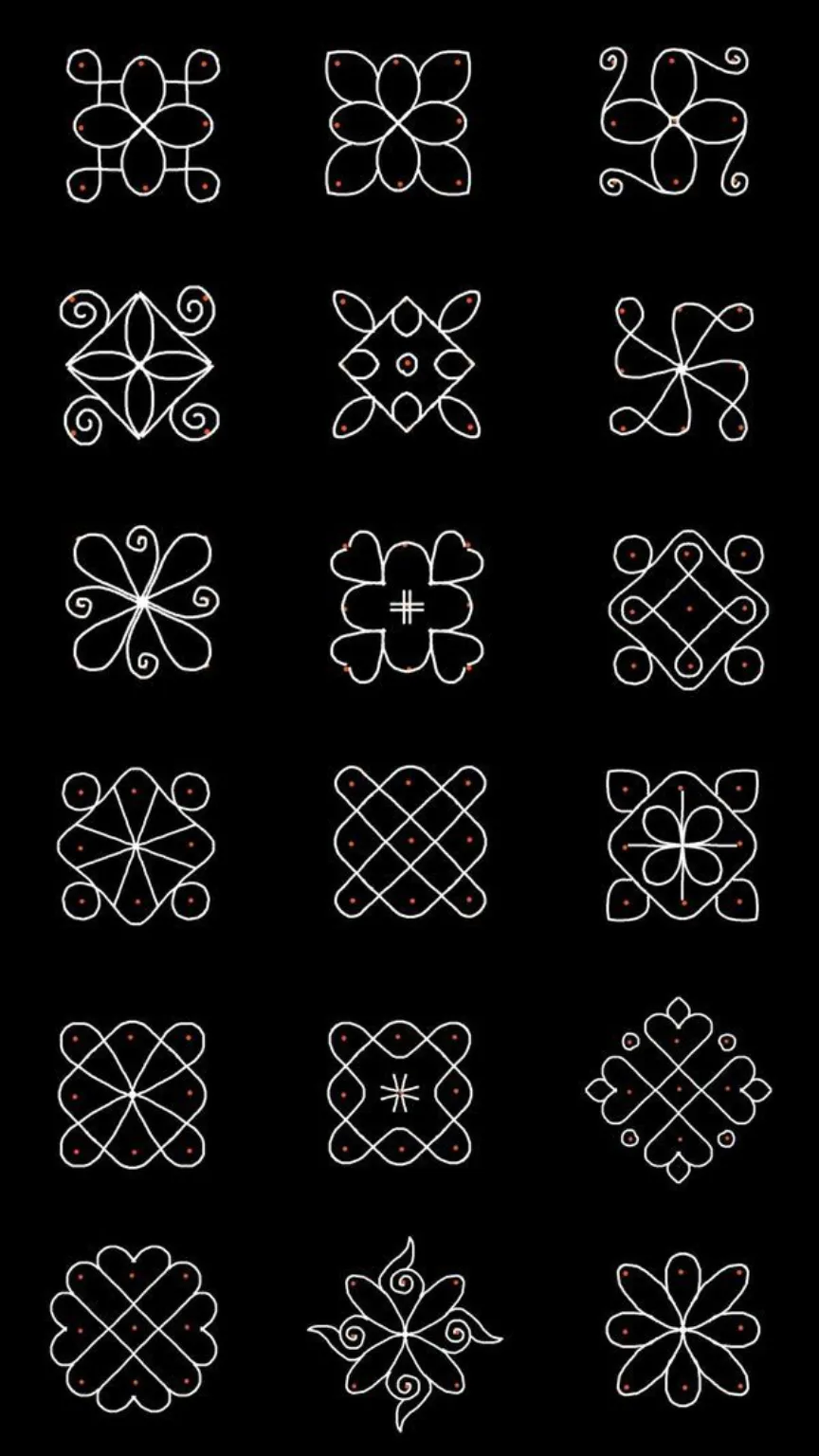
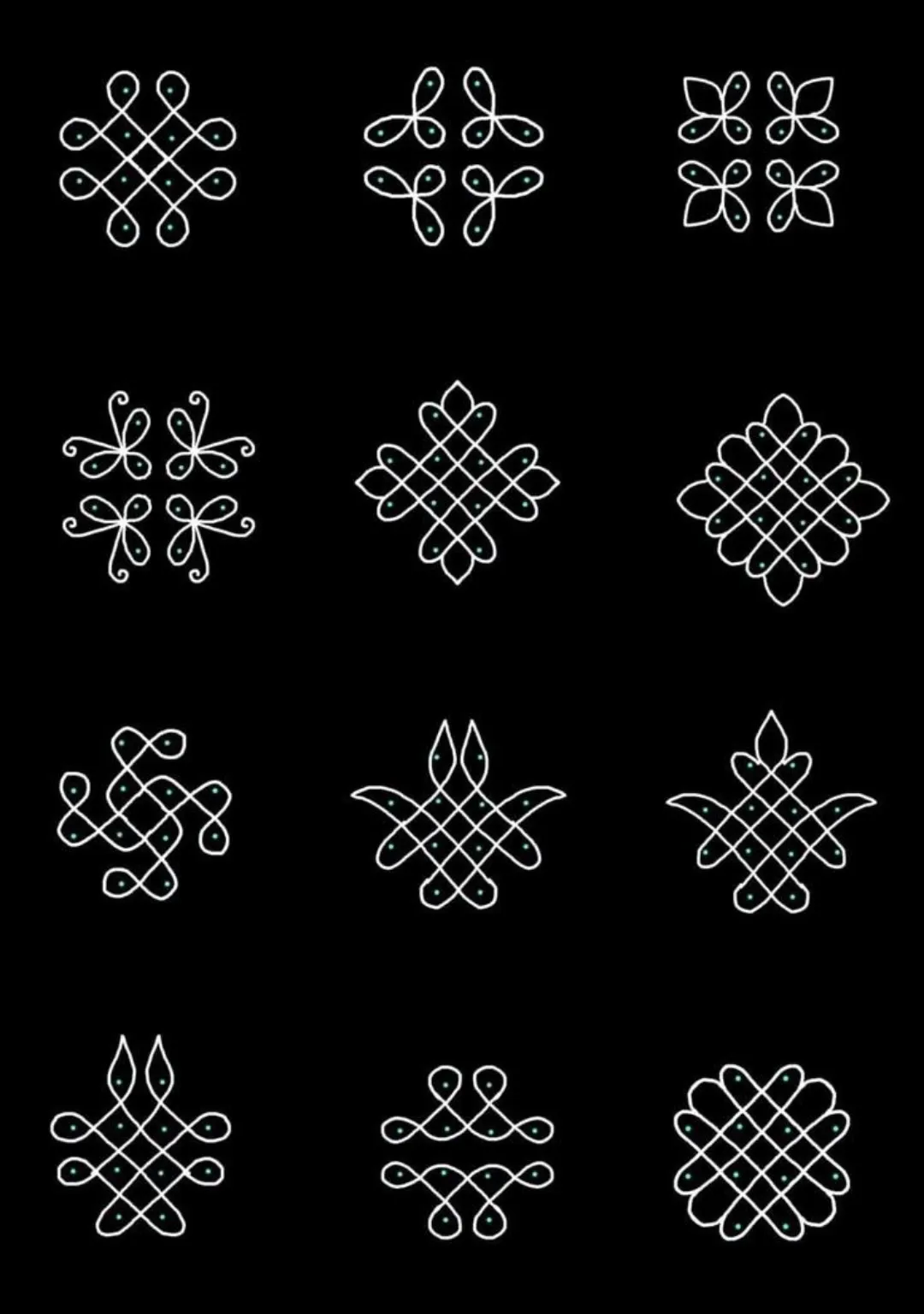
Dot kolam names vary between families, so here we name each design by the number of dots in its longest row. Practise on paper first.
| Design | Dot rows (top to bottom) | Result |
|---|---|---|
| 3 dot kolam | 1, 3, 1 | Small diamond, easiest start |
| 5 dot kolam | 1, 3, 5, 3, 1 | Medium diamond, good for a flower |
| 7 dot kolam | 1, 3, 5, 7, 5, 3, 1 | Larger diamond for loops and borders |
Step-by-step drawing
- Place the dots: make a 5-dot diamond (rows 1, 3, 5, 3, 1) with even spacing.
- Start at the edge: pick one outer dot and curve a line around it.
- Loop each dot: continue the curve around the next dots so the line passes between them.
- Close the loop: end where you began without lifting more than needed.
- Add a border: draw a ring or a row of small loops around the design.
- Check symmetry: turn the page; a good kolam looks the same from each side.
Traditional drawing is done by letting dry flour fall between the thumb and fingers; wet paste is drawn through a soaked cloth squeezed between fingers, as MAP Academy notes.
Daily, Pongal and Margazhi kolam
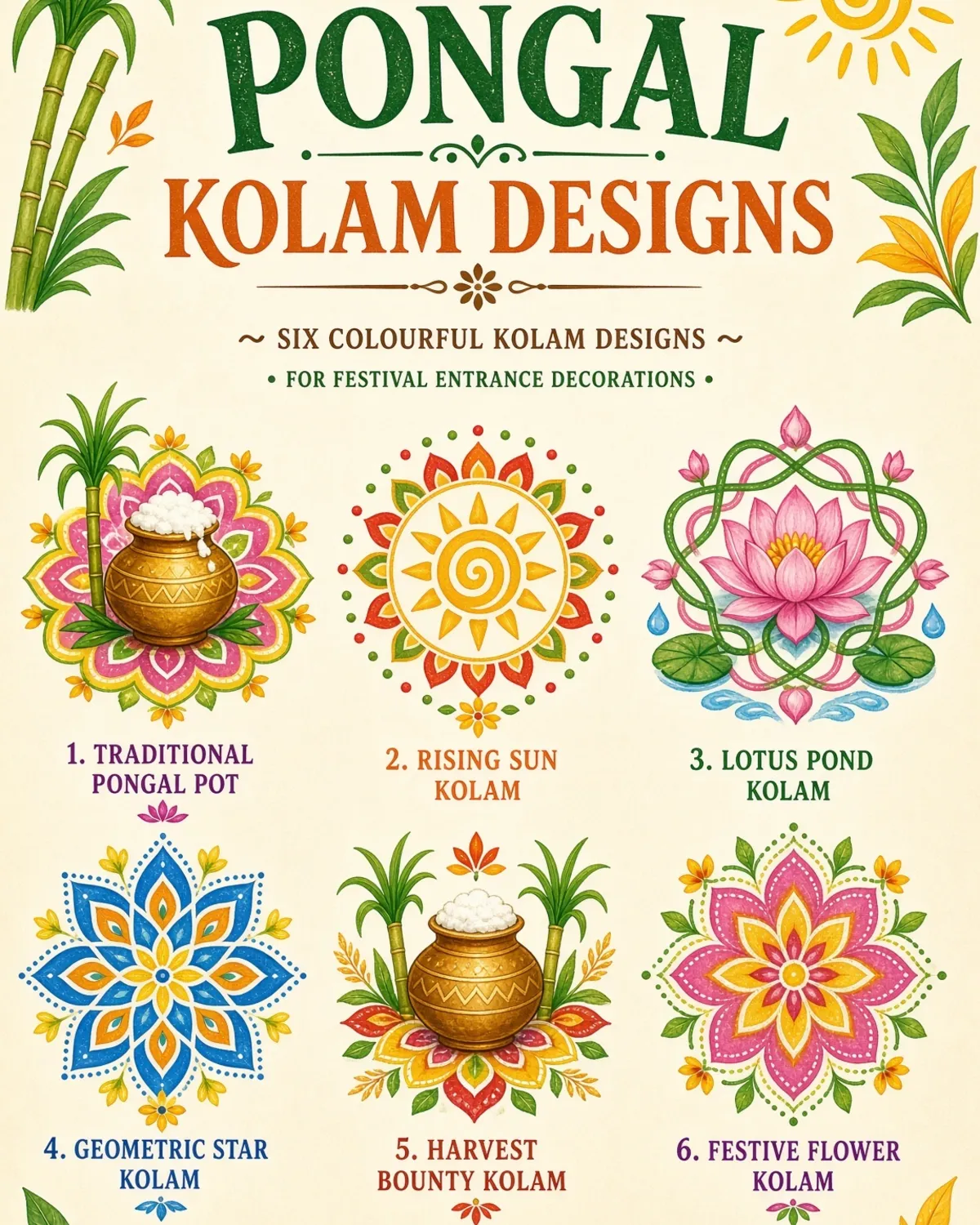
The Federal says Margazhi, the Tamil month spanning mid-December to mid-January, is auspicious and a peak time for kolam, and women also take great care for Pongal and Deepavali. Many families draw small pulli kolam daily and larger designs, often with colour, on festival days. For a Pongal kolam, common ideas include a pot, a sugarcane, a sun and a flower border; for Margazhi, a dot kolam with a lotus or a sikku loop. These are common ideas, not rules, and families follow their own customs.
Stencils, stickers and wall decoration
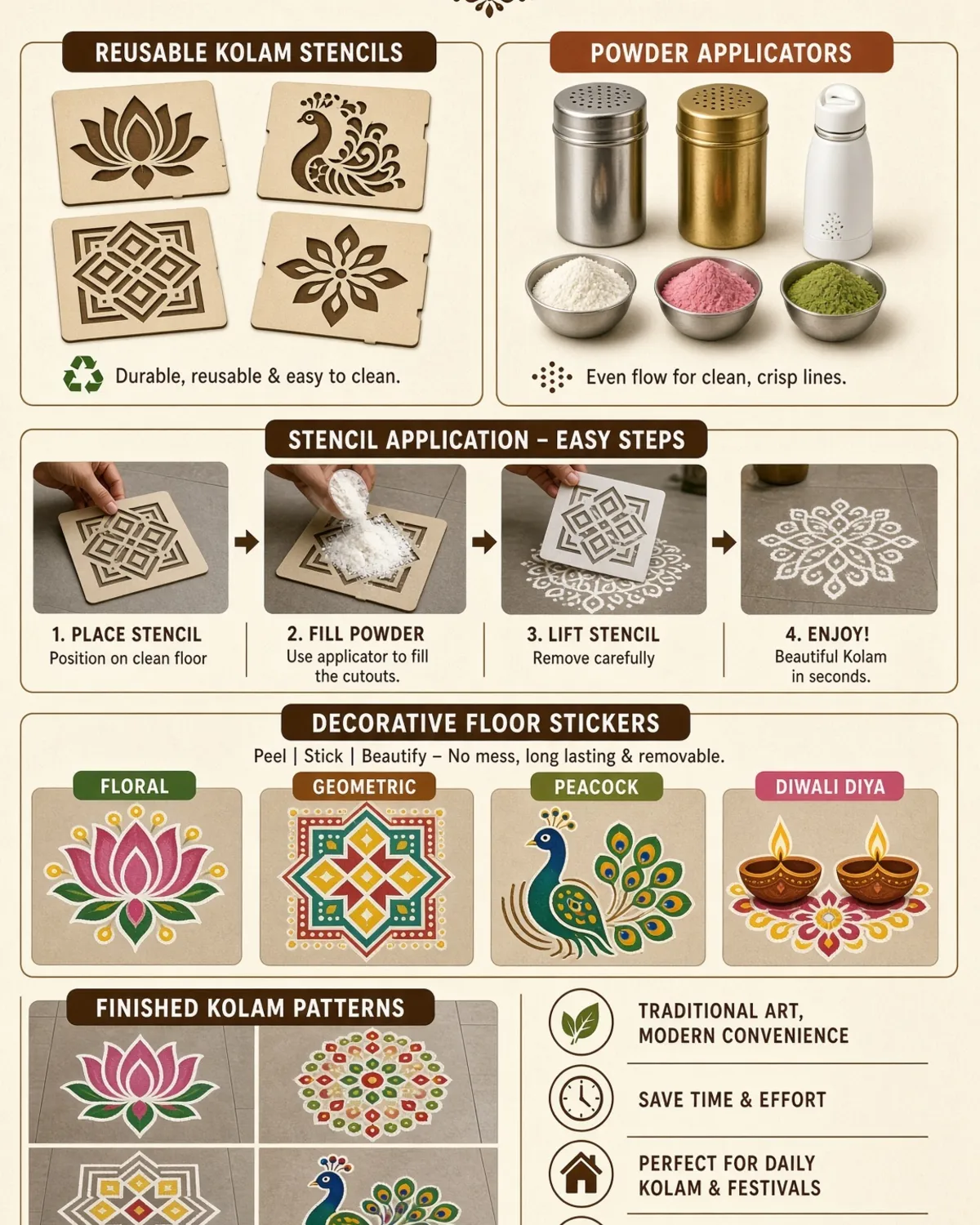
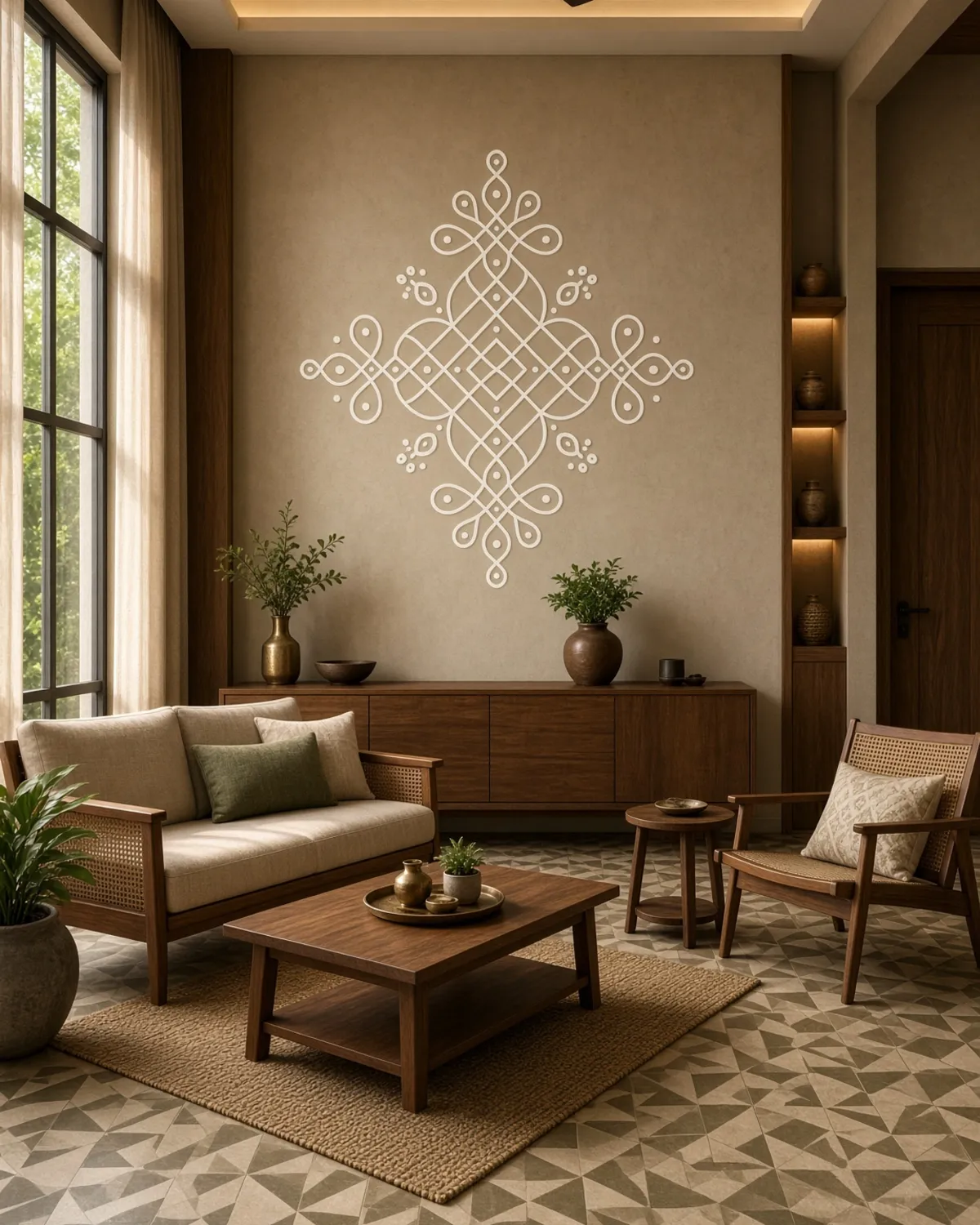
Kolam stencils help beginners and busy mornings, since they give an even pattern in one pass, but they cannot teach dot-and-loop skill. Stickers are a modern convenience for doorways and floors where flour cannot be used. A kolam on a wall means painting or a printed panel, not flour. Note a traditional point: rice flour is a food source for ants and birds, which is why many Tamil households avoid synthetic colours in daily kolam, as Lonely Planet reports. Stickers and paint do not do this.
Traditional vs modern designs
| Aspect | Traditional | Modern |
|---|---|---|
| Material | Rice flour, sometimes wet paste | Coloured powder, paint, stickers, stencils |
| Time | Daily, pre-dawn | Anytime, often for events |
| Colour | Mostly white | Multi-colour, rangoli-style |
| Place | Doorstep floor | Floors, walls, boards, artwork |
The Federal notes that rangoli, the north Indian style, appeals to youth, while many still prefer traditional pulli kolams during Margazhi. Both have a place; just label modern designs honestly.
FAQs
1. Kolam art: which state is it from?
Tamil Nadu; similar floor art has other names such as muggu in Telugu.
2. What is kolam made of?
Traditionally rice flour, sometimes as a wet paste, and occasionally chalk or stone powder.
3. What is the difference between pulli and sikku kolam?
Pulli kolam is built on dots; sikku kolam loops curved lines around dots.
4. How do I draw an easy 5 dot kolam?
Place dots in rows of 1, 3, 5, 3, 1, then loop a curved line around them and close it.
5. When is Margazhi kolam drawn?
During the Tamil month of Margazhi, roughly mid-December to mid-January.
6. Can I use kolam stencils and stickers?
Yes, they are modern conveniences, but they do not replace the hand-drawn tradition.
7. Why is kolam made with rice flour?
It is considered auspicious and also feeds ants and birds, according to several sources.
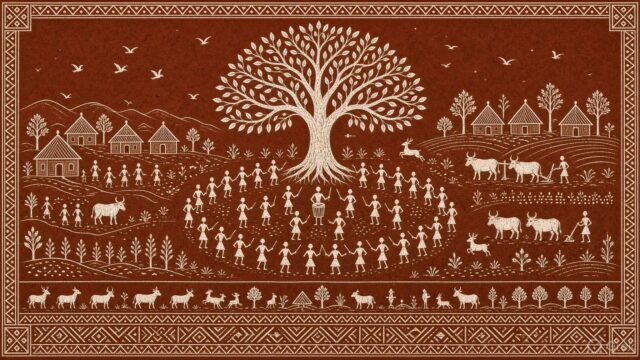
Related guides: Onam Pookalam, Alpana motifs, Aipan motifs, Mandana patterns and Warli art.
Sources: Tamil Nadu Tourism: Kolam; Sahapedia: Significance of Kolam; Britannica: Rangoli; Asia Inch: Rangoli and Kolam; Wikipedia: Kolam; The Federal; MAP Academy.
Related folk art: Bengali Alpana: rice-paste patterns and Lakshmi Puja designs













Share Your Opinion
Comments are closed on this post.