 Vista
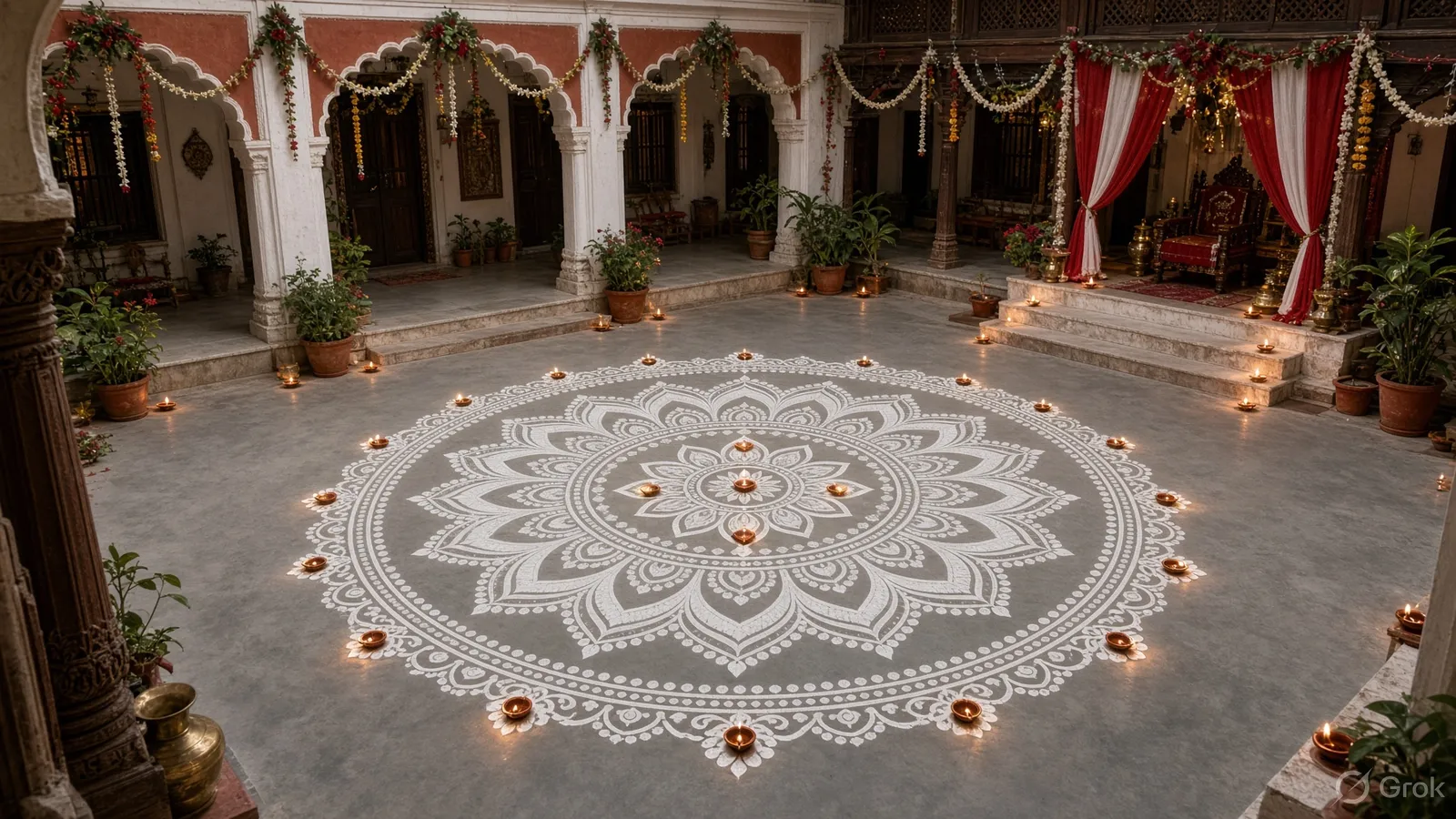
Alpana (also spelt Alpona) is the traditional floor and wall art of Bengal, drawn with a white rice-flour paste on festive and ritual occasions in West Bengal and Bangladesh. For an easy Alpana drawing, make a smooth rice paste, draw a circle, add lotus petals and a border of leaves or dots, and place Lakshmi’s footprints pointing into the room for Lakshmi Puja.
This guide covers Alpana art from tradition to practice: rice paste preparation, drawing materials, easy circular and floral designs, lotus, rice stalks and footprints, Lakshmi Puja and wedding Alpana, border designs and modern colourful versions. Practice designs on paper are Alpana-inspired; the ritual art is a living domestic tradition, so credit it and learn from those who practise it. For motif reference, see our Bengali Alpana motifs chart.
Table of contents
- Tradition in West Bengal and Bangladesh
- Rice paste and drawing materials
- Easy circular and floral designs
- Lotus, rice stalks and footprints
- Lakshmi Puja and wedding Alpana
- Border designs and modern adaptations
- Step-by-step drawing tutorial
- FAQs
Tradition in West Bengal and Bangladesh
Wikipedia describes Alpana as decoration of floors and walls with paints made from rice flour on religious occasions, common to Bangladesh and the Indian state of West Bengal. The word comes from the Sanskrit alimpana, meaning plastering or coating. Alpana is part of festivals such as Kojagari Lakshmi Puja, Durga Puja and Pohela Boishakh, and Outlook Traveller says it is best seen at Kojagari Lakshmi Puja. Motifs are meant as a symbolic welcome to the gods and to small creatures of nature, as The Better India puts it. Sources differ on its age, so we do not claim a date.
Rice paste and drawing materials
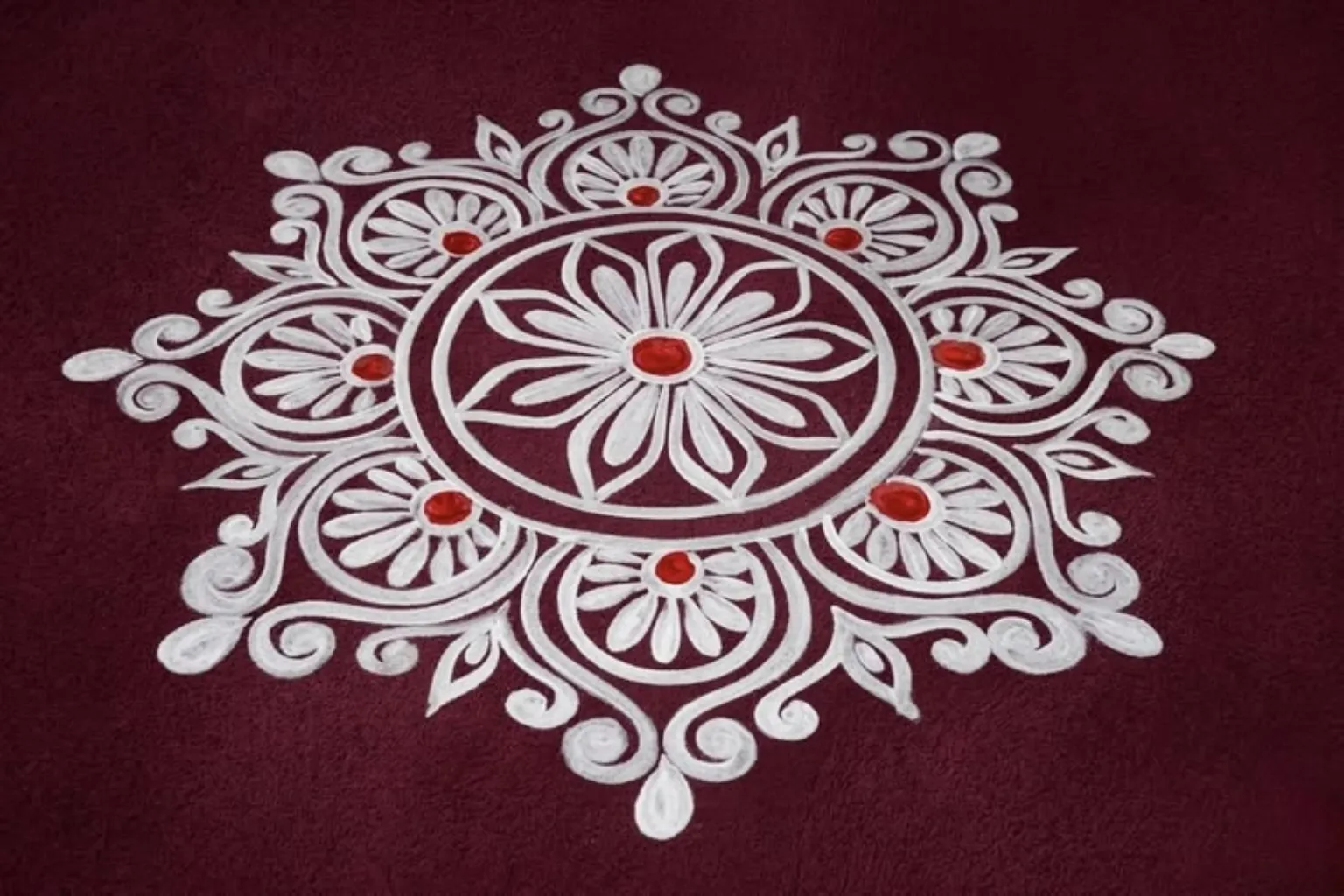
The Federal says Alpana is traditionally white, made from a water-based paste of uncooked rice kernels from sun-dried paddy (atop chaal). Deccan Herald notes the paste is traditionally diluted to roughly the consistency of thick milk, and The Better India says it was originally drawn on a base of clay mixed with cow dung. The rice is soaked and ground to a smooth paste, then thinned with water so it flows without running. Traditionally the fingers are the tool; the NIOS folk art module lists practice materials such as colour paper, cloth, bowls and binder for paper work.
| Item | Traditional | Practice option |
|---|---|---|
| Paste | Soaked, ground rice with water | White poster paint or chalk paste |
| Tool | Fingers | Round brush or cloth |
| Surface | Cleaned floor or courtyard | Board, paper or canvas |
| Colour | Mostly white | Coloured chalk or powder for modern designs |
Easy circular and floral designs
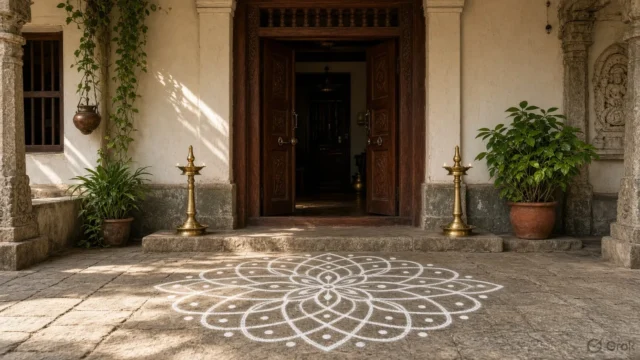
Wikipedia notes that circular Alpana is used as a holy pedestal at festivals including Saraswati Puja and Diwali. A beginner circle design uses one outer ring, a ring of petals inside and a small centre. Floral Alpana can grow from a four-petal flower to eight petals, adding a leaf between petals. Keep the spacing even by marking a centre dot first and drawing a light cross.
Lotus, rice stalks and footprints
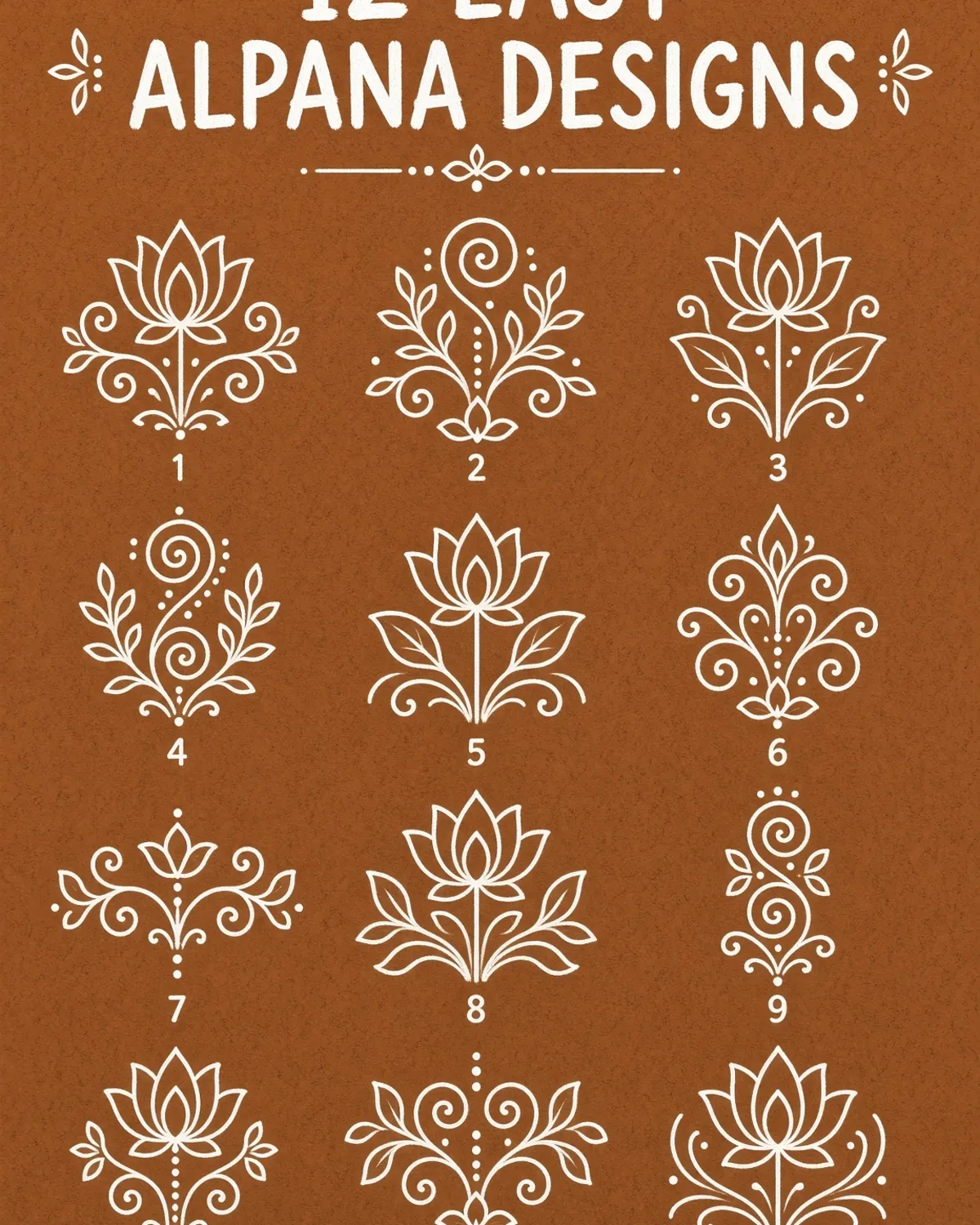
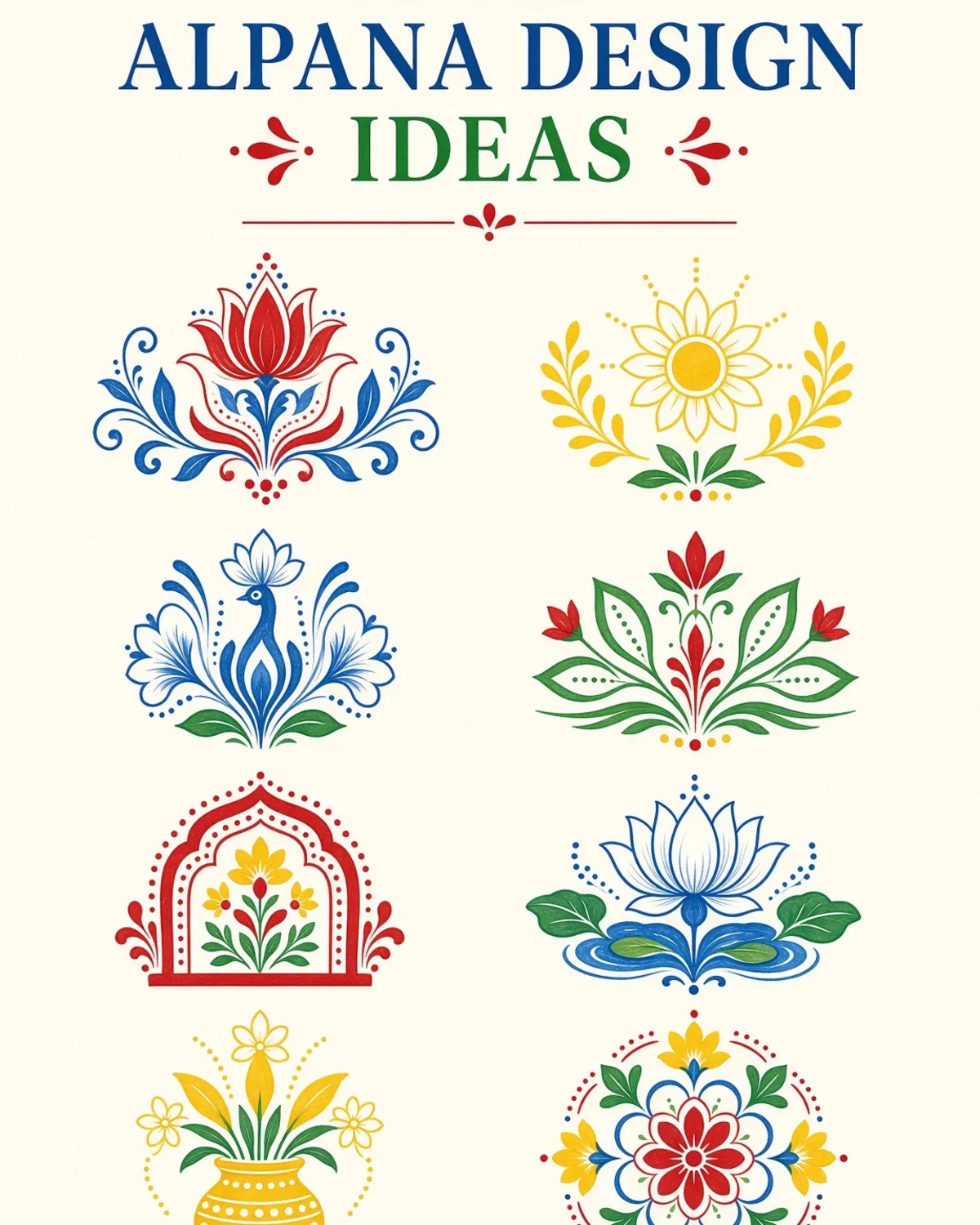
The Better India lists sun, lotus, fish, swastika, owl, snake, footprints of goddess Lakshmi and abstract designs as motifs. Deccan Herald says that for Lakshmi, people draw her carrier the owl, a granary, a conch shell and lotus motifs, and for a good harvest, rice stalks and overflowing granaries. A lotus is built from pointed petals in layers, a rice stalk from a curved stem with small grains on each side, and footprints from two small feet with toes and an arch.
Lakshmi Puja and wedding Alpana
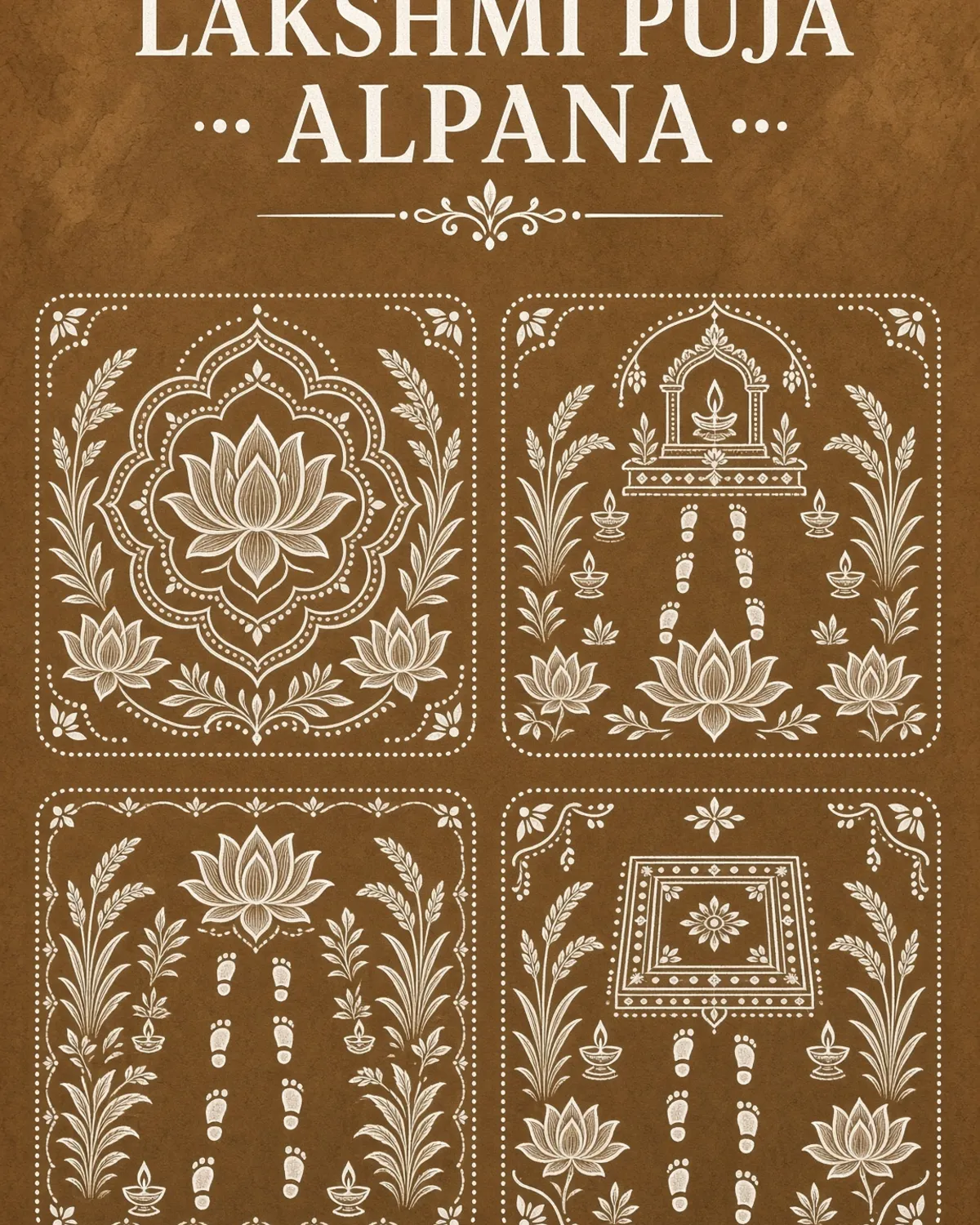
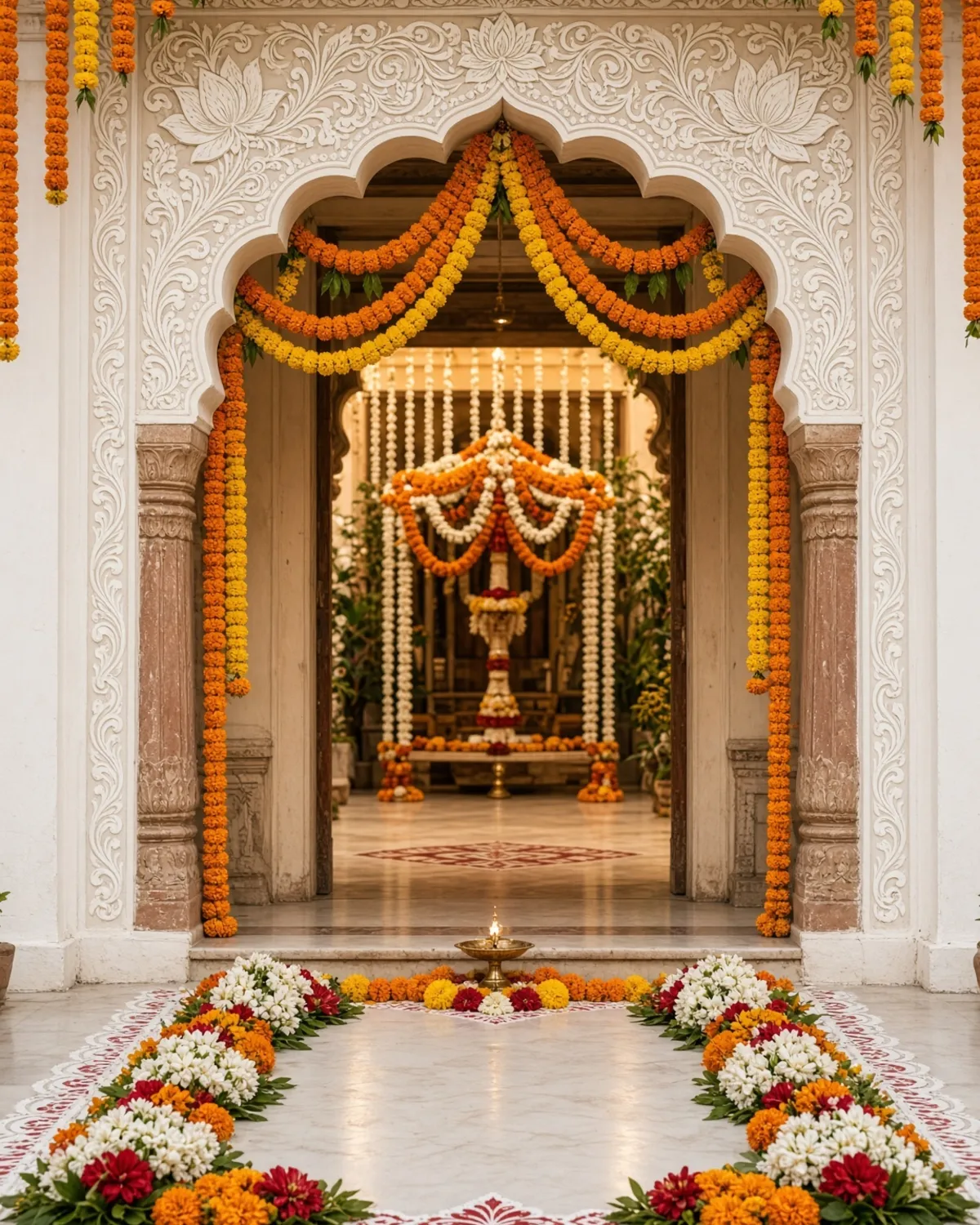
Outlook Traveller says that during Lakshmi Puja a pair of little feet is drawn, often with a wavy pattern with curlicues, and Deccan Herald says the feet are drawn pointing into rooms to show Lakshmi entering, never reversed. Weddings and other sanskars such as the first rice-eating ceremony also have Alpana, according to NIOS. If you draw for a real ritual, follow your family’s customs for motifs and placement.
Border designs and modern adaptations
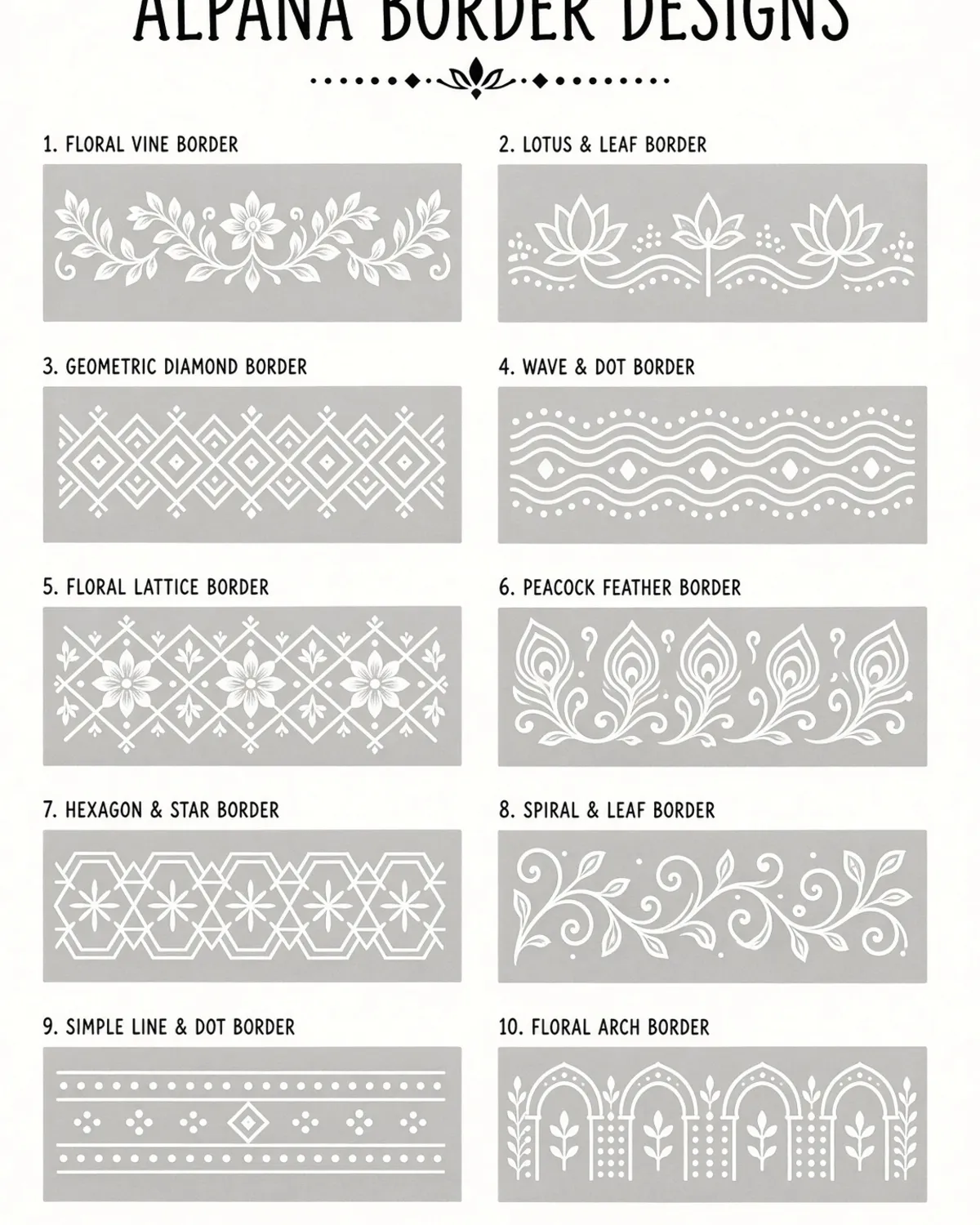
Alpana border ideas: a wave with curls, a chain of petals, a row of dots between two lines, or a leaf vine. Deccan Herald notes that coloured chalks, vermilion, flower petals and grains are also used now, and one writer says her generation used chalk paste and brushes instead of rice paste because they were easier. Treat colourful chalk, paint and rangoli powder versions as modern adaptations rather than traditional white Alpana.
Step-by-step drawing tutorial
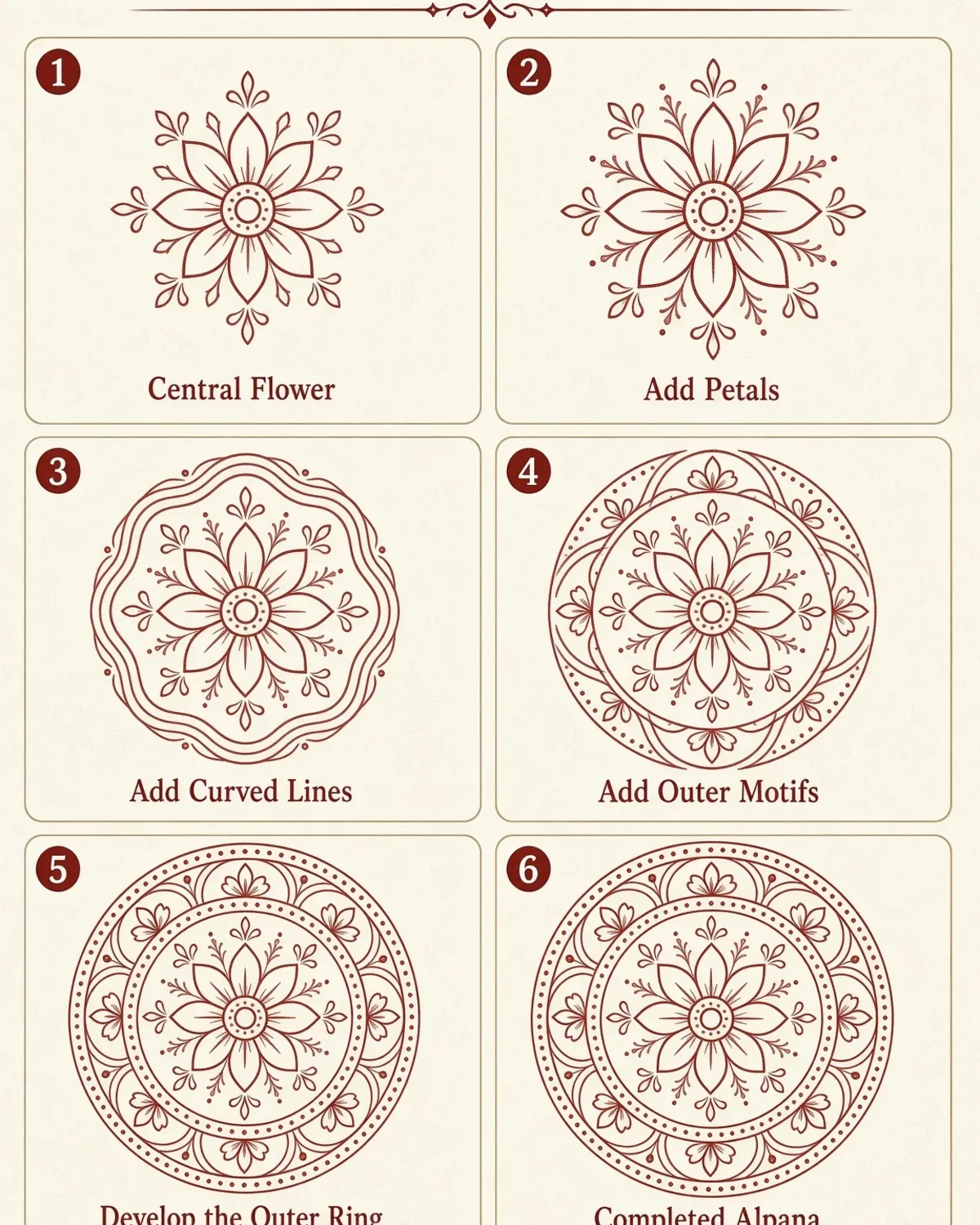
- Prepare the surface: clean and dry the floor or board.
- Mark the centre: make a dot and a faint cross.
- Outer circle: draw a ring around the centre.
- Lotus petals: add eight pointed petals, then a second layer between them.
- Fillers: add small leaves, dots or rice grain shapes between petals.
- Border: draw a wavy line or leaf chain outside the circle.
- Footprints: for a Lakshmi design, place a pair of feet at the entrance side.
FAQs
1. What is Alpana art?
A rice-paste floor and wall art of Bengal, drawn on religious and festive occasions.
2. Is Alpana the same as Alpona?
Yes, both spellings are used for the same art.
3. What is Alpana made of?
Traditionally a white paste of soaked and ground rice with water.
4. How do I draw a simple Alpana?
Draw a circle, add lotus petals, fill with leaves and finish with a wavy border.
5. Which Alpana is used for Lakshmi Puja?
Lotus, owl, conch, granary and Lakshmi’s footprints are the best-known motifs.
6. Which way do Lakshmi’s footprints face?
Into the room, to show her entering, according to Deccan Herald.
7. Is Alpana only white?
Traditionally yes, but modern versions use coloured chalk, powders and paint.
Related guides: Aipan motifs, Mandana patterns, Pookalam designs, Madhubani and Warli art.
Sources: Wikipedia: Alpana; NIOS Folk Art: Alpana; Outlook Traveller: Alpana; Deccan Herald: Floor art of Bengal; The Better India; The Federal.
Related folk art: Kolam designs: pulli, sikku and padi patterns












Share Your Opinion
Comments are closed on this post.