 Vista
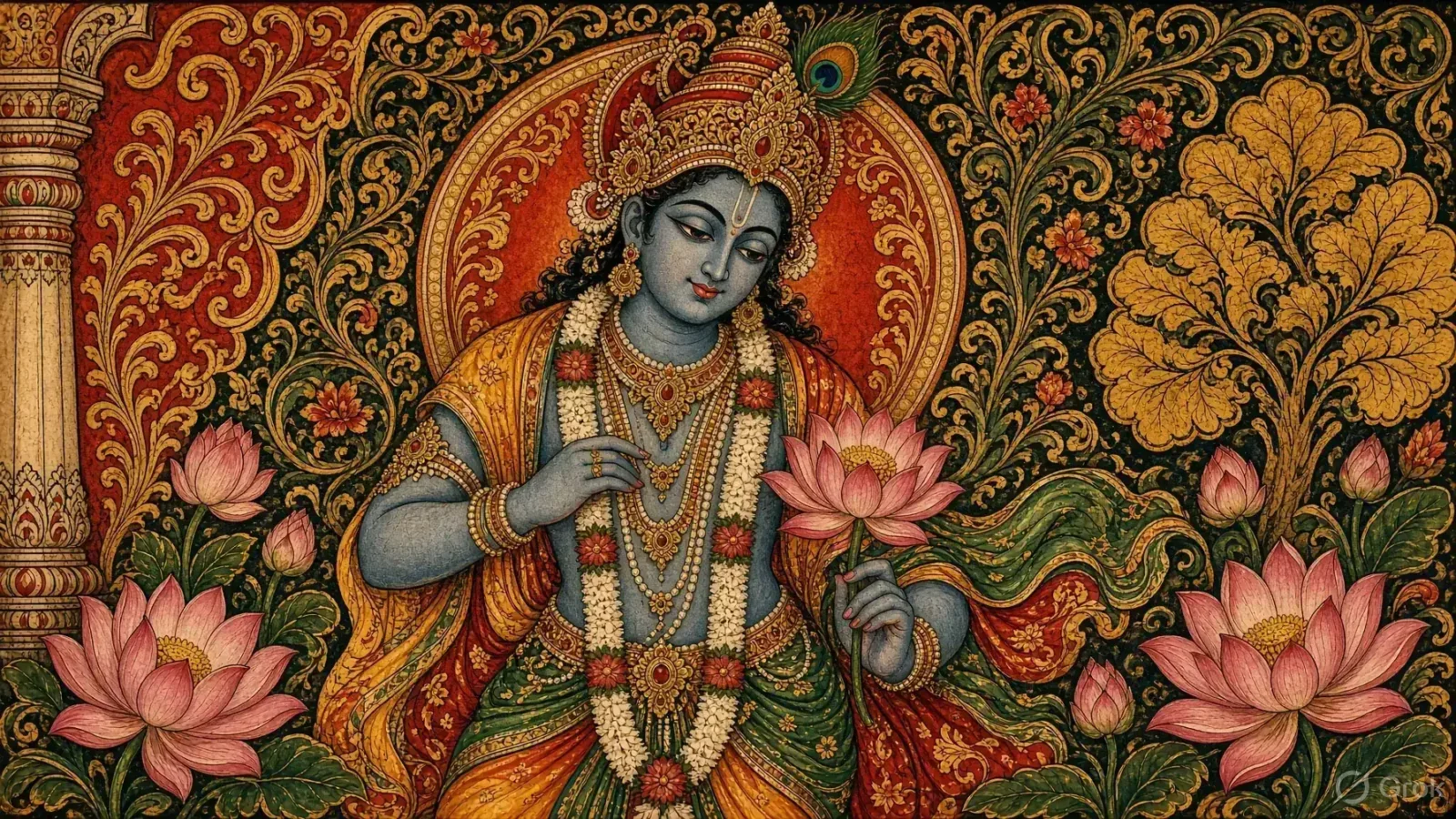
Kerala mural art is the traditional wall-painting style of Kerala, found in temples, palaces and churches and known for its rich colour, flowing outlines and the five-colour Panchavarna palette. For an easy Kerala mural drawing, start with a lotus, outline it in a warm ochre line, fill flat colour in red, green, yellow and black, keep white for highlights, and finish with a bold border.
This guide covers Kerala mural art painting for beginners: history, the traditional palette, materials, a simple tutorial, lotus, Krishna and Ganesha motifs, border designs, colour combinations, wall decor and mistakes to avoid. Everything here is mural-inspired practice. Traditional temple murals are sacred work made by trained artists, so learn from them, credit them and buy original work from them. For other Indian folk-art practice, see our Madhubani guide.
Table of contents
- What is Kerala mural art?
- History and cultural significance
- The five-colour Panchavarna palette
- Materials and beginner kit
- Easy drawing and painting tutorial
- Lotus, Krishna, Ganesha and decorative motifs
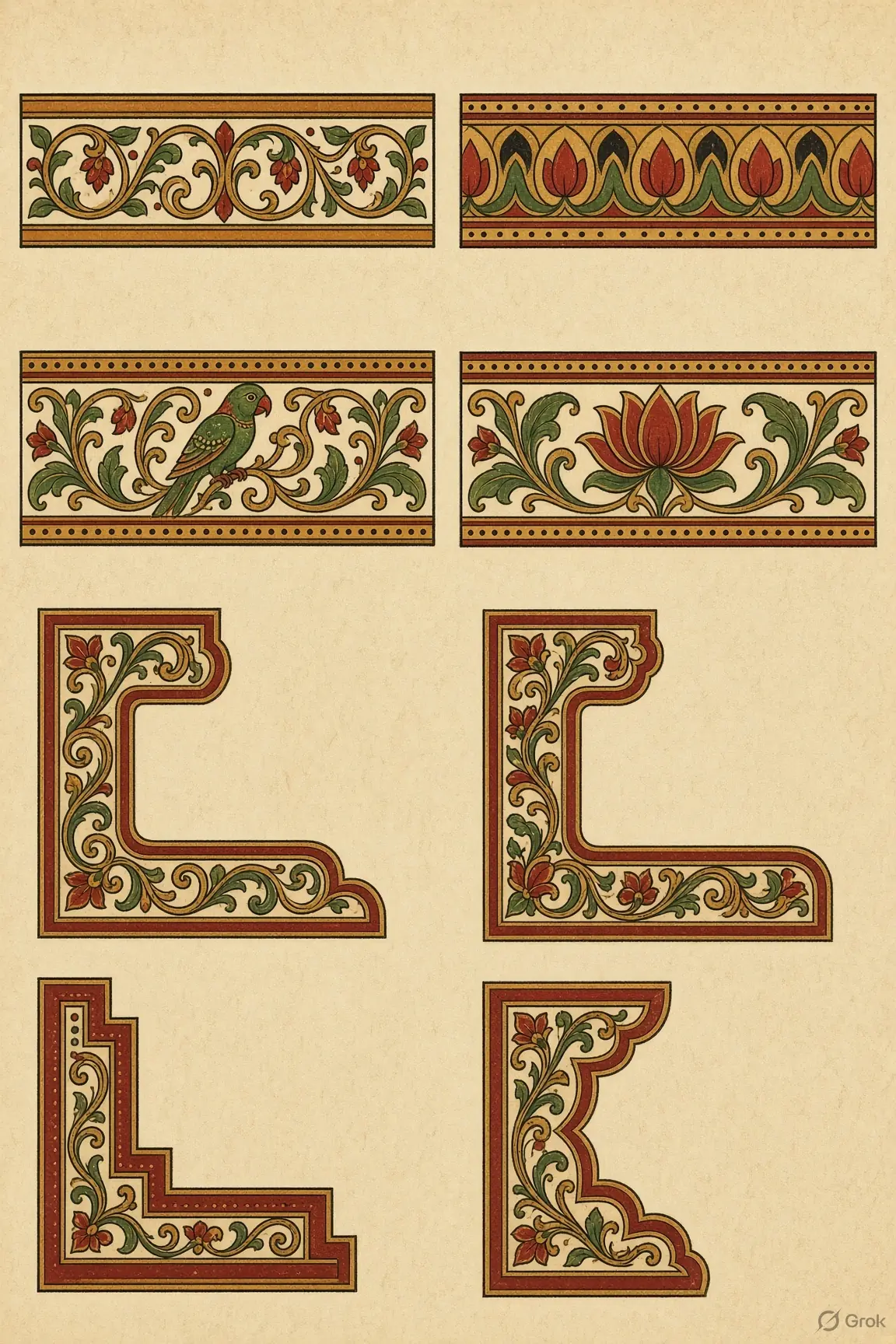
- Border designs and colour combinations
- Modern living room and wall decoration ideas
- Beginner mistakes to avoid
- Image gallery
- FAQs
What is Kerala mural art?
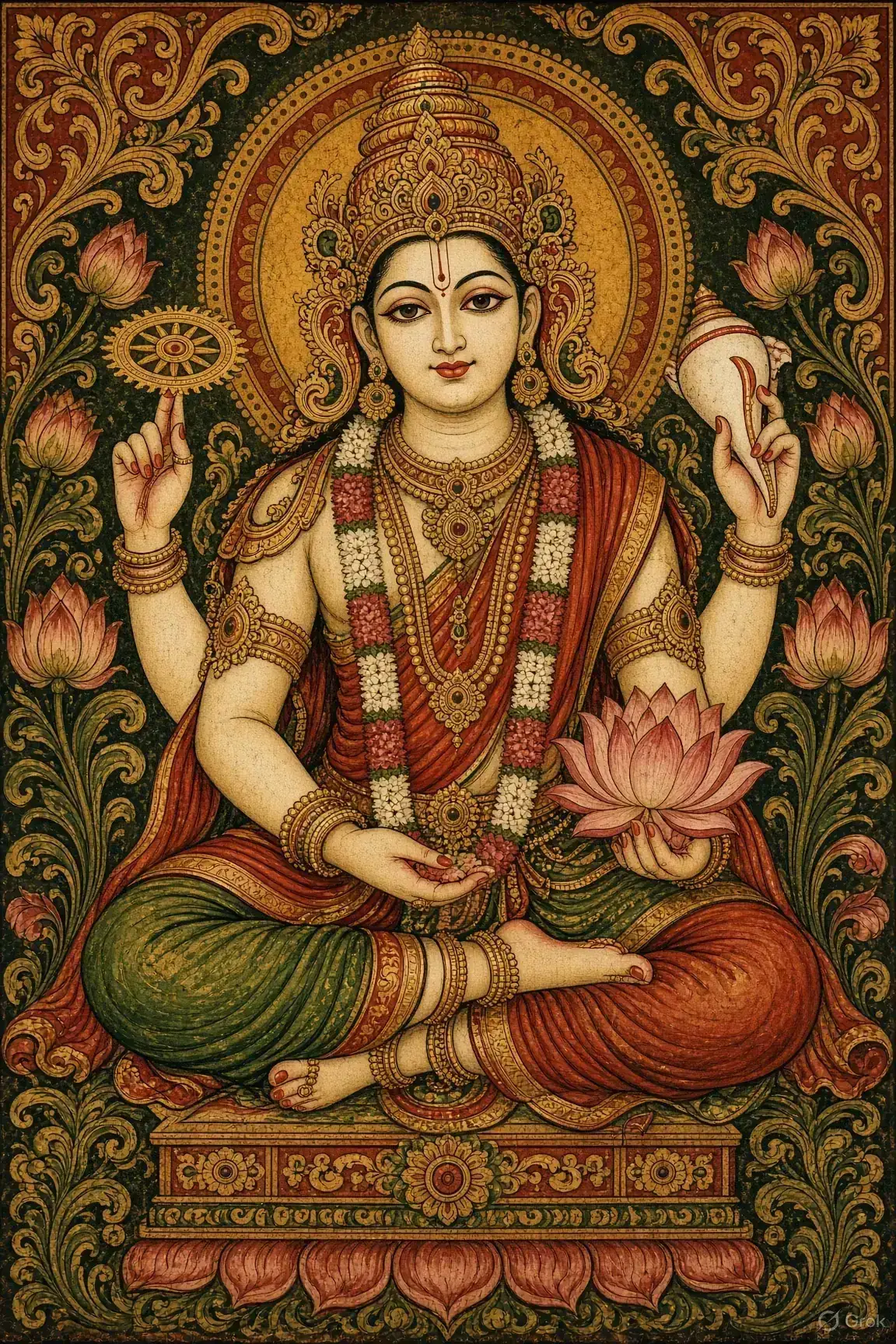
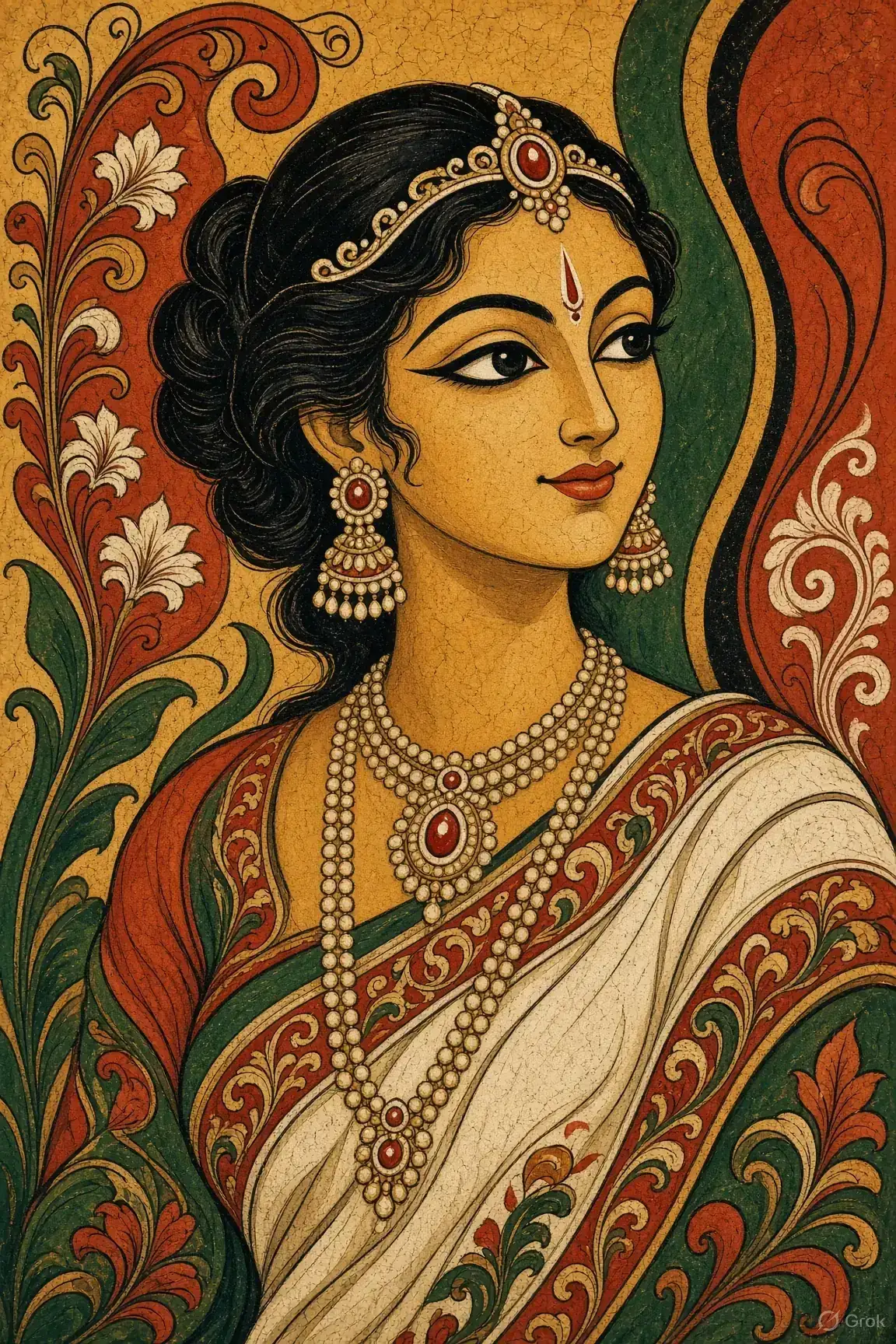
Kerala mural art, also called Kerala mural painting or Kerala mural wall art, is a tradition of painting on walls that depicts Hindu mythology. Kerala Tourism calls it one of the richest and most ancient artistic traditions of the state. Searches such as “Kerala mural folk art painting” usually mean the same thing, though strictly speaking murals are temple and palace art, closer to classical than folk traditions. Its look comes from rounded faces, large eyes, ornate jewellery and flowing lines filled with strong colour.
History and cultural significance
Kerala Tourism points to three major centres for fine murals: Padmanabhapuram, Krishnapuram and Mattancherry palaces. It says the Padmanabhapuram murals are believed to date to the middle of the eighteenth century and influenced later palace work, and that the Mattancherry Palace was built by the Portuguese in 1557 and presented to Raja Veera Kerala Varma of Kochi. Other sites listed on Wikipedia include the Shiva temple at Ettumanoor and the Vadakkumnathan temple. Today the tradition is taught in places such as the Mammiyur Krishnan Kutty Nair Institute of Mural Painting at Guruvayur and the Vasthuvidya Gurukulam at Aranmula. We do not give a start date for the art, because sources differ.
The five-colour Panchavarna palette
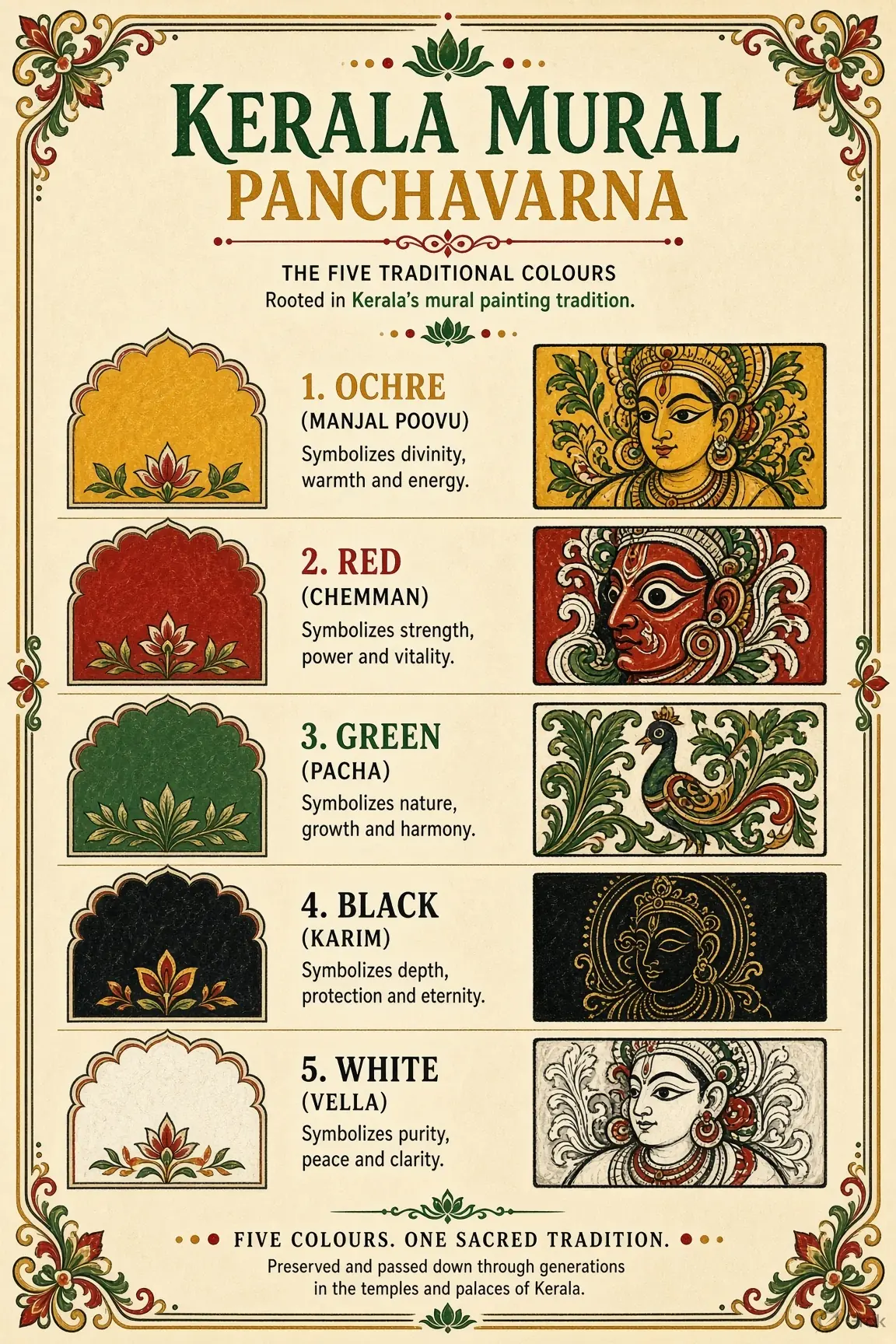
Kerala Tourism describes the palette as five colours known as Pancha Varna: ochre yellow, red, green, white and black, made from natural minerals and plant extracts. Wikipedia adds that white was traditionally the colour of the wall itself. Modern artists often use acrylics, but the five-colour idea is a good discipline for beginners because it forces strong contrast. We avoid assigning spiritual meaning to each colour because our sources do not do so.
Materials and beginner kit
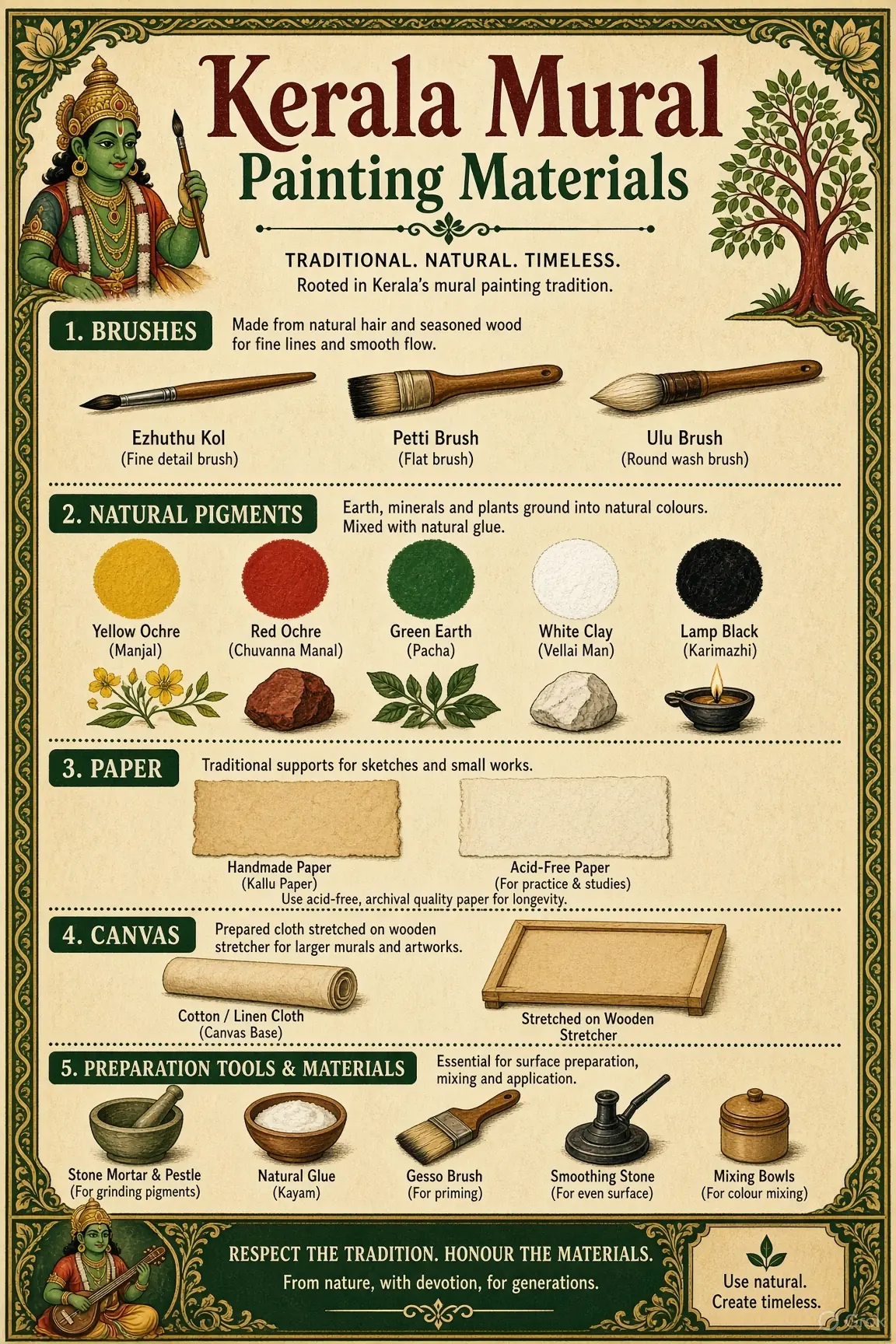
- Surface: thick paper, canvas board or a primed wooden panel.
- Colours: acrylic or poster colour in ochre yellow, red, green, black and white.
- Brushes: a fine round brush for outlines and a flat brush for fills.
- Extras: pencil, eraser, ruler, palette and water jar.
We do not give recipes for traditional mineral pigments, since some are hazardous and are best learned from artists.
Easy drawing and painting tutorial
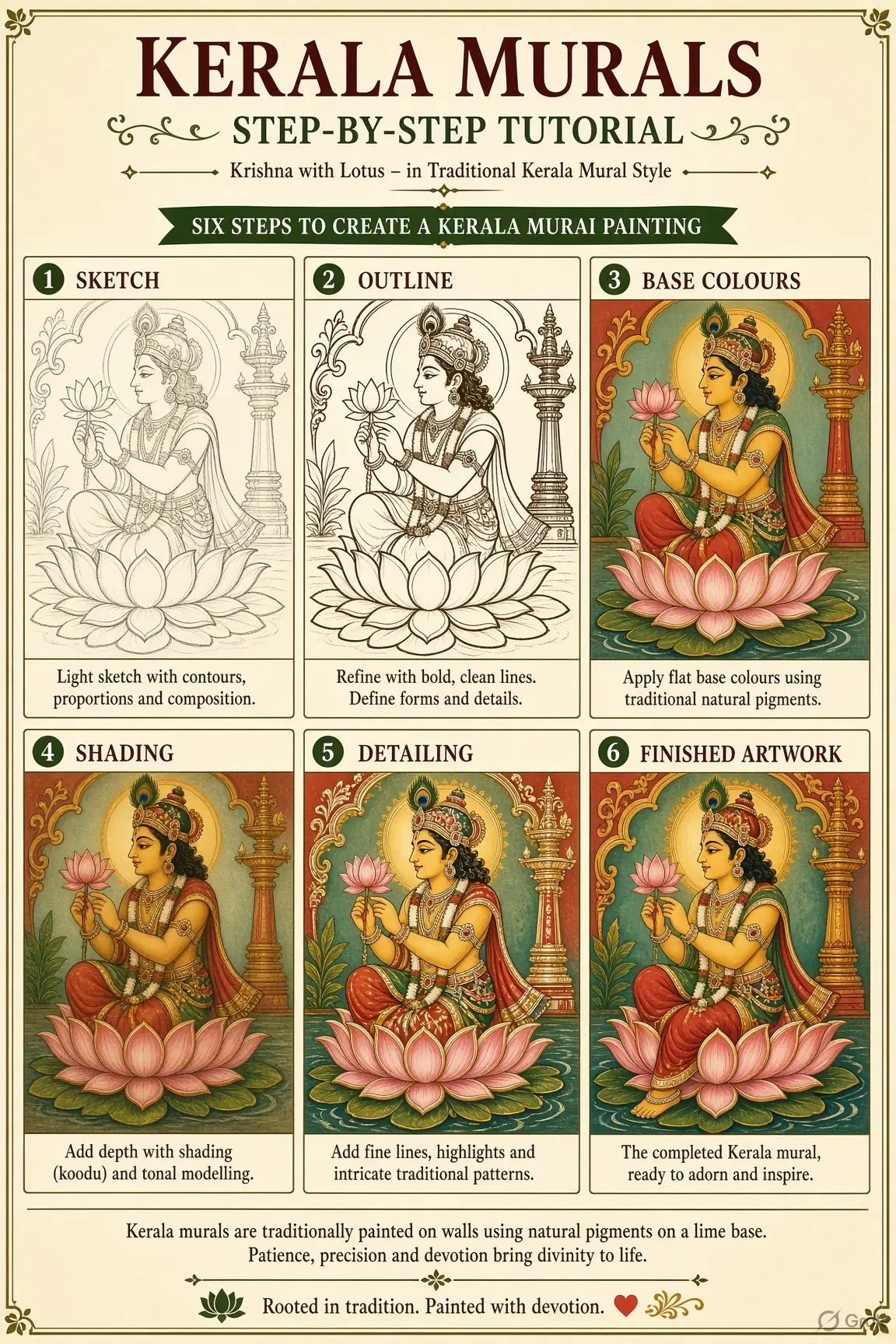
Wikipedia summarises the process in three parts: sketching the outline, applying colours and adding decorative details. A simple practice version:
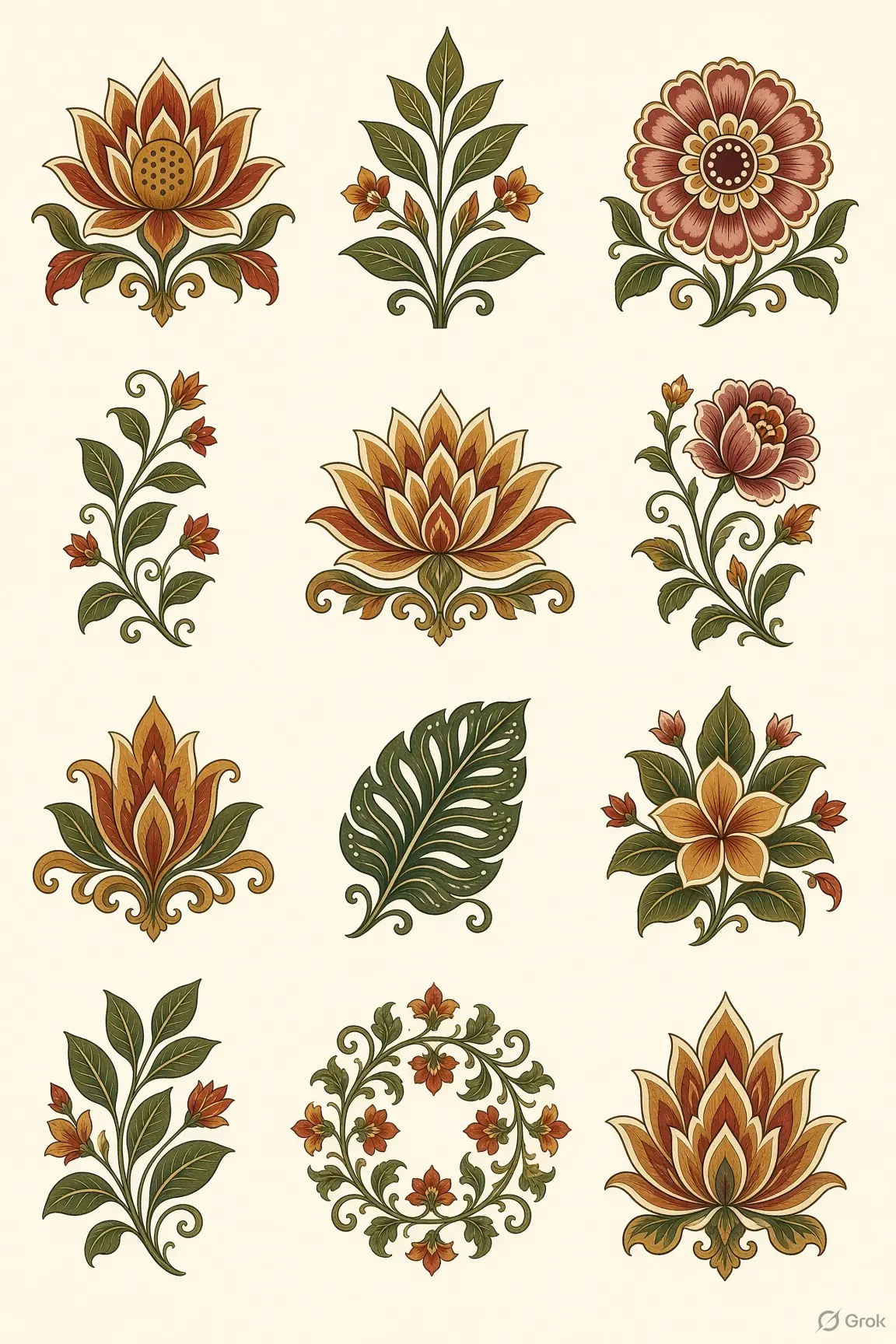
- Sketch. Draw a lotus lightly in pencil: a centre, then pointed petals in two layers.
- Outline. Trace the shape with ochre or light brown, keeping curves smooth.
- Fill. Apply flat red and ochre on petals and green on leaves, one colour at a time.
- Define. Outline everything in black and add fine lines inside the petals.
- Detail. Add white highlights and small decorative dots.
- Border. Frame the design with a simple repeating border.
Lotus, Krishna, Ganesha and decorative motifs
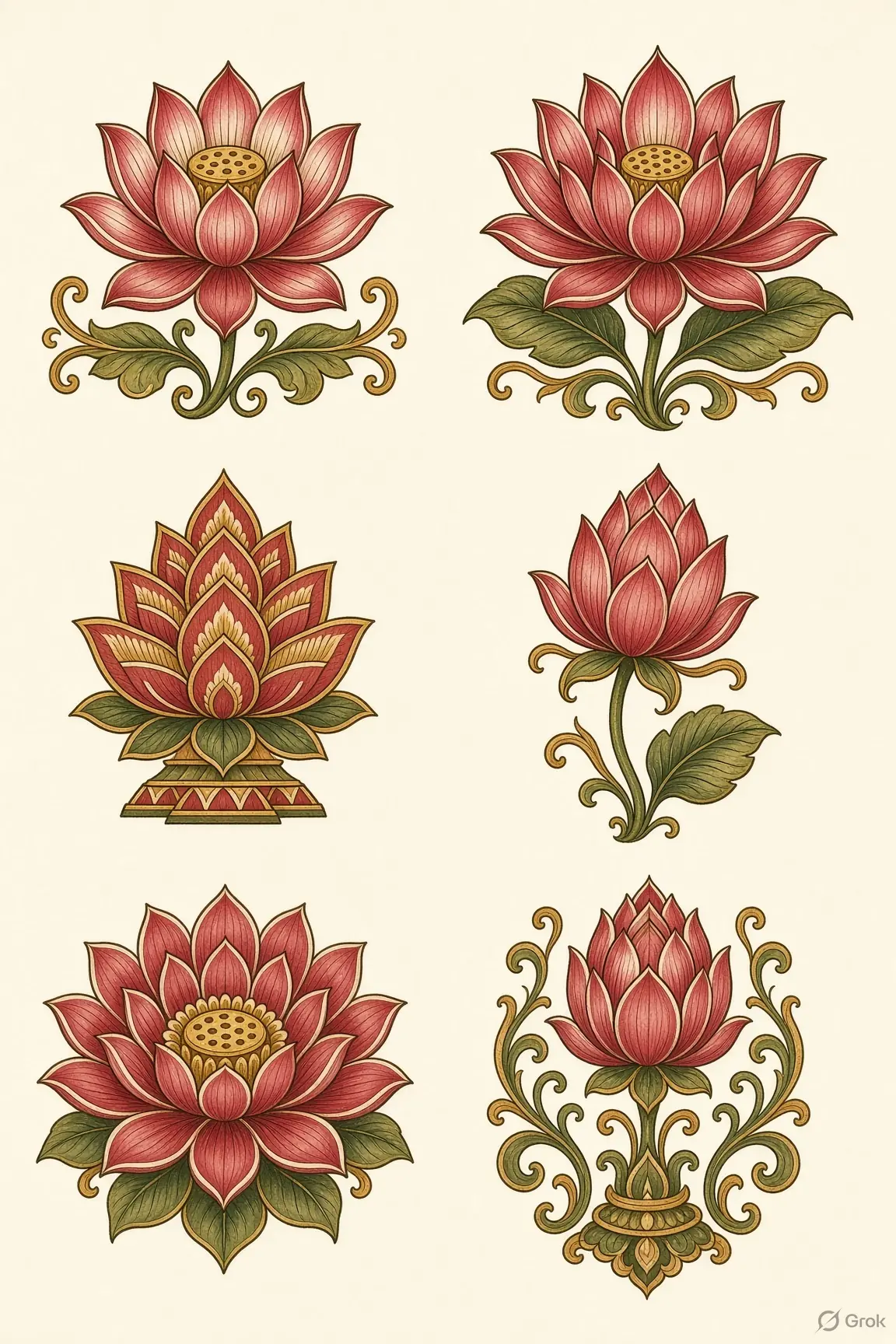
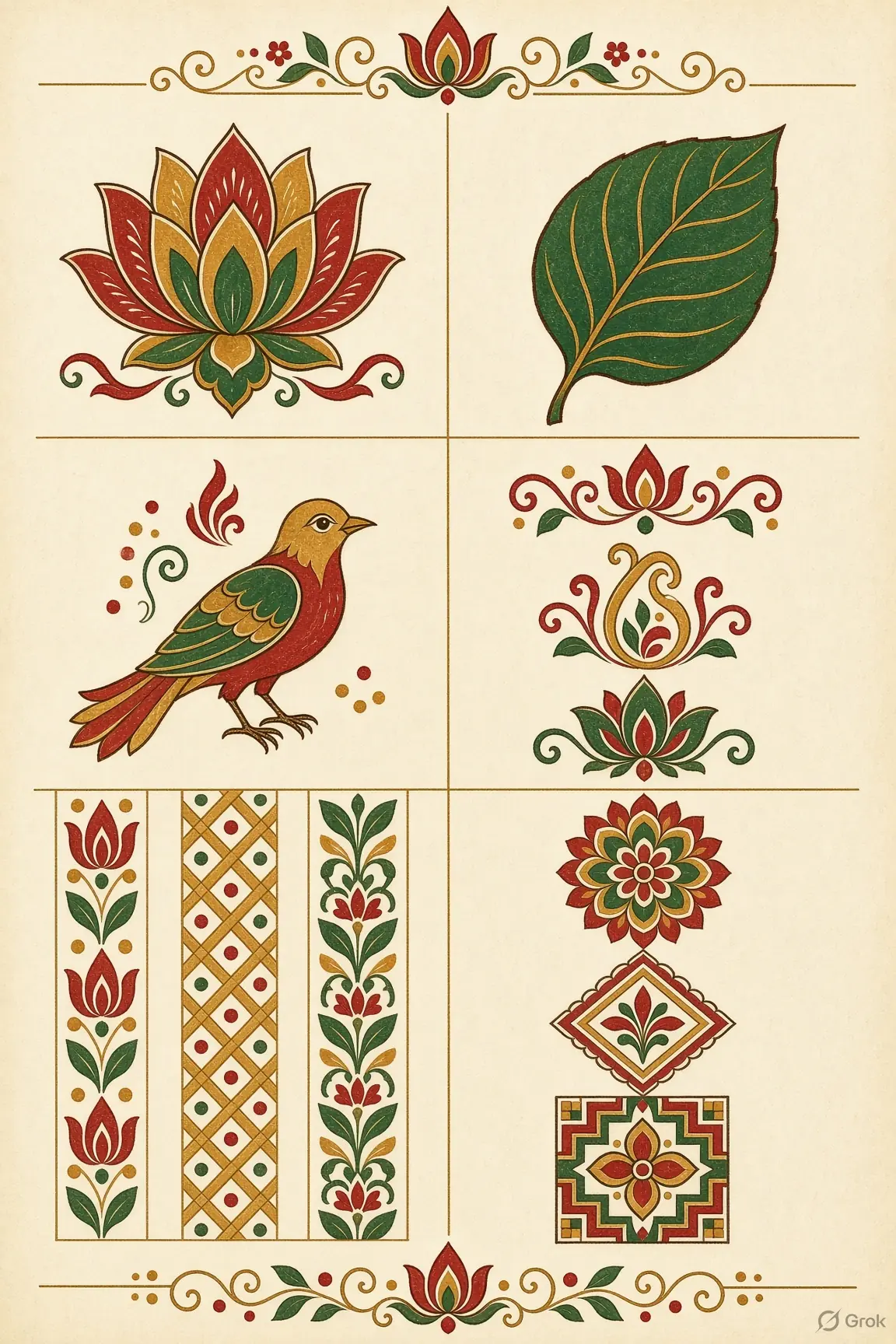
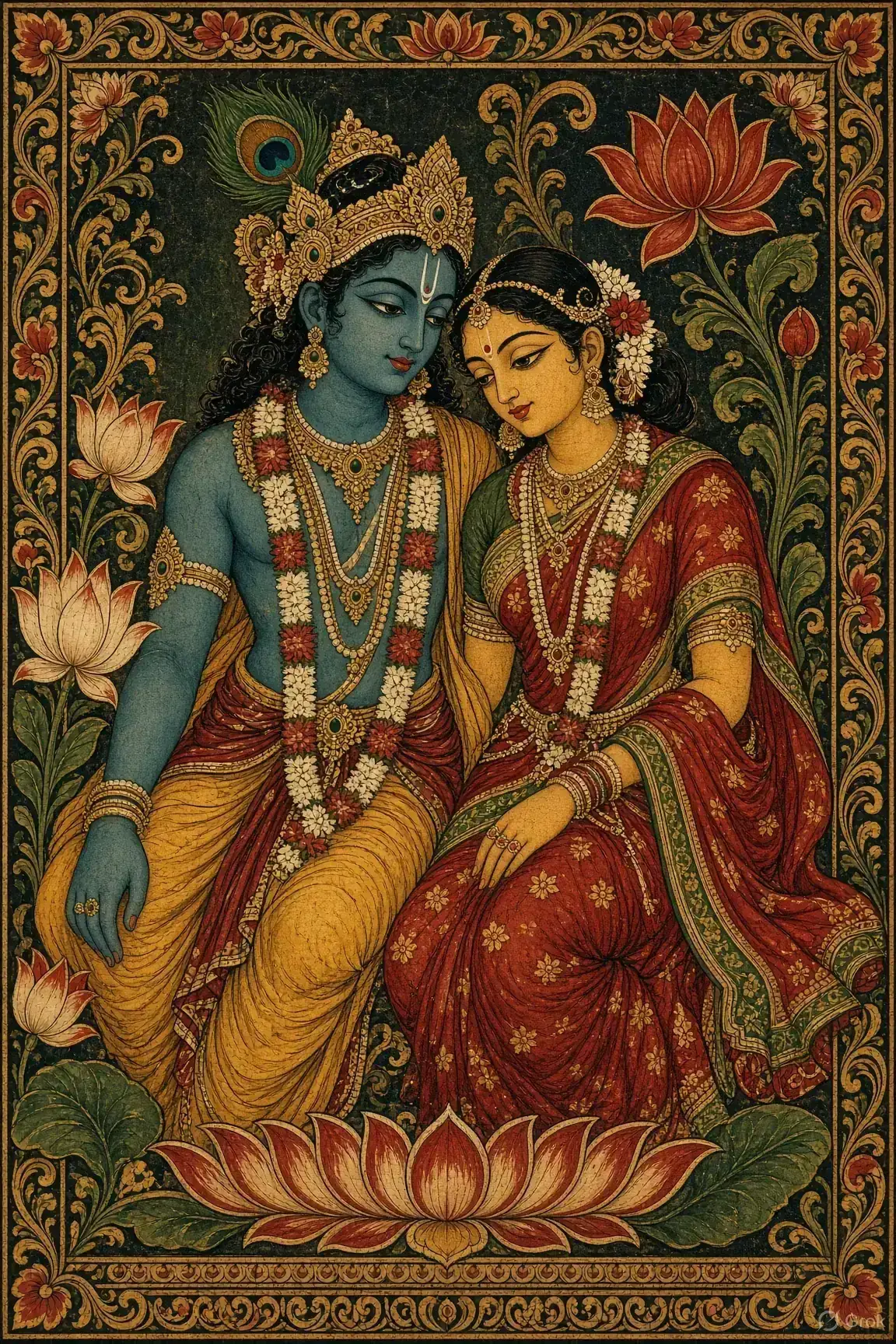
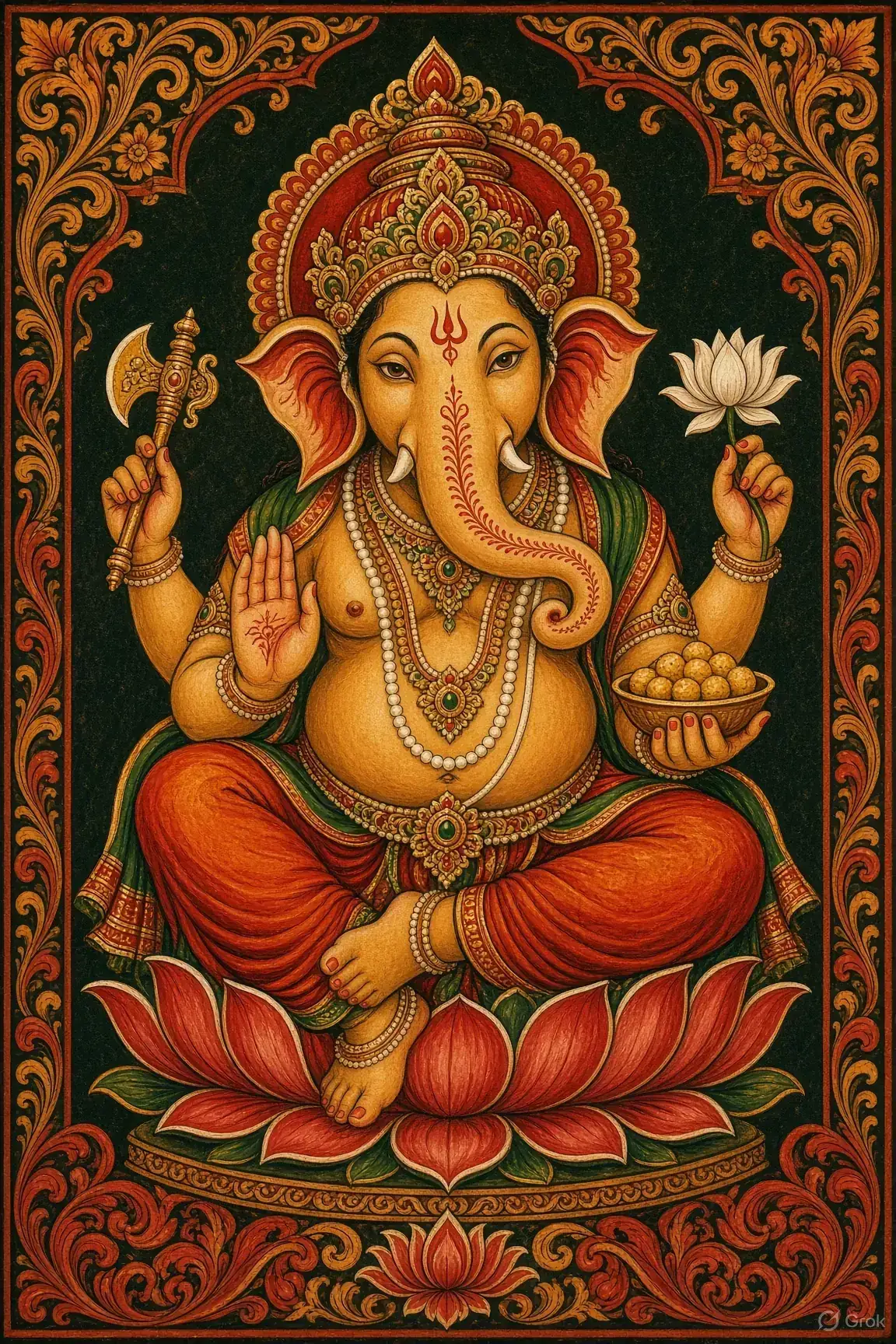
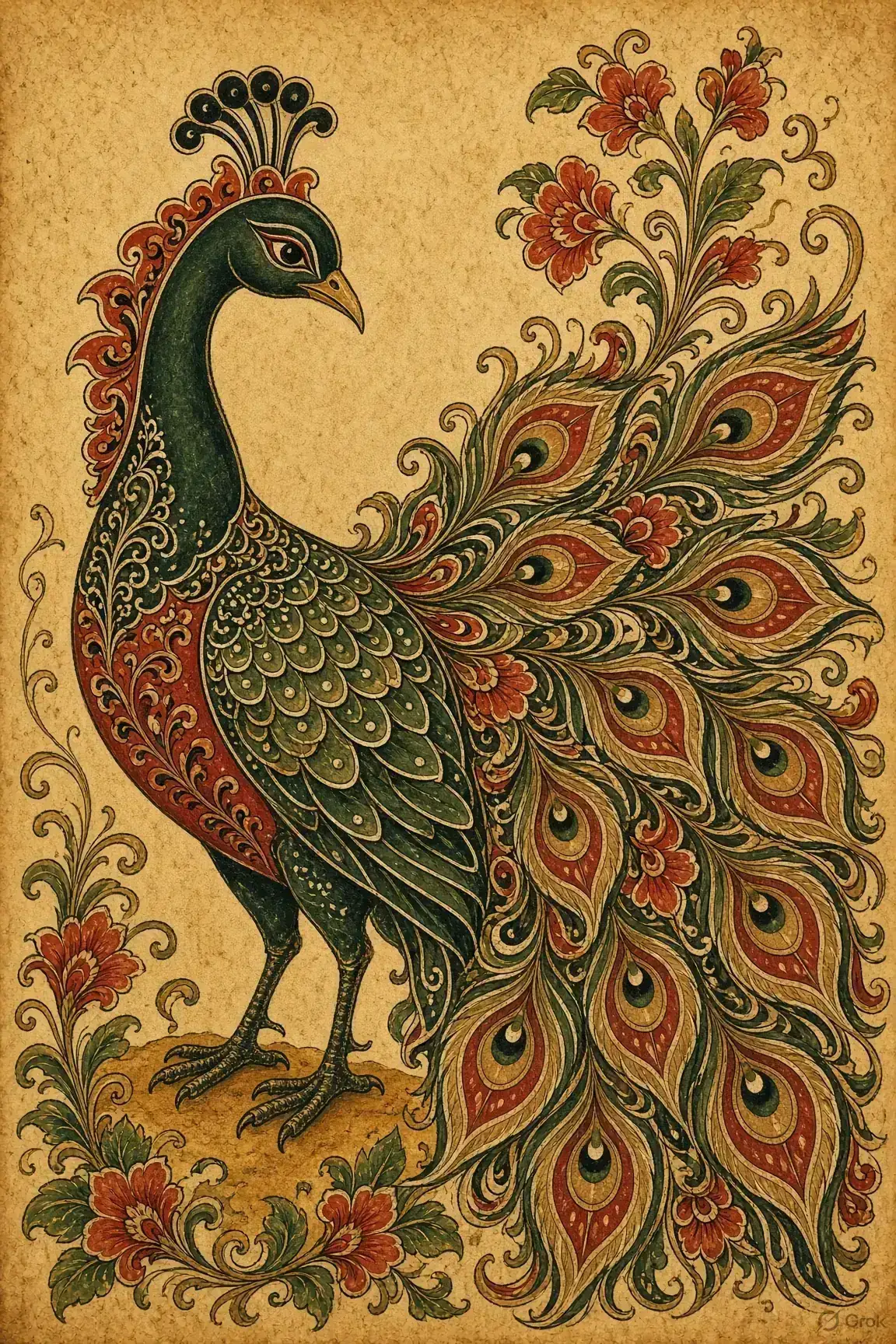
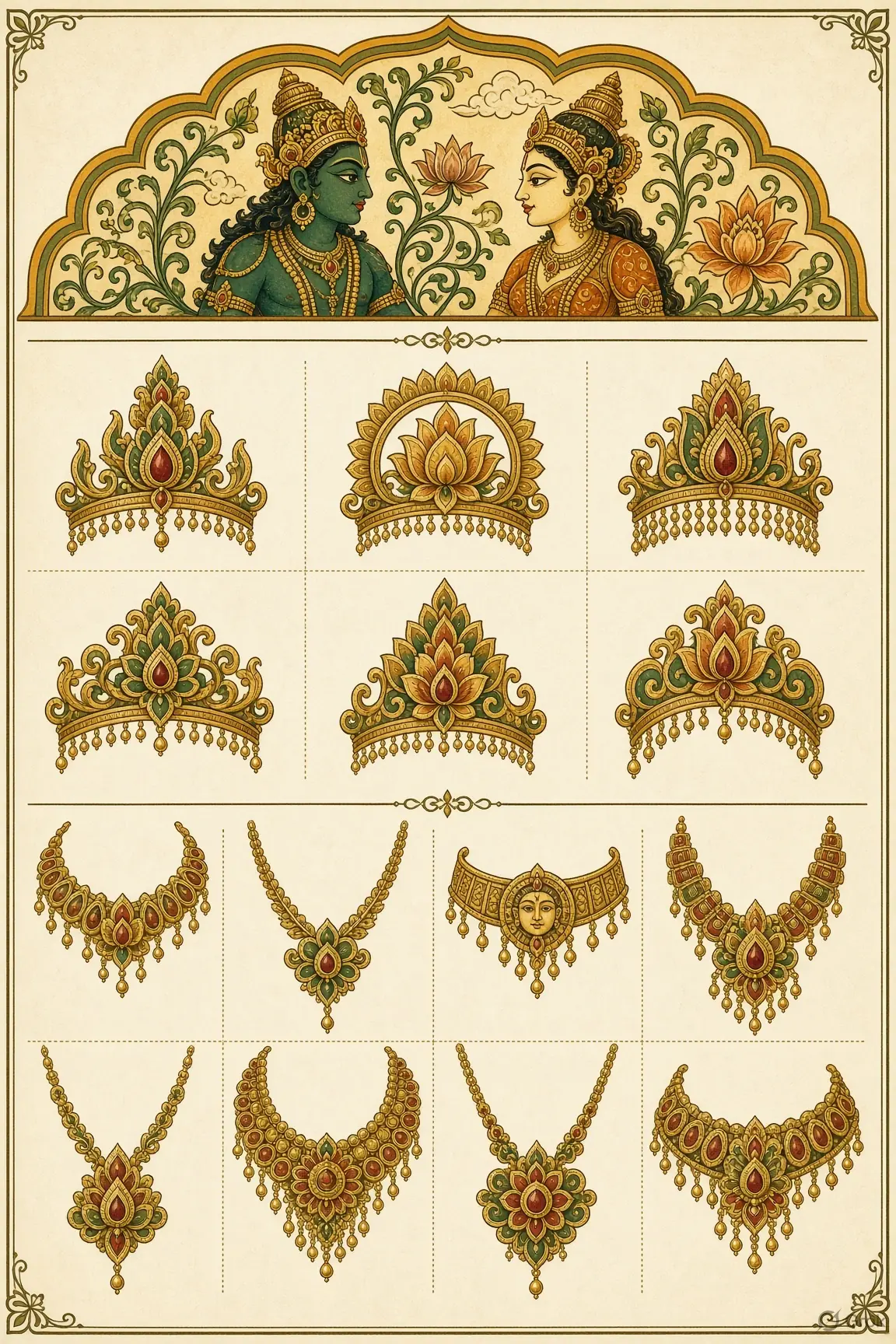
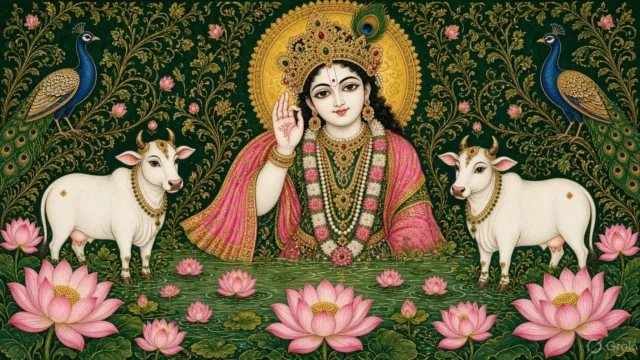
Wikipedia notes that the iconography of mythological characters in the murals is based on the Dhyanaslokas, which means traditional figures follow set rules. For that reason we keep guidance on deities general. Beginners can start with the lotus (Kerala mural art lotus is a popular search), leaves, vines, peacock feathers, small flowers and ornamental jewellery shapes. A decorative Krishna or Ganesha study is best done after you have practised faces, eyes and curves, and ideally under an artist’s guidance. Label such work “mural-inspired” and treat the subject with respect.
Border designs and colour combinations
For a Kerala mural art border design, use a band of repeating petals, leaves or a flowing vine, with a thin black line on each side. The combinations below are practical suggestions, not rules of the tradition.
| Palette | Colours | Look |
|---|---|---|
| Classic five | Ochre, red, green, black, white | Traditional-inspired |
| Warm | Ochre, deep red, black | Rich and bold |
| Fresh | Green, ochre, white | Light and calm |
| Night | Black background with ochre, red, white | Dramatic |
Modern living room and wall decoration ideas
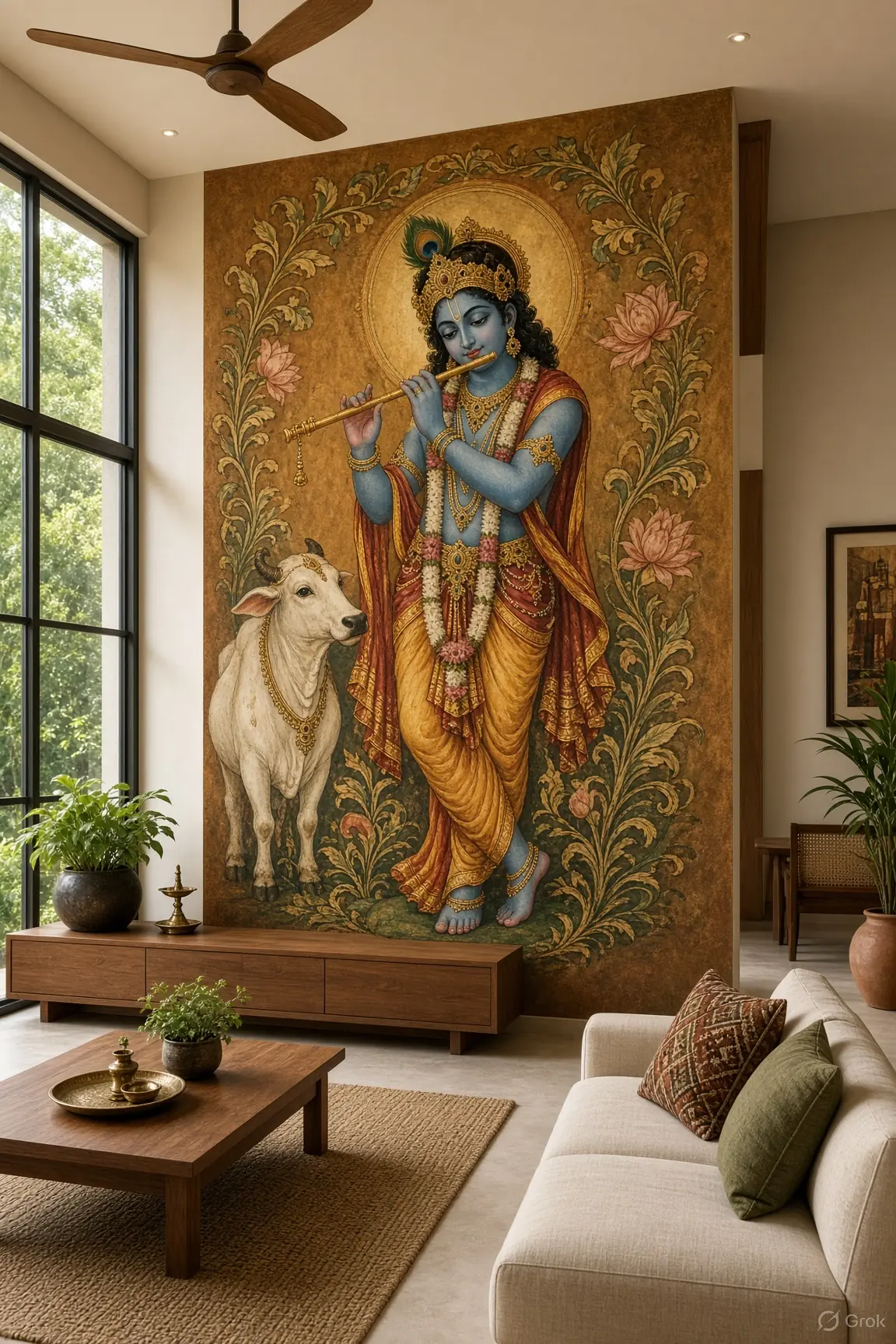
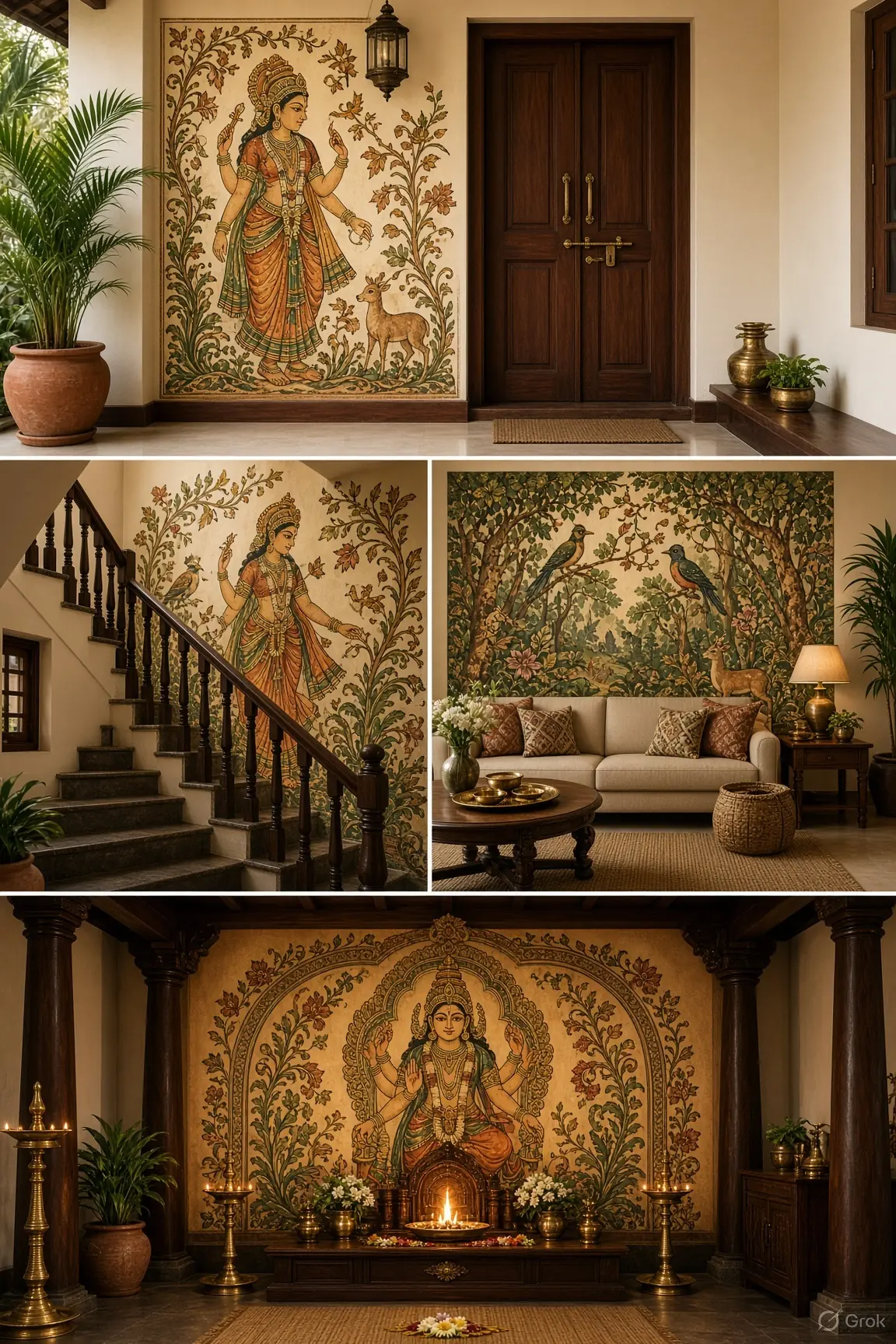
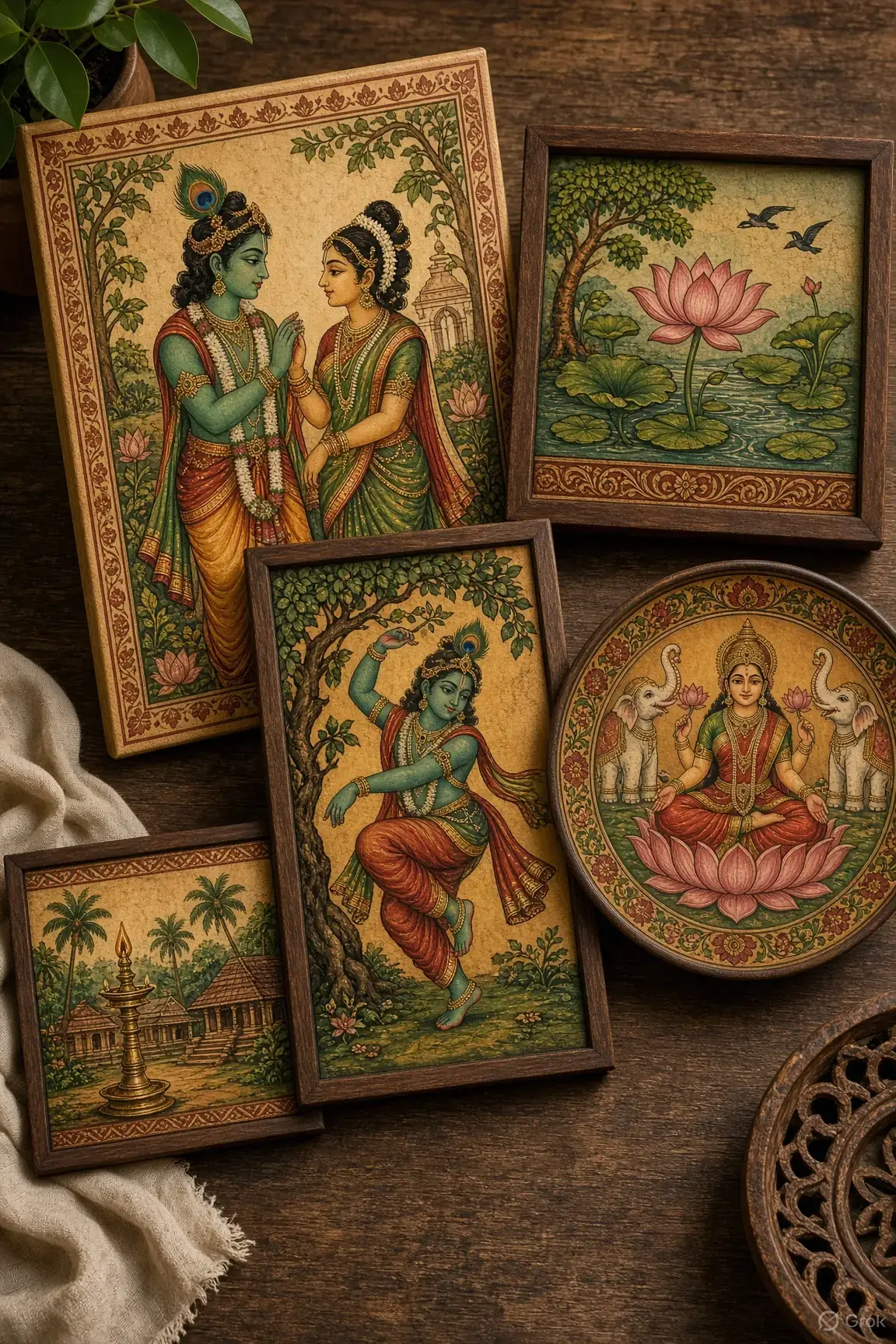
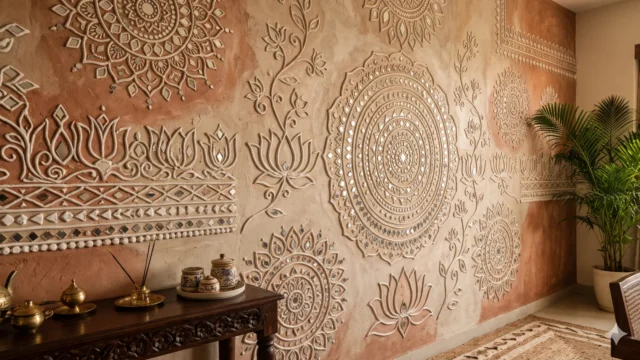
Kerala mural art on canvas works well as a single large panel above a sofa or console, or as a set of three smaller panels. A lotus with a bold border suits a quiet wall, while a darker background gives drama in a living room. Seal acrylic work with a clear varnish, hang it away from damp, and keep decorative pieces for display only. Craft paint is not food-safe, so do not paint plates you will eat from.
Beginner mistakes to avoid
- Using too many colours, which loses the strong contrast.
- Skipping the dry time between colours, so they bleed.
- Shaky outlines, solved by practising one smooth curve at a time.
- Tracing a famous mural instead of building your own design.
- Selling practice work as authentic temple mural art.
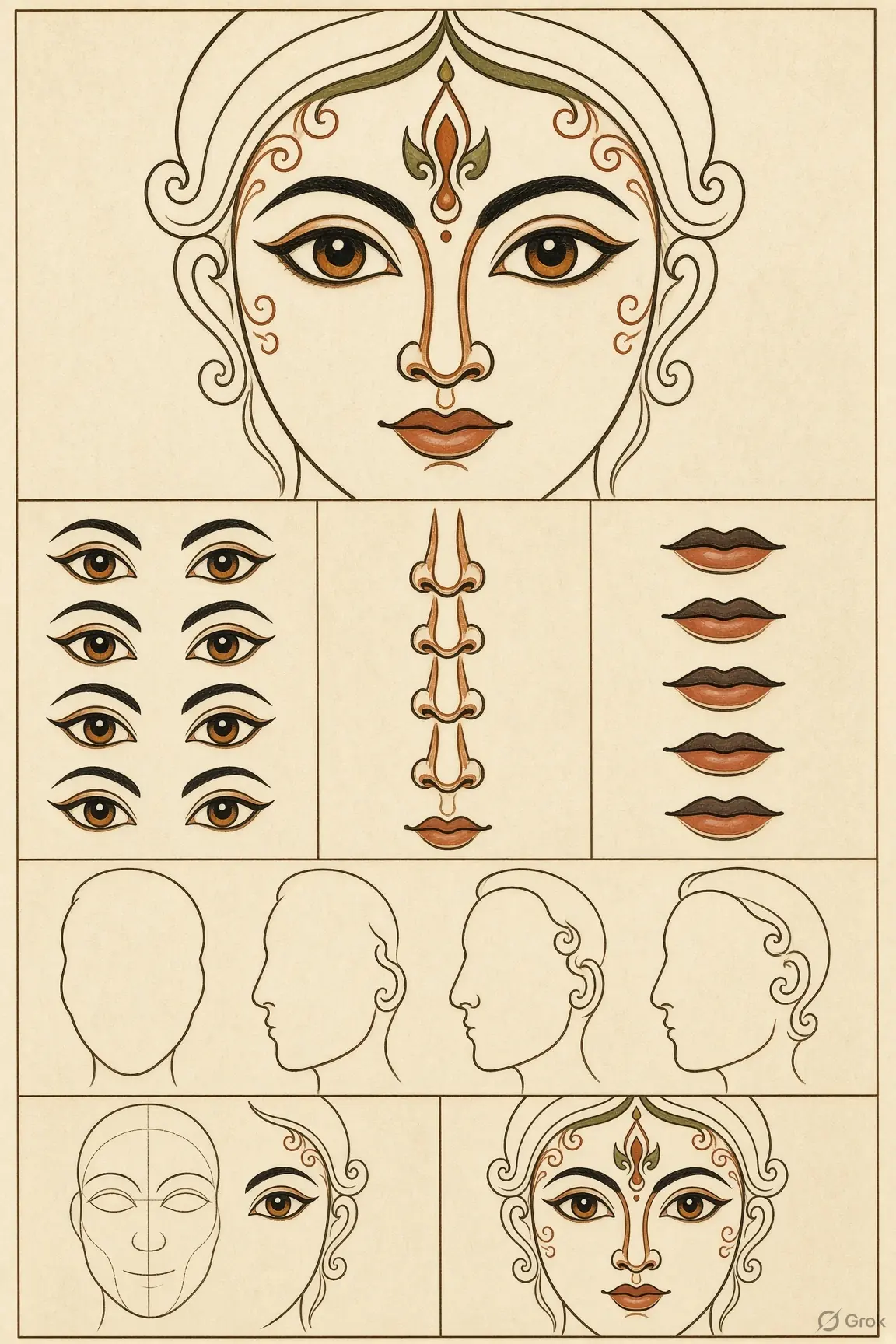
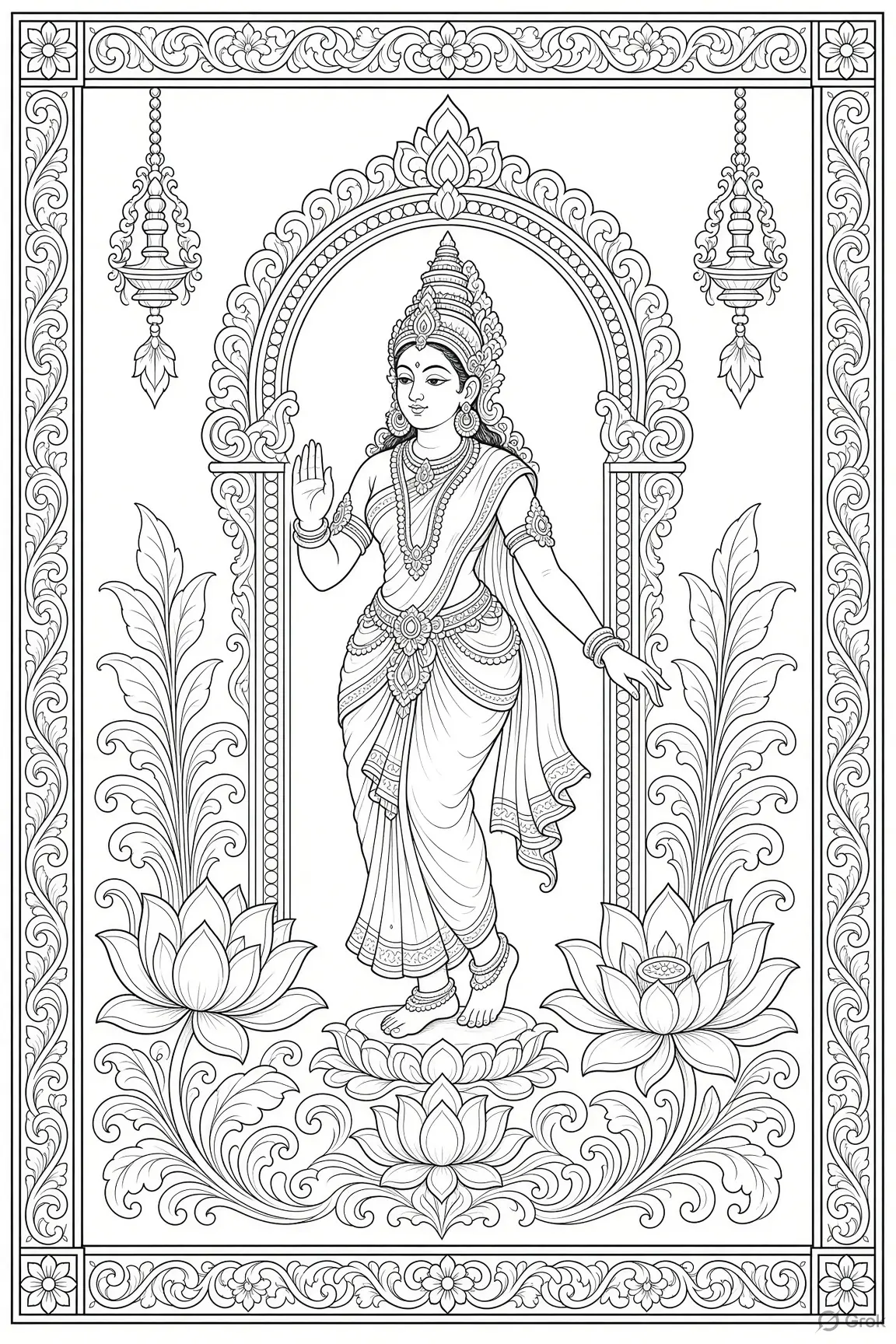
Image gallery
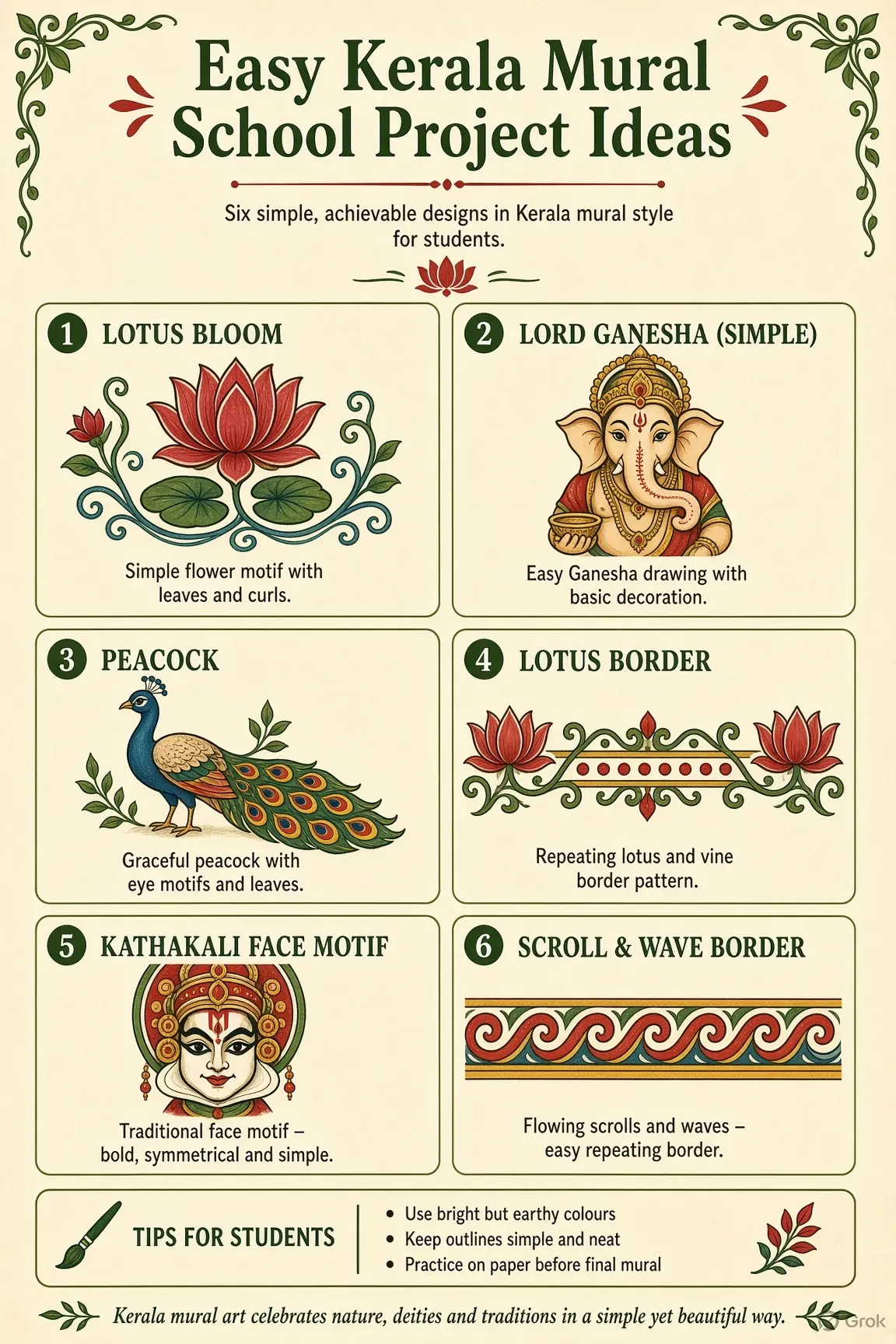
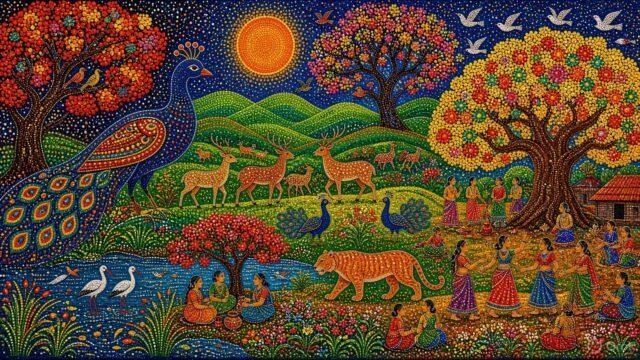
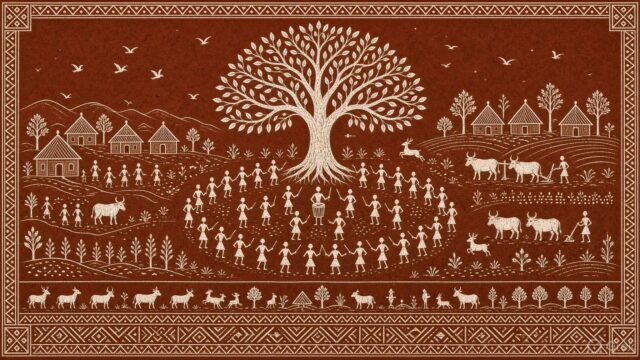
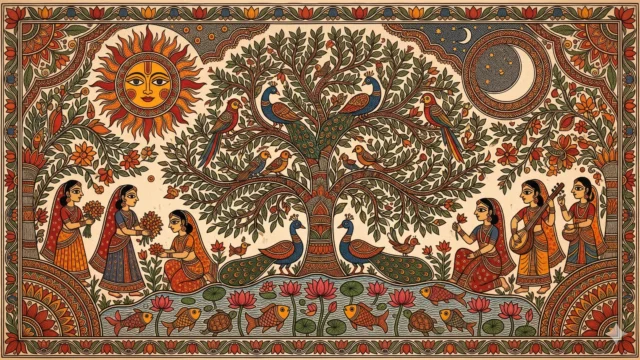
Explore Kerala mural art images and easy painting designs.
FAQs
1. What is Kerala mural art?
It is the traditional wall-painting style of Kerala, found in temples, palaces and churches, depicting Hindu mythology.
2. What are the five colours of Kerala mural painting?
Ochre yellow, red, green, white and black, known as Pancha Varna.
3. How do I start an easy Kerala mural drawing?
Begin with a lotus: sketch, outline in ochre, fill flat colours, outline in black and add a border.
4. Where can I see Kerala murals?
Kerala Tourism lists Padmanabhapuram, Krishnapuram and Mattancherry palaces as three major centres.
5. Can I paint Kerala mural art on canvas?
Yes, with acrylics on a primed canvas, though traditional work is on walls.
6. Is Kerala mural art folk art?
It is often searched that way, but murals are mainly temple and palace art with set iconography.
7. How can I support mural artists?
Learn from and buy from trained mural artists and institutes, and label your own work mural-inspired.
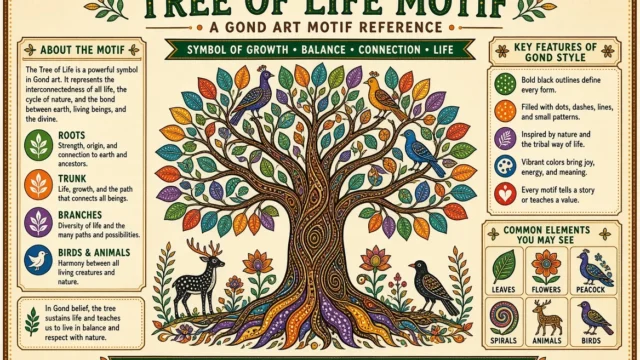
More folk-art practice: Warli chart, Gond tutorial, Lippan guide, Pichwai motifs chart, Kalamkari motifs chart and Pattachitra border chart.
Sources: Kerala Tourism: Kerala mural paintings; Kerala Tourism: Mural heritage of Kerala; Wikipedia: Kerala mural painting.
Related Indian folk art: Kalamkari painting: drawing, fabric designs and Tree of Life













Share Your Opinion
Comments are closed on this post.