 Vista
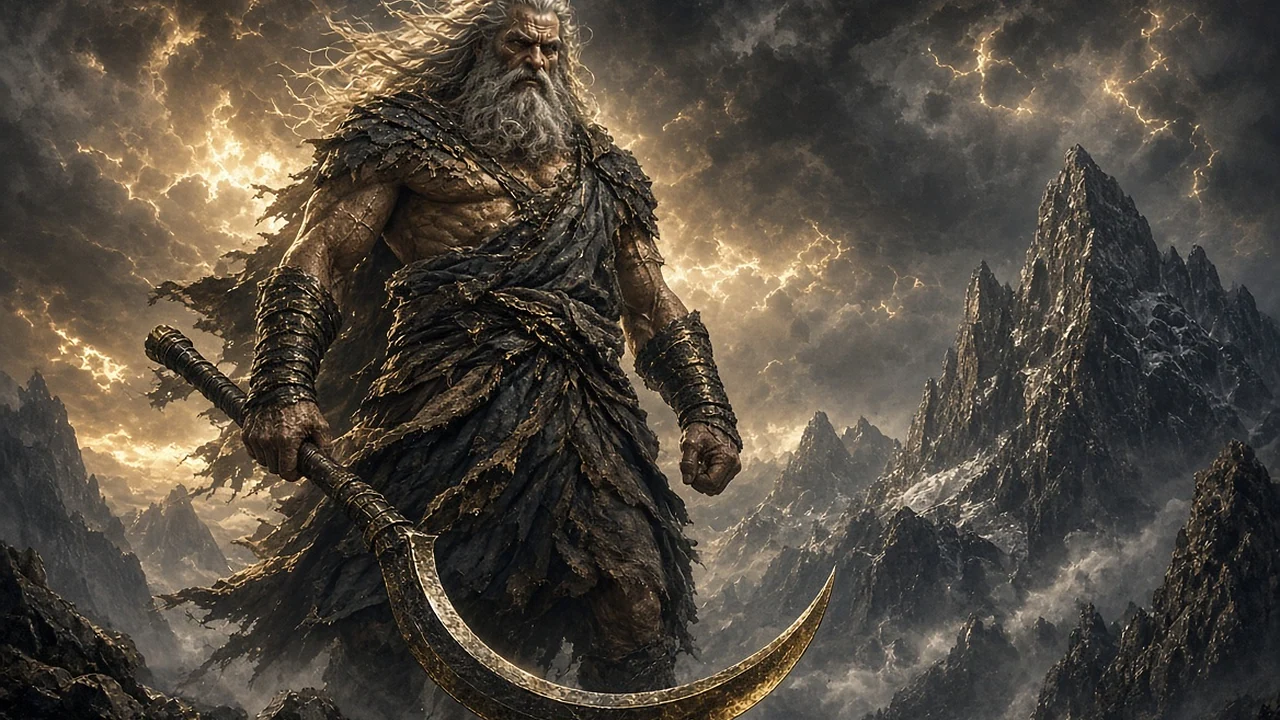
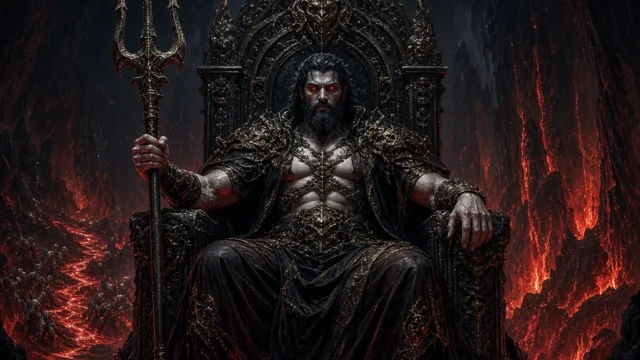
Cronus in Greek mythology, also spelled Kronos, is the Titan who overthrew his father Ouranos and later swallowed his own children because he feared a prophecy that one of them would overthrow him. His wife Rhea rescued the youngest child, Zeus, by giving Cronus a stone wrapped like a baby. Zeus eventually helped his brothers and sisters escape and led the alliance that defeated the older Titan rulers. Cronus’s story is about the fearful cycle of power, not simply a monster swallowing infants. One frequent source of confusion is the similarity of his name to Chronos, the personification of Time; those figures were distinct in early Greek traditions even though later allegories and imagery sometimes connect them.
Who was Cronus, the Greek Titan?
In Hesiod’s Theogony, Cronus is a child of Gaia (Earth) and Ouranos (Sky). He belongs to the generation of Titans that comes before Zeus and the Olympian gods. Other Titans include Oceanus, Hyperion, Iapetus, Rhea, Themis and Mnemosyne. The term “Titan” does not simply mean an unusually large human being. In these poems it identifies a divine generation whose members occupy central positions in the succession of cosmic rulers. Cronus is not introduced as an ordinary mortal king who lives to a certain age and then dies of natural causes.
Hesiod depicts him as an ambitious and calculating figure, especially during his rebellion against his father. His life is a key link between two events: the removal of Ouranos and the later rise of Zeus. Without Cronus, readers cannot easily understand why Rhea hides her baby, why the Olympians need to fight the Titans or why predictions about children are recurring threats. Family relationships are therefore not a minor fact box but the engine of the story.
Why did Cronus attack his father Ouranos?
Ouranos is depicted as concealing or preventing the emergence of his offspring, bringing distress to Gaia. She prepares a curved sickle and asks the children to act against their father. Most hesitate, but Cronus volunteers. In the violent account recorded by Hesiod, Cronus ambushes Ouranos and castrates him with the weapon. The act ends the dominance of the earlier ruler and permits the next generation to take power. Its physical violence is part of an ancient succession narrative, not an action to imitate or a simple moral lesson about family discipline.
Consequences of this attack include the origin of additional mythic beings in Hesiod’s poem. The birth of Aphrodite from the sea foam belongs to this sequence in Hesiod, although a separate Homeric genealogy associates Aphrodite with Zeus and Dione. Such differences remind readers that Greek mythology is not a single fixed modern encyclopedia. The chronology should be attributed to the author being discussed; mixing versions without labels can create family trees that neither Homer nor Hesiod would recognize.
What prophecy made Cronus swallow his children?
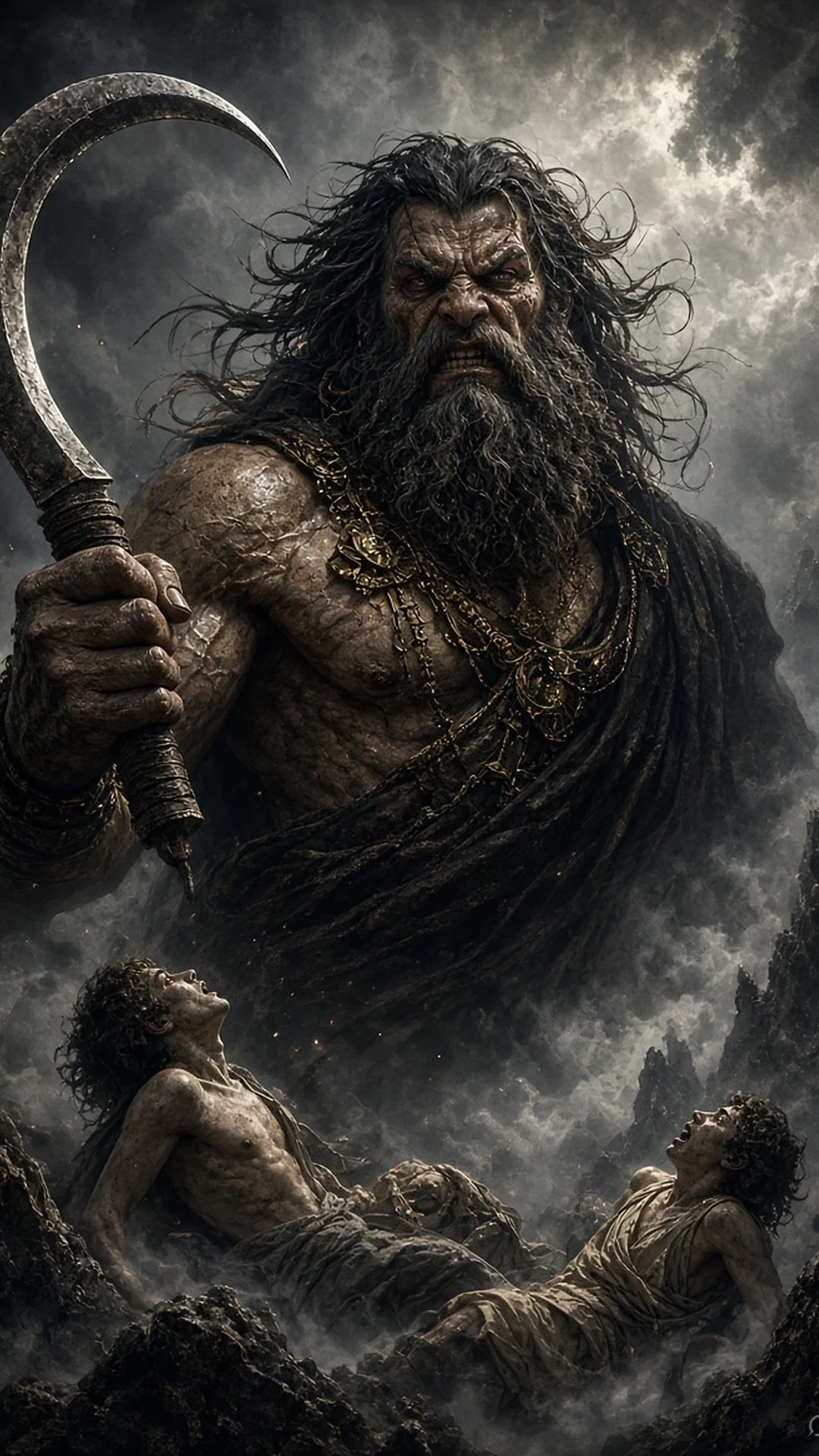
Cronus hears from Gaia and Ouranos that his own offspring is destined to overthrow him, just as he displaced his father. He reacts through fear, choosing to eliminate the danger as he understands it. His wife Rhea gives birth to Hestia, Demeter, Hera, Hades, Poseidon and Zeus. As the children arrive, Cronus swallows them rather than allow them to grow up and challenge his throne. The episode shows the destructive consequences of trying to hold absolute power by suppressing the future.
This is not a medical description of a person literally keeping children alive inside a stomach. It is a supernatural scene within a divine myth. Hesiod’s language dramatizes how new generations can threaten older ones, and how fear of losing authority leads a ruler to acts that ultimately undermine him. A sensational image can communicate the menace but should not encourage readers to treat the scene as a verified prehistoric event.
How did Rhea save baby Zeus with a stone?
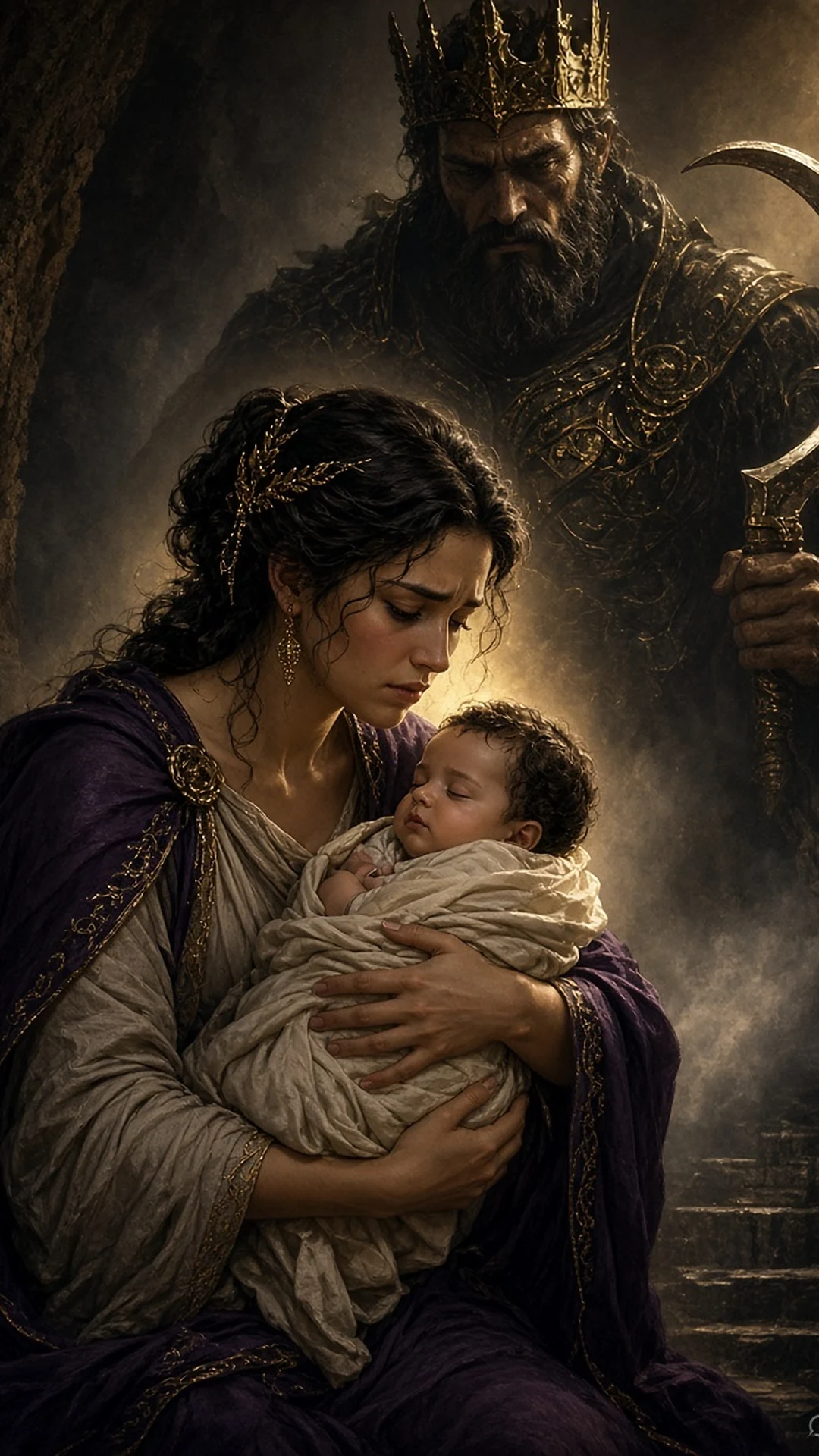
When Rhea expects her youngest child, she seeks help from Gaia and Ouranos to prevent another loss. In the familiar Hesiodic account, she travels to Crete and hides the baby Zeus. Cronus receives a large stone wrapped in swaddling clothes, mistakes it for his child and swallows it. The trick gives Zeus a chance to mature without being consumed alongside his siblings. It is a turning point because Cronus’s confidence in his own precautions becomes the weakness in his plan.
Different Cretan local traditions give additional descriptions of the cave, the caretakers or the sounds that protected the infant. The nymph Amalthea and the Curetes may appear in later accounts, but their details should not all be credited to the same lines of Hesiod. In a source-based chronology, the essential sequence is clear: Rhea protects Zeus, the stone fools Cronus, and the child grows strong enough to challenge the existing ruler.
How did Zeus free the children Cronus had swallowed?
Zeus later makes his father release the swallowed children. In Hesiod’s Theogony, Cronus brings them up through the intervention of Gaia’s counsel and Zeus’s stratagem; the stone is also expelled and associated with Delphi. Some later traditions introduce Metis and an emetic or special medicine as part of this act. It is important not to quote those expanded details as though they appear verbatim in Hesiod’s brief version. The distinction between a primary passage and later narrative elaboration is central to accurate myth explanation.
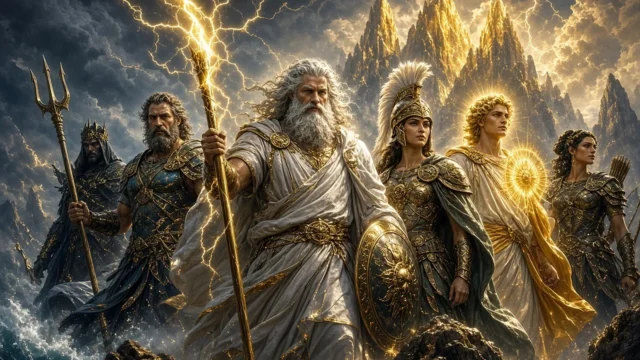
The released siblings rejoin Zeus and become important members of the future Olympian order. Zeus, Poseidon and Hades later govern major cosmic realms, while Hera, Demeter and Hestia retain their own important roles. Their survival undermines Cronus’s original plan. He tried to stop the prophecy by swallowing his children, but the youngest child he failed to consume becomes the one through whom the imprisoned generation is restored.
Cronus versus Zeus: what was the Titanomachy?
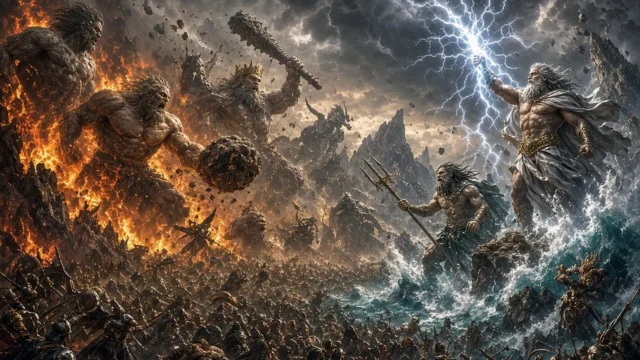
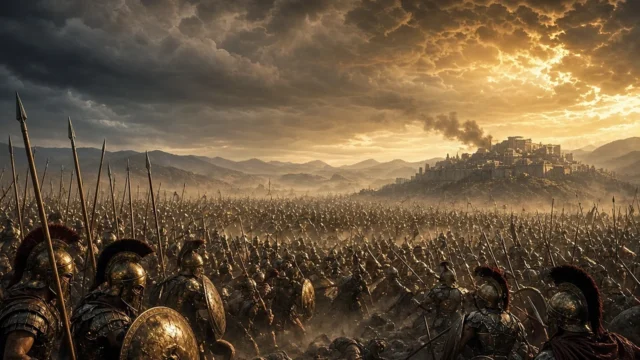
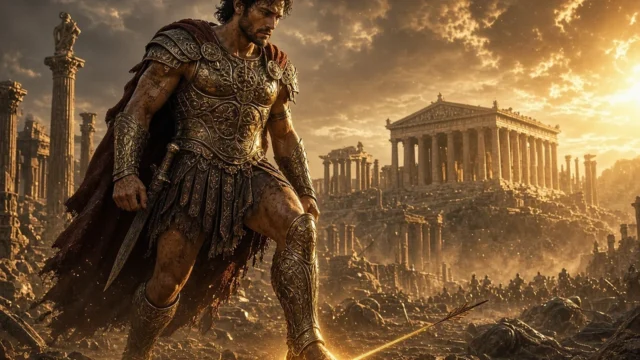
After Zeus’s rise and the release of the divine siblings, the conflict between the new Olympian alliance and the opposing Titans becomes the Titanomachy. Hesiod describes it as a long struggle, with fighting continuing for ten years. Zeus wins powerful allies, including the Cyclopes, connected with his thunderbolt, and the Hundred-Handers, whose extraordinary strength helps turn the battle. The story illustrates that kingship is achieved through alliances and strategy as well as through personal power.
The defeated Titans are confined to Tartarus in the well-known narrative. This is a loss of power and freedom, not necessarily a scene of every Titan dying. It is also misleading to assume every Titan opposed Zeus: traditions assign different characters different roles, and some cooperate with the new order. The Titanomachy should be distinguished from the Gigantomachy, a conflict involving Giants that is treated separately in ancient literature and art.
Was Cronus the god of Time? Cronus versus Chronos
Cronus (Kronos) and Chronos (Khronos) sound similar in modern English, but they are not simply the same figure in early Greek accounts. Cronus is the Titan son of Gaia and Ouranos who fathers Zeus and swallows his children. Chronos is the personification of Time, especially prominent in some later philosophical and Orphic cosmogonies. Later authors and artistic allegories sometimes merge their symbolism or deliberately play on the similarity of the names.
The familiar image of a bearded Father Time carrying a scythe has also been associated over the centuries with Saturn or Cronus imagery. That makes an attractive visual comparison but does not mean Hesiod identifies Cronus as the abstract force of time in his central succession episode. A source-based article can explain the later association and then return to the simpler early genealogy. This is especially important for keyword searches asking “Is Cronus the same as Chronos?”
Cronus and Roman Saturn: are they the same?
Roman religion and literature often identify the Greek Cronus with Saturn, an important deity connected with agriculture and an imagined earlier golden age. The Roman festival Saturnalia is part of Saturn’s separate history. Greek and Roman writers shared, adapted and reinterpreted divine identities, but the process was not a perfect copy-and-paste of every ritual. The Roman figure could be connected with sowing, prosperity and periods of social inversion in ways that differ from a straightforward retelling of Cronus swallowing children.
To understand the Greek succession narrative, Hesiod remains the primary starting point. To understand Saturn’s Roman festivals, a historian would consult Roman sources and ritual evidence. The two subjects overlap but have different search intents. A website that automatically converts every mention of Saturn into a scene from the Titanomachy may mislead readers about what the Romans actually celebrated.
What happened to Cronus after his defeat?
The straightforward version in Hesiod’s Theogony gives the defeat and imprisonment of the opposing Titans in Tartarus. Some other traditions imagine a different fate for Cronus, including stories in which he rules a distant blessed region or is linked with a golden age. These variations should not be flattened into a statement that Cronus either certainly died or certainly returned to rule Olympus in every account. Source and period matter as much as the character’s name.
Within the familiar Olympian order, Cronus no longer holds supreme authority. Zeus has replaced him, but this is a succession, not the end of all beings from the older generation. The broader Greek creation myth explains what existed before Cronus, while the Titanomachy focuses on how the later alliance won. This article answers the specific question of why Cronus swallowed his children and what the attempt to prevent his fate achieved.
Cronus family and myth timeline
| Stage | Event | Key meaning |
|---|---|---|
| Origin | Gaia and Ouranos become Cronus’s parents | Titan generation begins |
| Rebellion | Cronus attacks Ouranos | Older rule is replaced |
| Prophecy | Cronus learns a child will overthrow him | Fear of succession |
| Swallowing | Rhea’s older children are consumed | Attempt to suppress future rivals |
| Deception | Zeus hidden; wrapped stone swallowed | Youngest child survives |
| Release | Zeus frees his siblings | New divine alliance formed |
| Titanomachy | Opposing Titans lose | Zeus becomes ruler |
Cronus Greek mythology: five FAQs
Why did Cronus eat his children?
He feared a prophecy that one of his children would overthrow him, just as he had overthrown his father.
Which child escaped Cronus?
Zeus, the youngest, was hidden by Rhea while a wrapped stone was given to Cronus instead.
Who were Cronus and Rhea’s six children?
Hestia, Demeter, Hera, Hades, Poseidon and Zeus.
Are Cronus and Chronos the same?
Not as simple equivalents in early Greek sources. Cronus is a Titan ruler; Chronos personifies Time, though later imagery sometimes merges them.
Who defeated Cronus?
Zeus led the victorious Olympian alliance against the opposing Titans in the Titanomachy.
Primary sources and conclusion
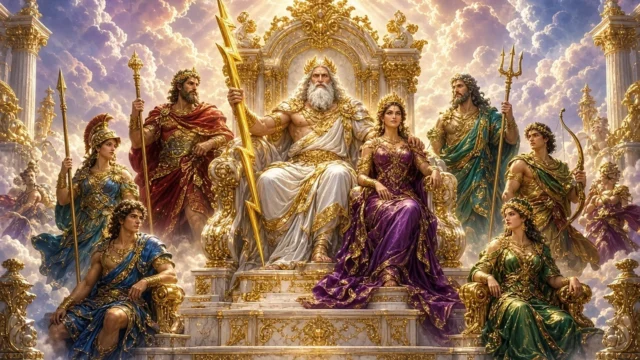
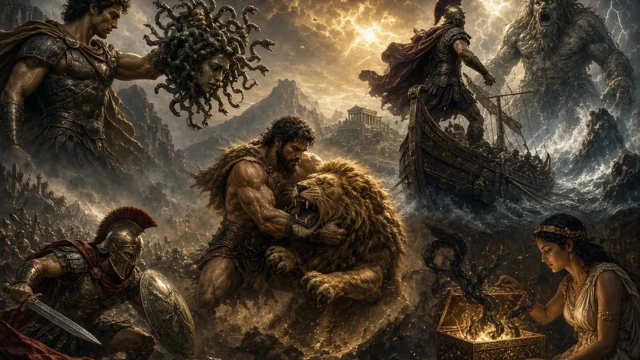
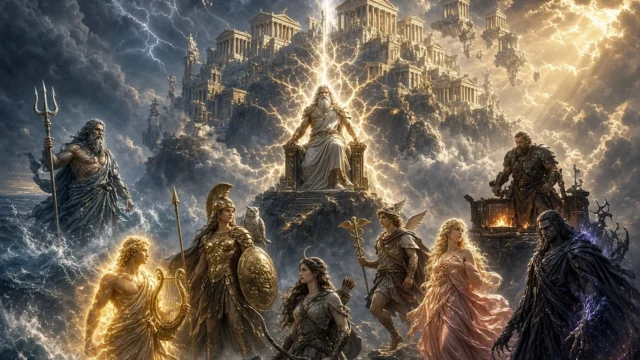
The core story appears in Hesiod, Theogony, especially lines 154–210, 453–506 and 617–735. For the Roman counterpart and collected source excerpts see Theoi’s Kronos dossier, and for another scholarly translation use Harvard Center for Hellenic Studies. Conclusion: Cronus attempted to prevent a prophecy by swallowing his children, but Rhea’s trick saved Zeus and set the stage for the Titanomachy. Cronus the Titan should be distinguished from Chronos the personification of Time. Updated 14 November 2026. Images are art based on myths.







Share Your Opinion
Comments are closed on this post.