 Vista
Is Lord Shiva Human in The Immortals of Meluha? The Direct Answer
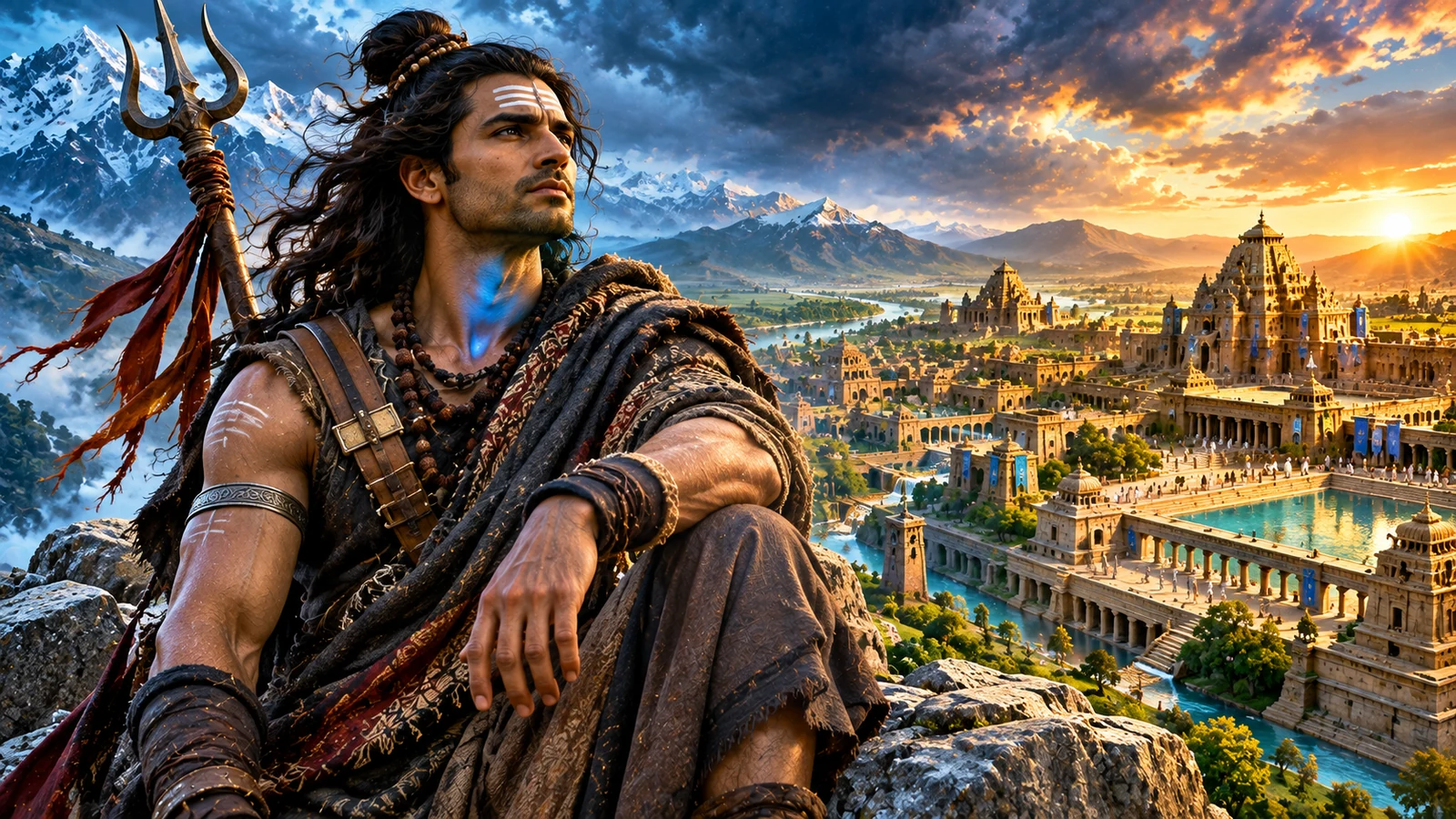
Yes. In Amish Tripathi’s novel The Immortals of Meluha, Shiva begins as a human being: a young tribal chief who leaves his Himalayan homeland and enters the kingdom of Meluha. He is not introduced as an all-knowing, already immortal god who performs miracles without effort. The story asks how a flawed, courageous person might become remembered as Mahadev through difficult choices. That is the central creative experiment of the Shiva Trilogy. It is also the distinction readers should understand before opening the book: Tripathi’s Shiva is a character in modern mythological fiction, not a declaration that Hindu worshippers must reinterpret Lord Shiva as an ordinary historical human.
The Meluhans recognize this outsider as the prophesied Neelkanth after an unusual event changes the color of his throat. Shiva himself is uncertain about the enormous expectations placed on him. He fears mistakes, loves people, argues with authority and repeatedly examines the meaning of good and evil. By giving a legendary figure recognizable human doubts, the novel turns the reader’s attention from inherited power to earned moral responsibility. This article explains the human-Shiva idea, what happens in the first book, what Neelkanth means inside the fictional world and how that version differs from established devotional narratives. Major twists from the later novels are deliberately avoided.
The Book at a Glance: Author, Genre and Reading Order
| Detail | Information |
|---|---|
| Author | Amish Tripathi |
| First published | 2010 |
| Genre | Mythological fiction |
| Trilogy | The Immortals of Meluha → The Secret of the Nagas → The Oath of the Vayuputras |
| Main idea | Human Shiva becomes a legendary figure through choices |
The Immortals of Meluha was first published in 2010 and is the opening volume of Amish Tripathi’s Shiva Trilogy. Its genre is mythological or historical fantasy, not scripture, archaeology or a scholarly translation of the Puranas. The story imagines a richly organized Meluhan civilization in a fictionalized setting around 1900 BCE. The author combines recognizable names such as Shiva, Sati, Nandi and Daksha with invented political conflicts, social practices and speculative technology. This combination is intentional: readers are supposed to experience an imaginative story informed by myth, rather than receive a literal account of ancient India.
The sequence matters. Book one, The Immortals of Meluha (2010), introduces Shiva and the world; book two, The Secret of the Nagas (2011), develops mysteries and loyalties; book three, The Oath of the Vayuputras (2013), concludes the trilogy. Start with book one rather than skipping to later revelations. Reprint dates, page totals and publishers vary across editions, so a listing that shows a later release does not mean the original novel appeared in that year. The author’s official book page and publisher catalog are better references than an unsourced social-media summary.
Who Is Shiva Before He Comes to Meluha?
The story’s Shiva is a tribal leader of the Gunas, a community associated with the mountainous region near Mount Kailash in Tibet. Unlike a remote celestial ruler, he has everyday concerns about the safety and future of his people. Conflict and hardship shape his decision to move. When the Gunas are offered a chance to settle in Meluha, a seemingly prosperous society, they encounter a way of life very different from their own. Shiva is capable in combat, but his importance is not just physical strength. He notices suffering, asks questions and reacts strongly when practices seem unfair.
This beginning is vital to the book’s argument. If the hero were born with complete knowledge and invincible powers, his ethical choices would carry less dramatic uncertainty. Tripathi instead shows a leader who must gather information and live with the consequences of what he believes. He can make a decision for good reasons and still discover that his assumptions were incomplete. Readers who search for a Shiva origin story should remember that this particular tribal background belongs to the fictional trilogy; it is not a substitute for the diverse origin accounts and theological understandings found in Hindu traditions.
Why Does Shiva Become Neelkanth in the Novel?
In the fictional plot, the visitors undergo a medical process connected with Somras, a special substance used in Meluha. Shiva’s throat changes to blue, marking him as the Neelkanth anticipated in an old prophecy. The event brings admiration and pressure in equal measure. Meluhans read the physical sign as evidence that the long-awaited figure has arrived, yet the man behind the sign is unsure whether he deserves it. That gap between public belief and private doubt drives much of the narrative. It is more precise to say Shiva is identified as Neelkanth than to claim he suddenly becomes an omnipotent supernatural being.
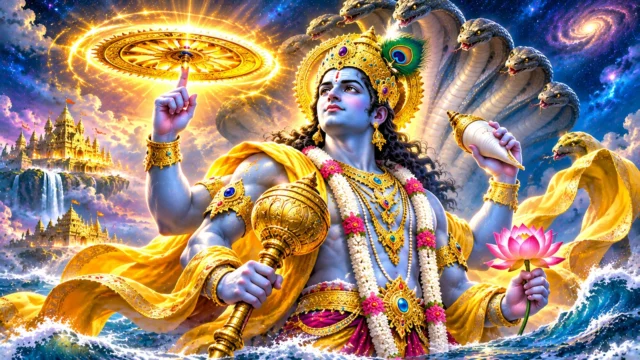
This must not be confused with the famous Samudra Manthan account in which Shiva contains the Halahala poison and earns the title blue-throated. In devotional tellings, that action protects the cosmos. In Meluha, Tripathi builds a different narrative mechanism around Somras and a prophecy. The novel’s explanations for Somras belong to its invented world; there is no verified ancient chemical, medical treatment or archaeological finding demonstrating a historical potion that turns a leader into Neelkanth. Appreciating the author’s creative choice does not require treating imagined chemistry as modern science.
Is Shiva a God, Superhero or Ordinary Man?
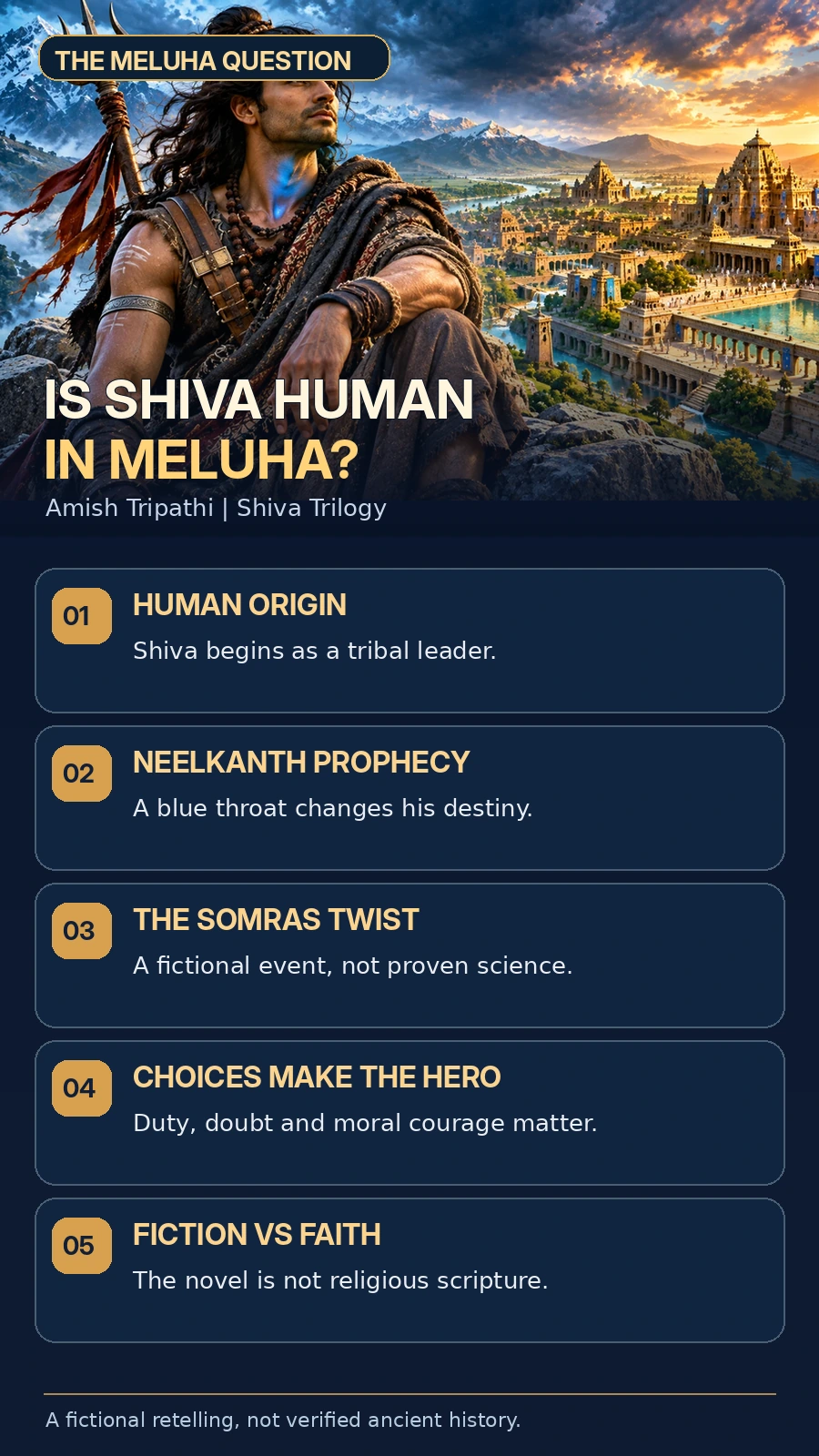
The helpful answer is: he starts as a human protagonist whose actions develop godlike significance in the story. ‘Ordinary’ does not mean weak or unimportant; Shiva is portrayed as a remarkable fighter and leader. But he remains psychologically recognizable. He can question himself, misjudge other people, love someone, become angry and reconsider what justice demands. His reputation grows because other characters watch his decisions and connect them to a prophecy. The novel therefore separates a heroic reputation from the idea of someone arriving already perfect.
It would also be misleading to describe him as a modern comic-book superhero with an established set of measurable superpowers. The book includes fantasy, heightened combat and speculative inventions, yet its main conflict is moral rather than a tournament ranking of magical abilities. Shiva does not prove his worth simply by overpowering an enemy. The crucial question is whether he correctly identifies what should be opposed in the first place. When readers ask ‘Is Lord Shiva human in Meluha?’ they are often really asking whether a person can be transformed into a legend by courage, compassion and judgment. That is the novel’s invitation.
Why Are the Suryavanshis, Chandravanshis and Nagas Important?
Meluha is ruled by the Suryavanshis, who value order and regard their society as deeply civilized. They fear attacks associated with the Chandravanshis and the mysterious Nagas. From their perspective, the Neelkanth appears just when their security is threatened. A newcomer may be drawn into their political interpretation of events before he fully understands the rival groups. For Shiva, trusting that interpretation creates an immediate moral problem: if leaders declare an enemy evil, is that declaration enough to justify war? The book gains tension from the difference between loyalty to hosts and the need for independent judgment.
An effective reading keeps the factions’ narrative roles distinct from real-world communities. The novel is a fictional political system that borrows cultural vocabulary and reshapes it. The Nagas, for example, have a particular plot function and are not interchangeable with every Naga story in Hindu, Buddhist or regional folklore. Avoid treating the invented Meluhan social order as an archaeological description of the historical Indus civilization. Place names, historical-sounding dates and familiar terminology make the world vivid, but that literary atmosphere is not itself proof of historical accuracy.
Sati, Nandi and Human Relationships
Shiva’s developing relationship with Sati is a second powerful sign that this is a human-centered story. Sati is not merely a decorative prize for the hero. Her position in Meluhan society exposes rules surrounding the category called Vikarma, and Shiva’s response tests his willingness to question an apparently orderly culture. Their bond introduces affection, vulnerability and the consequences of social status into a narrative that might otherwise become only a war story. The novel uses recognizable names associated with Shiva’s mythology while inventing scenes and social arrangements for its plot.
Nandi serves as another route into the difference between legend and person. He sees a figure to honor, whereas Shiva often sees himself as a man still trying to understand events. Their conversations bring out humor, awkwardness and conflicting expectations. Rather than reading every interaction as a sacred statement, it is more useful to see how dialogue reveals character. These relationships give readers reasons to care about what the hero chooses, even when they know the historical religious figure of Shiva from temples, hymns or family traditions. The fictional cast does not replace those traditions.
The Real Theme: Can Human Choices Create a Mahadev?
The most interesting question in the novel is not the mechanical cause of a blue throat but the ethics of becoming worthy of trust. Shiva confronts problems in which an easy answer can produce serious harm. He is invited to accept a public identity as a savior before fully understanding the world he is supposed to save. That is a familiar human experience in larger form: authority may arrive before wisdom, and people may praise confidence more than evidence. Tripathi’s story asks readers to examine how responsibility should change a person’s behavior rather than merely enlarge a person’s status.
The book’s recurring concern with dharma and karma reinforces this idea. Karma can mean action and its consequences; dharma includes questions of right conduct, obligation and order, with meanings that differ across philosophical traditions. In the novel these become themes for decisions under uncertainty. Shiva’s challenge is not simply to fight for the side that welcomed him. It is to examine whether that side’s account of justice is complete. The resulting lesson is not that anyone can become literally divine through a checklist of good deeds. It is a literary reflection on courage, moral development and the making of cultural heroes.
Fictional Shiva vs Lord Shiva in Hindu Traditions
There is no single short description that exhausts Hindu understandings of Shiva. In many Shaiva schools, Shiva is revered as the supreme divine reality, not a person who attained godhood through an ordinary life. Devotional accounts present him as Mahadeva, yogi, householder, compassionate protector and cosmic transformer. His blue throat is linked in a famous narrative to his acceptance of poison during Samudra Manthan. These beliefs are not interchangeable with Tripathi’s storytelling device involving Somras. A reader can respect the sacred tradition and enjoy an imaginative novel without insisting that one is an alternative proof of the other.
A practical comparison clarifies the issue. In the novel, Shiva has a tribal leadership background; in devotional practice his ultimate origin is interpreted in multiple theological ways. In the novel, Meluhans identify him through a prophecy; in worship, Shiva is already a deity for devotees. In the novel, a fictional substance is tied to his blue throat; in the well-known Puranic poison story, the explanation is Halahala. These differences are not necessarily a writer’s attack on religion. They are the choices that define a modern retelling, and labeling them clearly protects both literary understanding and religious accuracy.
| Aspect | Amish novel | Traditional narratives |
|---|---|---|
| Identity | Human tribal chief | Shiva worshipped as divine |
| Neelkanth | Somras-related fictional event | Halahala in Samudra Manthan |
| Purpose | Moral decisions and heroic transformation | Devotional, philosophical, theological meaning |
| Evidence | Modern fiction, not archaeology | Religious texts and living traditions |
Is Meluha Based on Real History?
The novel uses a historical-sounding setting and draws on words such as Meluha, Saraswati and Indus civilization, but its specific characters, kingdom structure, prophecy and magical-medical elements should not be promoted as established archaeological findings. The fact that a term resembles a historical place name cannot verify the events of a fantasy plot. Scholars study ancient civilizations through inscriptions, material remains, environmental evidence and source criticism. A novel instead builds a coherent imaginative world and can freely rearrange the material to make themes emotionally compelling.
Be especially cautious when online posts describe Somras as a proven ancient anti-aging formula or the series as a suppressed historical account. Such claims do not follow from a publisher synopsis or from the existence of ancient religious texts. Fiction can inspire research questions, but evidence is needed before making a claim about what actually occurred. The most accurate genre label is mythological fiction with speculative and philosophical elements. A good reader can distinguish what is historically researched, what is culturally inspired and what was invented to drive the story.
Spoiler-Light Story Path for New Readers
If you have not read book one, the central progression is easy to understand without revealing late twists. A Himalayan tribal chief enters a wealthy yet troubled civilization. A blue-throat event causes people to recognize him as their prophesied savior. He meets influential leaders, forms personal bonds and hears an apparently clear story about the enemy. As events unfold, his initial understanding is tested. The adventure combines action with questions about social rules, legitimacy, loyalty and what makes an act good or evil. It is not essential to memorize every invented term before starting: the narrative introduces its political and cultural rules as Shiva encounters them.
The book is more rewarding when approached as a mystery of judgment rather than a catalog of miraculous feats. Notice who tells Shiva that a particular group is evil, what evidence supports the claim and how new information changes his response. Observe how Sati’s position illustrates the cost of seemingly rigid order. Watch how others react to Shiva’s uncertainty: some find it admirable, while others need him to be the flawless figure promised by prophecy. These details explain the author’s reason for making a revered mythic figure human within the invented world.
What Should You Read After The Immortals of Meluha?
Continue with The Secret of the Nagas and then The Oath of the Vayuputras. Both build on decisions and mysteries introduced in the first novel, so jumping around can spoil the intended reveals. Readers who want more mythology-inspired fiction can also compare other contemporary Indian fantasy series, but those books have their own interpretations and should not be treated as part of Tripathi’s continuity. If your goal is to learn traditional Shaiva theology rather than a contemporary adventure, read an accessible, responsibly annotated overview of Hindu traditions alongside the fiction.
On Vista Hub, readers can also explore our English guide to books similar to The Immortals of Meluha and our separate explanation of why Shiva is called the destroyer. That pairing is useful because it keeps book recommendations apart from religious interpretation. Treat every title as a different kind of resource: a novel provides narrative imagination; a translation provides access to a particular source; and a scholarly introduction examines historical and theological context. Distinguishing them helps readers avoid the common mistake of turning an appealing plot into a purported ancient fact.
Frequently Asked Questions
Is Lord Shiva shown as a human in The Immortals of Meluha?
Yes. Amish Tripathi writes Shiva as a human tribal leader whose actions and reputation develop into the legend of the Neelkanth in a fictional world.
Why does Shiva’s throat turn blue in Meluha?
The novel links the change to a Somras-related event and the Meluhans’ prophecy. That differs from the devotional Halahala poison narrative.
Is The Immortals of Meluha a true story?
No. It is a modern work of mythological fiction, not a verified biography, ancient document or archaeological report.
Is Shiva a god from the beginning of the Shiva Trilogy?
He is introduced as a man. Other characters regard him as a prophesied savior, while he must make his own moral decisions.
Who is Sati in The Immortals of Meluha?
Sati is a central character whose relationship with Shiva and place in Meluhan society shape his growth and ethical questions.
What is the correct Shiva Trilogy reading order?
The Immortals of Meluha, The Secret of the Nagas, and The Oath of the Vayuputras, in that sequence.
Does the novel deny traditional Hindu beliefs about Shiva?
It offers a fictional reinterpretation; readers should not confuse its imagined plot with the many devotional and theological traditions about Shiva.
Conclusion: Why Amish Chose a Human Hero
The answer is simple, but its implications make the novel memorable: Shiva is human in The Immortals of Meluha because the author wants the reader to watch a legend emerge from choices, doubt, loyalty and responsibility. A man’s blue throat attracts attention, but his response to injustice and uncertainty gives the character depth. Treat this as a creative narrative rather than religious doctrine or historical evidence. Once that distinction is clear, readers can enjoy the trilogy on its own terms and understand why the question of a human Shiva continues to attract searchers across languages.
Sources and Further Reading
- Amish Tripathi – official book page
- Google Books – 2012 Quercus edition and synopsis
- HarperCollins ebook synopsis via OverDrive
- Google Books – first-book bibliographic information
- Shiva Trilogy reading order
Related Reading on Vista Hub
- Books Like The Immortals of Meluha: 12 Mythological Fiction Picks
- Why Is Lord Shiva Called the Destroyer?
- Best Indian Mythology Books for Beginners
Reviewed 13 November 2026. This is a literary analysis of a fictional novel, not a historical or religious proof.




Share Your Opinion
Comments are closed on this post.