 Vista
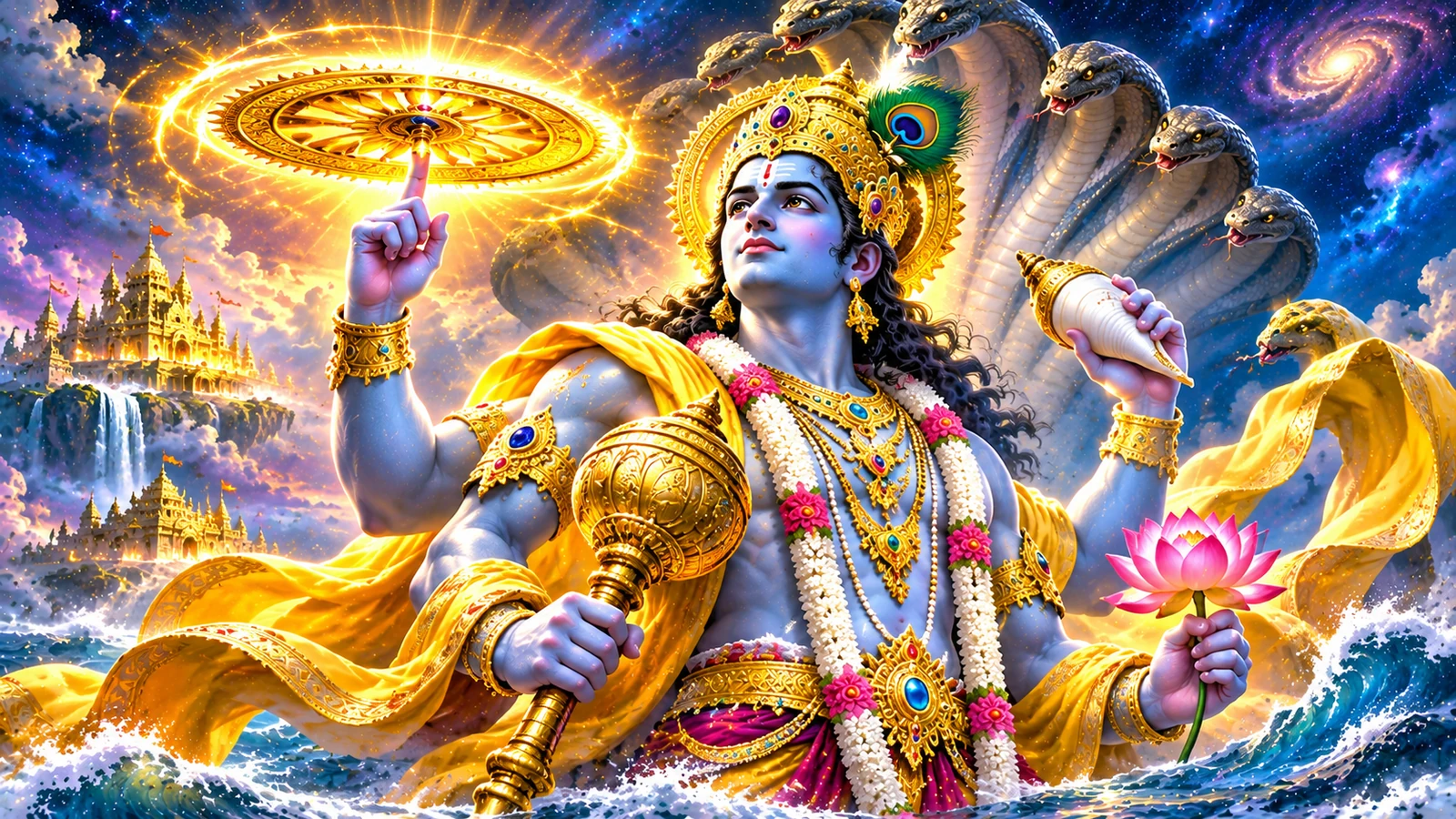
Quick answer: The Sudarshana Chakra is the divine discus most famously associated with Lord Vishnu and, in epic stories, Krishna. In Hindu iconography it appears as a wheel or circular weapon, often raised in one of Vishnu’s four hands beside the conch, mace and lotus. Mythological texts portray it as extraordinarily powerful and capable of protecting devotees or defeating dangerous opponents. Its origin is told differently across traditions: one account links its making to Vishvakarma and the Sun’s radiance, another describes a gift from Shiva, and the Mahabharata describes Agni giving Krishna a discus during the Khandava forest episode. These are religious narratives, not an archaeological identification of a physical high-technology machine.
What Is the Sudarshana Chakra? Meaning and Identity
The Sanskrit expression su-darshana is commonly understood through the idea of a beautiful, auspicious or clear vision, while chakra means a wheel or disc. In the most familiar religious image, Sudarshana is Vishnu’s circular weapon and a sign that divine power protects order rather than allowing every form of violence to prevail. That reading, however, does not exhaust its meaning. Some Vaishnava traditions praise Sudarshana as a divine presence in its own right, and certain temple images depict the wheel in a personified form. The same name can therefore refer to a weapon, a sacred symbol and a worshipped manifestation, depending on the setting.
A modern viewer sometimes imagines the chakra as a steel throwing disc from an action film. Its Sanskrit and devotional context is much broader. Paintings may show gold, flames, teeth or spokes. Sculpture may render it simply as a round emblem, or as a deity standing within a wheel. No one visual design is the universal shape prescribed by every text. It is especially misleading to claim that a specific number of spokes, blades or revolutions per second has been proven through ancient engineering. Such details are often features of later art or recent internet narration, not measurements taken from an excavated object.
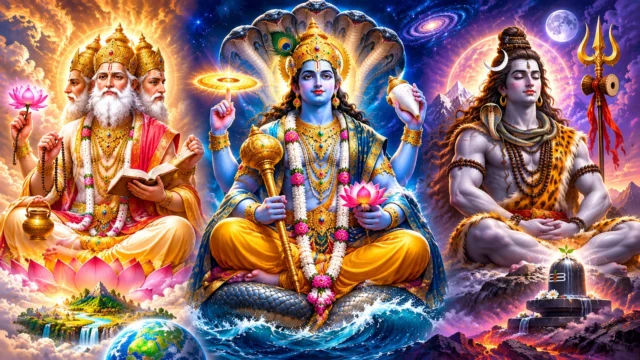
The chakra’s prominence also becomes clearer when seen beside Vishnu’s other emblems. The conch evokes announcement and sacred sound in many interpretations; the mace can signify strength; the lotus suggests purity and flourishing. Sudarshana adds a visibly dynamic circle to that group. These meanings differ between philosophical schools and commentators, but together the attributes explain why a deity associated with preserving dharma can be represented as calm and still while holding a formidable weapon.
Why Does Lord Vishnu Hold a Chakra? The Four Emblems
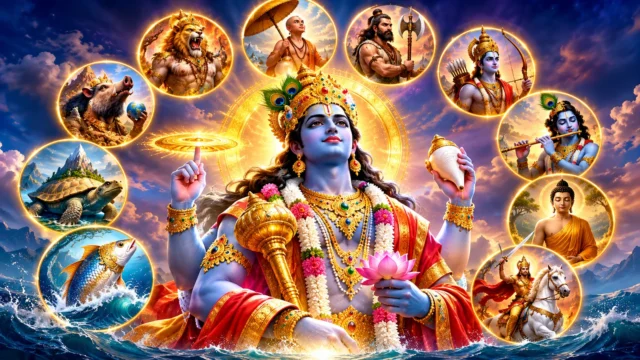
A widespread four-armed image of Vishnu includes Panchajanya, the conch; Sudarshana, the discus; Kaumodaki, the mace; and a lotus. The positions vary in sculpture and devotional art, and some forms include additional objects. Vishnu’s hands should not be read like a technical diagram in which every arrangement is mandatory. Hindu icons developed through religious communities, temple traditions and artistic conventions over centuries. What remains recognizable is the link between Vishnu and the cosmic responsibilities expressed through these emblems.
The Sudarshana Chakra signifies a capacity to intervene when order is endangered. But preservation is not the same as simply keeping everything unchanged. Vishnu’s stories often concern a world in which a ruler becomes oppressive, a devotee is threatened or the consequences of a choice grow unbearable. In that setting the discus becomes a dramatic narrative instrument. Its circular motion has also led interpreters to connect it with the cycle of time, the movement of mind and the law that governs life. Such symbolic readings are valuable precisely because they are readings. They should not be confused with a claim that the wheel is a literal astronomical instrument.
An object can also have more than one role in a culture. A conch is a real shell and an artistic religious symbol; a chakra can be a geometric form and a sign of divine power. Studying an image of Vishnu involves both describing what is physically visible and identifying what the devotional tradition says that object represents. That distinction is particularly useful for global readers encountering Indian mythology through temple photographs, games or online illustrations.
Who Created the Sudarshana Chakra? Three Different Origin Stories
1. Vishvakarma and the Radiance of Surya
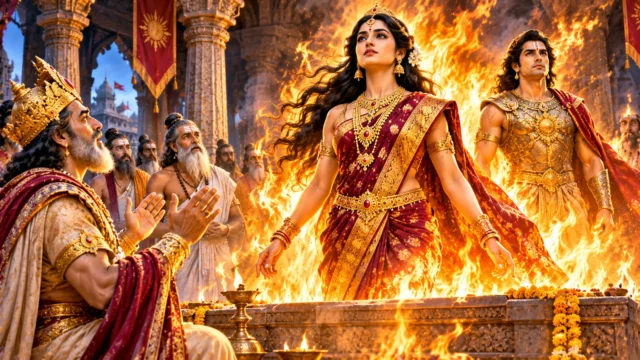
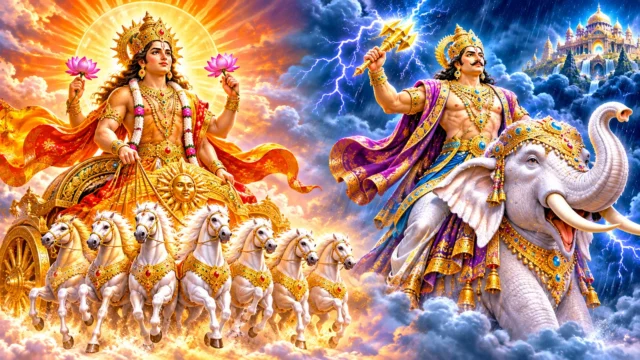
In an origin story commonly linked to the Vishnu Purana, the intense radiance of the Sun becomes difficult for Sanjna, the daughter of the divine craftsman Vishvakarma, to bear. Vishvakarma reduces or works with Surya’s brilliance, and from the resulting fiery material creates extraordinary divine objects, including the discus associated with Vishnu. Different summaries describe the production of the objects somewhat differently. The point is not a verifiable account of machining plasma into metal. It is a mythic explanation of how solar brilliance becomes a protective divine attribute.
2. Shiva’s Blessing in a Shaiva-Connected Narrative
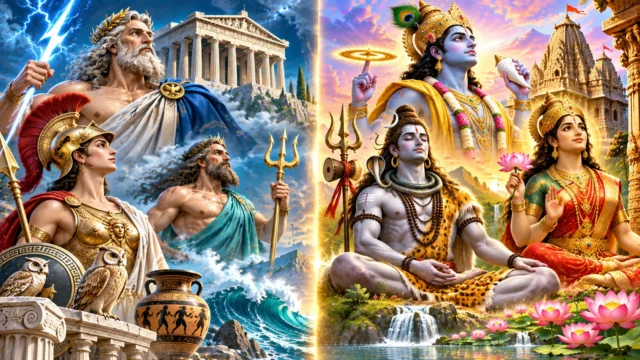
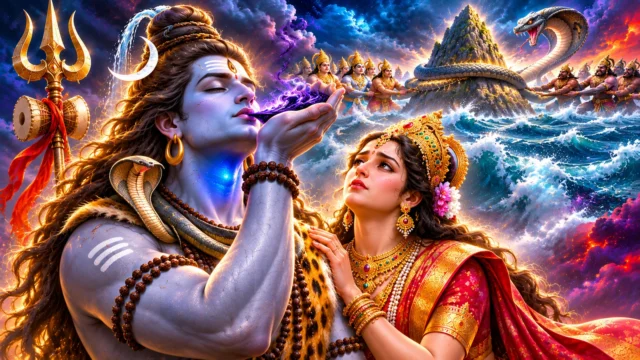
Another well-known devotional narrative says Vishnu worships Shiva with a thousand lotus flowers. When a flower is missing, Vishnu offers an eye associated with the beauty of a lotus, and Shiva grants the Sudarshana Chakra. Details, motives and textual attribution vary across retellings. Some versions connect the story with a particular adversary, while others concentrate on devotion and the gift. This account appears within a theological world that stresses Shiva’s role; other schools interpret the relationship among the deities differently. It is therefore unfair to present this as the sole origin story that everyone must accept.
3. Agni Gives Krishna a Discus in the Mahabharata
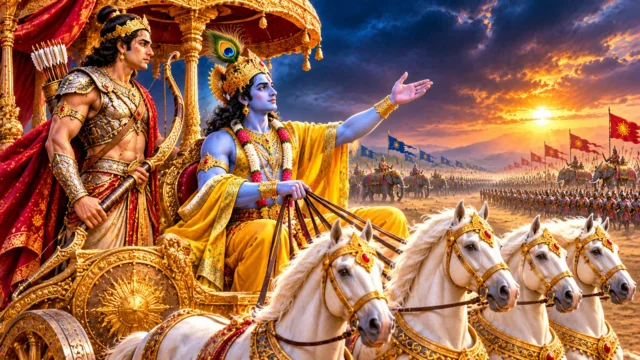
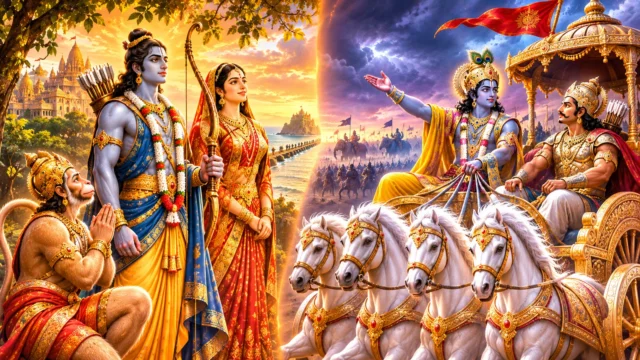
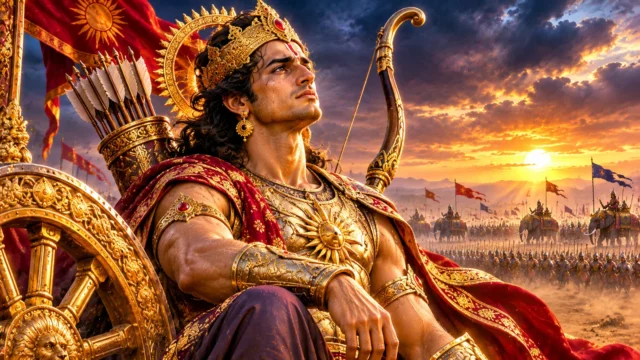
The Mahabharata offers another striking scene in the Adi Parva, during the burning of the Khandava forest. In an influential English translation, Agni, the deity of fire, gives Krishna a blazing discus that can strike extraordinary foes and return to the wielder. Varuna supplies Krishna with a mace and Arjuna receives the Gandiva bow and other equipment during the same general episode. This account does not need to be forcibly merged with the Vishvakarma story. An epic can narrate how a hero receives a weapon without necessarily claiming that the same moment is the first creation of that weapon in every cosmic age.
Put simply, “Who made it?” and “Who handed it to Krishna?” are different questions. A responsible article preserves that difference and identifies the tradition behind each version. Readers interested in religious art, Vaishnava philosophy or the literary history of the epics may prefer different interpretations without making the others disappear.
How Does the Sudarshana Chakra Work in the Stories?
In epic and Puranic narration, Sudarshana may appear brilliant, fast and irresistible. The Khandava passage explicitly describes Krishna receiving a discus that returns after being hurled. Other stories portray the weapon as responding to divine will and removing a threat rather than behaving like an ordinary projectile. These are supernatural properties within a literary and devotional universe. They do not establish real-world specifications for a spinning machine. There is no reliable measurement for its speed, diameter, mass or the temperature of its flames.
The same caution applies to internet claims that the chakra was controlled through telepathy, contained nuclear energy or could change size according to an ancient operating manual. A text may describe command by thought or a weapon blazing with light, but that does not translate automatically into a verifiable modern engineering claim. A poetic metaphor is not laboratory evidence. If a video asserts a numerical value, ask for the original Sanskrit passage, the edition, the translation and the method by which the number was inferred.
What is interesting about the stories is the moral condition surrounding powerful actions. Sudarshana is rarely important simply because it is sharp. It appears when the protection of someone, the defeat of a dangerous adversary or the larger order of the narrative is at stake. The mythology invites readers to think about power exercised with purpose. It should not be used as a model for making or testing dangerous devices, and artworks of a glowing wheel are imaginative depictions rather than photographs of something found underground.
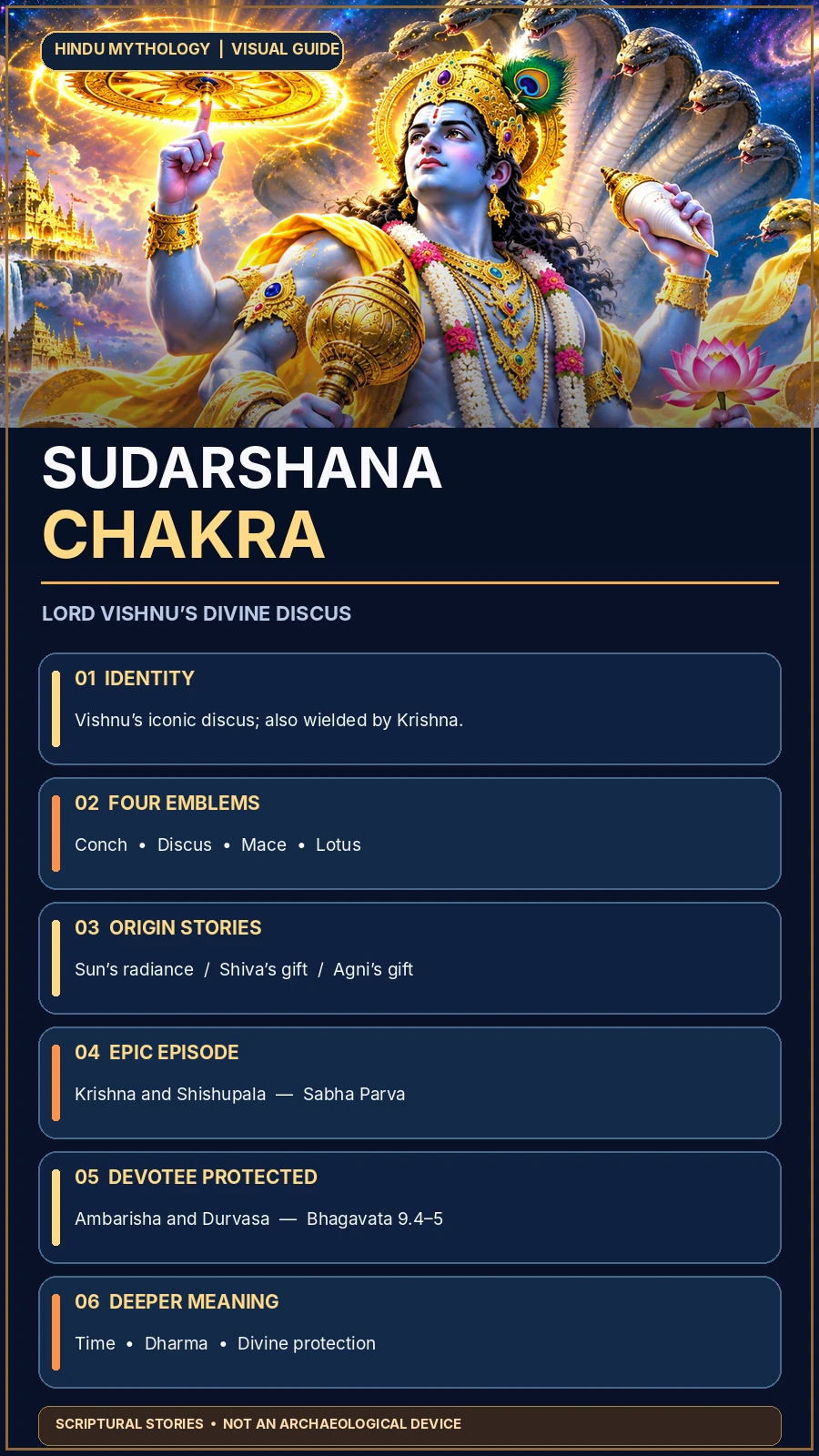
Krishna and the Sudarshana Chakra: Shishupala, Ambarisha and Other Episodes
Shishupala at the Rajasuya Assembly
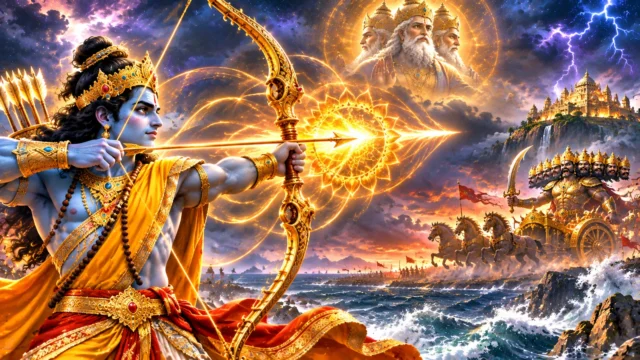
The confrontation with Shishupala is among the best-known Sudarshana episodes. During Yudhishthira’s Rajasuya sacrifice, Krishna receives a place of honor, and Shishupala fiercely objects. The scene becomes an escalating argument about conduct, status and restraint. After repeated offenses, Krishna uses the discus to bring the dispute to a decisive end. The broader scene belongs to the Sabha Parva of the Mahabharata. Dramatic dialogue and the numbering of Shishupala’s offenses vary between retellings, so readers should distinguish a popular storytelling formula from the wording of a particular edition.
The scene is often presented online as proof that the chakra is the strongest object in all mythology. That conclusion exceeds what a single narrative can demonstrate. Within the epic, the act has a place in a conflict over honor and conduct. A reader may discuss its ethical tensions without treating religious literature as a competition of fictional power ratings. In particular, Krishna’s choice in this incident should not be merged casually with his separate vow about not fighting with weapons during the later Kurukshetra war.
Ambarisha and Durvasa in the Bhagavata Purana
In Bhagavata Purana Canto 9, chapters 4 and 5, King Ambarisha observes a religious vow and then faces the wrath of the sage Durvasa over the timing of breaking his fast. Durvasa produces a dangerous being; Sudarshana destroys the threat and pursues the sage, who seeks refuge in many places. The crisis is resolved not by bigger force but through humility, intercession and Durvasa returning to Ambarisha. This is a particularly important episode because the chakra acts to protect a devotee, while the resolution highlights accountability and forgiveness.
What About Jayadratha and the Sun?
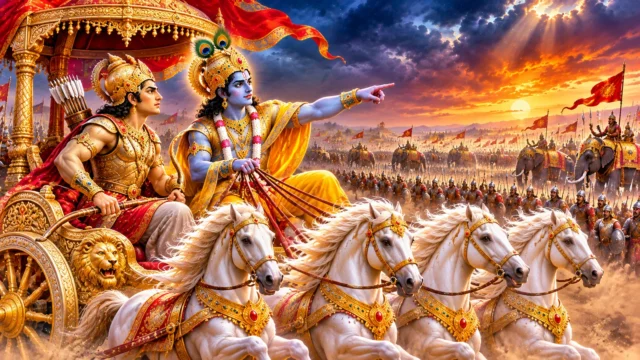
Many television and popular mythological retellings show Krishna using the chakra to cover the Sun so that Jayadratha believes sunset has arrived. The Kurukshetra narrative is transmitted and dramatized in differing forms; a writer should not automatically label every televised visual effect as a verbatim description from a Sanskrit critical edition. It is fair to say the sun-covering scene is widely associated with Krishna in popular retellings, while the precise source and wording need edition-specific examination. Treating every version as interchangeable creates avoidable confusion.
Sudarshana Symbolism: Time, Dharma and Clear Vision
The circular form is especially rich in symbolism. A wheel moves through cycles while keeping a recognizable center. This makes it a natural image for the passage of time, the continuity of cosmic law and disciplined action amid change. The Los Angeles County Museum of Art describes Vishnu’s personified discus, the Chakra Purusha, in connection with universal law, time and the defeat of evil. This museum perspective is useful because it distinguishes what can be studied as historical art from the theological meanings attached to that art.
The name Sudarshana also invites a reflection on seeing well. In devotional commentary, good vision can mean understanding what must be protected and what must be relinquished. That is not an eye-treatment promise or a scientifically established ability produced by looking at a symbol. It is a philosophical way of describing discernment. Some interpretations connect the revolving chakra with the mind, which is seldom still and can be directed wisely or unwisely. Others focus on divine order or the cleansing of obstacles. These readings coexist without requiring a single standardized answer.
Readers unfamiliar with Hindu philosophy should also distinguish dharma from a simple rulebook. It can refer to duty, moral responsibility, sustaining order and other ideas, depending on the text and context. Sudarshana’s destructive imagery becomes less confusing once the story’s protective purpose is understood. The deepest theme is not that any act of force is righteous, but that great power demands judgment. Contemporary ethical reflections should be presented as interpretations, not as commands to reproduce episodes of mythic violence.
Sudarshana as a Deity: Chakrathazhwar and Temple Art
In parts of South India, especially within Sri Vaishnava traditions, Sudarshana is revered as Chakrathazhwar or Chakrattalvar. Images may personify the discus as a multi-armed figure within a circular halo, sometimes with Narasimha imagery on the reverse of the icon. These depictions help explain why the chakra is more than an accessory in Vishnu’s hand. It can be approached as an expression of divine agency in temple worship, prayers and devotional literature.
Art historians refer to such figures as ayudha purusha, personifications of a deity’s attributes or weapons. The LACMA collection includes an early example of a Chakra Purusha, evidence that the iconographic idea has a documented history in South Asian sculpture. The sculpture is a real historical object; the supernatural properties of the discus remain within religious interpretation. That is an important distinction when an article aims to serve both devotional readers and students of art or history.
Devotional practices connected with Sudarshana include hymns, temple rituals and forms of homa in different communities. Readers should not assume that all traditions perform identical rites or that a prayer is a guaranteed medical cure, business benefit or protection against every physical danger. A religious practice can hold deep meaning without functioning as a substitute for professional medical attention or ordinary safety precautions. For a visitor, looking carefully at the wheel, surrounding flames and companion figure is often the best first step toward understanding the visual tradition.
Sudarshana Chakra vs Other Divine Weapons
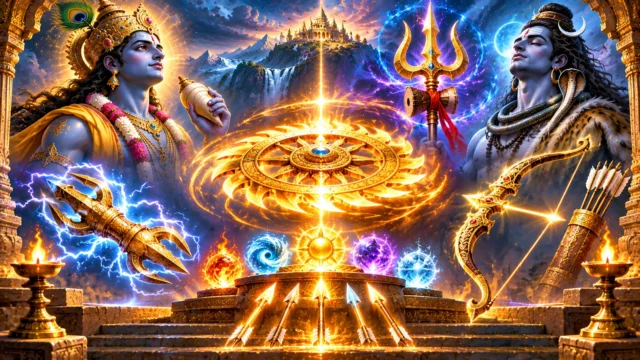
Sudarshana is a discus intimately connected with Vishnu; the Trishula or trident is especially associated with Shiva; the Vajra is a thunderbolt weapon associated with Indra; and the Brahmastra belongs to the category of extraordinary invoked weapons in epic literature. They do not come with one shared set of measurable strengths, so a universal top-ten list is an editorial invention rather than a statement from a single canonical text. Some stories emphasize a particular deity, and powers are shaped by the theological aims of that account.
For practical comparison, distinguish shape, association, narrative function and source. A physical discus shown in a sculpture is not the same kind of representation as an invoked astra described in a battle. The Sudarshana may act on behalf of Vishnu in a protective story; the Vajra features in Indra’s battles; the Trishula can embody Shiva’s cosmic functions. A careful writer can compare their imagery without announcing which has the higher fictional “damage score.”
| Divine weapon | Primary association | Typical representation |
|---|---|---|
| Sudarshana Chakra | Vishnu, Krishna | Divine discus / wheel |
| Trishula | Shiva | Trident |
| Vajra | Indra | Thunderbolt |
| Brahmastra | Brahma-linked epic traditions | Invoked astra, often a missile |
Myth vs Fact: Was the Sudarshana Chakra an Ancient Machine?
Sudarshana Chakra has an extensive history in manuscripts, liturgy, temple worship, painting and sculpture. Those are real and meaningful kinds of evidence for the history of ideas and devotion. They are not the same as proof that a self-guided, glowing weapon existed as a recoverable piece of ancient technology. No credible archaeological find has established a working Sudarshana device with the supernatural powers described by the epics. Claims about modern lasers, electromagnetic propulsion, GPS guidance or nuclear blades should be treated as speculation unless supported by independent technical evidence.
The strongest article separates three questions: What do the religious texts narrate? What do historians and art museums document? What does modern science independently verify? We can answer the first through responsibly attributed stories and translations; the second through surviving manuscripts, sculptures and ritual history; the third requires scientific standards that a devotional claim does not itself supply. None of these distinctions insults belief. They make it possible to read the tradition seriously without repeating internet myths as factual discoveries.
Frequently Asked Questions
What is the Sudarshana Chakra?
It is the divine discus associated with Lord Vishnu and Krishna in Hindu iconography, epic stories and Vaishnava devotion.
Who made the Sudarshana Chakra?
There is no single origin version. A Vishnu Purana tradition connects Vishvakarma and Surya’s radiance; another links the chakra to Shiva’s blessing. The Mahabharata describes Agni giving Krishna a discus.
How did Krishna get the Sudarshana Chakra?
In the Mahabharata Adi Parva Khandava episode, Agni gives Krishna a brilliant returning discus. That account describes receiving a weapon, not necessarily its first creation.
Did Krishna use the Sudarshana Chakra against Shishupala?
Yes. The Sabha Parva tells a major confrontation at Yudhishthira’s Rajasuya gathering in which Krishna uses his discus against Shishupala.
Does the Sudarshana Chakra come back after being thrown?
The Adi Parva description says Krishna’s discus returns to him after striking an enemy. This is a property of the epic narrative.
What does Sudarshana Chakra symbolize?
Interpretations commonly associate it with time, universal order, dharma, discernment and divine protection. The emphasis varies by tradition.
Is there scientific proof that Sudarshana Chakra was a real advanced machine?
No verified archaeological device establishes the supernatural weapon described in sacred stories. Historical sculptures and manuscripts document belief and iconography instead.
Is Sudarshana Chakra the same as Brahmastra?
No. Sudarshana is Vishnu’s discus; Brahmastra refers to a Brahma-associated divine astra in epic martial narratives. They differ in form and literary context.
Conclusion
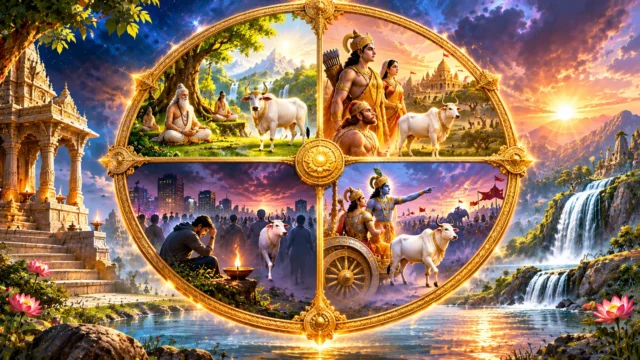
Sudarshana Chakra is one of the most enduring images in Hindu religious storytelling: a divine discus, an emblem of Vishnu, an active presence in Krishna’s adventures and, in some Vaishnava traditions, a form worthy of worship. Its story is richer when we keep the Vishvakarma, Shiva and Khandava accounts distinct, examine Shishupala and Ambarisha in their own contexts, and appreciate the difference between sacred symbolism and archaeological evidence. The next time you see the luminous wheel in a temple or illustration, you can recognize not just a fantastical weapon but a many-layered tradition about time, discernment and the protection of dharma.
Sources and Further Reading
- Mahabharata, Adi Parva, Khandava episode (Section 227)
- LACMA: Chakra Purusha, historic Sudarshana iconography
- Puranic Encyclopedia: Sudarshana origin stories
- Bhagavata Purana 9.4–9.5: Ambarisha and Durvasa
Related Reading in English
- Ten Avatars of Lord Vishnu in Order
- Brahma, Vishnu and Shiva: Roles Explained
- Kurukshetra War: Rules and Timeline
Editorial note: The mythological narratives and generated illustration are not independently verified physical history. Sources consulted 13 November 2026.




Share Your Opinion
Comments are closed on this post.