 Vista
Greek vs Hindu Mythology: The Essential Difference
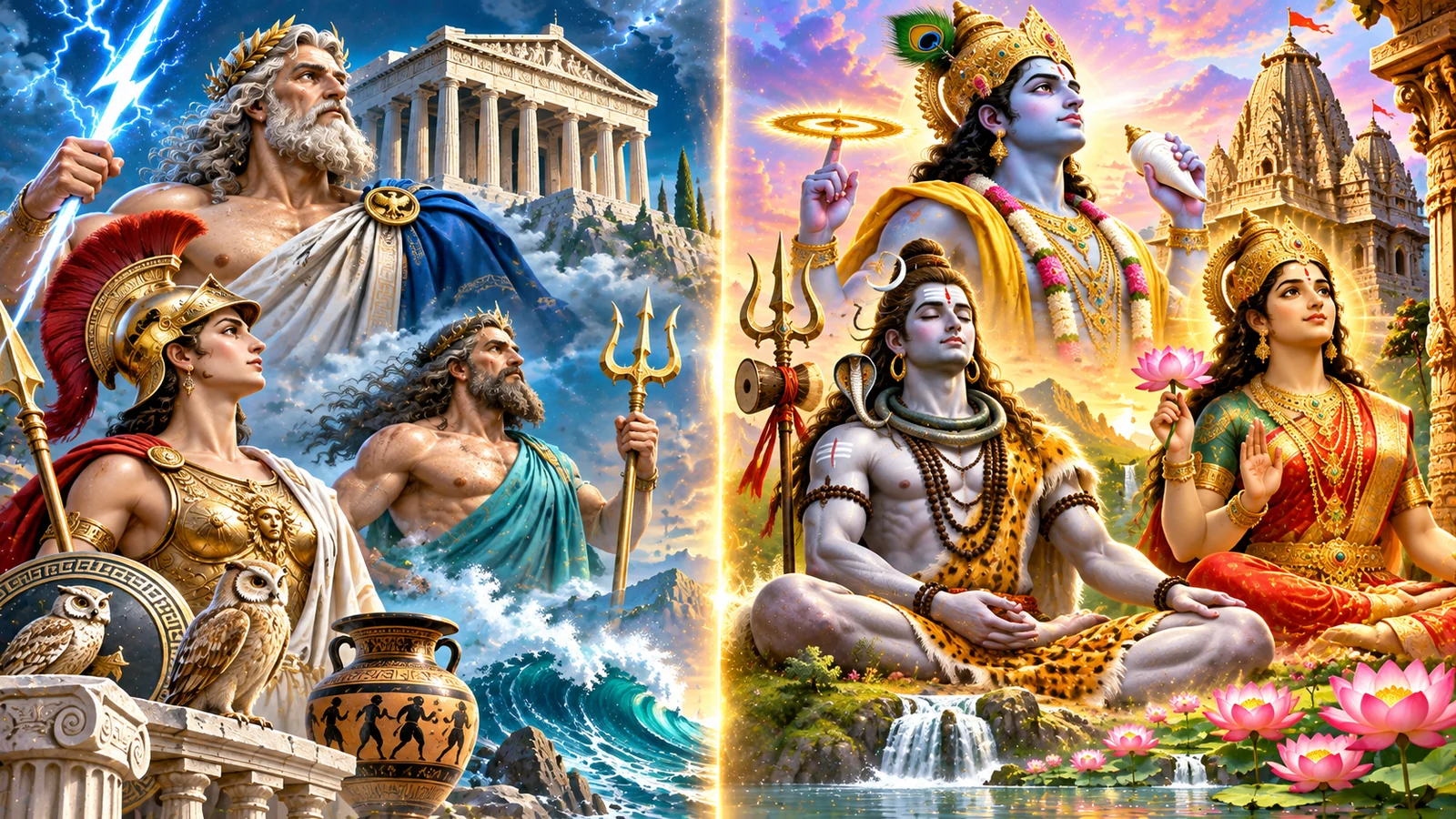
Greek vs Hindu mythology is a comparison of two enormously rich sets of stories about gods, human responsibility, creation and what happens after death. In many familiar Greek narratives, the Olympian gods are a divine family with Zeus as king, and their adventures intersect with the lives of mortal heroes. Hindu mythological traditions draw from the Vedas, epics, Puranas, regional narratives and philosophical teachings. They include multiple understandings of ultimate reality, divine manifestations, karma, rebirth and liberation. Both traditions feature powerful gods and extraordinary stories, but they do not share one fixed theology or a straightforward one-to-one list of corresponding deities.
The biggest practical difference for a new reader is the setting of the comparison. Ancient Greek religion is reconstructed through surviving texts, art, inscriptions and temples; modern people also practice forms of Hellenic worship. Hinduism remains a wide family of living religious traditions with ongoing festivals, temple worship, philosophy and devotion. Calling one “only mythology” and the other “only religion” would be unfair. In this guide, mythology means traditional sacred stories, not a verdict that somebody’s beliefs are false. We distinguish what texts narrate from what historians can independently establish.
Where Do the Greek and Hindu Stories Come From?
Ancient Greek myths survive through works attributed to Homer and Hesiod, later tragedians, hymns, local cult practices and ancient art. Homer’s Iliad and Odyssey explore conflict, homecoming, divine intervention and human frailty. Hesiod’s Theogony gives an influential account of divine genealogy, while Works and Days includes the Ages of Humanity. None is a complete official manual accepted identically in every Greek city or century. Athena was particularly important in Athens, Apollo at Delphi, and Demeter at Eleusis. Local ritual and literary drama did not always tell stories in exactly the same voice.
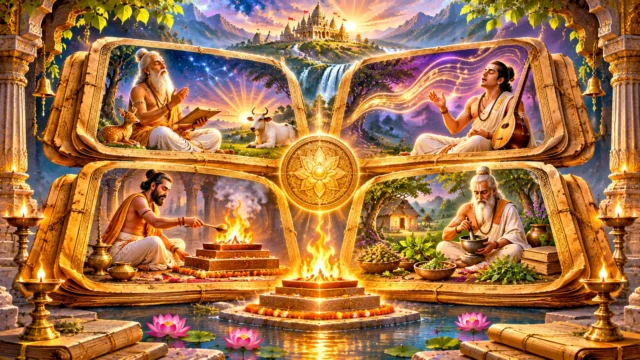
Hindu sacred literature is likewise far from a single book. The Rigveda contains hymns to deities such as Indra and Agni. The Upanishads ask about self, reality and liberation. The Ramayana and Mahabharata explore moral choice through elaborate narratives, while Puranic works tell many stories of Vishnu, Shiva, Devi and the creation of the cosmos. Ramayana versions and regional devotional traditions can differ sharply in emphasis. A careful comparison names a source and a community, rather than treating “Greek mythology says” and “Hindu mythology says” as if millions of people were repeating one fixed sentence.
Greek Gods vs Hindu Gods: Is There a Direct Match?
Zeus is the sky and thunder god and leading figure of the Olympian pantheon in many ancient Greek accounts. Athena is associated with wisdom, strategic warfare and crafts; Poseidon with the sea; Hera with marriage and queenship; Apollo with music, prophecy and other domains. Their relationships often resemble a complicated royal family. Greek artists and worshippers identified these figures by attributes such as Zeus’s thunderbolt, Athena’s helmet and owl, or Poseidon’s trident. Their humanlike quarrels are central to many literary narratives, though religious practice was more complex than those stories alone.
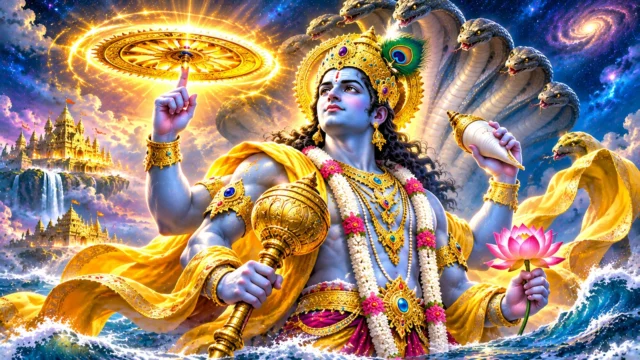
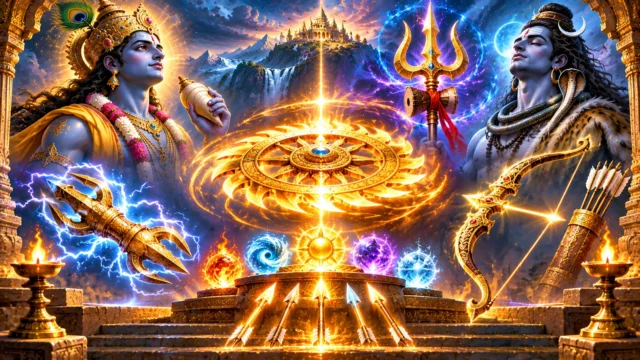
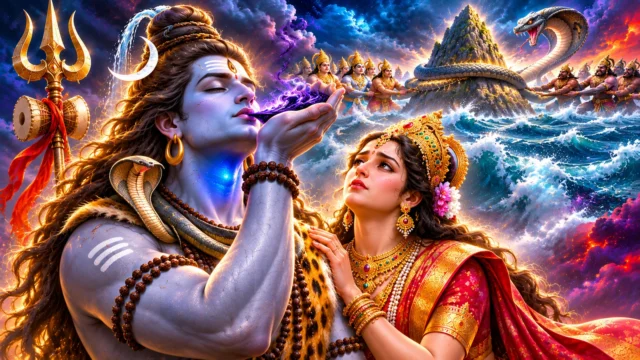
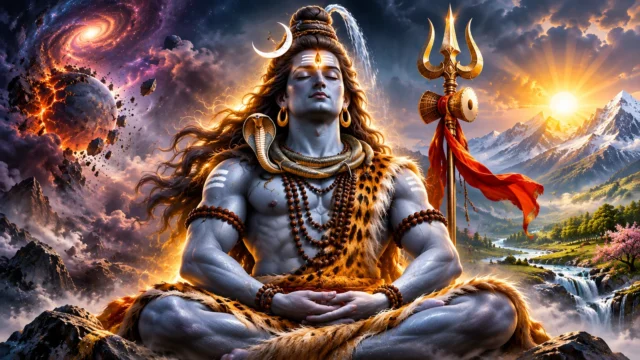
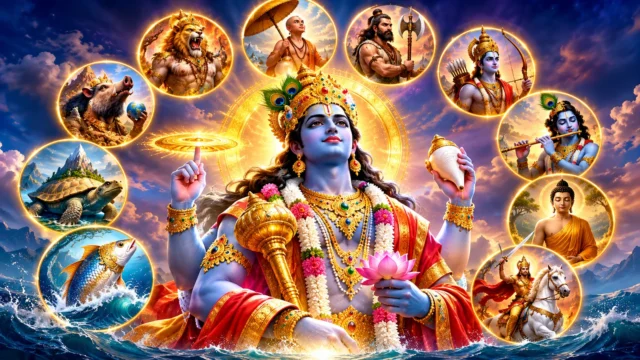
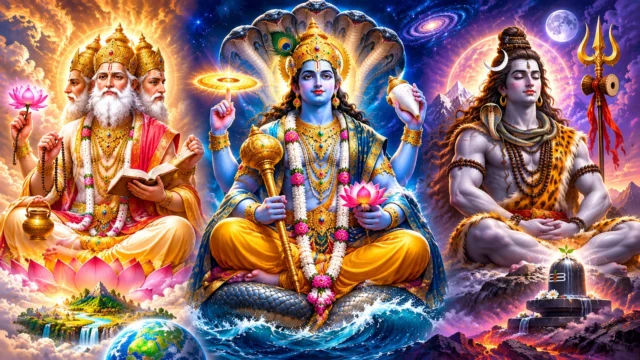
Hindu imagery also uses recognizable attributes, but the underlying theological frameworks vary more widely than a simple pantheon chart suggests. Vishnu is often associated with sustaining cosmic order and avatars such as Rama and Krishna; Shiva appears as yogi, Nataraja and transformer; Devi may be worshipped as supreme power in Shakta traditions. Lakshmi, Saraswati, Ganesha and many other divine forms have specific devotional communities and narratives. The Metropolitan Museum of Art explains that Hindu gods may be identified by objects, gestures, mounts and other visual clues. The popular Trimurti model of Brahma, Vishnu and Shiva describes cosmic functions but does not settle every Hindu view of divinity.
Zeus vs Indra: Similar Roles, Different Gods
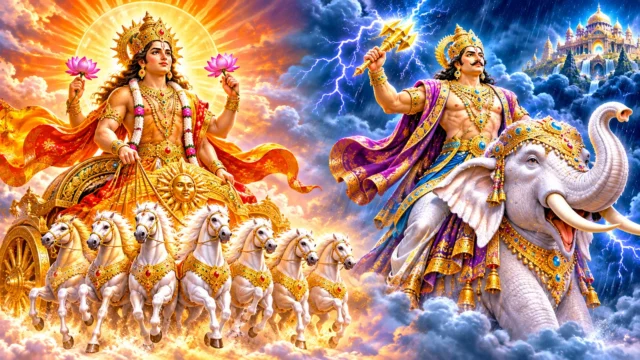
A popular Google question asks whether Zeus and Indra are the same god. They share striking themes: both are associated with storms, power and a leading place among gods in important narratives. Zeus wields the thunderbolt and rules the Olympians; Vedic Indra uses the vajra and famously defeats Vritra, a formidable obstructing serpent or dragon-like being. Yet sharing the thunder motif does not make the stories, rituals, personalities or later theological roles identical. The gods are embedded in distinct languages, cultures and evolving religious histories. Indra’s place in later Hindu worship also differs from his prominence in the Rigveda.
Comparative linguistics points to an especially important distinction: the name Zeus has a recognized historical linguistic connection with the Vedic sky-father name Dyaus Pitar, not simply with the name Indra. Oxford’s account of Zeus discusses the Indo-European language connection. Comparisons between Indo-European myths can reveal shared motifs and possible historical inheritances, but they do not prove that two separate present-day religious figures are one being. The correct search answer is therefore: Zeus and Indra have comparable storm-god roles in some sources; they should not be labeled identical.
Creation Stories: Chaos and Gaia vs Hindu Cosmology
One influential Greek account begins with Chaos, followed by figures such as Gaia, Tartarus and Eros in Hesiod’s Theogony. Gaia gives rise to Uranus, and generations of divine conflict eventually lead toward Zeus and the Olympian order. Chaos here is a primordial condition in a particular ancient poetic account, not a claim that ancient Greeks had measured an early stage of the physical universe. Greek creation narratives also varied with author, region and era. A beginner should avoid treating Hesiod as the sole Greek answer to how the world began.
Hindu texts offer several creation models. Some Vedic hymns reflect on the uncertainty of origins, while Puranic narratives describe cycles of manifestation and dissolution. In one important motif, Brahma is associated with bringing forth a world within a larger cosmic framework; other theological schools locate the source of manifestation in Vishnu, Shiva or the Goddess. Philosophical texts distinguish questions about ultimate reality from the timeline of a story. Neither mythology should be misrepresented as laboratory evidence of the Big Bang, or as a single account proving exactly when the earth was formed. These are deeply influential cultural and religious ideas expressed through different genres.
Time and the Ages: Greek Ages of Man vs Hindu Yugas
Hesiod’s Works and Days describes a sequence often called the Ages of Humanity: Golden, Silver, Bronze, Heroic and Iron. The story explores moral decline, violence, labor and humanity’s relationship with the gods. The Heroic Age complicates a simple downward ladder, and different classical authors later adapted the framework. The sequence is part of literary reflection, not a geological periodization. The Greek world also had other ways of discussing cosmic repetition and time, so the Ages of Man should not be treated as every Greek thinker’s complete worldview.
Many Hindu Puranic accounts describe four yugas: Satya or Krita, Treta, Dvapara and Kali. Their commonly taught duration ratio is 4:3:2:1, adding up to a mahayuga in traditional calculations. Larger cycles describe cosmic manifestation and dissolution. The yugas carry moral and religious symbolism, not an empirically verified measurement of human prehistory. Similarity between an Age of Gold and a Satya Yuga is an interesting comparative theme, but the lists, literary contexts and calculations are not the same. Treating them as secretly identical calendars produces more confusion than understanding.
Afterlife: Hades, Elysium and Tartarus vs Samsara and Moksha
In familiar Greek myth, Hades names both a deity and the realm associated with the dead. Homeric descriptions of shades differ from later accounts of reward or punishment. Elysium or the Elysian Fields and Tartarus appear in different mythic and philosophical settings, but not every ancient Greek writer outlined one uniform map of the afterlife. The Eleusinian mysteries and some Orphic and Pythagorean traditions explored distinctive hopes for the soul and could include ideas of rebirth. So the blanket statement “Greeks believed everyone went to exactly the same place forever” is inaccurate.
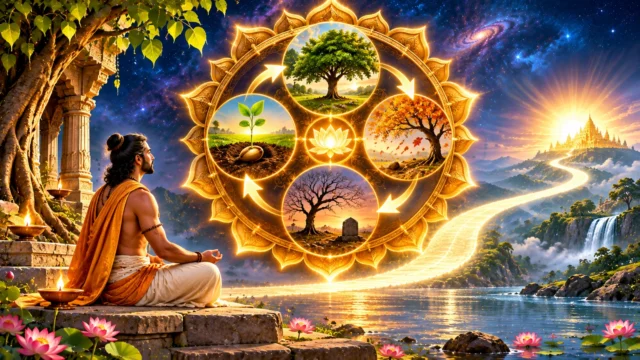
In many Hindu philosophical and devotional traditions, samsara refers to the cycle of births and deaths shaped by karma, and moksha means liberation from that cycle. The precise nature of atman, divine grace, knowledge and liberation differs across Vedanta and other schools. Garuda Purana stories about journeys after death should not be flattened into every Hindu’s only account. Neither reincarnation nor an afterlife destination has been established by the kind of repeatable evidence expected in laboratory science; the article describes religious understandings. Comparing Hades with Yama can be useful as a starting question, but the two occupy different theological and narrative systems.
Fate, Free Will, Karma and Dharma
Greek tragedies often ask whether a person can escape a prophecy, what responsibility remains when outcomes are constrained, and how pride affects relationships with gods and other people. The Moirai or Fates symbolize apportioned destiny in certain stories. Achilles must face difficult choices about glory and mortality; Oedipus becomes a famous example of the painful entanglement of knowledge and destiny. Yet it would be wrong to say that all Greek thought eliminated personal agency. Philosophers, dramatists and ritual traditions offered different accounts of what human beings can decide.
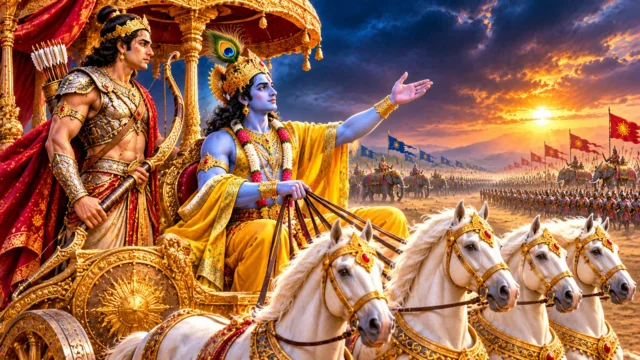
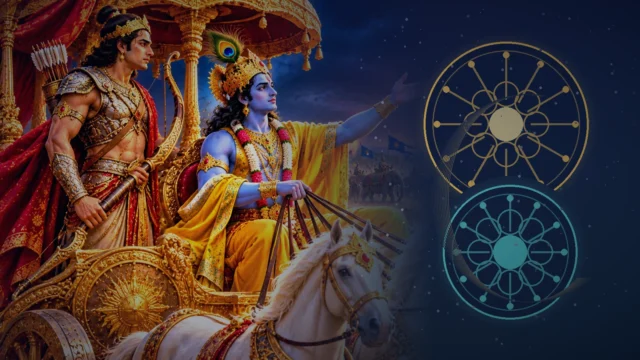
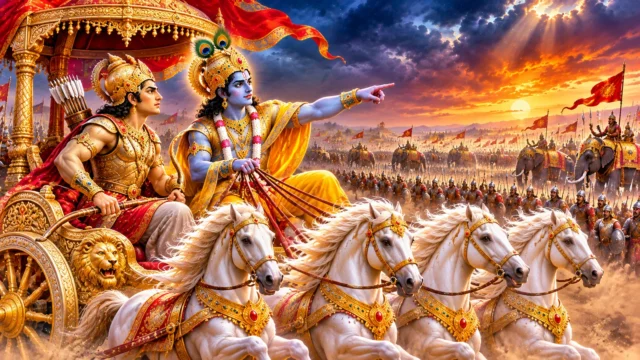
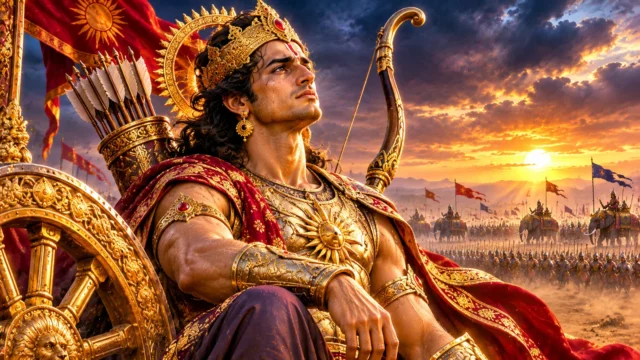
Hindu texts often explore karma, the moral significance and consequences of action, together with dharma, a complex idea of duty, order and ethical responsibility. In the Bhagavad Gita, Arjuna’s crisis forces a conversation about action and obligation rather than an effortless prediction of success. Karma is not simply “instant punishment,” and dharma is not an excuse for injustice. The two systems both ask hard questions about consequences and responsibility, but they use different conceptual languages. Neither should be simplified into the slogan “Greek fate equals Hindu karma.”
Heroes, Monsters and Divine Intervention
Greek hero stories include Heracles’s labors, Perseus and Medusa, Theseus and the Minotaur, and the adventures of Odysseus. A hero may be extraordinarily brave yet flawed, and divine assistance does not erase personal choice or suffering. Monsters can dramatize danger, unfamiliar places and human ambition, but interpretations change across eras. The Olympian gods frequently aid or obstruct mortals in epic poetry, making the boundary between divine politics and human struggle a major narrative feature.
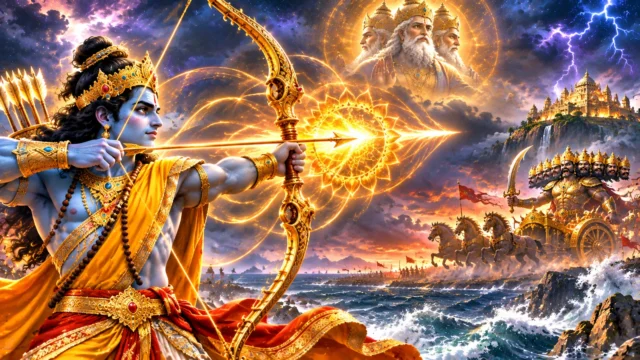
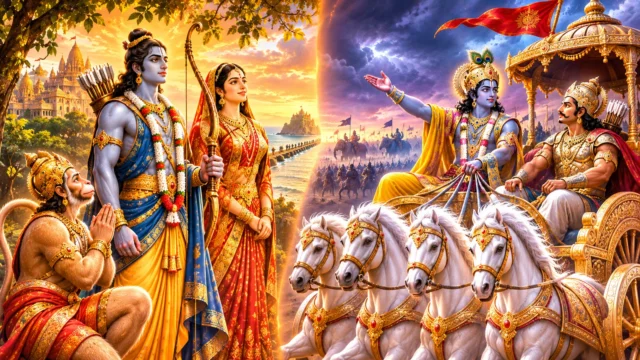
The Ramayana and Mahabharata likewise feature difficult decisions, battles and superhuman figures. Rama, Krishna, Arjuna, Karna and Hanuman are important for different reasons; some are regarded as divine manifestations and others as human or extraordinary devotees. Asuras, nagas, rakshasas and many other beings cannot all be translated as a generic “monster.” Likewise, Garuda is not merely a Greek-style griffin with an Indian name. A comparison works best when it explores how a narrative uses a creature or hero in context, rather than making a list of supposed equivalents based only on appearance or weapons.
Women and Goddesses: Athena, Hera, Devi and Saraswati
Greek mythology gives major roles to Athena, Hera, Artemis, Demeter, Persephone and Aphrodite. Athena’s association with strategy and skilled work, Demeter’s ties to agriculture and the Persephone narrative, and Hera’s queenship reveal different dimensions of divine femininity. These stories can also reflect ancient social tensions over marriage, inheritance, desire and power. Literary episodes should not be mistaken for direct evidence of every woman’s lived experience in ancient Greece.
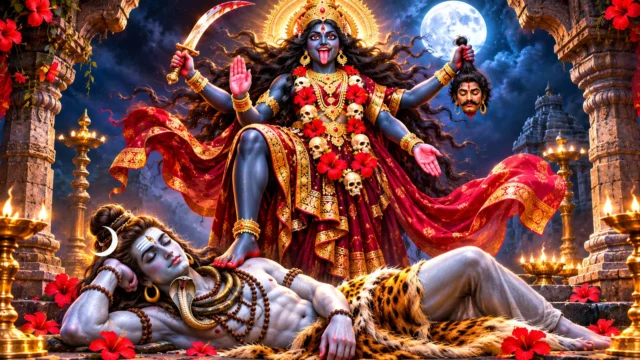
Hindu traditions include many goddess forms, with Lakshmi, Saraswati, Durga, Kali, Parvati and others central to ritual and devotion. The Goddess may be treated not merely as one domain-holder but as ultimate divine reality within Shakta theology. An easy internet chart sometimes pairs Athena with Saraswati because both are connected with knowledge, or Hera with Parvati because of marriage associations. Such analogies help beginners remember a theme but cannot establish shared identity. Their stories, rituals and philosophical roles differ. Both cultures preserve compelling accounts of goddesses whose meanings exceed a single label.
How Art and Worship Differ
Greek sanctuaries commonly had an altar, temple, offerings and cult images. Public festivals, processions and sacrifices formed central parts of civic religious life, though practices varied by city and period. Classical Greek sculpture often depicts idealized bodies, drapery and recognizable divine attributes; pottery preserves scenes of myth and ritual. The Metropolitan Museum’s account of Greek religious practice makes clear that myths and lived worship informed one another, but a painted vase is not a transcript of every community’s beliefs.
Hindu worship includes temple traditions, household puja, pilgrimage, festivals, devotional singing, meditation and philosophical study, with enormous regional variation. Temples may use murti imagery and iconographic conventions that identify a deity through objects, gestures and vahanas. A trident in a Greek image may suggest Poseidon; a trident beside Shiva carries a different narrative and theological context. The similar object is not proof of a directly shared deity. Visual comparison is useful when it starts with the artwork’s date, location, worship setting and source, not only a side-by-side screenshot.
Comparison Table: Five Differences at a Glance
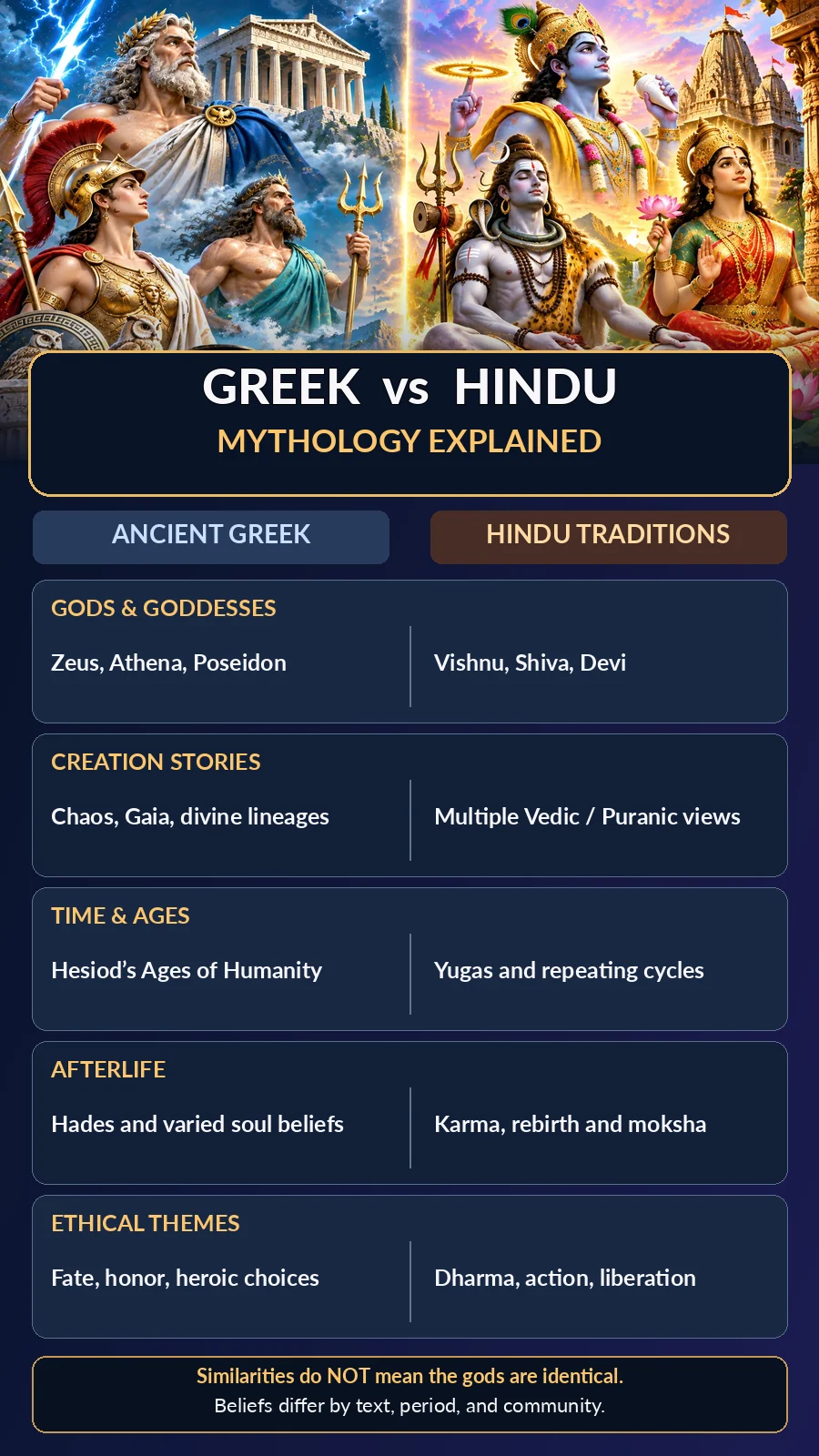
The following chart summarizes common introductory patterns, not rigid definitions. Ancient Greek religion and Hindu traditions are internally diverse. Individual texts, regions and historical periods provide exceptions to any short chart, especially on topics like creation, the soul and destiny.
| Theme | Greek traditions | Hindu traditions |
|---|---|---|
| Leading divine figures | Olympian gods including Zeus, Athena and Poseidon | Many deities and forms across distinct Hindu schools |
| Creation | Hesiod’s Chaos, Gaia and divine genealogies | Multiple Vedic, epic and Puranic accounts |
| Time | Ages of Humanity in Hesiod | Four yugas and larger cosmic cycles in many accounts |
| Afterlife | Hades and varied beliefs about souls | Karma, samsara and moksha in many traditions |
| Ethical concerns | Fate, honor, heroic struggle | Dharma, karma, responsibility and liberation |
Are Greek and Hindu Myths Connected Through Indo-European History?
Greek and Sanskrit belong to the Indo-European language family, and scholars have investigated shared vocabulary and mythic themes. The Zeus–Dyaus Pitar linguistic relationship is one well-known example. Storm figures, serpent-slaying narratives and divine family structures can invite comparison, but three questions must be kept separate: whether names are linguistically related, whether similar stories have a common historical source, and whether communities regard gods as spiritually identical. Evidence supporting the first does not automatically prove the third. Contact, independent invention, retelling and adaptation can also produce resemblance.
Some websites claim that an ancient Greek god is “actually” an Indian god because both carry a weapon or appear near a river. That reasoning is too weak. Historical comparison uses carefully dated sources, language change, archaeology and awareness of differences. Equally, it is simplistic to say the two traditions have no possible shared themes. The rewarding middle ground is to acknowledge documented linguistic relationships and thematic comparisons while being precise about what remains uncertain. Readers interested in serious comparative mythology can begin with museum collections and specialist classical or Indological scholarship.
How Should a Beginner Study Both Traditions?
Start with one narrative at a time. Read an accessible translation of Hesiod’s Theogony or a selection from Homer, then compare a relevant Hindu source such as a Rigvedic hymn, a chapter from the Bhagavad Gita or a Purana. Note the genre and date of the translation. Ask who is speaking, whether the passage is poetry or a ritual instruction, and what the image or story is trying to convey. A list of mythological characters can be a helpful map, but it cannot replace the landscape.
Then make a two-column notebook of themes rather than supposed identities: sky and storm, creation, human choice, death, divine protection and festivals. Include the differences prominently. Do not confuse a modern fantasy film with an ancient text or treat an AI illustration as archaeology. If you are researching family tradition, ask local practitioners how a story is understood in worship today. If you are researching ancient Greece, museum records and edited translations help place evidence within historical settings. Good comparisons leave room for mystery without turning speculation into fact.
Frequently Asked Questions
What is the main difference between Greek and Hindu mythology?
Greek mythology often centers the Olympian gods and heroic narratives within the ancient Greek world. Hindu mythological traditions span many scriptures, theologies and living devotional communities, including ideas of karma, rebirth and liberation. Neither is completely uniform.
Is Zeus the same as Indra?
No. Both have storm-related roles, but their names, stories and historical worship contexts differ. Zeus has a notable linguistic relationship with the Vedic sky-father Dyaus Pitar, which is not a claim that Zeus and Indra are identical.
Is Hades the same as Yama?
No. Both can be associated with the dead, but they function within different systems of narratives and religious philosophy. Greek afterlife ideas also varied, as did Hindu accounts.
Does Greek mythology include reincarnation?
Some Greek philosophical and religious traditions, including Orphic and Pythagorean currents, discuss the soul and rebirth. Reincarnation was not the single universal belief of all ancient Greeks.
Do Greek Ages of Man correspond to Hindu yugas?
They can be compared as stories about humanity and time, but their lists, sources and time schemes are different. Neither should be presented as a scientific chronology.
Are Athena and Saraswati the same goddess?
No. Both can be associated with knowledge or skill, but their iconography, stories and religious roles are distinctive. Similarity of a domain is not proof of identity.
Which mythology is older, Greek or Hindu?
The question is too broad to answer with one date. Surviving texts, oral traditions and archaeological evidence have different chronologies. Some Vedic material predates surviving classical Greek literary works, but each tradition developed over centuries.
Conclusion: Similar Questions, Different Traditions
Greek and Hindu mythology share human questions about power, creation, justice, fate and mortality. Yet Zeus is not simply Indra, Hades is not moksha, and the Greek Ages of Humanity are not the Hindu yugas. Greek stories emerged in particular ancient Mediterranean communities, while Hindu sacred narratives developed across many periods and remain part of vibrant living practices. A strong comparison celebrates resemblance without erasing cultural difference. Read the named sources, distinguish belief from historical proof, and use mythological art as a doorway into a richer conversation rather than as a substitute for evidence.
Related Reading
- Surya vs Indra: Sun God and King of the Devas
- Brahma vs Vishnu vs Shiva: Trimurti Explained
- Hindu Cosmology: How the Universe Is Created
- Ramayana vs Mahabharata: Differences Explained
Sources and Further Reading
- The Metropolitan Museum of Art — Greek Gods and Religious Practices
- The Metropolitan Museum of Art — Hinduism and Hindu Art
- The Metropolitan Museum of Art — Recognizing the Gods
- The Metropolitan Museum of Art — Mystery Cults in the Greek and Roman World
- Oxford Classical Dictionary — Zeus (Fritz Graf, 2015)
- Encyclopaedia Britannica — Greek Mythology
- Encyclopaedia Britannica — Hinduism
Editorial note: Religious narratives are described in their own contexts, not asserted as scientifically verified events. Illustrations are artistic comparisons, not records of historical encounters. Reviewed 13 November 2026.


Share Your Opinion
Comments are closed on this post.