 Vista
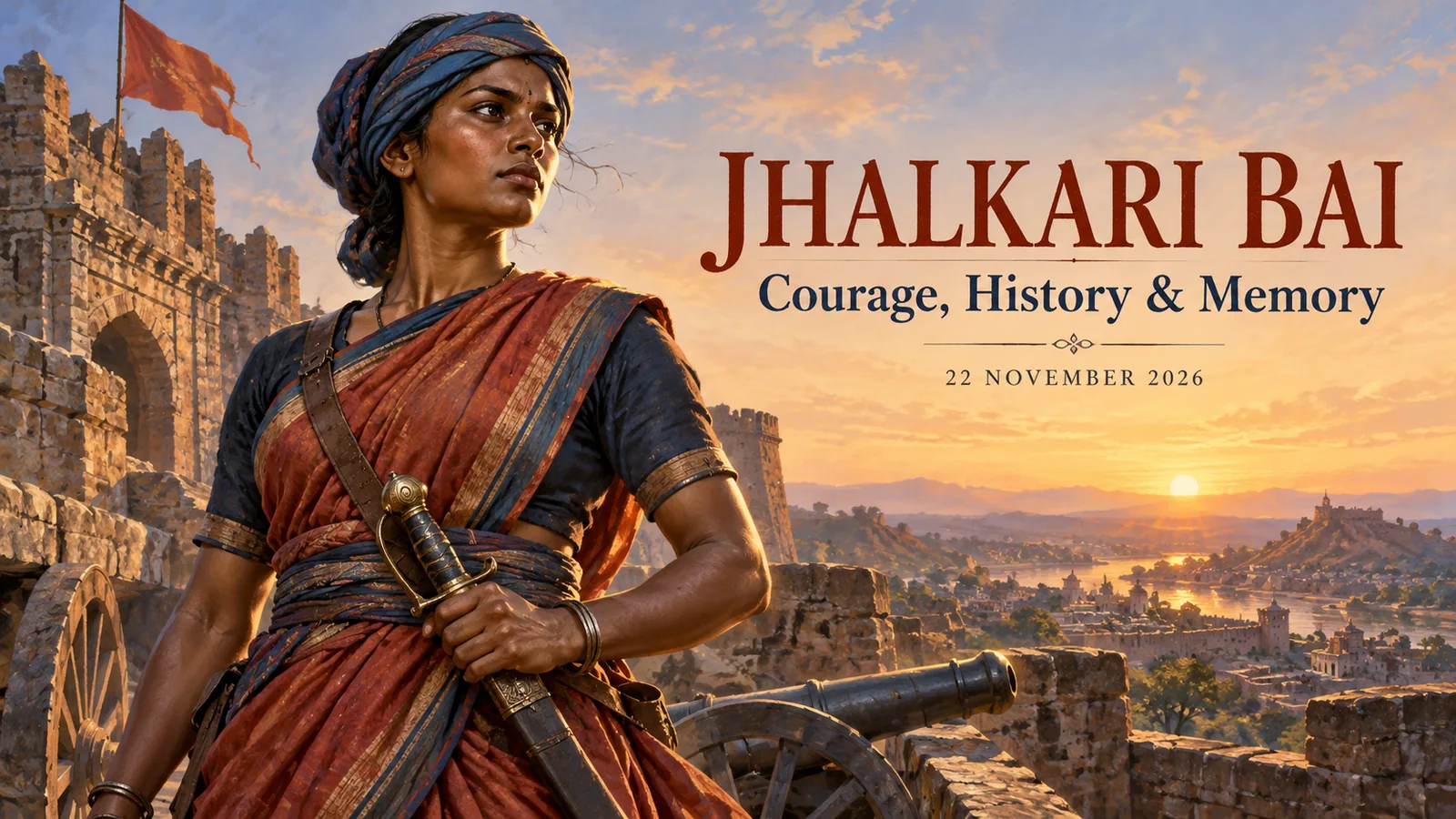
Jhalkari Bai: Her Role in Jhansi, Rani Lakshmibai and Historical Memory
Jhalkari Bai is often introduced through the story that she impersonated Rani Lakshmibai and diverted the British. Reading her history also means asking how that story has been preserved. This guide explains her commemorated birth date, her association with Jhansi, the Bundelkhand connection and an original school speech, while distinguishing public cultural accounts from eyewitness documentation.
Who was Jhalkari Bai, and when is her Jayanti?
Jhalkari Bai is remembered as a woman warrior associated with Rani Lakshmibai of Jhansi. A biography on the Ministry of Culture’s Azadi Ka Amrit Mahotsav portal gives her birth date as 22 November 1830 and her birthplace as Bhojla village near Jhansi. Her Jayanti is observed on 22 November.
The same account identifies her with the Kori community. This is relevant to understanding the participation of historically marginalised communities. Her story is also part of a wider remembrance of women from ordinary backgrounds who took active roles in a period of conflict.
A government cultural portal can document a public tradition without every episode becoming a contemporary military record. The biography identifies an Amar Chitra Katha publication from 2022 as its source. Readers asking for the “real history” should therefore consider when an account was produced and what kind of evidence it represents.
What role is she said to have played in Lakshmibai’s forces?
The cultural account places Jhalkari Bai in the queen’s women’s military formation, described as the Durga Dal, and among her trusted associates. It also describes her husband, Puran, as connected with Jhansi’s army. Stories of riding and weapons training form part of this published life narrative.
The central theme is women’s participation in defence and decision-making. That does not automatically establish every military rank, troop number or exact conversation found in a social-media post. Where a source uses one description of a role, an article should not silently turn it into a more precise title.
The uprising of 1857 and the struggle for Jhansi in 1858
Jhalkari Bai is remembered within the wider uprising of 1857. The siege and decisive struggle at Jhansi took place in 1858. A heading about her role in the “1857 revolt” therefore does not mean that every episode connected with Jhansi occurred within the calendar year 1857.
In the best-known narrative, she appears in the queen’s disguise and helps create an opportunity for Lakshmibai to leave. The Ministry of Culture portal recounts this episode while also identifying the story as part of Bundelkhand’s popular memory and folklore. This article retains that context.
The appropriate approach is neither to label a remembered episode as a verified eyewitness diary nor to dismiss oral tradition as meaningless. Different sources preserve different kinds of knowledge. A story’s significance to a community and the documentary evidence for each detail are related questions, but they are not identical.
History, folklore and “real photos”: what should readers distinguish?
| Material | How to assess it |
|---|---|
| A modern biography | Check its author, publication date and cited earlier sources. |
| A song or oral account | Read it as community memory; do not automatically treat dialogue as verbatim evidence. |
| A statue or painting | A later commemorative representation, not an archival photograph. |
| An AI illustration | Label it clearly as an artistic interpretation. |
Online versions contain accounts of childhood encounters with dangerous animals, exact battlefield conversations and final moments. When accounts differ, avoid presenting an unsourced version as settled fact. This guide does not assign a definite death date or invent last words.
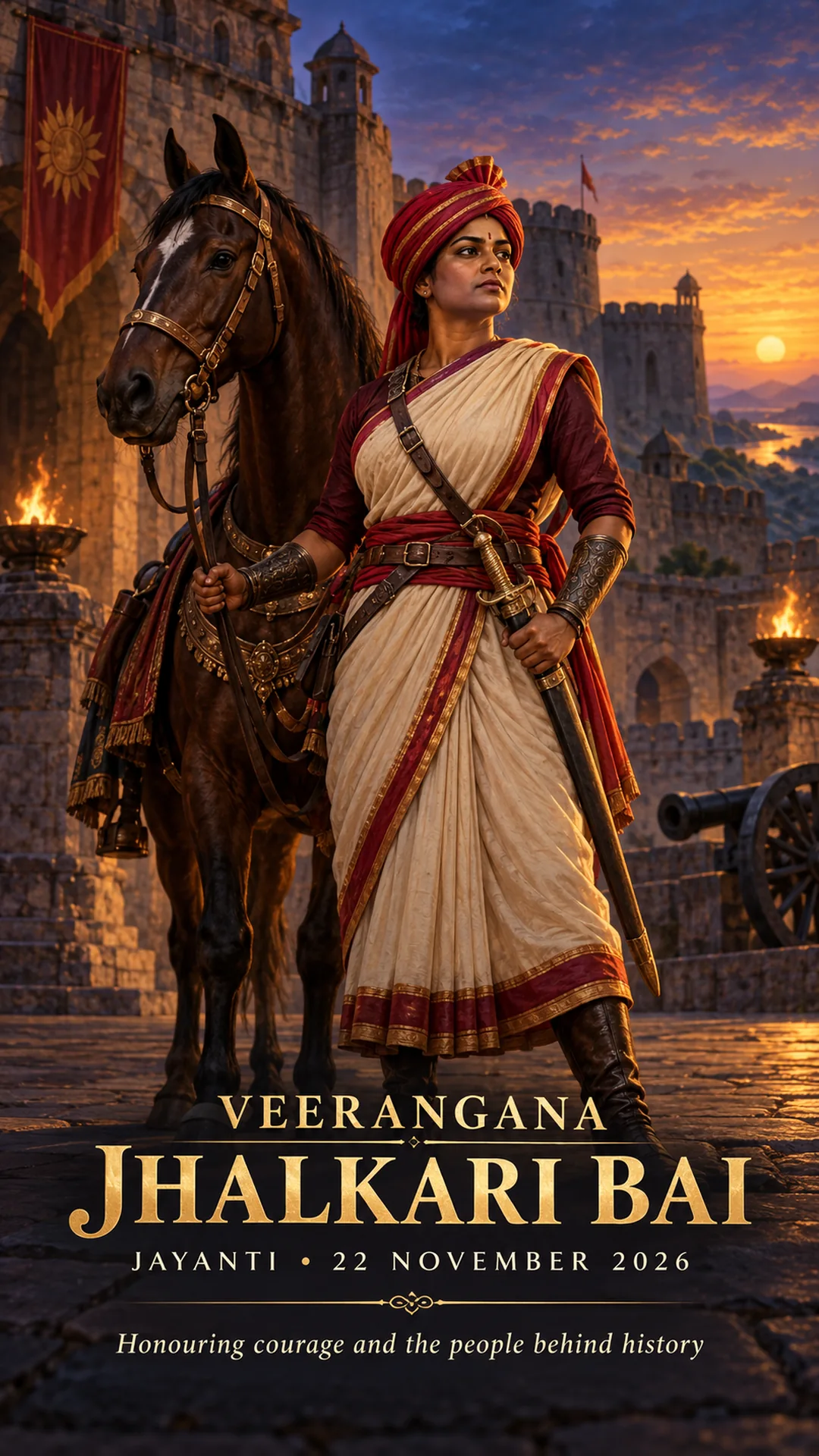
A search result labelled “Jhalkari Bai HD photo” may actually be a painting, statue photograph or digital illustration. A sword, horse or fort in an image does not establish authenticity. The illustrations made for this page are symbolic artistic interpretations.
How is Jhalkari Bai connected with Madhya Pradesh and Bundelkhand?
Jhansi is in present-day Uttar Pradesh. The cultural region of Bundelkhand extends across parts of Uttar Pradesh and Madhya Pradesh. That shared regional history is a sound way to explain the subject’s relevance to MP readers; it does not make her birthplace part of MP.
Schools in Bundelkhand can use the occasion to examine an 1857–58 timeline, women’s participation and local songs. Before using an image of a statue in Bhopal, Gwalior or another city, verify the actual location and image source. Do not relabel a statue from elsewhere just to include a popular search phrase.
A classroom oral-history exercise can ask students to record a story heard from a family member or local narrator, with the speaker’s name and the date of the conversation. Compare it with a published account afterwards. This encourages source awareness while respecting local knowledge.
A short Jhalkari Bai Jayanti speech
Respected teachers and friends, today we remember the courage of Veerangana Jhalkari Bai on her Jayanti. She is honoured in Bundelkhand’s memory as an associate of Rani Lakshmibai of Jhansi. Her story reminds us that history belongs not only to rulers and courts. Women from ordinary families also stepped forward in difficult times. As we learn about their contribution, we should use reliable sources and understand oral traditions in their context. Let us honour women and historically marginalised communities by recognising their participation, supporting education and working for equal opportunities. Remembering the past thoughtfully can help us build a more respectful future. Thank you.
This is an original sample. An original poster message is: “Remember the voices that made their place in history through courage.” Do not attribute that sentence to Jhalkari Bai as a recorded quotation.
Advice and frequently asked questions
For classroom notes, keep a column for sourced biographical details and another for remembered narratives. Label artistic images. A respectful account does not need invented conversations, derogatory caste language or fabricated battle scenes.
When is Jhalkari Bai Jayanti observed?
On 22 November. The Ministry of Culture biography gives the birth date as 22 November 1830.
Were Jhalkari Bai and Rani Lakshmibai the same person?
No. The accounts describe them as different people associated with one another.
Is Jhansi in Madhya Pradesh?
No. It is in Uttar Pradesh; Bundelkhand spans parts of both states.
Is the disguise story an eyewitness war diary?
It is presented here as an episode preserved in Bundelkhand’s popular memory, not as an eyewitness diary.
Does this page contain an authentic historical photograph?
No. Its cover and poster are artistic interpretations.
Editorial note: This guide distinguishes public cultural accounts from the kinds of evidence behind individual episodes. Speeches and messages are original; images are not historical photographs.
Sources and further reading
- Jhalkari Bai biography and popular memory — Ministry of Culture
- Women unsung heroes publication — Ministry of Culture
- 22 November Jayanti commemoration — PIB
- Jhansi historical context — District Jhansi
- Present-day location — District Jhansi
Related history and school resources
- Birsa Munda and Ulgulan
- Madhya Pradesh Foundation Day history
- Speeches and anchoring for school programmes
Related reading: Constitution Day: Preamble meanings and school speeches
Related reading: Veer Durgadas Rathore and the Ujjain cenotaph









Share Your Opinion
Comments are closed on this post.