Who is Maa Chhinnamasta? An Introduction
Maa Chhinnamasta, also known as ‘Prachanda Chandika,’ is one of the ten Mahavidyas, representing a fierce and self-sacrificing aspect of the Divine Feminine. Her name is a combination of ‘Chhinnam’ meaning ‘severed’ and ‘Masta’ meaning ‘head.’ This unique form symbolizes the continuous cycle of creation, sacrifice, and regeneration, embodying the eternal truths of life, death, and rebirth.
The Striking Form of Maa Chhinnamasta: A Glimpse
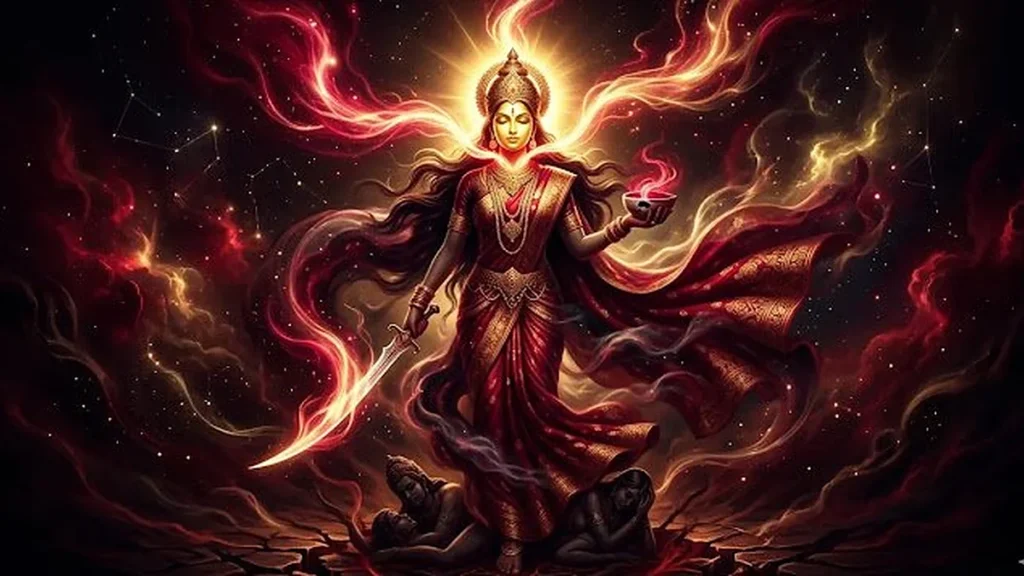
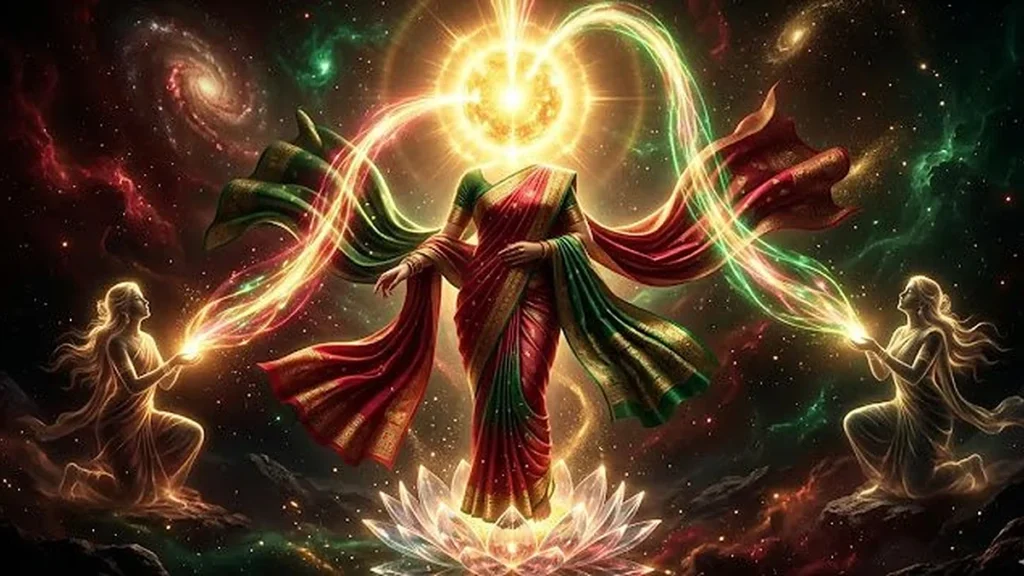
Maa Chhinnamasta is depicted seated on a lotus, a symbol of purity and knowledge. In one hand, she holds her own severed head, while the other grasps a sword. Three streams of blood flow from her headless torso. Two streams are consumed by her attendants, Dakini and Varini, while the third is drunk by the Goddess herself. Her nudity signifies freedom from illusion and worldly attachments, and the garland of skulls around her neck represents victory over time and death. Though seemingly fearsome, this form is a powerful emblem of profound spiritual secrets and life’s ultimate truths.
Why Does Maa Cut Her Head? The Mythological Narrative
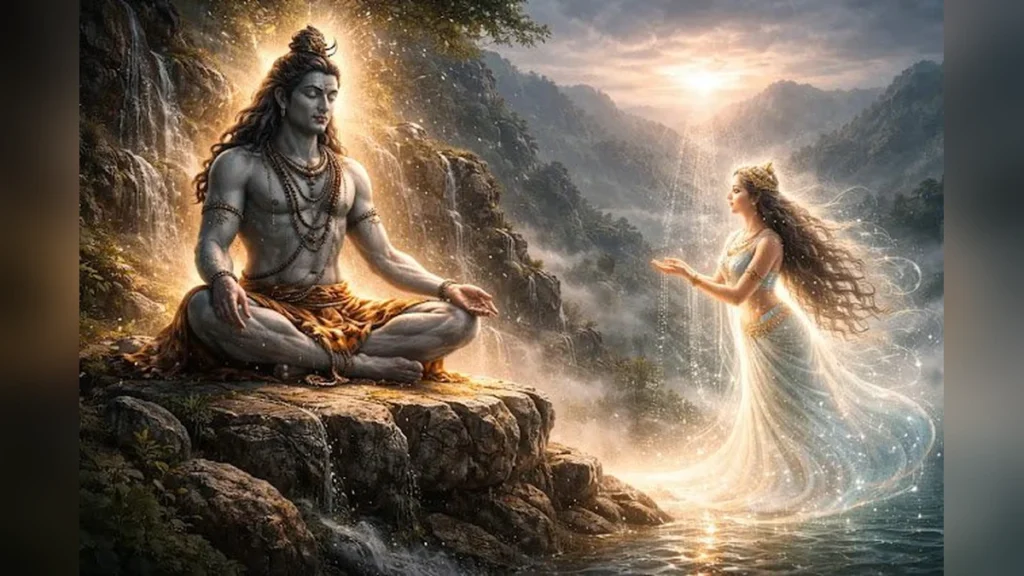
The story behind Maa Chhinnamasta’s unique form highlights her ultimate sacrifice and life-giving power. According to legend, Goddess Parvati, who later manifested as Chhinnamasta, was bathing in the Mandakini river with her companions, Dakini and Varini. After their bath, they were overcome by intense hunger. Dakini and Varini pleaded with the Goddess for food, but she asked them to wait. As their hunger became unbearable and no food was available, the compassionate Goddess, for the welfare of the world, made an extraordinary decision. Without hesitation, she took her sword and severed her own head. Three streams of blood flowed from her headless body: one for Dakini, one for Varini, and the third, which she herself drank from her severed head’s mouth. In this act, she satiated her companions’ hunger and nourished herself, symbolizing ultimate self-sacrifice, life-sustaining power, and self-sufficiency.
The Profound Symbolic Meanings of Chhinnamasta: Beyond a Story
Maa Chhinnamasta’s form is not merely a tale but is imbued with deep philosophical and spiritual significance, offering insights into life’s profound mysteries:
1. Self-Sacrifice and the Eternal Cycle of Life
Her act of self-decapitation is the ultimate symbol of self-sacrifice, illustrating the necessity of sacrifice for the sustenance of life in creation. Just as a seed destroys itself to give birth to a tree, the Goddess nourished life through her sacrifice. This also represents the eternal cycle of life, death, and rebirth, where one end leads to a new beginning.
2. Annihilation of Ego and Control Over the Mind
The head is often seen as a symbol of ego, intellect, and identity. By severing her own head, Maa Chhinnamasta conveys the message of liberation from ego, worldly desires, and material attachments. It signifies the ultimate control over the mind and the pinnacle of self-realization. True self-knowledge and liberation are attained only when one relinquishes the ‘I’ (ego).
3. Source of Life Force and Self-Nourishment
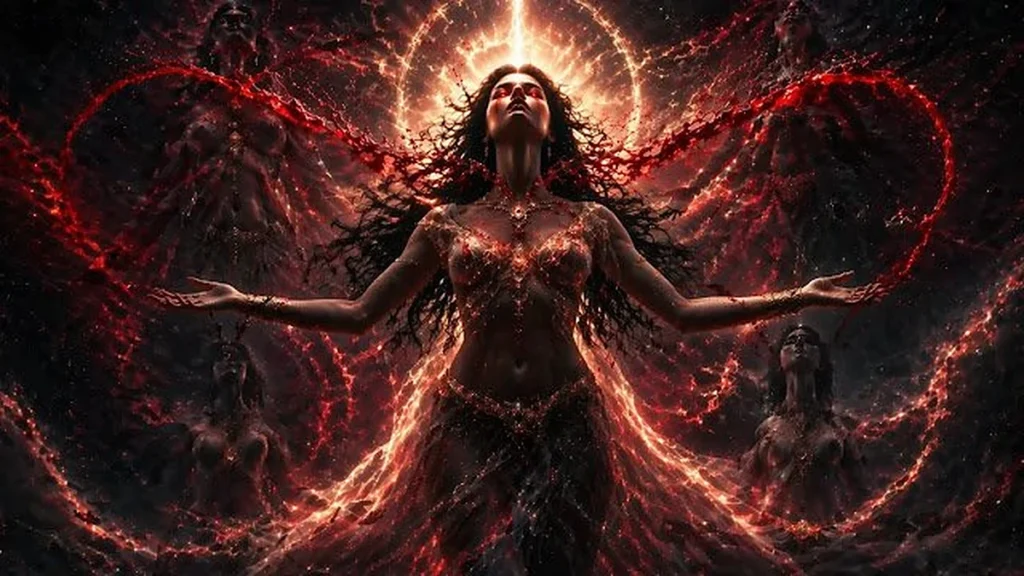
Blood symbolizes life force, or ‘prana.’ The streams of blood flowing from her torso and being consumed by the Goddess herself indicate that the source of life lies within. We can nourish ourselves with our own inner energy. This conveys a message of inner strength and self-reliance, where an individual operates life through their internal energy rather than depending on external sources. It also represents the awakening and upward movement of Kundalini energy.
4. Transcendence of Duality and Attainment of Non-Duality
Maa Chhinnamasta’s form transcends all dualities such as birth-death, life-destruction, and enjoyment-renunciation. She embodies these contradictions simultaneously, showing that everything in the universe is interconnected. Her severed head and living torso symbolize that death is not an end but a transformation, and life continues to flow in all its forms. This is a powerful representation of the Advaita (non-dual) philosophy.
5. The Ultimate Form of Feminine Power and Independence
Maa Chhinnamasta is one of the most fierce and independent forms of feminine power. She is not dependent on anyone; she nourishes herself and gives life to others. She symbolizes a woman’s inner strength, self-reliance, and the ability to make her own decisions. She breaks free from all social and gender bonds that define women as weak or dependent.
The Relevance of Chhinnamasta in the Modern Era
Even today, Maa Chhinnamasta’s message holds immense relevance. Her form teaches us:
* **Shedding Old Beliefs:** We need to ‘sever’ our old, rigid mindsets or habits that hinder our progress.
* **Self-Reliance:** Trusting our inner strength and moving forward in life without external support.
* **Embracing Change:** Viewing significant life changes and endings as new beginnings.
* **Conquering Ego:** Achieving true peace and self-knowledge by controlling our ego.
Conclusion
Maa Chhinnamasta’s form is not meant to frighten but to awaken us to life’s deepest truths. Her self-decapitation is a powerful symbol of self-sacrifice, ego annihilation, the source of life force, and the eternal cycle of existence. It teaches us that true liberation and power come from within, as we break free from our bonds and redefine ourselves. Her fierce form inspires us to understand life’s greatest mysteries and progress on the spiritual path.