The Enduring Tradition of the Kanwar Yatra
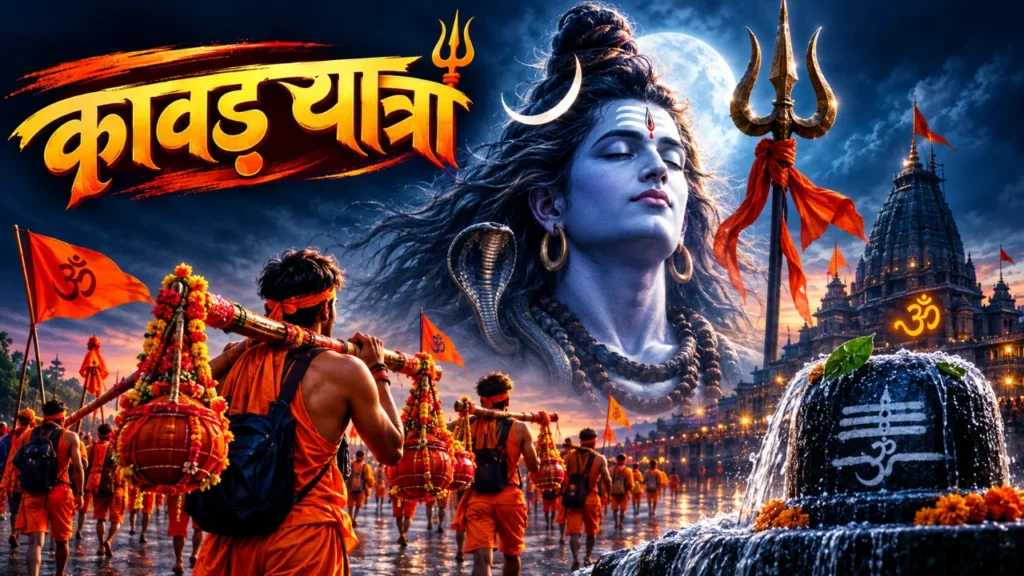
As the monsoon season arrives, the air fills with the chants of ‘Bam-Bam Bhole’ and the sight of millions of devotees clad in saffron, walking barefoot to collect holy Ganga water. This vibrant spectacle, known as the Kanwar Yatra, prompts a question: when did this arduous journey begin? Who is considered the first Kanwariya in ancient texts, and how has this tradition transformed from medieval times to the present day?
Mythological Origins: The Samudra Manthan Connection
The Kanwar Yatra’s roots are deeply embedded in Vedic times and the epic tales of the Devas and Asuras. The word ‘Kanwar’ itself originates from a Sanskrit term for a balanced structure carried on the shoulders, used for transporting materials. Spiritually, it symbolizes more than just carrying water; it represents devotion, penance, and the shedding of ego. As a devotee bears the weight on their shoulders, they resolve to surrender their inner impurities to the divine.
According to Puranic narratives, the tradition’s foundation was laid when Lord Shiva’s body began to burn intensely after consuming the Halahala poison during the Samudra Manthan (cosmic churning of the ocean). To protect the universe from this destructive heat, the deities offered him holy river water, which gradually cooled his burning form. This act of appeasing Shiva’s intense heat with water is considered the spiritual genesis of the Kanwar tradition.
Who Was the First Kanwariya? Exploring Four Key Narratives
While the exact identity of the first Kanwariya is debated among scholars and texts, four prominent figures are often cited in popular lore:
- Ravana: As mentioned, Ravana, the king of Lanka and a devoted Shiva follower, is believed by many to be the first to have brought Ganga water in a Kanwar to offer to Shiva, helping to soothe his burning throat.
- Lord Parashurama: According to folklore in North India, Parashurama collected Ganga water from Garhmukteshwar in a Kanwar and offered it at the ‘Pura Mahadev’ temple in Bagpat, Uttar Pradesh. He is also credited with establishing the Shiva lingam at this site.
- Shravan Kumar: In the Treta Yuga, Shravan Kumar devised a structure similar to a Kanwar to carry his blind parents on a pilgrimage. Upon reaching Haridwar, he collected Ganga water not only for his parents but also offered it to Lord Shiva.
- Lord Rama: In traditions prevalent in the Bihar and Jharkhand regions, Lord Rama is said to have carried Ganga water from Sultanganj in a Kanwar to offer at the Shiva lingam in the Baba Baidyanath Dham in Deoghar.
Historical Glimpses: The Kanwar Yatra Through the Ages
Beyond mythology, historical records suggest a clearer mention of the Kanwar Yatra around the 18th century. In medieval times, the pilgrimage was primarily undertaken by ascetics and renunciates. The journey was far from easy, lacking paved roads or organized facilities. These ascetics would walk hundreds of kilometers barefoot, from places like Sultanganj to Deoghar or Haridwar to their local Shiva temples, carrying the sacred water.
Gazetteers and travelogues from the British era also note groups of saffron-clad sadhus carrying water from the Ganga’s banks during the month of Shravana. At that time, it was considered an extremely difficult and somewhat secretive spiritual practice, not for the faint-hearted.
The Transformation: From Sadhus’ Penance to a Mass Movement
The mid-20th century marked a significant social shift in the Kanwar Yatra. Post the 1960s, the pilgrimage gradually expanded beyond ascetics to include common householders and youth. The development of roads, improved transportation, and growing social consciousness led to an unprecedented surge in participation by the 1980s. What was once a practice followed by a few hundred or thousand devotees transformed into an annual mega-event attracting millions.
This era also saw the emergence of new concepts like the ‘Dak Kanwar,’ where devotees pledge to complete the journey without rest, often running, within a strict time limit. The Kanwar Yatra evolved from a mere religious observance into a cultural festival, particularly in regions like Western Uttar Pradesh, Haryana, Delhi, Rajasthan, and Bihar.
Rules and Rigors of the Kanwar Yatra
The Kanwar Yatra is not just about walking; it involves adhering to stringent rules and disciplines. Devotees observe a strict sattvic lifestyle throughout the month of Shravana, especially from the time they take the vow to undertake the journey.
The most crucial rule is that the Kanwar (the carrying apparatus) must never touch the ground. If a Kanwariya needs to rest, the Kanwar must be hung on a stand or a tree branch. If the Kanwar accidentally touches the ground, the water is considered impure, and the devotee must return to the riverbank to refill it. Additionally, during the journey, wearing leather items is prohibited, intoxicants and non-vegetarian food are strictly forbidden, and one must maintain pure thoughts, free from malice towards others. Addressing fellow Kanwariyas as ‘Bhole’ fosters a sense of equality and brotherhood.
Reflections on Devotion and Responsibility
The history of the Kanwar Yatra teaches us that the essence of devotion lies in service and surrender. Whether it was to alleviate Shiva’s suffering after the Samudra Manthan or Shravan Kumar’s service to his parents, the Kanwar tradition has always conveyed messages of altruism and devotion. In contemporary times, it’s vital to understand the spiritual significance behind the Yatra. Reducing it to mere displays of strength or loud celebrations with DJs diminishes its sanctity. True faith should never cause inconvenience to others. A genuine Kanwar Yatra purifies the ego and promotes discipline and love in society. Adhering to the rules, respecting elders and fellow travelers, and maintaining cleanliness are paramount. When the heart is pure and the intention is sincere, one can truly receive Shiva’s blessings.
Frequently Asked Questions
Who first started the Kanwar Yatra?
According to mythological beliefs, the first to offer Ganga water to Lord Shiva after the Samudra Manthan were the deities. Among humans/devotees, Ravana and Lord Parashurama are considered the first Kanwariyas.
Why is the Kanwar not placed on the ground?
Religious belief dictates that the Kanwar is not placed on the ground to maintain the sanctity and purity of the holy Ganga water. If it touches the ground, the water is considered impure, and one must refill it.
In which month is the Kanwar Yatra observed?
The Kanwar Yatra is primarily observed during the month of Shravana (Sawan). Devotees offer the Ganga water collected from holy rivers to the Shiva lingam on the occasion of Shravana Shivaratri.
What is the difference between Dak Kanwar and a regular Kanwar?
A regular Kanwariya completes the journey on foot, taking rests along the way. In contrast, a Dak Kanwar involves devotees completing the journey without stopping, often running, to offer the water within a specified time limit.