 Vista

A new aquarium looks ready the day you fill it, but it is not safe for fish until beneficial bacteria have colonised the filter and surfaces. Fish waste produces ammonia, which is toxic; bacteria turn it into nitrite, also toxic, and then into nitrate, which is far less harmful. If you are looking for an aquarium nitrogen cycle chart, a fish tank cycling timeline or an ammonia, nitrite, nitrate chart, this guide explains the cycle, fishless cycling and a simple test log. There is no guaranteed number of days: how you know your aquarium is fully cycled depends on water test results, species and your own water conditions, not on the calendar.
What the aquarium nitrogen cycle does
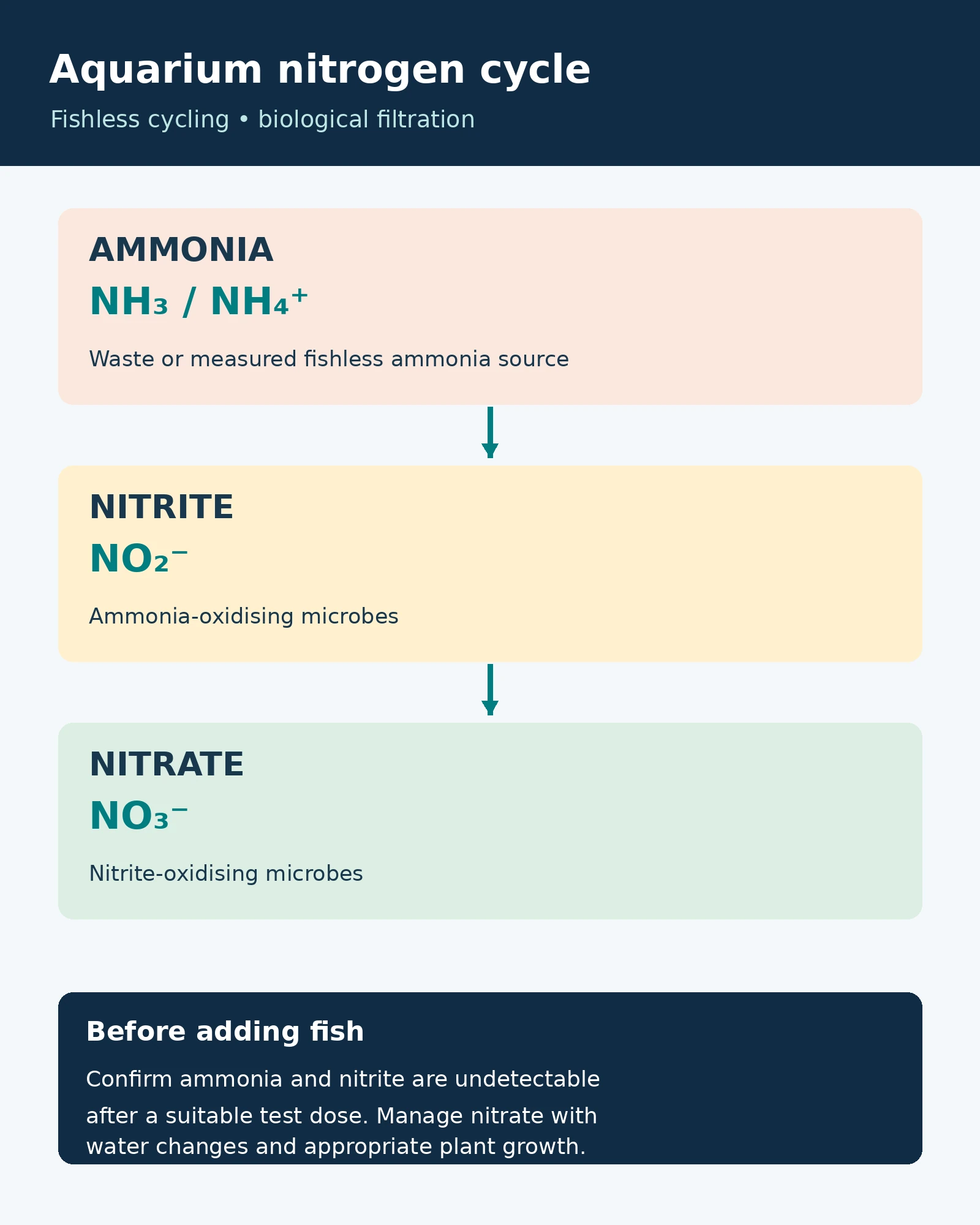
Practical Fishkeeping describes it this way: fish waste releases ammonia, bacteria convert it to nitrite, and other bacteria convert nitrite to nitrate, which regular water changes and plant growth can remove. In practice this means the tank first produces poison, then slowly learns to process it, and finally leaves one much milder compound that you remove by changing water.
Ammonia, nitrite and nitrate
| Step | Compound | For fish |
|---|---|---|
| 1 | Ammonia (waste, uneaten food) | Toxic |
| 2 | Nitrite | Toxic |
| 3 | Nitrate | Much less harmful; removed by water changes |
A simple way to remember the ammonia nitrite nitrate chart: ammonia rises first, then falls as nitrite rises, then nitrite falls as nitrate appears. How fast each stage moves differs from tank to tank, which is why a fixed timeline is unreliable.
Understanding fishless cycling
In fishless cycling you add an ammonia source to a tank with no fish, so bacteria establish without animals being exposed. Practical Fishkeeping notes that a fish-in cycle subjects fish to elevated ammonia and nitrite for a long time, which can cause chronic health problems. For that welfare reason many guides prefer fishless cycling.
Beneficial bacteria, filtration and water testing
- You need test kits for ammonia, nitrite and nitrate; pH is also useful when troubleshooting.
- Bacteria live on filter media and surfaces, so keep the filter running.
- Treat tap water with a conditioner suited to your water supply, since chlorine or chloramine can harm bacteria.
- Use a pure ammonia source and follow your test kit and product instructions for dosing. Handle ammonia with ventilation and gloves.
- Write down every reading so that you can see the trend.
For the first days you may see no movement. Once ammonia starts to fall between readings, begin testing for nitrite, and once nitrite falls, watch nitrate. Use the same brand of test kit throughout so that readings are comparable.
When a tank is ready for livestock
The usual sign is ammonia and nitrite reading at or near zero with nitrate present. One published experiment on AquariumScience.org defined “cycled” as two readings at or below 0.25 ppm for both ammonia and nitrite. That is one author’s definition, not a universal standard. A stronger sign is that the tank takes a dose of ammonia and brings it back to near zero within a set period, repeatedly.
Test results rather than a fixed timetable
Sources vary: one says colonies normally take 4 to 10 weeks, another says several weeks and sometimes less under good conditions. Because of that spread, this guide gives no day count. Very low pH can slow or stall the cycle, and temperature, water chemistry, filter size and species all matter.
Keeping an aquarium test log
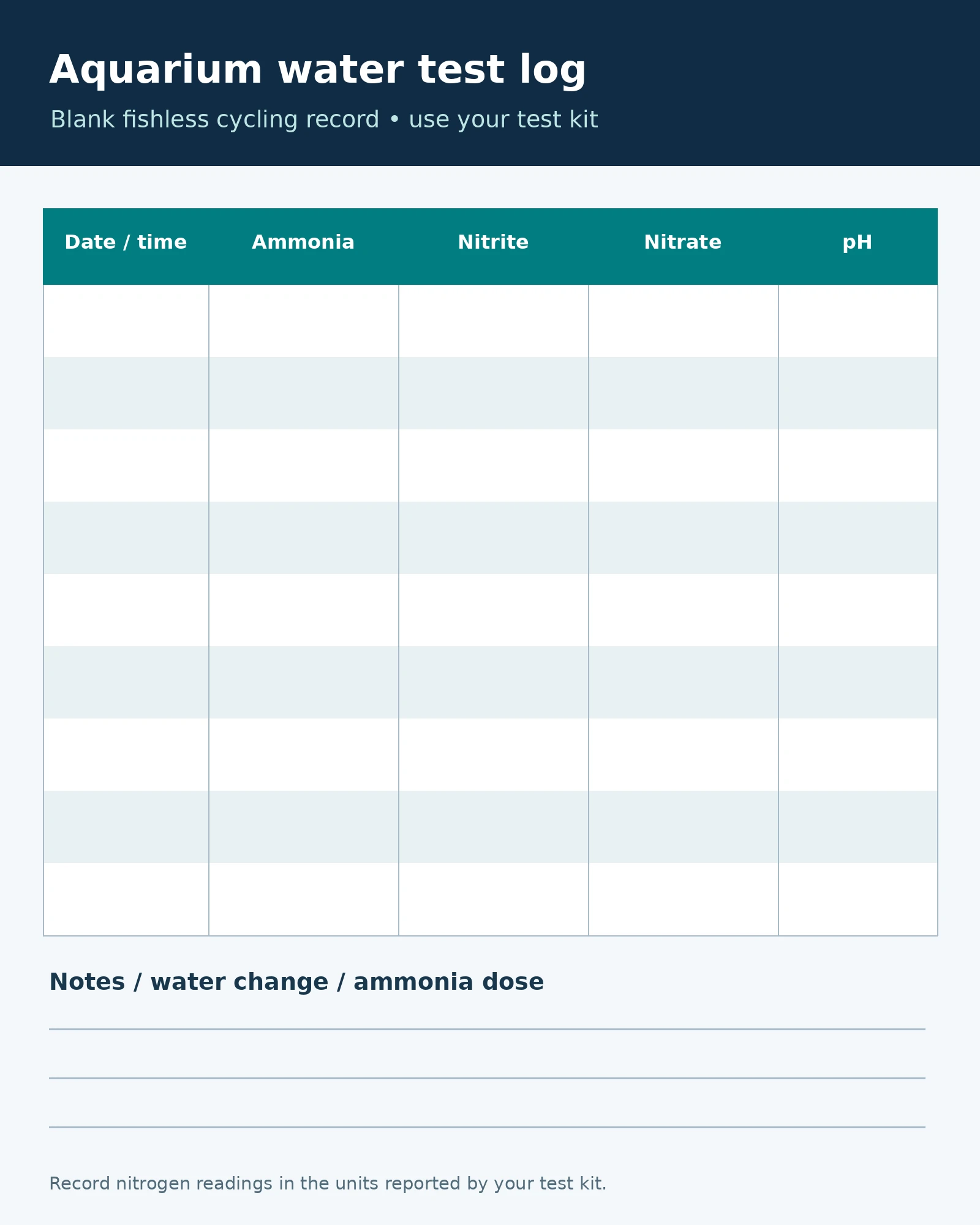
Record date, ammonia, nitrite, nitrate, pH, temperature and notes. The table below is a made-up illustration of the pattern, not real readings.
| Stage (illustrative) | Ammonia | Nitrite | Nitrate |
|---|---|---|---|
| Start | High | 0 | 0 |
| Middle | Falling | Rising | Appearing |
| Ready to consider fish | 0 | 0 | Present |
Recording readings and protecting fish welfare
Add fish only when readings are stable, and stock gradually while you keep testing, because a sudden load of fish can overwhelm young bacteria colonies. Check what your chosen species needs. If ammonia or nitrite appears after fish are in, seek advice from an experienced aquarist, a good fish shop or a vet.
Worked examples, practical checks and limitations
- No change after a week: check the filter is running, the temperature is steady and the test kits are in date.
- Test kit results vary by brand, so use one kit consistently.
- Bottled bacteria products do not replace testing.
- Do not rinse filter media under untreated tap water; chlorine can harm the bacteria. Rinse gently in old tank water instead.
- If pH has dropped very low, the cycle can stall, so check pH alongside the other tests.
Common mistakes and when to seek expert confirmation
Rushing, not testing, switching the filter off and adding many fish at once are the usual errors. If fish look distressed, gasp at the surface or the readings confuse you, ask a local aquarium specialist or vet.
Frequently asked questions
How do I know my aquarium is fully cycled?
Ammonia and nitrite read at or near zero on repeated tests while nitrate is present, ideally after the tank has processed an ammonia dose.
How long does fish tank cycling take?
Commonly several weeks, sometimes longer or shorter. Go by test results, not a date.
Which is more dangerous, ammonia, nitrite or nitrate?
Ammonia and nitrite are both toxic. Nitrate is far less harmful, though water changes should keep it from building up.
Is fishless cycling better for the fish?
It avoids exposing fish to elevated ammonia and nitrite, which is why many guides prefer it.
Which tests do I need during cycling?
Ammonia, nitrite and nitrate, plus pH for troubleshooting. Test at regular intervals and log every result.
Can a cycle stall?
Yes. Very low pH, an unsuitable water supply or a switched-off filter can slow or stop it. Check the basics and the test results first.
Conclusion
Test regularly, log the readings and add livestock only when the numbers say the tank is ready. A few extra weeks of patience before the first fish is one of the cheapest ways to protect them.
Sources
- Practical Fishkeeping: How to Cycle a Fish Tank
- Seriously Fish: Cycling an Aquarium
- AquariumScience.org: Aquarium cycling


















Share Your Opinion
Comments are closed on this post.