 Vista
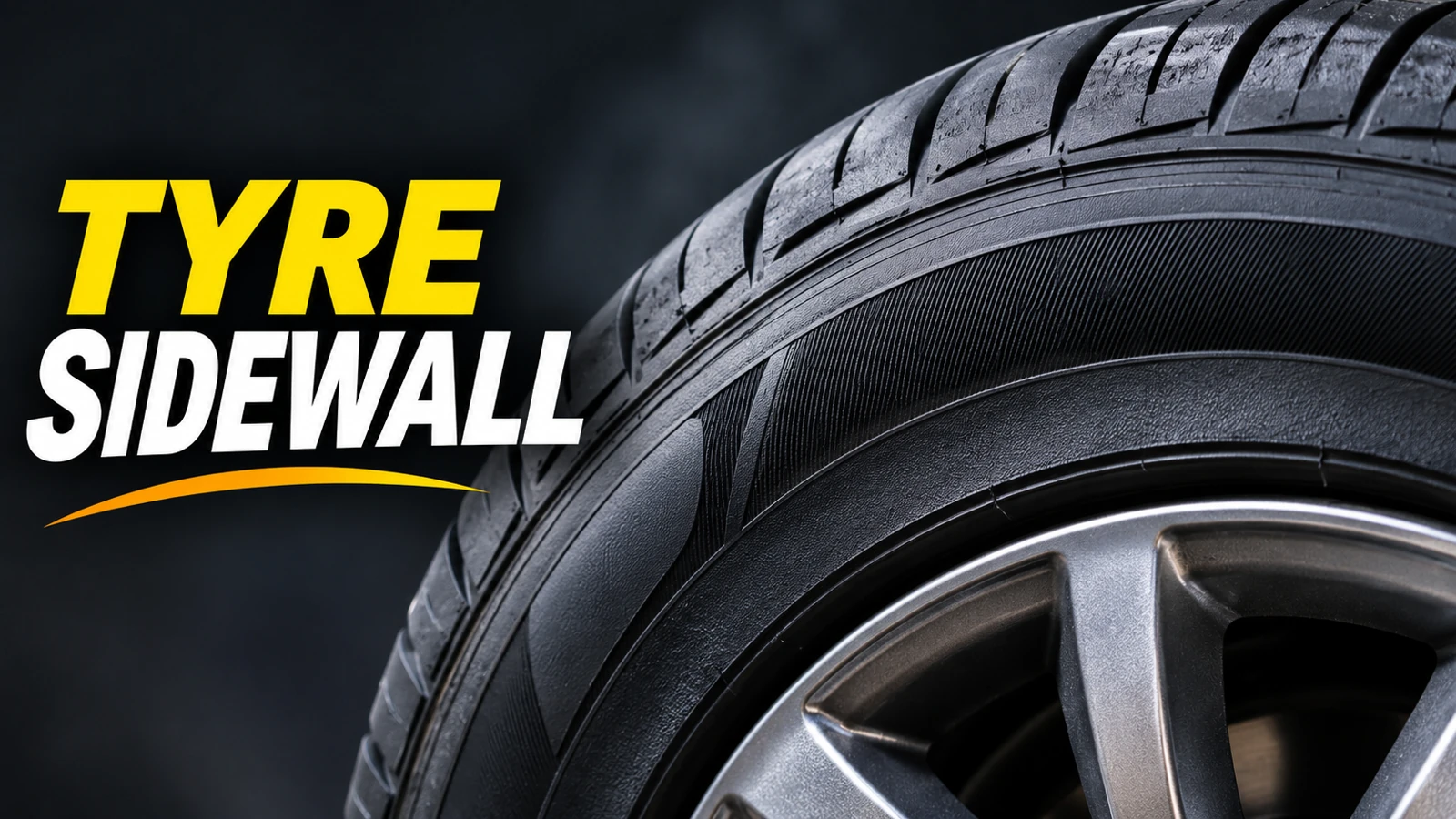
The letters and numbers on a tyre sidewall look cryptic, but they tell you the size, how much load the tyre is rated for, its speed rating and when it was made. This guide decodes a typical code such as 195/65 R15, explains the DOT date code and shows how to read load and speed indexes. The worked figures are teaching examples; always take the correct size, load and pressure for your vehicle from the vehicle maker’s manual or placard.
For a different car topic, see what car dashboard warning lights mean.
How to read tyre sidewall markings
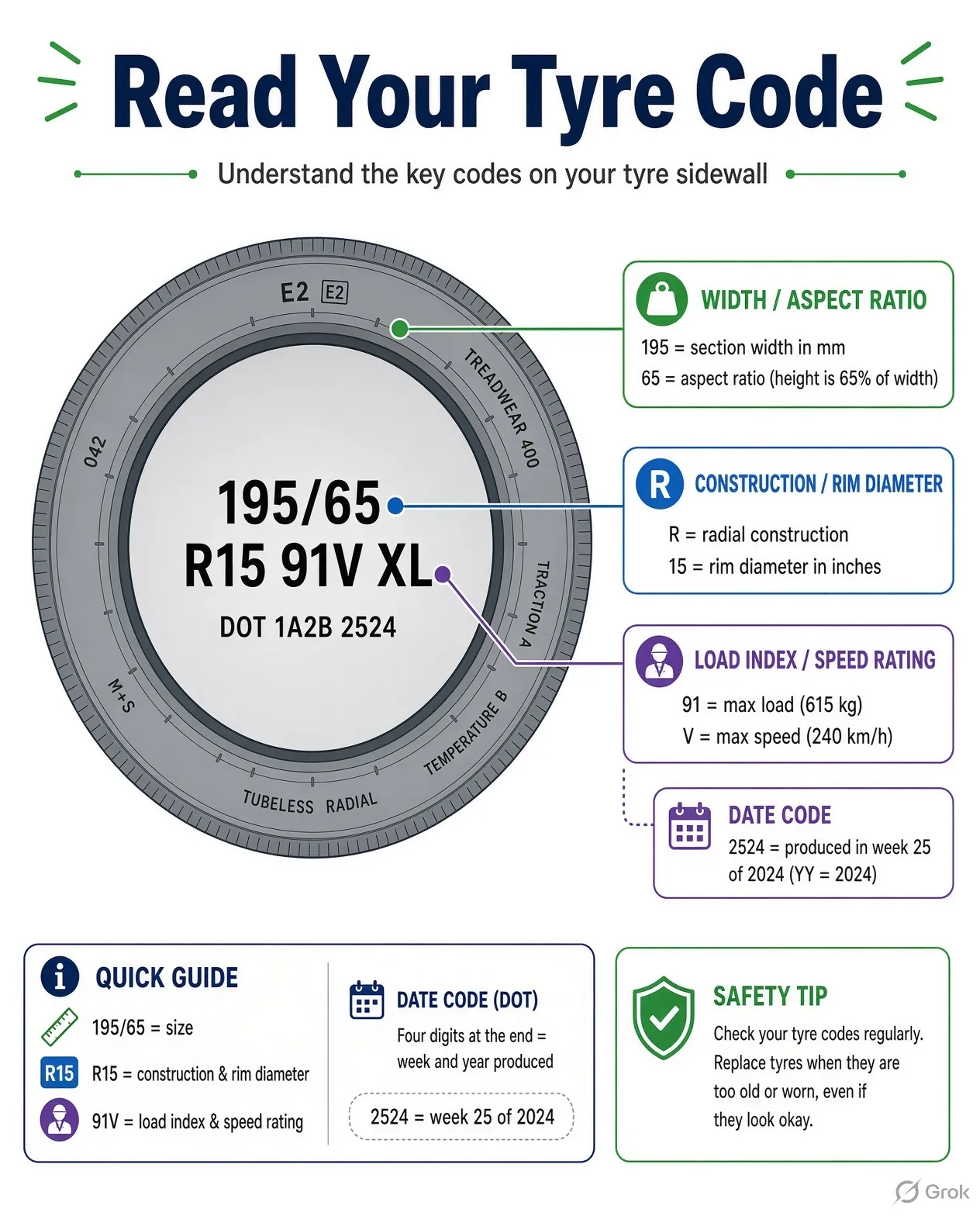
The first three digits give the tyre width in millimetres. The next two give the aspect ratio, the sidewall height as a percentage of the width. The wheel diameter in inches comes after the construction letter.
Width, aspect ratio and rim diameter
| Part | Meaning |
|---|---|
| 195 | Tyre width, 195 mm |
| 65 | Aspect ratio: sidewall height is 65% of the width |
| R | Radial construction |
| 15 | Rim diameter, 15 inches |
Decoding 195/65 R15
Sidewall height = 195 × 0.65 = 126.75 mm. Rim diameter = 15 × 25.4 = 381 mm. Overall diameter ≈ 381 + 2 × 126.75 = 634.5 mm, about 25 inches. This only illustrates how the numbers combine; changing size alters speedometer reading and clearances.
Radial construction and size examples
Some tyres carry a prefix such as P (passenger), as in P215/55R17 94V, but not every tyre shows it. After the size come the load index and speed symbol, for example 195/65 R15 91H.
Finding the tyre manufacturing date
Look for a code beginning with “DOT”. Where it is present, the last four digits show the week and year of manufacture: DOT … 1623 means week 16 of 2023.
DOT date code where applicable and other markings
The full DOT code is sometimes printed on only one side of the tyre, so check the inner side too. Formats can differ by market and for older tyres. Some vehicle makers, such as Kia in its owner’s manual, advise replacing tyres more than 6 years past their manufacturing date. That is one maker’s advice, not a universal rule; follow your vehicle and tyre maker.
Load and speed index explained
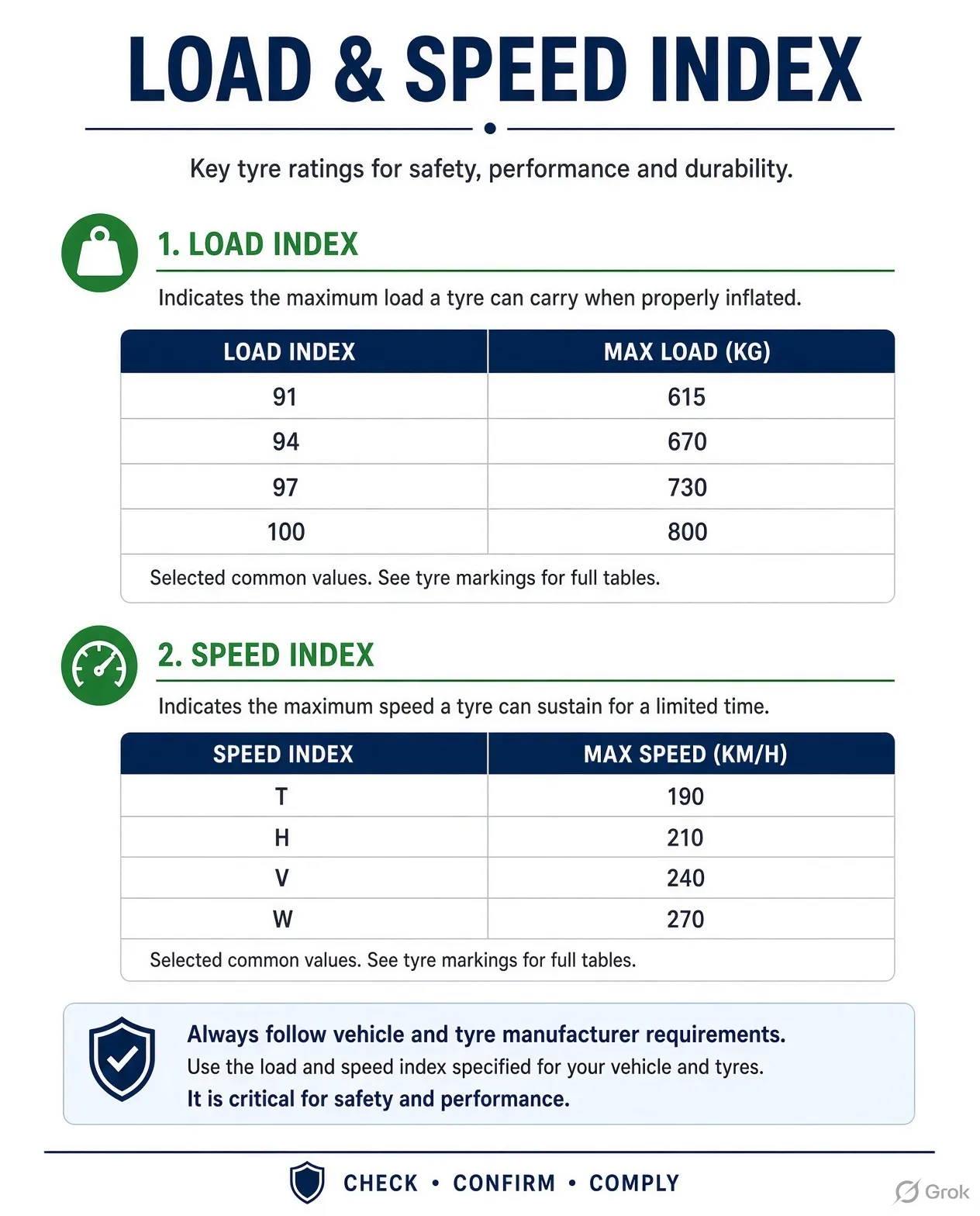
The load index is a code for the maximum load a tyre can carry. Goodyear gives an example: a load index of 91 corresponds to 615 kg. The speed rating is the letter after it.
| Speed symbol | Maximum speed |
|---|---|
| S | 180 km/h |
| T | 190 km/h |
| H | 210 km/h |
| V | 240 km/h |
| W | 270 km/h |
| Y | 300 km/h |
Vehicle specification and replacement limits
Never choose a tyre with lower size, load or speed ratings than your vehicle documents require. Goodyear advises against fitting a higher speed rating than the vehicle manufacturer recommends and against mixing different speed ratings. Read load and speed together.
Worked examples, practical checks and limitations
- Check the manufacture date on any tyre you buy.
- Keep size and ratings consistent across the vehicle unless the maker says otherwise.
- Use the vehicle maker’s recommended pressure, not the tyre’s maximum pressure.
- This guide sets no replacement age and makes no universal safety claim.
Common mistakes and when to seek expert confirmation
Changing rim size, tyre width or choosing a lower load index affects safety. Confirm any change with an authorised tyre dealer or mechanic.
Frequently asked questions
What does 195/65 R15 mean?
195 mm wide, sidewall 65% of width, radial construction, 15-inch rim.
How do I find a tyre’s manufacturing date?
Read the last four digits of the DOT code: two for the week, two for the year.
What is a load index?
A code for the maximum load a tyre can carry, such as 91 for 615 kg per Goodyear’s example.
What do speed ratings like H and V mean?
They give the tyre’s maximum rated speed: H 210 km/h, V 240 km/h. It is a design limit, not a safe-driving target.
Conclusion
Size, load, speed and date: read all four before buying, and let the vehicle maker’s specification decide.
Sources
- Goodyear: how to read your tyre sidewall markings
- Kia India manual: tyre sidewall labeling
- Ford: how to read the tyre sidewall codes
























Share Your Opinion
Comments are closed on this post.