 Vista
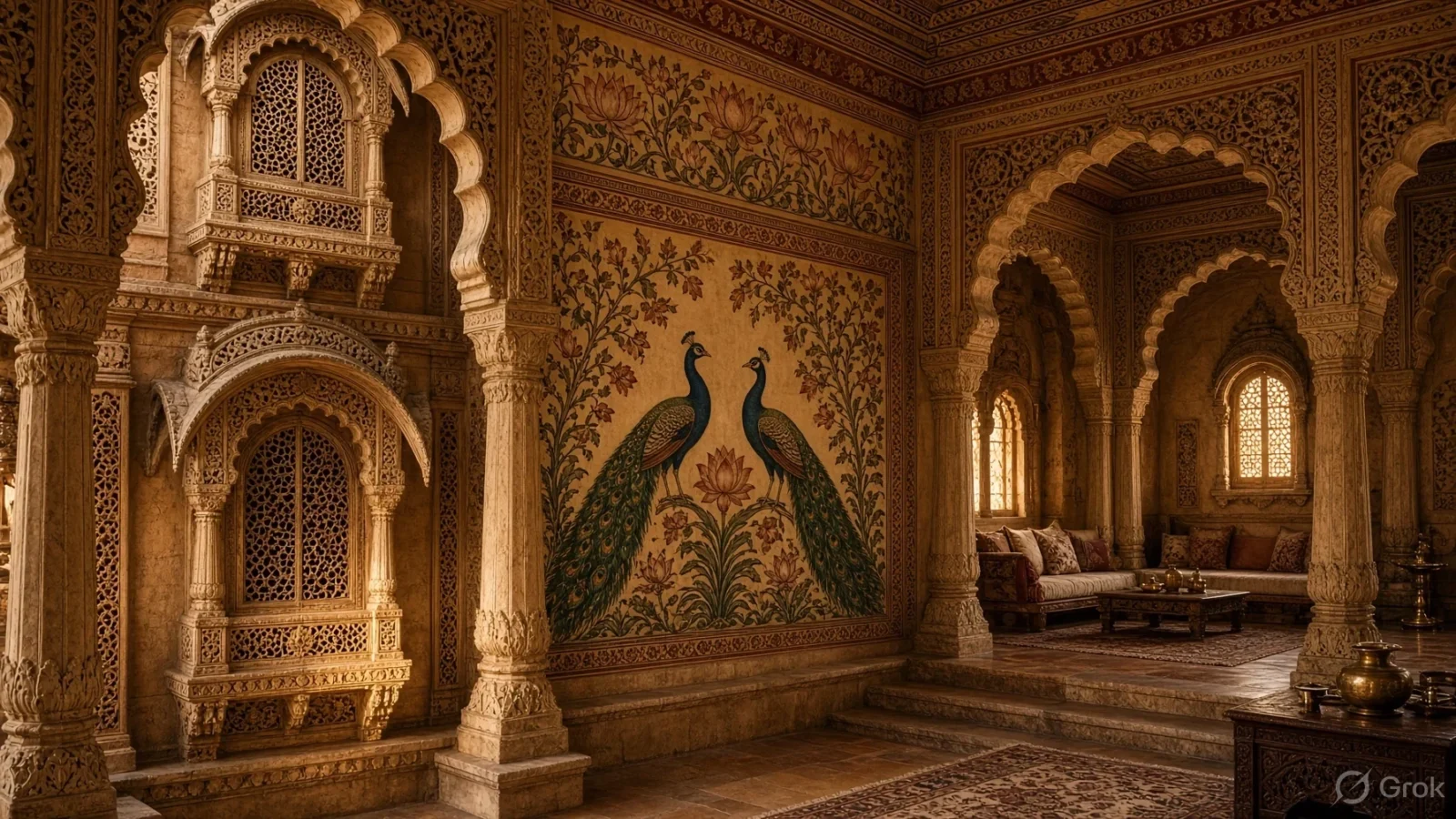
Indian traditional wall painting covers a huge range: the lime-plaster frescoes of Rajasthani havelis, the red-and-white mud-wall art of village homes, carved stone jharokhas that frame a window like a picture, and the repeating border designs that tie a whole wall together. This guide brings them into one practical reference: how each tradition works, how to tell a real architectural jharokha from a painted one, how to draw an easy Rajasthani jharokha design step by step, which borders suit which wall, and how to use traditional wall art in modern homes.
One honesty note before we start. Many pictures online are decorative reinterpretations, not documented historical art. Where we describe a tradition, we say who made it and where. Where we describe a design idea for your own wall, we call it “inspired by” so it is never passed off as a heritage mural. Surface preparation, paint types and colour palettes are practical craft advice, not claims about historical practice.
In this guide
- Traditional Indian Wall Painting
- Rajasthani Haveli Wall Painting
- Rajasthani Jharokha Designs
- Jharokha Wall Painting Ideas
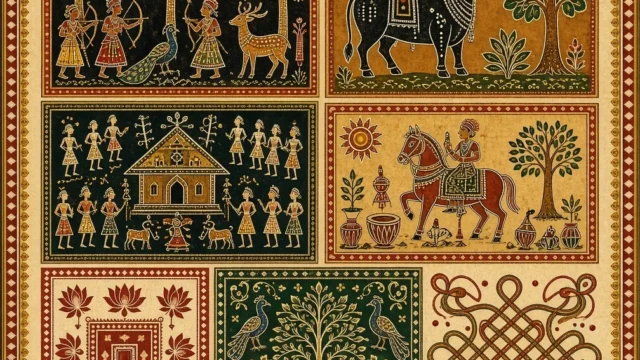
- Indian Folk Art Wall Decoration
- Traditional Indian Border Designs
- Easy Wall Painting Designs for Beginners
- Step-by-Step Jharokha Drawing
- Traditional Wall Art for Modern Homes
- Colour Combinations and Materials
- Traditional Indian Wall Art Design Ideas
- Frequently Asked Questions
Traditional Indian Wall Painting
India has no single wall painting style. The tradition splits into several families, and knowing which family you are looking at makes every later choice, from colours to borders, easier.
Four families of Indian wall art
- Palace and haveli murals: painted on lime plaster by trained artists for rulers and rich merchants, such as the Rajasthani frescoes of Bundi and Shekhawati.
- Temple and devotional murals: painted according to written iconography, such as the Kerala murals (see our Kerala Mural guide).
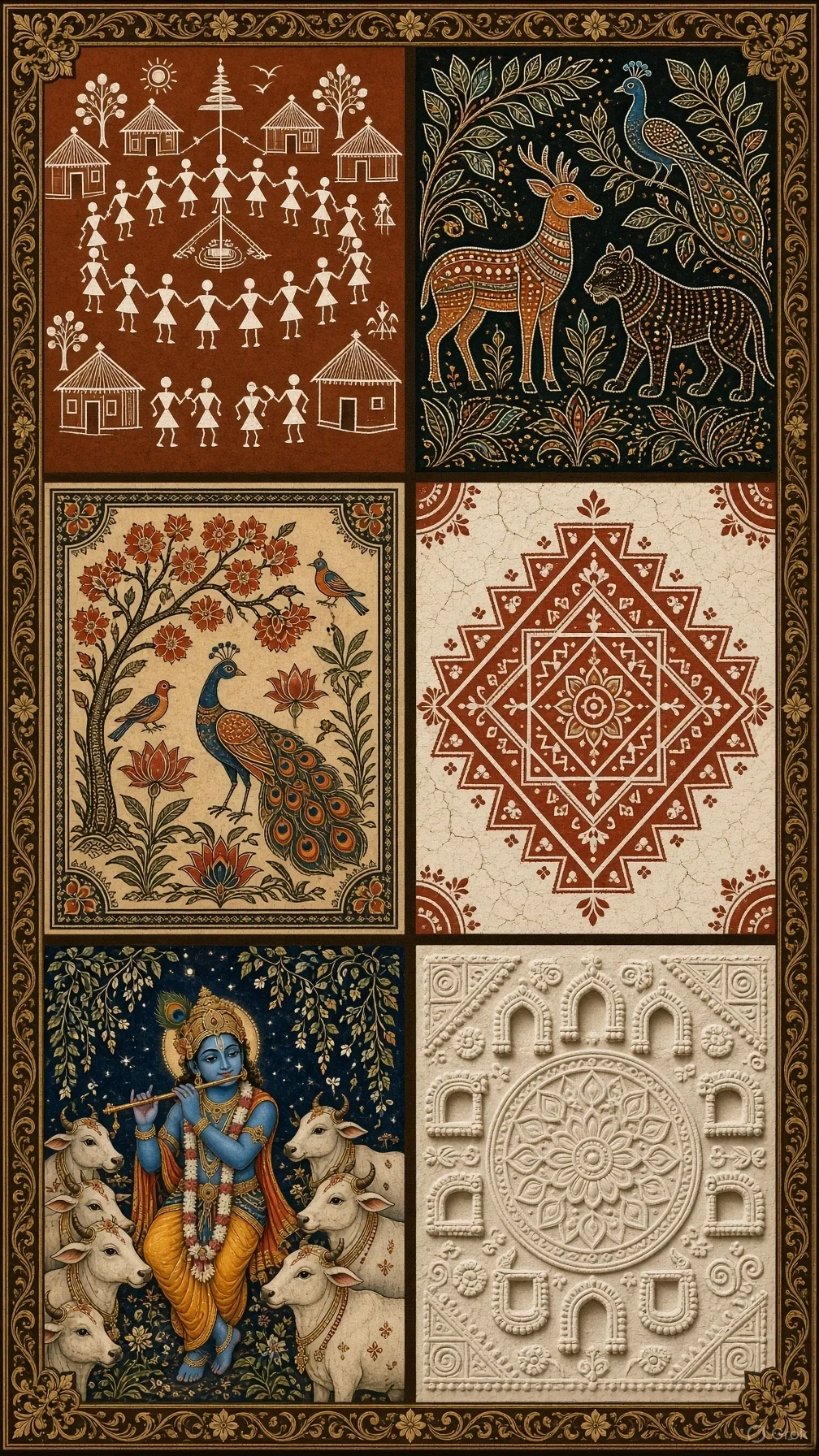
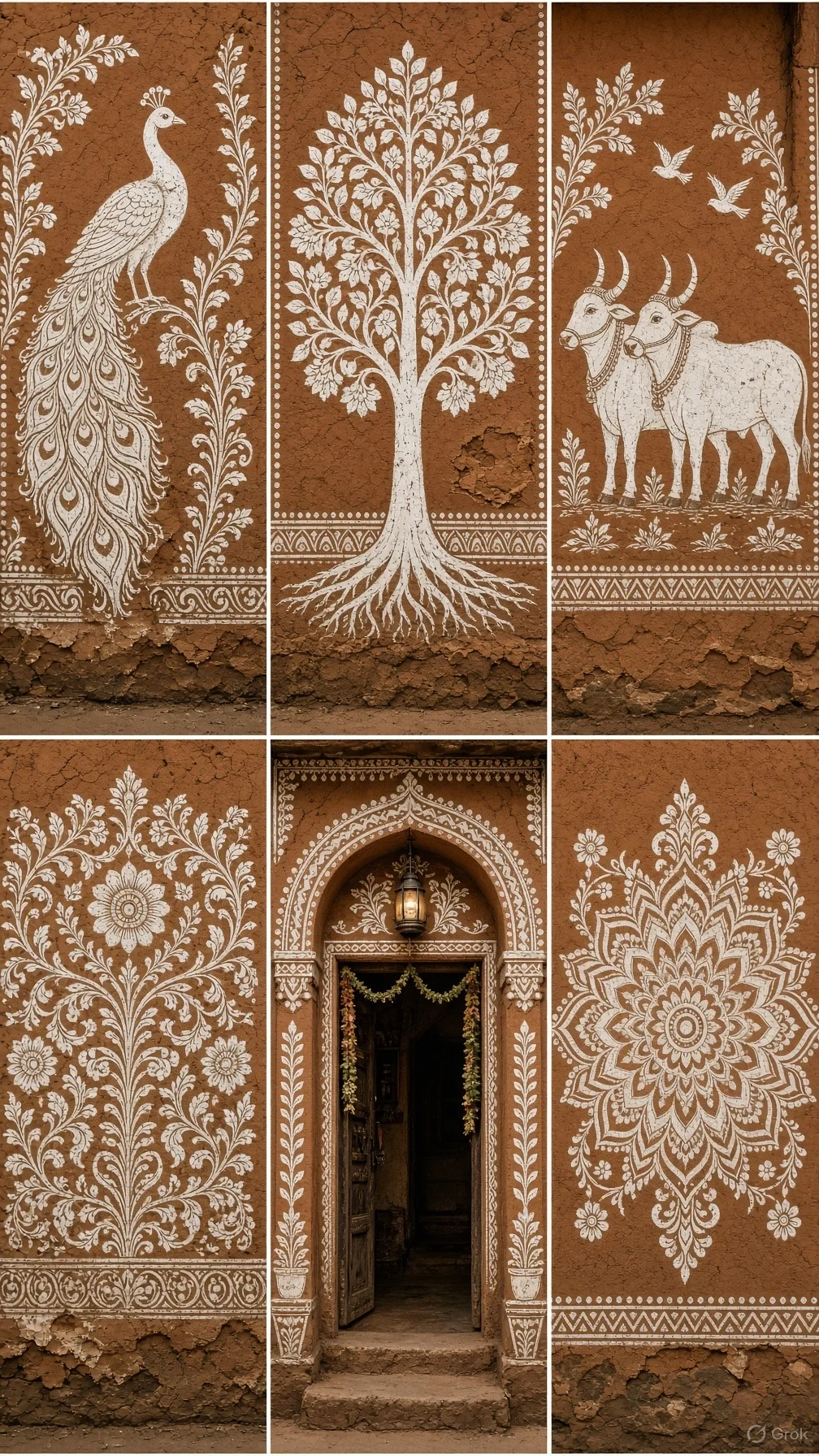
- Village and tribal wall art: made by the women of a household or community on mud walls, usually for festivals and rites, such as Warli, Sohrai, Pithora and Mandana.
- Architectural decoration: carved or painted frames, arches and jharokhas that are part of the building itself.
Materials in the traditional palette
Traditional walls were prepared with lime, clay or cow-dung washes, and colours came from earth, minerals, plants and soot. In Shekhawati, for instance, reported pigments include lamp black (kajal) for black, lime and chalk for white, indigo for blue, red stone powder (geru) for red and saffron for yellow. Modern homes use primer, emulsion and acrylic paint instead, which is fine for decoration as long as you do not describe the result as a heritage fresco.
State-wise wall art comparison
| State | Wall art tradition | Surface and material | Best for decoration |
|---|---|---|---|
| Rajasthan | Shekhawati and Bundi murals; Mandana | Lime plaster; mud wall with geru and white chalk | Arches, jharokhas, elephants, peacocks; geometric red-white panels |
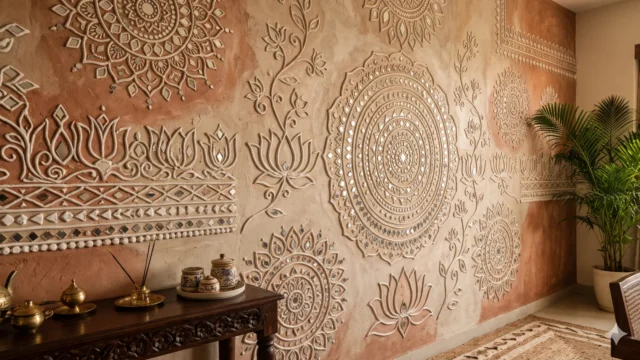
| Gujarat (Kutch) | Lippan mud and mirror work | Clay relief with mirrors | Round panels, nameplates, accent walls |
| Maharashtra | Warli | Mud wall, white rice-paste lines | Borders, staircase and corridor walls |
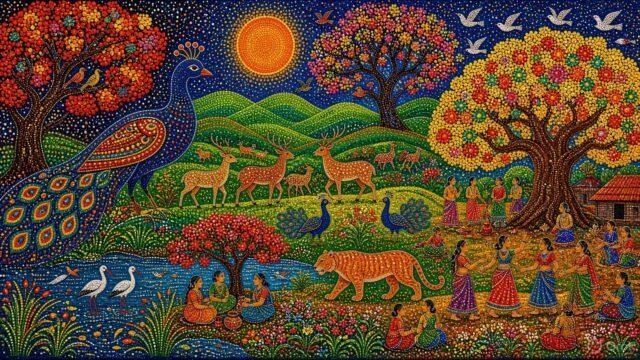
| Madhya Pradesh | Gond, Bhil, Pithora | Walls, paper and canvas | Tree, bird and dot-pattern panels |
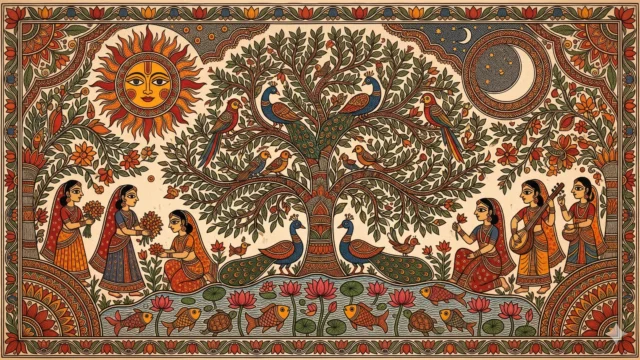
| Bihar | Madhubani (Mithila) | Walls, paper, cloth | Fish, lotus and peacock panels with line borders |
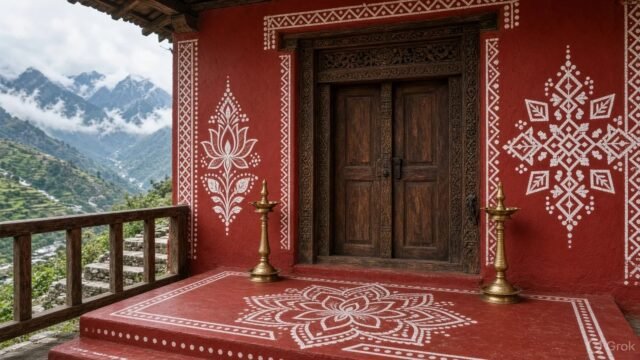
| Uttarakhand | Aipan | Red geru base, rice-paste designs | Entrance, puja corner, thresholds |
| Jharkhand | Sohrai and Khovar | Mud wall, natural earth colours | Animal and vine panels |
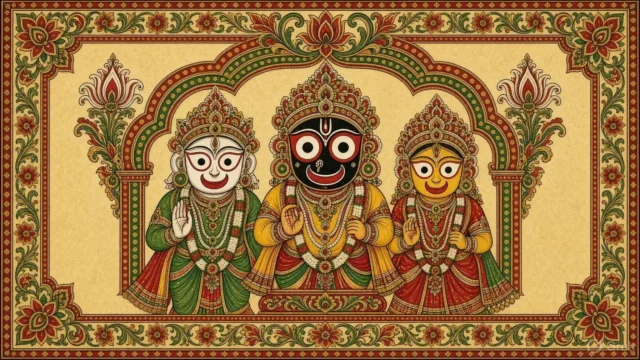
| Odisha | Pattachitra; Saura | Cloth; mud wall with rice paste | Border language, framed panels |
| Kerala | Kerala mural | Temple and palace walls, five-colour palette | Lotus and deity-inspired panels, carefully |
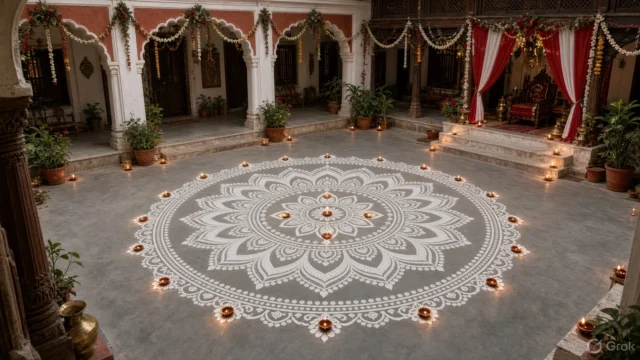
| West Bengal | Alpana | Floor and threshold, rice paste | Circular lotus designs, entrance |
| Tamil Nadu | Kolam | Floor, rice flour | Symmetry ideas for wall borders |
| Andhra Pradesh | Kalamkari | Cloth, natural dyes | Tree of life hangings and wall textiles |
For deeper reading on the tribal and ritual traditions in this table, see our Indian tribal and folk art state-wise guide.
Rajasthani Haveli Wall Painting
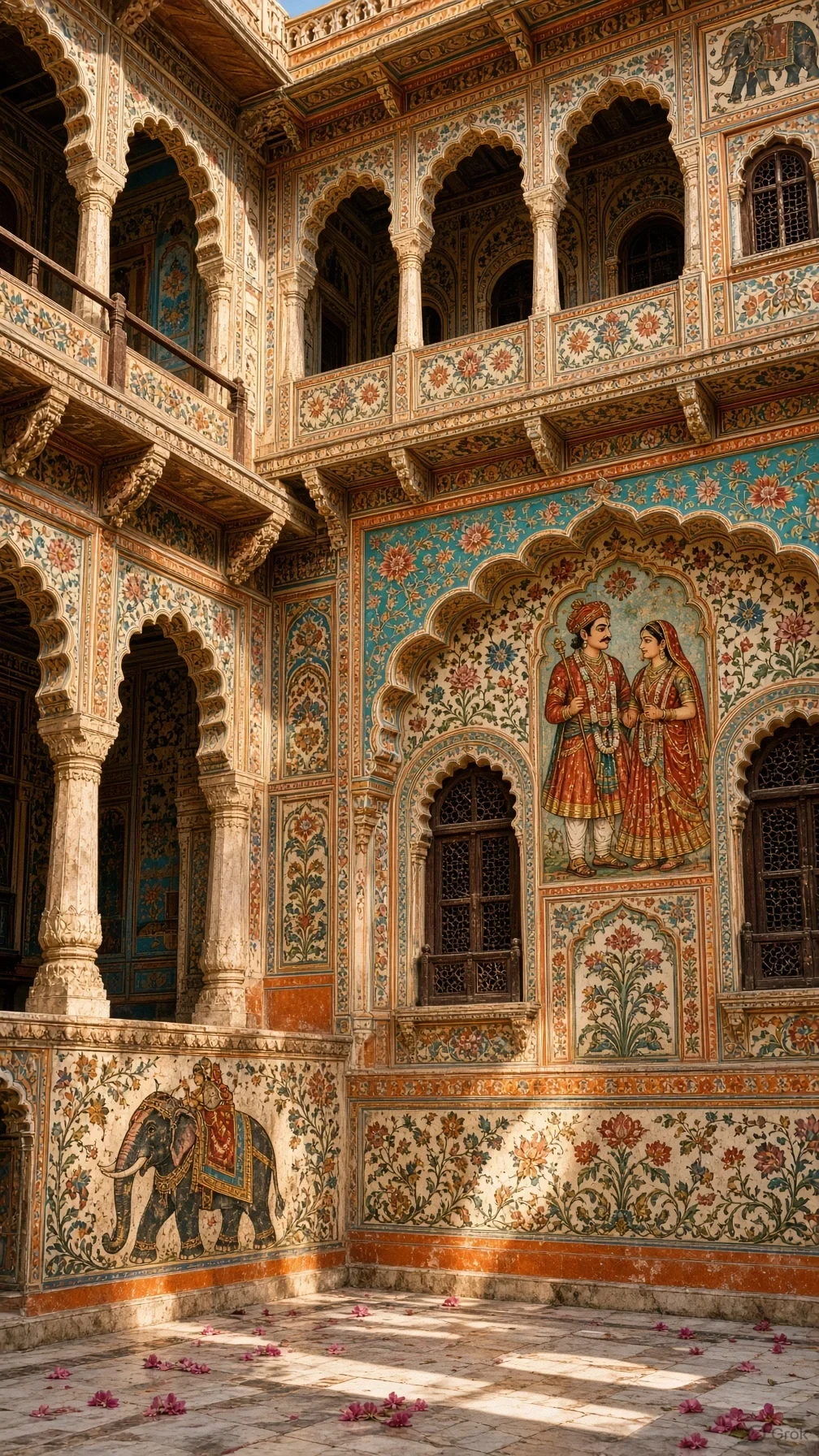
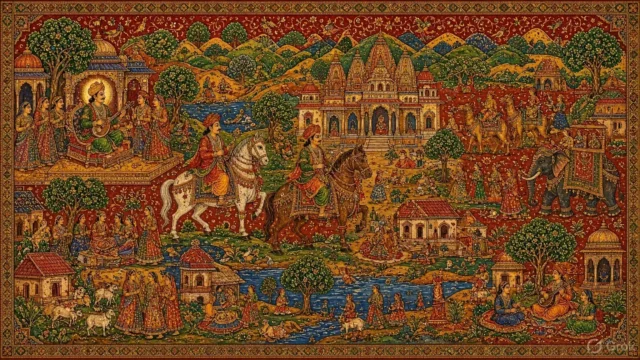
A haveli is a courtyard mansion built by a wealthy family, and in Rajasthan the finest ones carried paintings on their outer walls, inner courtyards and gateways. The best known concentration is Shekhawati, where painted havelis were built by Marwari merchant families in and around towns such as Nawalgarh, Mandawa, Fatehpur, Ramgarh and Dundlod. One travel source puts Nawalgarh at nearly 200 fresco-decorated havelis.
How Shekhawati walls were painted
The walls are layered lime plaster over brick or stone. Painters worked either on wet plaster (fresco buono, often called arayish locally) or on dried plaster (secco), where lime or natural gum is used as an additional binder. Early colours were mineral and vegetable pigments. By the mid-19th century, as British influence grew, imported chemical pigments from England and Germany gradually replaced natural dyes, which is one reason older and newer panels in the same haveli can look quite different.
Motifs you will see again and again
- Flowers and vines in repeating borders that frame larger scenes.
- Elephants and horses in processions, shown in profile.
- Peacocks filling corners and archway spandrels.
- Cusped arches that frame scenes like windows.
- Gods and stories from Krishna lila and the epics, alongside local hunting and daily life scenes.
- Colonial-era subjects in later panels, reflecting the merchants’ travels and the changing times.
Rajasthan’s royal murals followed a related technique. The Chitrashala at Bundi Palace is famous for murals of Krishna lila, hunts and courtly life, and other forts and palaces such as Mehrangarh also preserve painted walls. Scholars describe the Rajasthani technique as painting on wet plaster, sometimes called the “Jaipur process”, with burnishing for a lasting sheen. Treat that as the traditional method, not something home paint can reproduce.
Taking haveli inspiration home
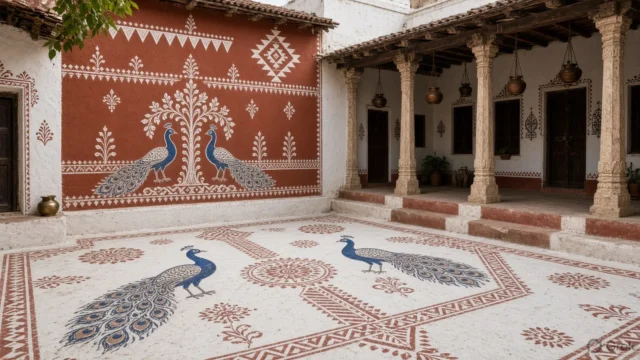
You do not need a fresco to borrow haveli character. A single cusped arch outline, a peacock in a corner and a floral vine border in two or three colours can give a wall a haveli feel. Keep scenes simple and label them “haveli-inspired”.
Rajasthani Jharokha Designs
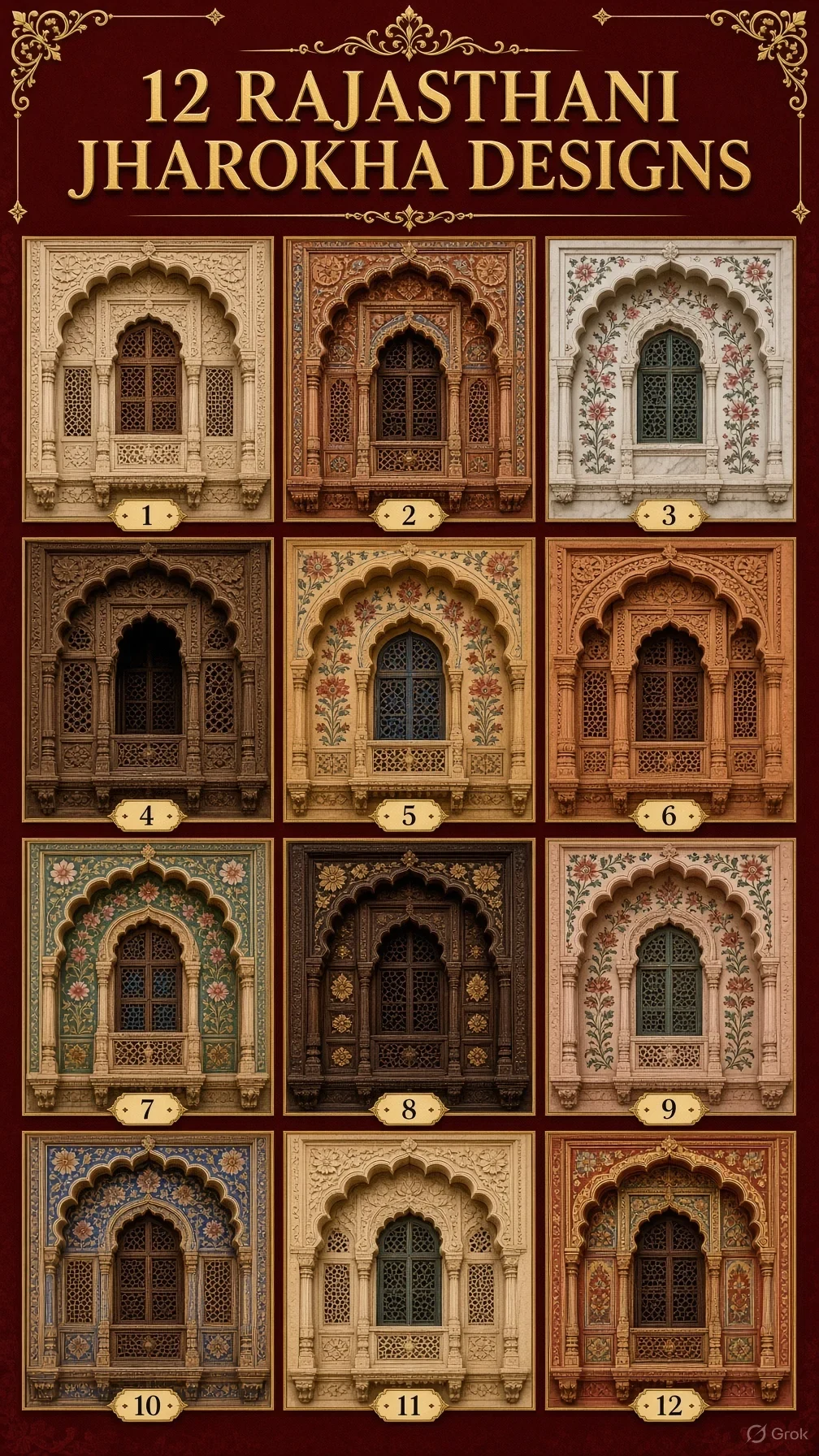
A jharokha is an overhanging enclosed balcony or stone window that projects from a wall on carved brackets. It is most strongly associated with Rajput architecture and with Mughal-era palace design, and it served practical purposes: light, air, shade and a view of the street from within.
What makes a real jharokha
- Projection: it juts out from the wall on ornate corbels or brackets, forming a small chamber or balcony.
- Three-sided enclosure: filled with latticework (jaali) or carved panels.
- Chhajja: a deep overhanging sunshade above, often with a small dome or canopy.
- Material: locally quarried stone such as sandstone, and marble in some palaces.
Famous examples
Hawa Mahal, Jaipur. Built in 1799 by Maharaja Sawai Pratap Singh and designed by Lal Chand Ustad, it takes its name from 953 windows, or jharokhas, set in a honeycomb pattern. It was built so that royal women observing purdah could watch city life without being seen, and the openings also help air movement.
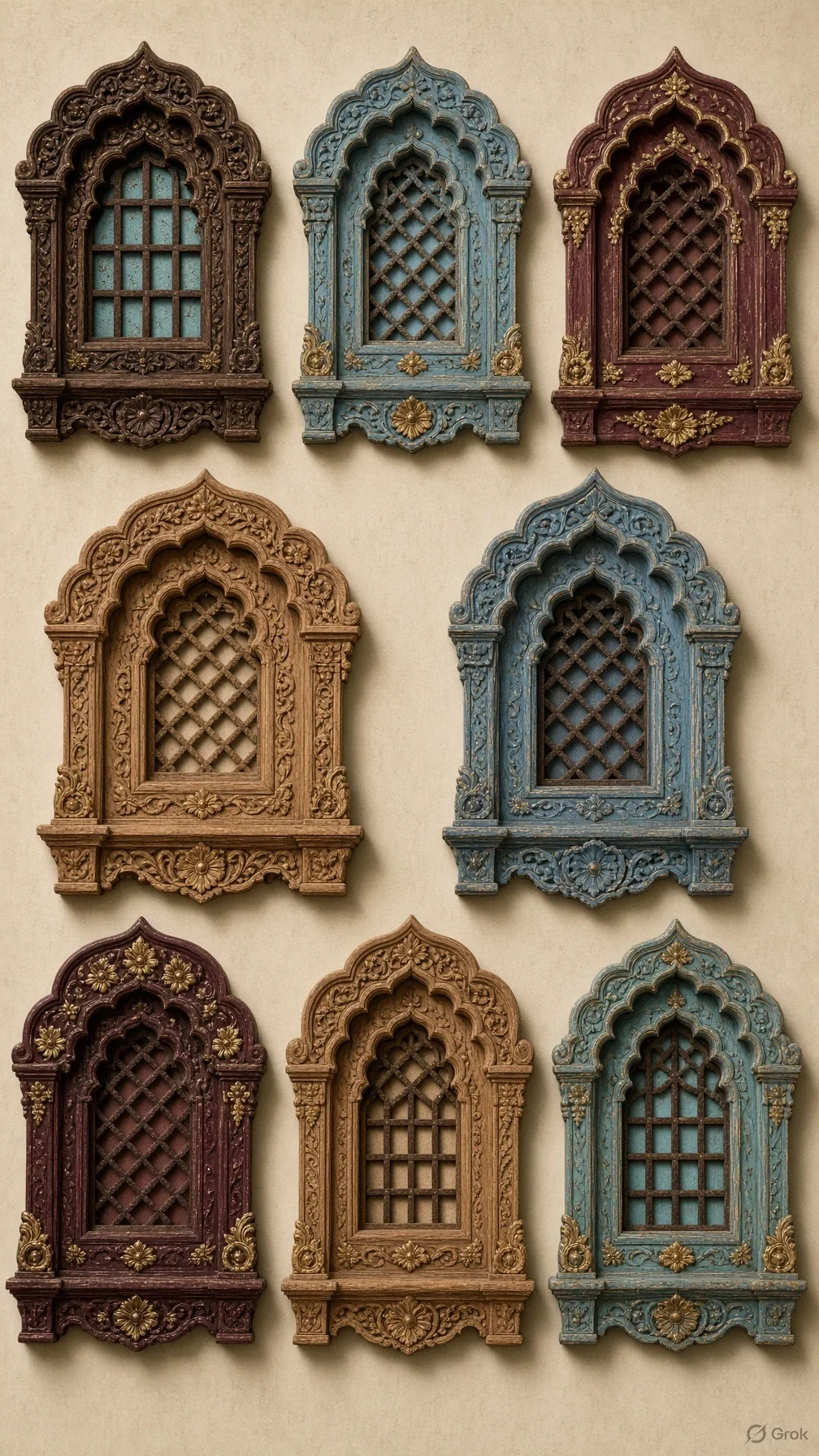
Patwon ki Haveli, Jaisalmer. A cluster of five havelis, the first commissioned in 1805 by the merchant Guman Chand Patwa, built mainly of yellow sandstone and known for fine stone carving, latticework and around sixty balconies or jharokhas.
Mehrangarh, Jodhpur and other forts. Many Rajasthani forts and palaces have jharokhas facing courtyards and streets, each with its own carved bracket and canopy style.
Cultural significance
A jharokha was also a stage. The tradition of jharokha darshan saw a ruler appear at such a window to be seen by the public. That is why jharokha frames, with their arch, canopy and brackets, became shorthand for dignity and welcome in Indian design.
Architectural versus painted jharokha
| Feature | Traditional architectural jharokha | Modern painted jharokha |
|---|---|---|
| What it is | A real projecting balcony or window | A flat painted illusion of one, often trompe l’oeil |
| Made from | Carved stone, marble or wood | Paint, stencil or wall decal on a plain wall |
| Function | Light, air, shade, viewing | Decoration only |
| Cost and skill | High; trained stone carvers | Low to moderate; a beginner can try |
| How to describe it | Jharokha | Jharokha-inspired wall painting |
Jharokha Wall Painting Ideas
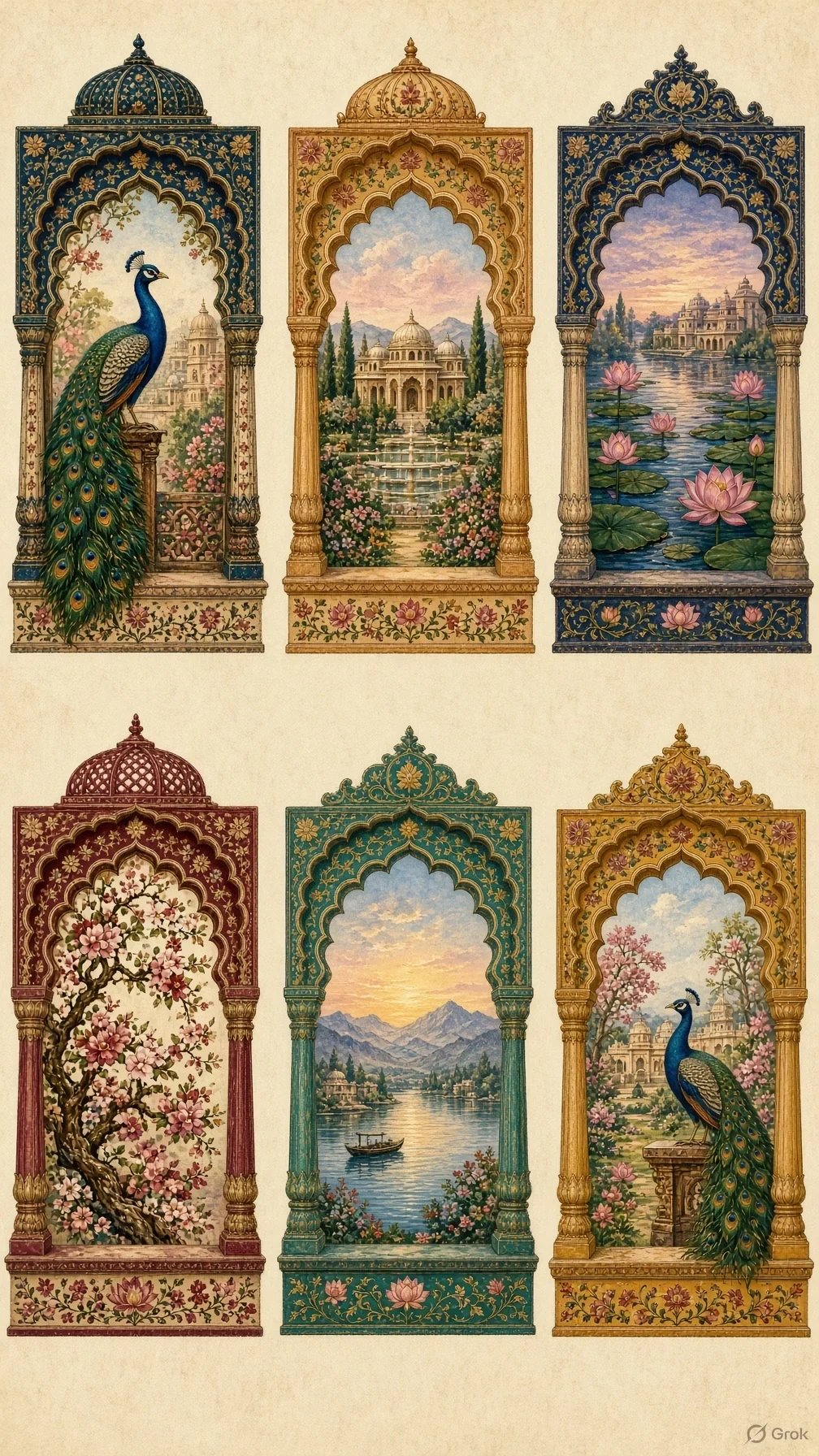
A jharokha wall painting uses perspective and shading to make a flat wall look like it has a carved balcony. It is popular for plain living room walls, staircase landings and dead-end corridors where a real window cannot be added.
Idea 1: The painted window with a view
Paint a cusped arch frame, then fill the inside with a soft landscape, a palace silhouette or a sunset sky. Use darker colour on the frame and lighter in the view to push the scene back.
Idea 2: The floral jharokha
Skip the scenery and fill the frame with a lattice of small flowers or a jaali pattern. This is the easiest option and works well for beginners.
Idea 3: The palace-inspired composition
Group three jharokhas of different heights on one wall, like a palace facade, with a chhajja line above each. Add a peacock on the brackets.
Idea 4: Pair with a mirror or niche
Build the painted frame around a real mirror, shelf or diya niche so the “window” has something real in it.
Making the illusion work
- Keep the light source consistent: shade the same side of every bracket and ledge.
- Add a thin dark line under the chhajja and brackets to suggest depth.
- Do not crowd the frame. One strong arch reads better than five small ones.
Indian Folk Art Wall Decoration
Folk art suits walls because it is flat, graphic and built from repeating shapes. Here is how each tradition translates, with a link to the full guide for each.
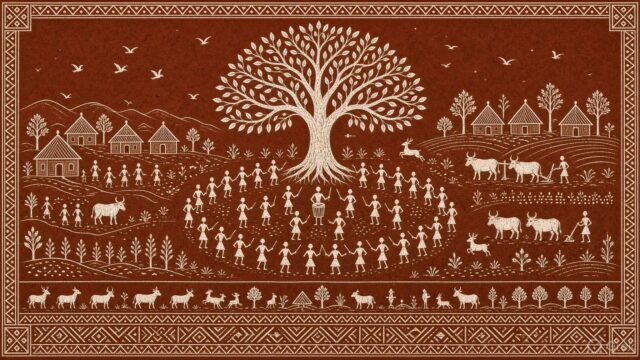
- Warli: white stick-figure dancers and huts on a terracotta or dark wall. Great for staircases. See the Warli art drawing guide.
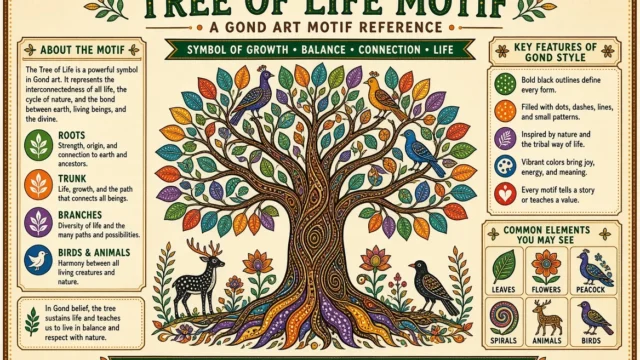
- Gond: trees, birds and animals filled with dots and dashes. See the Gond art tutorial.
- Bhil: bright dot-built animals and village scenes. See the Bhil art guide.
- Madhubani: fish, lotus and peacocks with line-pattern borders. See the Madhubani designs guide.
- Mandana: red ground with white geometric patterns, from Rajasthan and Madhya Pradesh. See the Mandana art guide.
- Aipan: geru-and-rice-paste patterns from Kumaon, suited to entrances and puja corners. See the Aipan motifs chart.
- Lippan: raised clay and mirror work from Kutch. See the Lippan art guide.
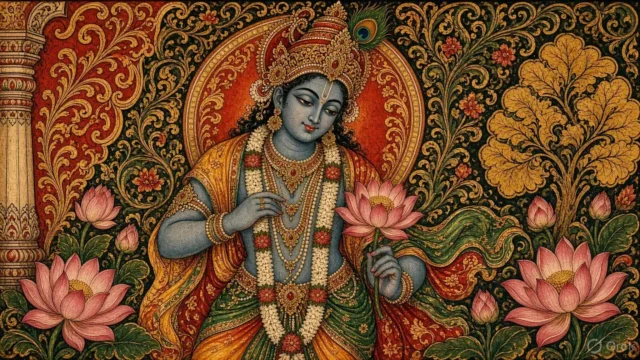
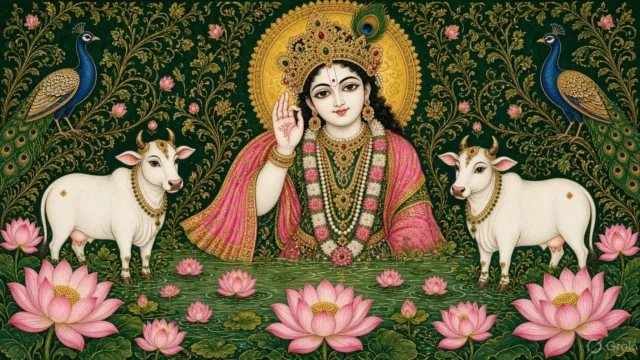
- Pichwai: Nathdwara cloth paintings of Shrinathji with cows and lotuses. See the Pichwai art guide.
Doorway and window decoration
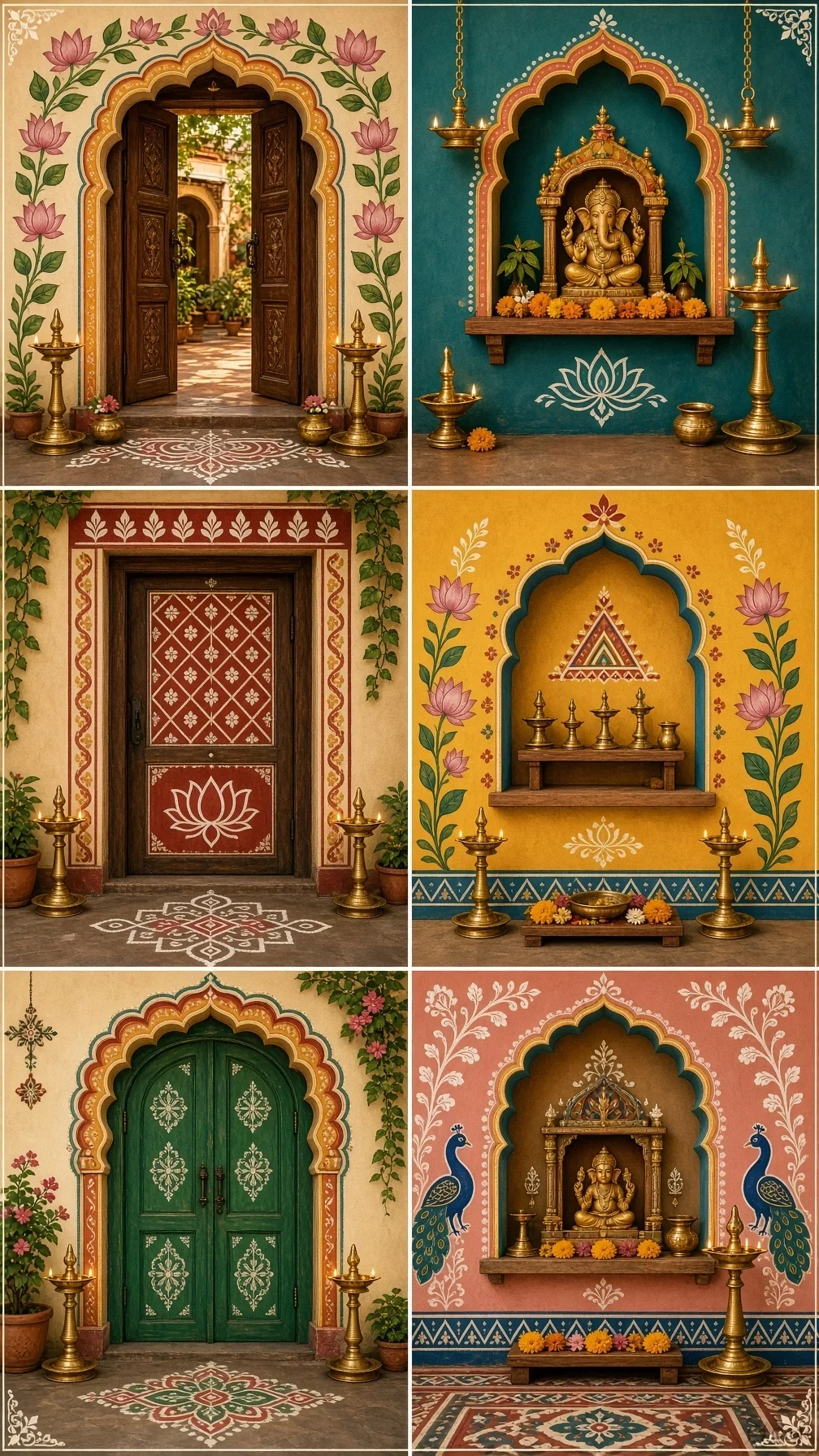
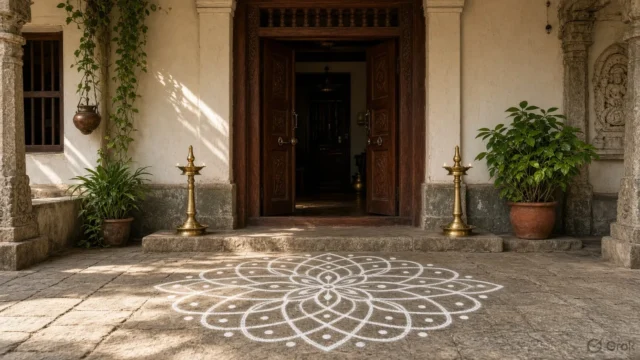
Thresholds are where Indian homes traditionally concentrate decoration. A narrow border around a door frame, an arch above it and a small motif at each lower corner follow the old logic of marking the entrance. Aipan, Mandana and Alpana patterns work here (see the Alpana guide).
A note on respect
Some of these arts are sacred or ritual for the communities that made them. Credit the tradition, call your own work “inspired by”, and do not reproduce ritual scenes as casual decoration.
Traditional Indian Border Designs
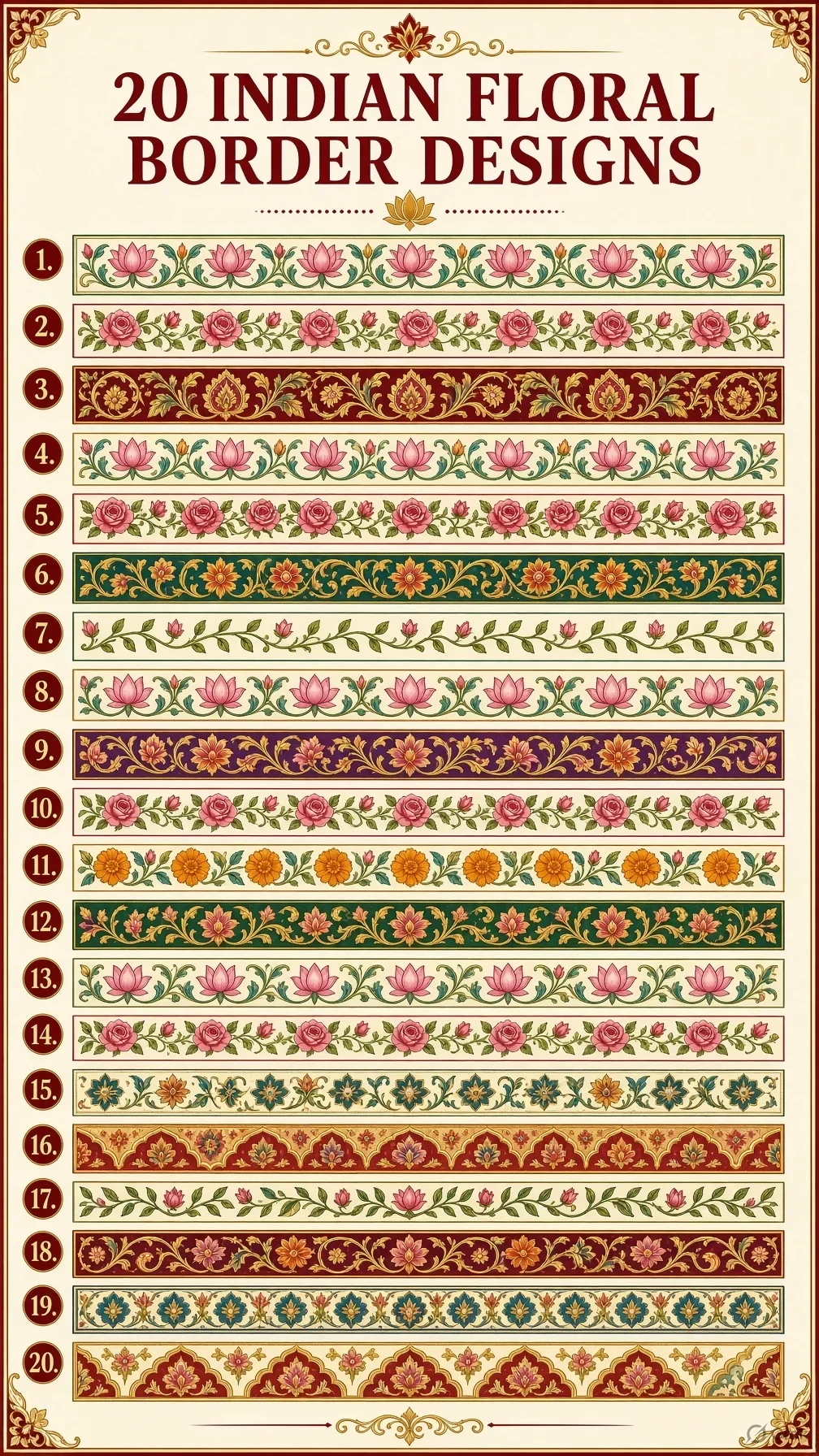
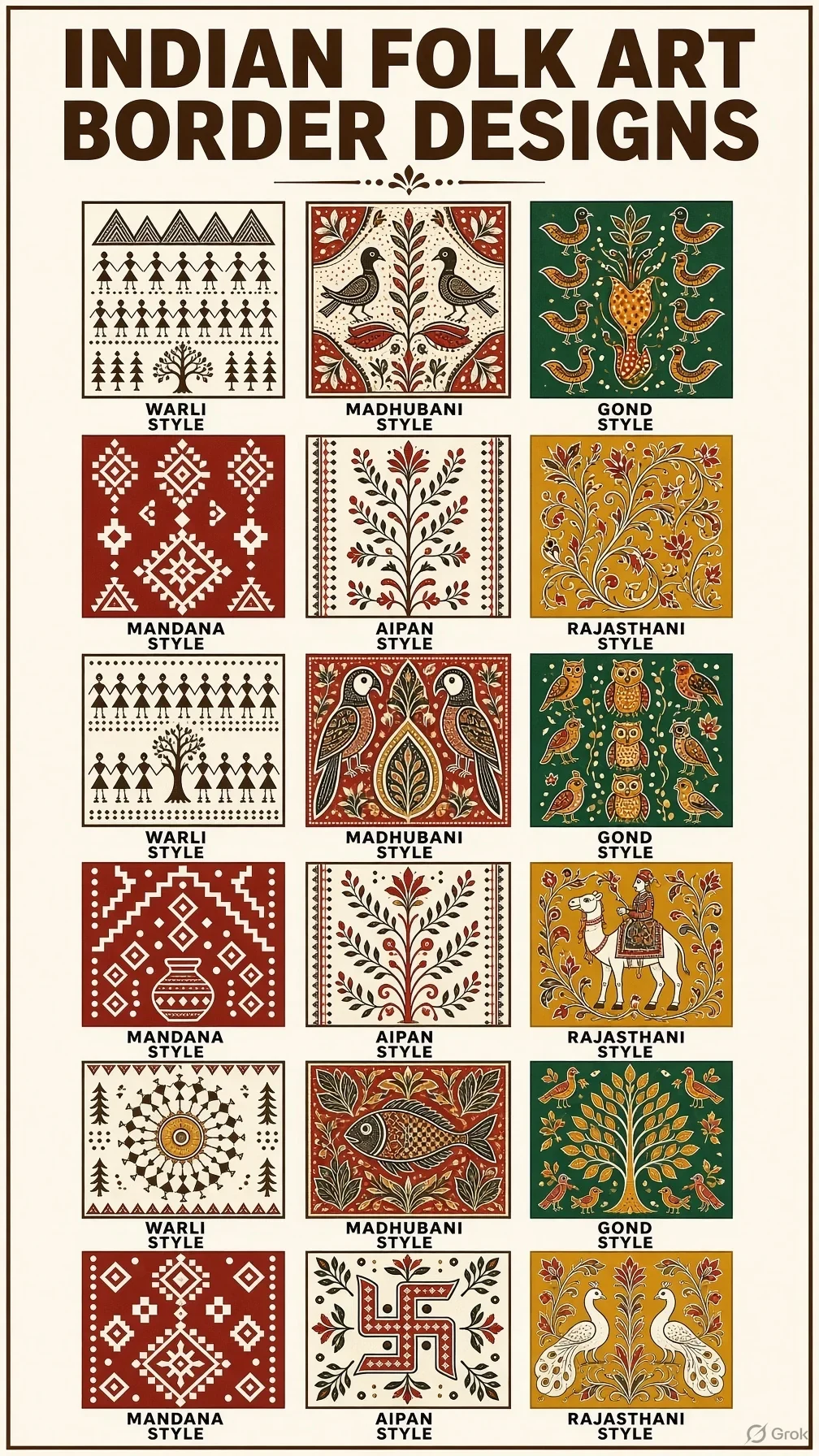
Borders are the quiet backbone of Indian wall art. They frame a panel, divide a wall into bands and hide the join between wall and floor or ceiling. Shekhawati painters used borders of decorative designs of their era or local flowers and animals, and the same idea carries through folk art.
Floral and vine borders
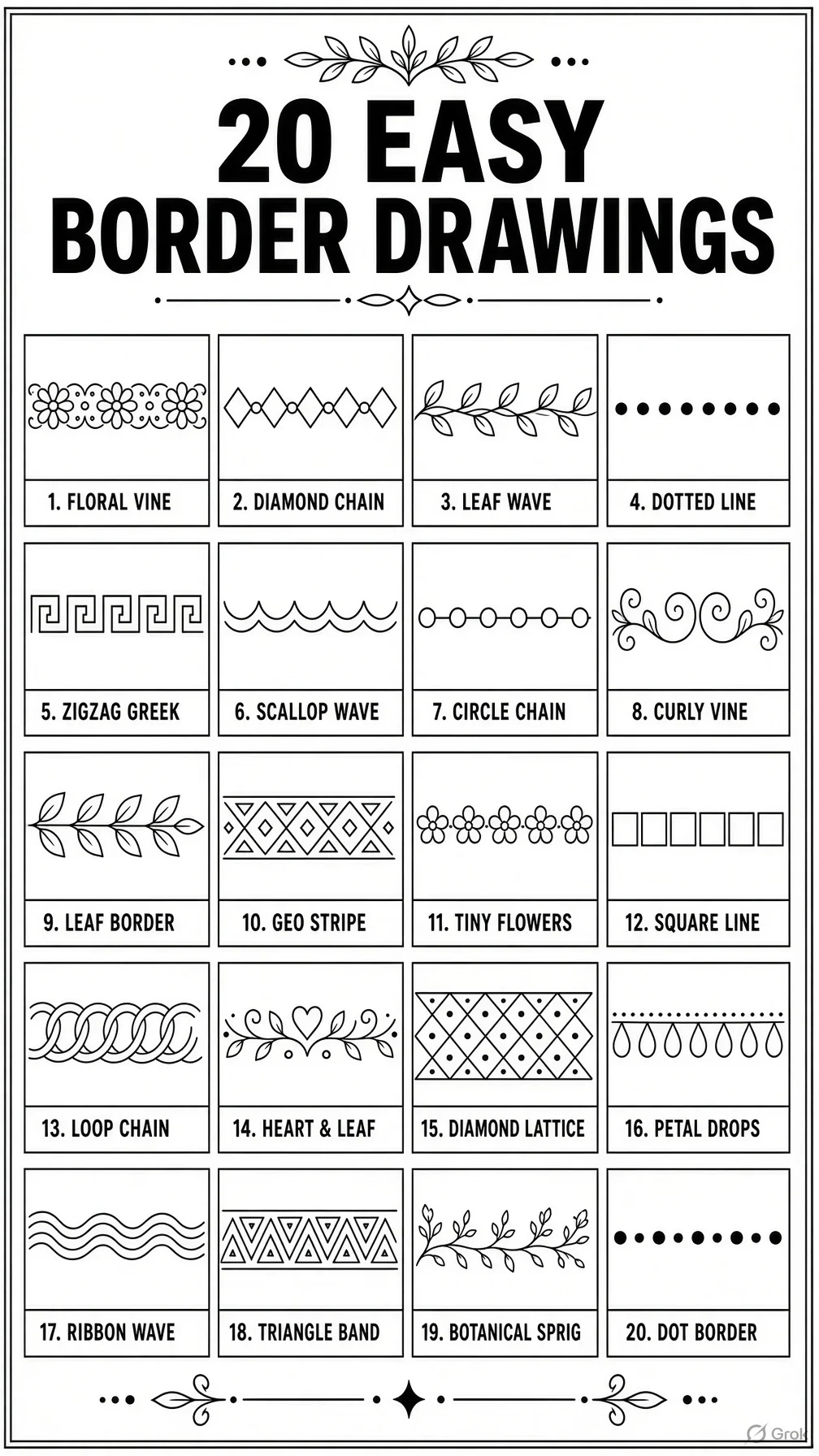
A wavy vine with alternating leaves and flowers is the classic. Draw the wave first as a light pencil line, then add a bloom at each crest. Works with a haveli, Madhubani or Kalamkari mood (see the Kalamkari guide).
Geometric borders
Triangles, diamonds, zigzags and stepped squares repeat easily and suit Warli, Mandana and Aipan inspiration. Use a ruler or masking tape for clean spacing.
Lotus and peacock borders
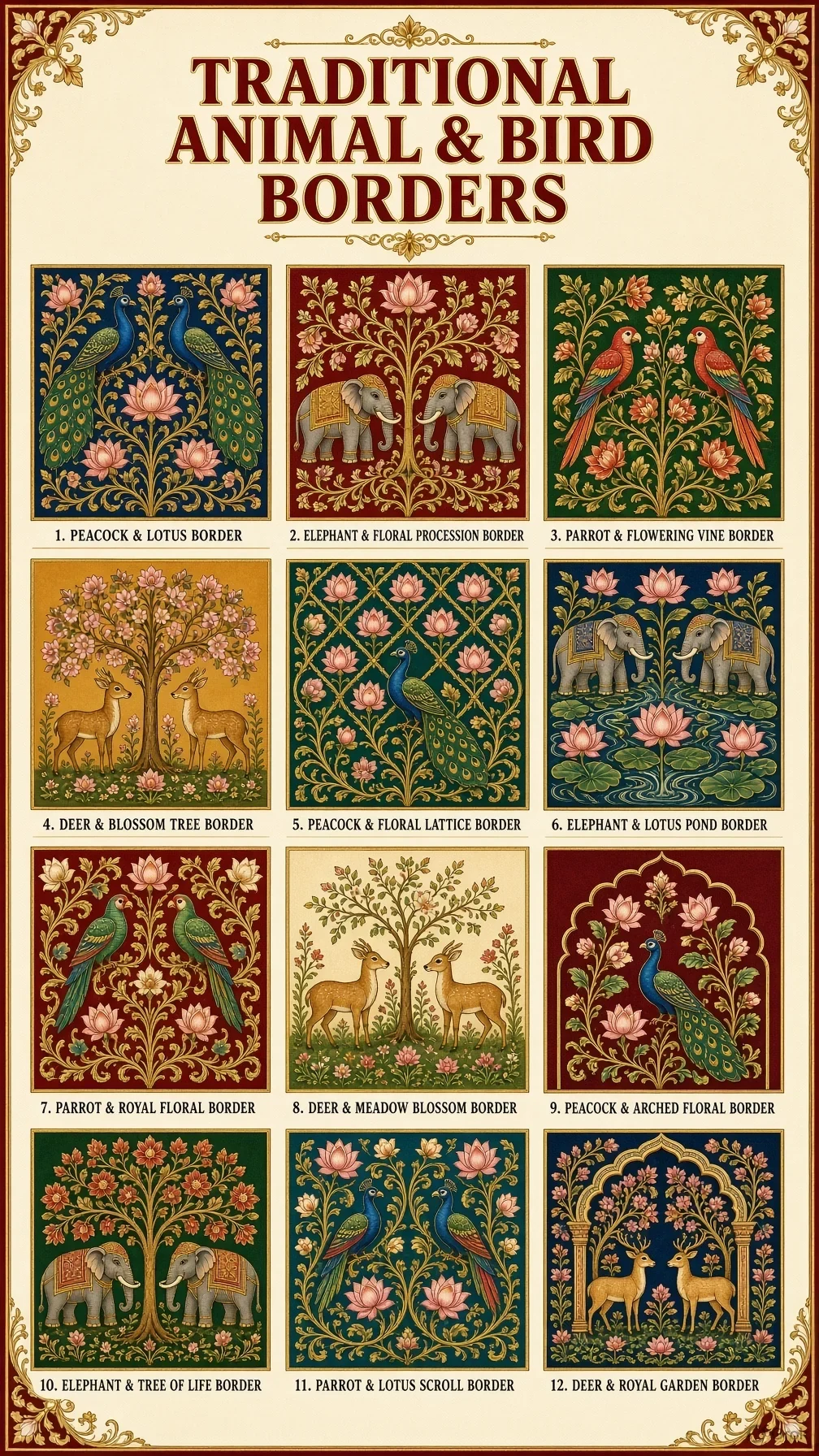
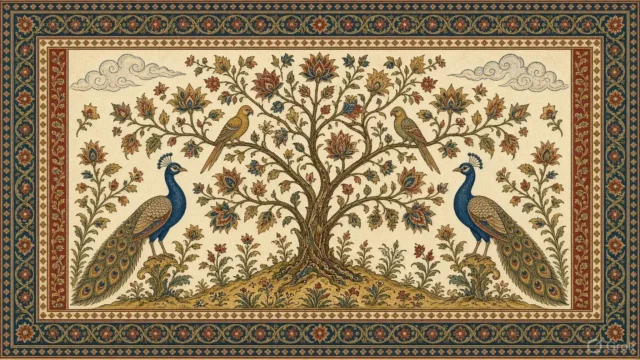
A row of lotus petals, either side-view or open top-view, gives a calm border that suits puja rooms. Peacocks in profile, facing each other across a flower, give a lively palace feel. For border language in another tradition, see the Pattachitra border patterns chart.
Corners and ethnic motifs
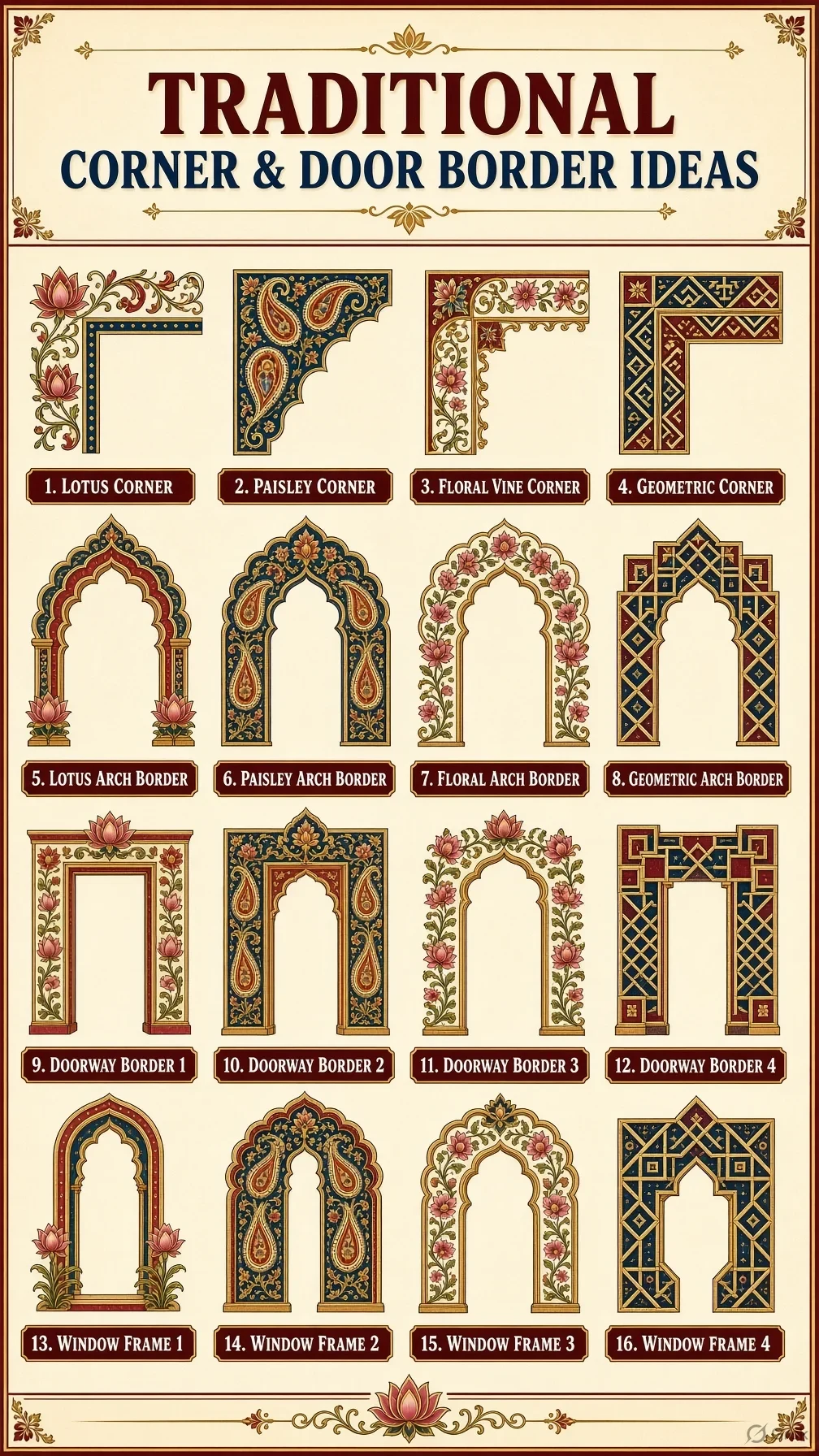
Corners are where borders usually look cheap or professional. Plan the corner first: a quarter-lotus, a small flower or a mirrored curl, then extend the border from it. The same logic helps school work, so see our easy school project border designs.
Which border for which room
| Room or spot | Border style | Why it works |
|---|---|---|
| Entrance | Lotus, geometric, Aipan-inspired | Traditional welcome motifs |
| Living room | Floral vine, haveli-inspired | Elegant and not too busy |
| Bedroom | Soft floral or Madhubani line | Calm, low contrast |
| Staircase | Warli or geometric | Repeats easily along a slope |
| Puja room | Lotus, simple geometric | Respectful and uncluttered |
| Courtyard or balcony | Bold peacock or floral, weatherproof paint | Visible from distance |
Easy Wall Painting Designs for Beginners
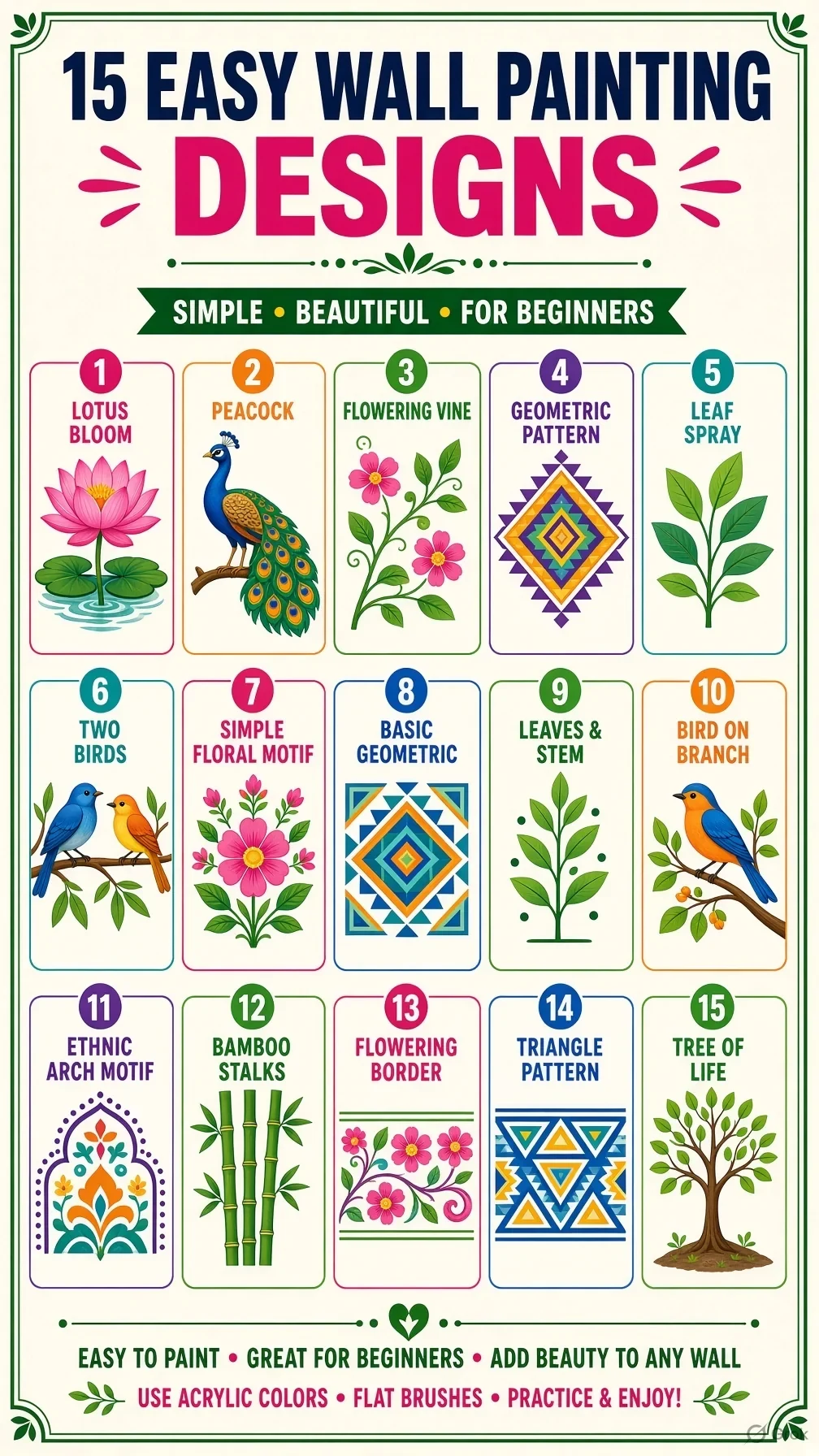
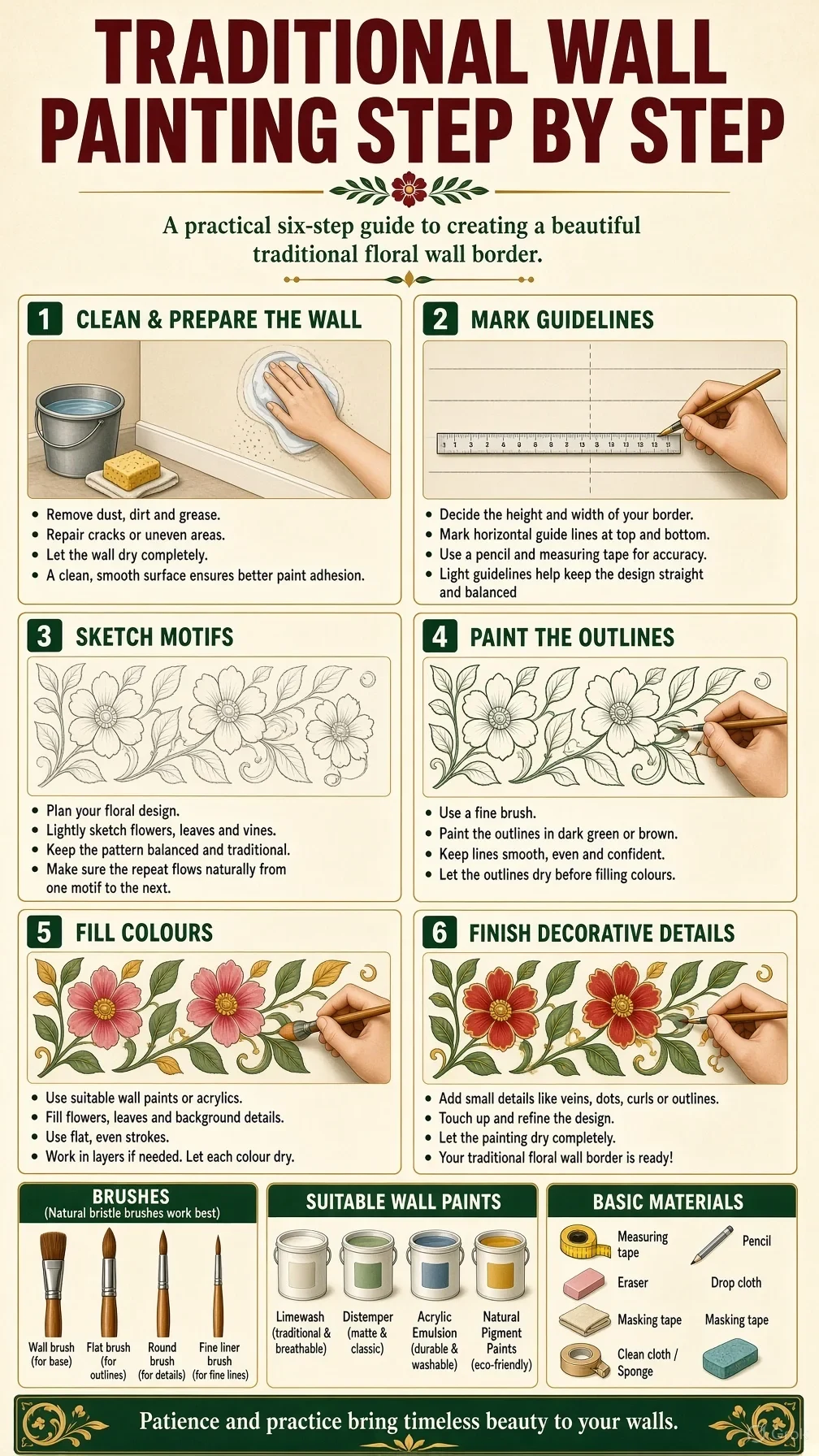
You can start with a few cheap tools and one small panel. Do not begin with a full wall.
Materials
- Pencil, eraser, ruler and a small spirit level
- Masking tape (low-tack) for straight edges
- Tracing paper or A3 sheet for the design
- Acrylic or wall-safe emulsion colours; fine and flat brushes
- Water-based sealer or clear varnish if the wall is high-touch (optional)
Surface preparation
- Clean dust and grease off the wall.
- Fill cracks and sand the area smooth.
- Apply a coat of primer or a plain base colour and let it dry fully.
- Test your colours on a hidden patch first.
Tracing and transfer
Draw the design on paper at final size. Rub soft pencil on the back, tape the paper to the wall and trace over the lines to transfer an outline. Or use a projector for large motifs.
Five easy starter designs
- A floral vine border along the top of a wall
- A single cusped arch with a flower inside
- A Warli dancer circle on a stair wall
- A pair of facing peacocks in a corner
- A geometric Mandana-inspired panel behind a console table
Common beginner mistakes
- Skipping primer, so colours look patchy and flake.
- Painting without a level line, so the border drifts.
- Using too many colours. Three to five is enough.
- Overworking one corner while the rest stays plain.
Step-by-Step Jharokha Drawing
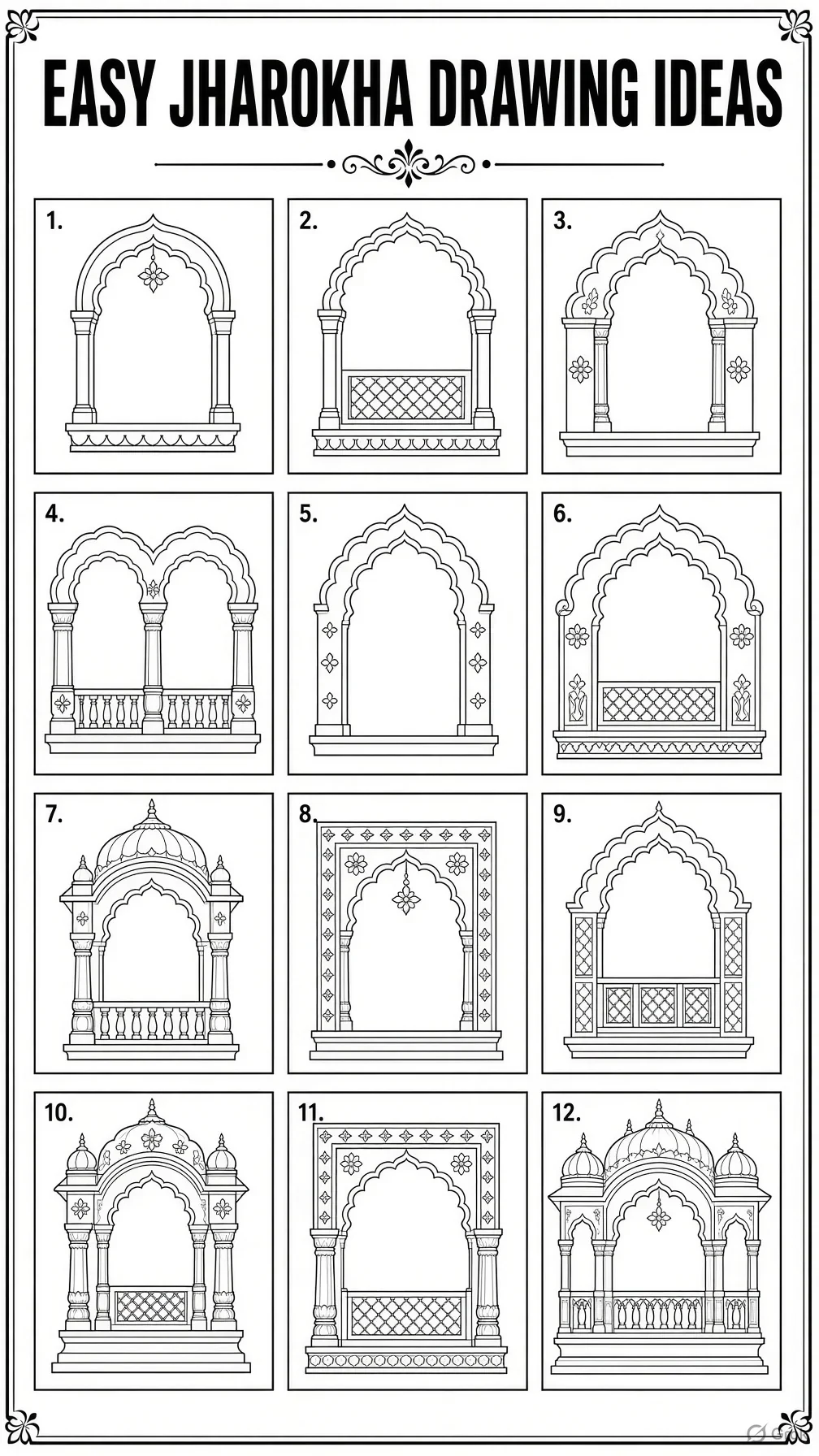
This is an easy jharokha drawing for paper, a sketchbook or as a plan for a wall. Keep your pencil light until step 8.
- Draw a tall rectangle as the outer frame. Make it about one and a half times taller than wide.
- Add the arch. Draw a half-circle on top, then a second, smaller arch inside it for the opening.
- Make it cusped. Inside the arch, draw three or five small scallops along the curve for that Rajput look.
- Draw the ledge. Add a horizontal base line below the opening and a thin rectangle under it as the projecting balcony floor.
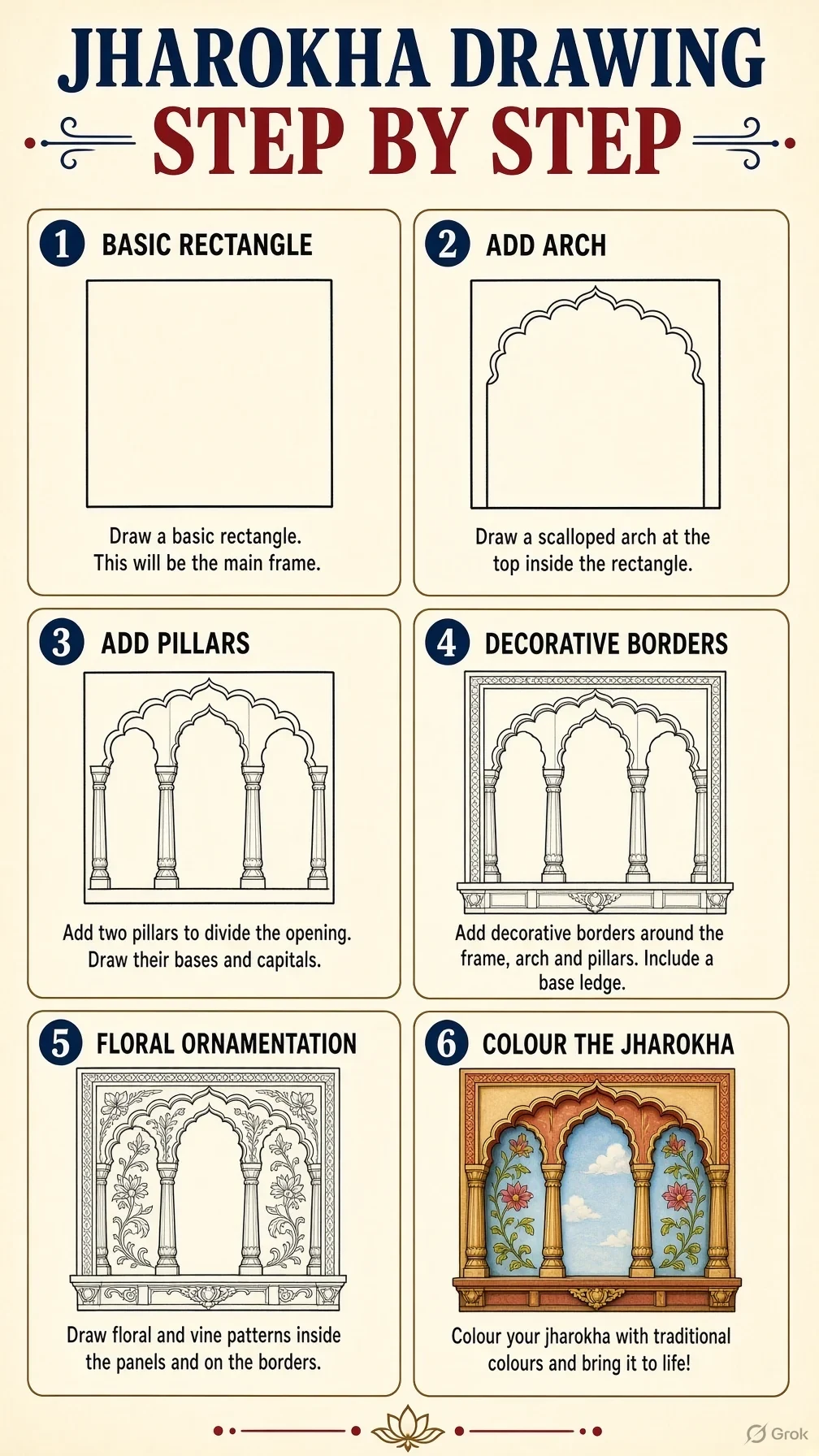
- Add brackets. Under the ledge, draw two or three curved brackets (S-shaped scrolls) pointing outward.
- Add the chhajja. Draw a wide, slightly sloped sunshade above the arch, with a small dome or finial in the middle.
- Add side pillars. Draw two slim pillars on each side of the opening and a small bell-shaped base and capital.
- Fill the opening. Add a jaali grid of small diamonds, or draw a small scene or flower. Now darken the lines you want to keep.
Finishing touches
- Add a floral border around the outer frame.
- Colour the frame in terracotta or sandstone yellow and the opening in deep blue.
- Shade under the chhajja and brackets with a darker tone to show depth.
- Add one peacock on the ledge for a haveli mood.
Traditional Wall Art for Modern Homes
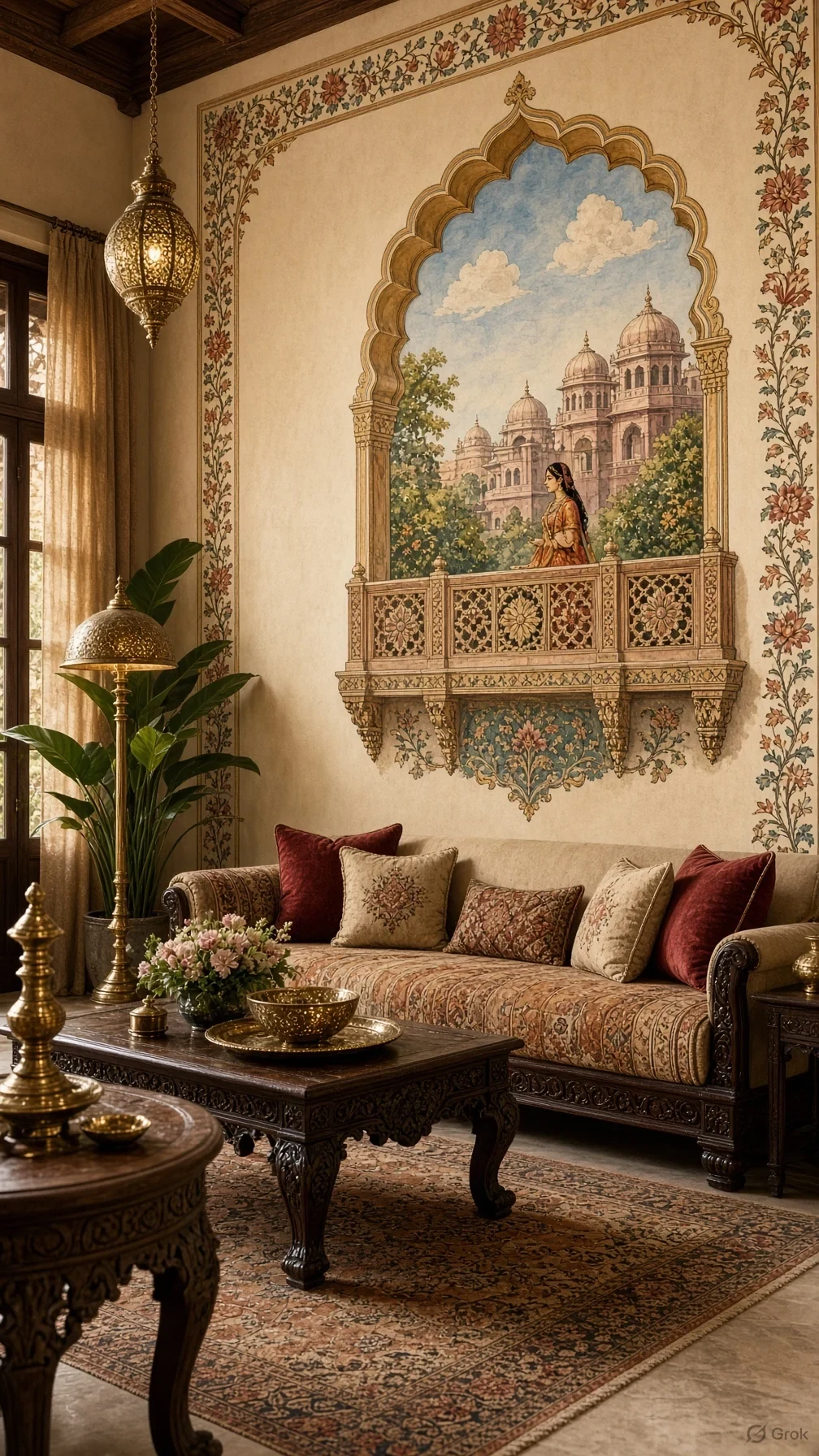
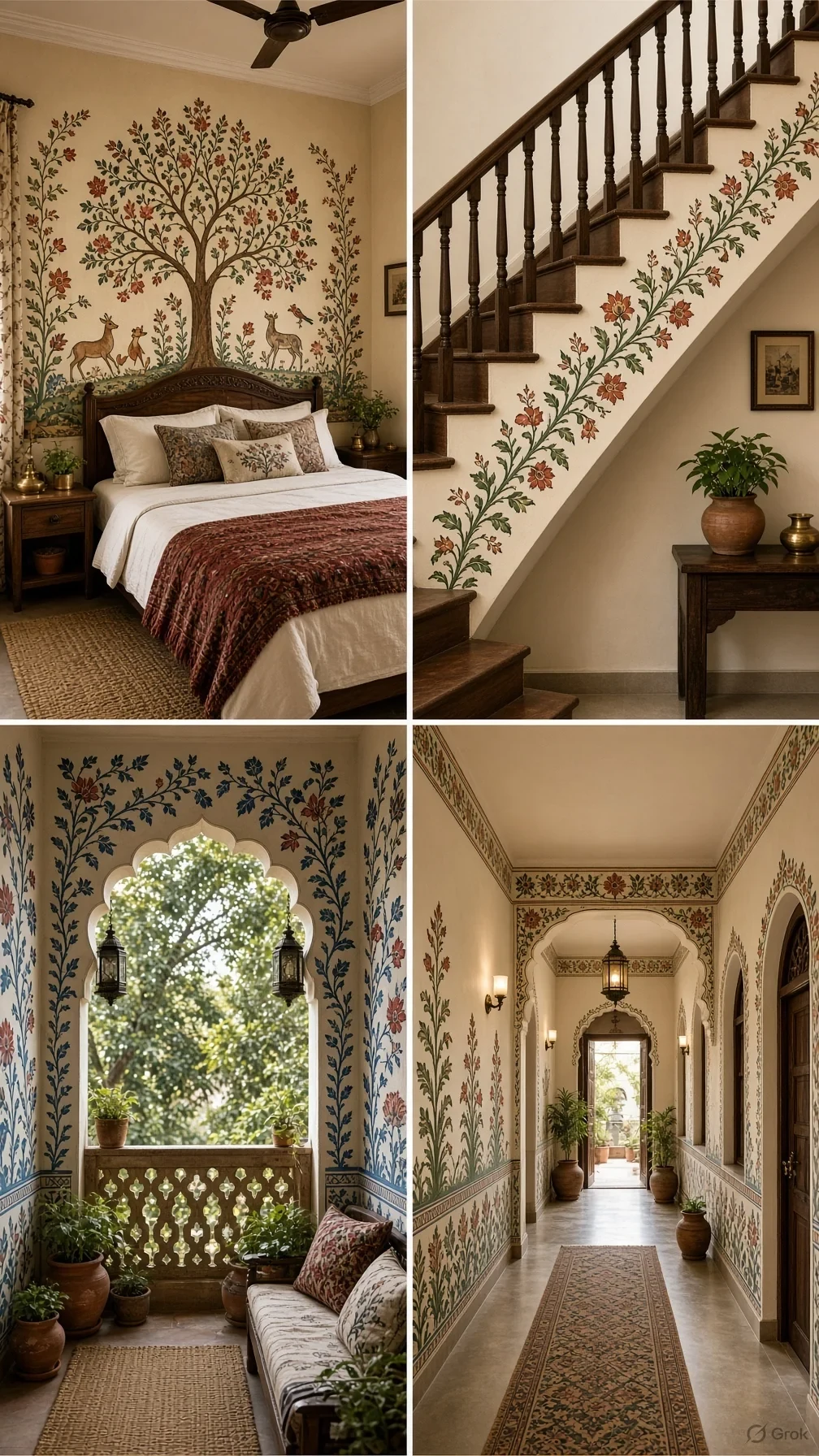
Traditional art works best in modern homes when it is the one confident element in a calm room. Choose one wall, one tradition and a restrained palette.
Where to place it
- Living room: a jharokha-inspired arch behind the sofa or a Madhubani panel above a console table.
- Bedroom: a soft floral border above the headboard.
- Entrance: a border around the door and an Aipan or Alpana-inspired motif near the threshold.
- Balcony: bold peacock or floral panel in weatherproof paint.
- Staircase: Warli or a geometric border following the stairs.
- Puja room: a lotus border and a simple arch niche; keep it respectful and uncluttered.
- Courtyard: Mandana-style red and white patterns in exterior-grade paint.
Keeping it modern
- Pick one wall and leave the rest plain.
- Use clean white or warm neutral walls around the art.
- Match the main colour of the art to a cushion or curtain.
- Light the art with a warm spotlight or wall washer.
Colour Combinations and Materials
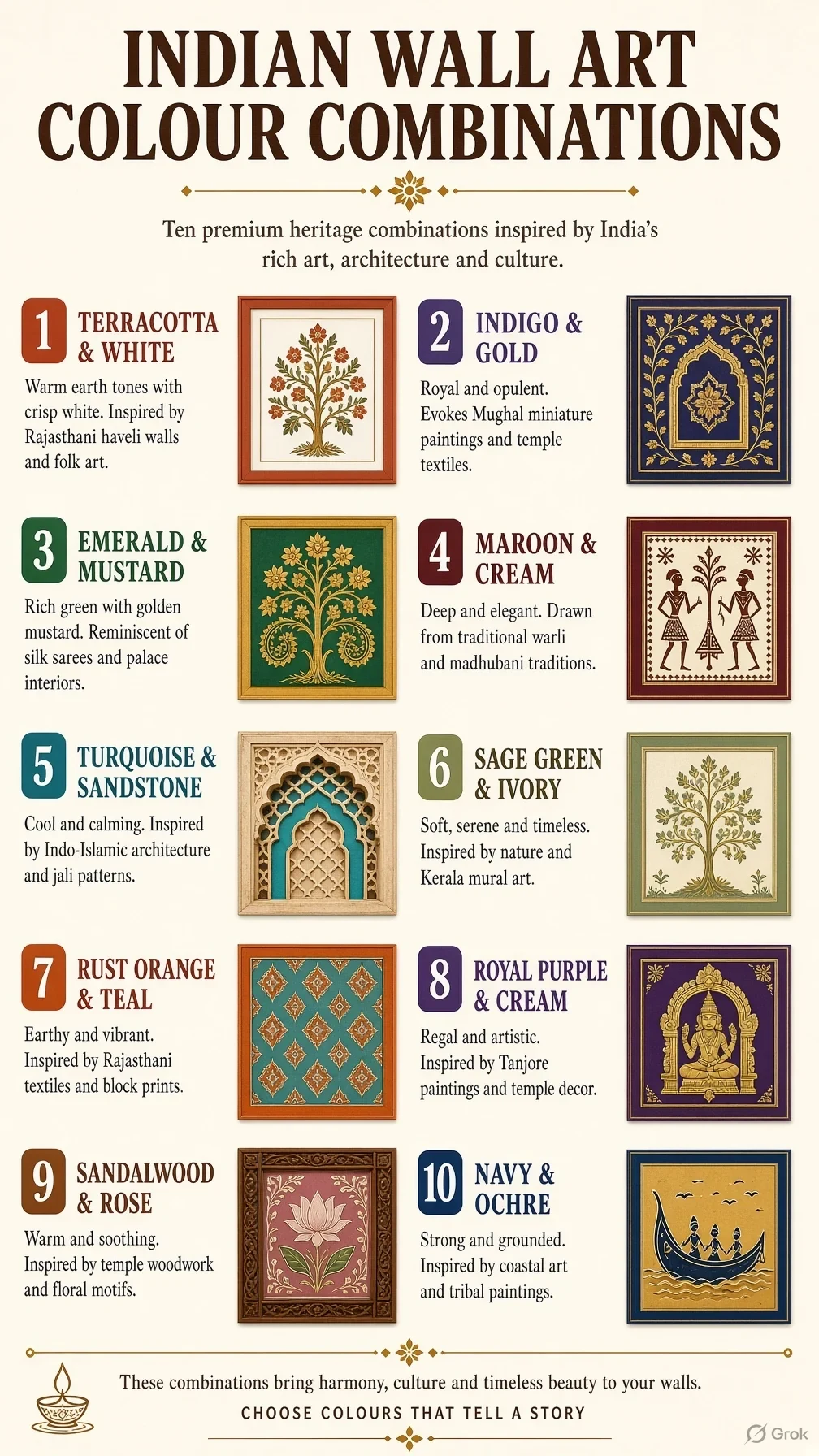
The classic Indian wall palette is earthy and warm, with one cool accent. These combinations are practical suggestions based on traditional colour families, not historical rules.
| Palette | Colours | Mood and use |
|---|---|---|
| Terracotta and white | Terracotta, off-white, charcoal | Village and Warli mood; staircase, courtyard |
| Haveli | Sandstone yellow, maroon, indigo | Rich and warm; living room arch |
| Royal | Deep blue, gold, ivory | Formal; jharokha frames |
| Mustard and emerald | Mustard, emerald green, maroon | Festive; Madhubani and peacocks |
| Red and white | Red-brown ground, white pattern | Mandana and Aipan-inspired panels |
| Soft modern | Dusty pink, sage, cream | Bedroom borders, low contrast |
Choosing materials
- Acrylic paint: flexible, forgiving and widely available; good for most designs.
- Wall emulsion: good for large flat areas and bases.
- Exterior-grade paint: use outdoors on balconies and courtyards.
- Stencils and tape: speed up repeated borders.
- Metallic gold paint: use sparingly for outlines and accents.
Traditional Indian Wall Art Design Ideas
Use these design ideas as a mood board. Each idea below is a starting point you can adapt to your own wall.
- Cusped arch with floral vine: classic haveli feel.
- Three-jharokha facade: palace-inspired accent wall.
- Warli dance circle: staircase or corridor.
- Gond tree of life: above a desk or bed.
- Madhubani fish pair: entry wall or study.
- Mandana diamond grid: behind a console.
- Peacock border: hallway.
- Lotus band: puja room and entrance.
- Kerala mural lotus panel: quiet corner (see the Kerala mural guide).
- Phad-style narrative strip: long wall (see the Phad art guide).
- Pattachitra border frame: around a mirror (see the Pattachitra guide).
- Kalamkari tree panel: textile hanging beside a painted wall.
Whichever idea you pick, practise it on paper first, then on a small board, then on the wall.
Frequently Asked Questions
What is a jharokha?
A jharokha is an overhanging enclosed balcony or stone window that projects from a wall on carved brackets, most associated with Rajput and Mughal-era architecture.
How many jharokhas does Hawa Mahal have?
953, according to Incredible India and other sources. It was built in 1799 by Maharaja Sawai Pratap Singh and designed by Lal Chand Ustad.
What is the difference between a jharokha and a painted jharokha?
A jharokha is a real architectural feature; a painted jharokha is a flat illusion made with paint or decals for decoration.
Which Rajasthani region is famous for painted havelis?
Shekhawati, with towns such as Nawalgarh, Mandawa and Fatehpur, known for frescoes built by Marwari merchant families.
What paint is best for easy wall painting designs?
Acrylic paint over a primed and fully dried wall is the easiest for beginners. Use exterior-grade paint outdoors.
How do I draw a jharokha easily?
Start with a tall rectangle, add an arch and cusps, then a ledge, brackets, a sunshade and a jaali fill. See the step-by-step section above.
What are traditional wall border designs?
Common ones are floral vines, lotus rows, peacock pairs, and geometric zigzags and diamonds.
Can I paint Warli or Madhubani on my wall?
Yes, as inspired decoration. Credit the tradition and avoid copying ritual scenes or selling them as authentic tribal art.
Which colours suit traditional Indian wall art?
Terracotta, white, indigo, mustard, emerald green, maroon and a touch of gold are all common choices.
Can traditional wall art suit a modern home?
Yes. Use one accent wall, a restrained palette and a plain surrounding wall.
Sources: Incredible India: Hawa Mahal, Britannica: Hawa Mahal, Wikipedia: Jharokha, Incredible India: Patwon ki Haveli, Museums of India: Patwa Haveli, Wikipedia: Shekhawati painting, Hyperallergic: Shekhawati frescoes, Wanderlust: Shekhawati, The Statesman: Shekhawati colours, Incredible India: Bundi Chitrashala.










Share Your Opinion
Comments are closed on this post.