What is the Shiv Tandav Stotram?
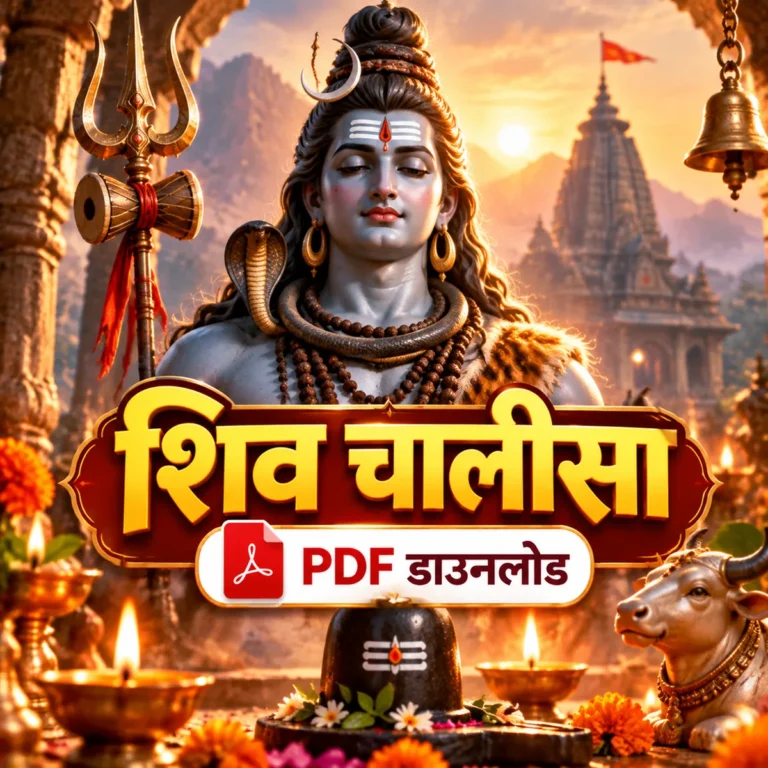
The Shiv Tandav Stotram is a powerful Sanskrit hymn dedicated to Lord Shiva. It is not merely a collection of words but an ode to Lord Shiva’s cosmic and fierce form, filled with deep meaning and vibrations. This stotram was composed by the great Shiva devotee and knowledgeable Lanka king, Ravana. This comprehensive guide delves into the profound meaning of the Shiv Tandav Stotram, the incredible story behind its composition, the correct method of recitation, and its miraculous benefits, helping you connect with this potent hymn.
The stotram describes Lord Shiva’s Tandav dance, his formidable and grand form, his matted locks, the serpents around his neck, the sound of his damaru, and his role in the creation, preservation, and destruction of the universe. It is a magnificent blend of Shiva’s power, beauty, and benevolent nature, composed by Ravana at the peak of his anguish and devotion.
The Incredible Story Behind the Shiv Tandav Stotram: From Ego to Devotion
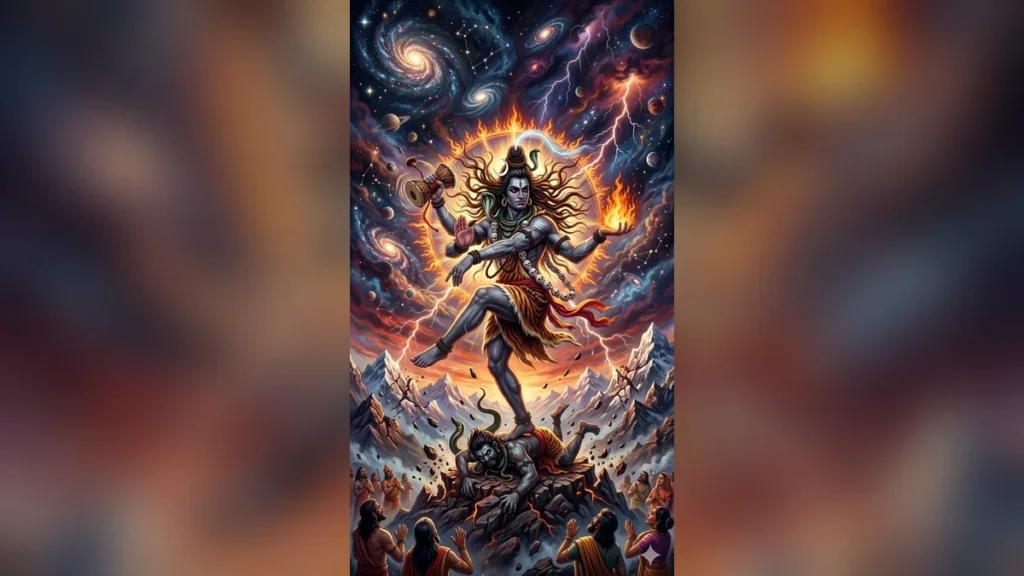
The composition of the Shiv Tandav Stotram is rooted in a fascinating and instructive tale. Ravana, the king of Lanka, known for his immense power and rigorous penance, once, in his arrogance, attempted to lift Mount Kailash, the abode of Lord Shiva, and carry it to Lanka. Ravana lifted Mount Kailash with his twenty arms. When the mountain began to shake, Goddess Parvati was frightened. Lord Shiva, to break Ravana’s ego and reassure Goddess Parvati, gently pressed Mount Kailash with his toe. Ravana’s hand was crushed under the mountain due to this slight pressure from Shiva. Ravana experienced unbearable pain as his hand was trapped under the mountain. Yet, even in this pain, Ravana did not abandon his penance and deep devotion to Lord Shiva. Groaning in pain, he immediately began to praise Lord Shiva to appease him and seek relief from his suffering. This praise became known as the ‘Shiv Tandav Stotram’.
Ravana glorified Shiva’s majesty with his ten arms and ten heads (symbolic of his intellect and knowledge). When Shiva heard his devotion and praise, he was pleased and freed Ravana from his pain. He also gifted Ravana the sword named ‘Chandrahāsa’.
Deep Meaning of the Shiv Tandav Stotram (Examples from Verses)
This stotram is composed of 17 verses, each describing different attributes and forms of Lord Shiva. Here, we will explore some key verses and their meanings in detail:
Verse 1: Describing Shiva’s Cosmic Form
Jataṭavīgalajjala-pravāha-pāvita-sthale, gale’valambya lambitāṁ bhujaṅgatunga-mālikām |
Ḍamaḍḍamaḍḍamaḍḍamanināda-vaḍḍamarvaṁ, chakāra chaṇḍa-tāṇḍavaṁ tanotu naḥ śivaḥ śivam ||1||
Meaning: May Lord Shiva, from whose matted locks the sacred water of the Ganga flows, who has a long garland of serpents hanging around his neck, and who performs the fierce Tandav dance with the sound of ‘ḍama-ḍama-ḍama-ḍama’ from his damaru, bestow auspiciousness upon us.
This verse vividly portrays Shiva’s fierce and grand form, symbolizing the destruction and recreation of the universe.
Verse 2: The Glory of Shiva’s Head and the Ganga
Jaṭākaṭāhasambhrama-bhramannilimpa-nirjharī- vilolavīchīvallarī- virājamānamūrdhani |
Dha-gad-dhagaddhagajjvala-laṭāṭa-paṭṭa-pāvake, kiśora-chandrashekhare ratiḥ pratikshaṇaṁ mama ||2||
Meaning: May my affection for Shiva, whose head is adorned with the swirling, playful waves of the celestial river Ganga flowing through the forest of his matted locks, whose forehead bears the blazing fire (third eye) with a ‘dhaga-dhaga’ sound, and who is crowned with the crescent moon, grow every moment.
This verse describes Shiva’s divine and captivating form, encompassing the flow of the Ganga and the coolness of the moon.
Verse 5: Poison in Shiva’s Throat and His Beauty
Sahasralochana-prabhṛtyaśesha-lekha-śekhara- prasūna-dhūli-dhoraṇī vidhūsarāṅghri-pīṭhabhūḥ |
Bhujaṅgarāja-mālayā nibaddha-jāṭajūṭakaḥ, śriyaich chirāya jāyatāṁ chakora-bandhuśekharaḥ ||5||
Meaning: May Shiva, whose feet are dusted by the pollen of flowers fallen from the crowns of all gods, including Indra; whose matted locks are bound by a garland of serpents; and whose crown is adorned by the moon (friend of the Chakora bird), bestow lasting prosperity upon us.
This verse highlights Shiva’s supreme position and the significance of the symbols he adorns. Thus, each verse of the Shiv Tandav Stotram offers a detailed description of Lord Shiva’s unique qualities, divine ornaments, powerful dance, and cosmic influence. The stotram simultaneously presents Shiva’s fearsome and benevolent aspects.
Miraculous Benefits of Reciting the Shiv Tandav Stotram
Regular and devout recitation of the Shiv Tandav Stotram yields numerous spiritual, mental, and material benefits:
- Increased Self-Confidence: The stotram strengthens the mind and boosts self-confidence.
- Freedom from Fear and Obstacles: Invoking Shiva’s power removes all kinds of fears, obstacles from enemies, and negative energies.
- Mental Peace and Concentration: Its powerful vibrations calm the mind and aid in concentration.
- Fulfillment of Desires: With sincere devotion, Lord Shiva fulfills the wishes of his devotees.
- Pacification of Planetary Influences: According to astrology, this stotram helps mitigate the negative effects of malefic planets in the horoscope, especially Saturn, Rahu, and Ketu.
- Development of Leadership Skills: Composed by a powerful personality like Ravana, it also enhances leadership and decision-making abilities.
- Spiritual Growth: It deepens Shiva devotion and aids in progressing on the spiritual path.
Correct Method and Rules for Reciting the Shiv Tandav Stotram
To derive the full benefits of any religious chant, it must be performed with the correct method and devotion. Here are some important rules and methods for reciting the Shiv Tandav Stotram:
1. Auspicious Times
- Pradosh Kaal: The period after sunset is considered highly auspicious for Shiva worship.
- Mondays: This day is dedicated to Lord Shiva, making recitation particularly fruitful.
- Shivratri and Mahashivratri: Reciting on these festivals yields manifold benefits.
2. Purity and Seating
- Bathing: Bathe and wear clean clothes before recitation.
- Location: Choose a quiet and clean place. Reciting in your home’s prayer area or a Shiva temple is ideal.
- Seat: Use a seat made of Kush grass or wool.
- Direction: Facing the East is considered auspicious.
3. Puja Materials and Sankalpa (Resolution)
- Install an idol or picture of Lord Shiva.
- Offer water, Bel leaves, Datura, Bhang, sandalwood, Akshat (rice grains), incense, and a lamp.
- Before starting the recitation, meditate on Lord Shiva and mentally state your wish or resolution.
4. Recitation and Pronunciation
- Pronunciation: The pronunciation of the stotram should be clear and accurate. If you are not proficient in Sanskrit, practice slowly or learn from a knowledgeable person. Avoid incorrect pronunciation.
- Concentration: Keep your mind fully absorbed in Lord Shiva during recitation.
- Number of Recitations: You can recite it 1, 3, 5, 11, or 21 times, according to your capacity and time.
- Listening: If you cannot recite it yourself, listening to a recording with accurate pronunciation is also beneficial.
5. Precautions
- Pregnant women and young children should consult an expert before reciting mantras with intense vibrations; they can listen but should avoid reciting.
- Individuals consuming non-vegetarian food and tamasic items should avoid recitation or ensure purity beforehand.
- Do not recite with malice or negative feelings towards anyone in your heart. The Shiv Tandav Stotram demands a pure heart and devotion.
Relevance of the Shiv Tandav Stotram in Modern Life
In today’s fast-paced life, where stress and uncertainty are common, the Shiv Tandav Stotram teaches us valuable lessons:
- Renunciation of Ego: Ravana’s story teaches us that no matter how powerful we are, renouncing ego is true strength.
- Devotion in Crisis: Ravana remembered Lord Shiva even in his greatest pain, teaching us to maintain faith in God during difficult times.
- Awakening Inner Strength: This stotram helps us recognize and awaken our inner strength and courage.
- Balance of Creation and Destruction: Shiva’s Tandav dance symbolizes the cyclical nature of life (creation, sustenance, destruction), inspiring us to accept change and live in harmony with it.
Conclusion
The Shiv Tandav Stotram is not just a religious text; it is a symbol of devotion, power, and surrender. It connects us with Lord Shiva’s cosmic and benevolent form. By understanding the deep meaning of this stotram and reciting it correctly, you can not only attain spiritual peace but also gain inner strength and confidence to face life’s challenges. So, let us embrace the power of this magnificent stotram and make our lives divine with the chant of “Har Har Mahadev”.