Old Indian school book covers bring back more than lessons
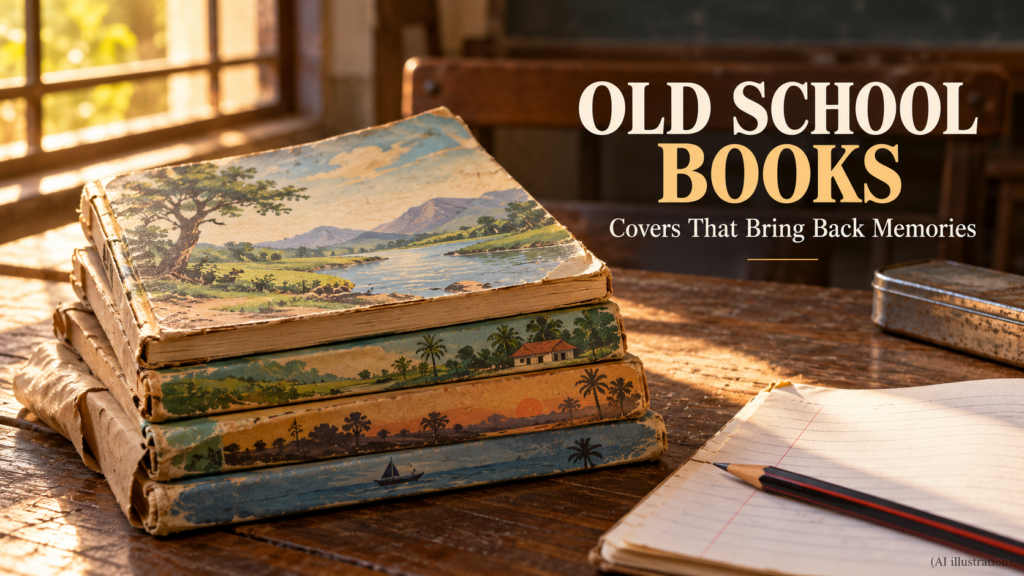
Old Indian school book covers can bring back a poem, a classroom or the brown paper jacket wrapped around a new term’s books. When looking for a textbook from the 1990s, you may remember a colour or illustration more clearly than its title. The useful next step is to turn that memory into searchable details.
These are memory prompts, not a claim that every school used the same books. All three images in this article are fictional AI reconstructions. They are not scans of actual NCERT or state-board covers, authenticated first editions or recovered archive photographs.
Remember the picture but not the title? Start here
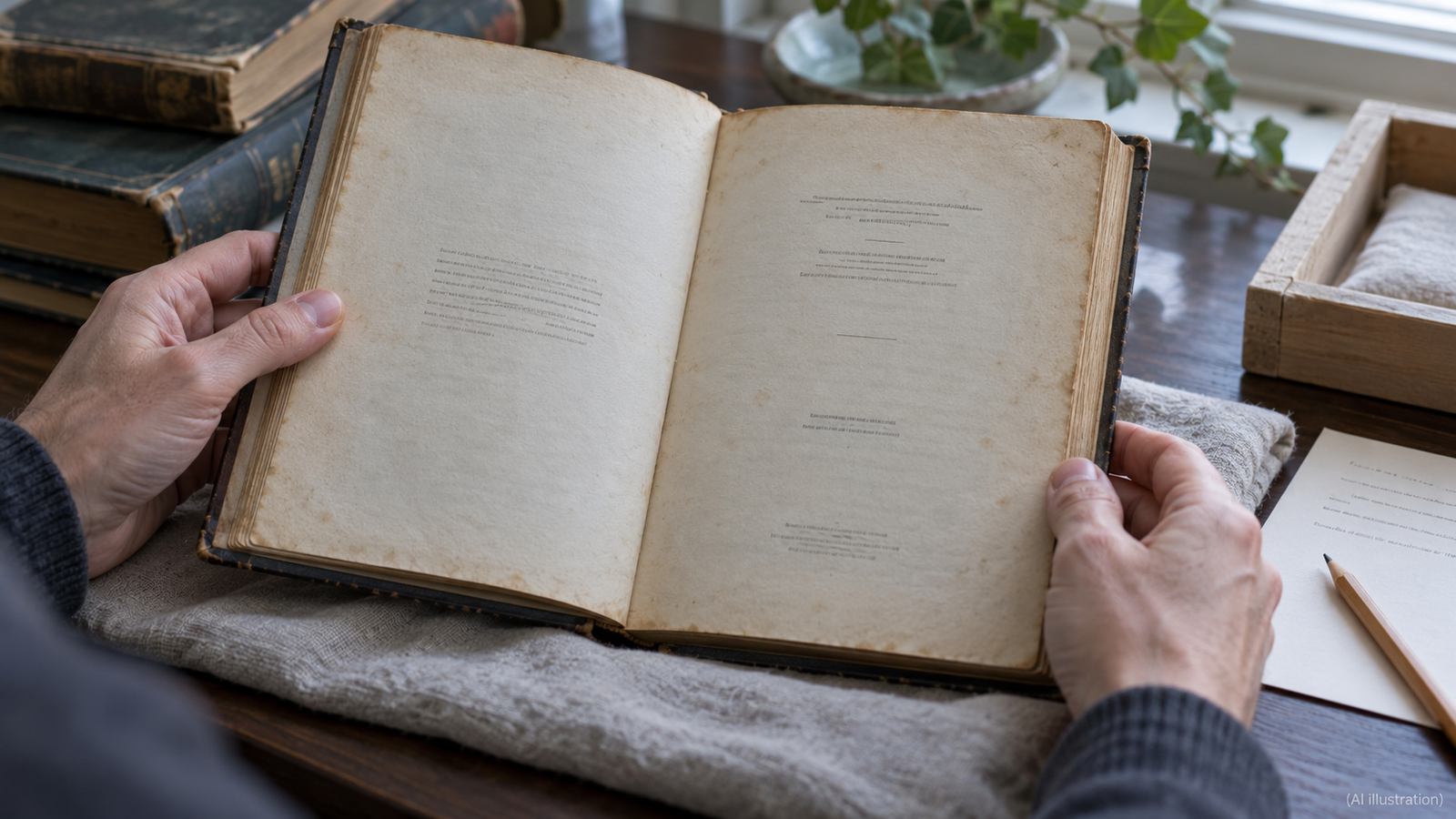
Write down five things: approximate class, subject, teaching language, state or board, and the period in which you used it. “Around 1994–96, class 4, Hindi medium, Madhya Pradesh” narrows a search more effectively than “a blue 90s book.” Mark uncertain details as estimates.
Record a remembered cover picture, lesson word, author or short line of a poem separately. Memory may alter wording, so try an exact-phrase search and a broader version without quotation marks. Another person recognising a picture is a clue rather than confirmation of your edition.
A query could combine old school textbook cover, class 5, Hindi and Madhya Pradesh. In other languages add terms such as जुनी शालेय पुस्तके or পুরনো স্কুলের বই with the class and board. These are search examples, not a promise that a matching scan exists.
Identify the board or publisher before deciding from a colour match. Similar subjects can be published by different institutions. Attending a government school alone does not establish that every textbook was an NCERT publication.
Edition, reprint and the year you studied are different
The year you studied a book need not be its publication year. A copy may have come from an older sibling or an edition may have remained in use. Use remembered dates to create a search range, not to replace the printed record.
Check the title page and publication or copyright page. Record the title, class, medium, publisher, edition or revised-edition statement, reprint year and book code separately. Not every book provides every field in the same format. Leave missing information unknown.
Do not automatically turn a reprint date into a revised edition. Nor does a redesigned cover alone establish that all the text changed. Compare the wording in the copy with the version described in an appropriate catalogue.
FACT: A book used in the 1990s, a book printed in the 1990s and its first edition are three different claims. A first-edition assertion needs bibliographic evidence; old paper and a torn binding cannot supply it alone.
Where to look for genuine older covers
Start with the relevant publisher or textbook bureau’s official records. NCERT’s online textbook section is for NCERT publications, not a complete archive of every state and every decade. Check the available edition rather than assuming a current PDF is the one remembered.
Balbharati’s official site says it has scanned rare older editions and provides an archive. It would be wrong to claim that genuine older textbook scans never exist online. It would also be wrong to assume every archived item is from the 1990s or matches your class.
Ask a state textbook corporation, SCERT, school library or district library using the title, class and medium. Teachers and family copies can provide leads. Failure to find an online record does not prove a book never existed; digital collections can have gaps.
Reading an online PDF and republishing it on another site are different activities. NCERT states copyright and reuse conditions for its material. This article does not upload complete textbooks or a copied cover gallery. Check the relevant rights before reproducing material.
Photograph a surviving book with its publication details
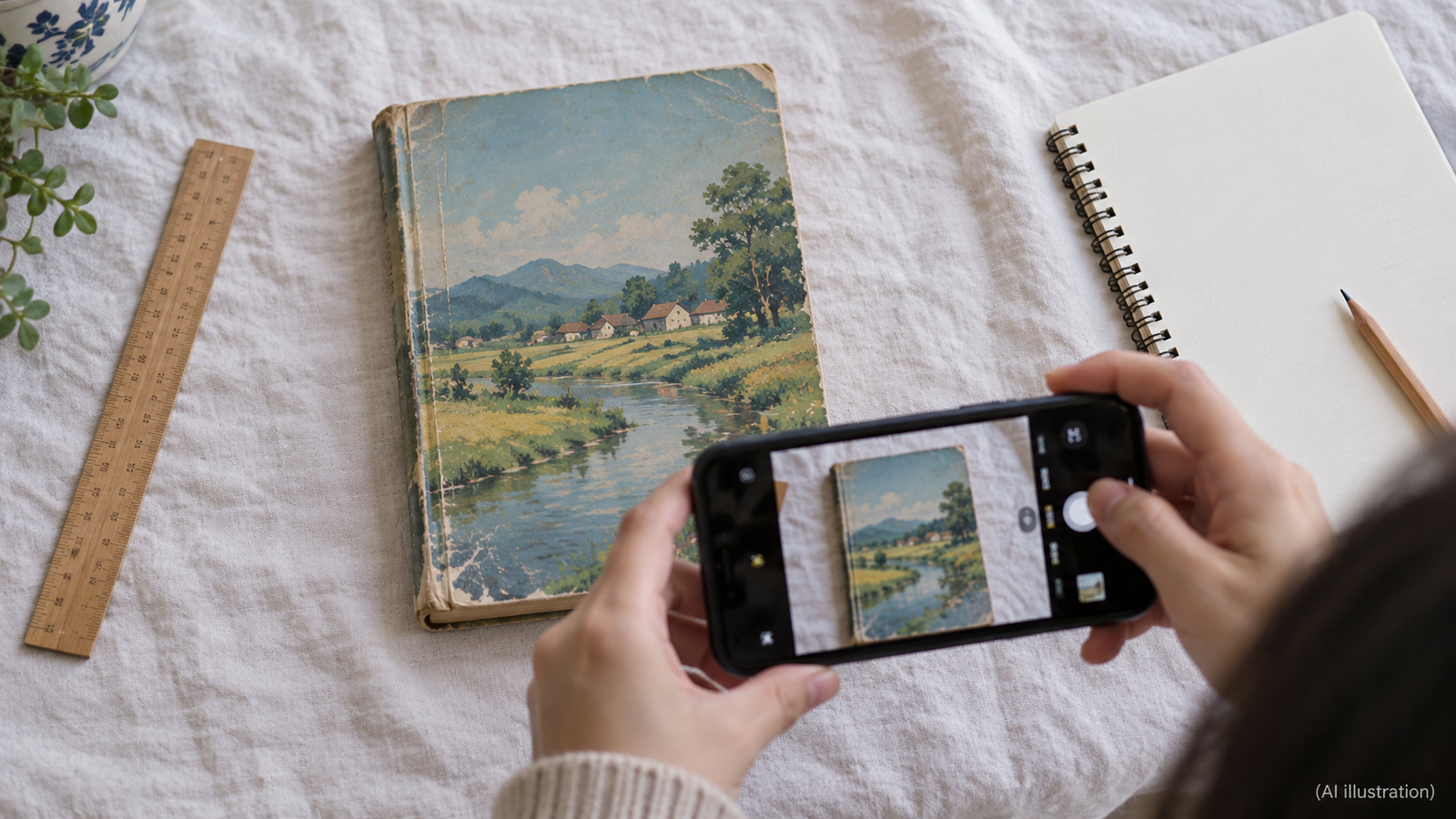
Photograph the front cover, back and spine, followed by the title page and the page carrying edition or reprint details. That sequence connects the remembered exterior with the bibliographic record inside. A cover-only crop may leave the date unresolved.
Do not force a binding flat. Support the book and open it only as far as it comfortably allows. Keep the phone facing the page, use diffuse daylight and clear focus, and avoid beauty filters. Flash glare can hide the wording you need to read.
Cover personal names, schools, roll numbers, addresses and phone numbers before publishing a photograph. Keep a private original if useful. Do not use AI to reconstruct missing title or edition text and then label the result an original scan. Altered pixels are not original evidence.
An honest caption might state that the copy is kept by the family, the publisher and class were read from its title page, the reprint line says 1995 and the photograph was taken in 2026. If a year comes only from memory, explicitly label it as a family estimate.
Advice: preserve both the book and its story
Create a small record containing title, class, language, publisher, the printed edition/reprint statement, source or owner, and photograph date. Note missing pages, replacement covers or rebinding. These notes help prevent an unrelated cover from being attached to the right title later.
The Library of Congress emphasises preventive storage and careful handling. Keep books in a clean, stable, relatively dry place away from intense direct light. For an important damaged copy, ask a qualified conservator before attempting repairs with glue or tape.
Obtain permission and provide credit for another family’s book photographs. Do not add your watermark to an online scan and present it as your original discovery. Do not caption your own genuine photograph as a different edition either.
Record which class you used the book in, who gave it to you and which lesson you remember. Personal memories enrich the story when distinguished from printed facts. This guide does not establish rarity or collectible value from a picture.
Frequently asked questions
Are these genuine 90s cover scans? No. They are AI illustrations; use official records or a surviving copy for actual evidence.
Were all government-school books NCERT? Do not infer the publisher from that alone.
Does a study year equal a print year? Not necessarily. A copy may be borrowed or older.
Are reprints and revised editions identical terms? No; record the actual printed wording.
Can a coverless copy be researched? Its title page, code and contents may help, with uncertainty clearly stated.
Sources and AI reconstruction disclosure
General nostalgia and research guidance, not authentication or valuation of an edition. Rights in official portal material remain with the relevant rights holders. All images are fictional AI reconstructions, not exact reproductions of genuine vintage covers. Checked on 24 October 2026.
- Balbharati: official older textbook archive
- Balbharati: information on scanned older editions
- NCERT: textbook section and copyright/reuse notice
- Library of Congress: preventive book storage and handling
90s India geometry box and school memories