Why Do Bishnois Protect Deer? The Community, 29 Principles and Conservation
The Bishnoi community is often associated with blackbuck, khejri trees and remarkable care for animals. Why is that relationship so important? The answer goes beyond a striking photograph. It involves the teachings of Guru Jambheshwar, a remembered history of protecting trees and an ethic of compassion. Accounts of women caring for orphaned fawns belong within that wider story, rather than defining every woman in the community.
Who are the Bishnois? Bishnoi and Vishnoi spellings
Bishnoi and Vishnoi are spellings readers may encounter for this community. Its historical roots are associated with the desert region of Rajasthan. Reducing that identity to people who keep deer would miss its religious traditions, family lives, occupations and social diversity.
Rajasthan Tourism describes Bishnoi village life in terms of respect for nature and living beings. That is useful context, but it should not become a claim that every member or household lives identically. A community’s teachings, individual choices and practices in different places need to be understood without erasing their differences.
Guru Jambheshwar and the place of the 29 principles
Bishnoi tradition is associated with Guru Jambheshwar, also known as Jambhoji. Community reference literature gives a central place to 29 principles. The name Bishnoi is commonly explained through the words for twenty and nine. These teachings concern a broader religious and ethical way of life, not simply a wildlife checklist.
Compassion towards living creatures and not cutting green trees are especially relevant to conservation. They can be understood as values influencing ordinary decisions, rather than a single annual event. This article summarises the conservation-related themes; it does not reproduce or reinterpret the complete numbered religious code. A detailed community reference is linked in the sources.
Why are deer and blackbuck important in this story?
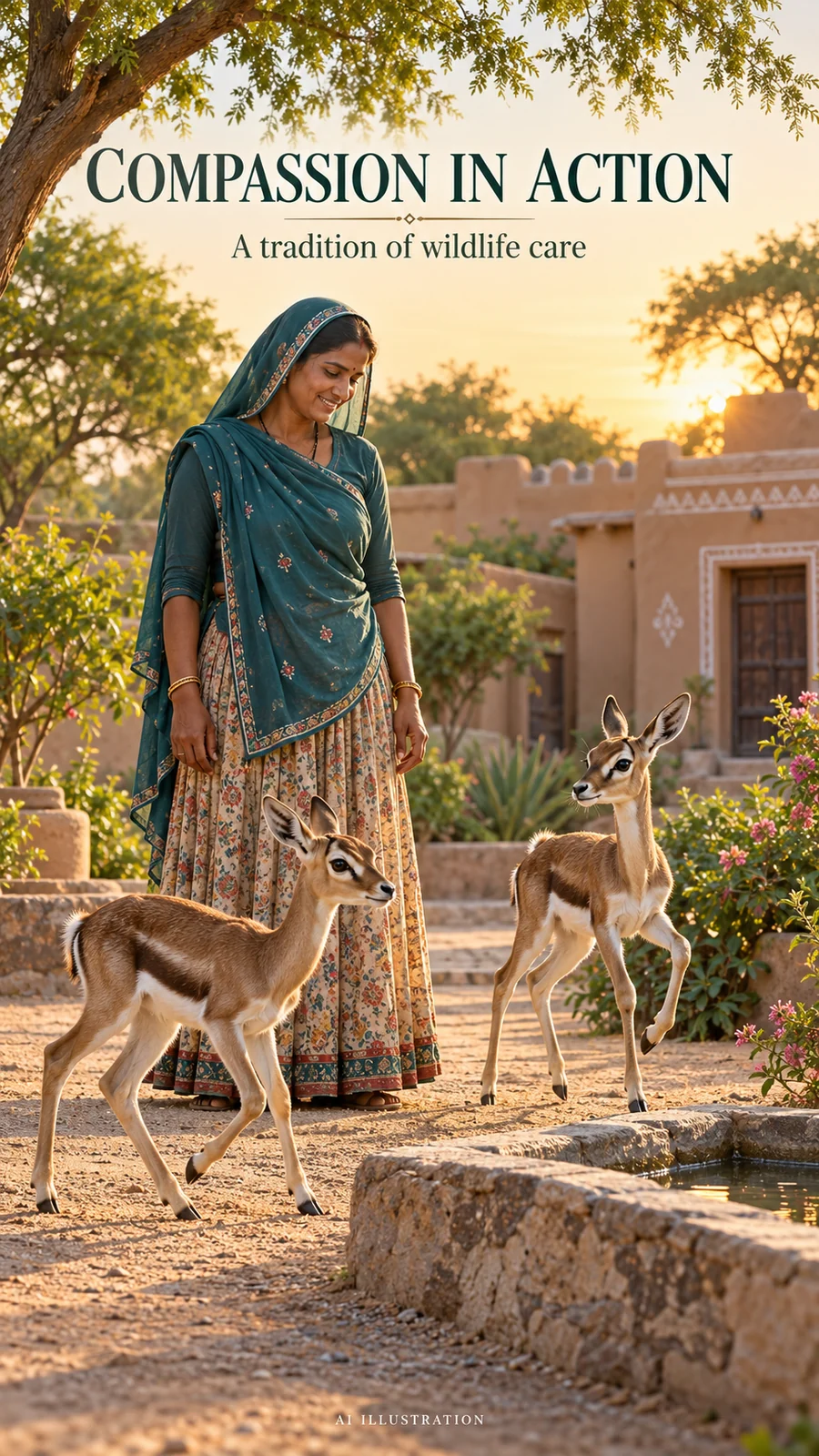
Concern for animals makes the relationship between people and wildlife an important part of understanding this tradition. Reports of care for injured or orphaned animals illustrate that concern. They should be read as accounts of particular situations, rather than an assumption that every wild animal is a household companion.
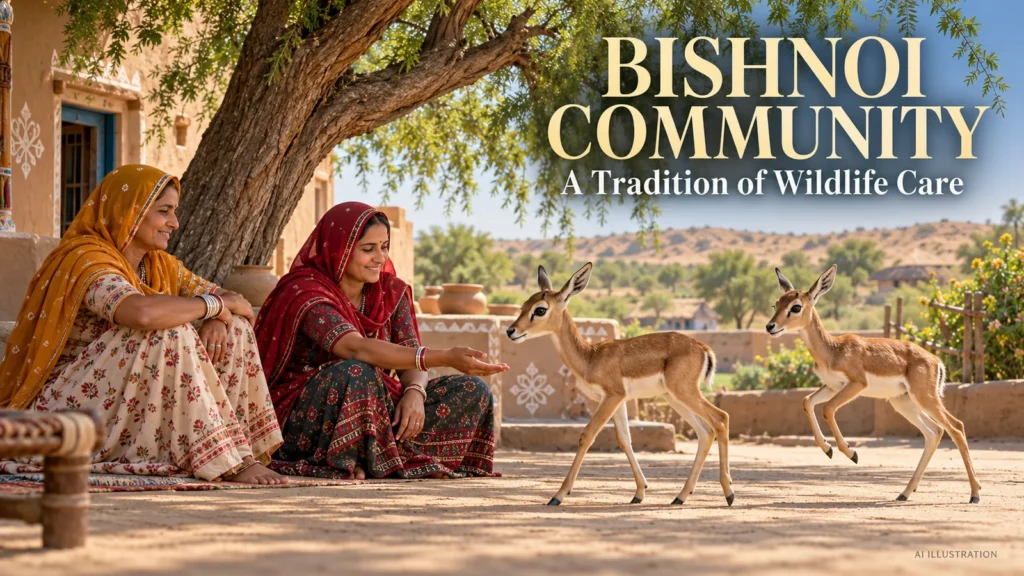
Everyday language can blur species names. Blackbuck and chinkara are different animals, even when both are loosely described as deer. The Rajasthan State Biodiversity Board lists both in connection with the Gudha Vishnoiyan conservation area. A photograph should therefore not be given a precise species or location simply because it appears beside a familiar community story.
Do Bishnoi women breastfeed orphaned fawns?
An ABP Majha field report from Kankani recorded a local man’s account of his sister nursing a motherless fawn and showing photographs. This is an attributed example from that reporting, not a verified description of every household.
It is not a basis for saying that every Bishnoi woman does this, that it is a compulsory religious rule, or that it remains the routine practice in every village. Women’s roles should not be reduced to one exceptional image either. Time, work and everyday support for care are less sensational aspects that also deserve attention.
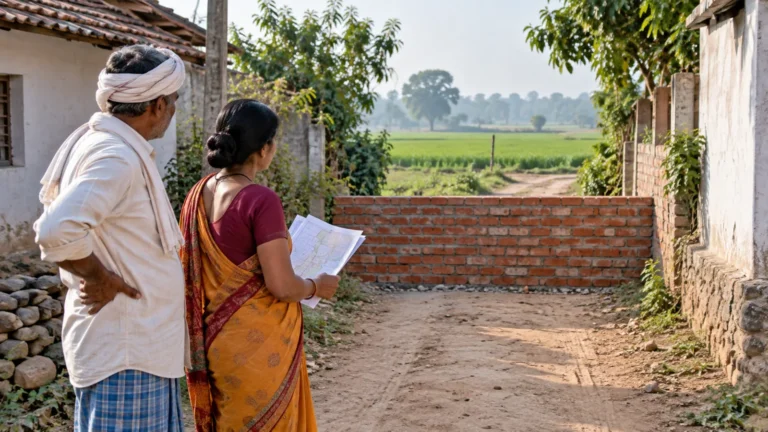
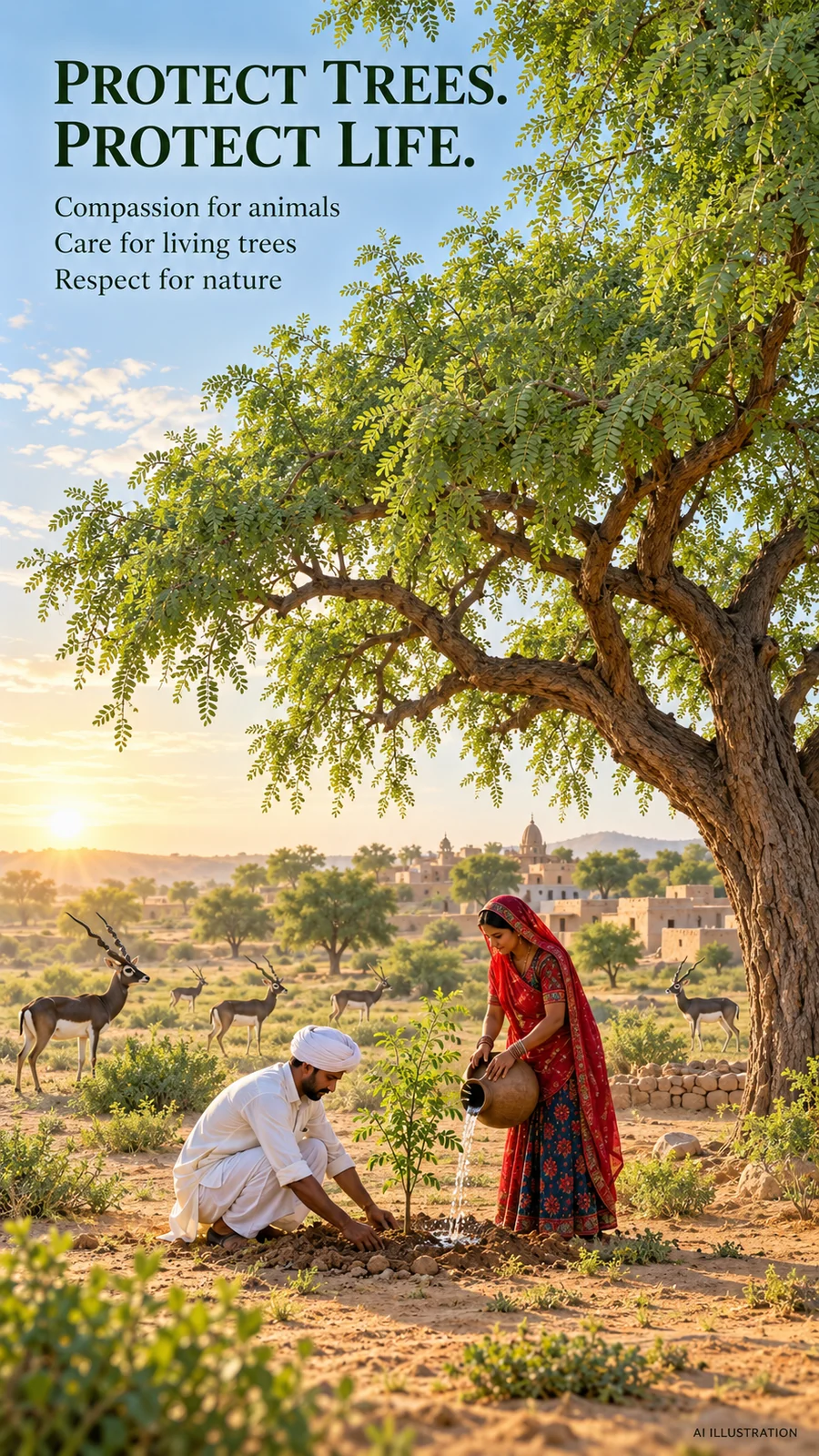
All three images in this article are symbolic AI illustrations. They do not identify real women, establish a location or document the event described in the report. No breastfeeding is depicted. The illustrations convey compassion, not instructions to feed milk to wildlife or keep wild animals at home.
Amrita Devi and the history of Khejarli
Tree protection brings another important history into view. Rajasthan Tourism records the sacrifice of 363 people under Amrita Devi’s leadership while protecting khejri trees in 1730. A memorial at Khejarli commemorates that history. The commonly cited total includes Amrita Devi; it should not casually be increased by adding her again.
Khejarli and care for fawns are different subjects, connected here by concern for living nature. An account does not need invented final speeches or a dramatic image presented as a historical photograph to communicate its significance. Keeping dates, names and the limits of the record clear is a form of respect for that history.
Conservation is larger than a viral photograph
An unusual act of care may attract attention, but a community’s relationship with its surroundings cannot be measured through that image alone. Trees, habitat, ordinary work and cooperation deserve room in the story. Neither a photograph nor a short video can establish everything about a family’s beliefs and life.
Visitors should respect residents’ consent and give wildlife space. Surrounding or pursuing an animal for a close photograph, or trying to change its behaviour, should not be mistaken for conservation. An account of care should not become an expectation that residents demonstrate intimate or exceptional practices for tourists.
An individual’s headlines do not define a community
A community is a broad social identity. Sharing the Bishnoi name does not make an individual a representative of every Bishnoi person. Allegations concerning an individual or an alleged criminal group do not extend to community members collectively.
News about Lawrence Bishnoi and the conservation traditions of the Bishnoi community are separate subjects. A reader looking for the status of a criminal case needs dated, case-specific sources. This article explains cultural and conservation context; it does not decide a criminal allegation or make a collective judgment about a community.
Advice: respect compassion and the needs of wildlife
If you encounter injured wildlife, contact the local forest authorities or trained rescuers rather than attracting a crowd or improvising care. Touching, capturing or feeding is not automatically helpful. A symbolic illustration or a moving story is not technical guidance on wildlife rehabilitation.
When reading about a community, distinguish official historical descriptions, community explanations and attributed field reporting. Keep a claim within what its source actually supports. It is possible to appreciate a tradition of compassion while remaining careful about evidence, individuals’ dignity and the difference between an illustration and a documented event.
Frequently asked questions
Are Bishnoi and Vishnoi different communities here?
They are spellings readers may encounter for the community discussed in this article.
Who is associated with the 29 Bishnoi principles?
Guru Jambheshwar, also known as Jambhoji. This article focuses on conservation-related themes rather than reproducing the full numbered text.
Does every Bishnoi woman breastfeed fawns?
No such universal claim is justified. The article refers to a specific example described in attributed field reporting.
Are blackbuck and chinkara the same species?
No. Using deer loosely in everyday speech does not make them the same animal.
Does Lawrence Bishnoi represent the whole community?
A surname does not establish representation or collective responsibility for an entire community.
Related reading
State trees of India and the khejri (Hindi article)
Sources and context
Rajasthan Tourism — Khejrli village and Bishnoi village tour
Bishnoi community resource — 29 principles
ABP Majha — field reporting from Kankani
Rajasthan State Biodiversity Board — wildlife protection areas
Azim Premji University — Amrita Devi and the khejri
Cultural and historical information. Reported examples do not describe every woman or household in the community. All images are symbolic AI illustrations. Facts reviewed: 19 October 2026.
Who is Lawrence Bishnoi? Background, Key Cases and Jail Information