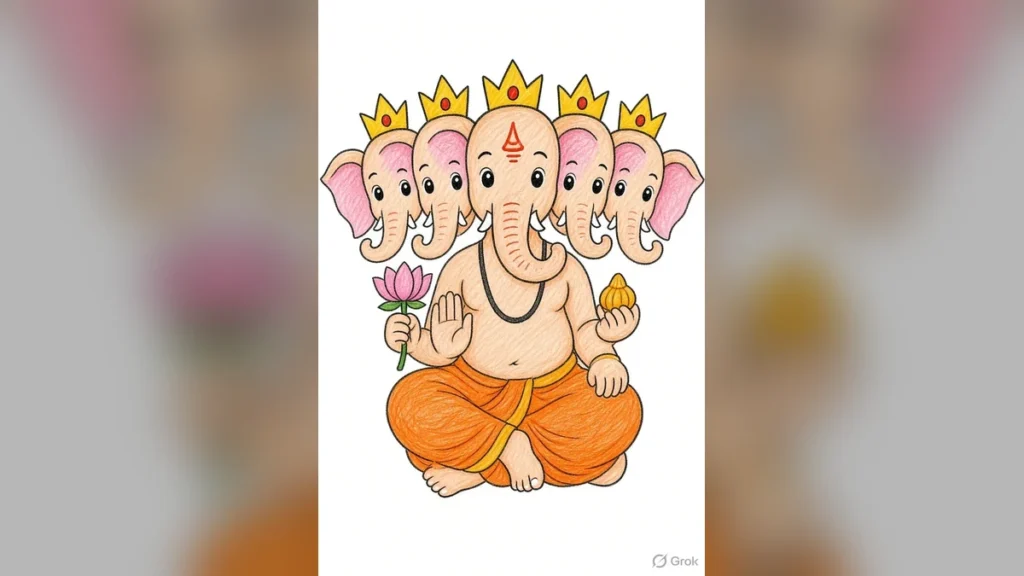
In Sanatana Dharma, every sacred ritual, auspicious undertaking, and new journey commences with the divine remembrance of Lord Ganesha. Revered as Vighnaharta (the remover of all obstacles) and Buddhidata (the bestower of supreme wisdom), Lord Ganesha purifies the heart, removes unseen hurdles, and paves the path for peace, wisdom, and prosperity. Among the most popular devotional hymns dedicated to him, the Ganesh Chalisa holds a sacred place in millions of homes worldwide.
Whether you are preparing for important examinations, initiating a new business project, moving into a new residence, or simply seeking daily inner serenity, chanting or reading the ganesh chalisa lyrics fills your surroundings with divine light and protective vibrations. Below, we present the complete Hindi text of the Chalisa alongside a clear English narrative, spiritual meaning, proper chanting guidelines, and answers to common spiritual questions.
What is the Shri Ganesh Chalisa?
The term Chalisa is derived from the Hindi word Chalis, meaning forty. The Shri Ganesh Chalisa is a sacred devotional poem consisting of forty poetic stanzas (chaupais) framed by opening and closing couplets (dohas). Composed in melodic and accessible Awadhi-Hindi, this hymn praises the magnificent form, compassionate nature, divine intellect, and legendary exploits of Lord Ganesha.
According to ancient spiritual traditions, Lord Ganesha presides over the Muladhara Chakra (the root energy center of the subtle body). Reciting his Chalisa activates this grounding center, bestowing emotional stability, mental focus, and spiritual strength. Devotees chant these forty verses to invite Riddhi (prosperity) and Siddhi (spiritual power) into their lives.
When and How to Recite Ganesh Chalisa for Divine Blessings
While Lord Ganesha is known to be easily pleased by simple, sincere devotion, adhering to traditional practices enhances the spiritual energy generated during prayer:
- Auspicious Days: Wednesdays (Budhvar) are especially dedicated to Lord Ganesha. Additionally, monthly Sankashti Chaturthi and the grand festival of Ganesh Chaturthi are deeply auspicious times for multi-fold recitations.
- Ideal Time: Chanting during the early morning hours of Brahma Muhurta (before sunrise) or during twilight (Sandhya Kaal) establishes mental clarity and peace for the day.
- Sacred Setup: Sit facing East or North on a clean woollen or darbha grass mat (Aasana). Place an image or idol of Lord Ganesha on a clean altar draped in red or yellow cloth.
- Devotional Offerings: Offer five blades of fresh Durva grass, red flowers (such as hibiscus), vermilion (sindoor), and his favorite sweet, Modak or Motichoor Laddoo. Light a pure ghee lamp (diya) and incense.
- Chanting Method: Begin with three slow, deep breaths. Recite the root mantra “Om Gam Ganapataye Namah” three times, and then read or recite the ganesh chalisa lyrics with steady devotion and clear focus.
Full Ganesh Chalisa Lyrics in Hindi (Complete Path)
Here is the full, authentic text of Shri Ganesh Chalisa in Hindi Devanagari script for your daily path and prayer:
श्री गणेश चालीसा पूरा पाठ — Ganesh Chalisa Lyrics in Hindi
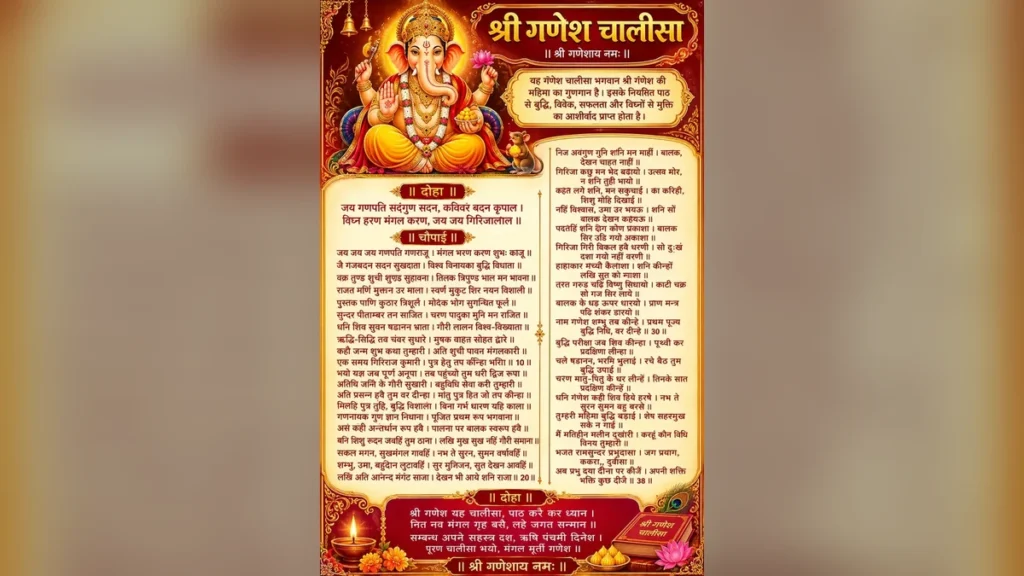
नीचे श्री गणेश चालीसा का पूरा हिंदी पाठ है। पंक्ति-पंक्ति पढ़ें; जहाँ परिवार का उच्चारण थोड़ा अलग हो, उसी का सम्मान करें। पोस्टर वाली ग्राफिक फीचर्ड इमेज पर भी लिखा है — यहाँ पाठ स्क्रीन पर आसानी से कॉपी–पढ़ने लायक HTML में है।
।। श्री गणेशाय नमः ।।
|| दोहा ||
जय गणपति सदगुण सदन, कविवर बदन कृपाल ।
विघ्न हरण मंगल करण, जय जय गिरिजालाल ॥
|| चौपाई ||
जय जय जय गणपति गणराजू । मंगल भरण करण शुभ काजू ॥
जै गजबदन सदन सुखदाता । विश्व विनायक बुद्धि विधाता ॥
वक्र तुण्ड शुची शुण्ड सुहावना । तिलक त्रिपुण्ड भाल मन भावना ॥
राजत मणि मुक्तन उर माला । स्वर्ण मुकुट शिर नयन विशाली ॥
पुस्तक पाणि कुठार त्रिशूलं । मोदक भोग सुगन्धित फूलं ॥
सुन्दर पीताम्बर तन साजित । चरण पादुका मुनि मन राजित ॥
धनि शिव सुवन षडानन भ्राता । गौरी लालन विश्व-विख्याता ॥
ऋद्धि-सिद्धि तव चंवर सुधारे । मुषक वाहन सोहत द्वारे ॥
कही जन्म शुभ कथा तुम्हारी । अति शुची पावन मंगलकारी ॥
एक समय गिरिराज कुमारी । पुत्र हेतु तप कीन्हा भारी ॥ 10 ॥

भयो यज्ञ जब पूर्ण अनूपा । तब पहुंच्यो तुम धरी द्विज रूपा ॥
अतिथि जानि के गौरी सुखारी । बहुविधि सेवा करी तुम्हारी ॥
अति प्रसन्न हवे तुम वर दीन्हा । मातु पुत्र हित जो तप कीन्हा ॥
मिलहि पुत्र तुहि, बुद्धि विशाला । बिना गर्भ धारण यह काला ॥
गणनायक गुण ज्ञान निधाना । पूजित प्रथम रूप भगवाना ॥
असं कही अन्तर्धान रूप हवे । पालना पर बालक स्वरूप हवे ॥
बनि शिशु रुदन जबहिं तुम ठाना । लखि मुख सुख नहिं गौरी समाना ॥
सकल मगन, सुखमंगल गावहिं । नभ ते सुरन, सुमन वर्षावहिं ॥
शम्भू, उमा, बहुदान लुटावहिं । सुर मुनिजन, सुत देखन आवहिं ॥
लखि अति आनन्द मंगल साजा । देखन भी आये शनि राजा ॥ 20 ॥

निज अवगुण गुनि शनि मन माहीं । बालक देखन चाहत नाहीं ॥
गिरिजा कछु मन भेद बढायो । उत्सव मोर, न शनि तुही भायो ॥
कहत लगे शनि, मन सकुचाई । का करिहौ, शिशु मोहि दिखाई ॥
नहिं विश्वास, उमा उर भयऊ । शनि सों बालक देखन कहयऊ ॥
पदतहिं शनि दृग कोण प्रकाशा । बालक सिर उडि गयो आकाशा ॥
गिरिजा गिरी विकल हवे धरणी । सो दुःख दशा गयो नहीं वरणी ॥
हाहाकार मच्यो कैलाशा । शनि कीन्हों लखि सुत को नाशा ॥
तुरत गरुड चढि विष्णु सिधायो । काटी चक्र सो गज सिर लाये ॥
बालक के धड ऊपर धारयो । प्राण मन्त्र पढि शंकर डारयो ॥
नाम गणेश शम्भू तब कीन्हे । प्रथम पूज्य बुद्धि निधि, वर दीन्हे ॥ 30 ॥

बुद्धि परीक्षा जब शिव कीन्हा । पृथ्वी कर प्रदक्षिणा लीन्हा ॥
चले षडानन, भरमि भुलाई । रचे बैठ तुम बुद्धि उपाई ॥
चरण मातु-पितु के धर लीन्हें । तिनके सात प्रदक्षिणा कीन्हें ॥
धनि गणेश कही शिव हिये हरषे । नभ ते सुरन सुमन बहु बरसे ॥
तुम्हेरी महिमा बुद्धि बड़ाई । शेष सहमुख सके न गाई ॥
मैं मतिहीन मलीन दुखारी । करहूं कौन विधि विनय तुम्हारी ॥
भजत रामसुन्दर प्रभुदासा । जग प्रयाग, ककरा, दुर्वासा ॥
अब प्रभु दया दीना पर कीजें । अपनी शक्ति भक्ति कुछ दीजे ॥ 38 ॥
|| दोहा ||
श्री गणेश यह चालीसा, पाठ करै कर ध्यान ।
नित नव मंगल गृह बसै, लहे जगत सन्मान ॥
सम्बन्ध अपने सहस्त्र दश, ऋषि पंचमी दिनेश ।
पूरण चालीसा भयो, मंगल मूर्ती गणेश ॥
।। श्री गणेशाय नमः ।।
यही है ganesh chalisa lyrics in hindi का पूरा रूप — स्क्रीन पर पढ़ो, प्रिंट करो, या बच्चों को पंक्ति दोहरा के सिखाओ। शब्द थोड़े अलग छपे मिलें तो घबराएँ नहीं; लोक-पाठ में हल्के भेद आम हैं।
Detailed Meaning and Narrative of the Ganesh Chalisa
To experience the deep spiritual power of the ganesh chalisa lyrics, it is helpful to understand the sacred narrative contained within these forty verses. The Chalisa beautifully weaves together salutation, birth story, wisdom tests, and heartfelt prayer.
1. Salutation to the Divine Form (Verses 1–8)
The hymn begins by praising Lord Ganesha as the reservoir of all virtuous qualities (Sadguna Sadan), possessing an elephant head that exudes infinite grace. He carries a book (symbolizing scriptural wisdom), an axe, and a trident while holding delicious Modaks. He is served by Riddhi and Siddhi, and his mount, the mouse, stays at his threshold. He is celebrated as the brother of Lord Kartikeya (Shadanana) and the beloved son of Mother Parvati and Lord Shiva.
2. The Tapasya of Mata Parvati and Ganesha’s Birth (Verses 9–18)
The narrative recalls how Goddess Parvati performed intense austerities desiring a virtuous son. Lord Ganesha appeared in the form of a holy guest (Dwij Rupa) and blessed her with a divine child born without mortal gestation. Soon, a luminous baby manifested in the cradle. Great celebrations erupted across Mount Kailash, and celestial beings showered fragrant flowers from the heavens.
3. The Aspect of Shani Dev and the Elephant Head (Verses 19–30)
When all sages and devas arrived to admire the baby, Lord Shani (Saturn) kept his eyes averted, knowing that his direct gaze carried a heavy cosmic curse. Misunderstanding his hesitation, Mother Parvati insisted that Shani look at her newborn son. As Shani glanced at the child, the baby’s original head vanished into the skies.
Overcome with grief, Mother Parvati collapsed. Seeing the distress on Kailash, Lord Vishnu immediately rode his mount Garuda, retrieved the head of a noble elephant, and brought it back. Lord Shiva affixed the elephant head onto the child’s body and chanted life-giving prana mantras. Shiva named him Ganesha and bestowed the eternal boon that Ganesha would always be worshipped first (Pratham Pujya) before any god or ritual.
4. The Test of Supreme Wisdom (Verses 31–35)
Later, Lord Shiva devised a test for his two sons, Ganesha and Kartikeya, asking them to circumambulate the entire universe. Lord Kartikeya immediately set off on his peacock to fly around the cosmos. However, Lord Ganesha utilized his profound wisdom: he simply bowed before his parents, Lord Shiva and Mother Parvati, and walked around them seven times. He explained that all the sacred realms and universe reside entirely within one’s parents. Overjoyed by his wisdom, Lord Shiva praised Ganesha, and divine blossoms rained from the sky.
5. Humble Supplication and Closing Blessing (Verses 36–38 & Closing Dohas)
The poet humbly surrenders at the lotus feet of Lord Ganesha, acknowledging human limitations and seeking divine grace, spiritual strength, and firm devotion. The closing couplets promise that anyone who recites this Chalisa regularly with pure focus will enjoy continuous domestic harmony, respect in society, and freedom from distress.
Spiritual Benefits of Daily Ganesh Chalisa Recitation
Chanting or listening to the sacred Chalisa daily confers multiple spiritual and worldly blessings:
- Overcoming Obstacles: Blockages in career growth, delayed marriages, or financial troubles dissolve through Lord Ganesha’s grace.
- Enhanced Intellect & Learning: Students and seekers gain retentive memory, clarity of thought, and success in educational endeavors.
- Harmony at Home: Regular recitation purifies the home environment, reducing conflicts and fostering peaceful relationships.
- Protection from Negative Energies: The divine vibrations act as a spiritual shield against anxiety, fear, and malefic astrological influences.
Frequently Asked Questions (FAQ)
Q1. Can anyone chant the Ganesh Chalisa at home?
Yes. The Ganesh Chalisa is a devotional prayer accessible to everyone. No formal Vedic initiation is required—only clean habits, sincere faith, and a devoted heart.
Q2. How many times should I recite the Ganesh Chalisa daily?
Reciting it once or three times every morning is a balanced daily practice. On Wednesdays or during Ganesh Chaturthi, chanting it 11 times brings deeper concentration and spiritual upliftment.
Q3. What if I make pronunciation mistakes while reading Devanagari Hindi?
While sincere effort toward correct pronunciation is valuable, Lord Ganesha looks primarily at your inner devotion (Bhava). With regular practice, your chanting will naturally become accurate and rhythmic.
Q4. Why is Durva grass offered to Lord Ganesha during prayer?
Durva grass possesses a unique ability to absorb and transmit Ganesha’s subtle spiritual frequency. Offering three or five blades of fresh Durva grass brings great joy to the deity.
Q5. Why is Lord Ganesha worshipped before starting any work or puja?
Lord Shiva granted Lord Ganesha the boon of Pratham Pujya (first-worshipped deity) because of Ganesha’s unmatched wisdom and reverence for his parents. Worshiping him first ensures that the endeavor proceeds smoothly without obstructions.
Devotional Disclaimer
Disclaimer: This article and the provided sacred lyrics are published purely for devotional, educational, and cultural reading purposes. Family traditions, local sampradaya variations, and regional pronunciation practices should always be honored during your personal spiritual routines.