 Vista
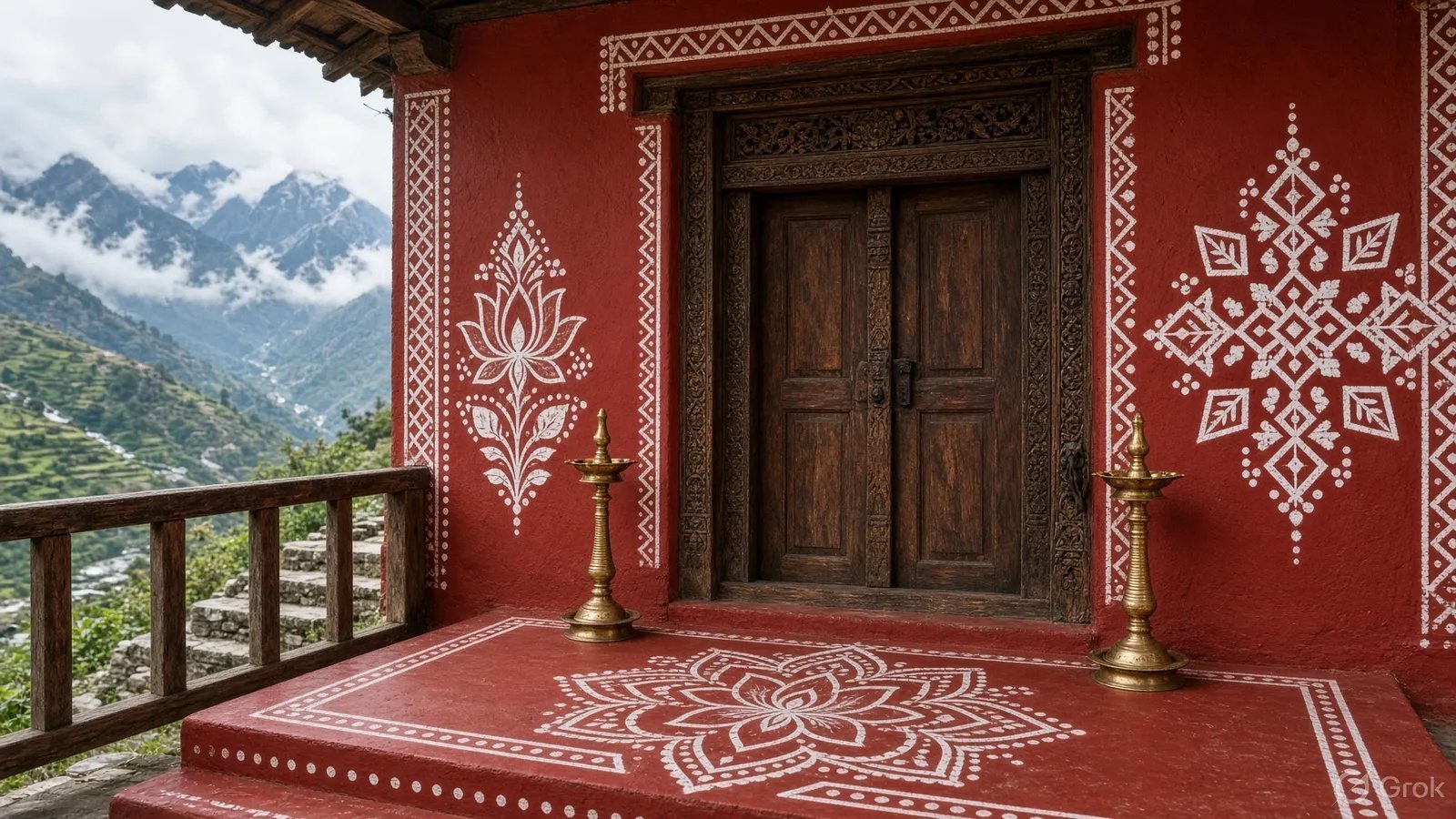
Aipan is a ritual folk art of the Kumaon region of Uttarakhand. Designs are drawn in white rice paste (biswar) over a red ochre (geru) base on floors, walls and doorsteps, mainly on festivals, pujas and family ceremonies. To draw an easy Aipan design, prepare a red base, make a smooth white rice paste, start from a central dot, add petals or a simple chowki frame, and finish with a border.
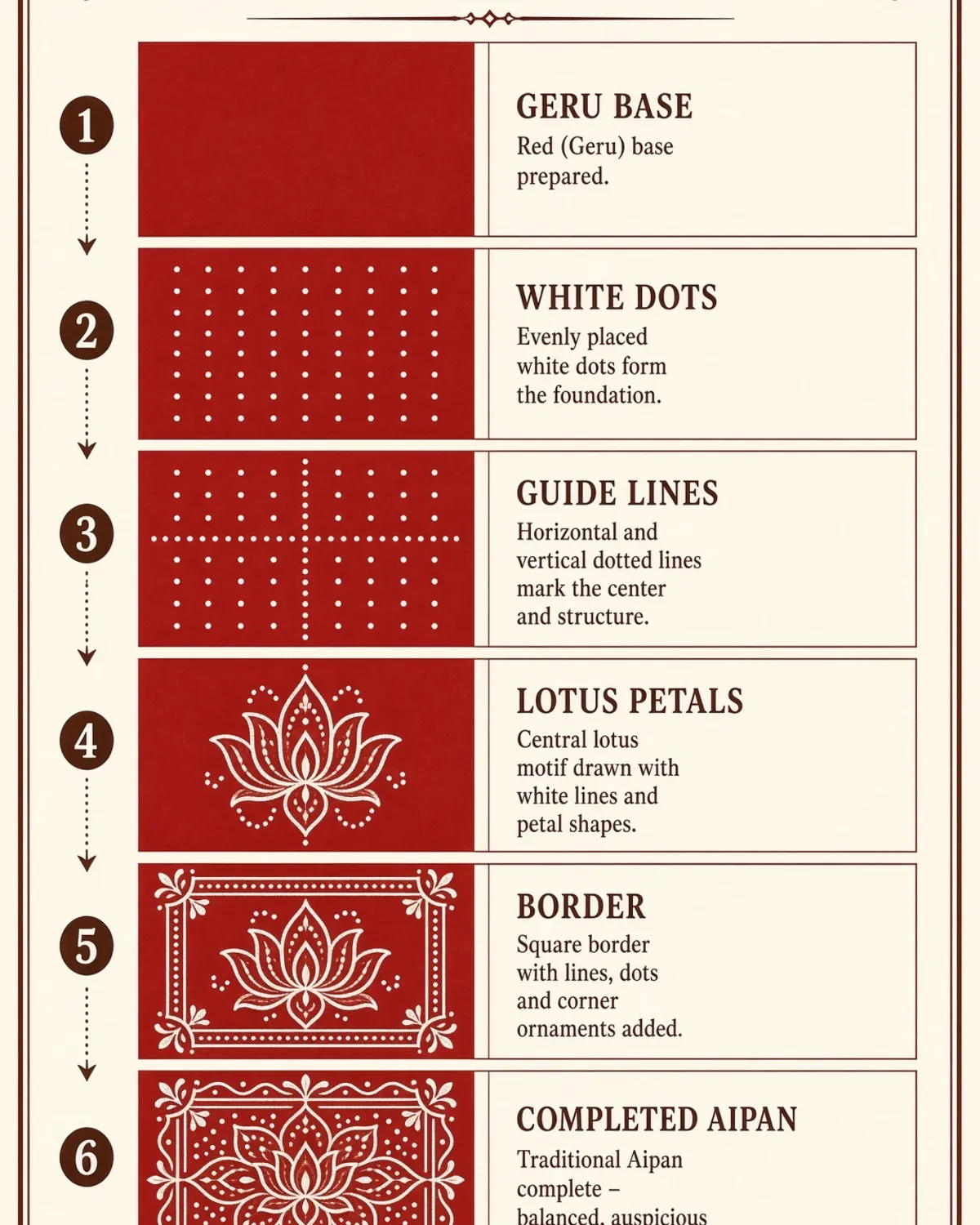
This guide covers the Aipan art of Uttarakhand from origin to practice: materials, tools, an easy step-by-step drawing method, deli (threshold) and doorway designs, chowki patterns, festival ideas and modern wall decor. A paper or board design is Aipan-inspired practice; the ritual art itself is a living tradition kept by Kumaoni women, so learn with respect and support local artists. For a pattern reference, see our Aipan motifs chart.
Table of contents
- Kumaon origin and cultural significance
- Geru and rice paste technique
- Aipan tools and modern applicators
- Easy Aipan design: step-by-step
- Deli and doorway designs
- Chowki patterns and their uses
- Diwali, wedding and puja designs
- Aipan border design
- Modern wall art and home decoration
- FAQs
Kumaon origin and cultural significance
The Government of India handicrafts portal says Aipan is native to Kumaon, began during Chand dynasty rule in Almora and then spread across the state. Designs belong to pujas, births, marriages, deaths and the janeu (sacred thread) ceremony. Google Arts & Culture describes it as ritual art that is believed to offer protection against evil, and the word is linked to the Sanskrit lepana, meaning plaster, according to Outlook Traveller. It is traditionally a women’s art passed from generation to generation. A GI tag was recorded for Aipan in 2023, according to AIACA’s craft note.
Geru and rice paste technique
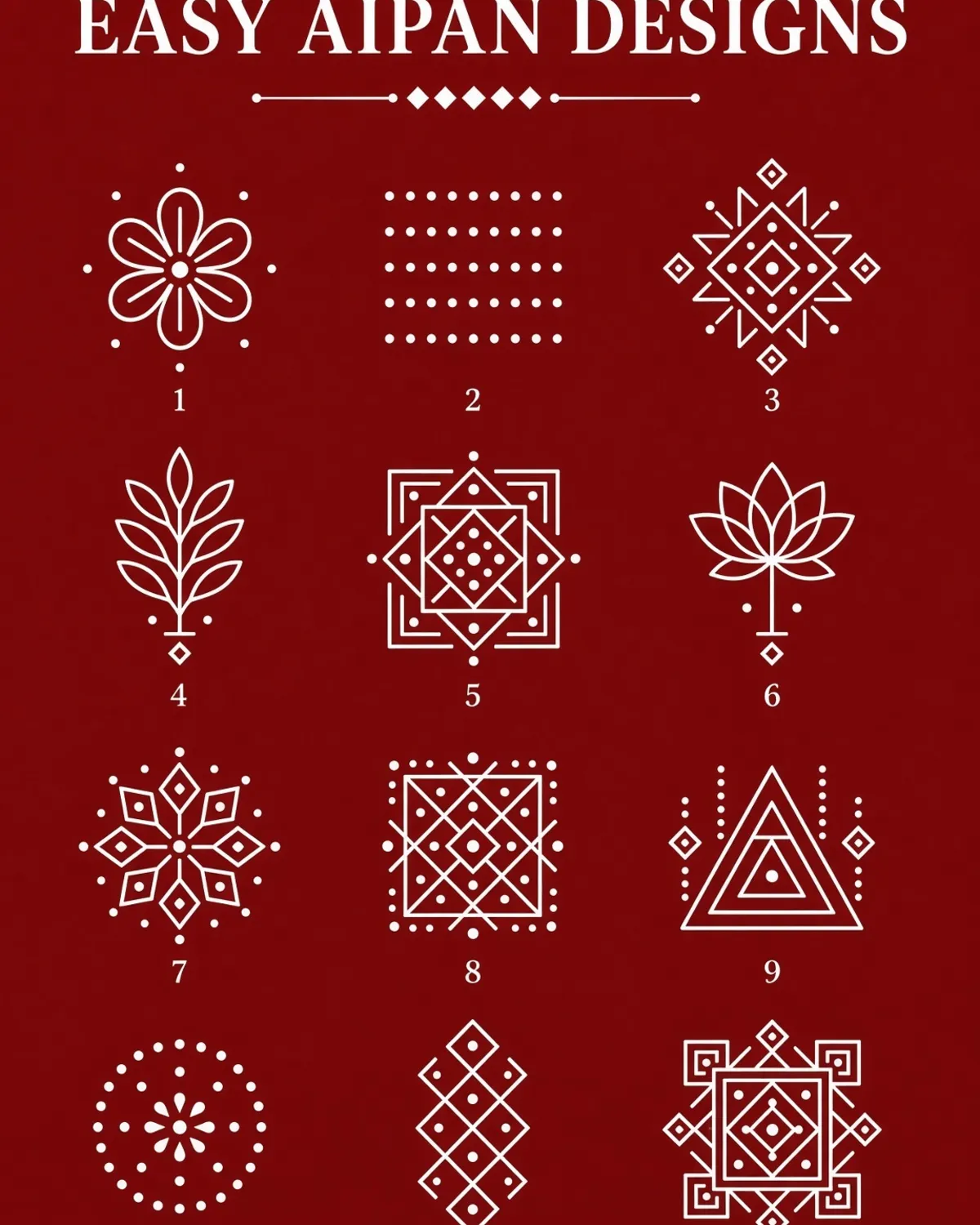
Traditional Aipan has two parts. First comes the red base: a wall or floor is coated with geru (red ochre clay), and the handicrafts portal also lists cow dung among raw materials for surface preparation. Then a white paste called biswar, made by grinding soaked rice in water, is used to draw the patterns with the fingers. Stories and photo essays also note that the paste should flow easily, neither too thick nor too thin, and that Aipan is not permanent: it is wiped away and redrawn for the next occasion. We do not give a ritual recipe; if you are doing it for a religious occasion, follow your family’s custom.
Aipan tools and modern applicators
The handicrafts portal lists a brush and fingers as the traditional tools, and Google Arts & Culture says women use the fore, middle and ring fingers to draw. The AIACA note adds that a cloth or stick is also used. The list below separates traditional tools from practical modern options for practice.
| Tool | Use | Type |
|---|---|---|
| Fingers (three) | Drawing lines, dots and petals in rice paste | Traditional |
| Brush | Applying geru and some line work | Traditional |
| Cloth or stick | Spreading base and drawing fine lines | Traditional |
| Fine round brush | Detail on paper or board with white paint | Modern practice |
| Squeeze bottle or cone applicator | Even lines for doorsteps and boards | Modern practice |
| Chalk or white acrylic | Practice on a red painted board | Modern practice |
Easy Aipan design: step-by-step
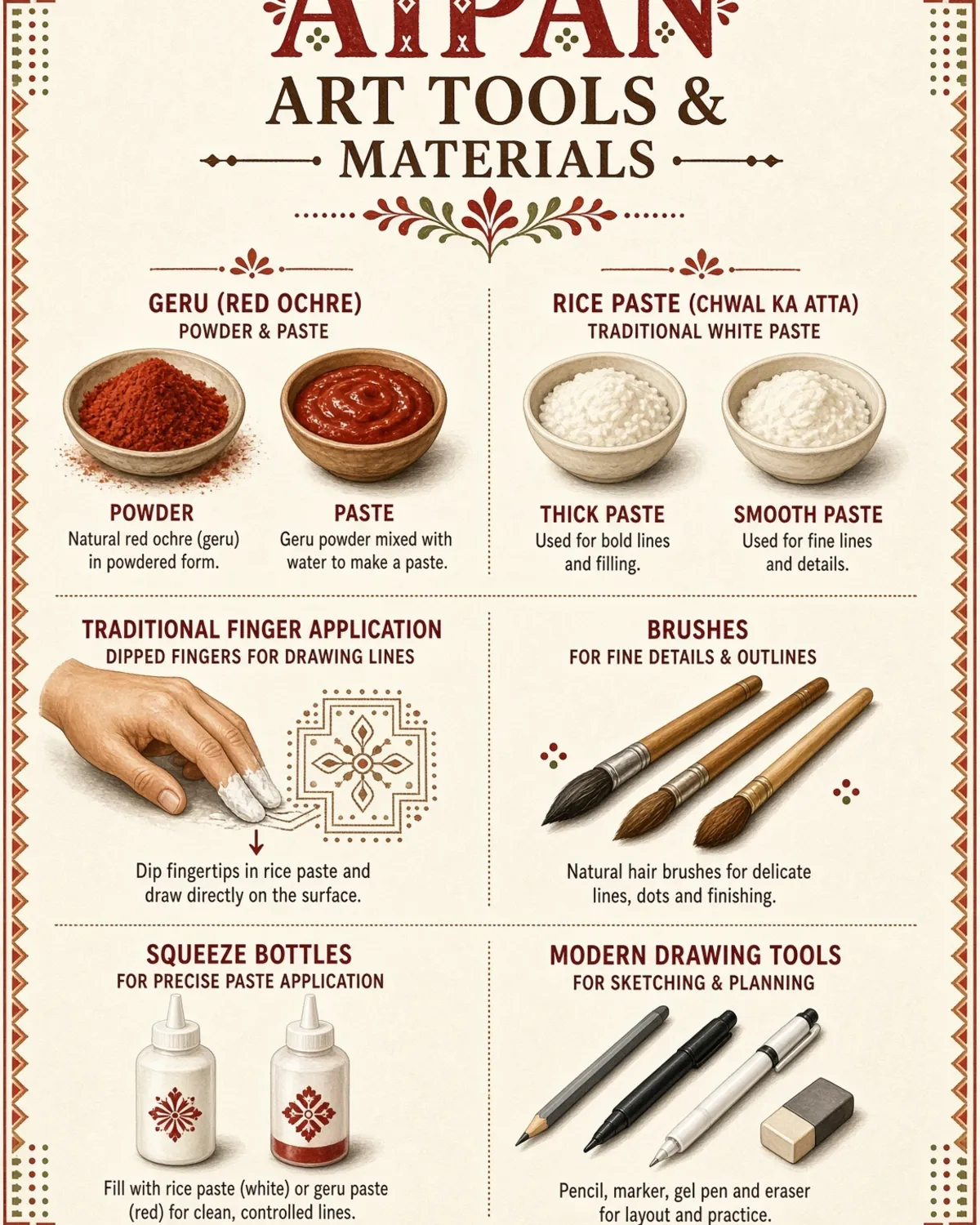
This beginner method works on a red-painted board or paper with white paint. It is a practice version, not a ritual one.
- Red base: paint a smooth, even red or brick surface and let it dry fully.
- Centre dot: place a single white dot in the middle. Sources describe designs that begin from a central dot.
- Petal ring: draw eight rounded petals around the dot, keeping the spacing even.
- Outer ring: add a second ring of smaller petals or a circle of dots.
- Frame: enclose the design in a square or chowki-like frame with parallel lines.
- Fill and border: add small dots or lines in empty corners, then finish with a repeating border.
Deli and doorway designs
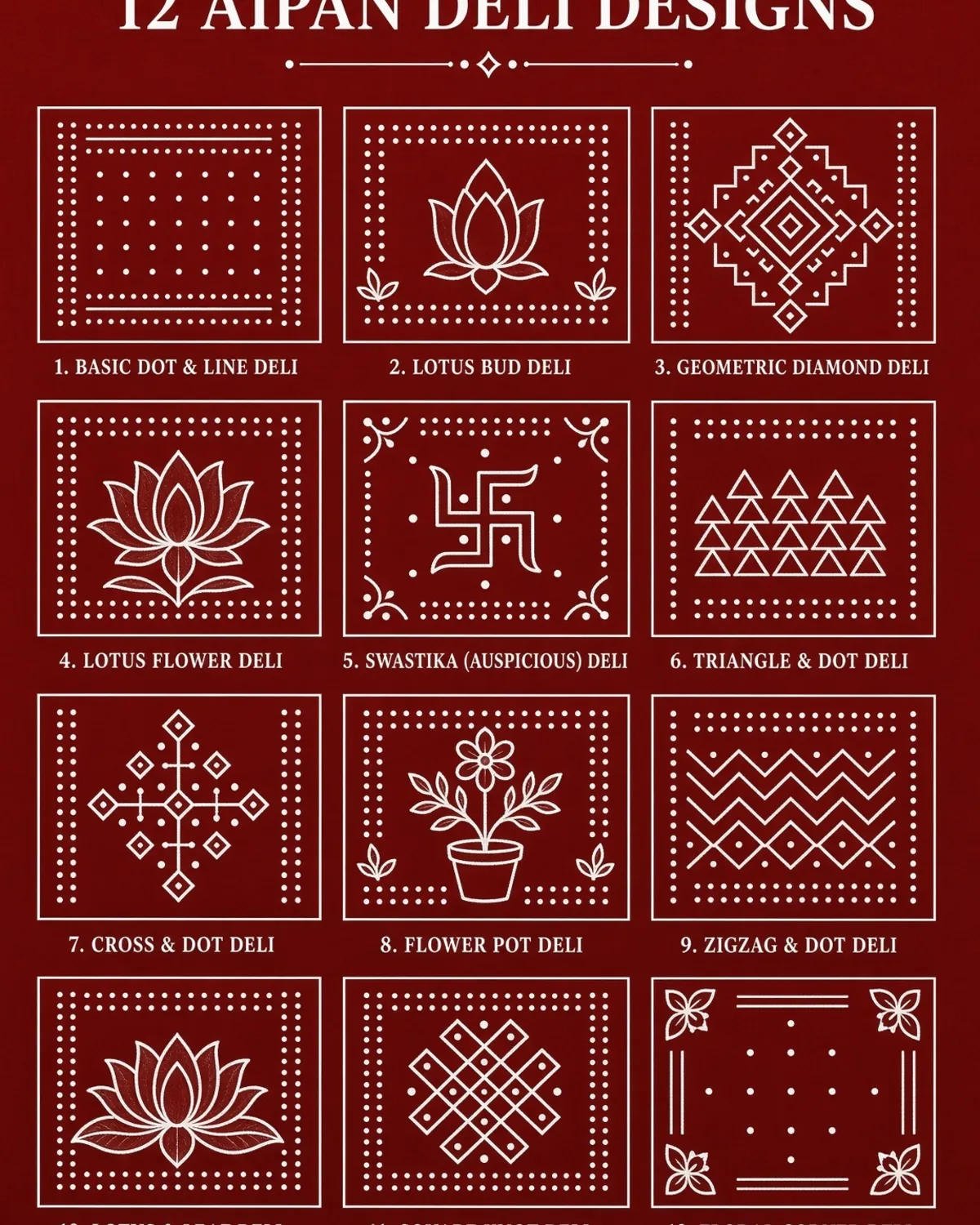
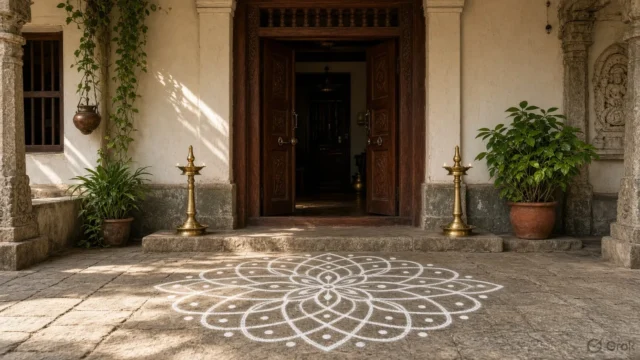
The deli, or threshold, is where Aipan is most visible. A typical doorway design uses the Vasudhara pattern: after painting the step risers with geru, vertical lines of biswar are dripped in groups of seven, according to a personal essay on Beliefnet describing Kumaoni practice. Doorsteps may also carry Lakshmi footprints pointing into the house, a swastika or a lotus. For an easy Aipan design for deli on a board, repeat vertical drip-style lines across a red band, then add a small lotus in the centre of the doorway frame.
Chowki patterns and their uses
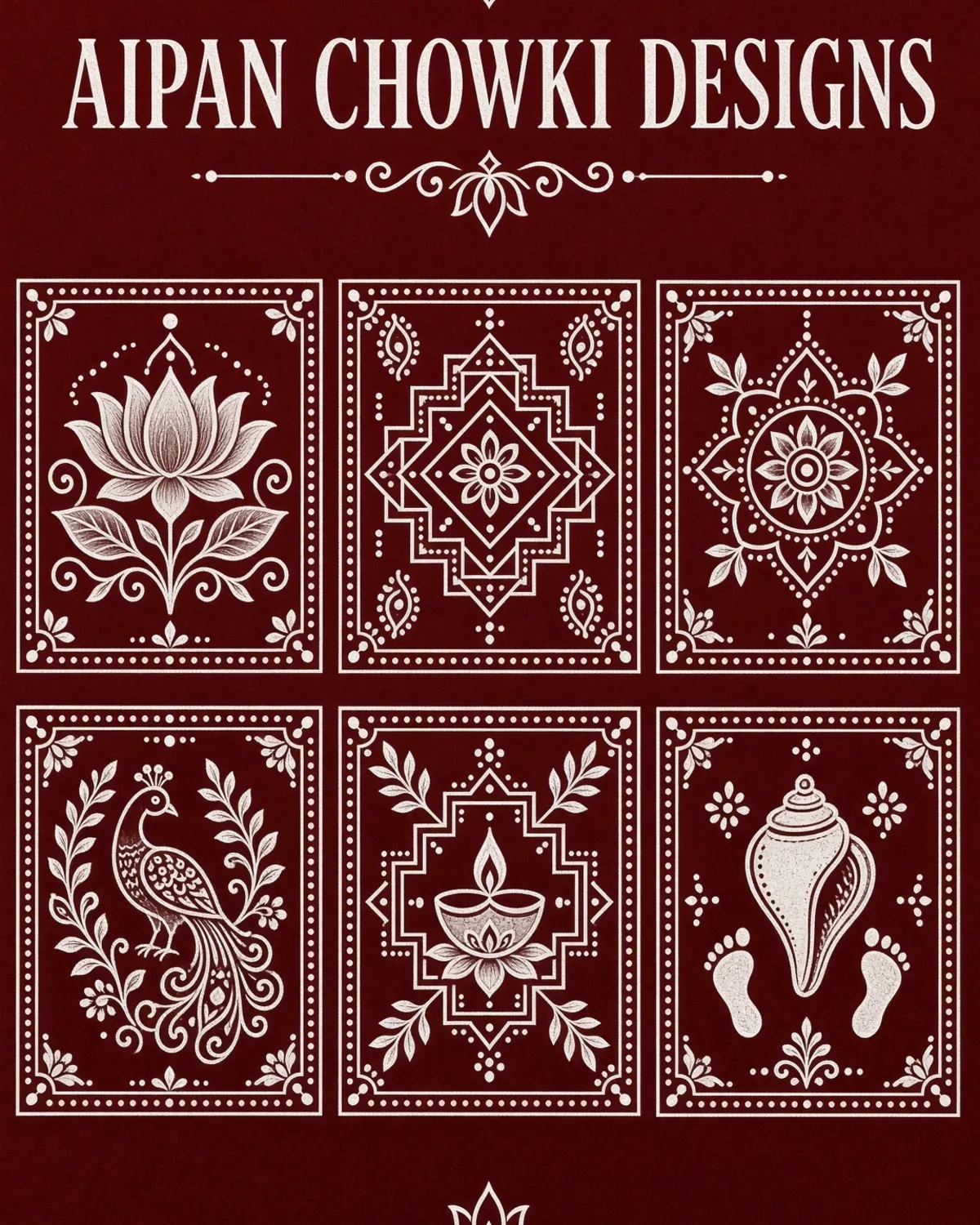
A chowki is a framed ritual pattern drawn as a seat or platform for worship. Outlook Traveller and Wikipedia name several, with their stated uses:
| Chowki | Stated use |
|---|---|
| Saraswati Chowki | Education and learning, for example a child’s schooling ritual |
| Chamunda Hast Chowki | Havans and yagyas |
| Nav Durga Chowki | Devi pujas |
| Janeyu Chowki | Sacred thread ceremony |
| Asan Chowki | Ritual worship seating |
Another source describes the Mahalakshmi chowki as beginning with a dot followed by two triangles. We keep symbolic meanings limited to what sources state, since interpretations vary between families.
Diwali, wedding and puja designs
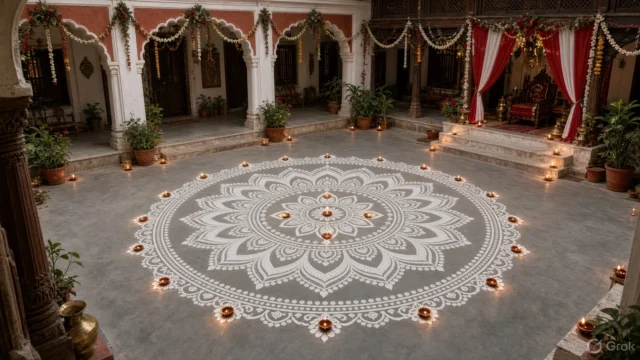
Aipan is linked to Ganesh Chaturthi, Makar Sankranti, Maha Shivaratri and Lakshmi Pujan, among other festivals. For Diwali, Lakshmi footprints, lotus and chowki designs are common. For weddings and pujas, families use chowkis suited to the ceremony. If you are drawing for a celebration at home, practice first on paper so your lines are confident, and treat the designs with the same respect you would give any ritual drawing.
Aipan border design
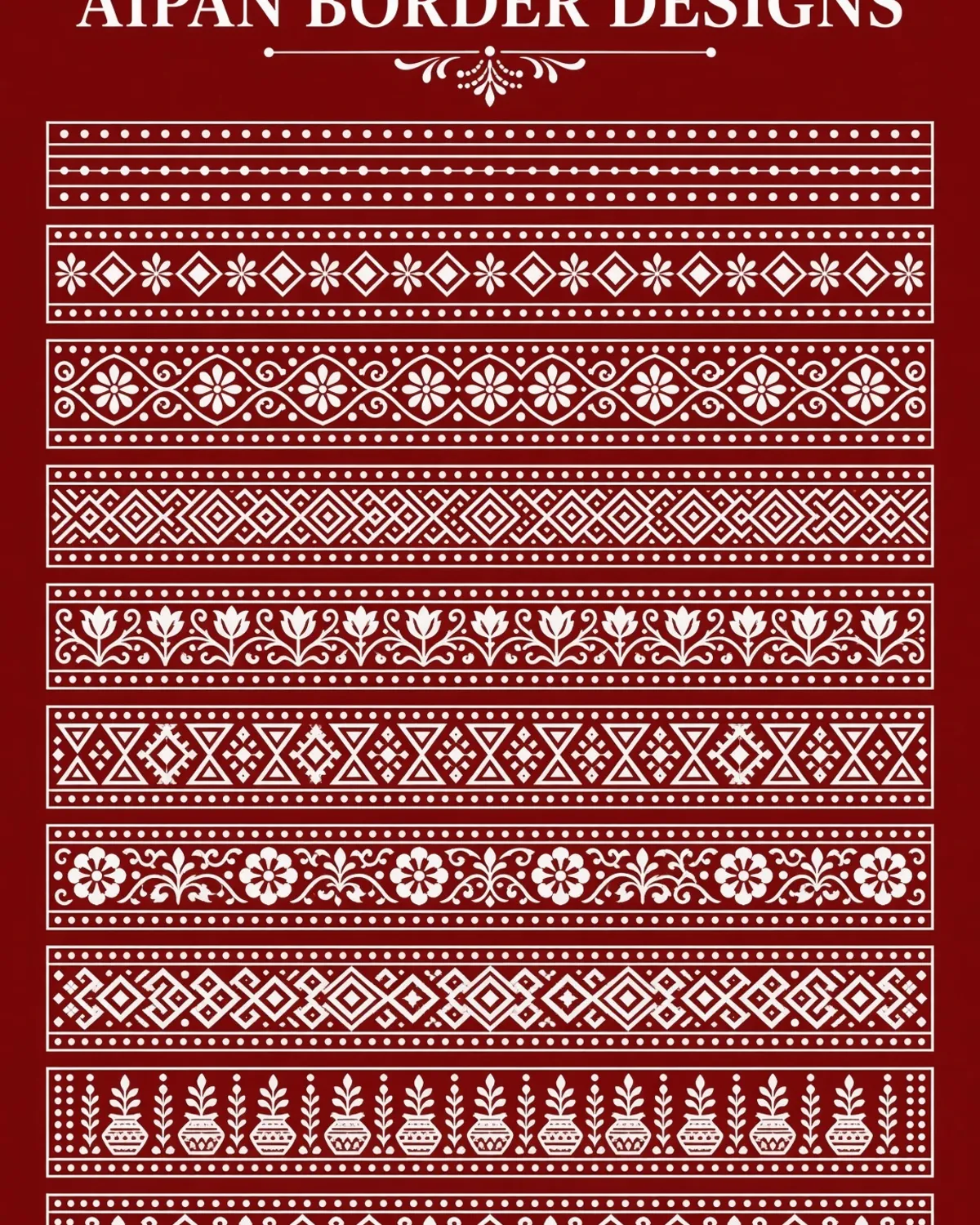
Simple borders for an Aipan border design include a row of dots, a zigzag, a chain of small petals and parallel lines. Vasudhara-style vertical lines make a distinctive border for doorways and frames. Keep a consistent spacing, because evenness is what makes the red-and-white look sharp.
Modern wall art and home decoration
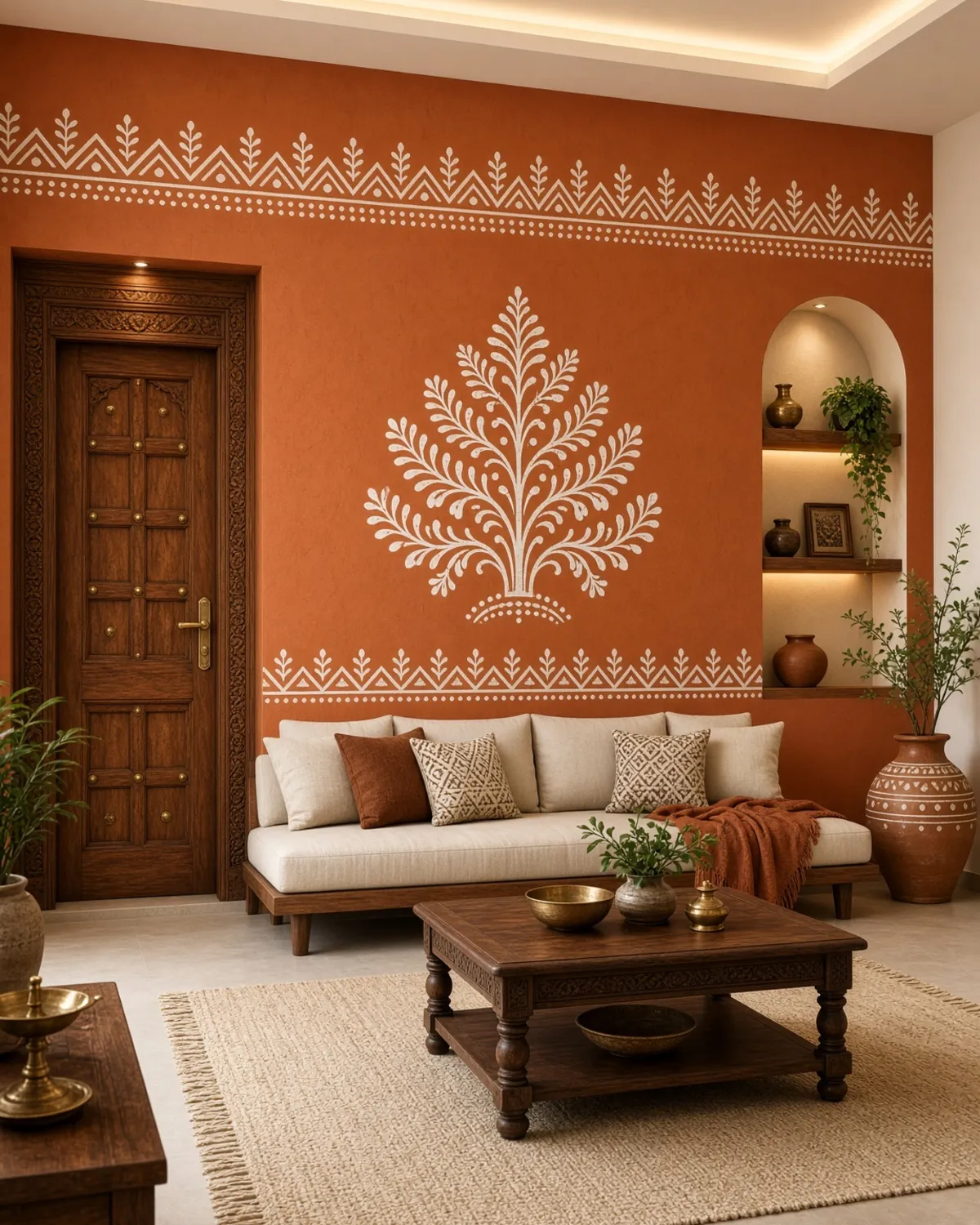
The AIACA note says Aipan is now also used on paper, cloth and wooden products, and the Uttarakhand government decided in 2015 to display Aipan art in government offices, according to Wikipedia. At home, try a red-and-white framed board, a painted nameplate, or a cloth runner. Keep clear that these are modern adaptations. A painted board is decoration, not the ritual floor drawing, and artisans’ work should be bought from them directly.
FAQs
1. What is Aipan art?
A ritual folk art of Kumaon, Uttarakhand, drawn in white rice paste over a red geru base.
2. What materials are used in Aipan?
Geru, rice paste called biswar and cow dung are listed by the handicrafts portal.
3. What tools are used in Aipan?
Traditionally the fingers and a brush; modern practice may use fine brushes or applicators.
4. What is a deli design in Aipan?
It is the threshold or doorstep design, often with Vasudhara lines or Lakshmi footprints.
5. What is a chowki in Aipan?
A framed ritual pattern, such as Saraswati or Nav Durga Chowki, used for specific ceremonies.
6. Can I make Aipan with paint?
Yes, for decoration; many households now use red-and-white paints, but it is then a modern adaptation.
7. Which festivals use Aipan?
Sources list Ganesh Chaturthi, Makar Sankranti, Maha Shivaratri and Lakshmi Pujan, among others.
Related guides: Mandana patterns chart, Alpana motifs, Lippan art, Warli art and Madhubani.
Sources: Development Commissioner (Handicrafts): Uttarakhand Aipan; Google Arts & Culture: Aipan; Wikipedia: Aipan art; Outlook Traveller; AIACA Craft Katha.
Related folk art: Mandana art: red-and-white floor and wall designs












Share Your Opinion
Comments are closed on this post.