 Vista
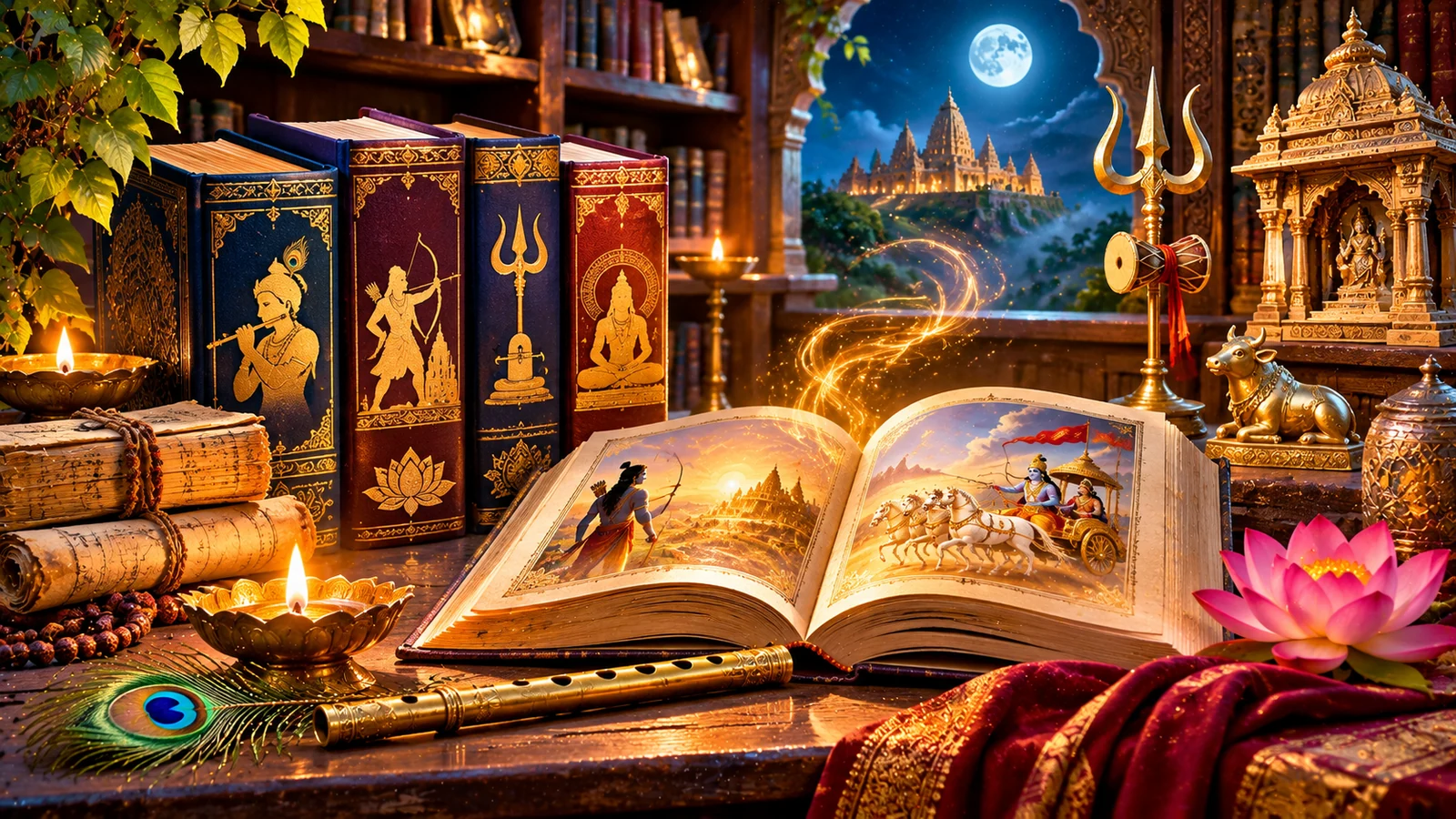
Quick answer: The best Indian mythology books in English for a beginner depend on what you want to read. Start with The Ramayana by R. K. Narayan for a short epic retelling, Jaya by Devdutt Pattanaik for an illustrated introduction to the Mahabharata, or Myth = Mithya for the meanings behind gods and symbols. Choose The Palace of Illusions or The Immortals of Meluha if you prefer modern novels. For philosophy, The Gita for Children is an approachable entry point even for older first-time readers. The important distinction is that a translation of a scripture, an illustrated retelling and a fantasy novel are three different kinds of books.
Indian mythology is not one simple story. The Ramayana, Mahabharata, Puranas, regional traditions and philosophical works have been interpreted in many ways. The following recommendations prioritize a clear starting point, variety of perspectives and honest descriptions of what each book does—and does not—offer. They are editorial choices, not a claimed worldwide sales ranking.
Best Indian Mythology Books in English: Quick Comparison
| Book | Author | Best for | Type |
|---|---|---|---|
| Jaya | Devdutt Pattanaik | Understanding the Mahabharata | Illustrated retelling |
| The Ramayana | R. K. Narayan | A short introduction to Rama’s story | Literary retelling |
| Sita | Devdutt Pattanaik | Ramayana variants and symbolism | Illustrated retelling |
| Myth = Mithya | Devdutt Pattanaik | Gods, rituals and symbols | Interpretive guide |
| The Palace of Illusions | Chitra Banerjee Divakaruni | Draupadi’s viewpoint | Literary fiction |
| The Forest of Enchantments | Chitra Banerjee Divakaruni | Sita’s viewpoint | Literary fiction |
| The Immortals of Meluha | Amish Tripathi | Action-driven Shiva-inspired fiction | Mythological fantasy |
| The Bhagavad Gita | Eknath Easwaran (translator) | Accessible spiritual teaching | Translation with introduction |
| The Gita for Children | Roopa Pai | First-time learners and families | Accessible explanation |
| The Vedas and Upanishads for Children | Roopa Pai | Big philosophical questions | Accessible guide |
| The Girl Who Chose | Devdutt Pattanaik | Young readers and Sita’s choices | Illustrated retelling |
Some books have multiple editions and changing covers. Before buying, confirm the author, subtitle, language and format. The words “in English” can mean an original English novel, an English-language retelling, or an English translation from Sanskrit or another Indian language. Those distinctions affect what readers will actually receive.
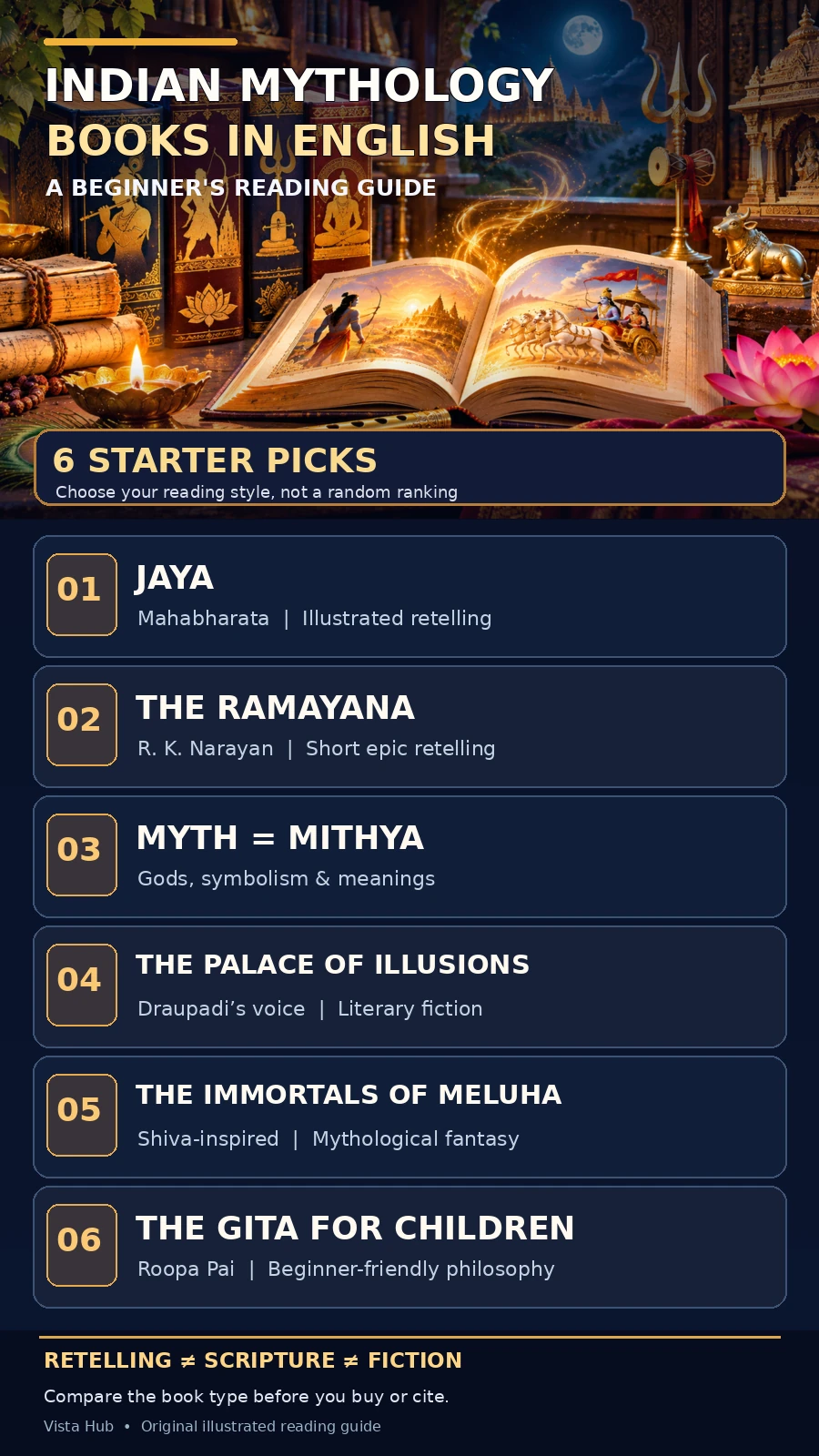
11 Best Indian Mythology Books to Read in English
1. Jaya: An Illustrated Retelling of the Mahabharata — Devdutt Pattanaik
Best for: Readers who know the names Krishna, Arjuna and Draupadi but need a map of the entire Mahabharata. Pattanaik arranges the vast narrative in relatively approachable chapters, with illustrations and attention to regional versions. You encounter familiar turning points—the rival branches of the Kuru family, the game of dice, exile, the Bhagavad Gita, Kurukshetra and its uncomfortable aftermath—without having to begin with a multi-volume scholarly translation.
What makes this recommendation useful is its willingness to show that the epic has lived in more than one performance and storytelling tradition. It gives readers questions to carry into deeper study. Its limitation is equally important: Jaya is a modern author’s synthesis and interpretation, not a line-by-line rendering of every Sanskrit verse. If your goal is to quote an exact passage or compare critical editions, consult a reliable translation of the Mahabharata separately. If your goal is to understand the cast, relationships and moral dilemmas before tackling that bigger project, it is a friendly starting book.
2. The Ramayana: A Shortened Modern Prose Version — R. K. Narayan
Best for: Someone who wants one manageable English book introducing the Rama–Sita–Hanuman–Ravana story. Narayan’s compact prose allows a first-time reader to follow the movement from Ayodhya to exile, the crisis surrounding Sita, the search across the forest and the conflict in Lanka. A short narrative also makes it easier to remember why individual events matter to the people involved.
There is a valuable detail to know before reading: the publisher says Narayan’s version draws inspiration from Kamban’s Tamil Ramayana tradition. It should therefore be introduced as a literary retelling rather than labelled a complete literal translation of Valmiki’s Sanskrit Ramayana. Many readers will love that economy; others may want a longer scholarly version afterwards. If you have only a weekend and want to meet the epic as a story rather than as an assignment, this is one of the most straightforward choices on the list.
3. Sita: An Illustrated Retelling of the Ramayana — Devdutt Pattanaik
Best for: Readers interested in different Ramayana tellings, the symbolism of Sita and questions about relationships and kingship. Pattanaik explores the Ramayana through Sita while drawing attention to how oral, visual and written traditions approach its characters. It is particularly useful after finishing a short conventional retelling, because then you can notice what a new narrator chooses to emphasize.
This is not simply a “better” or “corrected” Ramayana. It is one interpretive way of reading a long and diverse tradition. Discussions of Sita’s agency, Rama’s duty and regional narrative variants should be understood in that context. Readers who are studying the historical development of a particular passage will still need named primary texts. But if your questions are “Why do people tell Sita’s story differently?” or “How has the Ramayana shaped ideas of duty and dignity?”, the book offers a rewarding second perspective.
4. Myth = Mithya: A Handbook / Decoding Hindu Mythology — Devdutt Pattanaik
Best for: Readers less interested in following one long plot and more interested in what recurring images mean. Why does a deity carry a particular object? Why do creation and dissolution appear together? How do stories about gods, goddesses and demons express different attitudes toward life? Pattanaik uses short narratives and interpretive commentary to help readers notice those patterns. The book is especially suitable for someone coming to Hindu mythology through paintings, festival imagery or popular cinema.
It helps to approach any symbolism guide as an invitation to interpretation, not as an instruction manual containing the only meanings accepted by every Hindu community. Some claims may represent the author’s reading, while temples, philosophical schools and regional practices retain others. You can learn a great deal by asking “Which tradition tells this version?” alongside “What might the symbol suggest?” A 2026 special edition exists in addition to older versions, so check the actual edition you select instead of assuming every listing has identical pagination or a newly written text.
5. The Palace of Illusions — Chitra Banerjee Divakaruni
Best for: Readers who prefer emotionally absorbing literary fiction and want to experience the Mahabharata through Draupadi, also called Panchaali. Divakaruni gives its narrator an interior voice: she has private thoughts about family, power, friendship, loss and choices made around her. That shift changes the emphasis of familiar scenes. People who previously remembered only a battlefield may begin to notice the roles played by palace life, social expectations and relationships.
Read it as a novel, not a primary scripture. Imagined dialogue, motives and emotional relationships are creative decisions, even when characters and major events come from the epic tradition. This does not make the novel worthless or deceptive; fiction has a different job. The author is exploring a possible emotional truth through narrative art. Pair the book with an epic retelling if you want to understand the difference between the inherited plot and a modern feminist reimagining. It is also an excellent bridge for readers who usually choose historical or family novels over devotional literature.
6. The Forest of Enchantments — Chitra Banerjee Divakaruni
Best for: Readers who want Sita’s point of view in a modern literary novel. This book centers the emotional and ethical life of the Ramayana’s women, extending attention to figures such as Kaikeyi, Surpanakha and Mandodari. Its central questions concern the cost of expectations, the meaning of loyalty and the right to speak within a story often summarized through royal actions and battles.
If you are choosing between Divakaruni’s two novels, start with The Palace of Illusions for Mahabharata characters and The Forest of Enchantments for the Ramayana world. Both can be engaging first books, though readers who have no prior knowledge of either epic may benefit from a short retelling first. Their purpose is not to replace Sanskrit texts or every regional oral version. Their value lies in revealing how a storyteller’s chosen viewpoint can make a centuries-old narrative feel newly personal. The 2019 novel is literary fiction, and creative scenes should not be cited as direct scriptural testimony.
7. The Immortals of Meluha — Amish Tripathi
Best for: Fans of adventure, mystery, invented societies and fast-moving mythology-inspired fantasy. The first Shiva Trilogy novel imagines Shiva as an extraordinary human figure living in a fictionalized ancient setting. It blends names and motifs recognizable from Indian traditions with an author’s original political world, conflicts and storytelling devices. Readers who find long scriptures intimidating may connect immediately with a central protagonist, danger and unanswered questions.
The essential caveat is that its timeline, institutions, character choices and world-building are fiction. The presence of historical-sounding words or a date inside a novel does not turn it into archaeological evidence. This is an excellent gateway to ask about Shiva or the cultural history of a concept, but answer those new questions using primary texts and reputable scholarship rather than the novel’s invented explanations. If the reading experience itself is what you want, this is one of the easiest books on the list to approach as a conventional page-turner. If you want a faithful explanation of Shaiva theology, start elsewhere.
8. The Bhagavad Gita — translated by Eknath Easwaran
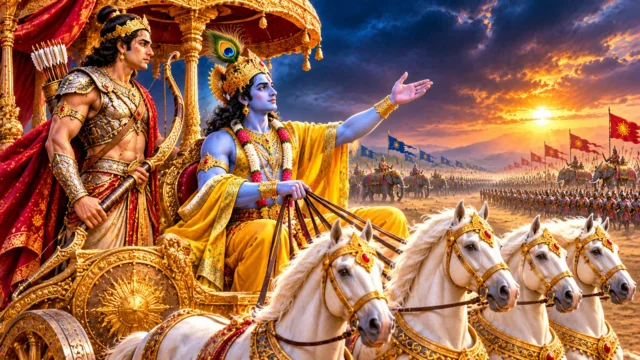
Best for: Readers who want to engage the Gita as a philosophical text rather than merely hear a modern plot retelling. The Gita is a dialogue embedded in the Mahabharata, presented at a moment when Arjuna faces a severe moral crisis and Krishna responds with teachings about action, knowledge, devotion and discipline. Easwaran’s English translation and introductory framing make the material accessible to a general reader while preserving its identity as scripture.
Even a readable translation should be read slowly. A sentence about duty can look simple until you consider its surrounding conversation. Translation necessarily requires choices, and different commentators disagree on concepts such as yoga, self, devotion or liberation. Compare at least one other reputable edition if you are writing about a precise verse. Do not treat lines circulating on motivational posters as automatic verified quotations. For someone willing to read a small amount every day and reflect on it, a complete Gita translation may offer more lasting value than an exciting mythological novel.
9. The Gita for Children — Roopa Pai
Best for: Younger readers, parents, teachers and adults who want a comfortable first encounter with the Gita’s ideas. Roopa Pai presents difficult questions in lively language and ties abstract teachings to the kinds of dilemmas that readers can recognize. The book is marketed to young people, but an adult who has never explored Indian philosophy should not feel embarrassed to choose it. Beginning with clarity is often more useful than opening a complex commentary that you immediately abandon.
There is an important category distinction: this is a modern explanatory guide, not a replacement for studying the full Sanskrit text or a carefully annotated translation. Use it to discover what questions the Gita asks, and then turn to a complete edition when you want to understand each chapter. It works particularly well alongside an introductory Mahabharata retelling, because that supplies the narrative stakes behind Krishna and Arjuna’s conversation. The publisher identifies the title and author clearly, making it a relatively safe recommendation for readers who are buying a book for family reading.
10. The Vedas and Upanishads for Children — Roopa Pai
Best for: Curious readers who ask big questions about consciousness, identity and the universe but need help entering early Indian philosophical literature. Rather than presenting every Vedic hymn or Upanishad passage in full, Pai introduces ideas, puzzles and conversations in an accessible style. It can help a beginner understand why Hindu traditions contain both richly detailed stories and demanding debates about what reality is.
This title is especially useful after reading a mythology book if you notice that a simple battle between gods cannot answer every philosophical question. Still, it is a guide to texts, not an edition of the entire Vedic corpus. Avoid treating a sentence from it as an ancient quotation unless it is clearly identified and verified against a translation. Families can explore its questions together without assuming that all Hindu philosophical schools agree. The book’s value lies in encouraging active thinking rather than requiring the reader to memorize a single approved conclusion.
11. The Girl Who Chose — Devdutt Pattanaik
Best for: Children and families who want a shorter, illustrated Ramayana-inspired story about Sita’s choices. This retelling puts decision-making and responsibility near the center, making it a useful discussion starter after a family storytelling session. It is not aimed at readers seeking the fullest account of every battle or ritual; its scale and selected viewpoint are part of its purpose.
Adults choosing a gift should check the age and reading level of the particular edition, then consider whether the child will appreciate a book that asks questions rather than offering only a simple hero-versus-villain plot. Like other retellings, it represents an authorial choice about which events and meanings deserve emphasis. For a very young reader, illustrated short narratives may be a better entrance than an adult epic translation; as their interest grows, they can move to longer retellings and eventually original-source translations.
Which Indian Mythology Book Should You Read First?
If you want one clear answer, choose by the experience you enjoy. For an unfamiliar reader who likes stories: start with R. K. Narayan’s The Ramayana, then move to Jaya. For visual explainers and gods’ symbols: begin with Myth = Mithya. For a strong female narrator: pick The Palace of Illusions or The Forest of Enchantments. For thriller-like fantasy: choose The Immortals of Meluha. For philosophy and reflection: start with Roopa Pai before trying a complete Gita translation.
These are reading paths, not tests of faith or cultural authenticity. A reader may enjoy fantasy and later turn to history; another might prefer a translation immediately. The mistake is expecting a single type of book to do every job. A novel is allowed to imagine scenes; a retelling is allowed to condense; a translation aims to represent a source faithfully; scholarly commentary asks different questions. Knowing the category protects you from disappointment and helps you evaluate the material fairly.
Original Epics vs Retellings vs Mythological Fiction: What Is the Difference?
Original-source translation: An edition that translates a particular text, often with notes, is the better choice when you need passage-level evidence. Even then, manuscript traditions and translation approaches matter. Retelling: A modern narrator condenses, reorganizes or interprets a larger story; this can help enormously with comprehension, but some material will be selected or adapted. Mythological fiction: A novelist creates original dialogue, relationships, settings or plots inspired by known figures. These books deserve to be assessed as imaginative literature, not as proof of ancient events.
For example, R. K. Narayan’s Ramayana is a shortened prose version influenced by Kamban, Pattanaik’s Jaya brings together material from multiple traditions, Divakaruni’s novels adopt focused narrators, and Amish’s Shiva Trilogy creates a new fictional world. None is a substitute for every primary text, but each can be the right first book for the right reader. Whenever an online claim begins with “the original Mahabharata says,” check whether its actual reference is a modern novel instead.
How to Choose a Good English Edition Without Wasting Money
Check the exact title and author before checkout. A title may appear in paperback, ebook, audiobook, illustrated and special-edition versions. Some listings use a broad marketing phrase such as “complete mythology” even when the text is intentionally abridged. Look at the table of contents, sample pages and publication information when available. If you are studying for school or research, favor an edition that explains its textual basis and identifies translator or editor. If you are reading for pleasure, a well-written modern story might be the smarter purchase. Do not assume the thickest volume is always more accurate or the easiest book is intellectually shallow.
Also consider the reader’s age, interest in philosophy, tolerance for difficult ethical scenes and preference for art or dialogue. Epic literature includes violence, grief, contested duties and complicated family relationships. A children’s adaptation may simplify these scenes, while literary fiction may explore them intensely. For a family gift, age-appropriate framing is often more important than an impressive cover. Prices and inventory change by country, so this guide avoids invented discounts and recommends verifying current formats with publishers or trusted booksellers.
5 Practical Reading Tips for Beginners
- Start with one epic: Learn the core characters before collecting too many versions.
- Keep a tiny family tree: It helps with the Kuru and Ramayana relationships.
- Label the book type: Write “translation,” “retelling” or “novel” in your notes.
- Compare without ranking faiths: Different traditions may tell different versions for meaningful reasons.
- Follow the questions: When a book mentions karma, dharma, a weapon or a deity, check a dedicated explainer or reliable translated source.
You can also read a fictional and a non-fiction book in parallel. For example, enjoy The Palace of Illusions for its narrator while looking up the same broad events in a readable Mahabharata retelling. That approach brings out the craft of both works without expecting them to sound identical. The purpose is to become a more attentive reader, not to collect a compulsory reading list.
Frequently Asked Questions About Indian Mythology Books
What is the best Indian mythology book in English for absolute beginners?
For a short story-based beginning, R. K. Narayan’s The Ramayana is accessible. For a broader illustrated introduction to the Mahabharata, try Jaya by Devdutt Pattanaik. The best choice depends on your preferred epic.
Which mythology books are good for reading about Shiva?
The Immortals of Meluha is a popular Shiva-inspired fantasy novel. Remember that its fictional world is not a scriptural or historical account of Shiva. For theology, look for named Shaiva texts and reputable scholarship.
Is The Palace of Illusions the original Mahabharata?
No. It is Chitra Banerjee Divakaruni’s literary novel told through Draupadi’s imagined voice. It draws on the epic but adds creative interpretation.
Which Indian mythology books are best for teenagers?
The Gita for Children, The Girl Who Chose and age-appropriate illustrated retellings are good starting possibilities. Assess the reader’s age, maturity and interests.
Should I read the Ramayana or Mahabharata first?
Either works. Choose the Ramayana if you want a shorter core storyline in an abridged version; choose a Mahabharata retelling if family conflict and complex ethical decisions interest you more.
Are mythology novels historically accurate?
They are imaginative fiction inspired by traditions. A convincing ancient setting does not independently establish historical events or technologies.
Is an English retelling the same as a Sanskrit translation?
No. A translation attempts to render a particular source text; a retelling may compress, combine or reinterpret several narratives.
Is there one authoritative version of Hindu mythology?
Hindu traditions include multiple textual, regional and devotional accounts. Always name the particular source when making a precise claim.
Related English Reading on Vista Hub
- Ramayana vs Mahabharata: key differences and authors
- Karna: character analysis of a tragic hero
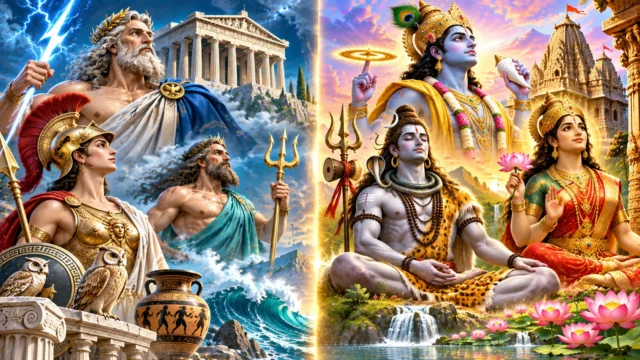
- Greek vs Hindu mythology: gods and cosmology
Sources and Editorial Notes
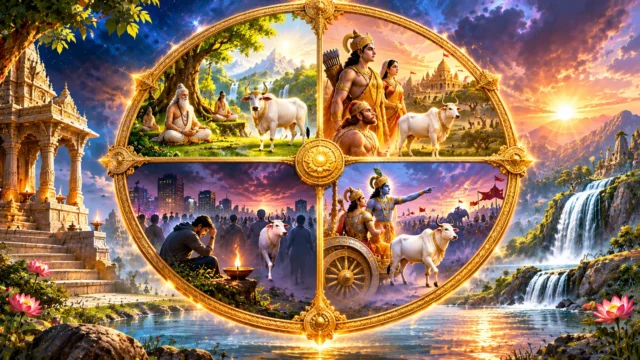
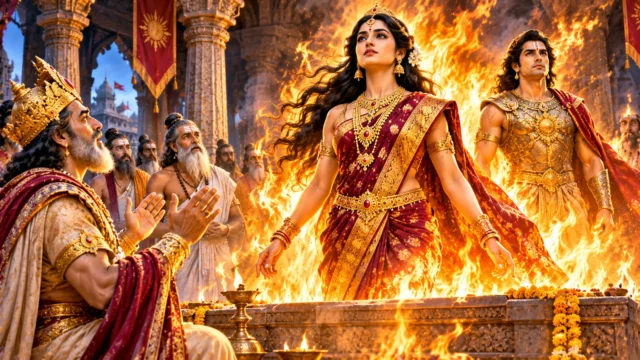
Bibliographic details were checked against Penguin: Jaya, Penguin: Sita, Penguin: Myth = Mithya, Penguin: The Ramayana, Chitra Divakaruni: The Palace of Illusions, Chitra Divakaruni: The Forest of Enchantments, Amish Tripathi: The Immortals of Meluha, Hachette: The Gita for Children and Hachette: The Vedas and Upanishads for Children. Selection is based on reading fit, not unverified search volume or sales data. Updated 13 November 2026. Illustrations are original symbolic artwork, not photographs of historical events or reproductions of book covers.
Conclusion: Build a Reading Path, Not Just a Book Stack
The strongest beginner reading plan combines one accessible epic, one book about ideas and one book written from a fresh viewpoint. A first-time reader could start with Narayan’s Ramayana, move to Pattanaik’s Jaya, then choose either an imaginative novel or a Gita guide. These English books can make Indian mythology easier to enter without pretending that all versions mean exactly the same thing. Choose the style that will actually keep you reading—and look up the underlying text whenever you need a precise religious or historical claim.




Share Your Opinion
Comments are closed on this post.