 Vista
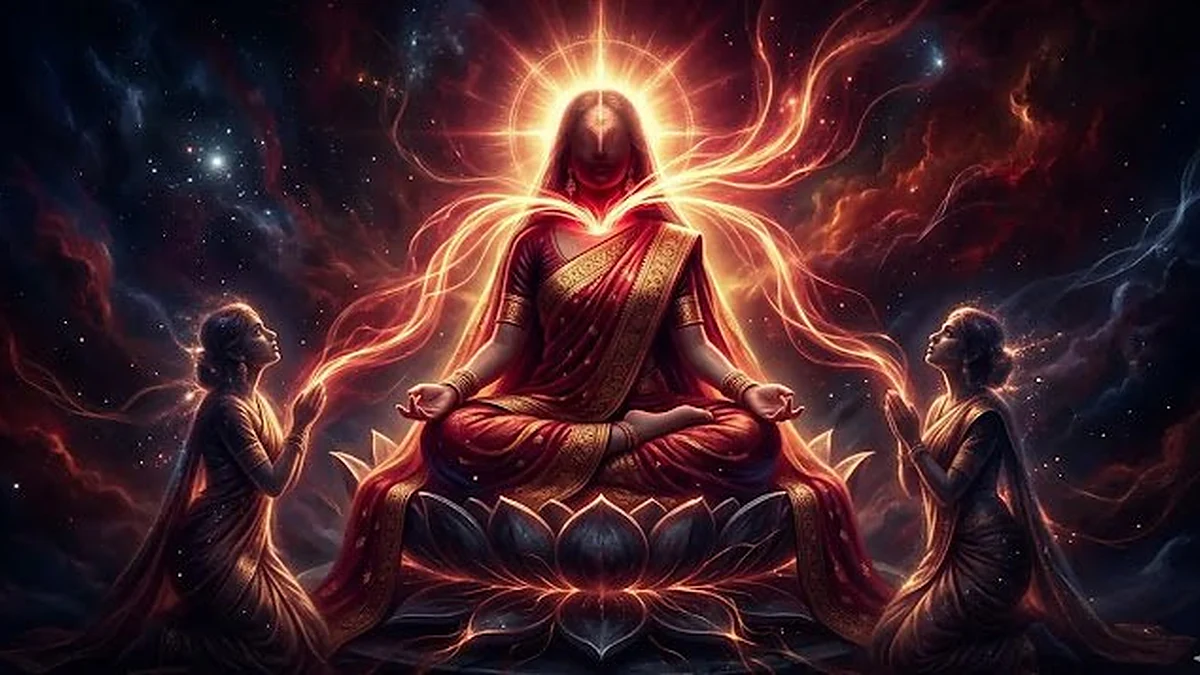
Chhinnamasta Mata: An Introduction to Her Enigmatic Form
In the rich tapestry of Indian spirituality, the Divine Mother manifests in numerous forms, each representing a facet of the cosmos. Among these, Chhinnamasta Mata, one of the ten Mahavidyas (Great Wisdom Goddesses), stands out with a form that is both unique and awe-inspiring. While her appearance can initially perplex, it is imbued with profound spiritual secrets and eternal truths of Sanatana Dharma. This exploration aims to demystify Chhinnamasta Mata, breaking down the myths associated with her outward appearance and revealing her true, deep symbolic meaning, allowing for a deeper understanding of her essence.
The Sixth Mahavidya: Understanding Chhinnamasta
Chhinnamasta is revered as the sixth Mahavidya in the pantheon. The name ‘Chhinnamasta’ itself translates to ‘She whose head is severed.’ This name directly points to her iconic depiction where she is shown severing her own head. This powerful imagery symbolizes supreme self-sacrifice, the annihilation of ego, and the ultimate control over life-force energy. She is also known as Vajrayogini, and a similar form is venerated in Tibetan Buddhism as Vajrayogini or Chinnmundā.
Decoding the Profound Symbolism of Chhinnamasta Mata’s Form
The form of Chhinnamasta Mata, though seemingly bizarre, is rich with profound symbolism. Let’s delve into the meaning behind each aspect:
Severing Her Own Head: The End of Ego or the Pinnacle of Self-Realisation?
This is perhaps the most striking and often misunderstood aspect of Chhinnamasta Mata’s iconography. Many interpret it as an act of self-harm or violence, which is a significant misconception. In reality, this depiction is highly symbolic and carries several deep meanings:
- Annihilation of Ego: The severed head represents liberation from ego, attachment, and worldly bonds. It signifies that to progress on the path of self-realisation, one must transcend the ‘self’ or ego.
- Control Over the Mind: The act of severing the head can be seen as the cessation of mental fluctuations and the uncontrolled flow of thoughts. It represents the yogic state where a practitioner achieves complete mastery over their mind.
- Rebirth and New Life: In some interpretations, it symbolizes life after death and creation emerging from destruction. It illustrates the principle that something new can only be attained by letting go of something old.
- Awakening of Life Force: It also symbolizes the awakening of Kundalini energy and the opening of the Sahasrara chakra, connecting the individual directly to cosmic energy.
The Three Streams of Blood: The Profound Science of Life Energy
From her severed neck, three streams of blood flow. One stream enters her own mouth, while the other two flow into the mouths of her two attendants, Dakini and Varnini. This imagery is also deeply symbolic:
- Flow of Life Force (Prana): These streams represent the continuous flow of life energy (Prana Shakti). The central stream signifies self-sustenance and nourishment, while the other two represent the sustenance of the universe and the circulation of life force among all beings.
- Creation, Preservation, and Destruction: These three streams can also represent the Trimurti (Brahma, Vishnu, Mahesh) or the three Gunas of nature (Sattva, Rajas, Tamas), which govern the cycle of creation.
- Ida, Pingala, and Sushumna Nadis: From a Tantric perspective, these can symbolize the three main nadis (energy channels) in yoga – Ida, Pingala, and Sushumna – through which Kundalini energy awakens.
Naked Form: Purity Beyond Illusion
Chhinnamasta Mata is often depicted in a state of nudity. This is not an act of indecency but holds profound spiritual significance:
- Liberation from Maya: Nudity symbolizes freedom from worldly illusion (Maya), deception, and all forms of coverings. It indicates that the Goddess is in her pure, primordial state, beyond all limitations.
- Transparency of Truth: It represents the nakedness of truth, with no concealment, no veils. Everything is clear and transparent.
- Primal and Natural Power: It signifies the fundamental, primal power of the universe, unbound by social norms or conventions.
Ascending on Kama and Rati: Victory Over Desires
Chhinnamasta Mata is frequently shown standing upon Kama (the god of love and desire) and his consort Rati. This is another powerful symbol:
- Control Over Desires: It symbolizes victory over Kama (desire) and Rati (enjoyment). The Goddess demonstrates that for spiritual progress, one must gain control over physical and worldly desires, not suppress them but transmute them into higher energies.
- Transmutation of Energy: It represents the power to transform sexual energy into spiritual energy.
The Sword and Garland of Skulls: Symbols of Knowledge and Detachment
- The Sword (Khadga): This symbolizes the sword of knowledge, which cuts through ignorance, illusion, and the bonds of Maya. It signifies discernment and sharp intellect.
- The Garland of Skulls (Mundamala): This represents victory over death, detachment (Vairagya), and the impermanence of the world. It shows that the Goddess is beyond life and death and is free from all worldly attachments.
Common Misconceptions About Chhinnamasta Mata and Their Truths
Is Her Form Terrifying or Negative?
While her external appearance might seem intimidating, her form is not negative. It is a fierce and powerful manifestation that bestows fearlessness and inner strength upon devotees. It symbolizes transformation and liberation, not destruction. She inspires those who seek to transcend their limitations and attain higher consciousness.
Does It Indicate Self-Harm?
Absolutely not. As explained, the act of severing the head is symbolic, not literal. It represents the ‘slaying of the ego’ and ‘mastery over the mind,’ not physical suicide. It is a path towards self-knowledge and spiritual freedom.
The Relevance of Chhinnamasta Mata in Modern Life
Chhinnamasta Mata’s form offers crucial lessons for contemporary times:
- Ego Liberation and Self-Control: In today’s competitive world, where ego often leads us astray, Mata teaches that true strength lies in self-control and the renunciation of ego.
- Proper Use of Life Energy: We should channel our energy towards constructive and spiritual pursuits rather than wasting it on trivial matters.
- Fearlessness and Inner Strength: To face life’s challenges, we need inner strength and fearlessness. Mata’s form inspires us to recognise our inherent power.
- Accepting Transformation: Change and endings are inevitable in life. Mata teaches us to embrace these transformations and grow through them.
Conclusion: Chhinnamasta – A Symbol of Power, Knowledge, and Liberation
The form of Chhinnamasta Mata is more than just an image; it is a living symbol of profound philosophical and spiritual principles. She teaches us that true liberation is not found in the external world but within, by severing the inner ego, controlling desires, and directing life energy correctly. She paves the way to power, knowledge, and ultimate freedom.













Share Your Opinion
Comments are closed on this post.