Understanding Fear and Anxiety According to Osho
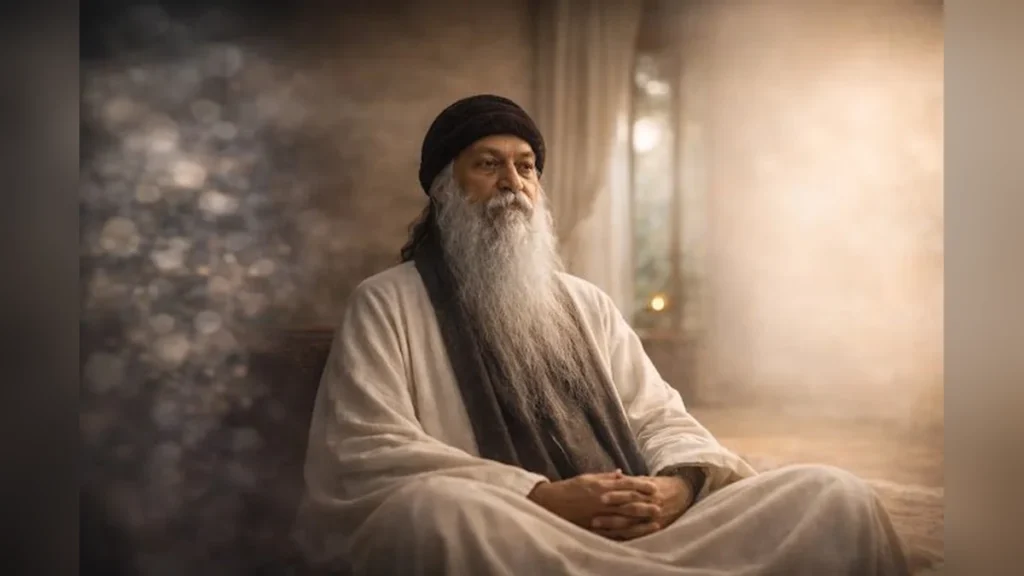
In today’s fast-paced world, fear and anxiety have become constant companions for many. The uncertainty of the future, relationship stress, career worries, or simply the entanglement of our own thoughts can leave us feeling hollow. But have you ever wondered where these emotions truly originate? Are they products of the external world, or are they born within us? India’s renowned philosopher and spiritual master, Osho, shed deep light on the psychology of fear and anxiety. According to him, these are not external problems but states created by our own minds. Osho not only shows us how to identify these issues but also suggests profound and practical paths to liberation. Let’s understand from Osho’s perspective why fear and anxiety arise and how we can become free from them.
Osho posits that fear and anxiety are nothing more than games played by our minds. Both emotions are directly linked to our tendency to disconnect from the present and live in the future.
Fear: Imaginary Tales of the Future
Osho states, “Fear is always connected to the future.” Our minds conjure up fear from things that haven’t happened yet, and perhaps never will. It’s a mental narrative based on hypothetical questions like ‘What if this happens?’ For Osho, fear is an imaginary enemy we create with our own thoughts.
Anxiety: The Persistent Form of Fear
Osho explains that anxiety is not separate from fear but rather its prolonged and persistent form. While fear may strike suddenly and pass, anxiety lingers. When we remain constantly entangled in future complexities and disconnect from the present, anxiety becomes our habit. It’s a mental state where the mind continuously dwells on problems and uncertainties, even if they aren’t currently present.
The Root Causes of Fear and Anxiety: Osho’s Insights

Osho identified several deep-seated causes for fear and anxiety:
1. Escaping the Present
This is a central point in Osho’s philosophy. According to him, “Where the present is, there is neither fear nor anxiety.” Our minds either wander in the past or flee into the future. Remaining in the present moment is difficult for the mind. When we don’t live the present moment fully, the mind clutches at future uncertainties, creating fear and anxiety.
2. The Mind’s Desire for Control
Osho says the mind’s function is to try and control things. When the mind feels it cannot control the future, it generates fear and anxiety. The mind always seeks security, and when security appears threatened (even hypothetically), fear arises.
3. Attachment to Identity
We often tie our identity to our body, relationships, possessions, and career. When we feel any of these could be lost, fear arises. According to Osho, this is the fear of the ego – the fear of losing the ‘I’ we have constructed.
4. Fear of Death and Uncertainty
The deepest source of fear is the fear of death. We all know we are mortal, but our minds resist accepting this truth. The uncertainty of death and the transience of life haunt us internally. This existential fear often manifests as fear of illness or loneliness.
5. Societal Expectations
From childhood, society conditions us to think and feel in specific ways. Expectations to be successful, better than others, or to never make mistakes create fear of failure, rejection, and inadequacy within us, leading to increased anxiety and stress.
Osho’s Paths to Freedom from Fear and Anxiety
Osho doesn’t just identify problems; he also offers profound and practical solutions for overcoming them.
1. Living in the Present
Osho’s most crucial message is ‘living in the present’. This means focusing your attention entirely on the moment you are in right now. Pay attention to your breath, listen to the sounds around you. When you are fully present, the mind has no opportunity to weave future narratives.
2. Witnessing Consciousness (Sakshi Bhav)
Osho encourages us to become ‘witnesses’ to our thoughts and emotions. This means observing the thoughts of fear or anxiety arising in your mind without getting attached to them or judging them. You are merely an observer watching your own mental processes. As you simply observe the thoughts, their grip on you begins to weaken.
3. Acceptance and Surrender
Fear and anxiety often stem from our desire to control things. Osho teaches us to learn to accept life’s uncertainties. Accept what is, as it is. Let go of the need to control everything and surrender to the flow of existence. This surrender brings a deep sense of peace and trust.
4. Meditation and Silence
Osho emphasized various meditation techniques that help calm the mind and connect with our inner center. Active meditations help release suppressed emotions, while passive meditations ground you in the present. Sitting in silence and listening to the inner noise is also a powerful way to quiet the mind.
5. Connecting with Nature
Osho encourages us to reconnect with nature and live life as a celebration. Spending time in nature, dancing, singing, and living each moment fully are all ways to break free from the mind’s traps and connect with life’s spontaneity and joy.
Conclusion

According to Osho, fear and anxiety are not external calamities but illusory states created by our own minds. They arise from future imaginations, detachment from the present, and attachment to the ego. However, liberation from them is possible. By living in the present, witnessing our thoughts, practicing acceptance, and meditating, we can rediscover our inner peace. Understanding that fear and anxiety are merely mind games is the first step to taking them less seriously and freeing ourselves. By looking within, we can not only become free from fear and anxiety but also live a more conscious, joyful, and meaningful life.