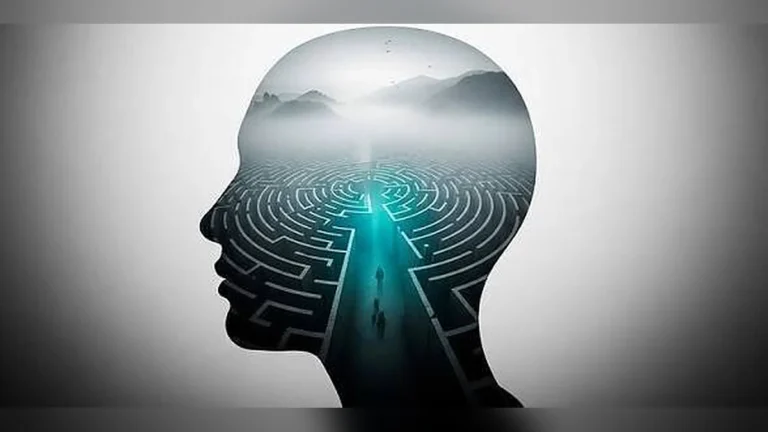
The Science Behind Dream Meaning
You wake up suddenly at 2 AM. In your dream, you were falling from a great height or saw an old friend you haven’t spoken to in years. Your heart races, and the first question that pops into your mind is: Does this dream have a message? Is there a real meaning, or is it just a trick of the mind?
When we sleep, our bodies may be at rest, but our brains are never entirely shut down. According to science, dreams are a natural byproduct of our brain’s neurological activities. Throughout the day, we absorb a vast amount of information, experiences, and emotions. While we sleep, our brain processes this data.
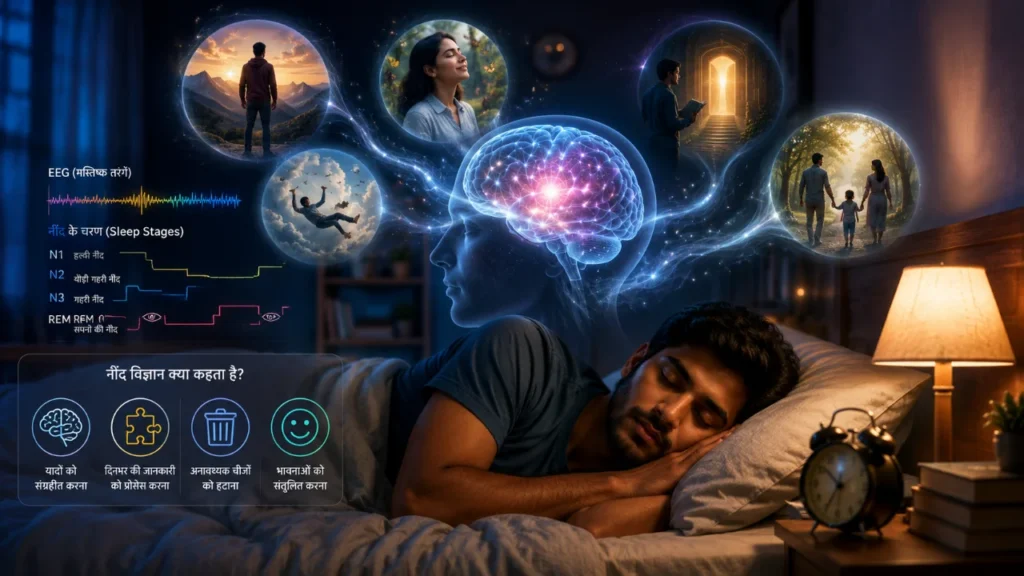
Neuroscience explains that sleep occurs in different stages, with REM (Rapid Eye Movement) sleep being particularly crucial. During REM sleep, the parts of the brain responsible for emotions, memories, and visuals become highly active. This is why dreams often feel so vivid, and sometimes frightening or bizarre.
From a scientific standpoint, dreams are not prophecies or premonitions of the future. They are simply a unique, combined response of your own thoughts, memories, and suppressed emotions, processed as a mental data stream during the quiet of the night.
REM Sleep and the Neurological Connection to Dreams

Our sleep is primarily divided into two types: Non-REM and REM. When we enter deep sleep, the REM sleep cycle begins. In this stage, our eyes move rapidly behind our eyelids, and the limbic system—the part of the brain that governs emotions—works at full speed.
Interestingly, the prefrontal cortex, responsible for logic and rational thinking, is significantly less active during REM sleep. This is why actions like flying, disappearing without reason, or witnessing strange events in a dream feel perfectly normal, and we don’t question them.
Scientists believe that if a person is awakened during this stage, they are most likely to remember their dream clearly. This supports the idea that dreams are not messages from a divine power but rather the result of biological neural activity.
How the Brain ‘Cleans’ Data at Night
Our brains process billions of bits of data daily—cars seen on the road, conversations with colleagues, news on TV, or articles read online. When we sleep, the brain initiates a process called memory consolidation, akin to a digital system’s defragmentation.
This process filters out unnecessary information and secures essential memories into long-term storage. The random images and thoughts that collide during this data transfer and ‘cleaning’ are what we experience as dreams. Think of it like your computer’s disk defragmentation; as old and new memories merge, a peculiar scene is created that has no direct link to any upcoming crisis in real life.
The Direct Impact of Stress, Fear, and Anxiety on Dreams
Have you ever noticed why nightmares seem more frequent before an exam, a job interview, or during periods of mental stress? Neurology shows a direct link between our emotional state and our dreams.
When you experience high levels of stress or anxiety during the day, the stress hormone cortisol increases in your body. At night, the amygdala—the brain’s fear center—remains highly active. This can lead to dreams where you are being chased, falling into a pit, or witnessing a loved one’s failure.
Such dreams are not omens of misfortune. Instead, they are a way for your subconscious mind to try and process and release the accumulated stress of the day.
FACT: The human brain spends about 20% of its sleep time in the REM stage, during which most vivid and emotional dreams occur when the brain is nearly as active as when awake.
Do Some Dreams Predict the Future? The Scientific Truth
Popular beliefs often suggest that dreams seen in the early morning hours come true. However, modern sleep science and data analytics do not support this claim. Scientists attribute such perceived connections to coincidence and selective memory.
A person dreams thousands of times throughout their life, and most dreams are forgotten upon waking. If, by chance, one dream aligns with a real event, our brain tends to remember that specific instance while disregarding the hundreds of forgotten dreams. This is known as ‘confirmation bias’ in psychology.
Therefore, from a scientific perspective, dreams are not a window into the future but a mirror reflecting our past experiences and current mental state.
How to Reduce Nightmares and Improve Sleep Quality
If you frequently experience nightmares or suffer from poor sleep, it might be due to a physical or mental imbalance. Instead of resorting to superstitions, focus on improving your sleep hygiene:
- Reduce Screen Time: Stop using mobile phones, laptops, or TVs at least an hour before bed. The blue light can disrupt your brain’s natural sleep signals.
- Avoid Heavy Meals: Eating late or consuming very spicy food at night can affect digestion, leading to disturbed sleep and unusual dreams.
- Maintain a Routine: Establish consistent times for sleeping and waking to balance your biological clock.
- Relaxation Techniques: Practice simple breathing exercises or meditation before sleep to lower stress levels.
By adopting these basic lifestyle changes, you can achieve a peaceful and restful sleep without fear.
Frequently Asked Questions
Do dreams seen in the morning come true?
There is no scientific evidence to support this. In the early morning, we are in the final stages of REM sleep, which makes dreams more vivid and memorable. If any event seems to align, it is likely a coincidence.
Why do we forget our dreams upon waking?
During sleep, neurotransmitters like norepinephrine, which are crucial for memory formation, are at low levels. Additionally, upon waking, the brain begins processing new experiences, which can quickly overwrite the night’s dreams.
What causes recurring dreams?
Recurring dreams often indicate an unresolved stress, fear, or emotion in your life that your subconscious mind is repeatedly trying to process.
Are nightmares a symptom of an illness?
Occasional nightmares are normal. However, if they occur frequently and disrupt your sleep, it could be a sign of excessive stress, anxiety, or a sleep disorder like sleep apnea.
Disclaimer: The information provided in this article is for general awareness only.